

SUBSCRIBE TO OUR FREE NEWSLETTER
Daily news & progressive opinion—funded by the people, not the corporations—delivered straight to your inbox.
5
#000000
#FFFFFF
To donate by check, phone, or other method, see our More Ways to Give page.
Daily news & progressive opinion—funded by the people, not the corporations—delivered straight to your inbox.
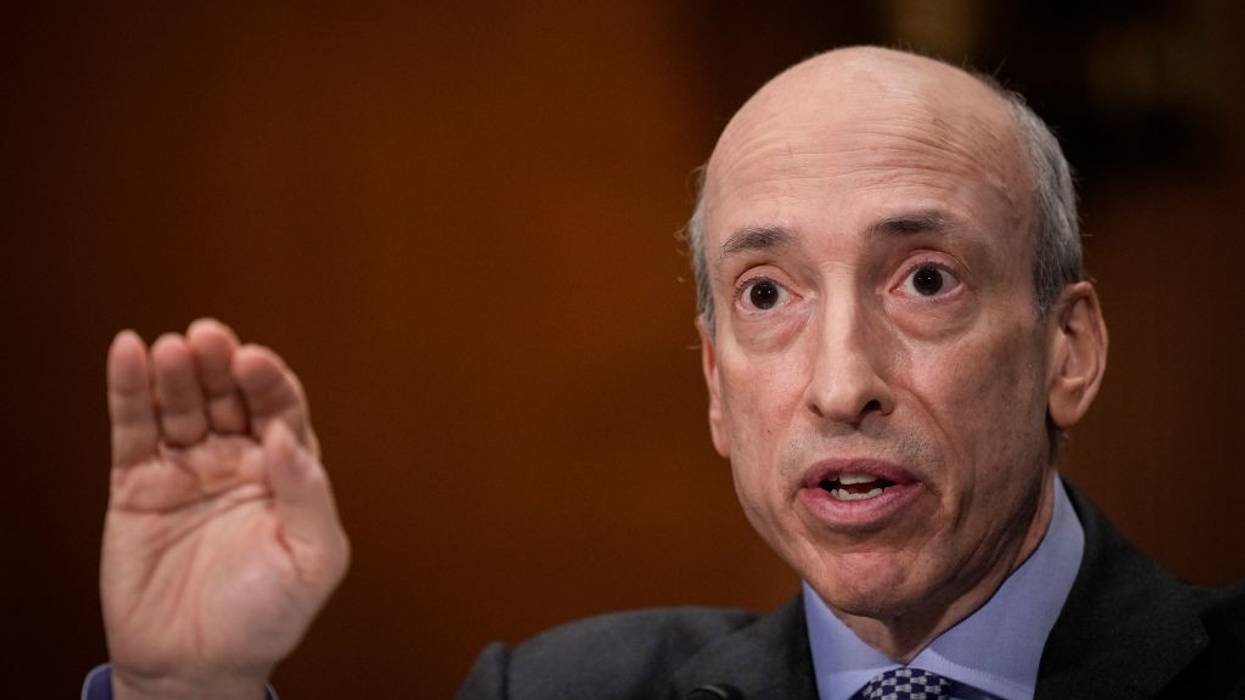
"Investors need reliable, comparable information about risks that registered companies face and how they are managing those risks," argued Democratic attorneys general who support the paused policy.
The U.S. Securities and Exchange Commission announced on Thursday that it would pause the implementation of climate disclosure rules for U.S. companies while it awaits the rulings on legal challenges related to those rules.
"The commission has determined to exercise its discretion to stay the final rules pending the completion of judicial review of the consolidated 8th Circuit petitions," the agency said in its order. "The commission will continue vigorously defending the final rules' validity in court and looks forward to expeditious resolution of the litigation."
Alongside @MassAGO, I’m leading a 19-AG coalition seeking to intervene in lawsuits against @SECGov’s rule requiring public companies to disclose comprehensive and comparable information about climate-related risks to investors.
— AG Brian Schwalb (@DCAttorneyGen) April 4, 2024
The rules are meant to force companies to make public any climate risks to their businesses. They have been challenged by attorneys generals from nine different states that are controlled by Republicans.
Meanwhile, 19 Democratic attorneys general are defending the policy, which they said in a Wednesday court filing "provides the states, their residents, and other investors with information about climate-related risks that is critical to making informed investment decisions."
"Investors need reliable, comparable information about risks that registered companies face and how they are managing those risks," the Democrats argued. "Climate-related impacts are undeniably one such category of risk."
Even if the rules were implemented, the SEC has been accused of "watering them down," because they don't include the greenhouse gas emissions related to companies' supply chains.
"Climate-related risks are financial risks, and investors have a right to know the full scope of a public company's emissions profile. This SEC decision will let big corporations off the hook in the United States, allowing them to avoid disclosure of emissions from throughout their supply chains," Sen. Ed Markey (D-Mass.) said when the rules were finalized last month
California has already passed legislation that requires large companies to disclose how much their supply chains are contributing to greenhouse gas emissions.
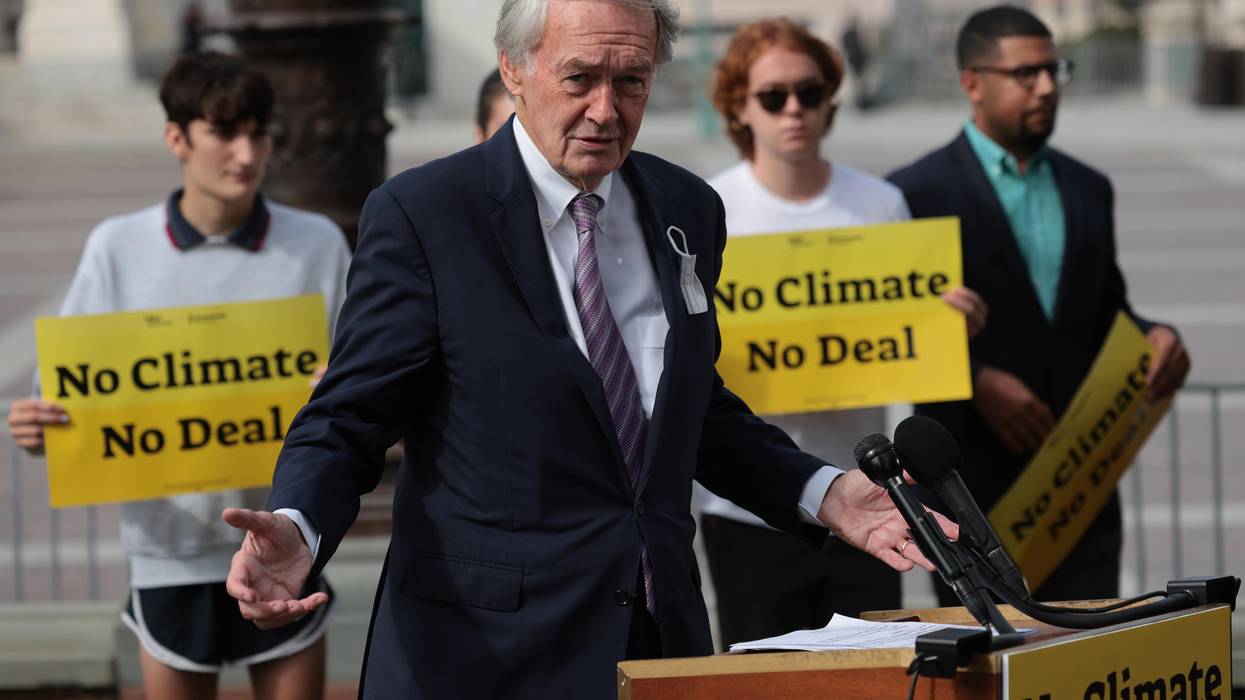
"The SEC's decision to bow to industry pressure against comprehensive climate disclosure requirements is a disservice to both the planet and investors," said one expert.
The U.S. Securities and Exchange Commission released a climate disclosure rule on Wednesday that will require public companies to report their greenhouse gas emissions and climate risks, but the new rule does not include requirements for companies to report emissions related to their supply chains.
The SEC seemingly bent to big business interests after many major companies pressured the commission to omit the supply chain aspect of the rule.
"Under the original proposal, large companies would have been required to disclose not just planet-warming emissions from their own operations, but also emissions produced along what's known as a company's 'value chain'—a term that encompasses everything from the parts or services bought from other suppliers, to the way that people who use the products ultimately dispose of them. Pollution created all along this value chain could add up," The New York Times reports.
The new rule only requires that companies report their direct greenhouse gas emissions and the risks they're exposed to from climate-related natural disasters and extreme heat.
Climate risks are financial risks. This @SECGov decision will let big corporations off the hook by not requiring disclosure of emissions throughout their supply chains. That means big promises with little accountability to deliver emissions reductions. Unacceptable. https://t.co/HjO4d1XyZu
— Ed Markey (@SenMarkey) March 6, 2024
Charles Slidders, a senior attorney at the Center for International Environmental Law, criticized the weakened rule in a statement.
"The SEC's decision to bow to industry pressure against comprehensive climate disclosure requirements is a disservice to both the planet and investors," Slidders said. "In an era of urgent need for more sustainable practices, greater transparency, and reliable information on corporate climate impacts and risks, the lack of ambition reflected in this rule represents a step backward that could ultimately undermine efforts to mitigate climate change and protect investors' interests."
David Arkush, director of Public Citizen's climate program, said in a statement that the SEC had "caved to special interests and was cowed by litigation risk." Sen. Sheldon Whitehouse (D-R.I.) said it was "unfortunate" that the SEC had watered down the rule.
"Climate-related risks are financial risks, and investors have a right to know the full scope of a public company's emissions profile. This SEC decision will let big corporations off the hook in the United States, allowing them to avoid disclosure of emissions from throughout their supply chains," said Sen. Ed Markey (D-Mass.).
While the SEC may be refusing to require that companies disclose how their supply chains affect the climate, the state of California doesn't have any problem doing that. The state passed a bill in September that requires large companies to disclose this information.
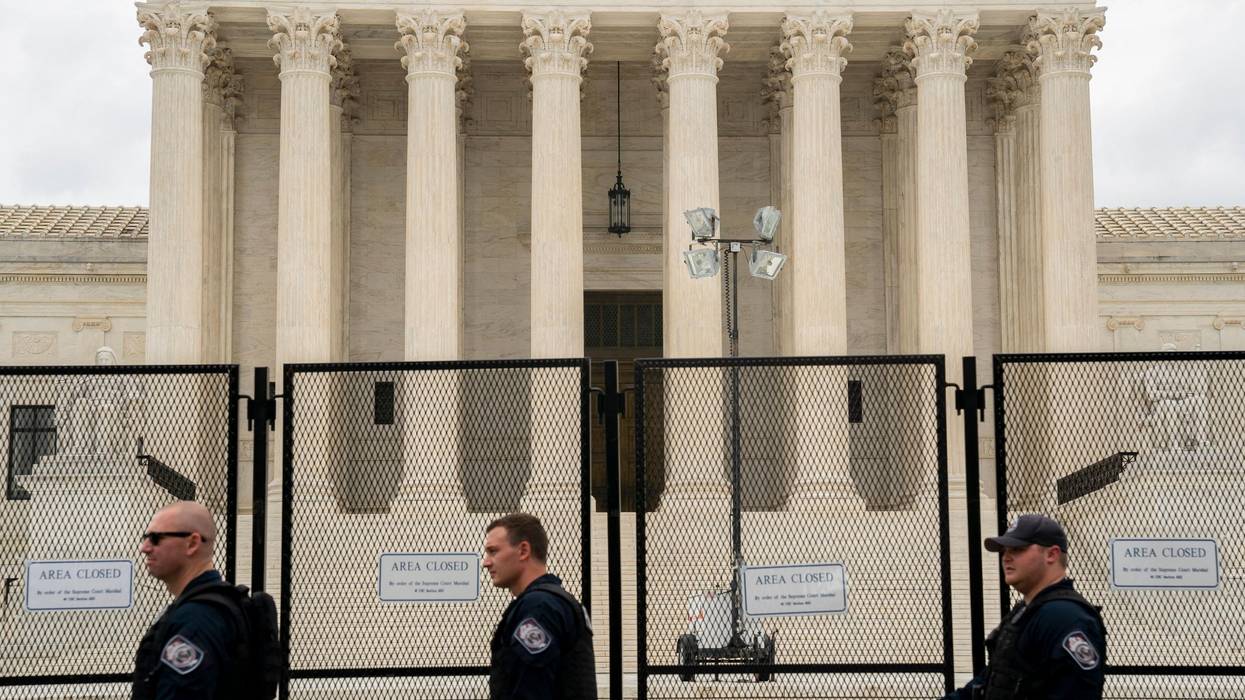
In two core areas of constitutional conflict—gun rights and administrative powers—the court will determine whether its revolutionary doctrines will continue to expand or come to a resolution.
The
first Monday in October, the traditional date for the beginning of the U.S. Supreme Court’s term, is almost here: On Oct. 2, 2023, the court will meet after the summer recess, with the biggest case of the term focused on the limits of individual gun rights.
The other core issue for the coming year is a broad reassessment of the power of the administrative state.
Both issues reflect a court that has announced revolutionary changes in doctrine and must now grapple with how far the new principles will reach.
In a revolutionary period, aggressive litigants will push the boundaries of the new doctrine, attempting to stretch it to their advantage. After a period of uncertainty, a case that defines the limits on the new rule is likely to emerge.
Two years ago, the court began what many consider to be a constitutional revolution.
The new supermajority of six conservative justices rapidly introduced new doctrines across a range of controversies including abortion, guns, religion, and race.
When the court announces a new principle—for example, a limit on the powers of a specific part of government—citizens and lawyers are not sure of the full ramifications of the new rule. How far will it go? What other areas of law will come under the same umbrella?
In a revolutionary period, aggressive litigants will push the boundaries of the new doctrine, attempting to stretch it to their advantage. After a period of uncertainty, a case that defines the limits on the new rule is likely to emerge.
U.S. v. Rahimi may be the limiting case for gun rights, identifying the stopping point of the recent changes in Second Amendment doctrine.
Zackey Rahimi is a convicted drug dealer and violent criminal who also had a restraining order in place after assaulting his girlfriend. The court will decide whether the federal law prohibiting the possession of firearms by someone subject to a domestic violence restraining order violates the Second Amendment.
In the 2022 case of New York Rifle & Pistol v. Bruen, the court announced a new understanding of the Second Amendment. The amendment had long been understood to recognize a limited right to bear arms. Under the Bruen ruling, the amendment instead describes an individual right to carry a gun for self-protection in most places in society, expanding its range to the level of other constitutional rights such as freedom of religion or speech, which apply in public spaces.
Historians have presented evidence that there were widespread laws and practices during the early Republic limiting gun possession by individuals, like Rahimi, who were judged to be dangerous.
However, the court’s conservative justices also tend to argue that constitutional rights are balanced by responsibilities to promote a functional society, a concept known as “ordered liberty.” The practical question is how to know the proper balance between liberty and order. If the right to carry a gun can be regulated but not eradicated, limited but not eliminated, where is the line?
The court’s answer in Bruen is history—a current law does not have to match a specific historical one exactly, but it has to be similar in form and purpose. Whatever gun regulations Americans allowed during the early Republic—the critical period from around the 1780s to around the 1860s at the time of the Civil War—are allowable now, with the exception of any that would violate racial equality under the 14th Amendment.
Justice Clarence Thomas, the author of the Bruen ruling, described it this way: The government must “identify a well-established and representative historical analogue, not a historical twin.” Thomas argued in Bruen that no such historical analogue existed for the limits New York imposed, invalidating the state’s ban on concealed carry permits.
The Rahimi case will provide a critical test of this historical approach to the boundaries of constitutional rights.
Historians have presented evidence that there were widespread laws and practices during the early Republic limiting gun possession by individuals, like Rahimi, who were judged to be dangerous. However, those dangers did not include domestic violence, which was not deemed the same important concern then that it is now.
The court may consider the laws prevalent in the early Republic, which regulated those who “go armed offensively” or “to the fear and terror of any person,” to be analogous to contemporary laws restraining those under a domestic violence restraining order. If so, the ruling will likely uphold Rahimi’s conviction and limit gun rights.
On the other hand, if the court reads those historical standards as more narrow and specific than the contemporary ban on gun possession while under a restraining order, those limits will be struck down.
The founders expected a permanent battle for power between the Congress and the presidency. What they did not anticipate was the expansion of the federal bureaucracy.
With the growth in the number, funding, and power of federal agencies, including the Environmental Protection Agency, the Department of Homeland Security, the Consumer Finance Protection Bureau, and many others, the debate over who controls them and how much power they wield has grown as well.
The court’s conservatives tend to see the actions of federal agencies as violating the constitutional principle of limited government. This view argues that government powers are specific and constrained, not flexible and expansive. They fear that the federal government is likely to use its vast power abusively if it is unconstrained. In this view, the expansion of the administrative state allowed an end-run around the Constitution’s limits on government power.
Perhaps the most far-reaching case could overturn a long-standing precedent known as Chevron deference, which allows agencies to determine the meaning of disputed terms in federal laws.
The constitutional question is whether bureaucrats have broad regulatory powers over economic and social questions, or only elected officials do.
Conservatives tend to think that liberals put the bureaucrats in charge because they don’t have a majority in Congress to pass the same laws.
The liberals tend to think that conservatives are blocking necessary regulations while ignoring the flexible nature of the Constitution’s provisions to adapt to the needs of modern society.
This is a core dispute between the two judicial camps.
In the last few years, the court has emphasized new doctrines limiting the power of federal agencies.
One of those doctrines is the Unitary Executive Theory, which limits the independence of administrative agencies. In this view, if the Constitution envisions executive branch agencies as controlled by voters through the selection and removal of the president, then the president must be able to control the decision-makers within those agencies.
One case before the court this term challenges the constitutionality of the Securities and Exchange Commission, or SEC, which regulates the stock market, on the grounds that the agency operates outside the boundaries set by the Constitution in several ways. One possible violation is that its judges cannot be removed by the president, violating the Unitary Executive Theory.
Another potential constitutional violation is the SEC’s practice of imposing monetary penalties without a finding by a civil jury. The court will decide if this violates the Seventh Amendment’s guarantee of a jury trial.
Another case challenges the constitutionality of the Consumer Finance Protection Bureau on the grounds that the agency’s funding mechanism—through fees charged to the Federal Reserve rather than through normal congressional appropriations—violates how the Constitution allows the government to spend money. If Congress does not control the agency’s budget, this may put the agency outside of the control of the legislative branch that created it.
Perhaps the most far-reaching case could overturn a long-standing precedent known as Chevron deference, which allows agencies to determine the meaning of disputed terms in federal laws. Overruling this precedent would strip power from administrative agencies and reallocate decisions to Congress or to courts.
In these two core areas of constitutional conflict—gun rights and administrative powers—the court will determine this term whether its revolutionary doctrines will continue to expand or come to a resolution.

"What did he know and what was the market anticipating when he sold? That's a critical moment," said one securities law expert.
Experts said Friday that Elon Musk's large sale of Tesla shares shortly before the company announced lower-than-expected vehicle deliveries should draw scrutiny from the U.S. Securities and Exchange Commission, an agency that has previously investigated and charged the billionaire for fraud.
The Wall Street Journal reported Friday that earlier this month, "Tesla announced fourth-quarter vehicle deliveries that were significantly below the company’s most recent forecast to investors. The news sent Tesla's stock price plunging when markets opened the next day."
Just weeks before the company's announcement, Musk sold roughly $3.6 billion worth of Tesla stock, raising questions over whether the Tesla CEO unlawfully took advantage of material nonpublic information.
James Cox, a securities law professor at Duke University, told the Journal that Musk's stock sale "should be of great interest to the SEC."
"The issue here is, what did he know and what was the market anticipating when he sold? That's a critical moment," said Cox.
Musk has repeatedly clashed with the SEC in recent years, saying in 2018, "I do not respect them."
The comment came after the agency charged Musk with securities fraud over "a series of false and misleading tweets about a potential transaction to take Tesla private." Musk ended up paying a $20 million fine for the tweets, and he's currently facing a shareholder lawsuit over the debacle.
Musk has since purchased Twitter for $44 billion, a transaction that also drew the attention of federal authorities.
The SEC—now headed by Gary Gensler, a former Tesla shareholder—launched an investigation last year to examine whether Musk properly disclosed his purchase of Twitter shares prior to the takeover.
Musk could soon be facing additional heat from the SEC over his suspiciously well-timed stock sale. As the Journal reported Friday, the Tesla chief "sold nearly 22 million shares December 12-14 at an average price of about $163 a share, according to a regulatory filing."
"When the stock closed on January 3 at just over $108, the shares Mr. Musk sold the prior month had declined in value by $1.2 billion," the newspaper continued. "The stock has since rebounded to about $127."
In an interview with the Journal, Georgetown University securities law professor Donald Langevoort said of the sale, "Is it suspicious? Yes. Is it entirely possible there are other explanations? Of course."
"But that's what the enforcement process is all about," he added.
The Securities and Exchange Commission just ruled that large publicly held corporations must disclose the ratios of the pay of their top CEOs to the pay of their median workers.
About time.
For the last thirty years almost all incentives operating on American corporations have resulted in lower pay for average workers and higher pay for CEOs and other top executives.
Consider that in 1965, CEOs of America's largest corporations were paid, on average, 20 times the pay of average workers.
Now, the ratio is over 300 to 1.
Not only has CEO pay exploded, so has the pay of top executives just below them.
The share of corporate income devoted to compensating the five highest-paid executives of large corporations ballooned from an average of 5 percent in 1993 to more than 15 percent by 2005 (the latest data available).
Corporations might otherwise have devoted this sizable sum to research and development, additional jobs, higher wages for average workers, or dividends to shareholders - who, not incidentally, are supposed to be the owners of the firm.
Corporate apologists say CEOs and other top executives are worth these amounts because their corporations have performed so well over the last three decades that CEOs are like star baseball players or movie stars.
Baloney. Most CEOs haven't done anything special. The entire stock market surged over this time.
Even if a company's CEO simply played online solitaire for thirty years, the company's stock would have ridden the wave.
Besides, that stock market surge has had less to do with widespread economic gains that with changes in market rules favoring big companies and major banks over average employees, consumers, and taxpayers.
Consider, for example, the stronger and more extensive intellectual property rights now enjoyed by major corporations and the far weaker antitrust enforcement against them.
Add in the rash of taxpayer-funded bailouts, taxpayer-funded subsidies, and bankruptcies favoring big banks and corporations over employees and small borrowers.
Not to mention trade agreements making it easier to outsource American jobs, and state legislation (ironically called "right-to-work" laws) dramatically reducing the power of unions to bargain for higher wages.
The result has been higher stock prices but not higher living standards for most Americans.
Which doesn't justify sky-high CEO pay unless you think some CEOs deserve it for their political prowess in wangling these legal changes through Congress and state legislatures.
It turns out the higher the CEO pay, the worse the firm does.
Professors Michael J. Cooper of the University of Utah, Huseyin Gulen of Purdue University, and P. Raghavendra Rau of the University of Cambridge, recently found that companies with the highest-paid CEOs returned about 10 percent less to their shareholders than do their industry peers.
So why aren't shareholders hollering about CEO pay? Because corporate law in the United States gives shareholders at most an advisory role.
They can holler all they want, but CEOs don't have to listen.
Larry Ellison, the CEO of Oracle, received a pay package in 2013 valued at $78.4 million, a sum so stunning that Oracle shareholders rejected it. That made no difference because Ellison controlled the board.
In Australia, by contrast, shareholders have the right to force an entire corporate board to stand for re-election if 25 percent or more of a company's shareholders vote against a CEO pay plan two years in a row.
Which is why Australian CEOs are paid an average of only 70 times the pay of the typical Australian worker.
The new SEC rule requiring disclosure of pay ratios could help strengthen the hand of American shareholders.
The rule might generate other reforms as well - such as pegging corporate tax rates to those ratios.
Under a bill introduced in the California legislature last year, a company whose CEO earns only 25 times the pay of its typical worker would pay a corporate tax rate of only 7 percent rather than the 8.8 percent rate now applied to all California firms.
On the other hand, a company whose CEO earns 200 times the pay of its typical employee would face a 9.5 percent rate. If the CEO earned 400 times, the rate would be 13 percent.
The bill hasn't made it through the legislature because business groups call it a "job killer."
The reality is the opposite. CEOs don't create jobs. Their customers create jobs by buying more of what their companies have to sell.
So, pushing companies to put less money into the hands of their CEOs and more into the hands of their average employees will create more jobs.
The SEC's disclosure rule isn't perfect. Some corporations could try to game it by contracting out their low-wage jobs. Some industries pay their typical workers higher wages than other industries.
But the rule marks an important start.
In a letter described by news outlets as "scathing" and "unusually blunt," Sen. Elizabeth Warren (D-Mass.) on Tuesday slammed the country's top Wall Street regulator for broken promises and lax regulation of the financial industry.
In a 13-page letter, Warren described the two-year tenure of Securities and Exchange Commission (SEC) chairwoman Mary Jo White as "extremely disappointing."
From failing to require companies to admit wrongdoing when the agency finds they violate the law to failing to implement Dodd-Frank rules on CEO pay disclosure, White has not been the "tough watchdog" the SEC needs, Warren said.
Warren also criticized the ongoing use of "waivers," which allow such companies to skirt SEC review, among financial firms that break the law, as well as White's failure to address undisclosed campaign contributions. And the letter raises the question of whether White's "regular recusals" for conflicts of interest have delayed enforcement activity.
On these and other matters mentioned in the letter, Warren says White made reassuring promises to lawmakers during her 2013 confirmation hearing. However, Warren states, "you appear to have broken those promises."
"The public relies on the SEC to act as the cop on the beat for an honest marketplace--issuing rules that ensure that investors can make informed decisions and holding rule breakers accountable for their actions," Warren wrote. "When the SEC falls down on the job, the impact is felt throughout the economy and it touches every American family."
She continued: "I am disappointed you have not been the strong leader that many hoped for--and that you promised to be. I hope that you will step up to the job for which you have been confirmed."
Warren, who serves on the Senate Banking Committee, voted for White during the confirmation process in 2013 despite some concerns about her banking industry ties. However, the Boston Globe reports that "[r]elations between Warren and White have been steadily deteriorating -- with a boiling point reached last month when Warren and White met to discuss a long-delayed rule on chief executive pay."
That rule, cited in Warren's letter, would require public companies to disclose compensation for CEOs, the median pay for their workers, and the ratio between the two. It was supposed to be completed 21 months ago but has been postponed several times, Warren said.
"I cannot understand how and why this rule has been delayed for so long," Warren wrote, "and I am perplexed as to why you told me personally that the rule would be completed by the fall of 2015 when it appears that you were or should have been aware of additional delays."
White, for her part, issued a statement that read in part: "Senator Warren's mischaracterization of my statements and the agency's accomplishments is unfortunate, but it will not detract from the work we have done and will continue to do, on behalf of investors."