

SUBSCRIBE TO OUR FREE NEWSLETTER
Daily news & progressive opinion—funded by the people, not the corporations—delivered straight to your inbox.
5
#000000
#FFFFFF
To donate by check, phone, or other method, see our More Ways to Give page.
Daily news & progressive opinion—funded by the people, not the corporations—delivered straight to your inbox.
Abandoned by the party they once considered their own, many Democrats across vast areas of the nation's heartland turned to the Republicans to vent their anger at a system that was screwing them.
Not so long ago the Democrats wielded significant power in the Great Plains states. In 1990, 10 of the 18 Senators from Oklahoma, Kansas, Nebraska, Missouri, Iowa, South Dakota, North Dakota, Montana, and Idaho were Democrats. Today, none are.
In much of this area, the Democrats are no longer functioning as a competitive second party. They lose by 25 percent or more in 21 of the 30 congressional districts in these states. By my rough count, the Democrats did not even run candidates in about 40 percent of the region’s 1,400 state legislative races. Clearly, something has gone profoundly wrong.
What happened?
During the Reagan era (from his election in 1980 and up through the early 1990s) Great Plains Democrats resurrected the populist traditions of the late 19th-century People’s Party, the progressives of the early 20th century, and the Nonpartisan league a few years later. The core ideology of this tradition focused on protecting family farmers and workers from the rapaciousness of big corporations and banks. The political opponents of the Reagan Revolution followed in their path and enough of them were in Congress in 1983 to form the Congressional Populist Caucus.
"It is political malpractice to abdicate so much of America’s heartland."
These 14 congresspersons adopted the populist moniker and fought against corporatized free trade deals, the high Federal Reserve interest rates, plant closings, anti-union legislation, and farm foreclosures. And they did so in alliance with, and in support of, dozens of community groups including abortion and gay rights organizations.
But in 1990, a powerful segment of the Democratic establishment created the centrist Democratic Leadership Council and made a firm decision to embrace corporations, agribusiness, free trade, and Wall Street deregulation, while moving away from labor unions and family farmers. In the 1992 presidential primaries, Bill Clinton was the Democratic Leadership Council’s representative, while Senator Tom Harkin of Iowa represented the progressive populists. As we know, Clinton won.
In When the Democrats Lost the Heartland Corey Haala shows that this turn to neoliberalism was not the inevitable result of technological advances, nor was it predetermined by the iron laws of capitalism. Rather, it was a victory by one interest group within the Democratic Party over another, and the consequences were felt immediately.
After the centrists won, they starved the Great Plains Democrats of funds and legislative victories, leaving them with little to offer their constituents—the populist-oriented farmers and workers struggling to survive against corporate power.
Working-class voters and family farmers sensed that the party’s priorities were changing long before Chuck Schumer said the quiet part out loud:
“For every blue-collar Democrat we lose in western Pennsylvania, we will pick up two moderate Republicans in the suburbs of Philadelphia, and you can repeat that in Ohio and Illinois and Wisconsin.”
The same logic could easily have been applied to the Great Plains.
Abandoned by the party they once considered their own, many Democrats turned to the Republicans to vent their anger at a system that was screwing them.
Rebuild the old or build something new?
Despite this fundamental ideological shift, it’s hard for progressives to move away from the Democratic Party, especially given the rise of MAGA. Don’t we have to do everything we can to support Democratic candidates in order to win back Congress and stop the fascist takeover of America?
Of course, defeating the MAGA Republicans is crucial. And the fortunes of the Democrats are a real concern in blue and marginal districts where new seats can be won and old seats can be held. Third-party candidates in those competitive districts would only serve as spoilers likely to help elect MAGA Republicans.
But that’s not the case in the ruby red states in which the Democrats have given up on 40 percent of the local races, and where they lose congressional seats by 25 percent or more.
In these areas there is nothing to spoil.
It is political malpractice to abdicate so much of America’s heartland. One strategy is for progressives to recapture the Democratic Party in the Great Plains and elsewhere, infuse it with new energy, change its neoliberal brand, and run new working-class candidates across the board.
But a new survey by the Center for Working Class Politics shows that many of those who have given up on Trump show little interest in voting for Democrats. And a recent New York Times/Siena survey reports 43 percent of registered voters nationally are dissatisfied with both parties. That’s a hell of a headwind to overcome, given how tarnished the Democratic Party brand has become.
Something new that isn’t blue?
Dan Osborn’s race for the US Senate in Nebraska points in another direction. This former local labor leader is running against both parties, what he calls “the two-party doom loop,” in an unabashed progressive populist campaign—the Nebraska Fairness Plan. As he says “It’s not a party’s platform or written by consultants. It’s written for the people who punch a clock and wonder why nobody in Washington is fighting for them.”
Osborn is appealing to independents, disaffected Democrats, and even disgruntled Republicans. So far, the race is a toss-up in a state where Republicans outnumber Democrats by nearly two to one. The Democratic nominee, Cindy Burbank, has said she will avoid playing the spoiler by dropping out before ballots are printed if she doesn’t see a path to victory.
Osborn’s effort (and the polling we report on in The Billionaires Have Two Parties, We Need a Party of Our Own) strongly suggests that the best path forward in the Great Plains districts largely abanoned by the Democrats is to create a new organization by and for working people to run independent candidates.
That requires a break from the Democrats. Osborn says he will not caucus with either major party, and attacks both billionaire parties that have left so many working people high and dry. Independent working-class candidates will need to take strong progressive populist positions that protect jobs, create new ones, and save what’s left of family farming—positions with strong support across the Great Plains.
Working people can build independent political power even in places where the Democratic Party has ceased to function as a competitive second party.
And progressive political activists will need to get comfortable with turning neoliberalism on its head—putting people instead of capital in the center of our economy. That means promoting real job creation, not public-private partnerships that enrich corporations and rarely produce new jobs.
We will need to promote strong policies like “the right to a job at a living wage, provided by the public sector if the private sector fails to do so.”
As radical as this policy seems, polling shows again and again that it is very popular. People want stable, secure jobs even if the government has to step in to provide them.
Rebuilding progressive populism in the Great Plains requires the kind of boldness that challenged corporate power from the 1880s onward. Those populists were able to grow their appeal nationally, and their efforts led to progressive reforms like the graduated income tax, anti-monopoly moves against the robber barons, the formation of public universities and colleges, and even a public bank in North Dakota, among other successes.
We must escape the corporatist framework that governs today’s Democratic Party, which appeals to wealthy donors, admires the billionaire class, and has given up on the working class it considers socially backward.
Can it be done? Not quickly. Not easily. But the Great Plains once produced some of the most powerful populist movements in American history that challenged concentrated wealth, built durable institutions, and won reforms that reshaped the country. We won’t know what is possible until we try again.
We need to leave our blue bubbles, talk face-to-face with alienated working people, and rebuild an independent politics rooted in work, community, and economic security.
And really, where better to spread populism than in America’s heartland, “where the wind comes sweeping down the plain.”
If we dare to act boldly, perhaps we can once again become the wind.
*****
The questions raised in this essay are explored in much greater depth in my new book, The Billionaires Have Two Parties, We Need One of Our Own: How Working People Can Build Independent Political Power.
The book examines why so many working people have abandoned the Democratic Party, why independents are now the largest political bloc in many states, what voters in the heartland actually want from politics, and whether a new working-class political organization can be built without acting as a spoiler.
Drawing on new polling and historical research, it argues that working people can build independent political power even in places where the Democratic Party has ceased to function as a competitive second party.
If these arguments resonate with you, I hope you’ll take a look at the book.
All book proceeds support our Reversing Runaway Inequality educational programs for working people.
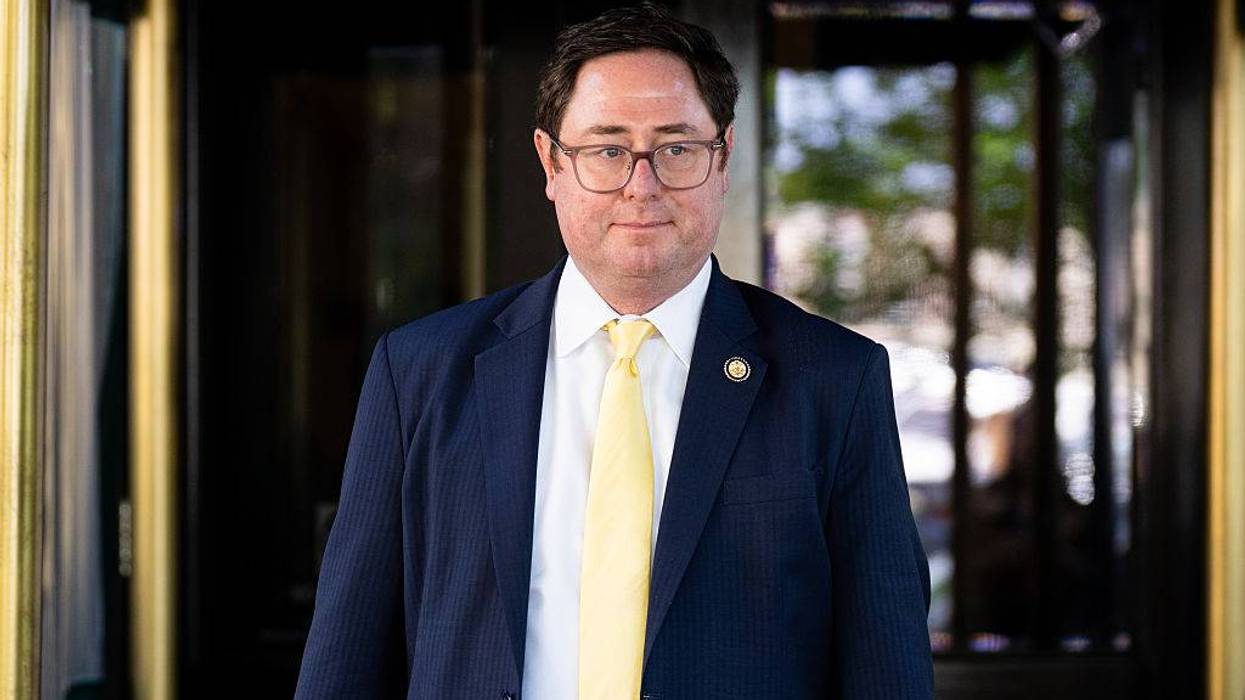
"I do not think we should be creating a fund for people that commit physical violence against law enforcement," said US Rep. Mike Flood.
A Republican congressman on Tuesday tried to distance himself from President Donald Trump's $1.8 billion slush fund after being grilled about it at a town hall appearance.
During the town hall, Rep. Mike Flood (R-Neb.) was asked for his opinion about the fund, which was created by the US Department of Justice (DOJ) as a "settlement" for Trump's $10 billion lawsuit against the Internal Revenue Service (IRS) over the 2019 leaking of his federal tax returns.
As constructed, the fund is set up to pay Trump allies who have been prosecuted for assorted criminal offenses, including the violent storming of the US Capitol building on January 6, 2021.
Flood was quick to state that he never voted to approve the fund, while emphasizing that "I do not think one penny of any fund should ever go to any January 6th insurrectionist that was in the Capitol on January 6, 2021."
"I do not think we should be creating a fund for people that commit physical violence against law enforcement," Flood added.
The crowd applauded the congressman in response.
GOP Rep. Mike Flood is clearly not happy about the anti-weaponization fund, but says he will follow Senate Rs on oversight issues
“I do not think one penny of any fund should ever go to any January 6th insurrectionist that was in the Capitol on January 6, 2021.” pic.twitter.com/QzhrLQQTXt
— Matt Rice (@matt____rice) May 26, 2026
According to a Tuesday CNN report, Flood throughout the event was jeered by constituents, who pelted him with questions not only about the Trump slush fund, but the war with Iran and the president's proposed luxury ballroom, for which he is seeking $1 billion in taxpayer funding.
Flood is far from the only Republican squeamish about Trump's slush fund, as even GOP hardliners have expressed reservations.
During an episode of his "Verdict" podcast last week, Sen. Ted Cruz (R-Texas) revealed that Republican senators erupted in fury when acting Attorney General Todd Blanche tried to justify the fund during a luncheon.
"Fiery does not begin to cut it,” Cruz said of the meeting. “My guess is there are probably 45 senators in the room, at least half of them were blasting the attorney general, and they were pissed. There were multiple senators yelling at the attorney general, saying this feels like self-dealing.”

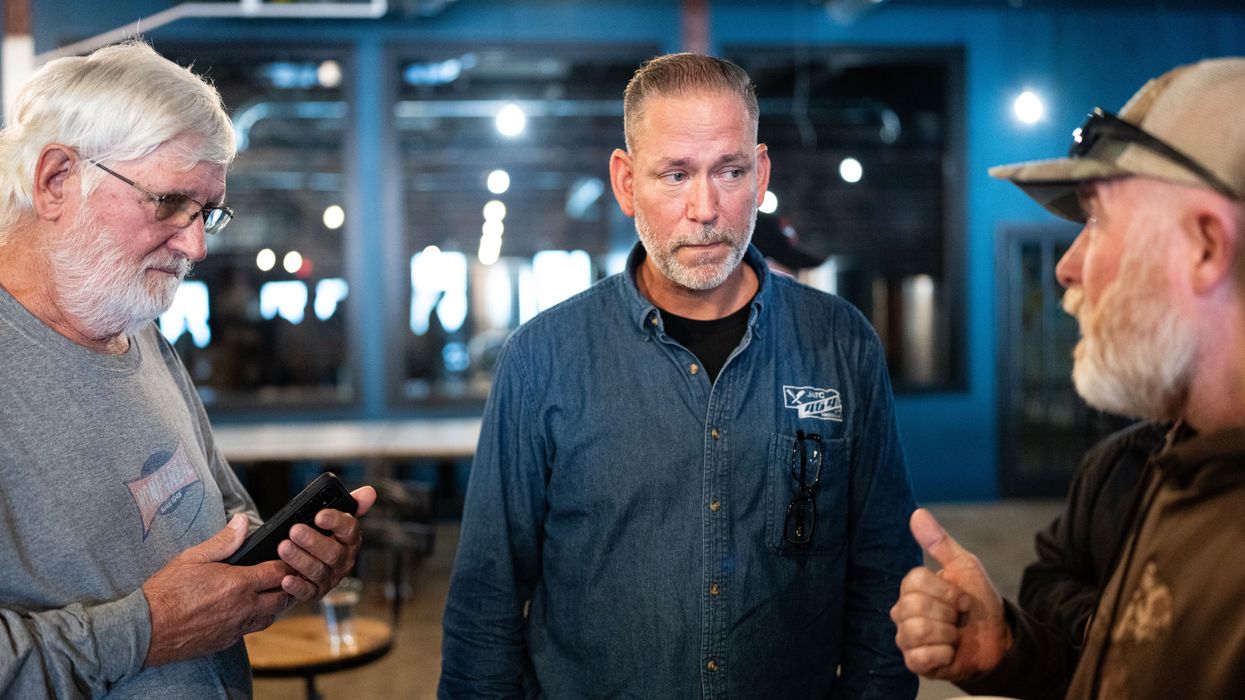
Austin Ahlman argued that "it's Tyson; it's Google; it's Facebook; it's every other corporation that is putting the squeeze and pressure on communities like mine and ripping us apart" that are "stealing your way of life."
As the winner of the Democratic US Senate primary in Nebraska mulls dropping out to boost Independent Dan Osborn, another congressional candidate not tied to either major political party launched a campaign for the state's 1st Congressional District on Thursday.
Joining incumbent GOP Rep. Mike Flood and Democratic primary winner Chris Backemeyer is Austin Ahlman, a 28-year-old investigative journalist, anti-monopolist, and self-described "insurgent Independent running in NE-01 to fight for the little guy."
Ahlman's launch video shares some struggles his family has faced—his parents working at the Tyson Foods meatpacking plant in Norfolk that closed in 2006, his dad's cancer battle, and his mom's suicide—and his work in journalism, "uncovering corruption among Democrats and Republicans, and taking on the corporations that are destroying our way of life."
It also features his fights for loved ones: against a bank for his family home, to assist his grandmother, "who was getting cheated by utility and insurance companies," and to help his brother "get his small business off the ground."
"My family's story isn't unique," he says in the three-minute ad. "Families all across our state are fighting, but the only ones who seem to be getting ahead are the elites on the coasts and the politicians who are selling us out to them."
The emotional ad makes Ahlman's policy priorities clear: taking on rising costs, Wall Street buying family homes, corporate monopolies, taxpayer-funded foreign wars, and health insurance companies that deny coverage.
"It's time we show the billionaires in Wall Street and Silicon Valley who are pitting us against one another that we won't let them steal our way of life out from under us," he concludes. "If you agree, then join us, and let's take Nebraska back."
As Nebraska Public Media reported Thursday:
Since Ahlman isn't running with a party affiliation, he will need to petition onto the general election ballot. According to the Nebraska Secretary of State's Office, Ahlman will need to collect at least 2,000 valid signatures from voters in the 1st Congressional District to get onto the ballot.
"I think most people these days are Independents," Ahlman said in a Thursday interview with Nebraska Public Media News. "They do feel pretty fed up with things."
He said he'd like the country's spending to refocus on the US and not in conflicts abroad.
"There is so much money from Americans' pockets being poured into other countries, armies to fight wars in places that we couldn't even find on a map. And I think this is one area where current voters in... this district don't have a choice," he said. "The blue-haired baristas are not the ones stealing people's way of life. Your uncle, who's perhaps a little gung-ho at Thanksgiving, is not the one stealing your way of life. It's Tyson; it's Google; it's Facebook; it's every other corporation that is putting the squeeze and pressure on communities like mine and ripping us apart."
On social media Thursday, Ahlman called out the GOP incumbent for taking campaign cash from corporate political action committees and special interests.
"I'm in this to beat Mike Flood—and yes, this is personal. We grew up in the same town, but Millionaire Mike's life was not like mine. I lived in trailer parks. Our whole family spent periods living in my grandmother's basement. I went to bed hungry," he explained. "Last year, Millionaire Mike... voted to hand tax cuts to big business and billionaires while gutting healthcare, education, and food programs. Those callous votes show he takes voters for granted."
Meanwhile, the Lincoln Journal Star reported Thursday that the Independent Norfolk native is already drawing vote-splitting criticism "from Republicans and Democrats alike."
In response, Ahlman said: "It seems I’ve pissed some people off! Look, taking on the establishment of both major parties was never going to be easy. They're fighting back, and that isn’t very surprising. But here's the deal—the overwhelming majority of real people in Nebraska—whether they're registered Republicans or Independents or Democrats, they all want change."
"They're sick of being looked down on, and sold out on, and lied to," he stressed. "Congressman Flood is selling us out to big money donors as he climbs the ladder in Washington. Americans are ready to elect Independents who work for them, not party bosses or corporate donors. That's why we're going to win."
The state's Democratic Party is standing by its candidate. The party chair, Jane Fleming Kleeb, told Drop Site News' Ryan Grim that "Chris Backemeyer is the clear choice for Nebraska's 1st District. He brings real federal experience from the State Department and is laser-focused on what Nebraskans actually care about—lowering costs and expanding access to affordable healthcare. Mike Flood has failed this district, and a fringe Independent won't fix that. Nebraska doesn't need noise from either extreme—we need a steady, experienced leader who will fight for fairness and protect our democracy. That's Chris Backemeyer."
Backemeyer was at the State Department under former Democratic President Joe Biden. While there, Zeteo News' Prem Thakker noted Thursday, he "helped coordinate aid to Israel amid its genocide in Gaza."
According to Thakker, the Democrat has received "much of his campaign donations from the DMV," a term for the Washington, DC, metropolitan area, which includes Maryland, and Virginia. Donors include key Biden officials, such as former Secretary of State Antony Blinken and ex-National Security Adviser Jake Sullivan.
The journalist also highlighted some early polling from Adam Carlson's Zenith Research that shows Ahlman doing well, particularly after respondents are introduced to candidates' biographies:
"In head-to-head matchups in these post-bios ballot tests, Ahlman (I) doesn't just outperform Backemeyer (D) overall by 16 points, but outperforms him among nearly every single subgroup," Carlson wrote. "Ahlman's largest overperformances relative to Backemeyer are among groups that Democrats have struggled with of late (especially in this part of the country)—Independents (+46), age 18-44 (+34), moderates (+26), white noncollege (+25), suburban voters (+24), white men (+21), and gun-owning households (+20)."
"In the post-bios three-way vote, Backemeyer (D) is in third place, 6 points behind Ahlman (I)," the pollster added. "But Flood still leads by 14 points despite only being at 42%. As we've seen, if Backemeyer drops out, Ahlman takes the lead if it's a 1:1 race against Flood."

"We believe Dan Osborn... represents the best opportunity to defeat Pete Ricketts and deliver real results for working families," said the chair of the state Democratic Party.
The winner of the Democratic US Senate primary in Nebraska has no expectation that she'd be able to win the general election in November, and her official website alludes to a plan to drop out of the race—which could ultimately help the party in its goal of wresting control of the chamber from Republicans.
The campaign website of Cindy Burbank, a pharmacy technician who jumped into the Democratic primary race after hearing the Republicans were plotting to place a right-wing "plant" on the ballot, suggests Burbank did some maneuvering of her own to secure a favorable result—even if she has no intention of actually going to the US Senate and instead aims to help Independent candidate Dan Osborn win.
Sen. Pete Ricketts (R-Neb.) "knows he’s losing to Dan Osborn and this is his plan to cheat his way to victory. We can’t let that happen," reads Burbank's website. "Support me—and I’ll make sure Pete Ricketts’ stooge never gets anywhere near our November ballot!"
Osborn, a former organizer who came within seven points of beating Sen. Deb Fischer (R-Neb.) in 2024, has been endorsed by the state's Democratic Party, which poured money into Burbank's campaign before Tuesday's primary.
In March, state Democratic Party Chair Jane Fleming Kleeb said William Forbes, an anti-abortion rights pastor who has voted for President Donald Trump in recent elections and attended a training run by a right-wing group, had joined the Democratic Party to "deceive Nebraska voters."
"The Nebraska Democratic Party made a deliberate, principled decision not to field a candidate in the US Senate race," said Kleeb. "We believe Dan Osborn—a veteran, a mechanic, a Nebraskan, and an independent voice—represents the best opportunity to defeat Pete Ricketts and deliver real results for working families."
Forbes has denied being a "Ricketts plant," as Kleeb has called him, and Burbank on Tuesday denied she had joined the race with the intention of dropping out to help Osborn win in a state where a Democrat has not won a Senate race since 2006. She told NBC News that "some people" she had worked with on previous political campaigns had spoken to her about running, but said they were not connected to Osborn's campaign or to the state Democratic Party.
But she added that following her overwhelming win, with 89% of primary voters supporting her, that Osborn is "a great guy, and we have to keep in mind that he might be able to be on [the ballot].”
“For me to stay on the ballot and take votes away from Osborn, it’s not fair,” she told the outlet.
Burbank added that she "will drop out when and if the time comes that I cannot win in November. And I think anybody with any dignity should do that."
David Dayen, executive editor of The American Prospect, said Burbank's resounding victory "suggests a well-educated [Democratic] electorate" and a well-organized push by Kleeb.
Osborn, who has emphasized that he would caucus independently if elected to the Senate, came closer than expected to beating Fischer in 2024, when Trump carried Nebraska by 20 points.
Polling has been limited so far, but Tavern Research found ahead of the primary election that 47% of likely voters were supporting Osborn while 42% backed Ricketts. The same survey found Ricketts 16 points ahead of Forbes, 9 points ahead of Burbank, and 7 points ahead of a generic Democrat. Earlier polls sponsored by Osborn's campaign found Ricketts just one point ahead of the Independent.
Tavern Research said the polls pointed to "an Independent problem in Nebraska" for Ricketts, whose wealth and financial industry ties have earned him the nickname "Wall Street Pete."
The state has long been a stronghold for Trump and the GOP, but Cook Political Report currently rates the state's Senate race as "likely Republican," downgrading it from "solidly Republican," ahead of the November election.
Osborn, a US Navy veteran and mechanic, became president of his union while working at the Kellogg's plant in Omaha and led a successful strike there in 2021, securing benefits for his fellow union workers. He has called his platform the Nebraska Fairness Plan and is vowing to "take on the corporations and their chosen political lapdogs to restore economic liberty and fairness for the working Americans who make this country run."
He has called to overturn the Citizens United Supreme Court ruling that allowed unlimited corporate spending in elections, refuses corporate political action committee donations, and has demanded an end to corporate practices like "shrinkflation" and surveillance pricing.
"We deserve a government that is truly of the people, by the people, and for the people," reads Osborn's platform. "But for decades, career politicians in both parties have been bought and paid for by the corporate cronies and lobbyists pouring money into our political process to bend the system to their will. When I’m in the Senate, I will champion the strongest anti-corruption platform Washington has ever seen."
"Candidate for Senate Dan Osborn is already doing more for the people affected by the Tyson closure than the current Nebraska senators," said a worker rights advocate.
Instead of "another investigation" into possible wrongdoing by meatpacking giant Tyson, independent US Senate candidate Dan Osborn is demanding that elected officials in Nebraska simply "pick up the damn phone" and demand action from the Trump administration following the company's closure of one of the nation's largest meat processing plants in what one antitrust expert said was a clear-cut case of market manipulation.
Sen. Pete Ricketts (R-Neb.), whom Osborn is challenging in the 2026 election, said Thursday that his team is "taking a look at any allegation of wrongdoing" by Tyson, weeks after the company announced its massive plant in Lexington, Nebraska is set to close in January—putting more than 3,000 people in a town of 11,000 out of work.
The closure comes months after Tyson boosted its stock buybacks and following an announcement that its adjusted operating income had increased by 26% compared to 2024. Tyson controls about 80% of the US beef market along with three other companies, and the Department of Justice is investigating whether the four corporations are colluding to keep beef prices high.
Despite near-record high prices in the industry, Tyson said last week it was closing the Lexington plant and scaling back operations at its facility in Amarillo, Texas to "right-size its beef business and position it for long-term success."
Basel Musharbash, an antitrust lawyer at Antimonopoly Counsel in Paris, Texas, attended a press conference with Osborn across the street from the Lexington plant this week and said that the "legal analysis here is pretty straightforward" regarding whether Tyson has engaged in market manipulation.
“The Lexington plant accounts for around 5% of the nation’s cattle," said Musharbash. "By shutting down a plant that slaughters such a large portion of the cattle in this region and the country, Tyson will single-handedly reshape the nation’s cattle markets from boom to bust.”
Ranchers will be forced "to accept lower prices, and Tyson will be able to make higher profits," he said.
Osborn and Musharbash say Tyson has broken the 2021 Packers and Stockyards Act, which prohibits meatpackers from engaging "in any course of business or [doing] any act for the purpose or with the effect of manipulating or controlling prices."
Addressing Ricketts on social media, Osborn said Tyson workers "don’t need another useless congressional report that leads to nothing. We need ACTION!"
"Tyson workers and Nebraska ranchers need you to demand that [US Agriculture] Secretary Brooke Rollins immediately initiate an action to hold Tyson accountable for any market manipulation," he said.
The USDA told the Nebraska Examiner this week that it is monitoring "the closure of the plant to ensure compliance with the Packers and Stockyards Act," but Musharbash said Rollins can and should "compel Tyson to either keep the plant open or sell the plant to an upstart rival who will introduce honest competition into this cartelized industry."
"There is nothing left for Ricketts to 'look into,' and Nebraskans certainly don’t need some intern on Ricketts’ staff to write a research paper about this issue for the next six months while Tyson hollows out the Lexington community for its selfish gain," added Musharbash. "Nebraska—and this whole country—deserves better leaders than this."
Osborn pointed out Thursday that Ricketts has taken more than $70,000 in campaign donations from Tyson.
“The people of Lexington need their elected officials to fight now more than ever,” Osborn said at the press conference this week. “The law that’s been on the books for over 100 years should be enforced... So pick up the damn phone, call Brooke Rollins, and get the USDA to enforce the law.”
By visiting Lexington and speaking out against Tyson's gutting of thousands of jobs, former Federal Trade Commission member Alvaro Bedoya said that "candidate for Senate Dan Osborn is already doing more for the people affected by the Tyson closure than the current Nebraska senators."
"Hard work should lead to home ownership, not permanent rental payments to corporate landlords," said Osborn.
Independent Senate candidate Dan Osborn, a mechanic and former labor union leader, posted a lengthy thread on the social media platform X on Monday in which he discussed the role that private equity firms play in increasing the cost of housing in the United States.
Osborn, who earlier this month announced he'd be running against Republican incumbent Sen. Pete Ricketts, drew a line between the lack of affordable housing and private equity firms that have gone on a buying spree of residential properties in recent years.
" Wall Street discovered they could make billions by turning homes into commodities," Osborn explained. "Since 2008, private equity firms and hedge funds have gobbled up hundreds of thousands of single-family homes—the exact starter homes that young families used to buy. Because of their financial strength and ability to pay in cash, larger investors can out-compete first-time homebuyers, making it harder for real people without millions to buy homes in neighborhoods where these corporate giants are active."
Osborn then pointed to reporting that the Flat Water Free Press did three years ago about how real estate firm VineBrook Homes aggressively bought up properties in Omaha, Nebraska, and then proceeded to evict current residents while also jacking up rents.
"From January 2020 through September 2021, VineBrook bought more Douglas County single family homes than anyone else, according to data from the Douglas County Registrar and Assessor of Deeds," the publication wrote. "All told, VineBrook Homes has bought up some 250 houses in the metro area since October 2019, a company spokesman said."
Osborn made the case that what VineBrook has done in Omaha is part of a concerted strategy by investors across the country to buy up single-family houses and raise rents for tenants. He then linked to a recent report from The Atlanta Journal-Constitution from earlier this year that found 30% of single family homes in the Atlanta metro area are now owned by investors.
"The shift to these corporate landlords almost NEVER brings an improvement in housing conditions or rent prices," Osborn charged. "New layers of bureaucracy and random new fees always seem to appear... And back in Nebraska, here's what the VineBrook situation was like for the North Omaha residents: '...tenants complained about unresolved maintenance issues, unfounded evictions, aggressive rent collection tactics, and poor customer service.'"
Osborn emphasized that he was "open" to a number of ideas to remedy this situation, including the removal of "unfair tax advantages that give private equity an edge over individual homebuyers"; ending "taxpayer subsidies for giant corporate mergers that create housing monopolies"; barring foreign investors from "buying up American neighborhoods"; and enacting "reasonable limits on how many homes Wall Street can control in any one community."
"Every kid deserves what we had—a real shot at the American Dream," he wrote in conclusion. "Hard work should lead to home ownership, not permanent rental payments to corporate landlords. Time to fix this rigged system."
Osborn kicked off his Senate bid two weeks ago by ripping into the budget megabill recently passed by Republicans that slashed roughly $1 trillion from Medicaid over the next decade and enacted tax cuts that are heavily tilted toward the wealthiest taxpayers.
He launched his campaign following an unexpectedly close race with Sen. Deb Fischer (R-Neb.) last year, which he lost by fewer than 7 points despite being heavily outspent.
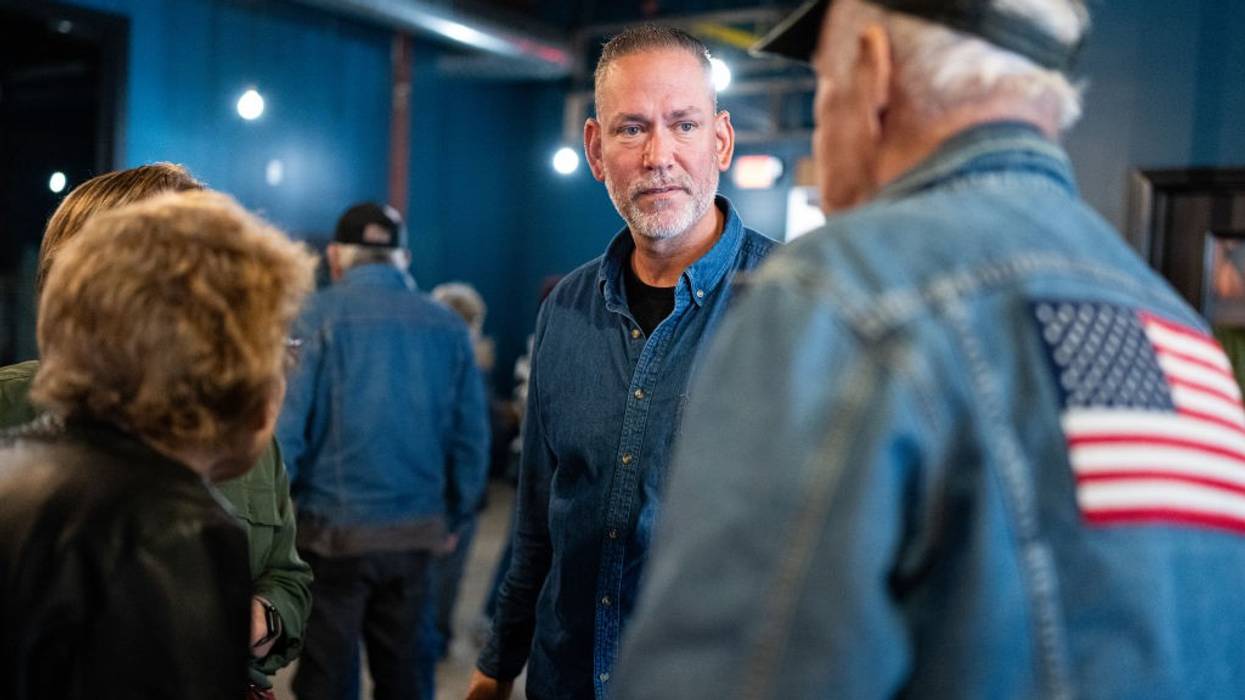
"We're seeing tax cuts for the billionaires at the expense of workers, people that are struggling to get by," Osborn said.
Mechanic and former labor union leader Dan Osborn, who last year ran for the United States Senate as an independent in deep-red Nebraska and came within 63,000 votes of defeating incumbent Republican Sen. Deb Fischer, is getting back into the ring.
Osborn announced on Tuesday that he will be running for Senate again next year against Sen. Pete Ricketts (R-Neb.), whom he lampooned in his opening campaign video as "Wall Street Pete."
🚨MAJOR ANNOUNCEMENT🚨
Ok. You've all convinced me. I'm in.
I'm running for Senate against billionaire Pete Ricketts In Nebraska.
This race represents the foundational battle taking place in America right now:
The Billionaire Class vs. The Working Class
Who's with me? pic.twitter.com/QQmcq4H3bl
— Dan Osborn (@osbornforne) July 8, 2025
In an interview with New York Times opinion columnist Michelle Goldberg, Osborn said that he believes he can make the recently passed GOP budget bill a key issue in a state that has not elected a non-Republican to serve in the Senate since Democrat Ben Nelson defeated Ricketts back in 2006.
"They were sold a bill of goods that if you work hard in this country, your government is going to be there, to have a level playing field for you to get ahead," Osborn explained to Goldberg. "But now we're seeing tax cuts for the billionaires at the expense of workers, people that are struggling to get by."
In fact, The New York Times reports that Osborn is resurrecting many of the class-based economic themes that he deployed in a race that he lost by just six-and-a-half points despite being in a state that President Donald Trump won by more than 20 points.
"If you're truly a party for the working class, your candidates are going to be mostly working-class," he told the Times. "I like to call it paycheck populism, because I get a paycheck once a week. I know how much money comes in. I know much money goes out. And I know how much harder it is to live now versus eight years ago."
In his interview with the paper, Osborn once again made sure to bring up the just-passed GOP budget bill.
"We can talk about the Big Beautiful Bill and the fact that it is going to continue funneling money toward the top by taking from social services, and healthcare from hard-working people," he said. "I doubt there's a bunch of billionaires that are in line for Medicaid."
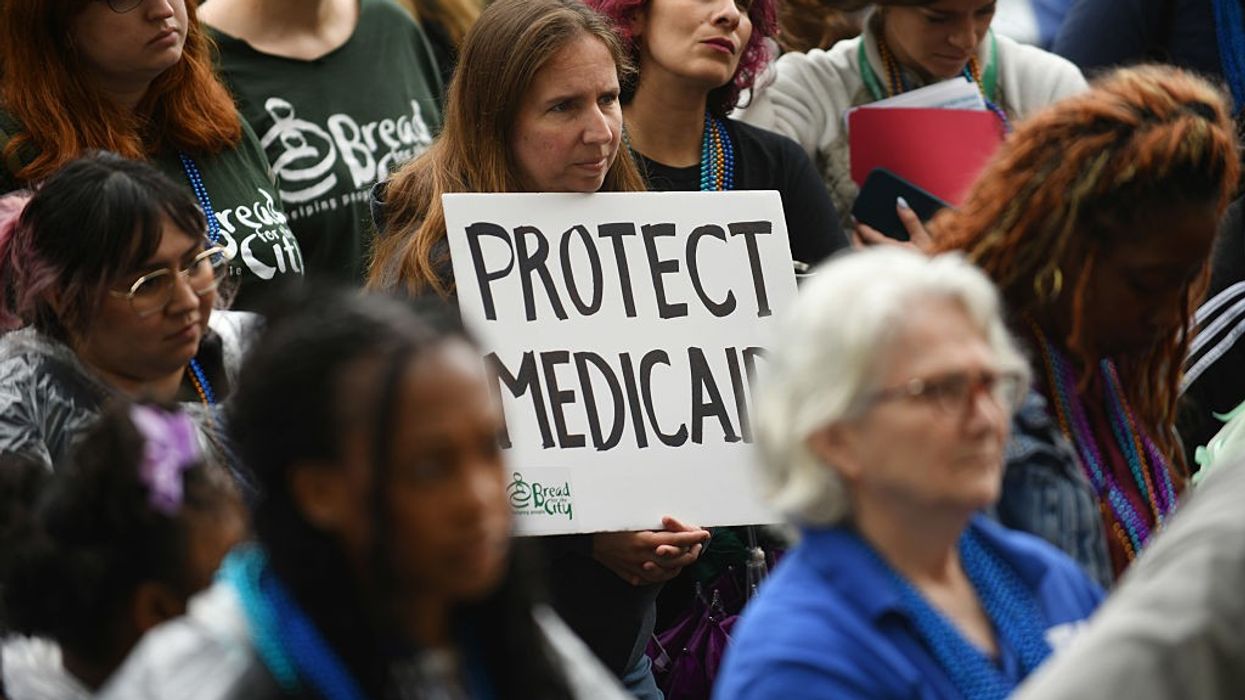
"Republicans haven't passed their bill yet, but if you live in Nebraska you can thank them for making you less healthy," wrote Rep. Sean Casten (D-Ill.).
The devastating cuts to Medicaid contained in Republicans' budget bill have not yet gone into effect but are already having negative consequences for American healthcare.
Nebraska Public Media reports Thursday that the Curtis Medical Center, a clinic located in a rural Nebraska community with a population of under 1,000 residents, will soon shut down thanks in part to the expected impact the GOP's cuts to Medicaid will have on its finances.
Troy Bruntz, the president and CEO of Curtis Medical Center owner Community Hospital, said in a news release that the coming Medicaid cuts are tipping many financially challenged health clinics into insolvency.
"The current financial environment, driven by anticipated federal budget cuts to Medicaid, has made it impossible for us to continue operating all of our services, many of which have faced significant financial challenges for years," he explained.
Nebraska Public Media notes that the Curtis clinic is likely just the first domino in the state's rural healthcare system to fall thanks to the Medicaid cuts and it speaks to recent warnings from people like Jed Hansen, executive director for the Nebraska Rural Health Association, about how many other hospitals are in real danger.
"We currently have six hospitals that that we feel are in a critical financial state, three that are in an impending kind of closure or conversion over to the rural emergency hospital model," Hansen said earlier this week during an online forum about the state's crisis. "We would likely see the closures within a year to two years of once [the Medicaid cuts are] fully enacted."
Other experts have sounded similar alarms on the budget bill's impact on rural hospitals. Sharon Parrott, a senior fellow at the Center on Budget and Policy Priorities (CBPP), wrote earlier this week that Senate Republicans' efforts to create a fund of money earmarked for rural hospitals would prove woefully inadequate to the problems these institutions will face in the coming years.
"Senate Republicans know the bill would hurt rural hospitals—that's why they added a face-saving temporary fund, but it won't rescue rural providers when the funding runs dry and the permanent cuts to Medicaid and Affordable Care Act (ACA) marketplace coverage remain," explained Parrott. "This is particularly true because the revised Senate fund gives the Health and Human Services secretary significant discretion in how the funds would be allocated. Rural providers need people in their communities to have health coverage they can count on. Without that, more rural hospitals will close and more people with and without coverage will be cut off from care they need."
In an analysis released last month, the American Hospital Association (AHA) estimated that 1.8 million individuals in rural communities would lose their Medicaid coverage under the Republican Party's plan while rural hospitals would receive $50.4 billion less in Medicaid funds over the next decade, putting many of them at severe risk of shutting down completely.
"The Medicaid cuts in the One Big Beautiful Bill Act would devastate rural hospitals across the country" if the bill became law, warned AHA president and CEO Rick Pollack. "Many rural hospitals would be forced to choose between maintaining services, keeping staff and possibly closing their doors. Patients would be forced to travel hours for basic or emergency care, and communities would suffer."
Rep. Sean Casten (D-Ill.) cited the story about the Nebraska clinic on X Thursday morning and predicted it was just the beginning of bad things to come for rural hospitals.
"Republicans haven't passed their bill yet, but if you live in... Nebraska you can thank them for making you less healthy," he wrote. "There will be many more."
The Congressional Budget Office has estimated that the GOP budget bill would slash spending on Medicaid and the Children's Health Insurance Program by more than $1 trillion over a ten-year-period and would result in more than 10 million Americans losing their health insurance coverage.

"Working-class candidate v. billionaire political race. I'm here for it," wrote one longtime progressive strategist.
Dan Osborn, an Independent U.S. Senate candidate who struck a chord with working-class voters in Nebraska and came within striking distance of unseating his Republican opponent last year, announced Thursday that he's considering another run, this time challenging GOP Sen. Pete GOP Ricketts, who is up for election in 2026.
"We could replace a billionaire with a mechanic," Osborn wrote in a thread on X on Thursday. "I'll run against Pete Ricketts—if the support is there." Osborn said that he's launching an exploratory committee and would run as Independent, as he did in 2024.
Ricketts has served as a senator since 2023, and prior to that was the governor of Nebraska from 2015-2023. By one estimate, Ricketts has a net worth of over $165 million—though the wealth of his father, brokerage founder Joe Ricketts, and family is estimated to be worth $4.1 billion, according to Forbes.
A mechanic and unionist who helped lead a strike against Kellogg's cereal company, Osborn lost to Sen. Deb Fischer (R-Neb.) by less than 7 points in November 2024 in what became an unexpectedly close race.
Although he didn't win, he overperformed the national Democratic ticket by a higher percentage than other candidates running against Republicans in competitive Senate races, according to The Nation.
"Billionaires have bought up the country and are carving it up day by day," said Osborn Thursday. "The economy they've built is good for them, bad for us. Good for huge multinationals and multibillionaires. Bad for workers. Bad for small businesses, bad for family farmers. Bad for anyone who wants Social Security to survive. Bad for your PAYCHECK."
Osborn cast the potential race as between "someone who's spent his life working for a living and will never take an order from a corporation or a party boss" and "someone who's never worked a day in his life and is entirely beholden to corporations and party."
"We could take on this illness, the billionaire class, directly," he said.
Osborn, who campaigned on issues like Right to Repair and lowering taxes on overtime payments, earned praise from Sen. Bernie Sanders (I-Vt.), who told The Nation in late November that Osborn's bid should be viewed as a "model for the future."
Osborn "took on both political parties. He took on the corporate world. He ran as a strong trade unionist. Without party support, getting heavily outspent, he got through to working-class people all over Nebraska. It was an extraordinary campaign," Sanders said.
In reaction to the news that Osborn is exploring a second run, a former Sanders campaign manager and longtime progressive Democratic strategist Faiz Shakir, wrote: "working-class candidate v. billionaire political race. I'm here for it."
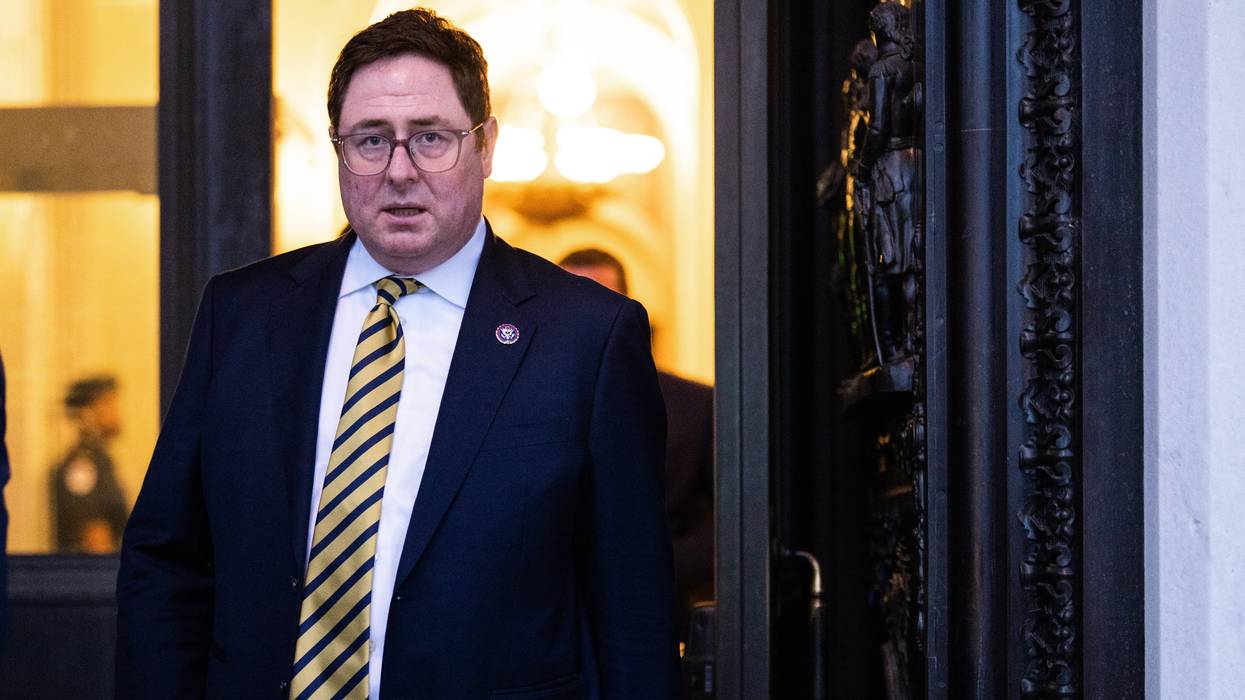
Voters were not impressed with Rep. Mike Flood's claim that massive cuts to public spending are needed to achieve a "balanced budget."
A small Nebraska city where U.S. President Donald Trump easily won the 2024 election was the site of the latest chaotic Republican town hall on Tuesday evening, with Rep. Mike Flood facing a roomful of about 200 voters, many of whom refused to accept his excuses for the Trump administration's drastic cuts to the federal government.
Flood came to the Columbus High School auditorium prepared with a graphic showing the national debt, with a giant screen showing the sum ticking up to $36 trillion—evidently confident that the number would help explain to voters why Republicans are pushing for hundreds of billions of dollars in cuts to Medicaid and Social Security while backing billionaire Elon Musk's massive cuts to the federal workforce.
But when he displayed the number and told one voter who asked about cuts to the National Institutes of Health that, "ultimately, where we need to go is to a balanced budget," he was met with loud booing.
"How can you be against a balanced budget?" Flood asked the room—which prompted the reply, "tax the rich!" to ring out across the auditorium.
Flood was meeting with voters in Nebraska's deep-red 2nd District for the first time since Trump took office. House Speaker Mike Johnson (R-La.) recently advised GOP lawmakers to avoid town halls and claimed protesters who have shown up to numerous meetings with Republican representatives are "Democrat activists who don't live in the district," but he and other critics have presented no evidence that the anger directed at Trump's allies in Congress is coming from anywhere but their constituents.
Flood also faced questions about Musk's so-called Department of Government Efficiency (DOGE), with one attendee asking, "What makes Elon Musk a better person to audit our government for waste, fraud, and abuse than the inspectors general that Donald Trump fired?"
"Elon Musk gets $40 billion a year in funding from the federal government. What makes you think he has no conflict of interest?" asked the voter. "Do you think he would cut that before he would cut our Medicare, or our Social Security, or our jobs?"
Flood replied that he supports both Musk and DOGE, prompting more loud booing and thumbs-down gestures.
With Republican lawmakers facing angry voters, Sen. Bernie Sanders (I-Vt.) in recent weeks has toured states including Iowa, Nebraska, and Michigan, speaking to large crowds in Republican districts. Rep. Alexandria Ocasio-Cortez (D-N.Y.) is scheduled to join him this week, while Democratic Minnesota Gov. Tim Walz has also been holding town halls.