
SUBSCRIBE TO OUR FREE NEWSLETTER
Daily news & progressive opinion—funded by the people, not the corporations—delivered straight to your inbox.
5
#000000
#FFFFFF
To donate by check, phone, or other method, see our More Ways to Give page.


Daily news & progressive opinion—funded by the people, not the corporations—delivered straight to your inbox.
"This is what judicial corruption looks like," said one critic.
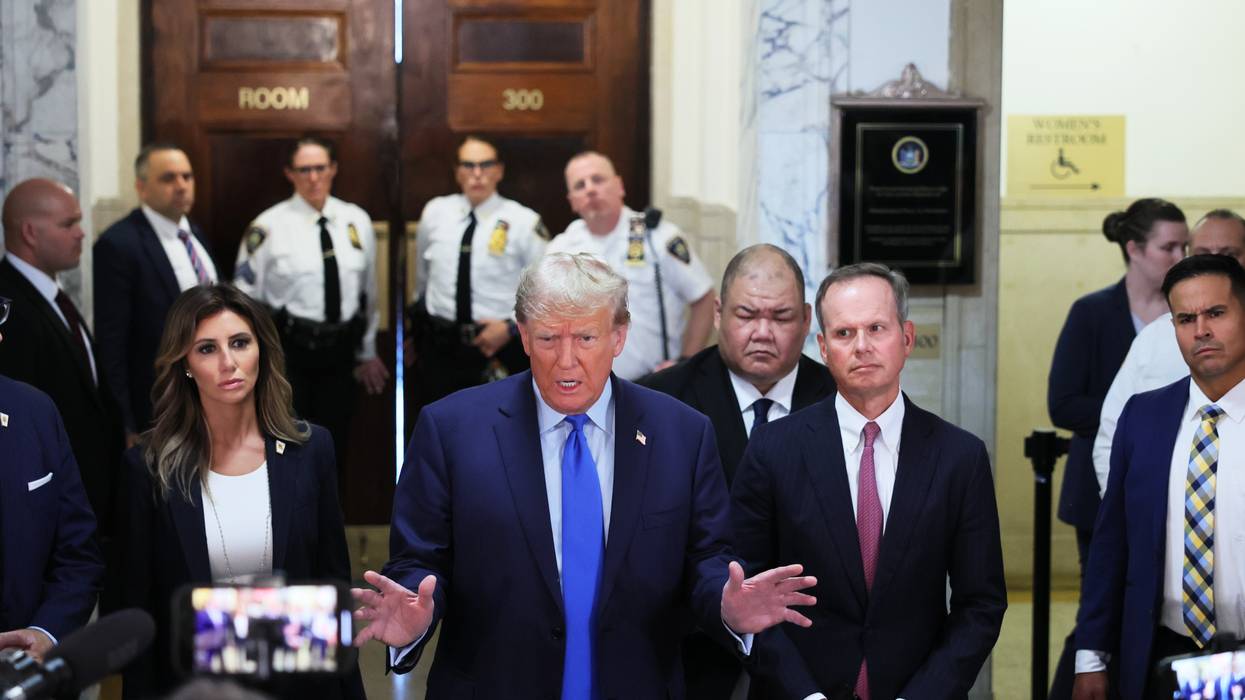
The Georgia Court of Appeals on Wednesday paused proceedings in the election interference case against former U.S. President Donald Trump and other defendants until an appellate panel determines whether the prosecuting district attorney should be disqualified for an alleged conflict of interest.
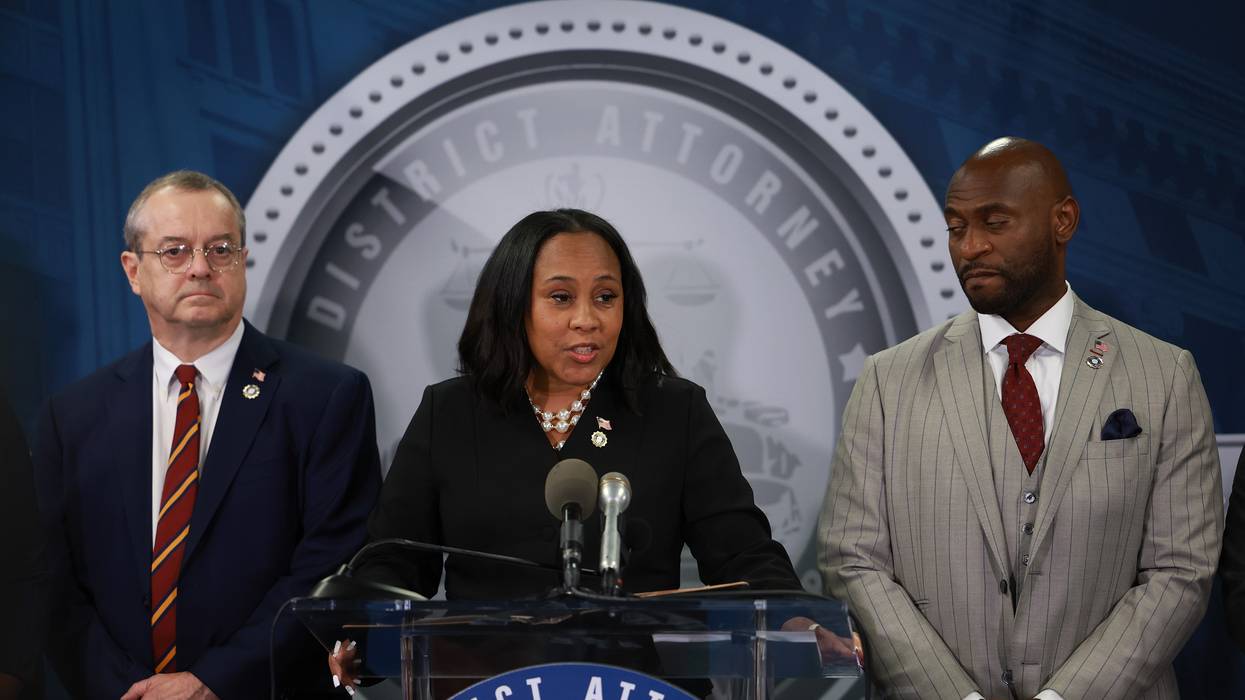
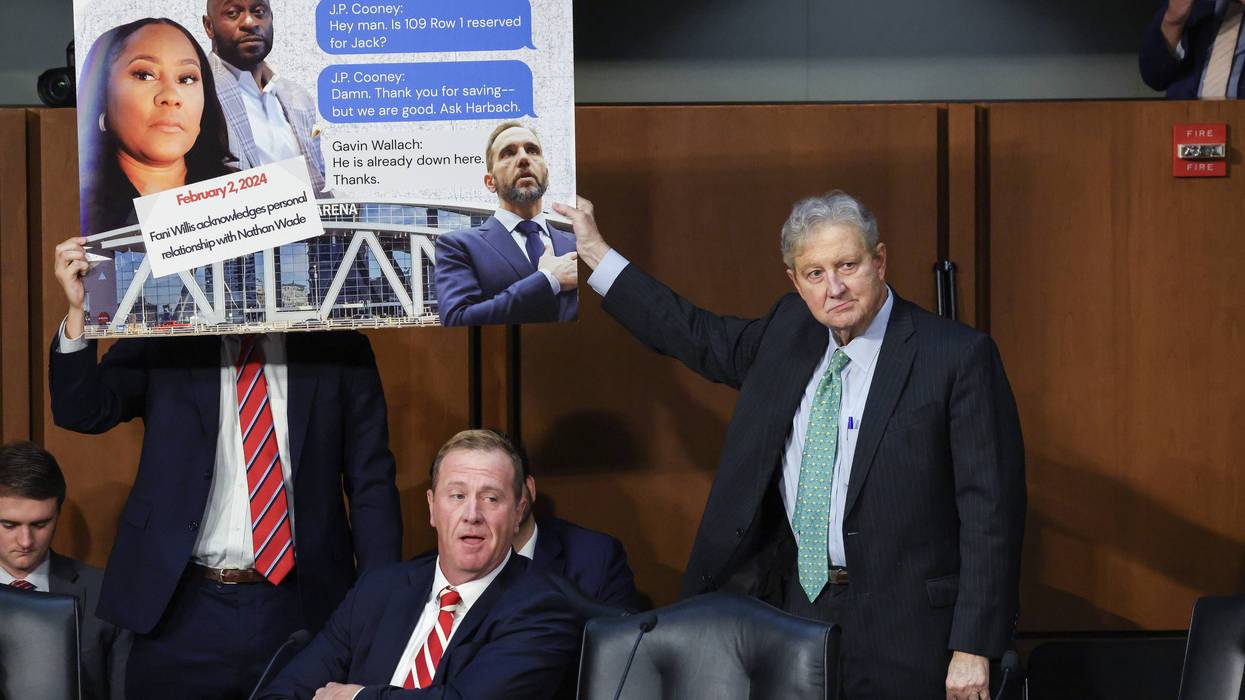
In a one-page ruling, the court stayed the trial pending the resolution of an appeal by Trump and some of his co-defendants asserting that Fulton County District Attorney Fani Willis, a Democrat, should be removed because of her romantic relationship with Nathan Wade, whom she appointed special prosecutor for the case.
Fulton County Superior Court Judge Scott McAfee ruled in March that Willis could remain on the case if Wade resigned, which he did. Willis maintains there was nothing improper about their relationship.
The appellate court's stay means that McAfee will have to delay a decision on a motion filed by Trump's legal team arguing he should have executive immunity from prosecution. The right-wing U.S. Supreme Court—three of whose members were appointed by Trump—is expected to rule on the immunity issue in the coming weeks.
The case revolves around Trump's attempt to overturn President Joe Biden's 2020 victory in Georgia. Trump made a January 2, 2021 phone call in which he pressured Georgia Secretary of State Brad Raffensperger, a Republican, to "find 11,780 votes" in his favor, prompting Willis' investigation.
Willis charged Trump with 13 criminal counts for alleged violations of Georgia's Racketeer Influenced and Corrupt Organizations (RICO) Act related to his participation in a sprawling "criminal enterprise" aimed at overturning the election. A total of 19 people were initially charged; four co-defendants have pleaded guilty and have received punishments including fines, probation, and having to publicly apologize. They also agreed to cooperate with prosecutors.
According to The Hill:
Oral arguments are tentatively scheduled for October, meaning the case likely will not proceed to trial until after the presidential election, where Trump is the Republican Party's presumptive nominee and is hoping to retake the White House and grind his cases to a halt. A trial date had not yet been selected.
The Georgia case is one of three federal and state criminal proceedings against Trump related to efforts to subvert the 2020 election and alleged mishandling of classified documents. Last month, Trump was convicted on 34 felony counts of falsifying business records related to hush money payments during the 2016 campaign to cover up alleged affairs.
Reacting to the stay, liberal lawyer and comedian Dean Obeidallah said on social media that "no one should be surprised that the GOP Supreme Court, Trump-owned Judge Aileen Cannon, or the GOP Georgia Court of Appeals are helping Trump."
"They are all Republicans and they are protecting their presidential nominee," he added. "This is what judicial corruption looks like!"
A Fulton County Superior Court judge on Thursday rejected a request by former U.S. President Donald Trump and most of his co-defendants to have their charges for interfering in Georgia's 2020 election dismissed on First Amendment grounds.
As Judge Scott McAfee explained, Trump and 14 other defendants in the Racketeer Influenced and Corrupt Organizations (RICO) Act case "argue this prosecution violates the First Amendment's protections of political speech and activity, freedom of association, and the right to petition Congress as-applied to their alleged conduct, and further contend that the indicted charges are overbroad."
"After interpreting the indictment's language liberally in favor of the state as required at this pretrial stage," McAfee wrote in his 14-page order, "the court finds that the defendants' expressions and speech are alleged to have been made in furtherance of criminal activity and constitute false statements knowingly and willfully made in matters within a government agency's jurisdiction which threaten to deceive and harm the government."
"Even core political speech addressing matters of public concern is not impenetrable from prosecution if allegedly used to further criminal activity," he continued. "And independently lawful acts involving speech within the meaning of the First Amendment may nonetheless suffice to support a RICO conspiracy prosecution."
In other words, as University of Alabama law professor and MSNBC legal analyst Joyce Vance put it, "speech isn't protected when it's in furtherance of a crime, like saying 'stick 'em up' during a bank robbery."
The Hill noted that the judge's Thursday ruling "leaves open the possibility that Trump could still raise a First Amendment defense down the road once the factual record is more developed."
Steve Sadow, the twice-impeached former president's lawyer, said in a statement that Trump and the other defendants "respectfully disagree with Judge McAfee's order and will continue to evaluate their options regarding First Amendment challenges."
"It is significant that the court's ruling made clear that defendants were not foreclosed from again raising their 'as-applied challenges at the appropriate time after the establishment of a factual record,'" the attorney added.
The Georgia election case has been held up recently by complications related to Democratic Fulton County District Attorney Fani Willis' love life, though McAfee ruled last month that she can continue to serve as the prosecutor. A trial date has not yet been set.
Trump is fighting three other criminal cases while campaigning as the presumptive Republican nominee to face Democratic President Joe Biden in the November election. There is also a New York state case stemming from hush-money payments during the 2016 election cycle as well as a pair of federal cases: one related to 2020 election interference and another that has to do with his mishandling of classified material.
In addition to 88 felony charges across the criminal cases, Trump is facing multimillion-dollar penalties in New York for "repeated and persistent fraud" related to his business and defaming E. Jean Carroll regarding rape allegations she made against him.
U.S. District Judge Aileen Cannon, the Trump appointee overseeing the classified material case in the Southern District of Florida, on Thursday rejected the ex-president's attempt to dismiss charges based on claims that he had the right to keep the documents under federal law—though her decision also leaves him the chance to return to the argument if the case goes to trial.
In her three-page ruling, Politico reported, "Cannon also shot down a request from Special Counsel Jack Smith to promptly reveal whether she agrees with Trump's claim that the Presidential Records Act—the post-Watergate law governing White House records—may have authorized him to keep classified records indefinitely even after leaving office."
This post has been updated to include Thursday's classified material ruling and the 88 charges, reduced from 91 in March.
"Now let's return our attention to the ACTUAL person on trial," said one strategist.
A superior court judge in Fulton County, Georgia on Friday ruled that lawyers for Donald Trump's co-defendants in the case regarding the former president's alleged election interference did not provide evidence that would have supported disqualifying the district attorney prosecuting the case.
Fulton County Superior Court Judge Scott McAfee ruled that the "allegations and evidence" against district attorney Fani Willis were "legally insufficient to support a finding of an actual conflict of interest."
Willis had been accused of "profiting personally from this prosecution" by a lawyer representing Michael Roman, a former opposition researcher for Trump who is accused of conspiring to overturn the 2020 election results in Georgia.
Roman's lawyers claimed Willis had engaged in "self-dealing" by hiring Nathan Wade, with whom she had previously had a romantic relationship, to manage the Trump case.
"You think I'm on trial," Willis said to Ashleigh Merchant, the lawyer representing Roman, at a February hearing. "These people are on trial for trying to steal an election."
Trump and 18 co-conspirators were indicted by Willis' office last August and accused of participating in a vast "criminal enterprise" when they tried to overturn the election results in Georgia. Trump faces 13 charges, including soliciting a public officer to break their oath and violating the state's Racketeering Influenced and Corrupt Organizations (RICO) Act. The state's investigation was sparked by a phone call on January 2, 2021 in which Trump asked Georgia Secretary of State Brad Raffensperger to help him "find 11,780 votes" that would swing the election results in his favor.
The allegation regarding Trump's conversation with Raffensperger "remains at the heart of the RICO charge here, and that must get in front of a jury as soon as possible," said legal analyst Norm Eisen of the Defend Democracy Project.
McAfee, a Republican appointee, on Friday said Willis had made a "lapse in judgement" by hiring Wade but that the case could proceed if either Willis or Wade leave the legal team.
Maya Wiley, president and CEO of the Leadership Conference on Civil and Human Rights, was among those who called for a prompt return to the prosecution at hand: that of the former president.
"Now let's return our attention to the ACTUAL person on trial," said Democratic strategist Christine Pelosi. "The disgraced, defeated former president who tried to steal an election!"
Eisen added that it is "time to turn the page on this distraction and get back to what this case is really about—the mountain of evidence against Donald Trump and his co-conspirators concerning one of the most serious alleged criminal conspiracies in American history."
Trump is too dangerous to the future of the planet for us to play nice with people who never, ever play nice.
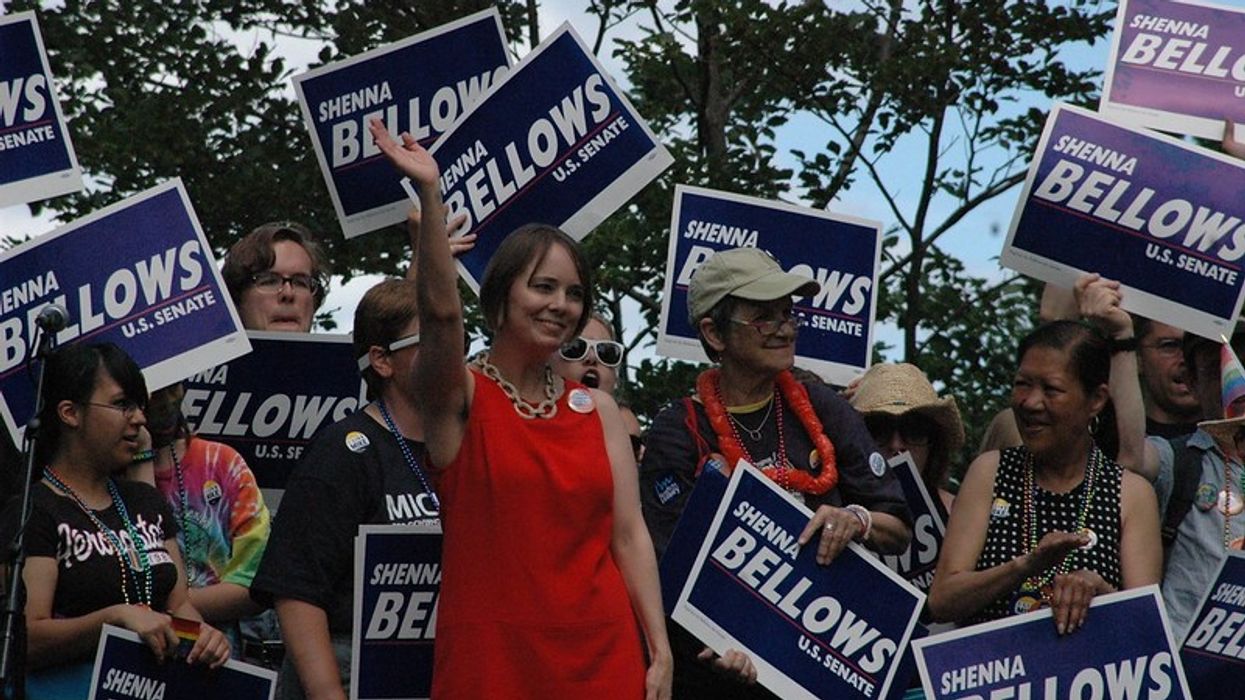
Kudos to Shenna Bellows! The secretary of state in Maine has done what every Republican would have done in the current situation, were the shoe on the other foot. If the Republicans had the opportunity to disqualify a candidate they consider an immediate threat to the survival of the world, there would be no restraint. When she used her power to disqualify former President Donald Trump from the 2024 ballot in Maine, she set an example that hopefully will wake up other Democrats. She runs the elections in Maine—will she have the guts to stand up to a Trump-appointed judge should they overturn her decision?
Section 3 of the 14th Amendment to the Constitution is crystal clear: Donald Trump is not qualified to run for or hold office in the United States. The language is very specific, and if we lived in a nation where fairness was valued, this would not even be a question.
The situation we face now is that the Trump cult is ready, willing, and able to cheat in any and every way to take over power in the United States. It is way past time for the center and the left to use every tool we have available. The hand-wringing and self-recrimination over prosecuting Trump for his many crimes has got to end. Even some on the left have been saying that we have to defeat Trump at the ballot box instead of using his own actions. Should those who attempted to assassinate Hitler have waited until the next election? Oops—there was never going to be another election. Trump is too dangerous to the future of the planet for us to play nice with people who never, ever play nice.
Every one of us who is committed to protecting our ability to speak freely, to welcome immigrants into our country, who believe in a multicultural democracy, had better get out and get voters to oppose Trump.
This current crop of Republicans is already guilty of an amazing array of dirty tricks in order to insure long-term electoral power, and they hope permanent minority rule over all of us. It was not too long ago that the Republicans stole at least one, and some of us believe two, seats on the Supreme Court in a completely immoral, unprecedented, and barely legal manner. This corrupt Supreme Court has stolen voting rights from Black voters by gutting the Voting Rights Act. They have permitted what would be considered outrageous gerrymanders in swing states and pure red states to limit the voting of Black citizens.
There is no legal action to demand more opportunities to vote when cities with a large Black population are stripped of sites, so voters have to stand in line for 8 to 10 hours, while those of us in small towns and suburbs can waltz into the voting site, say howdy to our town clerk, vote, and leave in 10 minutes or less.
In Florida, nearly 65% of the citizens voted in a referendum to restore voting rights to felons. The state has undermined it, with support from Trump appointed criminals (aka judges), by creating a new category of "court fees" that these mostly poor and mostly non-white people are forced to pay in order to vote. The dirty tricks abound—when will we again see the demand that Black voters cite the number of jelly beans in a jar in order to earn the right to the franchise?
The irony that Donald Trump, who used countless tweets and statements to attack Barack Obama's eligibility for the presidency—the "birther" nonsense—has now actually disqualified himself should not be left unstated. Whenever Trump defends his right to be on the ballot, his attacks on Obama should be pulled out from the past, Somebody must have explained the rules to qualify for the presidency to Trump and he decided that, because Barack Obama is not white, that made him unamerican.
The Democrats and the left must be tougher. As 2024 begins, the coalition of those who understand the peril of another Trump term should be organizing poll watchers for every site with non-white voters. We need to be the eyes to the system. Lawyers, or those trained by lawyers, need to be available on call to assist those who are being denied the right to register or to vote.
As terrible as this sounds, we need to be more like our opposition but in a smart way: Trump and his crimes need to not only be called out every day in creative ways. Trump invents stupid names for his opponents; we need to begin inventing some smart ways to call out these guys for who they are. We need to make public Trump's most vile and violent insults every time they come out of his mouth. The corporate media and the court system has given this guy a pass. Almost anyone else would be serving time in prison for the constant death threats to those he dislikes. The press allows the life-long racist Trump to call strong Black women like Fani Willis and Letitia James racists without a direct challenge—a use of the term that is totally bogus, as true racism is part of a system of oppression of the powerless by the powerful. This nonsense needs to be countered whenever it comes out of his hateful mouth with tough talk about real racism.
The fascist movement in the United States has come a very long way in the past 10 years. It is clear that the Kochs and the other oil, gas, and chemical barons have been planning this takeover for a long time—the Federalist Society, the Heritage Foundation, and lots of other secretive organizations have plowed the ground for a cruel, hateful, and corrupt Donald Trump. Large corporations have basically decided to go along with Trump in exchange for eliminating regulations and taxes. And these corporations largely own the media. So we, every one of us who is committed to protecting our ability to speak freely, to welcome immigrants into our country, who believe in a multicultural democracy, had better get out and get voters to oppose Trump. Because we may never get another chance.
One reporter said the plea shows the prosecution is "working... up the proverbial food chain when it comes to flipping lower-level defendants and trying to get to the king at the top."
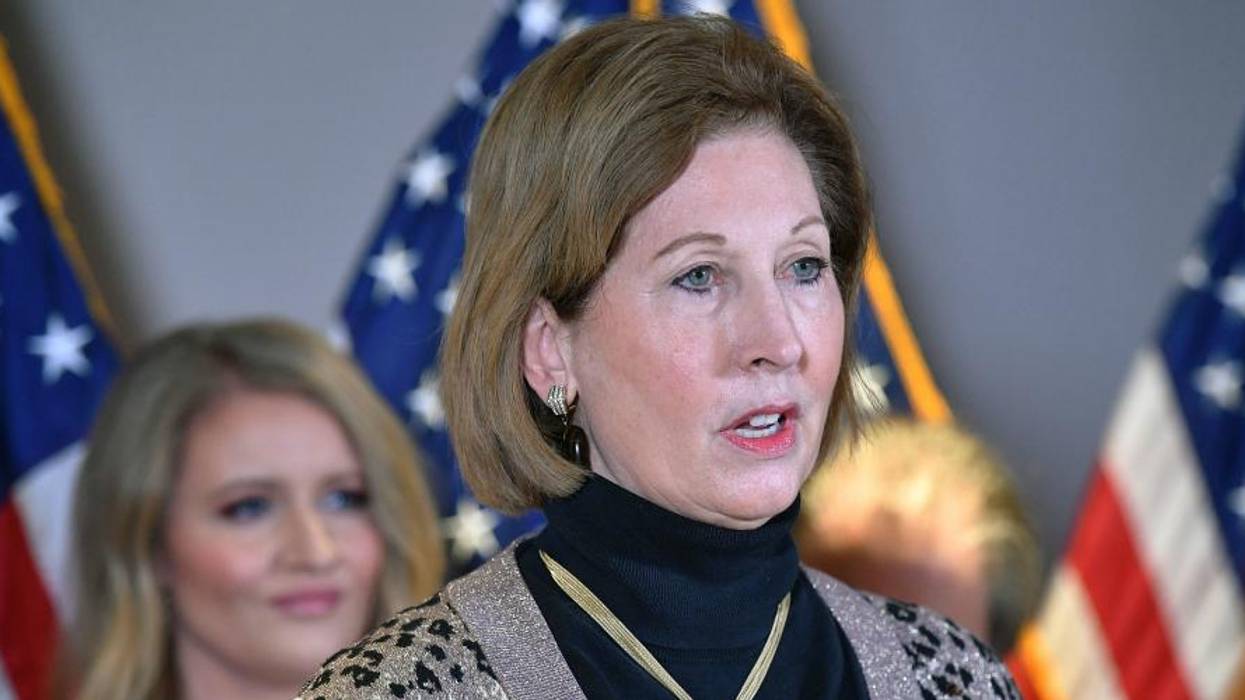
Disgraced attorney Sidney Powell—a key legal architect of former U.S. President Donald Trump's effort to rig the 2020 presidential contest—pleaded guilty Thursday to reduced charges in the Georgia election interference case, a move that came just one day before jury selection in her trial would have started.
Powell, Trump, and 17 others were charged in August by Democratic Fulton County District Attorney Fani Willis with violations of Georgia's Racketeer Influenced and Corrupt Organizations (RICO) Act for allegedly participating in a sprawling "criminal enterprise" aimed at overturning the 2020 presidential election results in the state.
Trump faces 13 criminal charges in the case, one of four state and federal cases in which the 2024 GOP presidential front-runner is charged with a combined 91 counts.
According to The Associated Press, Powell, who is 68 years old, will serve six years of probation, pay a $6,000 fine, and write an apology letter to the state and people of Georgia. Critically, she must also testify truthfully against her co-defendants at future trials.
Powell is the second defendant in the Georgia case to take a plea deal. Last month, bail bondsman Scott Hall pleaded guilty to five misdemeanor counts of conspiracy to commit intentional interference with the performance of election duties.
Jury selection in the trial of Powell co-defendant Kenneth Cheseboro, who is allegedly behind the Trump fake electors plot, is set to start Friday.
Powell, a prolific purveyor of Trump's "Big Lie" that the 2020 election was stolen by Democrats, claimed that Dominion Voting Systems was part of a plot to rig its voting machines to switch large numbers of votes from Trump to President Joe Biden.
In December 2020, Powell, former National Security Adviser Michael Flynn, and former Overstock.com CEO Patrick Byrne allegedly presented a draft executive order to Trump involving the seizure of voting machines by armed private contractors. She was also accused of involvement in arranging the illegal collection of data from election systems and voting machines at the Coffee County, Georgia elections office in January 2021.
Powell also associated herself with the QAnon conspiracy theory, which posits that a secret cabal of Satan-worshipping cannibal pedophiles including Hillary Clinton, Oprah Winfrey, and Tom Hanks are involved in an international child sex-trafficking ring.
Once described by Trump lawyer Jenna Ellis as part of an "elite strike force" working to prove the former president's stolen election claim, Powell was later sidelined after peddling baseless claims of vote hacking involving Venezuela, Cuba, and "communist money."
"She was too crazy even for the president," one unnamed Trump official told The Washington Post in November 2020.
Reacting to Powell's plea deal, MSNBC's Katie Phang said that "it is the communications between her and Donald Trump that are really kind of working your way up the proverbial food chain when it comes to flipping lower-level defendants and trying to get to the king at the top."
"Self-serving assaults on institutions and individuals are what Trump and his enablers do."
As former U.S. President Donald Trumpappeared in New York Supreme Court on Monday for the beginning of a civil fraud trial, over 30 advocacy organizations released a letter stressing the need to protect juries in his four ongoing criminal cases.
Trump faces a total of 91 felony charges: four in the federal 2020 election case; 40 in the federal classified documents case; 34 in the New York case that stems from alleged hush money payments during the 2016 cycle; and 13 in the Georgia election case.
"Jurors—past, present, and future—are under attack from Donald Trump and those who do his bidding," states the groups' letter, which came just hours after the 2024 Republican front-runner's social media tirade about the civil case that will be decided by a judge.
"Self-serving assaults on institutions and individuals are what Trump and his enablers do," the letter argues. "These attacks threaten centuries-old American institutions designed by the Framers to hold to account any leader who would be king."
The letter highlights that in early August, after a Washington, D.C. grand jury indicted Trump, he wrote on social media, "If you go after me, I will come after you."
A few days later, he said, "No way I can get a fair trial, or even close to a fair trial, in Washington, D.C." The letter says that "it's hard to miss the import of this message in a jurisdiction that draws its jury pool from a population of which 45% are Black Americans."
As
The Atlanta Journal-Constitution—which exclusively reported on the new letter—noted:
Fulton County District Attorney Fani Willis has sought increased protections after Trump supporters posted personal details about the grand jury that indicted the former president, leading to angry threats and harassment.
And Willis, herself, said she's been targeted by threats and racial slurs, forcing her to take steps to protect her daughters, father, and ex-husband.
Superior Court Judge Scott McAfee recently banned reporters and the public from identifying jurors in the trial against Trump and 18 co-defendants or disclosing other personal details about them. He also required lawyers to refer to them only as their numbers in court.
In addition to detailing examples of the ex-president and his allies' recent attacks on juries, the letter points out that Trump claimed the 2016 and 2020 elections would be "rigged" against him, and after his loss last cycle, he spread the "Big Lie" that he won and "successfully eroded faith in democracy and elections among his followers."
"Trump is now deploying the same, pre-judgment playbook upon the jurors and system of justice positioned to decide his fate in criminal court," asserts the letter. "His attacks are designed to eviscerate an institution of justice inherited from English law and in existence in America before the Constitution that enshrined it. Juries protect individual freedom."
"Trump, by undermining institutions that check both government power and lawless individuals, aims to release himself from all constraints. For this reason, his vicious attacks on juries are sure to escalate," the letter warns, concluding with a call for all "who believe in the rule of law and the jury system" to "speak up and defend such institutions under attack."
The letter was organized by the Not Above the Law coalition. Signatories include Citizens for Responsibility and Ethics in Washington (CREW), Common Cause, Free Speech for People, Government Accountability Project, Indivisible, People for the American Way, Public Citizen, Sierra Club, and Stand Up America.
"It is not inconceivable that Trump or a future anti-democratic leader could incite another mob to attack a different government institution," reads a new report by CREW and Common Cause.
As former Republican President Donald Trump surrendered at Fulton County Jail in Atlanta Thursday evening, a new analysis warned that his extremist political movement poses a continued threat to U.S. government institutions nearly three years after he and 18 co-conspirators allegedly tried to change the 2020 election outcome in Georgia.
Government watchdogs Common Cause and Citizens for Responsibility and Ethics in Washington (CREW) on Thursday released a report titled Donald Trump: Threatening Courts and Justice, warning of the threat that is posed to the nation's court system by the outgrowth of the so-called "Stop the Steal" movement, which emerged after the 2020 election and led the violent insurrection at the U.S. Capitol on January 6, 2021.
The groups noted that a document titled "1776 Returns" was uncovered by prosecutors as they investigated the perpetrators of the January 6 attack. The document detailed a plan to "seize and occupy the Supreme Court and other government buildings to disrupt the peaceful transfer of power and force federal officials to overturn election results."
"It's unclear exactly why these attacks did not fully materialize, but the lack of a specific call to action could have played a part," reads the report. "This is in contrast to Trump's specific call for his followers to come to Washington, D.C. on January 6th for a 'wild' event at the Capitol. Given the continued incendiary, anti-democratic rhetoric toward government institutions and officials coming from extremist groups and leaders, it is not inconceivable that Trump or a future anti-democratic leader could incite another mob to attack a different government institution."
As Trump's legal issues have mounted this year, he has continued to make threats against the judiciary, including New York Supreme Court Acting Justice Juan Merchan, who is presiding over one of the former president's four criminal cases—one involving 34 felony counts regarding multiple alleged hush money payments made to adult film actress Stormy Daniels.
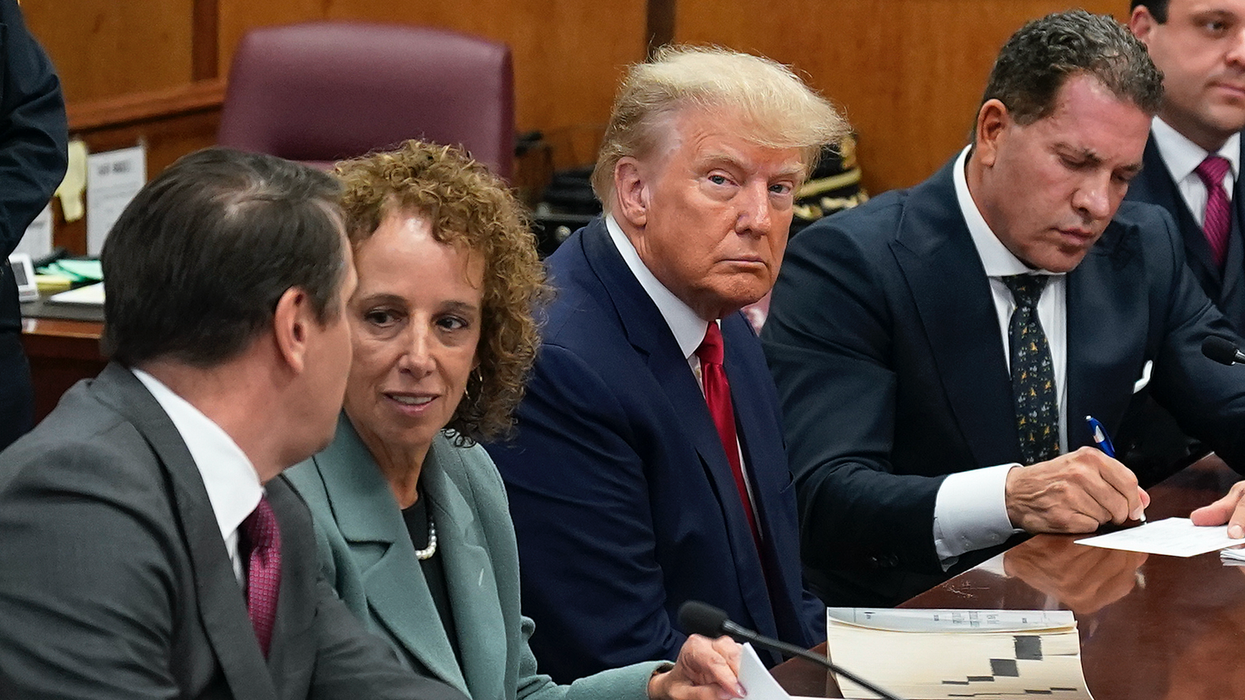
Shortly after being arraigned in New York in April, Trump publicly called Merchan "a Trump-hating judge with a Trump-hating wife and family whose daughter worked for [U.S. Vice President] Kamala Harris," ignoring the judge's instructions to "refrain from making comments or engaging in conduct that has the potential to incite violence, create civil unrest, or jeopardize the safety or well-being of any individuals."
Trump has also publicly said Judge Tanya Chutkan, who is presiding over a case in Washington, D.C. regarding the former president's alleged incitement of the January 6 attack, would not give him a "fair trial."
A Texas woman was arrested earlier this month for making a death threat in a voicemail to Chutkan, and Common Cause and CREW noted that "Judge Merchan and his family received dozens of threats, including death threats, in the immediate aftermath of Trump's comments" in April.
"Put together, these examples and others illustrate a clear pattern of conduct of Trump supporters levying threats against judges whom Trump publicly attacks, when, in reality, they are simply applying the law," said the groups. "Given Trump's ongoing legal fights, and his continued public criticism of the courts, it is likely that judges presiding over Trump-related cases will continue to face serious threats in the future."
The report was released the same day that Trump surrendered to the authorities in Atlanta following his indictment earlier this month in a case regarding his attempts to overturn Georgia's 2020 election results.
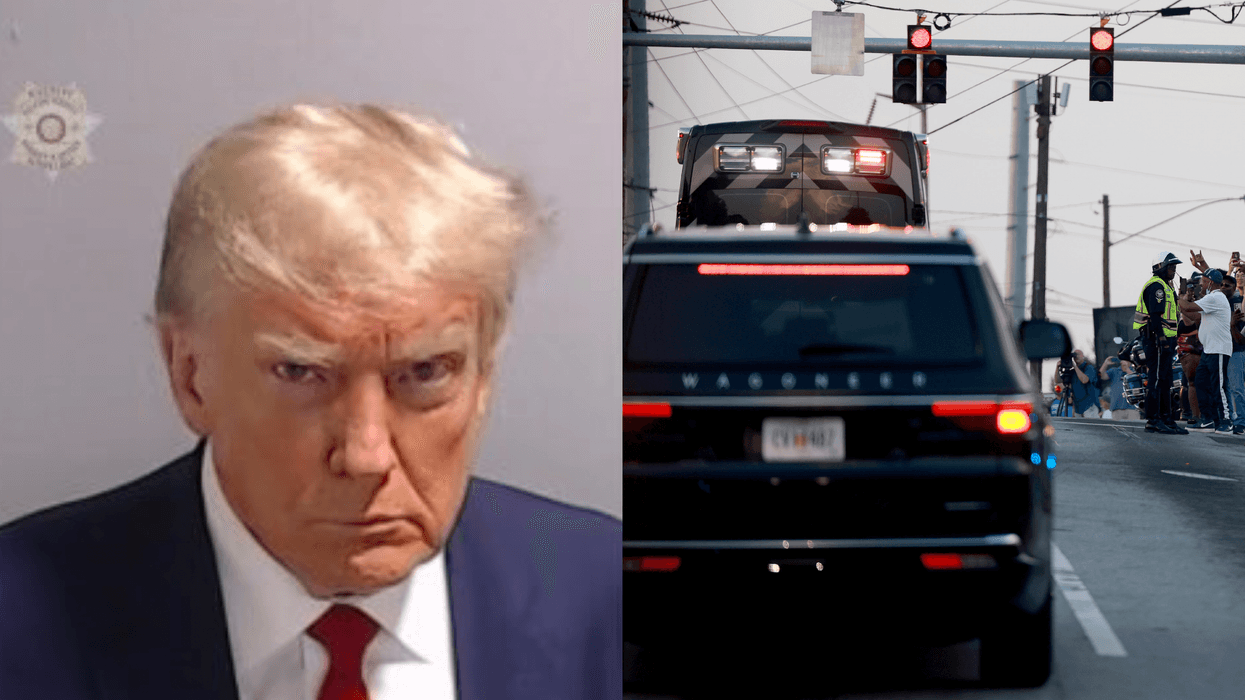
Trump's arrival at Fulton County Jail Thursday evening marked the first time in any of his criminal cases that officials released a mug shot, which he soon after posted on X—formerly known as Twitter—months after owner Elon Musk reinstated his account. Trump was banned from the platform after January 6, 2021, due to fears that he could incite more violence.
Earlier this week, as his fellow 2024 Republican candidates for president participated in the first debate of the election cycle, Trump told former Fox News anchor Tucker Carlson in an interview that Fulton County District Attorney Fani Willis is "getting killed" for indicting him and said his political enemies are "savage animals."
Willis has asked Fulton County Judge Scott McAfee to hold Trump's arraignment on September 5.
"Although the courts were ultimately not attacked on January 6, Trump's sustained anti-democratic rhetoric continues to make federal and state courts potential targets for his supporters," said Common Cause and CREW. "As Trump's legal battles intensify, and the 2024 presidential election approaches, the threat of violence posed by the far right to the judiciary is one which demands serious attention and vigilance."
He believes he can get away with intimidating and harassing potential witnesses, jurors, prosecutors, and judges. He is confident he is above the law.
Last night, Trump and 18 others were criminally charged in Georgia in connection with efforts to overturn Joe Biden’s 2020 victory in the state.
Trump was charged with 13 counts, including violating the state’s racketeering act, soliciting a public officer to violate their oath, conspiring to impersonate a public officer, conspiring to commit forgery in the first degree, and conspiring to file false documents.
The indictment also charges some of Trump’s most prominent advisers, including Rudolph W. Giuliani, his former personal lawyer, and Mark Meadows, who served as White House chief of staff at the time of the election.
Trump’s posts continue to directly and explicitly violate the conditions of Trump’s release from jail pending trial.
This indictment follows a two-and-a-half year investigation by Fulton County District Attorney Fani Willis—after audio leaked from a January 2021 phone call during which Trump urged Georgia Secretary of State Brad Raffensperger to question the validity of thousands of ballots, especially in the heavily Democratic Atlanta area, and said he wanted to “find” the votes to erase his 2020 loss in the state.
It is another step in America’s slow but steady process of criminal justice, another illustration that no one is above the law. Fani Willis and her staff deserve the nation’s thanks, as do Jack Smith and his staff, and Alvin Bragg and his staff in Manhattan.
This is not easy work under the best of circumstances. When a rogue former president is on the loose, fanning the flames of anger and recrimination, the work is fraught and potentially dangerous.
Early yesterday morning, before the Georgia grand jury met, Trump posted the following:
I am reading reports that failed former Lt. Governor of Georgia, Jeff Duncan, will be testifying before the Fulton County Grand Jury. He shouldn’t. I barely know him but he was, right from the beginning of this Witch Hunt, a nasty disaster for those looking into the Election Fraud that took place in Georgia. He refused having a Special Session to find out what went on, became very unpopular with Republicans (I refused to endorse him!), and fought the TRUTH all the way. A loser, he went to FNCNN!
I have no idea whether Mr. Duncan was intimidated by this post when he testified yesterday, whether he altered or downplayed his testimony out of fear of retribution by a Trump supporter. But the mere possibility raises a broader question that must be answered by the judges presiding over Trump’s trials—and very soon.
Trump’s conditions of release at his arraignment earlier this month included a vow—which Trump swore to uphold—that he would not intimidate or harass witnesses and officers of the court or threaten the administration of justice.
Yet he has not ceased posting inflammatory invective against potential witnesses, against potential jurors in Washington D.C., New York, and Georgia, against judges who have been assigned to hear the cases against him, against Special Counsel Jack Smith, and against other prosecutors.
His wild statements endanger all these people—we know all too well about the violent proclivities of a subset of Trump supporters. His posts could silence potential witnesses in any and all of Trump’s pending trials. His rants could intimidate jurors, prosecutors, and judges.
Trump’s posts continue to directly and explicitly violate the conditions of Trump’s release from jail pending trial.
Last Friday, federal Judge Tanya Chutkan, who is presiding over the Justice Department’s case charging Trump with federal crimes in connection with seeking to overturn the 2020 election, repeatedly instructed Trump that he is bound by laws preventing him from influencing jurors or witnesses. She said any “inflammatory remarks” that could influence a jury would hasten a trial, and she warned that “I will take whatever measures are necessary to safeguard the integrity of the case.”
Hours later, Trump called Judge Chutkan “highly partisan” and “very biased and unfair,” adding, “She obviously wants me behind bars.”
Friends, Trump is daring Judge Chutkan and other judges involved (or soon to be involved) in these four proceedings to revoke his release pending trial. He believes he can get away with intimidating and harassing potential witnesses, jurors, prosecutors, and judges. He is confident he is above the law.
He must be shown he is not above the law. His release pending trial must be revoked.
Donald Trump, Rudy Giuliani, Mark Meadows, and others "constituted a criminal organization whose members and associates engaged in various related criminal activities," the indictment states.
A grand jury in Fulton County, Georgia indicted former President Donald Trump and 18 others on Monday for taking part in a sprawling "criminal enterprise" aimed at overturning the 2020 presidential election results in the state.
The 98-page indictment, which includes a total of 41 counts, marks the fourth time Trump has been charged in a criminal investigation since April.
The indictment states that Trump and the other defendants—including former White House Chief of Staff Mark Meadows and Trump's former personal lawyer, Rudy Giuliani—"refused to accept that Trump lost, and they knowingly and willfully joined a conspiracy to unlawfully change the outcome of the election in favor of Trump."
Trump, Giuliani, Meadows, and more than a dozen others "constituted a criminal organization whose members and associates engaged in various related criminal activities including, but not limited to, false statements and writings, impersonating a public officer, forgery, filing false documents, influencing witnesses, computer theft, computer trespass, computer invasion of privacy, conspiracy to defraud the state, acts involving theft, and perjury."
The former president faces 13 charges under the Georgia indictment, including soliciting a public officer to violate their oath and breaching the state's Racketeering Influenced and Corrupt Organizations (RICO) Act.
Georgia's RICO law carries up to 20 years in prison for those convicted.
The indictment—the product of a sweeping investigation led by Fulton County District Attorney Fani Willis—cites Trump's early December phone call to Georgia Gov. Brian Kemp, during which the former president "solicited, requested, and importuned Kemp to call a special session of the Georgia General Assembly."
"This was an overt act in furtherance of the conspiracy," the indictment reads.
Willis launched the election interference investigation after an audio recording obtained by The Washington Post revealed that Trump called Georgia Secretary of State Brad Raffensperger and said he wants "to find 11,780 votes, which is one more than we have."
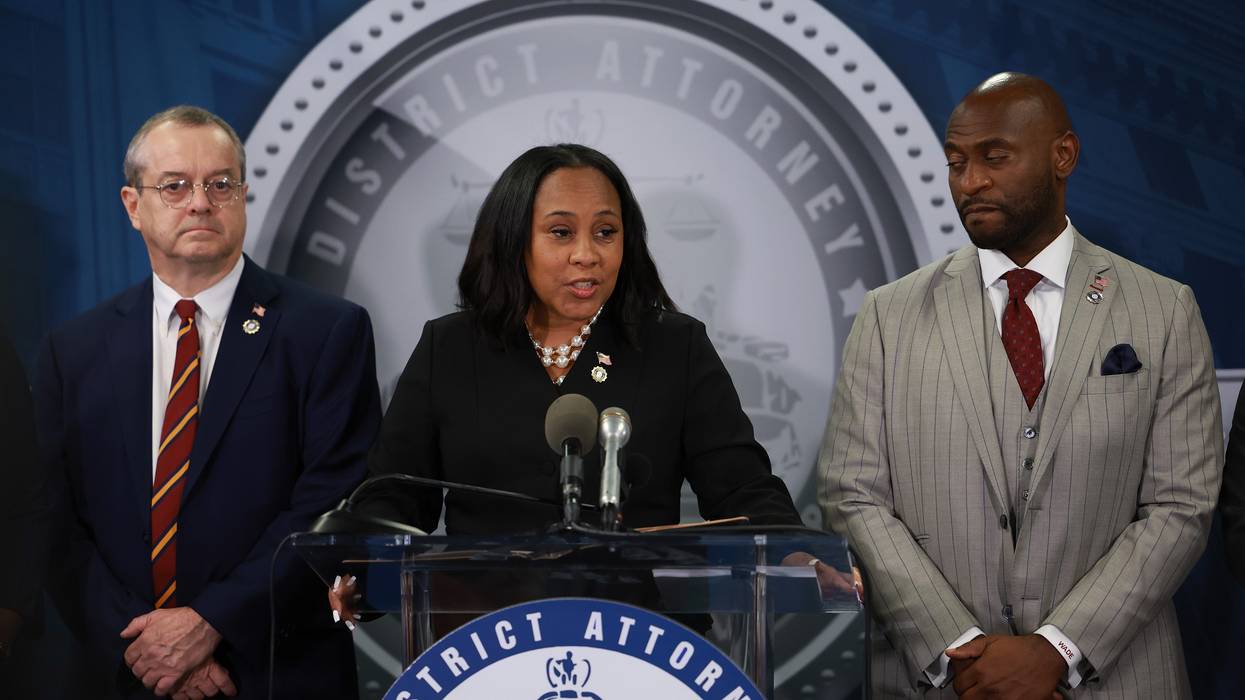
During a press conference, Willis said arrest warrants have been issued for those charged in the indictment, including Trump, who is running for president again in 2024.
"I am giving the defendants the opportunity to voluntarily surrender no later than noon on Friday, the 25th day of August 2023," said Willis.
Christina Harvey, executive director of the advocacy group Stand Up America, said in a statement that "the evidence of Trump's criminal conduct is overwhelming" and "holding the former president and his co-conspirators accountable is vital to protect our democracy and freedom to vote in future elections."
"At the heart of this indictment are Trump's concerted efforts to overturn the will of Georgia voters, Trump's attempts to deliberately spread disinformation, pressure Georgia officials to violate their oaths of office, and unlawfully change the outcome of the election in his favor demonstrate his deep-seated contempt for the law, the American people, and our democracy," said Harvey.
Common Cause Georgia executive director Aunna Dennis added that "we know today's indictment is just the beginning of what might be a long process in the courts, and that an indictment is not a conviction."
Nevertheless, Dennis said, "today's indictment of Trump and his co-conspirators highlights Georgia voters' steadfast insistence that anyone who attempts to steal our most sacred of rights must be held accountable."
"The people of Georgia can now take a moment to reflect on what type of government we want moving forward," said Dennis. "Do we want a democracy in the hands of a wealthy few, or in the hands of the people?"
"This is a story that is important for Republicans to hear—Americans to hear," said former Georgia Lt. Gov Geoff Duncan, one of two witnesses who confirmed District Attorney Fani Willis' office asked them appear in court.
A pair of witnesses revealed Saturday that Fulton County District Attorney Fani Willis will start presenting her 2020 elections interference case against former President Donald Trump—the GOP's 2024 front-runner—to a grand jury in Georgia early next week.
While Willis has previously signaled her intention to make charging decisions this month, former Georgia Lt. Gov Geoff Duncan, a Republican, and independent journalist George Chidi publicly confirmed on Saturday that her office asked them to appear in court on Tuesday.
"I did just receive notification to appear on Tuesday morning at the Fulton County grand jury and I certainly will be there to do my part in recounting the facts," Duncan, a CNN political commentator, told the network's Fredricka Whitfield on-air.
"I have no expectations as to the questions, and I'll certainly answer whatever questions put in front of me and certainly don't want to go any deeper than that to, you know, jeopardize or compromise the investigation," Duncan continued. "But look, for me, this is a story that is important for Republicans to hear—Americans to hear."
"Let's hear the whole truth and nothing but the truth about Donald Trump's actions and the surrounding cast of characters around him," he added. "We watched a series of events happen here that were tragic and untruthful, and he's got a chance to present these facts and say, 'hey, I didn't know what was going on,' or, I think what reality's gonna be is, they knew exactly what they were doing."
Meanwhile, Chidi said on social media Saturday that "I've just received a call from District Attorney Fani Willis' office. I have been asked to come to court Tuesday for testimony before the grand jury."
As The Atlanta Journal-Constitution reported Saturday:
Chidi stumbled upon a meeting of sham Republican electors at the state Capitol, part of an effort by the former president's allies in Georgia to undermine President Joe Biden's narrow 2020 victory.
Duncan would bring a different perspective to grand jurors. Once an ally of Trump, he publicly broke with the then-president in 2020 and has frequently criticized the "stop the steal" movement that spread through GOP circles.
After Biden won Georgia, Trump made a January 2, 2021 phone call in which he pressured Georgia GOP Secretary of State Brad Raffensperger to "find 11,780 votes" in his favor—which prompted Willis' investigation.
Trump, who was in Iowa to campaign on Saturday, said on his Truth Social platform: "How can they charge me in Georgia? The phone call was PERFECT. WITCH HUNT!"
Preparations for the former president's potential fourth indictment come after he was hit with federal charges at the beginning of the month in Special Counsel Jack Smith's investigation into efforts to overturn the 2020 election and the January 6, 2021 attack on the U.S. Capitol.
Smith—appointed by U.S. Attorney General Merrick Garland after Trump announced his 2024 run last year—is also responsible for the classified documents probe that led to the ex-president's indictment in June. That came after Trump was charged in April in Manhattan District Attorney Alvin Bragg's investigation into alleged hush money payments during the 2016 election.