

SUBSCRIBE TO OUR FREE NEWSLETTER
Daily news & progressive opinion—funded by the people, not the corporations—delivered straight to your inbox.
5
#000000
#FFFFFF
To donate by check, phone, or other method, see our More Ways to Give page.
Daily news & progressive opinion—funded by the people, not the corporations—delivered straight to your inbox.
"Instead of helping, Trump made the largest healthcare cuts in American history and doubled down on his costly tariff taxes," said Rep. Brendon Boyle.
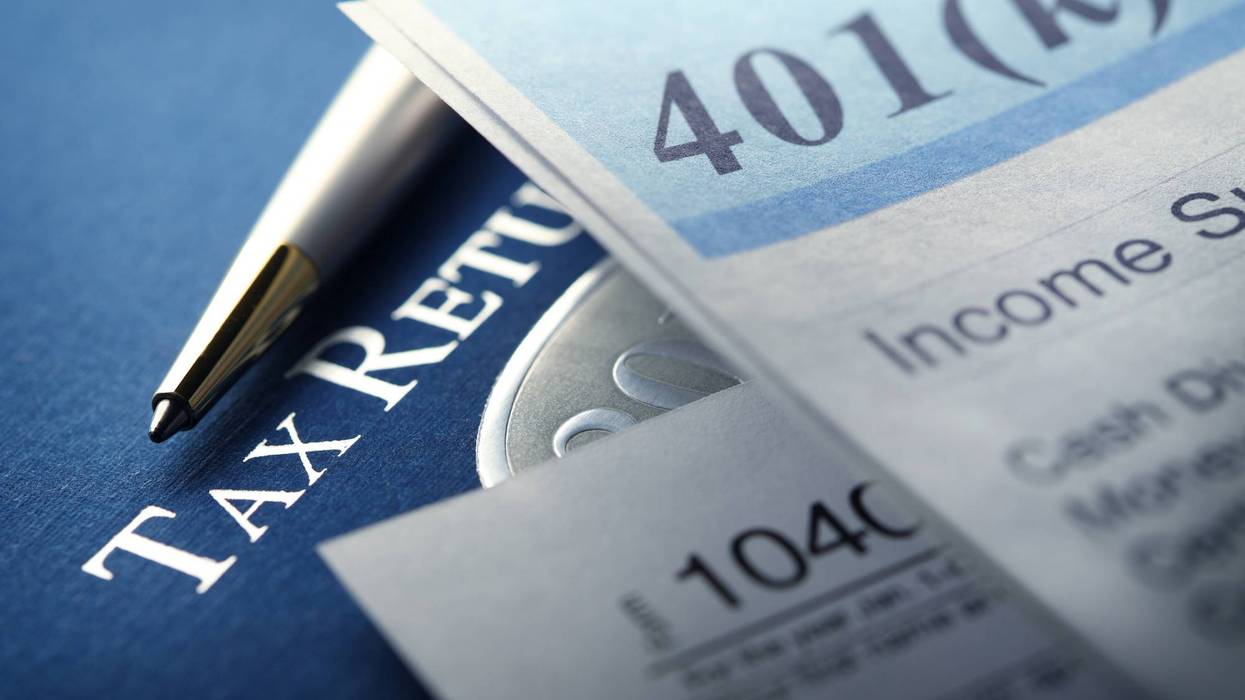
Even as President Donald Trump has declared that the US is in a "golden age" with the "greatest" economy on record, the Wall Street Journal reported on Wednesday that a record number of US workers are dipping into their retirement savings.
The Journal cited recent data from Vanguard Group showing that 6% of the 401(k) plans it administers took a hardship withdrawal in 2025, up from 4.8% that took such a withdrawal in 2024.
The top reasons for such withdrawals last year were avoiding eviction or paying off medical expenses, according to Vanguard.
The Journal noted that the Vanguard data about hardship withdrawals comes as "more Americans are falling behind on debt payments, including on some types of mortgages, putting them at risk of foreclosure," and "the average income of clients seeking help from credit-counseling agencies is rising."
Some Democrats quickly pounced on the Journal report, which they said undercut Trump's rosy assessment of the US economy.
"Record numbers of Americans are raiding their 401(k)s to avoid eviction or pay medical bills," wrote Rep. Mike Levin (D-Calif.). "That's not winning."
Rep. Brendan Boyle (D-Pa.) pointed to the Journal report and accused Trump and the GOP of exacerbating these problems with the cuts to Medicaid contained in the One Big Beautiful Bill Act that the party passed in 2025.
"A record number of Americans are dipping into their retirement savings just to stay afloat," wrote Boyle, the ranking member of the House Budget Committee. "A leading cause: Skyrocketing healthcare costs. Instead of helping, Trump made the largest healthcare cuts in American history and doubled down on his costly tariff taxes."
Senate Minority Leader Chuck Schumer (D-NY) responded to the report by saying, "This is not the golden age Donald Trump promised."
Andrew Bates, former senior deputy press secretary for President Joe Biden, also pointed to the GOP budget law as a key reasons for Americans' deteriorating financial security.
"The GOP in Washington makes the biggest healthcare and energy cuts in history, just to lower taxes for the rich," he wrote. "'Golden Age' for Jeffrey Epstein’s surviving friends, shittiness for everyone else."
Ann Larson, co-founder of Debt Collective, noted that while the data on 401(k) withdrawals is disturbing, it doesn't tell the whole story of the dire overall state of Americans' finances.
"This is bad, but add in the almost half of older Americans who have ZERO retirement savings to pull from," Larson wrote, "and the picture is even more horrifying."
"This is just cruel and doesn't have to happen," said the Debt Collective.
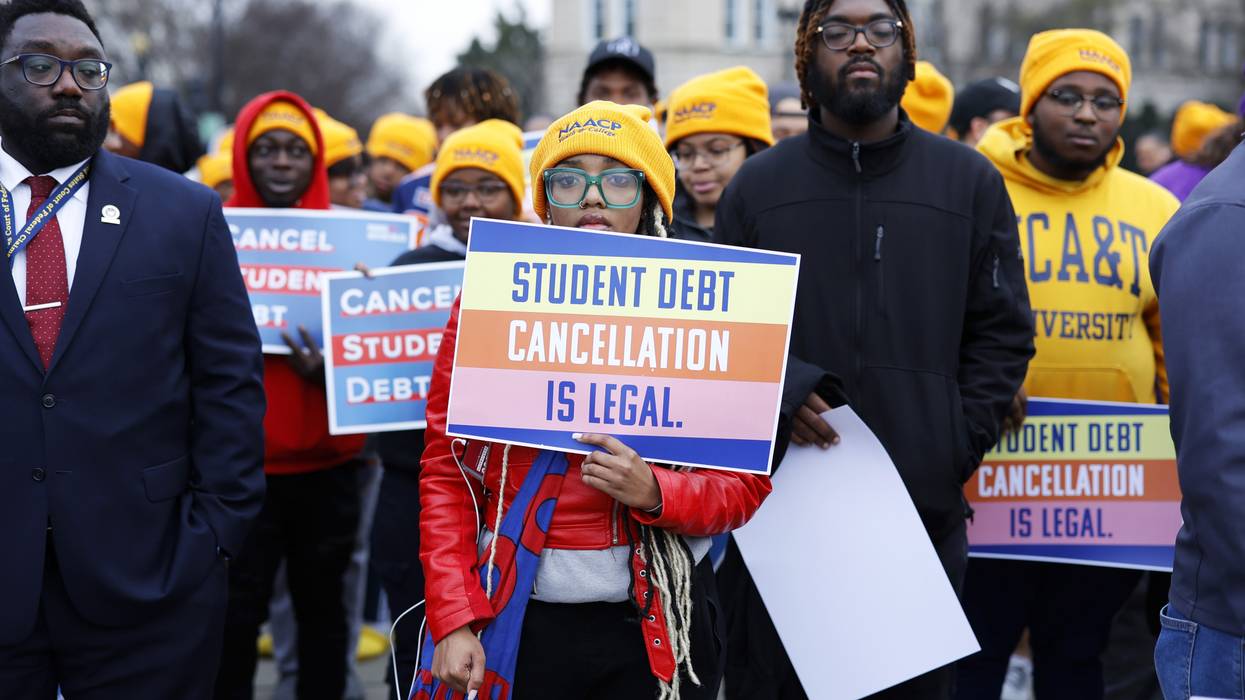
The Trump administration on Monday announced that it will resume involuntary collection measures against defaulted federal student loan recipients, including garnishing wages, tax refunds, and Social Security benefits and "other actions to help borrowers get back into repayment," as the U.S. Department of Education euphemistically said.
"Resuming collections protects taxpayers from shouldering the cost of federal student loans that borrowers willingly undertook to finance their postsecondary education," DOE said in a statement notifying the public that collections will resume May 5. "This initiative will be paired with a comprehensive communications and outreach campaign to ensure borrowers understand how to return to repayment or get out of default."
The DOE said the U.S. Treasury Offset Program will administer borrower garnishments, which are expected to resume this summer.
DOE continued:
While Congress mandated that student and parent borrowers begin to repay their student loans in October 2023, the Biden-Harris administration refused to lift the collections pause and kept borrowers in a confusing limbo. The previous administration failed to process applications for borrowers who applied for income-driven repayment and continued to push misguided "on-ramps" and illegal loan forgiveness schemes to win points with borrowers and mask rising delinquency and default rates.
"American taxpayers will no longer be forced to serve as collateral for irresponsible student loan policies," billionaire U.S. Education Secretary Linda McMahon said on Monday.
The repayment resumption is part of the Trump administration's three-pronged, $1.6 trillion overhaul of the federal student loan system. In addition to moving to collect on defaulted loans, the administration is looking to end former President Joe Biden's Saving on a Valuable Education (SAVE) plan, an income-driven repayment program currently blocked by a federal appellate court. President Donald Trump also signed an executive order narrowing eligibility for the Public Service Loan Forgiveness program.
Last month, the American Federation of Teachers led a lawsuit against the Trump administration after the DOE cut off access to income-driven repayment plan applications and secretly ordered student loan services to stop accepting and processing such applications.
The government has not collected on defaulted student loans since March 2020, when the first Trump administration paused repayments due to the burgeoning Covid-19 pandemic. The reprieve, which was subsequently extended several times, was set to end in September 2023. Efforts by the Biden administration to forgive some or all loan debt for more than 45 million student borrowers were thwarted by the right-wing U.S. Supreme Court in 2023.
"The Biden administration misled borrowers: The executive branch does not have the constitutional authority to wipe debt away, nor do the loan balances simply disappear," said McMahon. "Hundreds of billions have already been transferred to taxpayers."
"Going forward, the Department of Education, in conjunction with the Department of Treasury, will shepherd the student loan program responsibly and according to the law, which means helping borrowers return to repayment—both for the sake of their own financial health and our nation's economic outlook," she added.
As McMahon and the Trump administration work toward ending the DOE—a key goal of Project 2025, the Heritage Foundation-led plan to eviscerate the federal government—Trump has ordered the administration of federal student loans to be transferred to the Small Business Administration (SBA), which was headed by McMahon during Trump's first term.
Approximately 5.6 million student borrowers were in default at the end of 2024. The DOE warns that "there could be almost 10 million borrowers in default in a few months" after repayments resume. That's roughly 25% of the current student loan portfolio. Failure to make timely student loan repayments results in lower credit scores for borrowers, who in turn generate less economic activity—a domino effect with implications for the entire slowing U.S. economy.
"They bailed out banks, corporations, and airlines. But when it comes to student debt? Suddenly it's 'too expensive.'"
"Many of the households required to resume paying on their student loans are also struggling with credit card debt at near-record interest rates and high-rate mortgages they thought they would be able to refinance into a lower rate, but haven't," explained Moody's Analytics chief economist Mark Zandi in a Monday interview with The New York Times.
Some critics slammed the Trump administration for resuming student loan repayments amid an affordability and housing crisis during which a record number of people are unhoused.
"Parents delaying retirement. Grads postponing families. This isn't 45 million separate problems, it's one national crisis," the Student Debt Crisis Center (SDCC) said on social media. "They bailed out banks, corporations, and airlines. But when it comes to student debt? Suddenly it's 'too expensive.'"
SDCC executive director Mike Pierce said that "federal law gives borrowers a way out of default and the right to make loan payments they can afford. Since February, Donald Trump and Linda McMahon have blocked these borrowers' path out of default and are now feeding them into the maw of the government debt collection machine."
"This is cruel, unnecessary, and will further fan the flames of economic chaos for working families across this country," Pierce added.
Tuition-free college would help make America great. Those who need loans to attend college come from working class families, the elites don’t need loans. 40% of student debt holders don’t hold a degree. This will hurt the working class.
[image or embed]
— Nina Turner (@ninaturner.bsky.social) April 21, 2025 at 2:07 PM
Others offered solutions enjoyed by people in other countries, including simply not collecting the debt and making colleges and universities tuition-free—even if their chances of implementation under what many leftists call U.S. "late-stage capitalism" are next to nil.
"If the Trump/Musk administration really wanted 'government efficiency,' then they wouldn't be collecting on debts people cannot and will not pay,"
said the Debt Collective, a debtors' union, referring to Elon Musk, who heads the Department of Government Efficiency. "They would just cancel it and boost the economy."
"This is just a drop in the bucket," a campaigner said. "Now, it's up to our lawmakers to make healthcare affordable for everyone in our state and to eliminate medical debt."
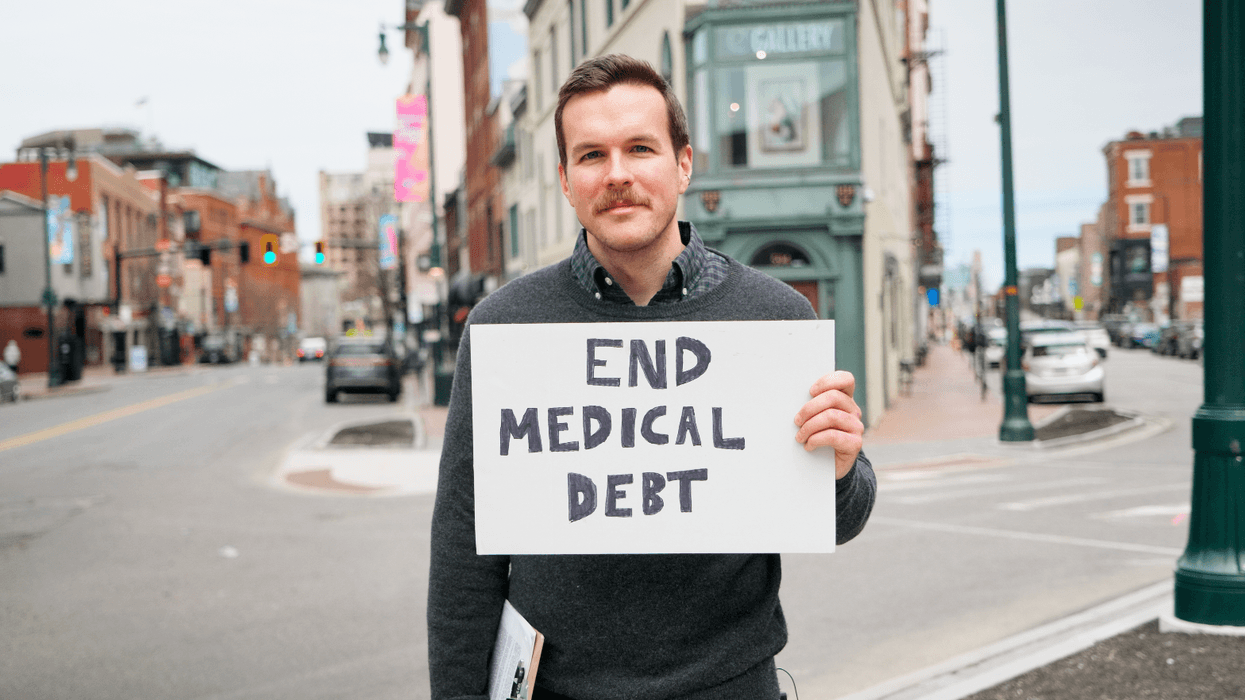
Mainers For Working Families, an advocacy group, announced on Thursday that it had partnered with a larger nonprofit to relieve $1.85 million worth of medical debt for 1,508 low-income people who live in Maine.
MFWF furnished a donation of $12,740 to Undue Medical Debt, a 501(c)(3) group formed by former collections executives, which bought the $1.85 million in debts; such debt is sold at pennies on the dollar.
The recipients, spread all over Maine, were people who live four times below the Federal Poverty Level or for whom medical debt totals more than 5% of their annual income.
"We can't turn back the clock for these people, but we had to do something," Evan LeBrun, MFWF's executive director, said in a statement.
"This is just a drop in the bucket," he added. "Now, it's up to our lawmakers to make healthcare affordable for everyone in our state and to eliminate medical debt."
BREAKING: Mainers for Working Families is partnering with @unduemeddebt to purchase and forgive $1.8 million in medical debt for over 1,500 Mainers across the state. pic.twitter.com/gkf4QELoiA
— Mainers For Working Families (@ForMainers) October 24, 2024
MFWF has worked on healthcare affordability issues since 2021 and medical debt since last year, a representative told Common Dreams. The group recently released a series of videos on the topic based on interviews conducted around Maine.
Undue Medical Debt formed in 2014 following inspiration from debt cancellation projects undertaken by Occupy Wall Street participants, including activist-intellectuals such as Astra Taylor and David Graeber. The nonprofit, which drew donor attention after it was featured by comedian John Oliver on his HBO show in 2016, has now canceled nearly $15 billion in medical debt, according to its website. Oliver himself made a contribution to the group, which was previously known as R.I.P. Medical Debt.
Nationwide, nearly 100 million people are dealing with unpaid medical bills, according to federal data.
The push for change in the field of medical debt has yielded a series of small victories. Last year, the three major consumer report agencies—Equifax, Experian, and TransUnion—stopped including medical debts below $500 on their credit reports, according to the Consumer Financial Protection Bureau. In June, the CFPB moved to ban all medical debt from credit reports, drawing praise from progressives such as Sen. Bernie Sanders (I-Vt.).
Vice President Kamala Harris, the Democratic presidential nominee, has pushed medical debt cancellation in her current role and pledged, as part of her economic agenda, to work with states to states to cancel more debt if she wins in November.
A working paper published by the National Bureau of Economic Research in April called into question the premise of Undue's work, finding that recipients of debt relief had no better credit scores or mental health than a control group. A co-author said the results had "disappointed" the researchers.
However, research has shown strong benefits to other forms of debt relief, and a 2023 survey conducted by Undue and other groups did show that medical debt negatively affected mental health for most people and caused 42% to delay further medical care.
Medical debt disproportionately affects people who are poor, Black, or disabled, according to Peterson-KFF Health System Tracker. About 3 million Americans have more than $10,000 in medical debt.
One is a woman named Kim, a resident of Old Town, Maine, whom MFWF interviewed in a recent video. She lives off of $26,200 per year and has roughly $2 million in debt, thanks to her fight with Addison's disease, a chronic endocrine disorder.
"I am really hoping that someone sees what is actually happening out there," she said. "God, I hope so."
Efforts to address the issue at the Maine state level have achieved mixed success. A modest reform bill that prevents debt accrual on medical debt did pass in Augusta in April.
"This week for the first time in history, older student debtors have gone to Washington to demand our student loan debts get canceled in our lifetime, not at our funerals," one older debtor said.
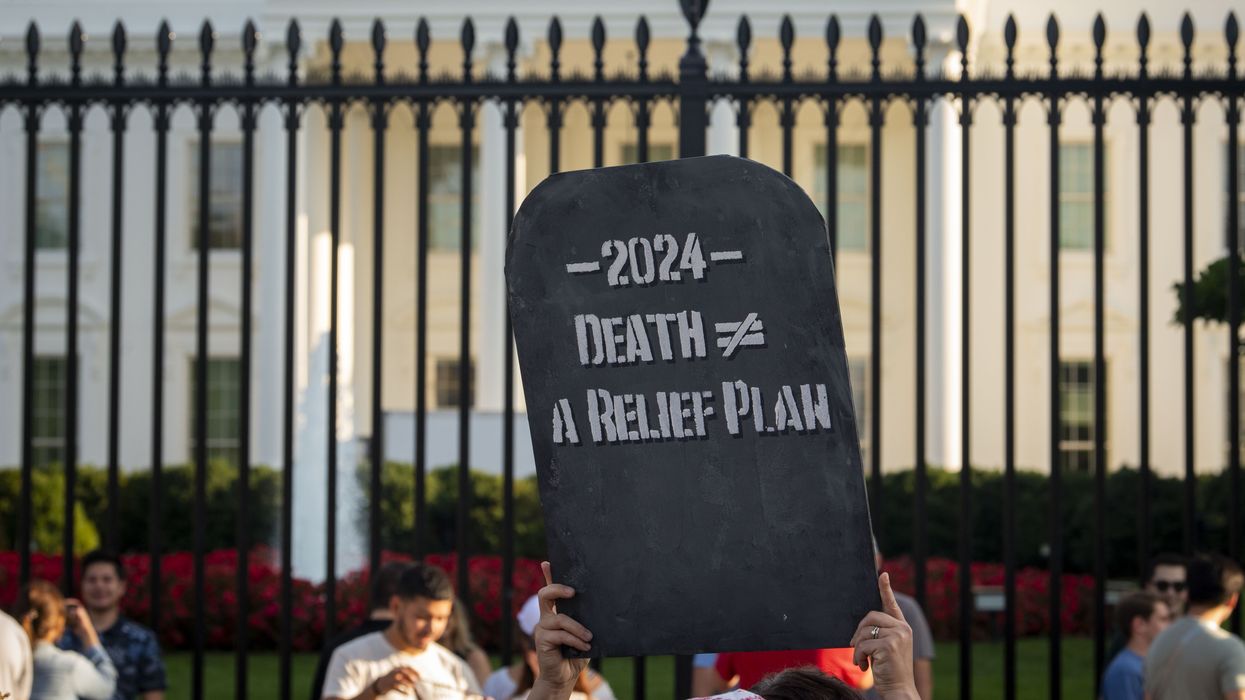
Carrying mock tombstones reading, "Death is not a relief plan" and "Stop burying us in debt," a group of older debtors held the first-ever senior-led mass action for student debt relief outside the White House on Thursday.
Borrowers over 50 are the fastest-growing demographic of student debtors, and some of them are calling on the Biden-Harris administration to take advantage of federal regulations that empower the Department of Education to cancel debt based on age.
"The only comprehensive student debt relief plan that the federal government offers right now is death," Debt Collective creative media strategist Maddie Clifford said in front of the White House. "That is the only way people can escape from these student loan payments."
The participants in the vigil, who collectively owe more than $1 million in student loans and include members of the Debt Collective's "50 Over 50" caucus, shared their stories as they demanded relief.
"I would have never imagined approaching my 60th birthday with $211,388 worth of student debt," said Renita Walker, a Debt Collective member from Sandy Springs, Georgia. "The idea itself is paralyzing. It is the realization that I will probably work myself to death, literally."
Walker took out loans both to continue her education as a single mother after her husband died and to help her two children pay for school. The loan payments ballooned to the point that she was paying $1,800 a month until she took money out of her 401(k) to bring the payment down to around $1,300 a month, still more than her mortgage.
"I just want to say like many of the people here standing behind me, this was not something we asked for," Walker said. "Unfortunately, the system is broken and we have to live with the results of that."
"For decades, millions of older debtors have crouched in shame, imagining ourselves as failures when in reality the system has failed us. But we will no longer be duped into suffering alone."
Fellow Debt-Collective member and Georgia resident Athena Blue, a 67-year-old retired nurse, also took out Parent Plus loans to pay for her children's education.
Blue spoke of overcoming the shame of indebtedness by learning the history of how former U.S. President Ronald Reagan had pushed for the current student loan system in order to make it more difficult for working-class Americans to attend university as a backlash to campus protests in the 1960s and 70s.
"The debt that I'm in isn't my fault," Blue said. "It was created purposely by people like former President Ronald Reagan who believed that only certain people should have the right to higher education."
Blue said she had managed to pay off all of her interest on her loan in 2020 when it was transferred to another provider and she had to start over.
"This burden of a loan threatens my retirement," Blue said, "So how can you, Congress, the Department of Education, and the White House allow this to continue? How can you allow seniors to be subject to predators like this? Have you no moral compass? No shame?"
Debt Collective member Alicia Barnes, who joined the Navy to avoid taking on any more debt, said she had discovered in a meeting with the Department of Education that day that her service provider had illegally placed her debt into default while she was deployed.
"Instead of including a Suicide Hotline for veterans on every piece of communication we receive, the causes of these tragedies should be met with real solutions including absolving some of the debt we accrued during our service because of this compounded interest and illegal activity by these debt collectors," Barnes said.
Every speaker at Thursday's vigil was a woman, as are the majority of student loan debtors. A disproportionate number of student debtors are Black women in particular.
Many of the speakers went into debt to pursue careers in public service fields like education, pastoral counseling, and social work.
"We are caring human beings that wanted to help out the world," said Debt Collective member Mary Donahue of Maryland. "We just need a little help."
The Debt Collective insists that "death should not be the only relief plan for their old, unpayable student loans."
"Decades of broken student relief programs, corrupt loan services, and government neglect have meant that millions of older Americans dragged decadesold student debts into their retirement," said Gail Gardner, who is 77 years old and owes $549,497.20. "Absent swift, bold policy change, and clear political leadership, this crisis will only deepen. The debtors will get older. The debts will get bigger."
That is why she said she had joined with other older debtors to "demand the White House and the Department of Education finally take responsibility for clearing the student debts burdening myself and millions of older Americans."
Both Gardner and Clifford pointed out that discharging debts based on age was something that the Biden-Harris administration could do without running afoul of right-wing attempts to block President Joe Biden's other attempts at student debt relief.
"We are urging the Biden Harris administration to work as fast and as hard as Republicans are working to keep us in debt to free borrowers from these loans, and they can do it today," Clifford said.
Gardner concluded: "For decades, millions of older debtors have crouched in shame, imagining ourselves as failures when in reality the system has failed us. But we will no longer be duped into suffering alone. This week for the first time in history, older student debtors have gone to Washington to demand our student loan debts get canceled in our lifetime, not at our funerals. We can't afford to wait."
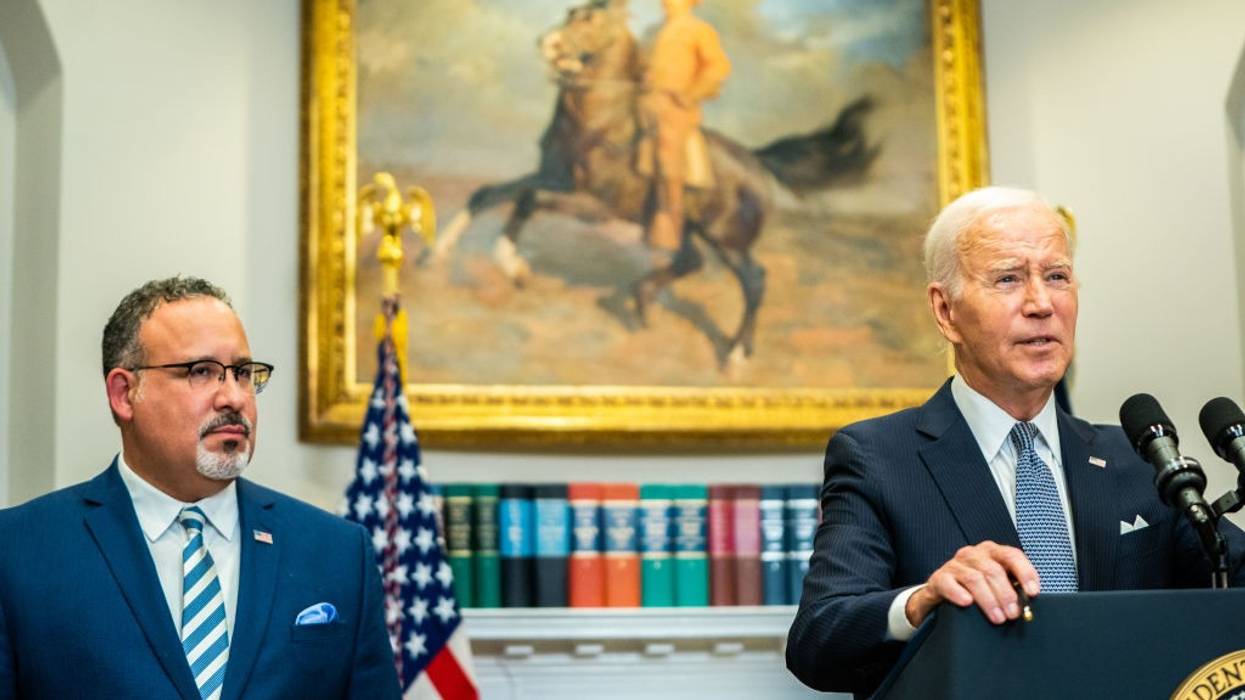
While praising the Biden administration's move "to stave off this reckless attack from extremist politicians and judges," advocates stressed that "broad-based debt cancellation is the only solution."
The Biden administration responded to an appellate court temporarily blocking one of its student debt relief programs by pausing payments for the 8 million borrowers already enrolled—a move welcomed by advocates, even as some called for further action.
U.S. Secretary of Education Miguel Cardona acknowledged in a statement that the 8th Circuit Court of Appeals' ruling against President Joe Biden's Saving on a Valuable Education (SAVE) plan "could have devastating consequences for millions of student loan borrowers crushed by unaffordable monthly payments if it remains in effect."
"It's shameful that politically motivated lawsuits waged by Republican elected officials are once again standing in the way of lower payments for millions of borrowers," Cardona continued. "Borrowers enrolled in the SAVE plan will be placed in an interest-free forbearance while our administration continues to vigorously defend the SAVE plan in court. The department will be providing regular updates to borrowers affected by these rulings in the coming days."
The appellate court's Thursday ruling was just the latest in a series of legal decisions endangering one of the administration's surviving policies to help Americans with burdensome student loans. Biden's attempt to roll out a broader debt cancellation program last year was thwarted by the U.S. Supreme Court's right-wing justices.
Despite that setback, the Democratic president has continued to pursue relief programs while seeking reelection in November. Biden and Vice President Kamala Harris are preparing to face former Republican President Donald Trump and Sen. JD Vance (R-Ohio). Analyses have warned that Trump's return to the White House would worsen the U.S. student debt crisis.
"It wasn't so long ago that a million borrowers defaulted on their student loans every single year, mainly because they couldn't afford the payments," Cardona noted Friday. "The SAVE plan is a bold and urgently needed effort to fix what's broken in our student loan system and make financing a higher education more affordable in this country. The Biden-Harris administration remains committed to delivering as much relief as possible for as many borrowers as possible."
"Already, we've approved an unprecedented $169 billion in relief for nearly 4.8 million Americans, including teachers, veterans, and other public servants, students who were cheated by their colleges, borrowers with disabilities, and more," he added. "And from larger Pell Grants to free community college, President Biden, Vice President Harris, and I continue to believe that college affordability is a cause worth fighting for—and we're not giving up."
The Student Borrower Protection Center, which had advocated for a payment pause after Thursday's ruling, thanked Cardona "for taking swift action to protect the millions of borrowers enrolled in SAVE."
"Opponents of SAVE have inflicted mass confusion and chaos across the entire student loan system—all borrowers are at risk," the group added. "Halt student loan payments and protect borrowers ASAP!"
American Federation of Teachers president Randi Weingarten put out a statement on Friday praising the administration's action "to stave off this reckless attack from extremist politicians and judges."
"But we shouldn't even be in this situation," she stressed. "These borrowers are on a roller coaster that's being forced off the rails by far-right politicians who will do anything in their power to hurt them, rather than help them get the relief they deserve."
"We are grateful that the Biden-Harris administration will continue to push for affordable monthly payments as bad faith actors continue to throw up roadblock after roadblock," she added. "In the end, broad-based debt cancellation is the only solution—and we will continue to advocate for it through every avenue available."
While also welcoming the pause as the court battle continues, the Debt Collective said Friday: "But no need to stop there—pause everyone's payments. Unburden them from what has been."
Recalling when student debt payments were halted because of the Covid-19 pandemic, initially under Trump and then Biden, the group also said that the president "never should have restarted student loan payments," calling it "an unforced error."
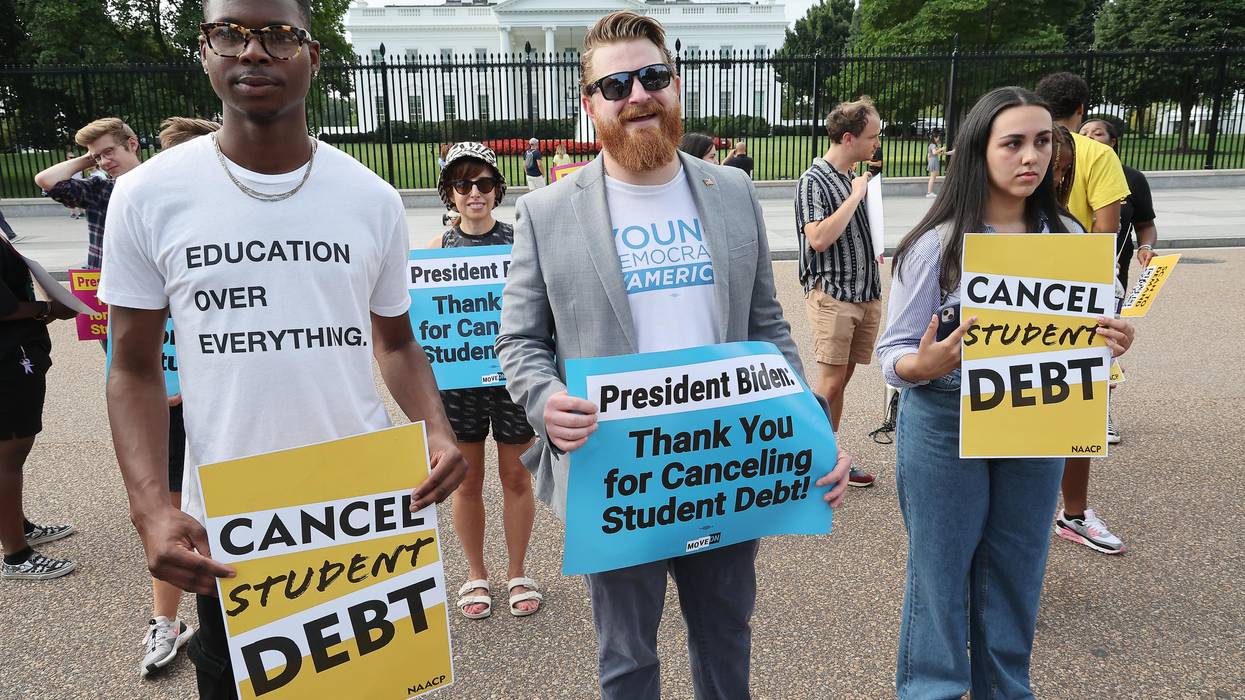
Advocates are calling for "shutting the student loan system down until borrowers have access to the rights they were promised."
Student debt cancellation advocates on Thursday responded to a federal appeals court blocking implementation of one of U.S. President Joe Biden's relief programs by demanding a shutdown of the whole system to spare borrowers and the economy.
The U.S. Court of Appeals for the 8th Circuit's temporary ruling against the administration's Saving on a Valuable Education (SAVE) plan comes just over a year after the Supreme Court struck down Biden's sweeping student debt cancellation proposal.
Although the high court's right-wing supermajority has thwarted Biden's attempt to deliver his promised broad relief, the administration has pursued initiatives including the SAVE program, which sets monthly payments based on borrowers' income.
Over half of the more than 8 million borrowers who have enrolled in the program have a $0 monthly payment, according to the U.S. Department of Education. SAVE also enables borrowers to have their balances canceled after 10, 20, or 25 years.
GOP state officials led by Kansas Attorney General Kris Kobach challenged the program, leading to Thursday's ruling—just the latest in a series of various decisions about the program. The 8th Circuit issued a stay until the court rules on a request for a preliminary injunction.
"Today's extreme, unsigned, single-sentence order from a judge out of Missouri's 8th Circuit Court of Appeals just sent the student loan system into chaos and borrowers will be forced to pay the price," warned Student Borrower Protection Center (SBPC) executive director Mike Pierce in a statement.
"It is clear that the Biden administration can and must protect borrowers from this partisan lawfare—that means shutting the student loan system down until borrowers have access to the rights they were promised under the law," he argued.
In addition to echoing Pierce's call for shutting down the system "to mitigate the widespread economic harm that could be imposed on borrowers," SBPC deputy executive director Persis Yu suggested the legal battle was politically motivated.
"Right-wing politicians are using the courts to wreak havoc on the student loan system and put the economic stability of tens of millions of borrowers and their families at risk. Make no mistake: These lawsuits are shameful political gamesmanship designed to hurt President Biden at all costs, and borrowers are merely collateral damage," Yu said. "Unfortunately, today, the special interests have prevailed, imperiling the financial security of millions and throwing the student loan system into an untenable chaos."
An Education Department spokesperson said in a statement Thursday that "we are assessing the impacts of this ruling and will be in touch directly with borrowers with any impacts that affect them."
"Our administration will continue to aggressively defend the SAVE Plan," the spokesperson added. "And, we won't stop fighting against Republican elected officials' efforts to raise costs on millions of their own constituents' student loan payments."
The 8th Circuit's decision came on the same day as the Biden administration's announcement that it is canceling $1.2 billion in student loans for borrowers who work in public service through changes to another federal program.
"These 35,000 borrowers approved for forgiveness today are public service workers—teachers, nurses, law enforcement officials, and first responders who have dedicated their lives to strengthening their communities, and because of the fixes we made to Public Service Loan Forgiveness, they will now have more breathing room to support themselves and their families," Biden said in a statement.
Biden—who has faced progressive pressure to keep pursuing bolder debt relief policies—is currently seeking reelection, though the Democrat has endured growing calls to step aside since his poor debate performance last month.
Former President Donald Trump this week formally became the Republican nominee and announced Sen. JD Vance (R-Ohio) as his running mate. Multiple analyses have warned that the U.S. student debt crisis would worsen under Trump.

"The rent is too damn high—and rent control is a real fix," one group said, praising the proposal.
As former U.S. President Donald Trump secured the Republican nomination and announced his running mate on Monday, Democratic President Joe Biden prepared to unveil a proposal that would cap annual rent increases at 5% for tenants of major landlords.
After Biden briefly previewed the proposal during a press conference last week, The Washington Post reported on the planned announcement Monday, citing three people familiar with the matter. The Associated Press separately confirmed the plan.
Biden is set to formally introduce the proposal on Tuesday in Nevada, which "has seen among the biggest explosions of housing costs in the country," the Post noted. "Democrats have grown increasingly concerned that Trump could win the state in November."
The president, who is seeking reelection, will propose taking a tax benefit away from landlords who hike rents by more than 5% annually, according to the reporting. The plan would only apply to the existing housing stock of landlords who own more than 50 units and would require congressional approval—so it is not expected to go anywhere unless Biden wins in November and Democrats secure majorities in both chambers of Congress.
As the newspaper detailed:
The Biden administration is also pushing numerous policies to increase housing construction, through incentives to local governments to change their zoning codes and new federal financial incentives for builders. If implemented, they could bring 2 million new units to the market in addition to the 1.6 million already in the pipeline.
"It would make little sense to make this move by itself. But you have to look at it in the context of the moves they propose to make to expand supply," said Jim Parrott, nonresident fellow at the Urban Institute and co-owner of Parrott Ryan Advisors. "The question is: Even if we get all these new units built, what do we do about rising rents in the meantime? Coming up with a relatively targeted bridge to help renters while new supply is coming online makes a fair amount of sense."
While housing industry representatives criticized the reported proposal, Diane Yentel, president and CEO of the National Low Income Housing Coalition, told The Associated Press that having it in effect in recent years could have helped renters.
"The recent unprecedented increases in homelessness in communities across the country are the result of those equally unprecedented—and unjustified—rent hikes of a couple years ago," she said. "Had such protections against rent gouging been in place then, many families could have avoided homelessness and stayed stably housed."
Other rent control advocates and progressive officials also welcomed the plan, with Kendra Brooks—the first Working Families Party member ever elected to Philadelphia City Council—declaring that "this is exactly the kind of leadership that working families need!"
Jacobin's Branko Marcetic said that "this is huge," particularly considering that "housing has rapidly climbed as a cost-of-living concern (and is also under 30s' most important issue)."
Multiple campaigners and organizations credited housing advocates for pushing rent control at the national level.
"It's amazing how rapidly the conversation around rent caps has changed," noted Shamus Roller, executive director of the National Housing Law Project. "Tenant organizing has created this change. It's a proposal for Congress which will face serious headwinds but the president just called for rent caps (even if only temporarily)."
The Debt Collective said, "We will say it over and over again: The rent is too damn high—and rent control is a real fix."
"Rent caps wouldn't be a national policy proposal without tenants unions across the country making it possible through organizing," the group added. "On our way to land without landlords, remember that rent control works. The 99%'s need for a roof over our head should not be 1% profits."

"Our government always finds money for war, but never finds enough when it comes to canceling student debt or funding public education," Rep. Cori Bush told the Capitol Hill rally.
More than a dozen members of the debtors' union and activist group Debt Collective were arrested Wednesday at a Capitol Hill protest demanding that U.S. President Joe Biden "fund education, not genocide."
Debt Collective members marched from the U.S. Department of Education to the Capitol, where they unfurled banners with messages including "You Are Not a Loan" and "1,700,000,000,000" the approximate dollar amount of all U.S. educational debt. Democratic Congresswomen Cori Bush of Missouri and Rashida Tlaib of Michigan attended and addressed the rally.
"As we stand here today, there are 43 million people whose collective debt burden stands at a staggering $1.75 trillion dollars. Shame," said Bush. "At the same time, our defense budget is over $880 billion per year, which could pay for our student debt crisis in two years."
"If we prioritize our communities the way we prioritize endless war, we could wipe out all student debt, we could end the unhoused crisis, we can fund Medicare for All, we could fund the Green New Deal, and we could provide universal school meals," she continued. "Instead, we are constantly, constantly told... by our leaders that 'we don't have the money. How are ya gonna pay for it? We don't have the money to invest in our own people and our people's basic needs.'"
But these are the same people, the same leaders, who will easily and readily send tens of billions of dollars of taxpayer money for endless war and genocide," Bush added.
Tlaib said that "it seems like over and over again, our country seems to find funds... when it comes to endless wars."
"Why is it that our president... moves with urgency to use every single tool at his disposal to bypass Congress to send more weapons to that genocidal maniac Netanyahu," she added—a reference to Israeli Prime Minister Benjamin Netanuyahu—"and why can't we do that same thing for the 40 million Americans still waiting for help with their student loans?"
Debt Collective
said ahead of the event that "we are calling on the president to use his executive powers to liberate student debtors, not accelerate war."
"The president of the United States holds great power. President Biden has used his authority to send billions of dollars of weapons to Israel," the group noted. "Israel's military offensive has cost at least 34,000 lives in less than a year."
Debt Collective continued:
And yet, when it comes to relieving 45 million Americans of crushing student debt—an action that would not cost the federal government a dime but would actually boost the economy for everyone—President Biden has held back. Although has used his executive authority swiftly and with conviction to approve millions of dollars emergency weapons sales to Israel, he refused to take bold, urgent action to cancel all student debt.
"Instead, Biden has slow-walked student debt cancellation through bureaucratic rulemaking processes, scattering drops of relief here and there along the way. One in 10 debtors have had their debts canceled; 9 in 10 are still waiting," the group said. "With a flick of a pen, President Biden could cancel all student debt. Why the delay?"
"We demand the president use his executive powers to cancel all student debt, and to do so with intensity, speed, and moral conviction —not use those powers to authorize Israel's destruction of Palestine," Debt Collective added. "Invest in education, divest from genocide."
"The rally comes as Biden is running for reelection against former President Donald Trump, a Republican expected to roll back the Democrat's limited actions so far to provide student debt relief.
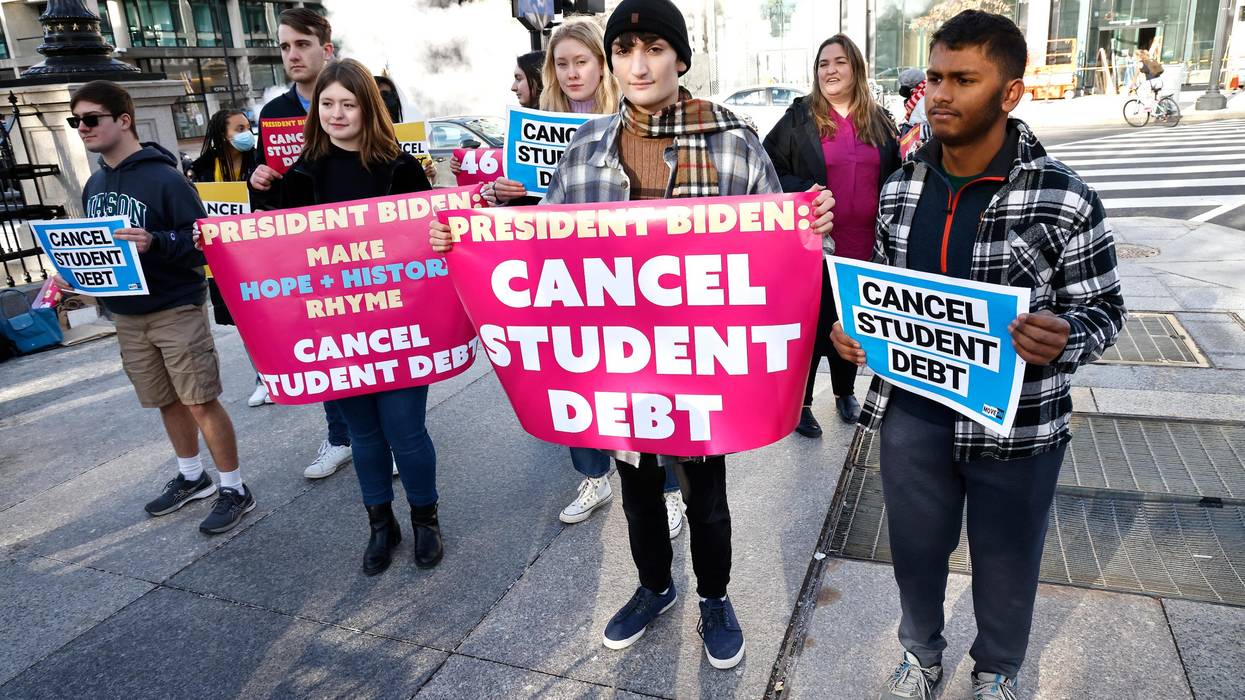
"If Congress will stop debt relief for pilots now, they'll do it to nurses tomorrow, teachers the next day, and social workers the day after," campaigners said.
Campaigners have issued a "red alert" over language included in the 2024 Federal Aviation Administration Reauthorization Act that could pave the way toward banning student loan cancellation.
The current draft of the routine bill bars executive branch officials from cancelling or forgiving student loans taken out to pursue flight training or education at the undergraduate level, the Debt Collective warned on Wednesday.
"They're trying to make relief illegal," the group posted on social media.
"Student debtors and their allies need to stick together and stick up for each other."
Buried 1,000 pages in, the language flagged by the Debt Collective comes under the heading, "Prohibition on mass cancellation of eligible undergraduate flight education and training programs loans."
"The secretary, the secretary of the treasury, or the attorney general may not take any action to cancel or forgive the outstanding balances, or portion of balances, on any federal direct unsubsidized Stafford loan, or otherwise modify the terms or conditions of a federal direct unsubsidized Stafford loan, made to an eligible student, except as authorized by an act of Congress," the text reads.
The Debt Collective named Sen. Chuck Schumer (D-N.Y.), Rep. Hakeem Jeffries (D-N.Y.), Sen. Maria Cantwell (D-Wash.), Sen. Tammy Duckworth (D-Ill.), and Rep. Rick Larsen (D-Wash.) as particularly responsible for the language.
"Forty-five million student debtors need to see this and get very, very loud," the group said.
While the language only prohibits the executive cancellation of a certain subset of loans, experts and advocates warned lawmakers would not stop there.
"Make no mistake, this is a test flight," author and Debt Collective co-founder Astra Taylor wrote on social media. "If they can make student debt cancellation illegal for some people, they will do it for others. Student debtors and their allies need to stick together and stick up for each other."
Taylor urged anyone concerned about the language to contact the legislators flagged by the Debt Collective.
The Debt Collective called the language a "test run."
"If Congress will stop debt relief for pilots now, they'll do it to nurses tomorrow, teachers the next day, and social workers the day after," the group said.
Former Ohio state Sen. Nina Turner, meanwhile, called out the lawmakers for hypocrisy.
"The same members of Congress who had PPP loans forgiven, want to make it illegal to cancel student debt," Turner wrote on social media, referring to the pandemic-era Paycheck Protection Program.
The question of who has the authority to cancel student loan debt has been a major stumbling block for the Biden administration's efforts to tackle the issue. The U.S. Supreme Court struck down President Joe Biden's student loan forgiveness plan in June 2023, arguing in part that the administration did not have the authority to forgive as much debt as it had without authorization from Congress.
Despite the ruling, the administration has found ways to forgive $143.6 billion for almost 4 million borrowers, though that's only a fraction of more than $1.7 trillion Americans owe in student loans.
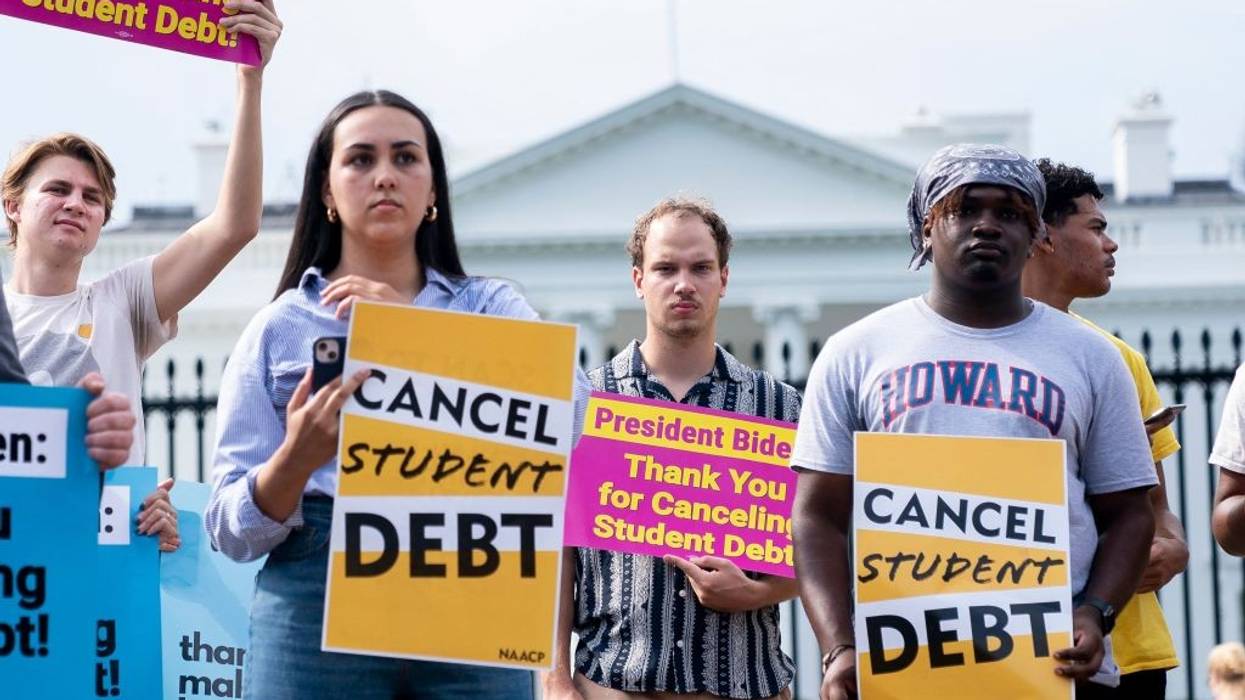
"President Biden says he is going to use every tool he can to cancel student debt, but there is still much more he can do," said a co-founder of the Debt Collective. "With this new tool, we are calling his bluff."
"Filling out this form creates an individual demand letter, tailored to your own student debt story, calling on the Department of Education to use its powers to cancel not just your debt, but everyone's."
That's how the Debt Collective describes a tool it launched Monday to increase pressure on the Biden administration to deliver on long-promised relief from federal student loan repayments.
As the group's website explains, for those who want to use the tool:
"Using this new tool can in no way harm you," said Debt Collective spokesperson Braxton Brewington. "The reality is, the Education Department has the authority to eliminate a person's federal student debts if they want to. We know because they've done it before. Whether they choose to cancel people's debts or not is completely up to their political rationale."
An FAQ section for the tool explains that filling out the form does not ensure debt cancellation, and "the Department of Education is not required to respond to these letters. However, our goal is to submit so many of them, they will HAVE to make a statement."
President Joe Biden—who is seeking reelection next year—announced his initial plan to use a 2003 law to cancel up to $20,000 per borrower last August, but the U.S. Supreme Court's right-wing supermajority struck down the program in June.
Now, with loan payments that have been paused throughout the Covid-19 pandemic set to resume in October, borrowers and some Democrats in Congress have renewed demands for urgent relief action by the Biden administration.
"President Biden says he is going to use every tool he can to cancel student debt, but there is still much more he can do," noted Debt Collective co-founder Thomas Gokey. "With this new tool, we are calling his bluff and demanding he cancel the debt for everyone today."
After the Supreme Court ruling, the Biden administration initiated a rulemaking process involving the Higher Education Act of 1965, but borrowers and campaigners are concerned about how long it is taking and warn that right-wing opponents of debt cancellation will use the time to come up with ways to keep blocking relief.
Hoping for swift and sweeping presidential action, the Debt Collective previously published a draft executive order that says in part, "The secretary of education shall immediately use the full extent of his power under the Higher Education Act and any other applicable law to cancel all obligations to repay federal student loans."