

SUBSCRIBE TO OUR FREE NEWSLETTER
Daily news & progressive opinion—funded by the people, not the corporations—delivered straight to your inbox.
5
#000000
#FFFFFF
To donate by check, phone, or other method, see our More Ways to Give page.
Daily news & progressive opinion—funded by the people, not the corporations—delivered straight to your inbox.
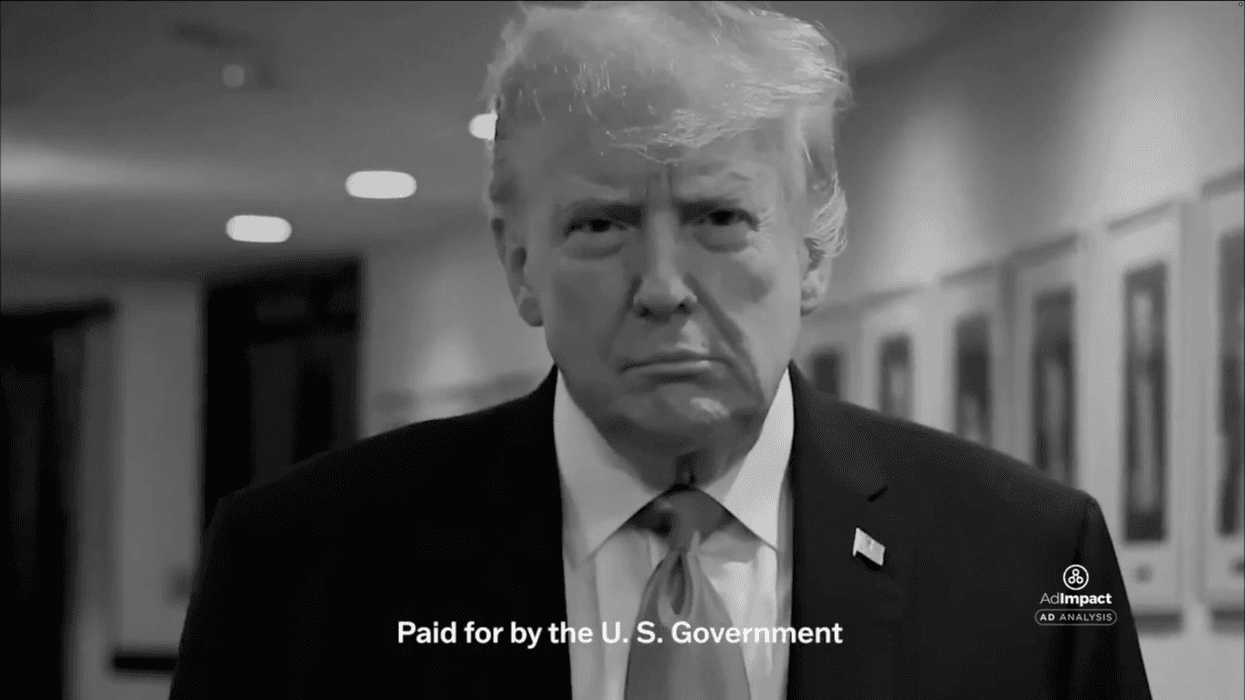
"So your hosts are on air all day saying this is illegal while you are taking the money and running the ads? Just gross," said one MS NOW critic.
CNN and MS NOW are both airing taxpayer-funded ads that promote President Donald Trump, who last month tried to ban the cable news networks from White House grounds.
As The Washington Post reported on Wednesday, two pro-Trump ads have aired on MS NOW and CNN this week in select markets, even though legal experts and government watchdogs say the ads violate laws prohibiting taxpayer funds for political propaganda.
In a statement provided to the Post, MS NOW spokesperson Richard Hudock defended the decision to run the ads.
"We know the size, engagement, and influence of the MS NOW audience, and apparently the White House does, too," said Hudock. "The decision to spend taxpayer dollars to reach our audience speaks for itself."
The MS NOW spokesperson also emphasized that "accepting an advertisement is not an endorsement of its message, and purchasing airtime will never purchase favorable coverage."
This justification drew an angry rebuke from Ron Filipkowski, editor-in-chief of MeidasTouch.
"This is just despicable by MS NOW, which has accepted stolen taxpayers dollars for 38 illegal ads," Filipkowski wrote in a Thursday social media post. "Give me a break with this bullshit statement too. So your hosts are on air all day saying this is illegal while you are taking the money and running the ads? Just gross."
According to a Wednesday report from Status, some MS NOW insiders are "pissed" about the decision to air the Trump ads, with some noting that the network's viewers will "hate" seeing them.
Government watchdog Public Citizen on Tuesday filed complaints with the Federal Communications Commission (FCC) and the Federal Trade Commission (FTC) demanding that the government-funded Trump ads be taken off the air.
However, Trump-appointed Trump FCC Chairman Brendan Carr told reporters on Wednesday that he is not planning any investigation into the ads, which he described as "public service announcements" despite the fact that they feature audio of the president personally vowing to "defeat communism, socialism, and Marxism in America."
"I don’t think there’s anything unique or different about it," said Carr. "There’s nothing in there that strikes me that merit any sort of FCC review."

Journalists from each of the outlets were barred from entering the White House complex just hours after a Trump-appointed federal judge ordered the president to reverse his ban.
Update (1:30 pm ET):
Journalists from Politico, MS NOW, and CNN said their access to the White House has been restored, hours after they were denied access to the complex despite a federal judge's Thursday morning order temporarily reversing President Donald Trump's ban on the outlets.
The director of the White House's press operations attested in a court filing that the administration had restored the outlets' access:
BREAKING: White House attests that access for POLITICO, CNN and MSNOW was restored as of 9:55am.https://t.co/32pQuZ1NmB pic.twitter.com/CZTqpJQeb9
— Kyle Cheney (@kyledcheney) September 24, 2026
Earlier (8:40 am ET):
Trump administration officials denied Politico, MS NOW, and CNN reporters access to the White House complex on Thursday morning, in blatant violation of a federal judge's decision ordering President Donald Trump to immediately reverse his ban on the three outlets.
US District Court Judge Timothy Kelly, a Trump appointee, ordered the White House in an early Thursday ruling to "immediately return, reinstate, and restore" press passes to reporters from the three outlets.
Politico reported that its journalist had "his press credentials confiscated" upon trying to enter the White House complex hours after Kelly's ruling.
Laura Barrón-López, a White House reporter for MS NOW, said she was also denied access to the White House. She said a Secret Service agent confiscated her press badge after it failed to scan properly.
Barrón-López said it is "not clear, based on the interaction that I had, whether or not this is a defiance... of the court order, or it's some kind of incompetence or lag in the system where they have not updated our press badges."
Watch her account:
MS NOW reports that their White House reproter was denied access to the White House this morning despite a court order demanding she have access pic.twitter.com/wqUiB413jV
— Aaron Rupar (@atrupar) September 24, 2026
According to CNN, one of its reporters and a photojournalist were "denied access to the White House grounds" early Thursday.
"There was no reason provided for the refusal and CNN will continue to try to gain access as regular business hours start," the outlet added.
Earlier:
A federal judge on Thursday ordered President Donald Trump to immediately restore White House access to CNN, MS NOW, and Politico, prominent media outlets that the president banned last week.
Timothy Kelly, a Trump-appointed judge for the US District Court in Washington, DC, granted the media outlets' request for a temporary restraining order as the legal fight continues. Kelly ruled that the outlets showed "a likelihood of success" on their claim that the president's ban and revocation of reporters' press credentials violated the Fifth Amendment's due process protections.
The judge rejected the Trump administration's claim that the president's ban on the three outlets was necessary to protect national security.
"The court is skeptical—at least on this record—that defendants’ interest in safeguarding national security is the actual motivation for, or is even advanced by, the revocation of plaintiffs’ hard passes," Kelly wrote. "The record lacks factual support for defendants’ contention that the revocation of plaintiffs’ hard passes will in fact protect national security or that national security will be endangered if the court orders their passes reinstated while this litigation proceeds."
Trump's initial announcement of the ban, on September 18, said nothing about national security. The president vaguely accused the outlets he has long attacked of publishing "FICTION and LIES."
In letters submitted to the court as part of the ongoing legal fight over the ban, the White House press office cited examples of reporting from the three outlets that it claimed damaged US national security.
In its letter to CNN, the White House points to the outlet's reporting on "construction details related to the East Wing bunker" and a story on the US military's bombing of an Iranian elementary school.
Ted Boutrous, the lawyer representing the news outlets, welcomed Kelly's decision to grant the temporary restraining order, which will be in effect for 14 days.
"This is a strong ruling vindicating freedom of the press, due process, and the rule of law," Boutrous said. "We greatly appreciate the court’s swift action."
Kelly ordered the Trump administration to "immediately return, reinstate, and restore" White House press passes to reporters from CNN, MS NOW, and Politico.
It's unclear how swiftly the news outlets will resume their typical coverage of the White House following the judge's order. Earlier this week, a White House event was broadcast with no audio after the administration dropped CNN from its TV press pool duties, prompting other major networks to ditch pool coverage in solidarity with CNN.
On Wednesday, when Trump greeted Chinese President Xi Jinping upon his arrival in the US, no major TV network captured the moment.
"Other television outlets whose crews were present, according to signs on their tripods and cameras, were NewsNation, Newsmax, Right Side Broadcasting Network, One America News, and LindellTV," The Associated Press reported.

"There will effectively be no TV coverage of Trump's UN visit or other presidential events," said one media reporter. "This is a very big deal."
The major US television networks launched what was described as a boycott against TV pool coverage of President Donald Trump on Monday after the White House dropped CNN from the network's scheduled pool assignment, escalating the administration's assault on the country's most prominent media organizations and press freedom.
CNN was set to act as the television pool network accompanying the president during his trip to the United Nations General Assembly this week, but the administration stripped the network of its assignment shortly after Trump banned CNN, MS NOW, and Politico from the White House, prompting a retaliatory lawsuit from the three outlets.
The major television networks typically rotate responsibility for traveling video coverage of the president. Bryan Boughton, Washington, DC bureau chief for Fox News and current chair of the TV press pool, said Monday morning that "effective today, the TV pool will not be covering events designated as pool coverage of the president."
"This follows the White House’s position preventing CNN from fulfilling its assigned pool duties," Boughton added. "There will be no replacement pool put in place."
Scott Nover, a media reporter with The Washington Post, noted that "it's effectively a boycott by the fellow members—ABC, CBS, NBC, and FOX."
"There will effectively be no TV coverage of Trump's UN visit or other presidential events, though I imagine smaller networks may take the White House's own feed," Nover wrote on social media. "This is a very big deal and one only possible because of solidarity from the whole pool."
The TV press pool developments unfolded as CNN, MS NOW, and Politico announced early Monday that they intend to sue the Trump administration for banning them from the White House. The outlets argued that the ban, which Trump announced late last week, endangers press freedom and "the public’s right to independent journalism free from government interference."
CNN, MS NOW and Politico announced the lawsuit in a joint statement, describing the legal action as an effort to "protect our First Amendment rights and defend the principle that the government does not decide what the press reports or publishes."
"Without notice or process, the White House revoked our journalists' credentials because it objected to our reporting," the news organizations said. "Left unchallenged, this threatens press freedom."
The lawsuit came after journalists from CNN, MS NOW and Politico were denied access to the White House grounds early Saturday, hours after Trump announced in a social media tirade that he was banning the outlets. Trump, without providing any examples, accused the three outlets of publishing "fiction and lies when they're covering the president of the United States"—and suggested other news outlets could also be banned in the near future.
When Politico reporter Cheyenne Haslett attempted to enter the White House on Saturday in the wake of Trump's social media post, Secret Service denied her access and confiscated her press pass. Journalists from the other two outlets reported similar experiences.
"We stand by her and all reporters here covering the White House," Jonathan Greenberger, Politico's global editor-in-chief, wrote in response to the incident involving Haslett. "We will vigorously defend our First Amendment rights."
The media outlets' lawsuit is set to be filed Monday in a federal district court in Washington, DC. The suit aims to restore the outlets' White House access and alleges that Trump's ban violates free press and due process protections.
"The president's ban of CNN, MS NOW, and Politico from the White House is a direct assault on the First Amendment and a blatant violation of due process," said Ted Boutrous, an attorney for the outlets. "The president has been explicit that this ban is intended to punish reporting he doesn’t like and to intimidate journalists and news organizations covering him and his administration. This ban on the free press harms the American people, who are entitled to rigorous, fact-based coverage of the president of the United States. The law is on our side across the board, and we look forward to presenting our arguments to the court as soon as possible."
Jameel Jaffer, executive director, Knight First Amendment Institute at Columbia University, applauded the news outlets' lawsuit and said his organization would support them in court. The Knight First Amendment Institute has previously supported The Associated Press and other news outlets in successful legal fights against the president, who has shown blatant disdain for press freedom during his two terms in office.
"We’re glad to see that these news organizations are suing," said Jaffer. "The president’s decision to bar them from the White House for the content of their reporting is a flagrant violation of the First Amendment. It’s an attack both on press freedom and the public’s right to independent information about the government."
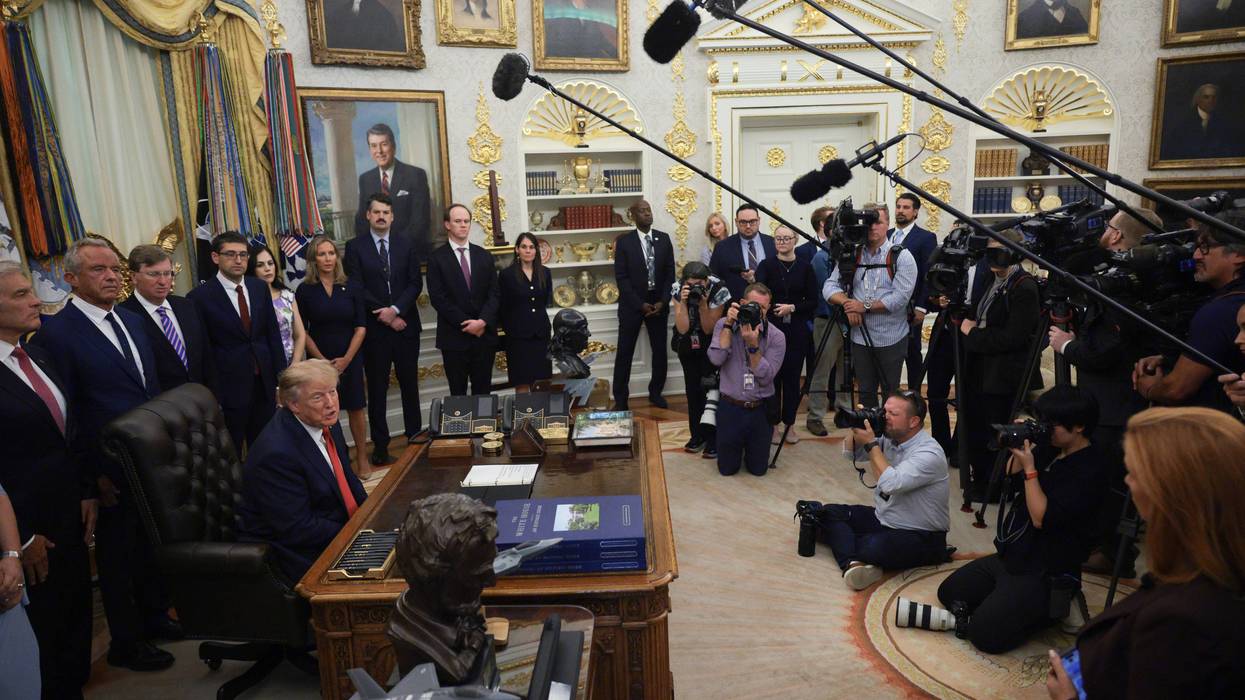
One press freedom advocate said it was "difficult to imagine a more blatant violation of the First Amendment."
In one of his most direct assaults on the First Amendment, President Donald Trump announced in a Friday afternoon tirade that he would ban CNN, MSNOW (formerly MSNBC), and Politico from the White House.
"I am proud to announce that, effective immediately, I am banning Fake News CNN, MSNOW... and Politico from the White House as a result of their constant 'reporting' FAKE NEWS!" the president wrote in a rambling Truth Social post.
"Media Outlets shouldn’t be able to constantly write or report FICTION and LIES when they’re covering the President of the United States, the Trump Administration, or the United States of America," he added, though he did not specify any particular reports he objected to. He added that bans on "Other Fake News Media Outlets" would soon follow.
Trump, who has long portrayed himself as a defender of free speech, has taken unprecedented actions to censor news outlets during his second term, including threatening networks' broadcast licenses through the Federal Communications Commission over unfavorable programming.
As of Friday afternoon, it's unclear whether Trump actually plans to follow through on his White House ban.
Reacting to the news on the air, CNN anchor Brian Stelter said that the network's reporting team "remains at the White House working just like a usual normal Friday afternoon." He added that "right now, there is no indication that the administration is taking any steps to actually follow through on his threat."
"Certainly, if there is an attempt to remove journalists from the White House, well, our cameras are rolling. I think viewers will see it happen," he said.
"CNN stands fully behind our White House team and their fair and accurate reporting," the network said in a statement following news of the ban. "We have a right under the US Constitution to do that reporting without hindrance or interference from the government."
Bruce D. Brown, the president of the Reporters Committee for Freedom of the Press, told Common Dreams in an email Friday that simply banning news organizations from the White House over the content of their reporting "would be flatly unconstitutional."
"The First Amendment is clear that once the White House invites in some journalists, it can't ban others because it doesn't like their reporting," he said. "This is textbook viewpoint discrimination and will be quickly struck down by the courts if challenged."
Federal courts have previously struck down attempts by Trump to bar certain press outlets on First Amendment grounds. Last year, a judge ruled that Trump's removal of the Associated Press from the White House press pool for its refusal to adopt the name "Gulf of America" for the Gulf of Mexico was an unconstitutional form of viewpoint discrimination.
Defense Secretary Pete Hegseth's rule banning reporters from obtaining information not authorized by the Pentagon, which led dozens of journalists to turn over their press badges and walk out of the building in protest, was also struck down as a violation of press freedom.
In light of these previous failures, Jameel Jaffer, the executive director of the Knight First Amendment Institute at Columbia University, expressed bewilderment that Trump was once again trying to ban news outlets from the White House.
"With so many courts having ruled against him on exactly this point, you’d think President Trump would have learned this lesson by now," he said in a statement.
Seth Stern, chief of advocacy at the Freedom of the Press Foundation, agreed it was "difficult to imagine a more blatant violation of the First Amendment than Trump banning news outlets from the People’s House for criticizing the government."
"It’s also hard to imagine a dumber move," he said. "The historically unpopular president has been retaliating against the press for years, but it hasn’t helped him. The press keeps exposing his corruption and his failures. These outrageous attacks only demonstrate how scared he is of an informed public."
He added that the press must "fight back to protect their rights, not only to access the White House but to access the public records and whistleblowers this administration so desperately wants to keep from them."
Trump's announcement was met with outrage from Democrats in Congress, who described it as an assault on a basic constitutional freedom.
Sen. Mark Warner (D-Va.) responded to the news simply by posting the full text of the First Amendment on X.
"Fascist and communist governments limit press access to only favorable outlets, persecute journalists, and suppress truthful reporting," said Rep. Jim McGovern (D-Mass.) in a post to social media. "Trump’s administration is doing all of that."
Sen. Ruben Gallego (D-Ariz.) agreed the move was "straight out of the authoritarian playbook."

"The White House and Pentagon have so far refused any accountability or transparency," said CNN host Jake Tapper.
Tuesday marks five months since the US carried out a deadly attack on the Shajareh Tayyebeh Elementary School in the city of Minab, Iran, which killed more than 150 schoolchildren along with over a dozen teachers.
The US Department of Defense (DOD), however, has yet to release the results of the investigation it said it was conducting on the strike.
In a Tuesday social media post, CNN host Jake Tapper highlighted the DOD's silence about the school attack, noting that "the White House and Pentagon have so far refused any accountability or transparency."
Tapper then posted a timeline of accumulated evidence that the US was responsible for the deadly strike, while also including a quote from Rachel VanLandingham, a retired official from the Judge Advocate General's Corps (JAG), who said "it's atrocious that we haven't had an acknowledgement, an explanation, and an apology yet" from the Pentagon.
Earlier this month, CNN reported that the investigation into the school bombing was essentially complete, and it found that US military commanders "bypassed warnings" indicating that their database of strike targets inside Iran was badly out of date shortly before authorizing the attack on the building.
Two of CNN’s sources said senior commanders ignored the warnings out of “expediency,” as they did not want to significantly delay providing target lists during the outset of the war, which Trump illegally launched in February without authorization from the US Congress.
A group of experts at the United Nations last week renewed calls for the US to release the findings of its probe into the school bombing, noting that the US has "obligations under international humanitarian law and international human rights law."
“Five months following the school bombing in Minab, the US and Israel have not made any findings public, raising valid questions regarding the impartiality, effectiveness and transparency of any investigation that may be underway,” they said. “Justice delayed is justice denied.”
Two weeks ago, a group of 25 Democratic US senators sent a letter to Defense Secretary Pete Hegseth pressing him to release the results of the Pentagon investigation and to submit to Congress a "prevention and remediation plan that identifies the specific corrective actions the Department will take to ensure this does not happen again."
"The United States military has a legal and moral obligation to take all feasible precautions to prevent civilian harm," the senators wrote. "When a U.S. strike kills civilians, the Department owes Congress, the American people, and the victims’ families a clear accounting of what happened and a credible plan to prevent future failures."
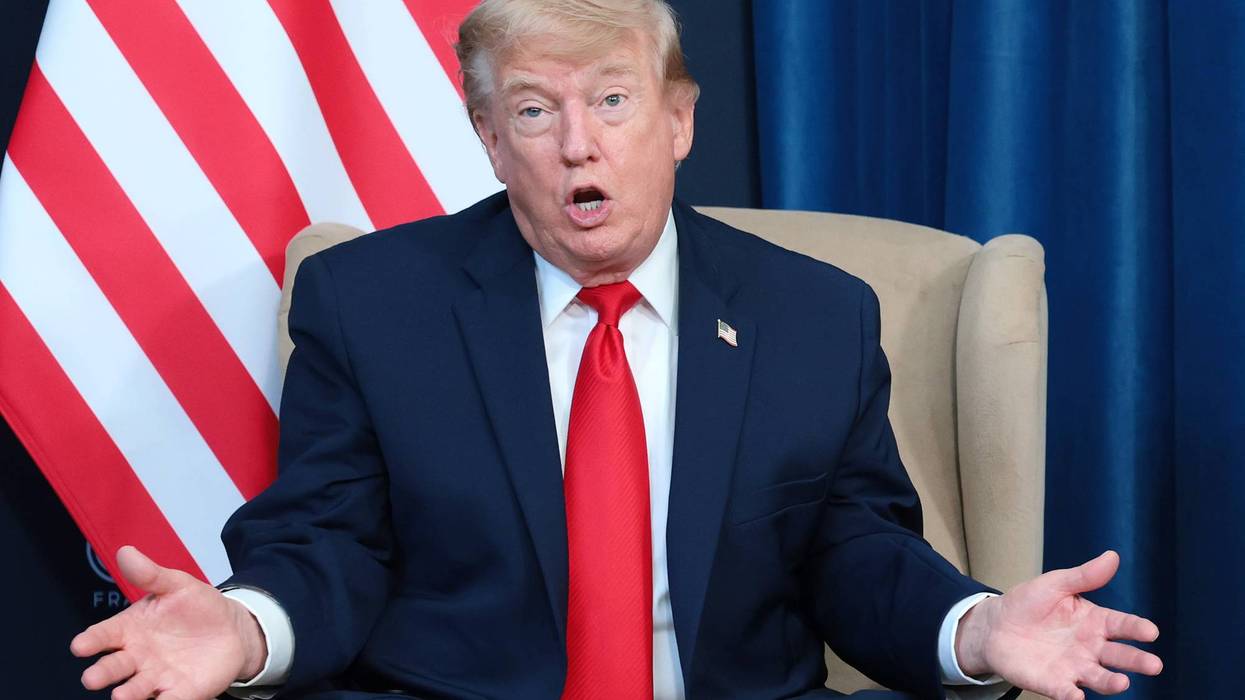
Despite the strait's closure, Trump insisted it was "open as far as we're concerned."
US President Donald Trump on Sunday twice told journalists to stop asking him about the status of the Strait of Hormuz, which Iran once again closed after the president declared an end to the ceasefire deal between the two countries.
The first instance came during an interview with NBC News' Kristen Welker, who pointed to conflicting statements from the Iranian government and US Central Command about the status of the strait, which is an essential shipping lane for global petroleum supplies.
Trump replied that "it's open, and I don't want to talk about it because I want to honor the life" of the late Sen. Lindsey Graham (R-SC), who died on Saturday from what his office described as "a brief and sudden illness."
"So I don't want to talk about it," Trump continued. "I told you that before the call."
WELKER: Iran says the Strait of Hormuz is closed. CENTCOM says it's open. Which is it?
TRUMP: It's open, and I don't want to talk about because I want to honor the life of Lindsey Graham, so I don't want to talk about it. I told you that before the call. pic.twitter.com/3ed7dN1bhK
— Aaron Rupar (@atrupar) July 12, 2026
Shortly after, during an interview with CNN's Jake Tapper, Trump was again asked whether the strait was still open.
"It's open as far as we're concerned," Trump told Tapper. "Don't talk about it. Talk about the reason you asked me to speak."
"Okay," Tapper replied. "We appreciate your time, sir."
TAPPER: Iran has declared the Strait of Hormuz closed. Is that true?
TRUMP: It's open as far as we're concerned. Don't talk about it. Talk about the reason you asked me to speak. pic.twitter.com/TwssTycQdF
— Aaron Rupar (@atrupar) July 12, 2026
Iran shut down shipping traffic in the strait after Trump launched an illegal war against the country in late February. The strait's closure resulted in spiking oil and gasoline prices, which coincided with further erosion in Trump's approval ratings.
Although traffic through the strait initially picked up in the wake of a June memorandum of understanding signed by the US and Iran, it has since slumped as the ceasefire between the two nations has fallen apart.
Ana Marie Cox, contributing editor at The New Republic, bashed both Welker and Tapper for heeding the president's requests and not pushing him to answer questions about the war he unlawfully started.
"Frankly astonished that supposed news sources agreed to terms to interview Trump and appeared to be deferential to them," Cox wrote in a social media post, "enough that they were apologetic in brining up other topics."
Cox's sentiment was echoed by Kai Ryssdal, host of NPR's Marketplace, who remarked that "the guy being interviewed doesn’t get to pick the questions."
Journalist Helen Kennedy challenged Trump's assertion that asking about the status of the Iran war was irrelevant when talking about Lindsey Graham.
"Making war with Iran was Lindsey Graham's favorite thing," Kennedy observed. "It's not like it's unrelated."
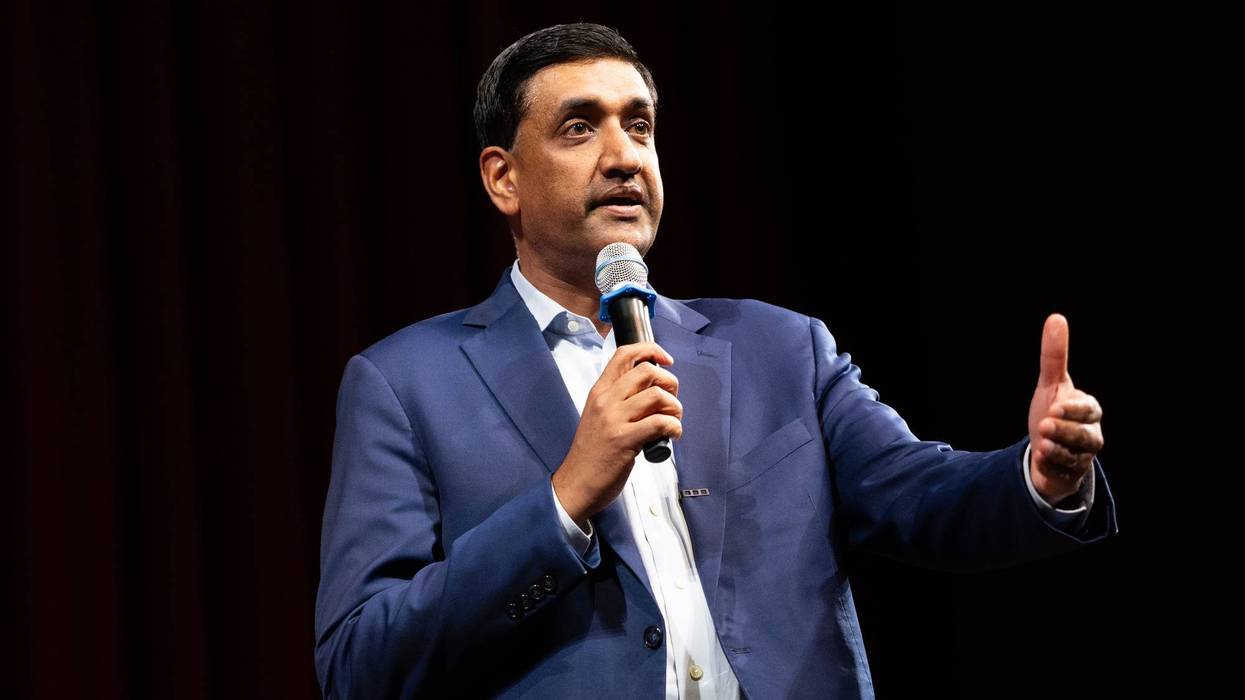
"These hoodlums come in with machine guns—M4, an American-made machine gun—and they detain us. They block off the road."
Rep. Ro Khanna this week was detained by a group of Israeli settlers whom he described as "hoodlums... with machine guns" while making a visit to a Palestinian village in the occupied West Bank.
In an interview with Reuters published on Saturday, Khanna (D-Calif.) said he and his tour group were surrounded by armed settlers as they were traveling through the West Bank on Wednesday.
"We were at a village that Israeli settlers had destroyed, they had destroyed the school, they had destroyed that village, and we were just looking at it," said Khanna. "And these hoodlums come in with machine guns—M4, an American-made machine gun—and they detain us. They block off the road."
The California Democrat said that the settlers called in members of the Israel Defense Forces (IDF) to help them deal with him and his group.
"The IDF is on their side," Khanna remarked, "not on the side of the Americans."
Cameron Kasky, an aide to Khanna, told Reuters that the group was held for over an hour before officials whom he believed to be police intervened and secured their release.
The IDF told Reuters that both military troops and police officers dispersed the settlers who had set up a roadblock near the small Palestinian village of Khirbet Zanuta.
Khanna wasn't the only American to have a run-in with Israeli settlers this week, as CNN reported that four settlers attacked groups of journalists, including CNN reporters and crew, who were traveling through an area north of the Palestinian city of Ramallah on Saturday.
As the journalists were driving, four settlers blocked off the road with their cars and began attacking the reporters' vehicles with wooden clubs and metal rods.
"The settlers then began to jump on the vehicle behind CNN's—carrying another group of journalists—and smashed the windshield of that vehicle," the network reported. "Another group of settlers tried to block a separate exit route before chasing the journalists towards the town of Sinjil."
Israeli police arrived on the scene and arrested four settlers who were allegedly responsible for the attacks, CNN reported.
"The Israel Police and the IDF view any manifestation of violence or causing damage to property very seriously," the Israeli officers said after the arrests, "especially when it concerns media personnel performing their work."
Israeli settlers for years have carried out violent attacks on Palestinians living in the West Bank, and witnesses have regularly described IDF soldiers at the scene either standing by as the attacks occur or even actively helping the attackers.
In an interview with CNN on Tuesday, Israeli Prime Minister Benjamin Netanyahu said that claims about settler violence have been "blown up beyond belief," describing attacks as being carried out by a small number of "juvenile delinquents."
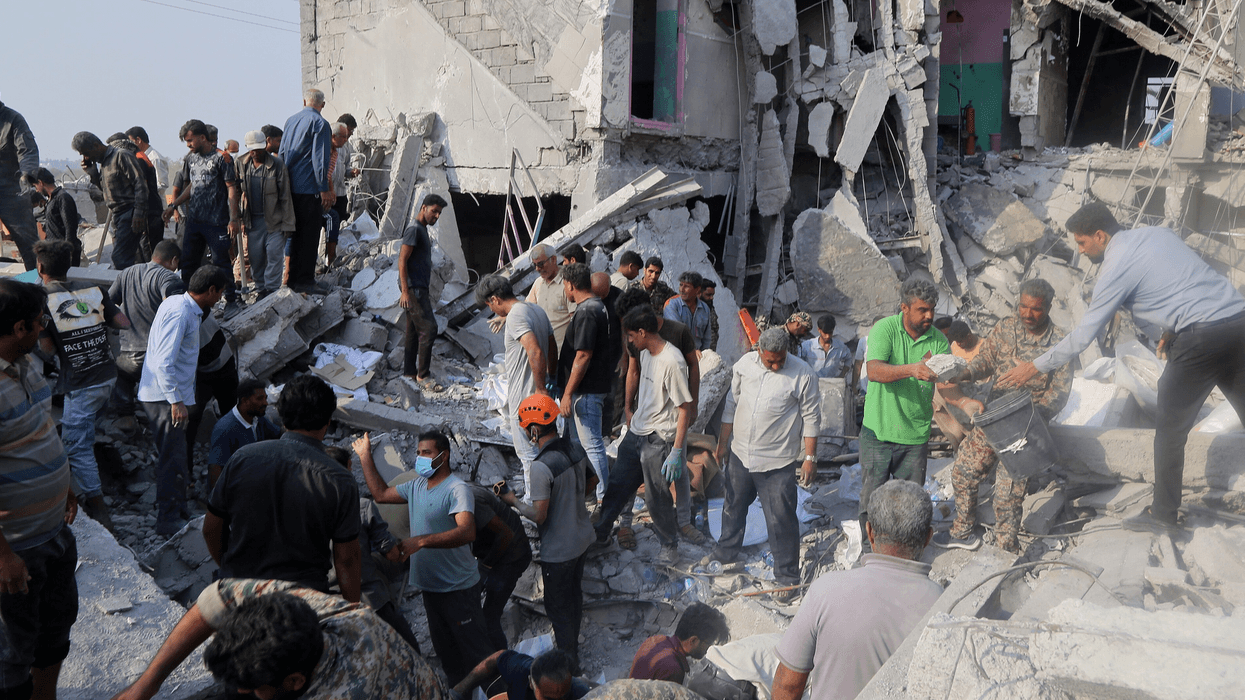
Sources told CNN that warnings were ignored due to "expediency."
US military commanders "bypassed warnings" indicating that their database of strike targets inside Iran was badly out of date shortly before launching a deadly attack on an Iranian primary school in the city of Minab, according to a Tuesday report from CNN.
Three sources told CNN that senior military officials received messages informing them that the intelligence behind the target list had been gathered years ago and "needed to be re-vetted."
Regardless, the proposed Iranian targets were added to a strike list shortly before the US launched an attack on the Shajareh Tayyebeh Elementary School, killing more than 150 schoolchildren along with over a dozen teachers.
Two of CNN's sources said senior commanders ignored the warnings out of "expediency," as they did not want to significantly delay providing target lists during the outset of the war, which Trump illegally launched in February without any authorization from the US Congress.
For months, Defense Secretary Pete Hegseth has repeatedly dodged questions about the strike on the school, insisting that he didn't want to comment on an ongoing Pentagon investigation.
However, one of CNN's sources said that US military officials "knew within days how the mistake happened," as the school was targeted based on "obviously old info."
CNN noted that old satellite images showed the school once belonged to the same compound as an Islamic Revolutionary Guard Corps facility. However, as recently as 2016, images showed "that a fence had been erected to separate the school from the rest of the base, and that a separate entrance to the school had been built."
Rutgers Law School Professor Adil Haque, noting that intelligence on many of the targets was more than a decade old, called the US decision to proceed with attacks "inexcusable."
The US Department of Defense has still not released its investigation into the bombing, drawing criticism from Palestinian-American policy analyst Yousef Munayyer, who reacted to the CNN report by describing the US military as being "quick to bomb, slow to investigate."
The slow pace of the investigation has also drawn criticism from Rep. Adam Smith (D-Wash.), the ranking member of the House Armed Services Committee.
During a May congressional hearing, Smith grilled Adm. Brad Cooper about why the US hasn't taken responsibility for the school strike despite clear evidence that it was at fault.
"In the past, when we’ve had these type of mistakes, they’ve been quickly acknowledged," Smith said, "even if a further investigation is necessary to figure out prevention methods."
Smith also criticized Hegseth for showing a "callous disregard for any sort of rules of engagement or protecting of civilian life" during his tenure as defense secretary.
Last month, President Donald Trump brushed off responsibility for the strike on the school, stating that "mistakes are made" and "war is nasty."
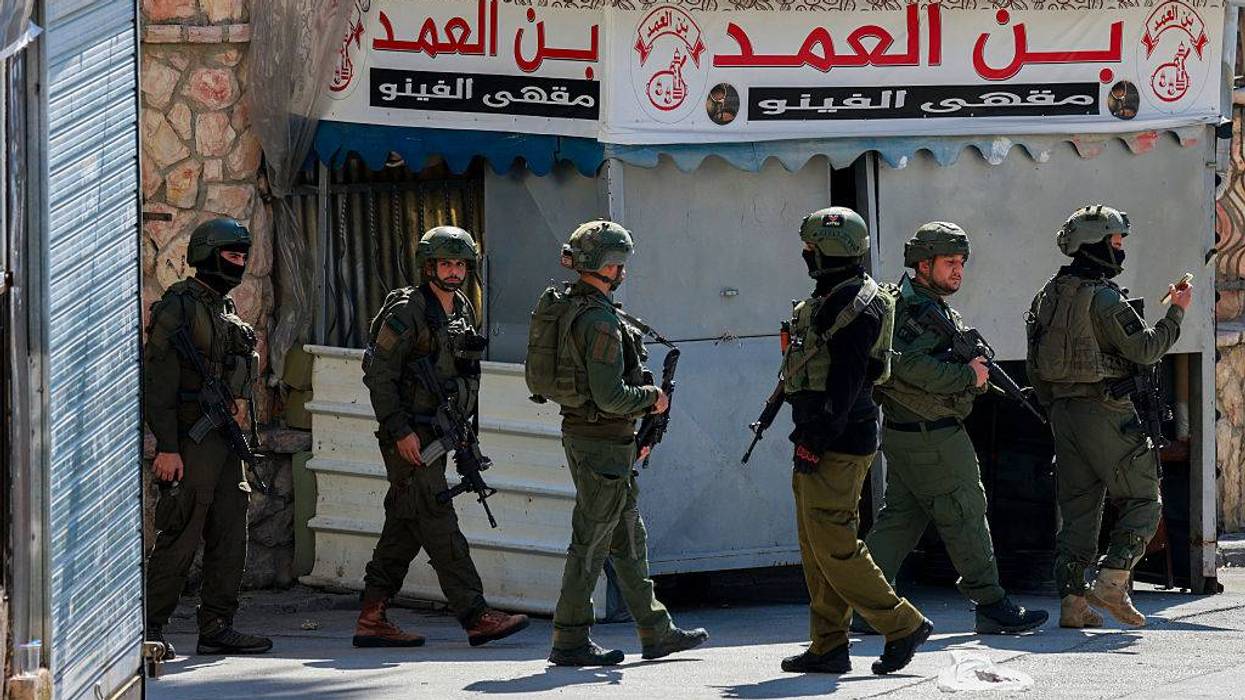
"Messiah complexes, talk of revenge, and the use of force against journalists are just symptoms of what's been happening to the army over the past three years," said one Israeli journalist.
Soldiers in the Israel Defense Forces on Friday were caught on camera assaulting and detaining a crew of CNN journalists while they were reporting from the occupied West Bank.
A video of the incident posted on social media by CNN Jerusalem correspondent Jeremy Diamond shows the CNN crew walking near the Palestinian village of Tayasir, which in recent days has come under assault from Israeli settlers who established an illegal outpost in the area.
The crew are then accosted by armed members of the IDF, who order them to sit down. After the crew complies with their commands, the soldiers come to seize the journalists' cameras and phones that are being used to record the incident.
A soldier then puts CNN photojournalist Cyril Theophilos in a chokehold and forces him to the ground. Writing about the assault later, Theophilos said that the soldier "pushed and strangled me," adding that this kind of violence "is just a symptom of the IDF's actions in the West Bank."
According to Diamond, the CNN crew were subsequently detained for two hours. During that time, Diamond wrote, it became clear that the ideology of the Israeli settlers movement was "motivating many of the soldiers who operate in the occupied West Bank" and that the Israeli military regularly acts "in service of the settler movement."
For instance, one IDF soldier acknowledged during conversations with the CNN crew that the settler outpost near Tayasir was unlawful under both international and Israeli law, but insisted "this will be a legal settlement... slowly, slowly."
The soldier also said he wanted to exact "revenge" on local Palestinians for the death of 18-year-old Israeli settler Yehuda Sherman, who was killed last week by a Palestinian driver. Palestinians who witnessed Sherman's killing have said that the driver was trying to stop Sherman from stealing sheep.
The IDF issued an apology to CNN over the incident, insisting that "the actions and behavior of the soldiers in the incident are incompatible with what is expected of IDF soldiers."
However, this apology was deemed insufficient by Barak Ravid, global affairs correspondent for Axios.
"Apologies are not enough," he wrote on social media. "There is a need for clear accountability. 99.9% of the time there is zero accountability."
The soldiers' actions also drew condemnation from Haaretz reporter Bar Peleg, who argued that problems in the IDF have only grown worse under the far-right government led by Prime Minister Benjamin Netanyahu.
"Messiah complexes, talk of revenge, and the use of force against journalists are just symptoms of what's been happening to the army over the past three years," Peleg said. "The chief of staff and the commanding general can write another thousand letters and wave flags all they want, but the process already seems irreversible."
Palestinian human rights activist Ihab Hassan argued that incidents like the one captured by CNN are all too common for the IDF.
"The Israeli army arrests and assaults journalists, while settlers who commit horrific crimes against Palestinian civilians enjoy total impunity," he wrote. "This is state-backed terrorism."
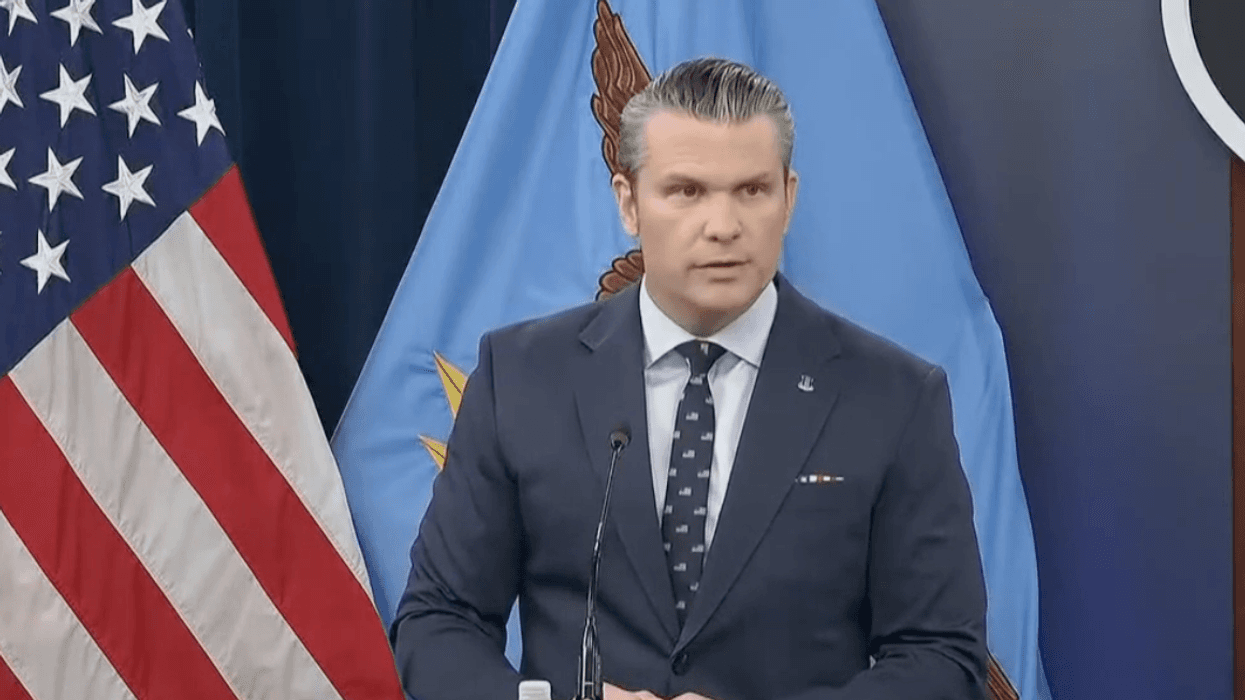
In a tirade against media coverage of the Trump administration's illegal assault on Iran, Pentagon Secretary Pete Hegseth said, "The sooner David Ellison takes over that network, the better."
Pentagon Secretary Pete Hegseth used part of his Friday press conference to complain about what he described as negative and "fake" news stories about the administration's illegal war on Iran, openly pining for the day the son of billionaire Trump donor Larry Ellison takes control of CNN.
"The sooner David Ellison takes over that network, the better," said Hegseth, pointing specifically to CNN's report Thursday that "the Pentagon and National Security Council significantly underestimated Iran’s willingness to close the Strait of Hormuz in response to US military strikes while planning the ongoing operation."
"CNN doesn't think we thought of that," said Hegseth, a former Fox News host who is facing mounting backlash over the US military's bombing of an Iranian elementary school on the first day of the war and poor strategic planning overall.
"It's a fundamentally unserious report," Hegseth added.
Watch:
Hegseth: "Some in the press just can't stop. Allow me to make a few suggestions. People look at the TV and they see banners, headlines -- I used to be in that business, I know everything is written intentionally. For example, a banner -- 'Mideast War Intensifies.' What should the… pic.twitter.com/mbz70e7SsY
— Aaron Rupar (@atrupar) March 13, 2026
David Ellison is the CEO of Paramount Skydance, which is poised to acquire CNN owner Warner Bros. Discovery after a lengthy bidding war with Netflix. The deal still must receive regulatory approval from the Trump administration and in Europe, and some state attorneys general have vowed to closely scrutinize the agreement.
"Hysterical Hegseth wants state media," Jim Acosta, a former CNN anchor and White House correspondent, wrote in response to the Pentagon secretary's comments on the looming Ellison takeover.
Hegseth rejected as "patently ridiculous" the notion that the Trump administration—whose deadly incompetence has been on full display since the start of the war—would fail to adequately plan for Iran to retaliate against a military attack by closing the Strait of Hormuz, a route through which roughly 20% of the world's oil supply travels each year.
"Don't need to worry about it," Hegseth said Friday of the strait's closure, as oil prices skyrocket.
Hegseth's latest attack on the US media, which he called insufficiently "patriotic," came days after it was revealed that the Pentagon decided to bar press photographers from briefings about the Iran war after the secretary's staff reportedly deemed some of the photos taken during a March 2 briefing "unflattering."
"I, along with print photographers, have been denied entry to cover today’s Pentagon briefing," reported Nancy Youssef, a journalist with The Atlantic, on Friday morning. "All other media were allowed in."
Mark Schoeff Jr., president of the National Press Club, called the Pentagon's decision to bar photographers from briefings "deeply troubling," saying it "runs counter to the fundamental principles of transparency in a democratic society."
"A government confident in its actions welcomes scrutiny. It does not restrict it," said Schoeff. "When the government decides which images the public is allowed to see, transparency is replaced by control. Accountability doesn't take place behind closed doors."