"What do we need to do to improve the quality of life of our citizens of the world?" —Dr. Jane O'Meara Sanders, The Sanders Institute
"I think it's important that we realize the intersectionality of the issues," explained Jane O'Meara Sanders, who along with executive director David Driscoll founded The Sanders Institute and organized the Gathering. "I mean environmental sanity has to do with income inequality and so many things. And that's why we intentionally do things more comprehensively because we don't want to say, 'We're having an environmental conference,' or 'We're having a housing conference.'"
The conference, she said in an interview with Common Dreams, was one that wanted to ask: "What do we need to do to improve the quality of life of our citizens of the world?"
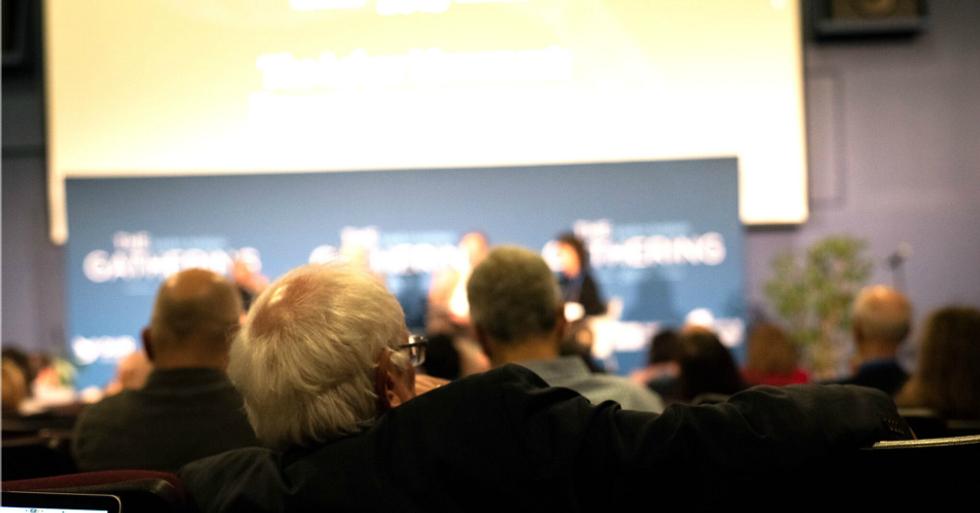
And while Jane's husband, Sen. Bernie Sanders (I-Vt.), was at the conference—delivering the keynote and sitting on several panels—the weekend was distinctly not about him. Throughout the weekend, the senator could be found waving off reporters, sitting quietly in the back row during panel discussions, trying not to be seen, but listening intently to what was being said by the assembled speakers and the engaged attendees.
"I'm a guest here," Bernie told The Real News Network in an interview on Saturday as he credited his wife and the Institute for putting on the event.
"And what Jane understood," he explained, "is that when we deal with climate change, when we deal with the economy, when we deal with housing, when we deal with criminal justice or immigration issues—we have got to deal with them in a holistic way. We cannot see them as silo-ized, separate issues. And a lot of that has to do with the fact that we live in a nation owned and controlled by a small number of multi-billionaires whose greed—incredible greed, insatiable greed--is having an unbelievably negative impact on our entire country."
Despite being sandwiched between the just-concluded 2018 midterms and the hugely consequential 2020 race—which is already driving frenzied discussion and speculation—the three-day retreat was devoid of the kind of horse-race, personality-driven noise that tends to dominate the vapid political discourse seen on MSNBC, Fox News, and in the pages of America's major newspapers.
Aside from the occasional "Bernie 2020?" outburst from an audience member—and former Greek Finance Minister Yanis Varoufakis' short but forceful demand that Sanders run for president for the good of the world—the Sanders Institute Gathering was predominantly driven by and organized around the issues and crises affecting the everyday lives of ordinary people in the United States and across the globe, from grotesquely unequal healthcare systems to the climate crisis, which threatens to render the planet uninhabitable for future generations if immediate and bold action is not taken.
What's love got to do with it?
"Only all that we love is on the line," declared Our Revolution president and Sanders Institute fellow Nina Turner during a panel on the moral necessity of Medicare for All, capturing both the ethos of the retreat and the urgency of the issues at hand.
Applauding nurses and others leading the charge for progressive change throughout the U.S. and the world, Turner said success will only come from working together "to soften the soil, to have the conversations, one person to another, that are necessary to ensure that our family and our friends and our play cousins understand what is at stake. You can't win somebody's head unless you win their heart."
"You can't win somebody's head unless you win their heart." —Nina Turner, Our Revolution
Winning over a critical mass of hearts—as the progressive experts and organizers emphasized repeatedly across panels on human rights, the criminal justice system, labor, and the climate crisis—will require an enormous grassroots movement that is not merely single-issue focused and national, but far-reaching and international in scope.
" Capitalism isn't working for a huge number of people on this planet," said journalist and activist Naomi Klein during a panel on the necessity of a Green New Deal as she explained why the crisis also carries with it a political opportunity that must be recognized.
"If we can come up with a framework for responding to climate change that is actually a challenge to economic inequality, joblessness, economic precarity, the need for Medicare for All, and the rest of it," Klein said, "then actually we're gonna build a much broader movement, and also a movement that will fight harder, because it has so much to gain. Because not only is it not threatened by systemic change, it's hungry for it."
"What is required now is transformation of every aspect of society," Klein added. "In other words, a political revolution."
But simply winning over hearts is not sufficient, said many participants, for the kind of transformative change that is necessary for the United States and the world to confront staggering levels of poverty and inequality, lack of healthcare, and the existential threat posed by the climate crisis. In addition to a vision of justice for all, argued the diverse array of voices featured at the Gathering, any successful progressive movement must also rest on a solid intellectual foundation that demonstrates not just the moral necessity of bold progressive initiatives, but also the striking practicality of these objectives.
Social justice from below and the criminals at the top
Discussing criminal justice and the necessity of holding power to account in the U.S., academic and social justice activist Cornel West denounced the two-tiered nature of the nation's justice system. "Why are the criminals at the top hardly talked about?" West asked during a morning panel discussion. "All that market manipulation, insider trading, predatory lending, fraudulent activity on Wall Street. How many of them went to jail? Not at all, not at all. Massive corruption in government, Republicans and Democrats. Republicans are not the only gangsters. And greed is a difficult thing not to be seduced by when you're not accountable."
"When we talk about criminality," West added, "we have to put it in the right context. If we had all the prison reform in the world and still had high levels of poverty, still had decrepit school systems, still had inadequate housing, still had dominant images of a corporate media in which you deal with conflict by killing other people, we still have a problem."
Criminal Injustice
On the broader effort of building a viable progressive movement, West told attendees: "It's got to be solidaristic. If we don't have a left populist option that's credible, we're headed down a neo-fascist road. There's no guarantee that we're gonna win. So what? We're gonna fight anyway."
In the panel discussing why organized labor is essential to democracy, Joseph Geevarghese, executive director of Good Jobs Nation, argued that in order for the broad progressive movement to be successful, workers must be marshalled in order to ensure there is political power behind its shared and visionary demands.
"There's been an all-out attack by the corporate class to destroy worker power," Geevarghese said. "That's significant because the power of workers is the only thing that stands between our democracy and having a completely corporate-run government. The working class has been eviscerated and we don't have a powerful countervailing force to take on capital."
"The working class has been eviscerated and we don't have a powerful countervailing force to take on capital."
--Joseph Geevarghese, Good Jobs Nation
And so, he added, "If we are to win the vision that all of us share, I would argue that the conditions precedent for that are empowering the working class to take on the corporate class."
RoseAnn DeMoro, former head of National Nurses United, told Common Dreams after the panel that organized labor and non-unionized citizens who support progressive solutions like Medicare for All should work alongside one another in order to call attention to "all the different sectors in this economy that are harming people" because they all tie into the shared human condition.
"If you tie your workers into the human condition," she said, "then they can take a stand for all the people in the society. And when the labor movement connects with the public good, guess what? When you're out on strike, the public good connects with you."
The Labor Movement: Essential to Democracy
While Republicans have shown amazing commitment to attacking organized labor, lamented Geevarghese, Democrats have failed to show their commitment to defending workers.
"The problem on our side is when we elect Democrats--or, mainstream Democrats--their goal is not to immediately grow the labor movement. But it should be," he said to applause from the audience. "It fundamentally should be. The challenge for all of us, if we are to realize the vision that the Sanders Institute is giving us space to articulate, I think it is imperative that we do everything possible to increase the number of workers in unions."
What's a progressive economy good for?
Separately--sitting on a panel focused on civil rights, immigration, and human dignity--Radhika Balakrishnan of the Center for Women's Global Leadership at Rutgers University opened the talk with a simple question, invoking the astronomical riches of just three American billionaires who together own more wealth than the bottom half of the U.S. population--approximately 160 million people.
"What's the economy for?" Balakrishnan asked. "Why do we go buy stuff, make things, get paychecks, do all these things? What's the purpose of it? Is it so those three men have half the wealth of the nation, is that what the economy is for?" While the audience responded with a resounding, "No," she explained the imperative of world economies being judged not by the amount of wealth they generate, but by whether the people living within those economies are able to survive and thrive.
Civil Rights, Immigration, and Human Dignity
Balakrishnan argued that whether it's a focus on various forms of gender inequality or racial inequality, the real questions should be about the freedoms people have, what rights they have, and whether their real material needs are being met. "Are people eating?" That's an important question, she said. "We talked about housing, we talked about mass incarceration, we talked about poverty. Now if we were to judge economic policy by the fact that it does not fulfill these rights, then we can think about a different kind of economy."
Ben Jealous, the former NAACP president and Democratic gubernatorial candidate for Maryland, agreed with Balakrishnan's model of putting "human need at the center of economics and not human greed." But he added that progressives must approach economic debates without allowing conservatives and corporate Democrats to frame bold initiatives as costing too much.
"In reality, you dig into it and what we're actually talking about is saving money, because Medicare for All will save us money," Jealous said. "You end mass incarceration and it turns out you have enough money to lower the cost of higher education dramatically."
"We talked about housing, we talked about mass incarceration, we talked about poverty. Now if we were to judge economic policy by the fact that it does not fulfill these rights, then we can think about a different kind of economy."
--Prof. Radhika Balakrishnan, Rutgers University
"Our policies are not only the right thing to do from a rights perspective, they're also the right thing to do from an economic perspective," he added. "They're the right thing to do from a public safety perspective. And we've got to be willing to stop and say, 'Wait a second, Medicare for All will save us money.'"
Helping to prove that point, the Sanders Institute Gathering also featured the unveiling of a first-of-its-kind analysis of Medicare for All which comprehensively demonstrates that single-payer healthcare is economically feasible and beneficial in addition to morally necessary.
Authored by a team of researchers at the Political Economy Research Institute (PERI) at the University of Massachusetts Amherst, the new paper found that Medicare for All would save the U.S. a staggering $5.1 trillion over ten years while guaranteeing every American comprehensive coverage.
'Medicare for All' - I like it! How do we pay for it?
"It's easy to pay for something that costs less," said economist Robert Pollin, the paper's lead author.
The distance from policy prescriptions to claiming power
In remarks connecting policy solutions to the kind of politics needed to achieve them, Jealous invoked a phrase that was repeated throughout the weekend, applauding progressive victories in state houses and legislatures during the midterm elections and imploring progressives to stay engaged in fighting for progressive solutions and social justice even while Republicans still control the White House and the Senate.
"At the end of the day we root this movement in our cities, in our counties, in our states," Jealous said. "What we'll find is that we'll move further, faster. It's not that change comes from the top down. Change has always come from the bottom."
"[Our progressive] policies are not only the right thing to do from a rights perspective, they're also the right thing to do from an economic perspective."
--Ben Jealous, former NAACP presidentReflecting on his time spent at the conference as an attendee, educator, and organizer Nikhil Goyal, author of Schools on Trial: How Freedom and Creativity Can Fix Our Educational Malpractice, told Common Dreams that even though he wished his area of specific focus had been given more attention at the conference, he strongly believes the progressive movement needs to hold gatherings such as this this more often.
"We need to have opportunities to mull over, debate, analyze, and thrash out the details of the agenda we are pursuing for the United States and the rest of the world," Goyal said. "The right-wing does this consistently with its numerous think tanks and the left needs to counteract that force."
On the Front Lines, a Mayor's Roundtable
Goyal said the absence of a firm "hierarchy" at the Gathering--in addition to its small size and casual atmosphere--made speakers and participants accessible to one another and created space for people from various regions and backgrounds to chat, share stories, and make connections.
The empire in the room
It was in the hallways outside one panel where Jeffrey Sachs, economist and Columbia University professor, took stock of American foreign policy and discussed why the American people--and certainly people around the world--are ready for an end to this century's wars and the gratuitous and destructive military spending driving them. The Pentagon budget was a frequent touchstone for many at the conference.
"People are definitely ready to hear about a new U.S. foreign policy," Sachs told Common Dreams in an interview. "They know the last 25 years has been disastrous. You can't point to one success--in Afghanistan, Iraq, Syria, Libya, or elsewhere in the Middle East. There's not one U.S. success. People understand how much has been wasted."
"You spend money on stupid, wasteful, destructive, unsuccessful wars... and sure enough you're not going to have money for your own kids in this country."
--Jeffrey Sachs, Columbia UniversityThose bragging about or defending the size of the military budget--including Trump, the Republicans, and many prominent Democratic leaders--have it exactly backward, warned Sachs. "If we stand with our people in uniform," he said, "we should stop these wars, get them to safety, and not use the rhetoric of building the military budget as the patriotic thing to do."
Both lawmakers and the American people "need to get serious about this now," Sachs concluded. "Is the public ready? Yes. The public wants peace. Is the Washington establishment ready? No, not yet. Are there voices in Washington that are ready to tell the truth? Absolutely yes."
Also a focus of his new book, A New Foreign Policy, Sachs argues there is a great hunger among other nations to forge new agreements of cooperation and end the failures of U.S. hegemony and the imperial mindset that so infects the nation's politics.
"The fact of the matter is," he told Common Dreams, "there's a world of counterparts out there that would actually like to cooperate to solve problems like climate change, poverty, hunger, the need for building infrastructure, and creating a future that people want. That world's actually out there. I travel and meet leaders all over the world and they cannot understand how the United States digs deeper and deeper into this hole."
The link between U.S. failures abroad and domestic struggles, Sachs continued, is the outrageous size of the nation's military and the economic damage wrought by the deluded religion of American exceptionalism.
"We have more than 800 military bases in more than 70 countries around the world," he said. "We have troops stationed in more than a hundred countries around the world. The costs of this are absolutely mind-boggling. They have drained the budget. They have created massive debt. The wars have cost trillions of dollars, and then we hear Congress turn around and say, 'Oh, there's no money for health, for education, for modernizing our infrastructure.' So the links are absolutely direct. You spend money on stupid, wasteful, destructive, unsuccessful wars... and sure enough you're not going to have money for your own kids in this country."
The Housing Crisis in America
Ben Cohen, Vermont political activist and co-founder of Ben & Jerry's Ice Cream, joined Sachs at the conference in putting emphasis on the ills of military spending, but also paired his critique with the Republican Party's systematic attack on voting rights.
"We are part of a large and potentially powerful movement," he told a room of conference participants during an interlude at the event. "We all have our pet issues, but in general we all want the same stuff: a world that is life-affirming instead of death-defying. But there are these two threshold issues--Pentagon spending and voter suppression--that must be addressed before we can get anything else that we want."
"We all have our pet issues, but in general we all want the same stuff: a world that is life-affirming instead of death-defying."
--Ben Cohen, ice cream maker & political activistThe country, said Cohen, "needs to learn to measure its strength not by how many people we can kill, but by how many people we can feed, clothe, house, and care for."
According to Sachs, it is time for the U.S. to get its priorities straight.
"We don't need hundreds of military bases around the world," he argued. "We don't need a military budget that's not only the $700 billion of the Pentagon itself, but when you add up all the other military-related budgets is closer to a $1 trillion. It eats up our budget and for what? We're not getting security out of it. We're not getting solutions out of it. We're not getting peace out of it. We're getting the illusion, which is the illusion of each president after the next, that the United States somehow runs the world--which is a bizarre idea to begin with because we're only 4.4% of the world's population. So maybe we should take a look at the mirror and realize we're really not here to run the world and we should take care of our own problems."
Existential concerns and the need for a global movement
Sachs says he's not arguing for isolation, but rather global cooperation.
Sitting on a panel with Bernie Sanders, Greece's former finance minister Yanis Varoufakis, Mayor of Barcelona Ada Calou, Canadian House of Commons MP Niki Ashton, and Irish economist David McWilliams, Sachs said on Friday night that international cooperation will be absolutely key if the world is to seriously address war, poverty, and the climate threat.
"Everybody can be a part of [the Progressive International] and what ties it all together is the understanding that we need to come together in pursuit of the justice that we all deserve."
--Canadian MP Niki AshtonIt was at the end of this panel when Jane Sanders and Varoufakis announced their new joint project, the Progressive International, and issued a call for progressives worldwide to join the effort in order to fight the rise of fascism with a bold call for solidarity and the creation of "a global network of individuals and organizations that will fight together for dignity, peace, prosperity, and the future of our planet."
Talking with Common Dreams about the new project, Ashton said "it's clear to me that we're all facing similar elements" and that the "rise of the right" is a threat that cannot be ignored. The Progressive International, she added, "gives us an opportunity to learn from each other and find ways to fight back. It is for elected representatives, but it's also for activists, it's for concerned citizens. Everybody can be a part of it and what ties it all together is the understanding that we need to come together in pursuit of the justice that we all deserve."
International Roundtable
In a Guardian op-ed published by Varoufakis and his European colleague David Adler on the morning after the announcement at the Sanders Institute Gathering, the pair argued that progressives from around the world must recognize the importance of seizing established institutions--both political and economic ones--in order "to transform the world for the better, and reclaim them as our own. The alternatives--the technocratic status quo and the strongman unilateralism that has emerged to challenge it--are simply unacceptable."
In her talk with Common Dreams, Jane Sanders explained: "We need to include people of all walks of life, of all backgrounds, in different countries and make sure that we have communication with them so that we know when there are things happening in their countries that need progressive support."
Such communication and organization, she said, will be essential in order to shift the Progressive International from a concept embraced by a handful of political figures into "a movement around the globe that is looking for peace, prosperity, environmental justice, racial justice, social justice, and economic justice."
Reclaiming existing institutions and building new ones
And one of the central themes that emerged from the conference was the urgent need for progressive organizers--and the social movements they represent--to address the real institutional needs of a movement that is clamoring for far-reaching and transformational change.
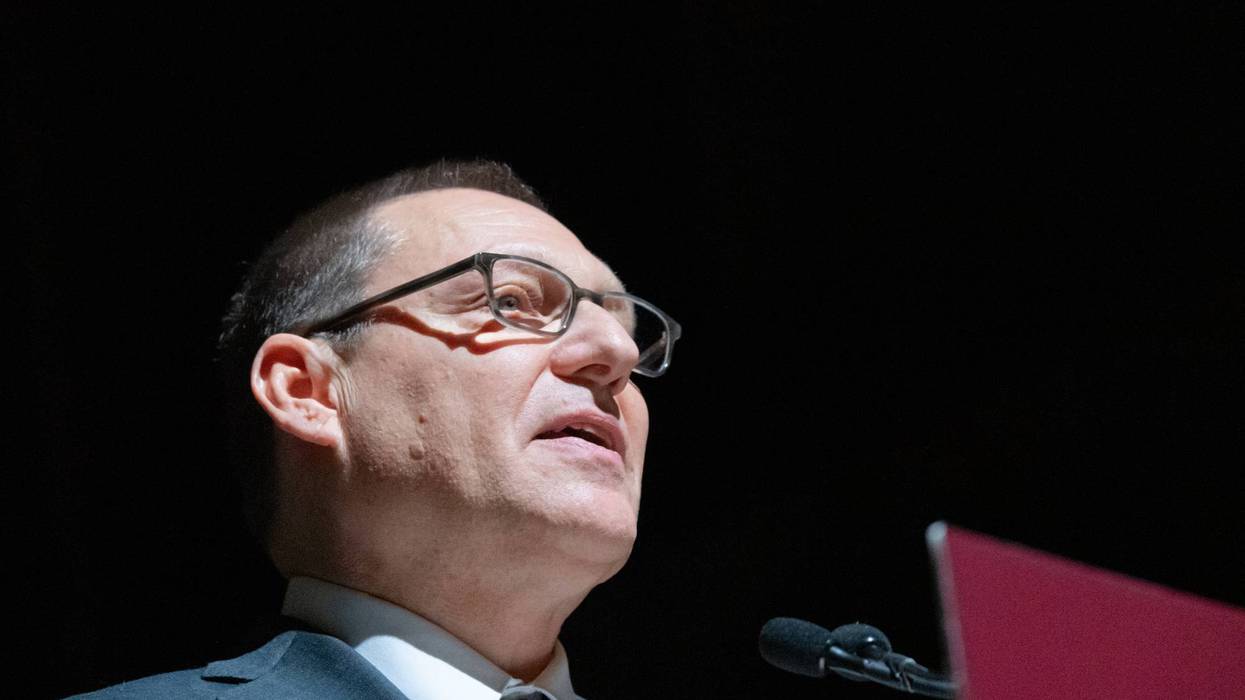
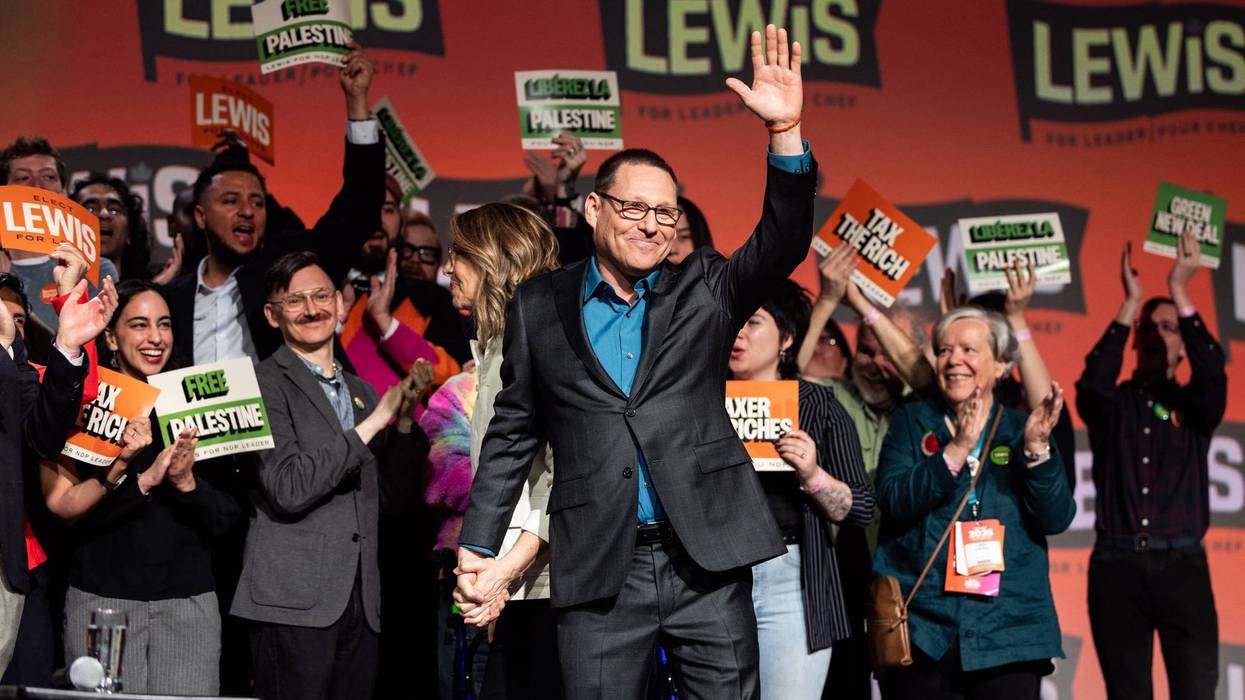
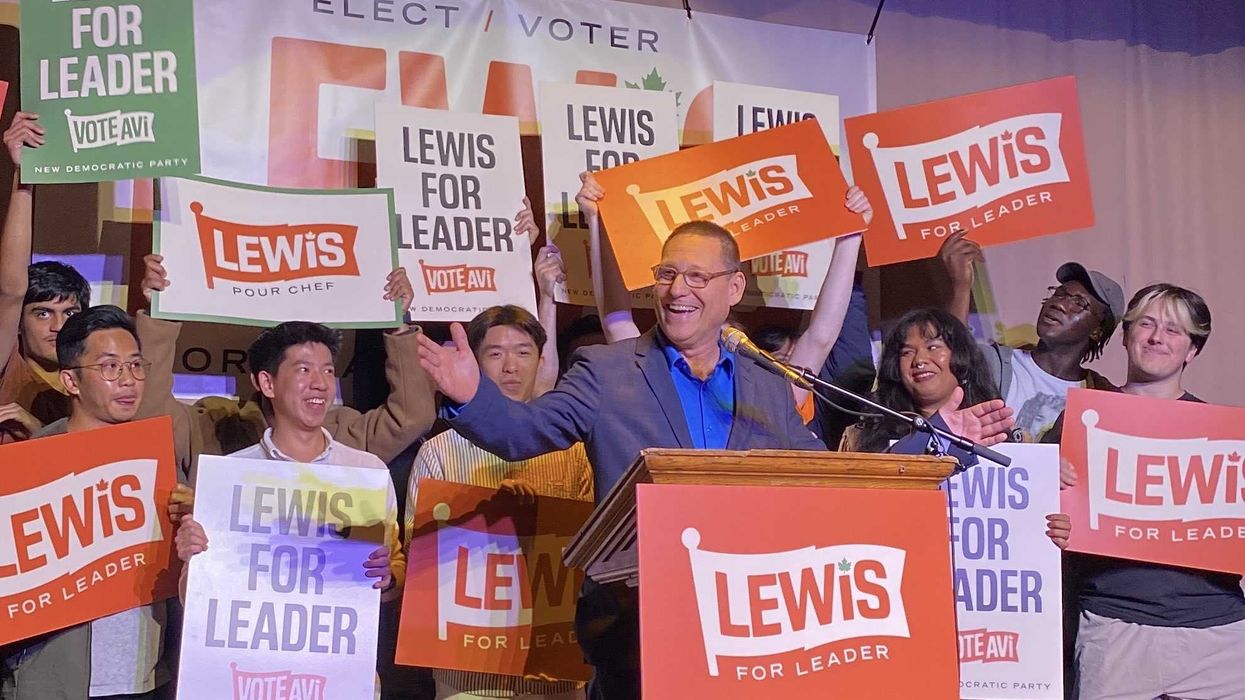
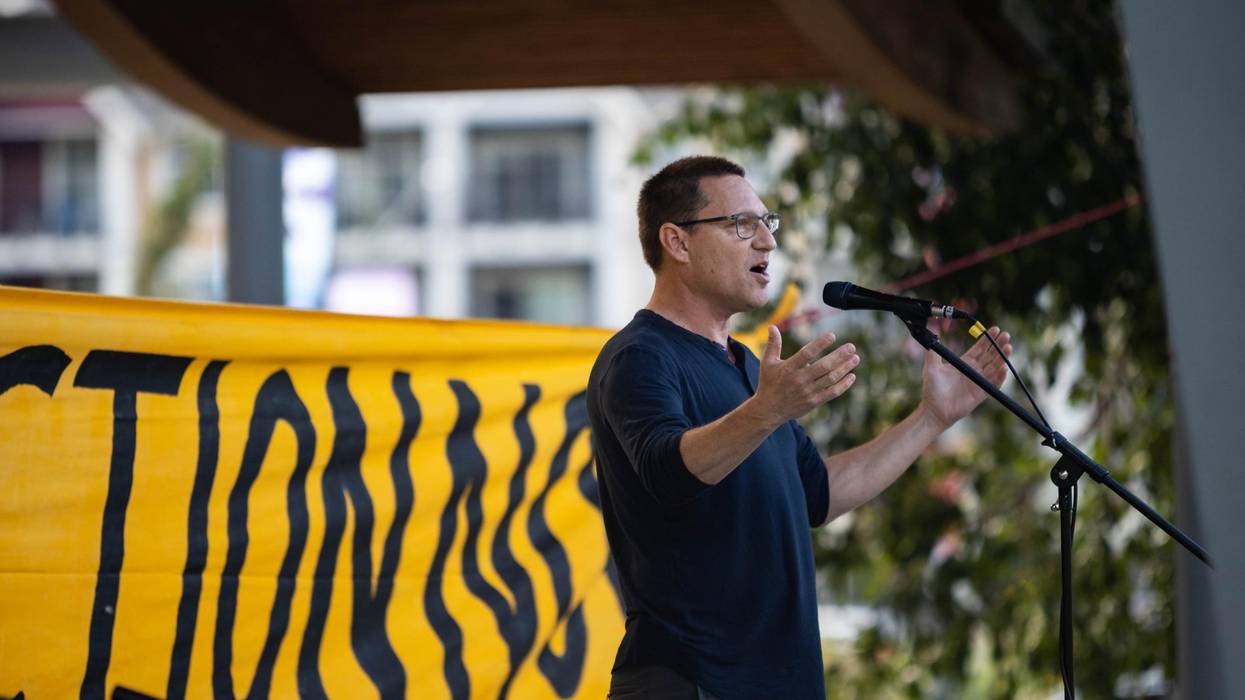
In a conversation with Common Dreams at the conference, veteran Canadian journalist Avi Lewis, co-founder and strategic director of The Leap, argued that a hard, but liberating, truth of the current moment is that progressives "are now in a position globally and historically where we need an all-of-the-above change strategy" when it comes to taking over existing institutions as well as creating new ones.
"We have to take over and use existing institutions--and not to reform them, but transform them."
--Avi Lewis, The Leap
In terms of how transformative change happens, Lewis said, one of the most exciting things now happening is "a renewed interest among social movements in North America to engage with the electoral sphere. And part of that is a recognition of the existential urgency and the short time left on the clock. There isn't time to build institutions from the ground up if we're serious about the imminence of the climate crisis. And so we have to take over and use existing institutions--and not to reform them, but transform them."
But that's not all. Progressive forces, he added, also "need to build new institutions at the same time" in order to challenge the corrupted political mechanisms that have so far shown to be incapable of making the kind of radical changes both climate science and outrageous levels of inequality demand.
"We need to do it all," Lewis said. "We just simply need to do it all, so I think it's an interesting historical moment when you're seeing lots of social movement energy trying to intervene in the electoral sphere as a shortcut to taking over and trying to use existing institutions. This is a recognition of the conditions of urgency we are now forced to work under."
Naomi Klein, who is married to Lewis and also helped launch The Leap initiative in Canada, told Common Dreams in the same conversation that the choice before humanity is no longer a choice between half-measures and bold solutions. Responding with market-based prescriptions or paying lip service to the threat while continue to drill for, mine, and burn fossil fuels is what we've been doing for the last 20 years. And as the science has become more dire and the here-and-now evidence of climate catastrophes pile up all around us, she says, that approach has not even come close to solving the problem. In fact, it has only increased the threats we face.
The choice now, says Klein, is one "between a model that failed and a model that is really our last chance."
"There are a lot of people on the liberal end of the spectrum who can talk a really good game about the urgency of the climate crisis," she explained, "but if we look at the track record of the kind of legislation they produced; the kind of one-step-forward and three-steps-back approach" that took place under President Obama in the U.S. during his tenure--and happening now under Prime Minister Justin Trudeau in Canada--there are important lessons that must be recognized.
"We are up against the wall... For some reason we are acting like it's thirty years ago when it would have been possible to gradually introduce renewables and maybe have a carbon tax--that is not the stage we're at now."
--Naomi Klein, journalist & activistKlein says the all-of-the-above energy strategy pushed by Democrats under Obama was absurd, given the science. Now, she says, that is exactly the model that cannot be replicated.
"We are up against the wall," Klein declared. "We need a rapid transition off fossil fuels to 100 percent renewable energy. That is not an all-of-the-above approach. And for some reason we are acting like it's 30 years ago when it would have been possible to gradually introduce renewables and maybe have a carbon tax--that is not the stage we're at now."
The demand for a Green New Deal--an energy and economic transformation on a global scale and matched with a deep commitment to climate justice--is now one of the unifying and defining features of the international progressive movement and it was a big topic of conversation throughout the weekend in Vermont.
In her assessment of the conference, and the purpose behind it, Jane Sanders said the institute's goal was to amplify the most important issues that good people are organizing around in communities across the country and the world.
"There are so many people that are doing really important work, and it can be anything," she told Common Dreams on the final day of the Gathering. "It doesn't have to be that you have to go across the world to go help people with a big project. It can be trying to influence the education system. Or everybody can make a difference no matter what you're doing. So you don't have to spend a lot of time or money to do it, you just have to come to it with kindness."
"I guess that's my message to progressives around the world," she concluded. "Where do you want to take it? And please just come from a sense of kindness, spirit of generosity, and inclusion."
In his final thoughts about the trends that are being seen and felt around the world--as well as the ideas, issues, and solutions offered by those at the Sanders Institute event--Avi Lewis said the big question was not whether or not the prescriptions on offer were the correct ones, but whether or not there was enough time, movement cohesion, and political acumen to see them executed within the time frame now available to humanity.
The big question, he concluded, is this: "Can we hear this in time to really change course--fundamentally, economically, and culturally? This is the great drama of our age. Can enough of us hear the alarm bells?"