SUBSCRIBE TO OUR FREE NEWSLETTER
Daily news & progressive opinion—funded by the people, not the corporations—delivered straight to your inbox.
5
#000000
#FFFFFF
To donate by check, phone, or other method, see our More Ways to Give page.
Daily news & progressive opinion—funded by the people, not the corporations—delivered straight to your inbox.
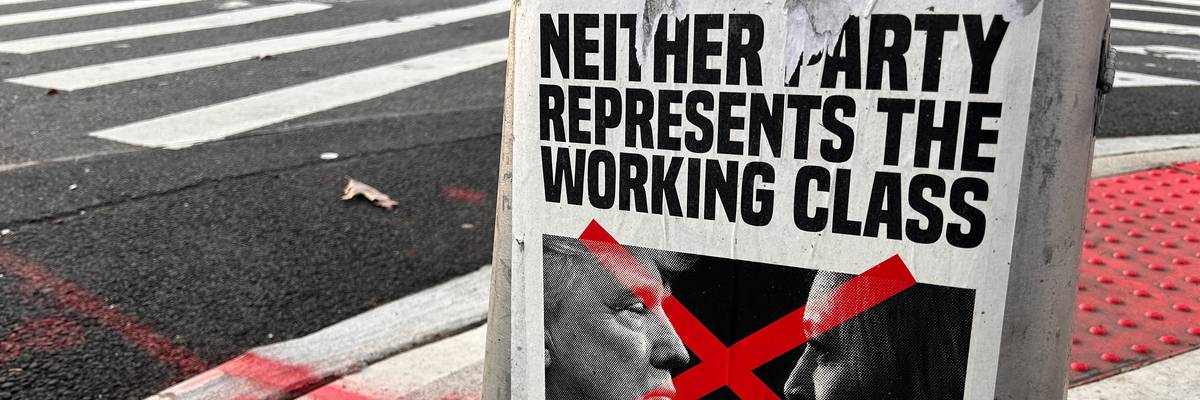
Working class voters need a home, but the Democratic Party refuses to build them one.
A new study by Jared Abbott and Joan C. Williams, of nearly 2 million 2024 Trump voters, shows that more than one in five are not planning to vote for the Republicans in 2028. That group, which they call the “waverers,” is disproportionately poor, non-white, and working class.
But neither are these waverers planning to return to the Democrats. According to the study:
Of the 20.1 percent who are wavering, only 3.4 percent plan to vote Democrat. The remaining 16.7 percent say they will vote for neither party or are unsure.
That poses a severe problem for anyone who believes that our political system should better represent the needs and interests of working people. And it should scare the hell out anyone who fears the rise of more authoritarians in the future.
These workers clearly are telling us that they don’t have a home. We’d better figure out how to help build one.
Run more working-class candidates in the Democratic Party?
That’s what most progressives argue for. They believe that such candidates can attract these disgruntled workers back into the Party. As one progressive campaign operative said to me, “Our goal is to once again make the Democratic Party the party of the working-class.” That’s also what the League of Labor Voters and the Working Families Party are trying to do.
But it’s an uphill struggle. According to the Guardian:
“Millionaires make up less than 3% of the general public but have unified majority control of all three branches of the federal government. Working-class Americans, on the other hand, make up about half of the country. But they have never held more than 2% of the seats in any Congress since the nation was founded.
For every former bartender like Alexandria Ocasio-Cortez, there are thousands of ambitious candidates who are well-off members of the bar.
The Democratic Party brand is in big trouble. In the study the Labor Institute conducted with the Center for Working-Class Politics (again with Jared Abbot, that boy gets around), 70 percent of the 3,000 voters surveyed in Michigan, Ohio, Pennsylvania, and Wisconsin had negative things to say about the Democrats. And a hypothetical Democratic candidate ran 8 percent behind an independent candidate even when they said exactly the same things.
That makes it next to impossible to launch Democratic working-class candidates in the 130 congressional districts in which the Democrats already lose by more than 25 percent. In those areas, the Democratic Party is not just dying, it is dead.
What are the odds, really, of the Democrats changing their stripes? Do the reformers really believe that a trickle of working-class candidates can turn into a torrent of new working-class candidates, if only we pushed harder?
Never say never, but that would be more likely if Democrats faced a real threat from the outside—from new working-class candidates running as independents. Should those independents gain traction, we can be sure the Democrats will take notice.
Independent working-class candidates in red areas
If you are tired of seeing nearly all of rural America flash bright red on your screen a few seconds after the polls close, there has to be a new approach outside of the Democratic Party. Dan Osborn, a mechanic and former local union president, is doing just that in his Senate run in Nebraska. In 2024 he ran 15 points ahead of Kamala Harris though still lost by six points. He’s running again in 2026, and so far the race is a toss-up.
Osborn knows that his only chance is to run against both parties as an independent. He calls it the “two-party doom loop.” He is directly taking on the wealthy in both parties, including the scion of a billionaire against whom he is running for Senate in 2026.
At a recent United Steelworkers conference I ran into a young miner who is running for the state legislature in Wyoming, also as an independent in this deep read state, and he thinks he will win in a landslide.
The point is that these working-class candidates with union credentials understand that voters in these red areas, including their fellow union members, have little use for the Democrats, and the only way to run is by running against both parties. Their slogan seems to be: “Not Blue, Not Red: I’m a working-class independent!”
If more and more working-class independents run against the two parties, and succeed, then maybe the Democrats will realize that they too should run working-class candidates in red areas.
But I’m not holding my breath. I truly believe that it will be much harder to wean the Democratic Party from its wealthy donors and consultants than it will be to run independent working-class candidates in red areas. But that prediction won’t matter until more working people, and their allies, jump into the fray as independents.
Then and only then will those disaffected MAGA voters have a place to go, and candidates they are willing to vote for. If we keep playing pattycake with the Democrats we may be delivering these disaffected working-class voters to Cruella de Vance, or worse, next time around.
Dear Common Dreams reader, It’s been nearly 30 years since I co-founded Common Dreams with my late wife, Lina Newhouser. We had the radical notion that journalism should serve the public good, not corporate profits. It was clear to us from the outset what it would take to build such a project. No paid advertisements. No corporate sponsors. No millionaire publisher telling us what to think or do. Many people said we wouldn't last a year, but we proved those doubters wrong. Together with a tremendous team of journalists and dedicated staff, we built an independent media outlet free from the constraints of profits and corporate control. Our mission has always been simple: To inform. To inspire. To ignite change for the common good. Building Common Dreams was not easy. Our survival was never guaranteed. When you take on the most powerful forces—Wall Street greed, fossil fuel industry destruction, Big Tech lobbyists, and uber-rich oligarchs who have spent billions upon billions rigging the economy and democracy in their favor—the only bulwark you have is supporters who believe in your work. But here’s the urgent message from me today. It's never been this bad out there. And it's never been this hard to keep us going. At the very moment Common Dreams is most needed, the threats we face are intensifying. We need your support now more than ever. We don't accept corporate advertising and never will. We don't have a paywall because we don't think people should be blocked from critical news based on their ability to pay. Everything we do is funded by the donations of readers like you. When everyone does the little they can afford, we are strong. But if that support retreats or dries up, so do we. Will you donate now to make sure Common Dreams not only survives but thrives? —Craig Brown, Co-founder |
Les Leopold is the executive director of the Labor Institute and author of the new book, “The Billionaires Have Two Parties, We Need a Party of Our Own” (2026). His previous books include: “Wall Street’s War on Workers: How Mass Layoffs and Greed Are Destroying the Working Class and What to Do About It" (2024); "Runaway Inequality: An Activist's Guide to Economic Justice" (2015); and “The Man Who Hated Work and Loved Labor: The Life and Times of Tony Mazzocchi” (2007). Read more of his work on his substack here.
A new study by Jared Abbott and Joan C. Williams, of nearly 2 million 2024 Trump voters, shows that more than one in five are not planning to vote for the Republicans in 2028. That group, which they call the “waverers,” is disproportionately poor, non-white, and working class.
But neither are these waverers planning to return to the Democrats. According to the study:
Of the 20.1 percent who are wavering, only 3.4 percent plan to vote Democrat. The remaining 16.7 percent say they will vote for neither party or are unsure.
That poses a severe problem for anyone who believes that our political system should better represent the needs and interests of working people. And it should scare the hell out anyone who fears the rise of more authoritarians in the future.
These workers clearly are telling us that they don’t have a home. We’d better figure out how to help build one.
Run more working-class candidates in the Democratic Party?
That’s what most progressives argue for. They believe that such candidates can attract these disgruntled workers back into the Party. As one progressive campaign operative said to me, “Our goal is to once again make the Democratic Party the party of the working-class.” That’s also what the League of Labor Voters and the Working Families Party are trying to do.
But it’s an uphill struggle. According to the Guardian:
“Millionaires make up less than 3% of the general public but have unified majority control of all three branches of the federal government. Working-class Americans, on the other hand, make up about half of the country. But they have never held more than 2% of the seats in any Congress since the nation was founded.
For every former bartender like Alexandria Ocasio-Cortez, there are thousands of ambitious candidates who are well-off members of the bar.
The Democratic Party brand is in big trouble. In the study the Labor Institute conducted with the Center for Working-Class Politics (again with Jared Abbot, that boy gets around), 70 percent of the 3,000 voters surveyed in Michigan, Ohio, Pennsylvania, and Wisconsin had negative things to say about the Democrats. And a hypothetical Democratic candidate ran 8 percent behind an independent candidate even when they said exactly the same things.
That makes it next to impossible to launch Democratic working-class candidates in the 130 congressional districts in which the Democrats already lose by more than 25 percent. In those areas, the Democratic Party is not just dying, it is dead.
What are the odds, really, of the Democrats changing their stripes? Do the reformers really believe that a trickle of working-class candidates can turn into a torrent of new working-class candidates, if only we pushed harder?
Never say never, but that would be more likely if Democrats faced a real threat from the outside—from new working-class candidates running as independents. Should those independents gain traction, we can be sure the Democrats will take notice.
Independent working-class candidates in red areas
If you are tired of seeing nearly all of rural America flash bright red on your screen a few seconds after the polls close, there has to be a new approach outside of the Democratic Party. Dan Osborn, a mechanic and former local union president, is doing just that in his Senate run in Nebraska. In 2024 he ran 15 points ahead of Kamala Harris though still lost by six points. He’s running again in 2026, and so far the race is a toss-up.
Osborn knows that his only chance is to run against both parties as an independent. He calls it the “two-party doom loop.” He is directly taking on the wealthy in both parties, including the scion of a billionaire against whom he is running for Senate in 2026.
At a recent United Steelworkers conference I ran into a young miner who is running for the state legislature in Wyoming, also as an independent in this deep read state, and he thinks he will win in a landslide.
The point is that these working-class candidates with union credentials understand that voters in these red areas, including their fellow union members, have little use for the Democrats, and the only way to run is by running against both parties. Their slogan seems to be: “Not Blue, Not Red: I’m a working-class independent!”
If more and more working-class independents run against the two parties, and succeed, then maybe the Democrats will realize that they too should run working-class candidates in red areas.
But I’m not holding my breath. I truly believe that it will be much harder to wean the Democratic Party from its wealthy donors and consultants than it will be to run independent working-class candidates in red areas. But that prediction won’t matter until more working people, and their allies, jump into the fray as independents.
Then and only then will those disaffected MAGA voters have a place to go, and candidates they are willing to vote for. If we keep playing pattycake with the Democrats we may be delivering these disaffected working-class voters to Cruella de Vance, or worse, next time around.
Les Leopold is the executive director of the Labor Institute and author of the new book, “The Billionaires Have Two Parties, We Need a Party of Our Own” (2026). His previous books include: “Wall Street’s War on Workers: How Mass Layoffs and Greed Are Destroying the Working Class and What to Do About It" (2024); "Runaway Inequality: An Activist's Guide to Economic Justice" (2015); and “The Man Who Hated Work and Loved Labor: The Life and Times of Tony Mazzocchi” (2007). Read more of his work on his substack here.
A new study by Jared Abbott and Joan C. Williams, of nearly 2 million 2024 Trump voters, shows that more than one in five are not planning to vote for the Republicans in 2028. That group, which they call the “waverers,” is disproportionately poor, non-white, and working class.
But neither are these waverers planning to return to the Democrats. According to the study:
Of the 20.1 percent who are wavering, only 3.4 percent plan to vote Democrat. The remaining 16.7 percent say they will vote for neither party or are unsure.
That poses a severe problem for anyone who believes that our political system should better represent the needs and interests of working people. And it should scare the hell out anyone who fears the rise of more authoritarians in the future.
These workers clearly are telling us that they don’t have a home. We’d better figure out how to help build one.
Run more working-class candidates in the Democratic Party?
That’s what most progressives argue for. They believe that such candidates can attract these disgruntled workers back into the Party. As one progressive campaign operative said to me, “Our goal is to once again make the Democratic Party the party of the working-class.” That’s also what the League of Labor Voters and the Working Families Party are trying to do.
But it’s an uphill struggle. According to the Guardian:
“Millionaires make up less than 3% of the general public but have unified majority control of all three branches of the federal government. Working-class Americans, on the other hand, make up about half of the country. But they have never held more than 2% of the seats in any Congress since the nation was founded.
For every former bartender like Alexandria Ocasio-Cortez, there are thousands of ambitious candidates who are well-off members of the bar.
The Democratic Party brand is in big trouble. In the study the Labor Institute conducted with the Center for Working-Class Politics (again with Jared Abbot, that boy gets around), 70 percent of the 3,000 voters surveyed in Michigan, Ohio, Pennsylvania, and Wisconsin had negative things to say about the Democrats. And a hypothetical Democratic candidate ran 8 percent behind an independent candidate even when they said exactly the same things.
That makes it next to impossible to launch Democratic working-class candidates in the 130 congressional districts in which the Democrats already lose by more than 25 percent. In those areas, the Democratic Party is not just dying, it is dead.
What are the odds, really, of the Democrats changing their stripes? Do the reformers really believe that a trickle of working-class candidates can turn into a torrent of new working-class candidates, if only we pushed harder?
Never say never, but that would be more likely if Democrats faced a real threat from the outside—from new working-class candidates running as independents. Should those independents gain traction, we can be sure the Democrats will take notice.
Independent working-class candidates in red areas
If you are tired of seeing nearly all of rural America flash bright red on your screen a few seconds after the polls close, there has to be a new approach outside of the Democratic Party. Dan Osborn, a mechanic and former local union president, is doing just that in his Senate run in Nebraska. In 2024 he ran 15 points ahead of Kamala Harris though still lost by six points. He’s running again in 2026, and so far the race is a toss-up.
Osborn knows that his only chance is to run against both parties as an independent. He calls it the “two-party doom loop.” He is directly taking on the wealthy in both parties, including the scion of a billionaire against whom he is running for Senate in 2026.
At a recent United Steelworkers conference I ran into a young miner who is running for the state legislature in Wyoming, also as an independent in this deep read state, and he thinks he will win in a landslide.
The point is that these working-class candidates with union credentials understand that voters in these red areas, including their fellow union members, have little use for the Democrats, and the only way to run is by running against both parties. Their slogan seems to be: “Not Blue, Not Red: I’m a working-class independent!”
If more and more working-class independents run against the two parties, and succeed, then maybe the Democrats will realize that they too should run working-class candidates in red areas.
But I’m not holding my breath. I truly believe that it will be much harder to wean the Democratic Party from its wealthy donors and consultants than it will be to run independent working-class candidates in red areas. But that prediction won’t matter until more working people, and their allies, jump into the fray as independents.
Then and only then will those disaffected MAGA voters have a place to go, and candidates they are willing to vote for. If we keep playing pattycake with the Democrats we may be delivering these disaffected working-class voters to Cruella de Vance, or worse, next time around.