SUBSCRIBE TO OUR FREE NEWSLETTER
Daily news & progressive opinion—funded by the people, not the corporations—delivered straight to your inbox.
5
#000000
#FFFFFF
To donate by check, phone, or other method, see our More Ways to Give page.
Daily news & progressive opinion—funded by the people, not the corporations—delivered straight to your inbox.
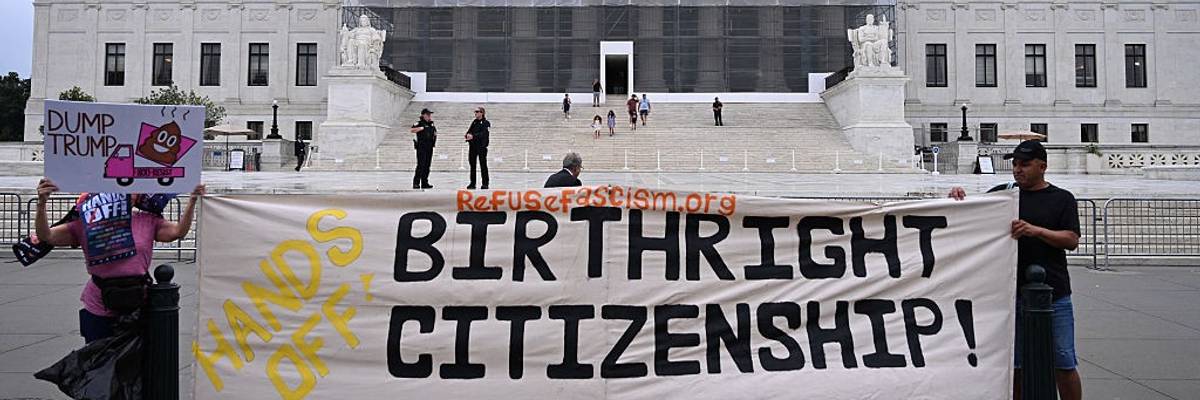
Demonstrators holds up an anti-Trump sign outside the US Supreme Court in Washington, DC, on June 27, 2025.
The sitting members should consider what kind of legacy they wish to leave for future generations before siding blindly with our most autocratic president in history.
The justices on the Supreme Court should not favor the president who appointed them because checks and balances demand that they uphold the law without passion or prejudice. The current Supreme Court has increasingly shown a pattern of siding with the Trump administration—a result made predictable by the court’s conservative majority. Immigration cases have, with rare exception, aligned along these partisan lines.
On June 27, 2025, the Supreme Court sidestepped the question of birthright citizenship and overruled lower court decisions that sought to protect it. The original plaintiffs filed suit to enjoin the enforcement of the executive order that identifies circumstances in which a person born in the United States is not “subject to the jurisdiction thereof,” thereby restricting the constitutionally guaranteed bestowal of birthright citizenship. The Trump administration petitioned the Supreme Court, which granted review. The plaintiffs argued that the executive order violates the 14th Amendment’s Citizenship Clause, as well as sections 1 and 201 of the Nationality Act of 1940—the constitutional guarantee that birth on US soil confers citizenship.
Before the case reached the Supreme Court, the district court entered universal injunctions barring the application of the executive order to anyone, thereby preserving birthright citizenship, and the appellate court denied the government’s request to postpone the granted relief. In its application to the Supreme Court, the government argued that federal courts lacked equitable authority to issue universal injunctions under the Judiciary Act of 1789, attacking the district court’s authority in order to preserve the president’s propensity to overstep his. The Supreme Court granted the government's application and held that Congress has not granted federal courts authority to universally enjoin the enforcement of an executive order. Reaching all the way back to pre-Revolution English law and the Founding Fathers, the Supreme Court reasoned that no such authority exists. Their reasoning reads as petulant and arbitrary, an invocation of ancient doctrine to narrow modern rights.
On September 8, 2025, the Supreme Court granted an application for stay by the Department of Homeland Security (DHS). The decision states that the Immigration and Nationality Act authorizes immigration officers to interrogate any alien (or person believed to be an alien) as to “his right to be or to remain in the United States.” They also found that they may briefly detain individuals if they have a “reasonable suspicion” that he or she is an alien illegally present in the United States, based on the “totality of the particular circumstances.”
The Supreme Court’s deep bias in favor of Trump administration policies gestures toward a reversal, through immigration cases, of the trenchant progress in civil rights litigation that the Warren Court and subsequent courts have made.
The Supreme Court’s interpretation of the law, however, takes tremendous liberties with the letter of these laws, essentially recognizing ethnicity as a basis for reasonable suspicion. Specifically, the California District Court enjoined immigration officers from making investigative stops based on, among other factors, speaking Spanish or English with an accent, and race or ethnicity. In a nutshell, the lower court forbade immigration enforcement from racially profiling Latine Angelenos. The Supreme Court overruled the lower court, reasoning that, while ethnicity alone cannot furnish reasonable suspicion, it can be a relevant factor when considered along with other salient factors. This argument is internally incoherent and contradictory, suggesting that racial bias is at once insufficient and persuasive evidence. Citing the myriad “significant economic and social problems” caused by “illegal” immigration, the Supreme Court sided with DHS, finding that the government would suffer irreparable injury from the injunction. The relevance of socioeconomic problems to the question of racial profiling and potential excessive force in the execution thereof is tenuous at best.
Justice Sonia Sotomayor wrote the dissenting opinion, in which Justices Elena Kagan and Ketanji Brown Jackson joined. She argued that “we should not have to live in a country where the Government can seize anyone who looks Latino, speaks Spanish, and appears to work a low wage job,“ as it would be a loss to our constitutional freedom.
On December 23, 2025, however, the Supreme Court issued an noticeably restrained opinion upholding a lower court’s temporary restraining order (TRO), which barred the deployment of the National Guard in Illinois. The court found that, under the Posse Comitatus Act, the military is prohibited from executing the laws, except in cases and under circumstances expressly authorized by the Constitution or Act of Congress. The decision further stated that, before the president can federalize the guard under 10 USC §12406(3), he must have statutory or constitutional authority to execute the laws with the regular military and must be unable with those forces to perform that function.
The Supreme Court’s deep bias in favor of Trump administration policies gestures toward a reversal, through immigration cases, of the trenchant progress in civil rights litigation that the Warren Court and subsequent courts have made. The sitting members should consider what kind of legacy they wish to leave for future generations before siding blindly with our most autocratic president in history. Political expediency may be convenient in the short term, but history will judge harshly those who twisted our most sacred liberties to the advantage of an advantageous few, rather than standing with the people our Constitution was written to protect.
Dear Common Dreams reader, It’s been nearly 30 years since I co-founded Common Dreams with my late wife, Lina Newhouser. We had the radical notion that journalism should serve the public good, not corporate profits. It was clear to us from the outset what it would take to build such a project. No paid advertisements. No corporate sponsors. No millionaire publisher telling us what to think or do. Many people said we wouldn't last a year, but we proved those doubters wrong. Together with a tremendous team of journalists and dedicated staff, we built an independent media outlet free from the constraints of profits and corporate control. Our mission has always been simple: To inform. To inspire. To ignite change for the common good. Building Common Dreams was not easy. Our survival was never guaranteed. When you take on the most powerful forces—Wall Street greed, fossil fuel industry destruction, Big Tech lobbyists, and uber-rich oligarchs who have spent billions upon billions rigging the economy and democracy in their favor—the only bulwark you have is supporters who believe in your work. But here’s the urgent message from me today. It's never been this bad out there. And it's never been this hard to keep us going. At the very moment Common Dreams is most needed, the threats we face are intensifying. We need your support now more than ever. We don't accept corporate advertising and never will. We don't have a paywall because we don't think people should be blocked from critical news based on their ability to pay. Everything we do is funded by the donations of readers like you. When everyone does the little they can afford, we are strong. But if that support retreats or dries up, so do we. Will you donate now to make sure Common Dreams not only survives but thrives? —Craig Brown, Co-founder |
The justices on the Supreme Court should not favor the president who appointed them because checks and balances demand that they uphold the law without passion or prejudice. The current Supreme Court has increasingly shown a pattern of siding with the Trump administration—a result made predictable by the court’s conservative majority. Immigration cases have, with rare exception, aligned along these partisan lines.
On June 27, 2025, the Supreme Court sidestepped the question of birthright citizenship and overruled lower court decisions that sought to protect it. The original plaintiffs filed suit to enjoin the enforcement of the executive order that identifies circumstances in which a person born in the United States is not “subject to the jurisdiction thereof,” thereby restricting the constitutionally guaranteed bestowal of birthright citizenship. The Trump administration petitioned the Supreme Court, which granted review. The plaintiffs argued that the executive order violates the 14th Amendment’s Citizenship Clause, as well as sections 1 and 201 of the Nationality Act of 1940—the constitutional guarantee that birth on US soil confers citizenship.
Before the case reached the Supreme Court, the district court entered universal injunctions barring the application of the executive order to anyone, thereby preserving birthright citizenship, and the appellate court denied the government’s request to postpone the granted relief. In its application to the Supreme Court, the government argued that federal courts lacked equitable authority to issue universal injunctions under the Judiciary Act of 1789, attacking the district court’s authority in order to preserve the president’s propensity to overstep his. The Supreme Court granted the government's application and held that Congress has not granted federal courts authority to universally enjoin the enforcement of an executive order. Reaching all the way back to pre-Revolution English law and the Founding Fathers, the Supreme Court reasoned that no such authority exists. Their reasoning reads as petulant and arbitrary, an invocation of ancient doctrine to narrow modern rights.
On September 8, 2025, the Supreme Court granted an application for stay by the Department of Homeland Security (DHS). The decision states that the Immigration and Nationality Act authorizes immigration officers to interrogate any alien (or person believed to be an alien) as to “his right to be or to remain in the United States.” They also found that they may briefly detain individuals if they have a “reasonable suspicion” that he or she is an alien illegally present in the United States, based on the “totality of the particular circumstances.”
The Supreme Court’s deep bias in favor of Trump administration policies gestures toward a reversal, through immigration cases, of the trenchant progress in civil rights litigation that the Warren Court and subsequent courts have made.
The Supreme Court’s interpretation of the law, however, takes tremendous liberties with the letter of these laws, essentially recognizing ethnicity as a basis for reasonable suspicion. Specifically, the California District Court enjoined immigration officers from making investigative stops based on, among other factors, speaking Spanish or English with an accent, and race or ethnicity. In a nutshell, the lower court forbade immigration enforcement from racially profiling Latine Angelenos. The Supreme Court overruled the lower court, reasoning that, while ethnicity alone cannot furnish reasonable suspicion, it can be a relevant factor when considered along with other salient factors. This argument is internally incoherent and contradictory, suggesting that racial bias is at once insufficient and persuasive evidence. Citing the myriad “significant economic and social problems” caused by “illegal” immigration, the Supreme Court sided with DHS, finding that the government would suffer irreparable injury from the injunction. The relevance of socioeconomic problems to the question of racial profiling and potential excessive force in the execution thereof is tenuous at best.
Justice Sonia Sotomayor wrote the dissenting opinion, in which Justices Elena Kagan and Ketanji Brown Jackson joined. She argued that “we should not have to live in a country where the Government can seize anyone who looks Latino, speaks Spanish, and appears to work a low wage job,“ as it would be a loss to our constitutional freedom.
On December 23, 2025, however, the Supreme Court issued an noticeably restrained opinion upholding a lower court’s temporary restraining order (TRO), which barred the deployment of the National Guard in Illinois. The court found that, under the Posse Comitatus Act, the military is prohibited from executing the laws, except in cases and under circumstances expressly authorized by the Constitution or Act of Congress. The decision further stated that, before the president can federalize the guard under 10 USC §12406(3), he must have statutory or constitutional authority to execute the laws with the regular military and must be unable with those forces to perform that function.
The Supreme Court’s deep bias in favor of Trump administration policies gestures toward a reversal, through immigration cases, of the trenchant progress in civil rights litigation that the Warren Court and subsequent courts have made. The sitting members should consider what kind of legacy they wish to leave for future generations before siding blindly with our most autocratic president in history. Political expediency may be convenient in the short term, but history will judge harshly those who twisted our most sacred liberties to the advantage of an advantageous few, rather than standing with the people our Constitution was written to protect.
The justices on the Supreme Court should not favor the president who appointed them because checks and balances demand that they uphold the law without passion or prejudice. The current Supreme Court has increasingly shown a pattern of siding with the Trump administration—a result made predictable by the court’s conservative majority. Immigration cases have, with rare exception, aligned along these partisan lines.
On June 27, 2025, the Supreme Court sidestepped the question of birthright citizenship and overruled lower court decisions that sought to protect it. The original plaintiffs filed suit to enjoin the enforcement of the executive order that identifies circumstances in which a person born in the United States is not “subject to the jurisdiction thereof,” thereby restricting the constitutionally guaranteed bestowal of birthright citizenship. The Trump administration petitioned the Supreme Court, which granted review. The plaintiffs argued that the executive order violates the 14th Amendment’s Citizenship Clause, as well as sections 1 and 201 of the Nationality Act of 1940—the constitutional guarantee that birth on US soil confers citizenship.
Before the case reached the Supreme Court, the district court entered universal injunctions barring the application of the executive order to anyone, thereby preserving birthright citizenship, and the appellate court denied the government’s request to postpone the granted relief. In its application to the Supreme Court, the government argued that federal courts lacked equitable authority to issue universal injunctions under the Judiciary Act of 1789, attacking the district court’s authority in order to preserve the president’s propensity to overstep his. The Supreme Court granted the government's application and held that Congress has not granted federal courts authority to universally enjoin the enforcement of an executive order. Reaching all the way back to pre-Revolution English law and the Founding Fathers, the Supreme Court reasoned that no such authority exists. Their reasoning reads as petulant and arbitrary, an invocation of ancient doctrine to narrow modern rights.
On September 8, 2025, the Supreme Court granted an application for stay by the Department of Homeland Security (DHS). The decision states that the Immigration and Nationality Act authorizes immigration officers to interrogate any alien (or person believed to be an alien) as to “his right to be or to remain in the United States.” They also found that they may briefly detain individuals if they have a “reasonable suspicion” that he or she is an alien illegally present in the United States, based on the “totality of the particular circumstances.”
The Supreme Court’s deep bias in favor of Trump administration policies gestures toward a reversal, through immigration cases, of the trenchant progress in civil rights litigation that the Warren Court and subsequent courts have made.
The Supreme Court’s interpretation of the law, however, takes tremendous liberties with the letter of these laws, essentially recognizing ethnicity as a basis for reasonable suspicion. Specifically, the California District Court enjoined immigration officers from making investigative stops based on, among other factors, speaking Spanish or English with an accent, and race or ethnicity. In a nutshell, the lower court forbade immigration enforcement from racially profiling Latine Angelenos. The Supreme Court overruled the lower court, reasoning that, while ethnicity alone cannot furnish reasonable suspicion, it can be a relevant factor when considered along with other salient factors. This argument is internally incoherent and contradictory, suggesting that racial bias is at once insufficient and persuasive evidence. Citing the myriad “significant economic and social problems” caused by “illegal” immigration, the Supreme Court sided with DHS, finding that the government would suffer irreparable injury from the injunction. The relevance of socioeconomic problems to the question of racial profiling and potential excessive force in the execution thereof is tenuous at best.
Justice Sonia Sotomayor wrote the dissenting opinion, in which Justices Elena Kagan and Ketanji Brown Jackson joined. She argued that “we should not have to live in a country where the Government can seize anyone who looks Latino, speaks Spanish, and appears to work a low wage job,“ as it would be a loss to our constitutional freedom.
On December 23, 2025, however, the Supreme Court issued an noticeably restrained opinion upholding a lower court’s temporary restraining order (TRO), which barred the deployment of the National Guard in Illinois. The court found that, under the Posse Comitatus Act, the military is prohibited from executing the laws, except in cases and under circumstances expressly authorized by the Constitution or Act of Congress. The decision further stated that, before the president can federalize the guard under 10 USC §12406(3), he must have statutory or constitutional authority to execute the laws with the regular military and must be unable with those forces to perform that function.
The Supreme Court’s deep bias in favor of Trump administration policies gestures toward a reversal, through immigration cases, of the trenchant progress in civil rights litigation that the Warren Court and subsequent courts have made. The sitting members should consider what kind of legacy they wish to leave for future generations before siding blindly with our most autocratic president in history. Political expediency may be convenient in the short term, but history will judge harshly those who twisted our most sacred liberties to the advantage of an advantageous few, rather than standing with the people our Constitution was written to protect.