

SUBSCRIBE TO OUR FREE NEWSLETTER
Daily news & progressive opinion—funded by the people, not the corporations—delivered straight to your inbox.
5
#000000
#FFFFFF
To donate by check, phone, or other method, see our More Ways to Give page.
Daily news & progressive opinion—funded by the people, not the corporations—delivered straight to your inbox.
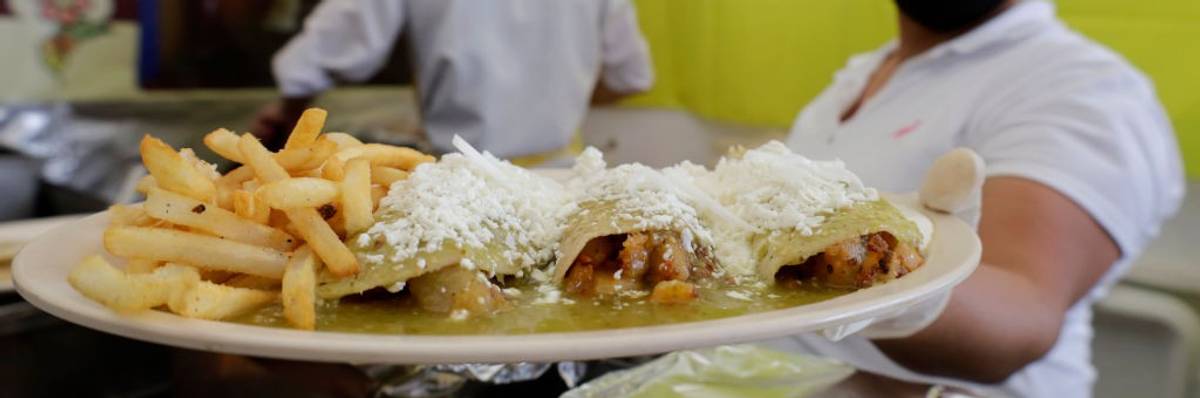
View of enchiladas on the occasion of the Enchilada Fair on the esplanade of the Iztapalapa mayor's office in Mexico City,
The U.S. government ignores the trade numbers and misconstrues Mexican policy when it comes to glyphosate and American corn destined for human consumption across the border.
An international battle over tortillas is taking place this week. For an ingredient in tacos, the United States gins up a trade dispute with Mexico. Last year, in a Decree Mexico outlawed genetically modified (GMO) corn for human consumption. The U.S. argues that this violates trade obligations. Worried about its GMO corn exports, it formed a trade panel under the United States Mexico Canada Agreement (USMCA). Hearings started Wednesday.
The controversy is overstuffed and a sloppy mess. So far, American and Mexican legal filings contain 586 pages, 758 exhibits, and nearly 2,000 footnotes. Arguments span over 20 separate USMCA provisions and multiple annexes. Extra submissions come from Canada and non-governmental organizations. It’s hard to follow, whether you’re a trade expert, scientist, or just care about food safety.
The U.S. position has two weaknesses: economic errors and misrepresentations about the Decree. These are basic mistakes, from a Trade 101 class, regarding injuries and policy. The fumbles stand out from the legalese and scientific jargon in the filings. And let's be clear: he U.S. should drop the case.
A good place to start making sense of the fight is the actual Decree. Article 6 outlaws GMO corn for human consumption, precisely defined as corn for tortillas or masa (dough). It stops approvals for GMO corn for these two items. That is it. The Decree is explicit in not touching GMOs in animal feed or industrial use—the kind U.S. corn farmers mostly export.
Decree motivations include protecting human health, biodiversity, and food security. The prohibition responds to risks from glyphosate, an herbicide needed to grow GMO corn. It has been found to be a likely cause of cancer by international health agencies and U.S. courts. Next, Mexico is corn’s center of origin and diversity, a scientific designation indicating extreme genetic vulnerability. In 2021, Mexico’s Supreme Court found that GMOs threaten to permanently damage this biodiversity. More immediate, corn provides half of the daily protein intake for Mexicans.
With Article 6, Mexico reduces these threats by outlawing GMOs in the tortillas and masa, eaten by millions every day. For these scientifically established risks, Mexico tailored the Decree to only impact two food staples.
The U.S. ignores this. Recent economic figures explain. Mexican corn imports from the U.S. have increased since the Decree. Last week, the U.S. Department of Agriculture reported a “record-high” for corn exports to Mexico for 2023 and 2024 and forecasts similar trends next year. This confirms earlier reports citing increases by 20 percent.
Put simply, the Decree has no real impact on trade in corn. Why? Because American farmers overwhelmingly export corn for animal feed and not for human consumption. Mexico has explained this since enacting the Decree. Let’s be clear, the U.S. fights as exports increase. It makes no sense.
Furthermore, the U.S. mispresents the Decree. The U.S. says Mexico imposes a “Tortilla Corn Ban.” Wrong. It suspends approvals for human consumption. GMO corn can still be imported but cannot be destined for tortillas. Mexico describes this as an “End Use Limitation,” since it regulates how corn is used. This applies to GMO corn from anywhere including from Mexican farms.
Next, the U.S. exaggerates what the Decree does. It quibbles about non-issues. What it coins “Substitution Instructions” to force replacing GMO corn in animal feed. The complaint is that instructions are unclear.
Problem: the Decree does not mandate substitution. It does describe future actions and the prerequisites needed to replace GMO feed. Article 7 expressly says Mexico’s commission on sanitary risk will continue approving GMO corn in animal feed, so long as it is not for tortillas. It clarifies that federal agencies will conduct any possible substitution. By implication state governments in Mexico have no role.
Article 8 confirms this, explaining what is necessary before any replacement. It designates the parameters to eventually substitute GMO corn for animals. Pre-conditions include determining national food security and any impacts on human health. In two filings, Mexico explains that the prerequisites have not occurred. As such, it has not set any date for substitution, much less any guidance.
Nowhere does the Decree demand alternatives for GMOs. American complaints miss the mark. There is no there there. The Decree does not touch corn for livestock.
The dispute just started warming up the comal (skillet used to heat tortillas). A final panel report comes in November. Until then, expect a mess with more scientific and legal arguments piled on. In the simplest terms, the U.S. ignores commercial reality and misrepresents the Decree. Basic blunders compounding obstacles in the USMCA’s food safety rules.
All this should inspire resolution versus repeating trade defeats. American farmers and Mexican eaters deserve better. Ending the dispute secures a corn buyer in a neighbor. It promotes public health in Mexico. The current course only produces uncertainty.
Dear Common Dreams reader, It’s been nearly 30 years since I co-founded Common Dreams with my late wife, Lina Newhouser. We had the radical notion that journalism should serve the public good, not corporate profits. It was clear to us from the outset what it would take to build such a project. No paid advertisements. No corporate sponsors. No millionaire publisher telling us what to think or do. Many people said we wouldn't last a year, but we proved those doubters wrong. Together with a tremendous team of journalists and dedicated staff, we built an independent media outlet free from the constraints of profits and corporate control. Our mission has always been simple: To inform. To inspire. To ignite change for the common good. Building Common Dreams was not easy. Our survival was never guaranteed. When you take on the most powerful forces—Wall Street greed, fossil fuel industry destruction, Big Tech lobbyists, and uber-rich oligarchs who have spent billions upon billions rigging the economy and democracy in their favor—the only bulwark you have is supporters who believe in your work. But here’s the urgent message from me today. It's never been this bad out there. And it's never been this hard to keep us going. At the very moment Common Dreams is most needed, the threats we face are intensifying. We need your support now more than ever. We don't accept corporate advertising and never will. We don't have a paywall because we don't think people should be blocked from critical news based on their ability to pay. Everything we do is funded by the donations of readers like you. When everyone does the little they can afford, we are strong. But if that support retreats or dries up, so do we. Will you donate now to make sure Common Dreams not only survives but thrives? —Craig Brown, Co-founder |
An international battle over tortillas is taking place this week. For an ingredient in tacos, the United States gins up a trade dispute with Mexico. Last year, in a Decree Mexico outlawed genetically modified (GMO) corn for human consumption. The U.S. argues that this violates trade obligations. Worried about its GMO corn exports, it formed a trade panel under the United States Mexico Canada Agreement (USMCA). Hearings started Wednesday.
The controversy is overstuffed and a sloppy mess. So far, American and Mexican legal filings contain 586 pages, 758 exhibits, and nearly 2,000 footnotes. Arguments span over 20 separate USMCA provisions and multiple annexes. Extra submissions come from Canada and non-governmental organizations. It’s hard to follow, whether you’re a trade expert, scientist, or just care about food safety.
The U.S. position has two weaknesses: economic errors and misrepresentations about the Decree. These are basic mistakes, from a Trade 101 class, regarding injuries and policy. The fumbles stand out from the legalese and scientific jargon in the filings. And let's be clear: he U.S. should drop the case.
A good place to start making sense of the fight is the actual Decree. Article 6 outlaws GMO corn for human consumption, precisely defined as corn for tortillas or masa (dough). It stops approvals for GMO corn for these two items. That is it. The Decree is explicit in not touching GMOs in animal feed or industrial use—the kind U.S. corn farmers mostly export.
Decree motivations include protecting human health, biodiversity, and food security. The prohibition responds to risks from glyphosate, an herbicide needed to grow GMO corn. It has been found to be a likely cause of cancer by international health agencies and U.S. courts. Next, Mexico is corn’s center of origin and diversity, a scientific designation indicating extreme genetic vulnerability. In 2021, Mexico’s Supreme Court found that GMOs threaten to permanently damage this biodiversity. More immediate, corn provides half of the daily protein intake for Mexicans.
With Article 6, Mexico reduces these threats by outlawing GMOs in the tortillas and masa, eaten by millions every day. For these scientifically established risks, Mexico tailored the Decree to only impact two food staples.
The U.S. ignores this. Recent economic figures explain. Mexican corn imports from the U.S. have increased since the Decree. Last week, the U.S. Department of Agriculture reported a “record-high” for corn exports to Mexico for 2023 and 2024 and forecasts similar trends next year. This confirms earlier reports citing increases by 20 percent.
Put simply, the Decree has no real impact on trade in corn. Why? Because American farmers overwhelmingly export corn for animal feed and not for human consumption. Mexico has explained this since enacting the Decree. Let’s be clear, the U.S. fights as exports increase. It makes no sense.
Furthermore, the U.S. mispresents the Decree. The U.S. says Mexico imposes a “Tortilla Corn Ban.” Wrong. It suspends approvals for human consumption. GMO corn can still be imported but cannot be destined for tortillas. Mexico describes this as an “End Use Limitation,” since it regulates how corn is used. This applies to GMO corn from anywhere including from Mexican farms.
Next, the U.S. exaggerates what the Decree does. It quibbles about non-issues. What it coins “Substitution Instructions” to force replacing GMO corn in animal feed. The complaint is that instructions are unclear.
Problem: the Decree does not mandate substitution. It does describe future actions and the prerequisites needed to replace GMO feed. Article 7 expressly says Mexico’s commission on sanitary risk will continue approving GMO corn in animal feed, so long as it is not for tortillas. It clarifies that federal agencies will conduct any possible substitution. By implication state governments in Mexico have no role.
Article 8 confirms this, explaining what is necessary before any replacement. It designates the parameters to eventually substitute GMO corn for animals. Pre-conditions include determining national food security and any impacts on human health. In two filings, Mexico explains that the prerequisites have not occurred. As such, it has not set any date for substitution, much less any guidance.
Nowhere does the Decree demand alternatives for GMOs. American complaints miss the mark. There is no there there. The Decree does not touch corn for livestock.
The dispute just started warming up the comal (skillet used to heat tortillas). A final panel report comes in November. Until then, expect a mess with more scientific and legal arguments piled on. In the simplest terms, the U.S. ignores commercial reality and misrepresents the Decree. Basic blunders compounding obstacles in the USMCA’s food safety rules.
All this should inspire resolution versus repeating trade defeats. American farmers and Mexican eaters deserve better. Ending the dispute secures a corn buyer in a neighbor. It promotes public health in Mexico. The current course only produces uncertainty.
An international battle over tortillas is taking place this week. For an ingredient in tacos, the United States gins up a trade dispute with Mexico. Last year, in a Decree Mexico outlawed genetically modified (GMO) corn for human consumption. The U.S. argues that this violates trade obligations. Worried about its GMO corn exports, it formed a trade panel under the United States Mexico Canada Agreement (USMCA). Hearings started Wednesday.
The controversy is overstuffed and a sloppy mess. So far, American and Mexican legal filings contain 586 pages, 758 exhibits, and nearly 2,000 footnotes. Arguments span over 20 separate USMCA provisions and multiple annexes. Extra submissions come from Canada and non-governmental organizations. It’s hard to follow, whether you’re a trade expert, scientist, or just care about food safety.
The U.S. position has two weaknesses: economic errors and misrepresentations about the Decree. These are basic mistakes, from a Trade 101 class, regarding injuries and policy. The fumbles stand out from the legalese and scientific jargon in the filings. And let's be clear: he U.S. should drop the case.
A good place to start making sense of the fight is the actual Decree. Article 6 outlaws GMO corn for human consumption, precisely defined as corn for tortillas or masa (dough). It stops approvals for GMO corn for these two items. That is it. The Decree is explicit in not touching GMOs in animal feed or industrial use—the kind U.S. corn farmers mostly export.
Decree motivations include protecting human health, biodiversity, and food security. The prohibition responds to risks from glyphosate, an herbicide needed to grow GMO corn. It has been found to be a likely cause of cancer by international health agencies and U.S. courts. Next, Mexico is corn’s center of origin and diversity, a scientific designation indicating extreme genetic vulnerability. In 2021, Mexico’s Supreme Court found that GMOs threaten to permanently damage this biodiversity. More immediate, corn provides half of the daily protein intake for Mexicans.
With Article 6, Mexico reduces these threats by outlawing GMOs in the tortillas and masa, eaten by millions every day. For these scientifically established risks, Mexico tailored the Decree to only impact two food staples.
The U.S. ignores this. Recent economic figures explain. Mexican corn imports from the U.S. have increased since the Decree. Last week, the U.S. Department of Agriculture reported a “record-high” for corn exports to Mexico for 2023 and 2024 and forecasts similar trends next year. This confirms earlier reports citing increases by 20 percent.
Put simply, the Decree has no real impact on trade in corn. Why? Because American farmers overwhelmingly export corn for animal feed and not for human consumption. Mexico has explained this since enacting the Decree. Let’s be clear, the U.S. fights as exports increase. It makes no sense.
Furthermore, the U.S. mispresents the Decree. The U.S. says Mexico imposes a “Tortilla Corn Ban.” Wrong. It suspends approvals for human consumption. GMO corn can still be imported but cannot be destined for tortillas. Mexico describes this as an “End Use Limitation,” since it regulates how corn is used. This applies to GMO corn from anywhere including from Mexican farms.
Next, the U.S. exaggerates what the Decree does. It quibbles about non-issues. What it coins “Substitution Instructions” to force replacing GMO corn in animal feed. The complaint is that instructions are unclear.
Problem: the Decree does not mandate substitution. It does describe future actions and the prerequisites needed to replace GMO feed. Article 7 expressly says Mexico’s commission on sanitary risk will continue approving GMO corn in animal feed, so long as it is not for tortillas. It clarifies that federal agencies will conduct any possible substitution. By implication state governments in Mexico have no role.
Article 8 confirms this, explaining what is necessary before any replacement. It designates the parameters to eventually substitute GMO corn for animals. Pre-conditions include determining national food security and any impacts on human health. In two filings, Mexico explains that the prerequisites have not occurred. As such, it has not set any date for substitution, much less any guidance.
Nowhere does the Decree demand alternatives for GMOs. American complaints miss the mark. There is no there there. The Decree does not touch corn for livestock.
The dispute just started warming up the comal (skillet used to heat tortillas). A final panel report comes in November. Until then, expect a mess with more scientific and legal arguments piled on. In the simplest terms, the U.S. ignores commercial reality and misrepresents the Decree. Basic blunders compounding obstacles in the USMCA’s food safety rules.
All this should inspire resolution versus repeating trade defeats. American farmers and Mexican eaters deserve better. Ending the dispute secures a corn buyer in a neighbor. It promotes public health in Mexico. The current course only produces uncertainty.

