

SUBSCRIBE TO OUR FREE NEWSLETTER
Daily news & progressive opinion—funded by the people, not the corporations—delivered straight to your inbox.
5
#000000
#FFFFFF
To donate by check, phone, or other method, see our More Ways to Give page.
Daily news & progressive opinion—funded by the people, not the corporations—delivered straight to your inbox.

It is up to us to challenge the government's dangerous misinformation and demand that the government support binding international laws that protect the well-being of people and the planet.
Does Canada uphold binding international law? The answer is No.
The Canadian government repeatedly tells the world that Canada upholds an international rules-based order that is the basis of democracy.
What the Canadian government says is not true. The evidence that it is not true is indisputable.
When the Canadian government says it supports the rule of international law, it is referring to its support for international "free" trade rules that override democracy, increase corporate power, and harm the environment.
There is widespread concern that social media is putting out misinformation, that this practice is dangerous and harmful and should be challenged. What about when our government puts out serious misinformation that is dangerous and harmful? Should that not be challenged? What do you think?
I'm not talking about trivial matters. I'm talking about extremely serious issues where the health and survival of people and the planet are threatened. And I'm not talking about pretty words. The Canadian government excels at that. I'm talking about our actions. When words and actions contradict one another, it is the actions that speak the truth. In fact, it makes Canada's role more destructive because it is dishonest. What do you think?
If the Canadian government told the truth, it would say that Canada does not uphold binding international laws that protect human rights and the environment. What the Canadian government means is that it upholds international trade agreements that enforce the interests of powerful private corporations, override democracy, and harm human rights and the environment.
Does that make sense to you? Does that reflect your values? Is that the world you want for your and everyone's kids and grand-kids?
Or does that trouble you like it troubles me?
Another question. If we are a democracy as we claim to be, do you think this should be talked about? It isn't. Why not? I thought democracy meant accountable government. Do you think we should require our political leaders to state where they stand on this issue and hold an open discussion with Canadians as to whether this is what we, who they supposedly represent, want—i.e. a discussion that is not held behind closed doors and under the influence of powerful vested interests and their paid lobbyists, as is the way that Canada's policy on human rights, the environment and, corporate power is typically decided?
Canada, right now, is blatantly violating binding international human rights law
Binding international human rights laws require that, no matter how much economic, military, or political power you (and your allies) have, you are legally bound to obey that law. There can be no double standards. All lives are valuable, even the most powerless, especially the most powerless. Human rights are for all. Otherwise, it is not human rights law at all. It is a sham.
The most serious binding international laws address horrific crimes of genocide, crimes against humanity, and war crimes. The International Court of Justice investigates and makes legally binding rulings against countries that have violated these laws, and the International Criminal Court makes rulings against individuals who have violated these laws.
Canada has ratified these international laws. Canada is legally bound to obey them and obey the rulings of these two top world courts. But Canada does not. Canada has sabotaged and continues to violate these laws.
For example, Canada lobbied the International Criminal Court to refuse to investigate documented allegations of war crimes committed by Israel against Palestinians. This effort by Canada to prevent the rule of law failed, and the International Criminal Court (ICC) proceeded with its investigation. On the basis of overwhelming evidence, the court said it had reason to believe that Israeli Prime Minister Benjamin Netanyahu and Defence Minister Yoav Gallant, as well as three Hamas leaders, had committed war crimes and that the ICC would be seeking arrest warrants for them.
After failing in its attempt to prevent the rule of law, the Canadian government now refuses to say whether it will, as it is legally required to do, obey the court's ruling. Its pretended commitment to international law is nonexistent.
Amnesty International and other human rights organizations, including Jewish organizations, have challenged the Canadian government to obey international law. The government has ignored their appeal.
Please note that binding international laws that protect human rights and the environment have no enforcement mechanisms.
Former Liberal Foreign Minister Lloyd Axworthy and former Liberal Attorney General Allan Rock and a group of 375 prominent former politicians and current academics have sent a letter challenging Prime Minister Justin Trudeau to express clear support for the ICC ruling. The government has ignored their appeal.
Prof. Heidi Matthews of Osgoode Hall Law School notes that along with a panel of experts in international law who independently reviewed the evidence, the ICC prosecutor concluded there are reasonable grounds to believe Netanyahu and Gallant are criminally responsible for starvation, murder, intentional attacks against civilians, extermination, and persecution, among other crimes.
As Prof. Matthews points out, "This dramatic development marks the first time leaders of a Western allied state have been accused of war crimes and crimes against humanity at the ICC." Apparently, Canada believes that binding international law does not apply to Western allied states.
The U.S. government, whether under President Joe Biden or President Donald Trump, believes that binding international human rights law does not apply to the US. In the past and currently Republican and Democrat politicians in the U.S. have threatened to punish and to arrest the ICC prosecutor and ICC officials if they come to the United States.
Human Rights Watch has written to Canada's Foreign Minister Mélanie Joly May 21, 2024, saying, "We urge Canada, as an ICC member committed to a rules-based international order, to protect the court's independence and publicly condemn efforts to intimidate or interfere with the court's work, its officials, and those cooperating with the institution. Canada should also robustly support the ICC's efforts to advance justice for grave international crimes."
The Canadian government stays silent and does nothing. Its proclaimed commitment to the rule of international law is nowhere to be seen.
The International Court of Justice said that South Africa's genocide case against Israel was plausibly brought. The court has ordered a number of provisional measures. Under the Genocide Convention, Canada is legally required to implement these measures and take all action possible to prevent genocide. Instead, Canada is aiding and abetting genocide by not immediately stopping the shipment of any weapons to Israel.
Canadian Lawyers for International Human Rights, along with others, have filed a lawsuit against the Canadian government to stop arms exports to Israel.
Please note that, in addition to the horrific human costs, war has a devastatingly destructive environmental impact. See, for example: " Revealed: Repairing Israel's Destruction of Gaza Will Come at Huge Climate Cost."
Canada supports international "free" trade rules that enforce the interests of corporations.
When the Canadian government says it supports the rule of international law, it is referring to its support for international "free" trade rules that override democracy, increase corporate power, and harm the environment. These "free" trade rules are colonialism in a new disguise, giving "freedom" to exploit and dehumanize Indigenous peoples and populations in the Global South.
The government is providing misleading, deceptive information.
Please note that binding international laws that protect human rights and the environment have no enforcement mechanisms. International trade agreements have enforcement mechanisms, such as secretive World Trade Organization tribunals and free trade panels, which can force governments to pay billions of dollars to corporations and get rid of laws the corporations don't like, such as laws that protect the environment and the rights of Indigenous communities.
Think about that. Trade agreements that protect the huge global power and profits of corporations, such as fossil fuel corporations, mining corporations, and agro-chemical corporations, are enforceable.
Legally binding international conventions that protect the health and survival of people and the planet are not enforceable.
Does that make sense to you? Do you think that we should, if we are a democracy, at least have an open discussion about this?
Right now, for example, the Canadian government together with the U.S. government and powerful agro-chemical corporations (" Revealed: Monsanto Owner and U.S. Officials Pressured Mexico to Drop Glyphosate Ban") has threatened to take legal action against Mexico under the Canada-United States-Mexico Agreement (formerly the North America Free Trade Agreement), if the Mexican government does not abandon its decision to place restrictions on the import of GMO corn and glyphosate.
In January 2023, the Council of Canadians and other organizations wrote to Trudeau and government ministers, stating: "We call on the Canadian Government to back Mexico's plan to phase out GMO corn and the use of glyphosate by 2024. We oppose the use of trade agreements to undermine democratic rights and prioritize corporate profit-making ahead of the needs of our communities."
Farmer associations and environmental and social justice organizations sent a petition to the Canadian government, stating: "We oppose Canada's role in the trade dispute that challenges Mexico's restrictions on the use of GM corn. We oppose the use of trade agreements to undermine democratic rights and prioritize corporate profit-making ahead of the needs of our communities." They asked Canada to withdraw from this dispute. Canada continues to act for the interests of the agro-chemical lobby.
The powerful pesticide lobby organization CropLife Canada stated: "CropLife is pleased that Canada is defending rules-based trade and holding Mexico accountable to the free trade agreement."
Contrary to what the Canadian government states, Canada is serving the vested interests of the chemical lobby, not democracy. Environmental organizations have expressed concern that Health Canada, which is supposed to regulate pesticides to protect human and environmental health, has been captured by the industry it is supposed to regulate and ignores inconvenient scientific evidence. In the same way, Health Canada was captured by the asbestos industry and supported the corrupt information of the asbestos lobby that asbestos can be safely used.
Another example of how Canada is undermining democracy, the environment, and human rights and is instead serving the interests of Canadian mining and resource extraction corporations is Canada's support for an "investor-state dispute settlement" regime (yes, this is indeed a pretty phrase intended to put you to sleep, but what it means is giving enforceable power for corporations to override democracy) in the free trade agreement Canada is currently negotiating with Ecuador.
As University of British Columbia professor of law, policy, and sustainability and former United Nations Special Rapporteur on human rights and the environment, David R. Boyd, stated in a report to the U.N. General Assembly in October 2023, investor-state dispute settlements have catastrophic consequences for the environment and human rights.
Boyd's report provides:
compelling evidence that a secretive international arbitration process called investor-state dispute settlement has become a major obstacle to urgent actions needed to address the planetary environmental and human rights crises. Foreign investors use the dispute settlement process to seek exorbitant compensation from states that strengthen environmental protection, with the fossil fuel and mining industries already winning over $100 billion in awards.
Amnesty International and environmental groups have called on the Canadian government to exclude this investor-state dispute settlement provision, but, as is its practice, the government is serving the financial interests of powerful corporate lobby groups and is violating binding international laws that protect the environment and human rights.
Do you support this? Do you think we should, at least, talk about whether this is the world we want? Does it bother you that the CBC and the establishment media pretend not to see this issue and choose not to challenge the government on it? Supposedly, their role is to hold power accountable, but they do not.
It is up to us to challenge the government's dangerous misinformation and demand that the government support binding international laws that protect the well-being of people and the planet.
We need to care about one another and the planet. We will be happier and safer if we do so.
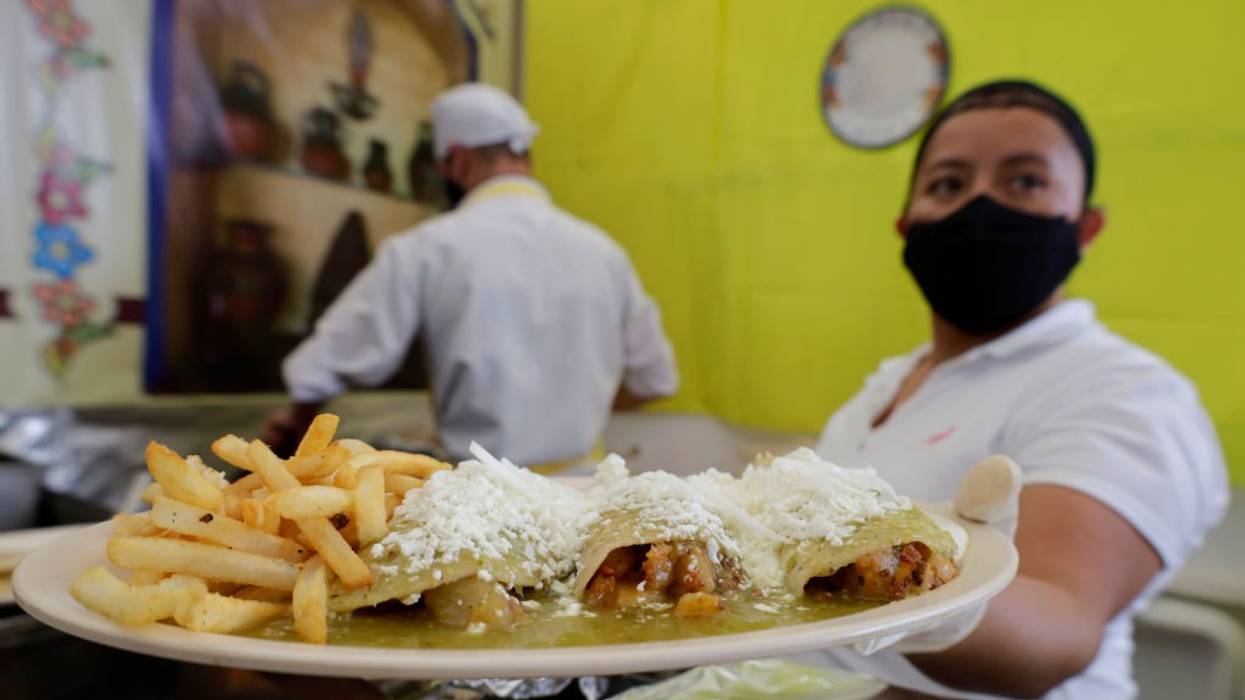
The U.S. government ignores the trade numbers and misconstrues Mexican policy when it comes to glyphosate and American corn destined for human consumption across the border.
An international battle over tortillas is taking place this week. For an ingredient in tacos, the United States gins up a trade dispute with Mexico. Last year, in a Decree Mexico outlawed genetically modified (GMO) corn for human consumption. The U.S. argues that this violates trade obligations. Worried about its GMO corn exports, it formed a trade panel under the United States Mexico Canada Agreement (USMCA). Hearings started Wednesday.
The controversy is overstuffed and a sloppy mess. So far, American and Mexican legal filings contain 586 pages, 758 exhibits, and nearly 2,000 footnotes. Arguments span over 20 separate USMCA provisions and multiple annexes. Extra submissions come from Canada and non-governmental organizations. It’s hard to follow, whether you’re a trade expert, scientist, or just care about food safety.
The U.S. position has two weaknesses: economic errors and misrepresentations about the Decree. These are basic mistakes, from a Trade 101 class, regarding injuries and policy. The fumbles stand out from the legalese and scientific jargon in the filings. And let's be clear: he U.S. should drop the case.
A good place to start making sense of the fight is the actual Decree. Article 6 outlaws GMO corn for human consumption, precisely defined as corn for tortillas or masa (dough). It stops approvals for GMO corn for these two items. That is it. The Decree is explicit in not touching GMOs in animal feed or industrial use—the kind U.S. corn farmers mostly export.
Decree motivations include protecting human health, biodiversity, and food security. The prohibition responds to risks from glyphosate, an herbicide needed to grow GMO corn. It has been found to be a likely cause of cancer by international health agencies and U.S. courts. Next, Mexico is corn’s center of origin and diversity, a scientific designation indicating extreme genetic vulnerability. In 2021, Mexico’s Supreme Court found that GMOs threaten to permanently damage this biodiversity. More immediate, corn provides half of the daily protein intake for Mexicans.
With Article 6, Mexico reduces these threats by outlawing GMOs in the tortillas and masa, eaten by millions every day. For these scientifically established risks, Mexico tailored the Decree to only impact two food staples.
The U.S. ignores this. Recent economic figures explain. Mexican corn imports from the U.S. have increased since the Decree. Last week, the U.S. Department of Agriculture reported a “record-high” for corn exports to Mexico for 2023 and 2024 and forecasts similar trends next year. This confirms earlier reports citing increases by 20 percent.
Put simply, the Decree has no real impact on trade in corn. Why? Because American farmers overwhelmingly export corn for animal feed and not for human consumption. Mexico has explained this since enacting the Decree. Let’s be clear, the U.S. fights as exports increase. It makes no sense.
Furthermore, the U.S. mispresents the Decree. The U.S. says Mexico imposes a “Tortilla Corn Ban.” Wrong. It suspends approvals for human consumption. GMO corn can still be imported but cannot be destined for tortillas. Mexico describes this as an “End Use Limitation,” since it regulates how corn is used. This applies to GMO corn from anywhere including from Mexican farms.
Next, the U.S. exaggerates what the Decree does. It quibbles about non-issues. What it coins “Substitution Instructions” to force replacing GMO corn in animal feed. The complaint is that instructions are unclear.
Problem: the Decree does not mandate substitution. It does describe future actions and the prerequisites needed to replace GMO feed. Article 7 expressly says Mexico’s commission on sanitary risk will continue approving GMO corn in animal feed, so long as it is not for tortillas. It clarifies that federal agencies will conduct any possible substitution. By implication state governments in Mexico have no role.
Article 8 confirms this, explaining what is necessary before any replacement. It designates the parameters to eventually substitute GMO corn for animals. Pre-conditions include determining national food security and any impacts on human health. In two filings, Mexico explains that the prerequisites have not occurred. As such, it has not set any date for substitution, much less any guidance.
Nowhere does the Decree demand alternatives for GMOs. American complaints miss the mark. There is no there there. The Decree does not touch corn for livestock.
The dispute just started warming up the comal (skillet used to heat tortillas). A final panel report comes in November. Until then, expect a mess with more scientific and legal arguments piled on. In the simplest terms, the U.S. ignores commercial reality and misrepresents the Decree. Basic blunders compounding obstacles in the USMCA’s food safety rules.
All this should inspire resolution versus repeating trade defeats. American farmers and Mexican eaters deserve better. Ending the dispute secures a corn buyer in a neighbor. It promotes public health in Mexico. The current course only produces uncertainty.
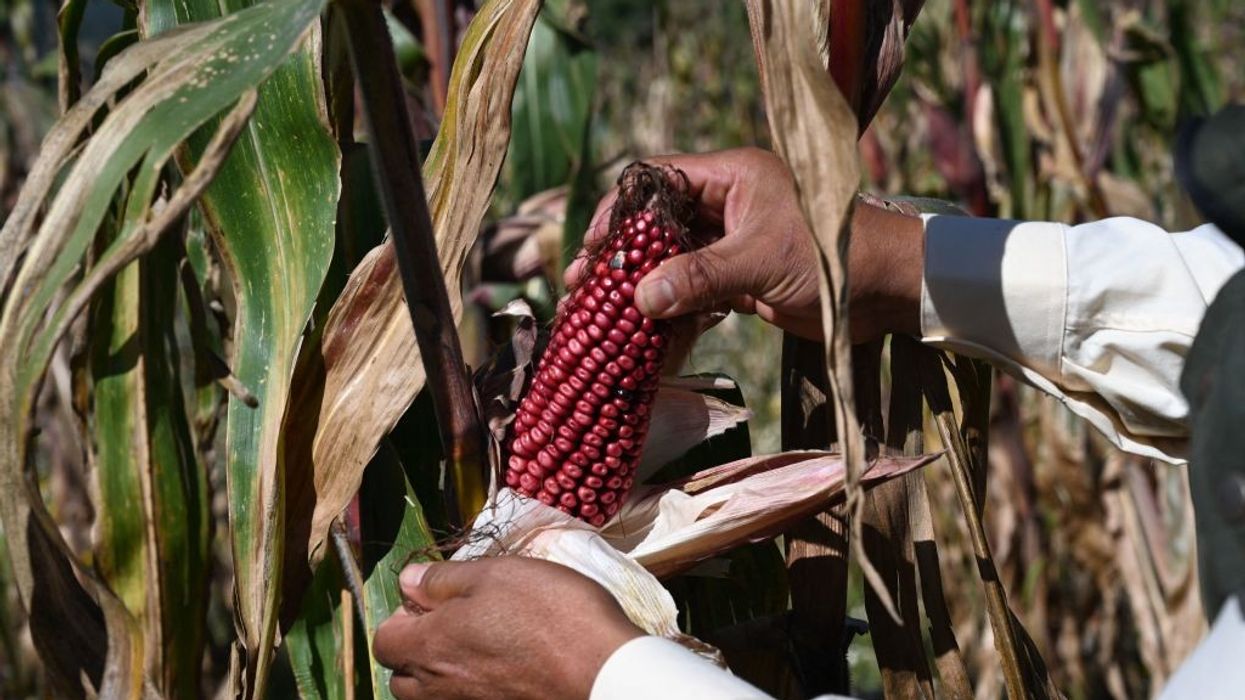
Put simply, the U.S. gets it wrong when it comes to trade rules on food safety. Their lawyers—experienced as they are—should know better.
The United States ups the ante in its legal clash with Mexico over genetically modified (GMO) corn. Last month, a trade panel released the US’s latest legal filing. It essentially doubts the science Mexico offers and claims Mexico violates obligations from the USMCA trade pact.
This regards Mexico’s Decree from April 2023 banning GMO corn for human consumption. The ban cites harms from genetic manipulation of corn seeds and cancer risks from herbicides like glyphosate, needed by GMO farms. A USMCA panel will hold hearings on American complaints in June.
The U.S. position is not as strong as it claims—far from it. Observers analyze why Mexico’s scientific justifications are on solid ground. As a law professor, I explain how the U.S. overstates its legal case, at times severely so, when it comes to the ban on GMOs in tortillas and masa (dough).
Put simply, the U.S. gets it wrong when it comes to trade rules on food safety, called sanitary and phytosanitary measures (SPS) and covered in USMCA Chapter 9. Weaknesses regard two aspects of food safety: protection levels and health risks. In a recent journal article, I offer detailed examinations of these and other obstacles.
American faults involve established international law. The USMCA is three years old and this case raises its first SPS controversy. Fortunately, there are long-settled understandings in international law specific to SPS and trade obligations. For decades, panels have interpretated the World Trade Organization’s (WTO) SPS Agreement. This will inform the USMCA panel.
SPS Agreement obligations are central to the USMCA. In the new trade pact, the U.S., Mexico and Canada expressly agreed to affirm “rights and obligations” from the SPS Agreement. Numerous tribunals have ruled on disputes about the SPS Agreement. They’ve examined food safety measures and impacts on trade in food and agriculture, similar to gripes concerning Mexico’s Decree.
Both sides refer to panel reports from SPS cases. Reports are like court opinions. The U.S. cites over 40 reports, including 16 from the highest level, the WTO’s Appellate Body. Mexico references nearly50 and 23 from the highest level. The U.S. problem : it excludes important legal aspects from these reports.
One omission regards what is called the “appropriate level of protection” (ALOP). The USMCA uses the WTO definition for ALOP: the “level of protection deemed appropriate” by the country establishing a measure to protect human life.
The U.S. gets it wrong in terms of what this level can be and who determines it, to then say Mexico inadequately defines it. Mexico is clear that for human consumption of GMO corn, its ALOP is “zero risk.”
The U.S. may not like this, but it is legal under trade rules. This is irrefutable. In 1998, the Appellate Body found “zero risk” is permitted for an ALOP. This comes from a controversy between Australia and Canada over salmon imports. In the corn dispute, the U.S. refers to the case but not to its sections approving “zero risk” levels.
This is forgetful lawyering. Trade law treatises describe “zero risk” as a settled option and interpreted as such by later trade panels. Like legal encyclopedias, treatises summarize how legal doctrine develops, based on new rulings. Attorneys and judges use them to identify how courts and panels interpret legal rules. For ALOP, American lawyers fail with the basics.
The US underplays who actually determines the ALOP. Mexico does, according to the USMCA. Trade rules are explicit that countries in situations like Mexico have wide discretion to determine the ALOP. This is “unambiguous.”
Prior cases are clear. In 2008, the Appellate Body said a country employing a food safety measure has the “prerogative” to determine the ALOP. This involved an American challenge to European Union (EU) controls of hormones in beef.
Second, the US exaggerates requirements in evaluating food safety, called “risk assessment.” Risk assessments are “evaluation[s] of the potential for adverse effects on human health.” This definition comes from the SPS Agreement and is incorporated by the USMCA. Mexico’s assessment is titled the “Scientific Record on Glyphosate and GM Crops” published in 2020 and available since then online from the National Council of Humanities, Sciences and Technologies (CONAHCYT).
The U.S. overstates what is legally needed, to then characterize Mexico’s assessment as “incoherent and inadequate.” WTO cases find that risk assessments must only establish a “potential” for adverse effects. The Appellate Body confirmed this standard in the US’s first challenge of EU controls for hormones in beef in 1998.
The standard has staying power. Ten years later, the tribunal re-affirmed this requirement in the U.S.’s second trade case against beef hormone regulations.
The standard is a fixture of SPS doctrine. Recent treatises explain that for risks in human food, trade rules are deferential to SPS measures since “protection of public health is at stake.”
In its legal filing, the U.S. demands far more than is legally necessary. It calls for excessive proof. This includes “estimates of hazard, exposure, or risk” and “levels that can cause” adverse effects when eating corn. It faults Mexico for not proving that imported GMO corn “presents unsafe levels of glyphosate residue.” These are a few examples that veer from what international trade law actually requires.
SPS cases on risk assessments further undercut American positions. In the first beef hormone controversy, the Appellate Body explained that food safety measures must have a “rational relationship with the risk assessment” and that risk assessments must “reasonably support” this food safety measure. This U.S. must have missed these trade rules, since it asks for significantly more from Mexico.
Emotionally, the U.S. presents criticisms of GMOs as fringe and unacceptable. The filing says that scientific evidence provided by Mexico only “distract[s] from prevailing scientific opinion.” This is demeaning.
Trade rules are more based on reason. They do not require SPS measures to reflect majority scientific opinion. Lawyers for the U.S. should know this. In the first fight over beef hormones, the report explained that assessments do not need to “embody” the “view of a majority” of the scientific community. Then with a second American try, the Appellate Body added that scientific support is acceptable as long as it is “considered to be legitimate science.”
Where does this take us? With legal lapses in several areas, the U.S. should try to resolve its gripes with Mexico versus pursuing fruitless disputes. The commercial reality is U.S. corn exports to Mexico have dramatically increased since the Decree.
Be careful what you ask for, when it comes to trade rulings. It is 2024 and trade lawyers for the U.S. eerily face the same legal questions from 1998 and 2008. Then they concerned American beef exports. U.S. lawyers should re-read those rulings. Trade law is clear on ALOP and risk assessments. American farmers don’t need another trade loss, they need better legal advice.
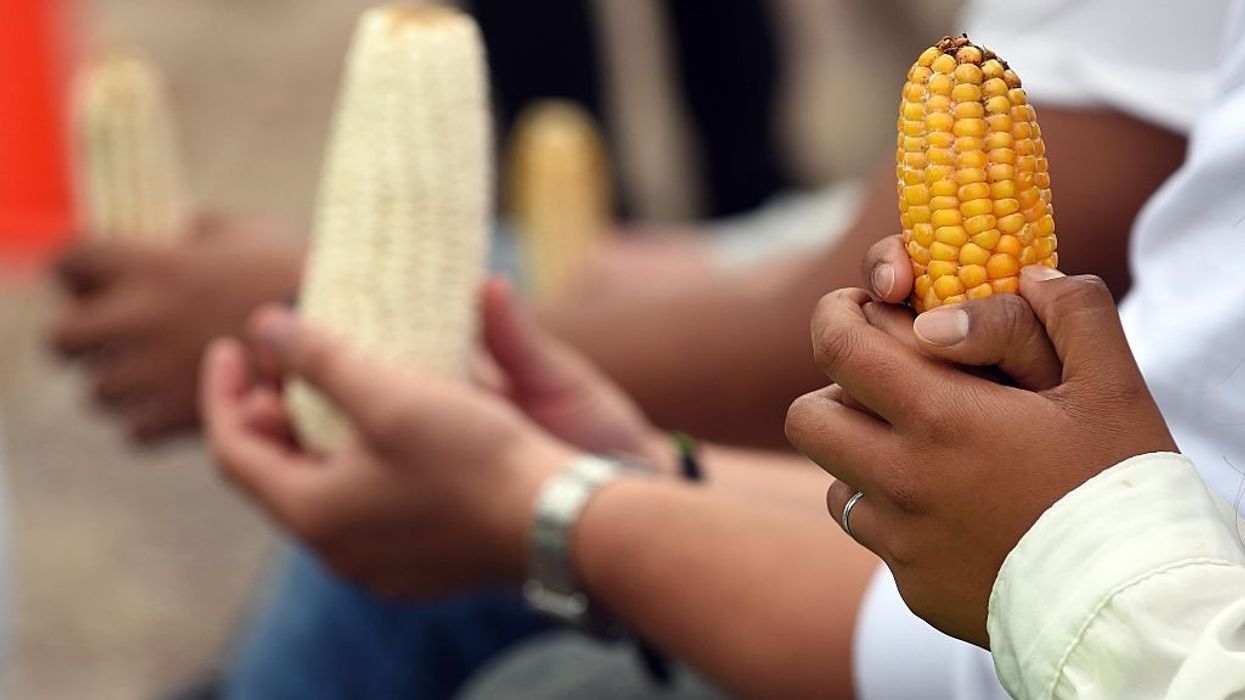
The U.S. position in support of corporate interests is stuck in a mythical past, when massive agribusiness claimed their products would save family farmers without harming consumers or the environment—claims we know are false. Mexico is taking a different approach to create greater resiliency and healthier alternatives that meet public demand.
The trade dispute over Mexico’s limitations on genetically modified (GM) corn and glyphosate continues to unfold. On April 30, the U.S.-Mexico-Canada Agreement (USMCA) Secretariat published the U.S. rebuttal to Mexico’s comments published in March. Much of what’s in that analysis repeats previous U.S. comments, arguing that Mexico has violated the terms of the agreement and has failed to offer scientific evidence that GM corn and herbicide residues present potential dangers to Mexican consumers.
Civil society groups, many of which have made official submissions to the trade panel on the case, offered some responses to the issues raised in the lengthy statement by the U.S.
The U.S. claims that Mexico failed to produce scientific evidence to back its restrictions on the use of GM corn in tortillas. However, Mexico presented many important studies in its submission. The U.S. neglected to address many of these studies in its response.
“There are a dozen references in the U.S. rebuttal to papers published in industry-friendly journals by scientists whose work has been funded for years by GMO seed and pesticide companies,” notes pesticide expert Charles Benbrook, who co-authored a detailed submission to the panel by Friends of the Earth. “Their work draws heavily on cherry-picked data the companies chose to provide these analysts. The absence of any reference to, or discussion of, the dozens of credible, high-quality papers supporting points made in the Mexican submission, including several pointing to possible human food safety issues with genetically engineered (GE) corn, is strong evidence that the U.S. response is a political document, not a scientific one.”
“There are a dozen references in the U.S. rebuttal to papers published in industry-friendly journals by scientists whose work has been funded for years by GMO seed and pesticide companies.”
“The U.S. government still fails to take seriously the evidence Mexico has provided showing ample cause for its precautionary restrictions on GM corn in its tortillas,” said IATP’s Timothy A. Wise of the U.S. response. “Mexico justifiably wants scientific evidence that GM corn with glyphosate residues is safe to eat for Mexicans, who consume 10 times the corn we do in the U.S. and do so not in processed foods but in minimally processed foods. The U.S. has provided no such evidence.”
Nor does the U.S. government take seriously the science showing risks to native corn biodiversity from GM corn varieties, according to Mercedes López of Regeneration International. “The U.S. claim that ‘The prohibition of corn for tortillas and the gradual substitution of Mexico are not ‘related’ to the conservation of an exhaustible natural resource’ is totally false. Mexico is a center of origin and constant diversification of corn. It is a product of the biodiversity of hundreds of generations. The possible planting of genetically modified corn and the import of GM corn for staple foods would threaten that biodiversity and endanger the millions of people who consume corn.”
The U.S. response also makes the case that U.S. producers have suffered damages from Mexico’s limited restrictions on the uses of GM corn in tortillas, even though there is little evidence it has affected many U.S. producers. U.S. officials now claim that Mexico’s decree violates the trade agreement because it threatens future expected exports, a theory debunked by IATP advisor and trade attorney Sharon Treat.
“The USMCA text affirms each country’s rights to honor its legal obligations to Indigenous communities. Mexico has many such commitments in Federal law and the Constitution. Now in its rebuttal, the U.S. argues that even if Mexico’s actions are justified under the Indigenous rights provision, Mexico hasn't proved that its actions don't amount to a ‘disguised restriction on trade.’ The U.S. argues that exporters had a ‘reasonable expectation’ that Mexico’s rules would never change. Contrary to the U.S. contention, the text simply does not say that the status quo at the time the trade agreement was signed could never be altered. The Indigenous rights provision specifically protects Mexico’s authority to adopt new measures to honor its obligations” says Treat, who coauthored a joint submission to the tribunal on Indigenous rights to GM-free corn with the Rural Coalition and the Alianza Nacional de Campesinas.
The U.S. rebuttal is stuck in a mythical past, when massive agribusiness exports would supposedly save family farmers from low prices. That hasn’t worked in the U.S. or in Mexico. Mexico is taking a different approach to create greater resiliency and healthier alternatives that meet public demand. We should be learning from their experience rather than trying to disrupt it.
See IATP’s resource page on the dispute, where you can read the submissions from Mexican, Canadian and U.S. NGOs.
There is a mountain of evidence that both GM corn and its accompanying herbicides, including glyphosate, may cause serious health problems.
The three-member trade panel hearing the U.S. complaint over Mexico’s restrictions on the use of genetically modified corn in tortillas will no doubt need some scientific advice to evaluate the technical evidence presented by the Mexican government on the risks associated with GM corn and their accompanying herbicide residues. They got some on April 23 from a panel of experts assembled by the Institute for Agriculture and Trade Policy (IATP) in the first of three webinars on the GM corn dispute.
Their message could not have been clearer. The Mexican government is right to doubt U.S. assurances that GM corn is safe to eat given the lax regulatory processes for GM crops in the U.S. There is a mountain of evidence that both GM corn and its accompanying herbicides, including glyphosate, may cause serious health problems. And those risks are magnified for Mexicans, who eat more than ten times the corn we eat in the U.S. and do so in minimally processed form, not processed foods.
"Has the U.S. government provided sufficient evidence to the Mexican government to assure the safety of GM corn, which is routinely sprayed with multiple herbicides known to be associated with reproductive problems, metabolic syndrome, and cancer?” asked pesticide expert Dr. Charles Benbrook in his remarks during the webinar. “No, because the studies have never been done."
Benbrook and his fellow panelists all were invited to submit formal comments to the trade panel hearing the dispute, a year-long process expected to be resolved by the end of the year. The eight submissions from U.S. and Mexican non-governmental organizations were published by the tribunal earlier this month. They offer a range of evidence that supports Mexico’s presidential decree, issued in February 2023, phasing out glyphosate use in Mexico and restricting the use of GM corn in tortillas and other minimally processed corn products. (The submitted comments are available in English and Spanish on this IATP resource page.)
Dr. Benbrook co-authored technical comments for Friends of the Earth, which focused on the rising toxicity of GM corn, particularly the insecticidal Bt varieties, and the failure of U.S. regulators to test them for safety.
“Mexico is correct to state that it cannot rely on the U.S. government to ensure the safety of GM crops.”
"The first GM corn varieties in the late 1990s expressed 2 ppm to 6 ppm of one or two Bt toxins in corn kernels, the part of the plant people eat,” said Dr. Benbrook. “Today's leading GM corn varieties express four to seven toxins in corn kernels and at much higher levels, 50 ppm to 100 ppm. Why the big increase? Because target insects become more tolerant to Bt toxins over time, and eventually fully resistant. This forces the seed-biotech industry to add in new GM toxins and engineer the plants to express them at much higher levels. That might help kill more insects for a short time, but it also steadily increases human food safety risks."
Bill Freese, Science Director at the U.S.-based Center for Food Safety, emphasized just how weak U.S. regulations are, allowing companies to introduce new products with no required safety testing. He referred to is as a “deregulatory regime” rather than proper regulation.
“U.S. regulation of GM crops does not even comply with the U.S.-Mexico-Canada trade agreement (USMCA) because it is weak and voluntary, not mandatory,” he said, claiming U.S. agencies have facilitated the rising toxicity in fields of GM crops. As Freese explained, “The Environmental Protection Agency has raised the permissible level of glyphosate on corn by 50-fold since the mid-1990s to facilitate introduction of GM corn, which is sprayed directly with glyphosate.”
Monsanto and new parent company Bayer are now paying out billions of dollars in damages to people who have suffered cancer and other ailments from glyphosate exposure.
Lucy Sharratt, coordinator of the Canadian Biotechnology Action Network (CBAN), highlighted Mexico’s strong rationale for its precautionary measures. CBAN was invited to offer comments to the trade panel but was later disinvited because it is a Canadian, not a U.S. or Mexican, organization. CBAN published its technical comments anyway.
"U.S. and Canadian government safety assessments of GM corn do not necessarily transfer readily to an assessment of safety in the Mexican context,” Sharratt explained to the webinar’s large online audience. “The U.S. and Canada argue that there is a long history of safe use of GM corn, but this is not the case in Mexico. The use of white corn in Mexico is entirely different from the history of the use of GM corn in processed food ingredients across North America. Mexico is largely self-sufficient in white corn, which is a staple of the diet, and has been mostly non-GM. Additionally, there is no post-market monitoring to validate safety of any use."
Mexican lawyer Javier Zuñiga, from the NGO Poder del Consumidor (Consumer Power), closed the expert panel, explaining that Mexico’s decree is both justified and legal under existing trade rules. “The Mexican government is obligated by its own constitution to take precautionary and preventive action to ensure the right to health, food, and a clean environment,” Zuñiga said. “Mexico's presidential decree is legal in the Mexican context and also under the USMCA, which includes exceptions for matters of public health.”
This scientific panel urged the trade tribunal to consider the evidence, listen to experts who do not have industry ties or conflicts of interest, and acknowledge that Mexico has the right to take precautionary measures to protect public health and the environment. It has done so in the least trade-distorting manner possible entirely consistent with USMCA guidelines.
As Freese concluded, “Mexico is correct to state that it cannot rely on the U.S. government to ensure the safety of GM crops.”
Two more webinars on other aspects of the trade dispute are scheduled May 2, on biodiversity and cultural rights, and May 7, with farmers’ perspectives on non-GM corn opportunities. The recording of this panel will be available April 25 here
While Mexico incorporates peer-reviewed science to challenge industrial agriculture interests, American stances ignore it.
Frustration with Mexico grows, not over the border or drugs, but over science. The United States demands that Mexico explain why GMO corn is unsafe. Last year, out of concern for human health, Mexico outlawed GMO corn for human consumption. This type of corn is engineered with lab techniques that modify the genetic content of seeds. Issued as a Decree, these restrictions apply to corn in tortillas or masa (dough).
Immediately, American officials complained that this blocks imports. No surprise, most American corn is GMO. They said Mexico lacks a scientific basis for the restrictions, required by the USMCA, NAFTA’s successor. A dispute panel was established. This insistence on science grew, becoming standard talking points for trade and agriculture officers, members of Congress, and lobbyists.
Mexico definitely offers scientific proof and lots of it in its reply, which was recently made public. It includes over one hundred and fifty scientific studies, referred to in peer-review journals, systemic research reviews, and more. Mexico incorporates perspectives from toxicology, pediatrics, plant biology, hematology, epidemiology, public health, and data mining, to name a few.
This clearly and loudly responds to American persistence. The practical result: American leaders cannot claim there is no science supporting the Decree. They may disagree with or dislike the findings, but there is proof.
Based on this, Mexico points to safety risks when humans consume GMO corn and consume corn exposed to herbicides like glyphosate. A World Health Organization (WHO) agency concluded that glyphosate is a likely cause of cancer. Five years ago American courts agreed and continue to do so.
Science-based research supports the Decree in two ways, with justifications for safety measures and with trade obligations. First, corn plays an enormous role in Mexican diets. Because of this, any potential risk from corn creates significant public health concerns for Mexico. Corn provides half of the daily protein intake for Mexican adults. In Mexico corn products are consumed at rates ten times higher than in the United States, according to data from the FAO (United Nations Food and Agriculture Organization). Put simply, any toxicity from eating corn poses substantial dangers for Mexico.
Luckily the USMCA permits food safety policies tailored to specific risks. This points to a second kind of support for the Decree. Specifically, Mexico has the “right to adopt” measures needed to protect human health. To narrowly craft the measure, Mexico identifies risks to human health from contaminants or toxins in GMO corn in human food. This is why the Decree only applies to tortillas and masa and not animal feed, what American farmers mostly export.
The trade pact supports this fine-tuning. Called “the appropriate level of protection,” it’s set by governments when developing food safety measures. The USMCA “does not prevent” Mexico from establishing a level of protection “it determines to be appropriate.” The upshot: if Mexico identifies risks to human health from GMO corn, it can determine the suitable level of protection.
With substantial scientific backing, Mexico isolates risks and sets protection. The Decree responds to two dangers from: GMO corn and corn exposed to glyphosate.
One danger exists in the unintended molecular effects that come from consuming GMO corn. Mexico points to field and lab studies on GMO corn finding negative consequences. They detect heavier kidneys, changes in gastrointestinal functions, and more. These adverse effects are at molecular levels, caused by the introduction of genes into corn cells. To avoid these, Mexico prohibits corn engineered with these modifications in human food.
The science-based support for this is comprehensive. In its section “impacts of GM corn on human health,” Mexico refers to over fifty individual studies, with examples from the WHO and leading journals like Nature and PLoS One.
A second danger is glyphosate, an herbicide found to be a likely cause of cancer. It kills weeds that grow near crops. Mexico describes the inseparable link between glyphosate and GMO corn, referring to over twelve scientific studies and to databases from the U.S. Department of Agriculture, the international biotechnology organization (ISAAA), and Mexico’s science council (CONAHCYT).
Corn is genetically engineered so it can tolerate greater amounts of herbicide. This is the “main function” of genetic modification. When GMO techniques succeed, plants withstand more herbicide. As genetic modifications advance, larger amounts of toxins are sprayed on plants without killing them.
Mexico looks to important research on this toxicity, including recent studies conducted in Mexico. Anxieties go beyond plants. Herbicide traces have been detected in breast milk and blood. Investigations found glyphosate in the urine of Mexican children, consistent with the latest research into similar experiences worldwide.
Mexico pinpoints important risks from glyphosate. This includes liver cancer, diabetes, and cardiovascular diseases. Moreover, research finds glyphosate can lead to infants developing “neuronal damage, diabetes, obesity and impaired lung function.” In sum, science-based reasoning isolates risks in eating GMO corn and in eating corn exposed to glyphosate.
While Mexico incorporates science American stances ignore it. They do not mention glyphosate. They argue that GMO corn is safe, citing studies from decades ago. This is “striking.” In 2021, Mexico announced its restrictions. Since then officials from both countries have met repeatedly to discuss these matters.
What does this all mean? Most immediately, American officials should take Mexican positions seriously. Scientific experts worldwide do. The panel will. With elections this year in both countries, tensions won’t easily fade.
Ideally, trade officers see the compromise implicit in the Decree: American farmers still export GMO corn for animal feed to Mexico. If this dispute continues, they risk losing that and more. Trade disputes carve losing paths when governments refuse to see the evidence. Hopefully, objective heads in Washington take an honest look at Mexico’s reply and prioritize resolution over conflict.