SUBSCRIBE TO OUR FREE NEWSLETTER
Daily news & progressive opinion—funded by the people, not the corporations—delivered straight to your inbox.
5
#000000
#FFFFFF
To donate by check, phone, or other method, see our More Ways to Give page.


Daily news & progressive opinion—funded by the people, not the corporations—delivered straight to your inbox.

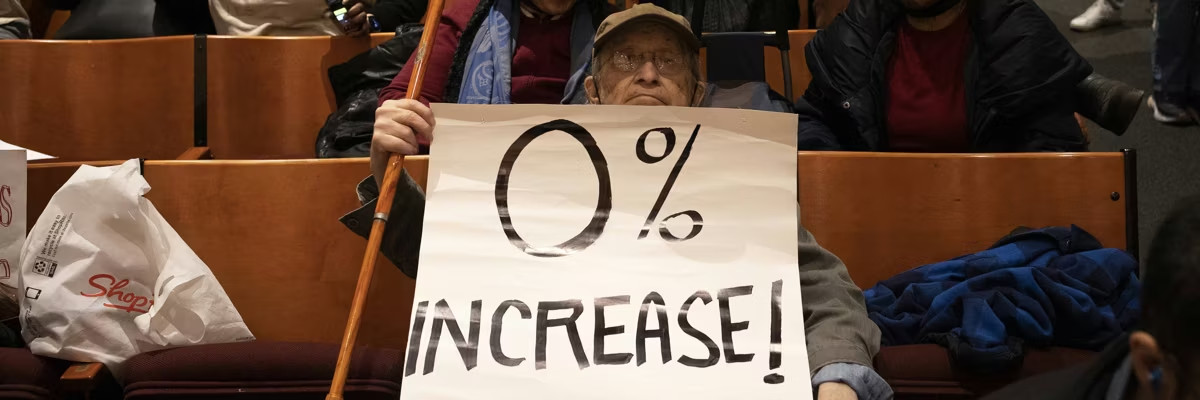
Tenants and housing rights activists disrupt a meeting of the New York City rent board to demand a zero percent increase in rent for city rent stabilized apartments, May 2, 2023 at Cooper Union in New York City, New York.
Taking care of each other is a part of the American way. Politicians doing the right thing on the behalf of vulnerable tenants is also a part of the American way.
The real estate industry doesn’t want you to know an important fact about rent control: Since World War I, rent regulations have protected poor and middle- and working-class tenants against skyrocketing rents and predatory landlords. Rent control, in other words, has long been a part of the American way.
Soon after World War I, elected officials understood that they needed to protect tenants against sky-high rents due to a worsening housing shortage. Fair rent committees, with an emphasis on “fair,” were set up in 153 cities in the United States, and those committees routinely reached out to landlords to stop unreasonable rent hikes. In Washington D.C. and Denver, rent commissions determined fair rents, and, in New York, state legislators passed emergency laws to control sky-high rising rents.
Politicians knew that they couldn’t allow the status quo of unfair rents to continue, and they knew that they had the power to do something about it. So they stepped in to help hard-working Americans.
During World War II, politicians again did the right thing and expanded rent control. The federal government established rent control for around 80 percent of rental housing in the U.S. in response to housing shortages and rent gouging. When that federal program was phased out, some states, such as New York and New Jersey, established their own rent control policies in the early 1950s.
If there was ever time for politicians to protect tenants, now is that time, and the situation is dire.
Throughout this period, elected officials understood that tenants needed stable, affordable housing that would not force renters to choose between eating or paying the rent or paying medical bills or paying the rent. Americans’ well-being was at stake.
Fast forward to the early 1970s. With worsening inflation, rents spiked. President Richard Nixon pushed for temporary rent controls, and that was followed by American cities passing rent regulations, including Berkeley, San Francisco, and Los Angeles.
Unfortunately, in the 1980s and 1990s, the deep-pocketed real estate industry pushed back, aggressively lobbying state legislatures across the country to pass rent control bans or restrictions. Landlords and lobbyists went against the American way of looking out for people.
Today, more than 35 states have laws that stop the expansion of rent control while the real estate industry’s profits, through unfair, excessive rents, go through the roof. Between 2010 and 2019, renters paid a staggering $4.5 trillion to landlords in the U.S, according to Zillow.
Recently, Big Tech and Big Real Estate teamed up to charge wildly inflated rents through a rent-fixing software program by RealPage, which brought about numerous lawsuits and investigations. The software allowed corporate landlords to collude and charge outrageous rents that harmed Americans throughout the nation.
If there was ever time for politicians to protect tenants, now is that time, and the situation is dire. Eviction Lab, the prestigious research institute at Princeton University, found that increasingly unaffordable rents are linked to higher mortality rates. And a wide-ranging study on homelessness by the University of California San Francisco revealed that people ended up living on the streets because of sky-high rents. An urgent way to address these life-threatening problems is to utilize rent control—an American tradition since World War I.
But activists believe that rent control isn’t the only tool to fix the housing affordability and homelessness crises. There needs to be a multi-pronged approach called the “3 Ps”: protect tenants through rent control and other renter protections; preserve existing affordable housing, not demolish it to make way for unaffordable luxury housing; and produce new affordable and homeless housing.
Taking care of each other is a part of the American way. Politicians doing the right thing on the behalf of vulnerable tenants is also a part of the American way. Today’s elected officials must continue that work, especially since tenants throughout the country are facing serious risks of death and homelessness. They must immediately utilize rent regulations and the 3 Ps.

Dear Common Dreams reader, The U.S. is on a fast track to authoritarianism like nothing I've ever seen. Meanwhile, corporate news outlets are utterly capitulating to Trump, twisting their coverage to avoid drawing his ire while lining up to stuff cash in his pockets. That's why I believe that Common Dreams is doing the best and most consequential reporting that we've ever done. Our small but mighty team is a progressive reporting powerhouse, covering the news every day that the corporate media never will. Our mission has always been simple: To inform. To inspire. And to ignite change for the common good. Now here's the key piece that I want all our readers to understand: None of this would be possible without your financial support. That's not just some fundraising cliche. It's the absolute and literal truth. We don't accept corporate advertising and never will. We don't have a paywall because we don't think people should be blocked from critical news based on their ability to pay. Everything we do is funded by the donations of readers like you. Will you donate now to help power the nonprofit, independent reporting of Common Dreams? Thank you for being a vital member of our community. Together, we can keep independent journalism alive when it’s needed most. - Craig Brown, Co-founder |
The real estate industry doesn’t want you to know an important fact about rent control: Since World War I, rent regulations have protected poor and middle- and working-class tenants against skyrocketing rents and predatory landlords. Rent control, in other words, has long been a part of the American way.
Soon after World War I, elected officials understood that they needed to protect tenants against sky-high rents due to a worsening housing shortage. Fair rent committees, with an emphasis on “fair,” were set up in 153 cities in the United States, and those committees routinely reached out to landlords to stop unreasonable rent hikes. In Washington D.C. and Denver, rent commissions determined fair rents, and, in New York, state legislators passed emergency laws to control sky-high rising rents.
Politicians knew that they couldn’t allow the status quo of unfair rents to continue, and they knew that they had the power to do something about it. So they stepped in to help hard-working Americans.
During World War II, politicians again did the right thing and expanded rent control. The federal government established rent control for around 80 percent of rental housing in the U.S. in response to housing shortages and rent gouging. When that federal program was phased out, some states, such as New York and New Jersey, established their own rent control policies in the early 1950s.
If there was ever time for politicians to protect tenants, now is that time, and the situation is dire.
Throughout this period, elected officials understood that tenants needed stable, affordable housing that would not force renters to choose between eating or paying the rent or paying medical bills or paying the rent. Americans’ well-being was at stake.
Fast forward to the early 1970s. With worsening inflation, rents spiked. President Richard Nixon pushed for temporary rent controls, and that was followed by American cities passing rent regulations, including Berkeley, San Francisco, and Los Angeles.
Unfortunately, in the 1980s and 1990s, the deep-pocketed real estate industry pushed back, aggressively lobbying state legislatures across the country to pass rent control bans or restrictions. Landlords and lobbyists went against the American way of looking out for people.
Today, more than 35 states have laws that stop the expansion of rent control while the real estate industry’s profits, through unfair, excessive rents, go through the roof. Between 2010 and 2019, renters paid a staggering $4.5 trillion to landlords in the U.S, according to Zillow.
Recently, Big Tech and Big Real Estate teamed up to charge wildly inflated rents through a rent-fixing software program by RealPage, which brought about numerous lawsuits and investigations. The software allowed corporate landlords to collude and charge outrageous rents that harmed Americans throughout the nation.
If there was ever time for politicians to protect tenants, now is that time, and the situation is dire. Eviction Lab, the prestigious research institute at Princeton University, found that increasingly unaffordable rents are linked to higher mortality rates. And a wide-ranging study on homelessness by the University of California San Francisco revealed that people ended up living on the streets because of sky-high rents. An urgent way to address these life-threatening problems is to utilize rent control—an American tradition since World War I.
But activists believe that rent control isn’t the only tool to fix the housing affordability and homelessness crises. There needs to be a multi-pronged approach called the “3 Ps”: protect tenants through rent control and other renter protections; preserve existing affordable housing, not demolish it to make way for unaffordable luxury housing; and produce new affordable and homeless housing.
Taking care of each other is a part of the American way. Politicians doing the right thing on the behalf of vulnerable tenants is also a part of the American way. Today’s elected officials must continue that work, especially since tenants throughout the country are facing serious risks of death and homelessness. They must immediately utilize rent regulations and the 3 Ps.
The real estate industry doesn’t want you to know an important fact about rent control: Since World War I, rent regulations have protected poor and middle- and working-class tenants against skyrocketing rents and predatory landlords. Rent control, in other words, has long been a part of the American way.
Soon after World War I, elected officials understood that they needed to protect tenants against sky-high rents due to a worsening housing shortage. Fair rent committees, with an emphasis on “fair,” were set up in 153 cities in the United States, and those committees routinely reached out to landlords to stop unreasonable rent hikes. In Washington D.C. and Denver, rent commissions determined fair rents, and, in New York, state legislators passed emergency laws to control sky-high rising rents.
Politicians knew that they couldn’t allow the status quo of unfair rents to continue, and they knew that they had the power to do something about it. So they stepped in to help hard-working Americans.
During World War II, politicians again did the right thing and expanded rent control. The federal government established rent control for around 80 percent of rental housing in the U.S. in response to housing shortages and rent gouging. When that federal program was phased out, some states, such as New York and New Jersey, established their own rent control policies in the early 1950s.
If there was ever time for politicians to protect tenants, now is that time, and the situation is dire.
Throughout this period, elected officials understood that tenants needed stable, affordable housing that would not force renters to choose between eating or paying the rent or paying medical bills or paying the rent. Americans’ well-being was at stake.
Fast forward to the early 1970s. With worsening inflation, rents spiked. President Richard Nixon pushed for temporary rent controls, and that was followed by American cities passing rent regulations, including Berkeley, San Francisco, and Los Angeles.
Unfortunately, in the 1980s and 1990s, the deep-pocketed real estate industry pushed back, aggressively lobbying state legislatures across the country to pass rent control bans or restrictions. Landlords and lobbyists went against the American way of looking out for people.
Today, more than 35 states have laws that stop the expansion of rent control while the real estate industry’s profits, through unfair, excessive rents, go through the roof. Between 2010 and 2019, renters paid a staggering $4.5 trillion to landlords in the U.S, according to Zillow.
Recently, Big Tech and Big Real Estate teamed up to charge wildly inflated rents through a rent-fixing software program by RealPage, which brought about numerous lawsuits and investigations. The software allowed corporate landlords to collude and charge outrageous rents that harmed Americans throughout the nation.
If there was ever time for politicians to protect tenants, now is that time, and the situation is dire. Eviction Lab, the prestigious research institute at Princeton University, found that increasingly unaffordable rents are linked to higher mortality rates. And a wide-ranging study on homelessness by the University of California San Francisco revealed that people ended up living on the streets because of sky-high rents. An urgent way to address these life-threatening problems is to utilize rent control—an American tradition since World War I.
But activists believe that rent control isn’t the only tool to fix the housing affordability and homelessness crises. There needs to be a multi-pronged approach called the “3 Ps”: protect tenants through rent control and other renter protections; preserve existing affordable housing, not demolish it to make way for unaffordable luxury housing; and produce new affordable and homeless housing.
Taking care of each other is a part of the American way. Politicians doing the right thing on the behalf of vulnerable tenants is also a part of the American way. Today’s elected officials must continue that work, especially since tenants throughout the country are facing serious risks of death and homelessness. They must immediately utilize rent regulations and the 3 Ps.