SUBSCRIBE TO OUR FREE NEWSLETTER
Daily news & progressive opinion—funded by the people, not the corporations—delivered straight to your inbox.
5
#000000
#FFFFFF
To donate by check, phone, or other method, see our More Ways to Give page.
Daily news & progressive opinion—funded by the people, not the corporations—delivered straight to your inbox.
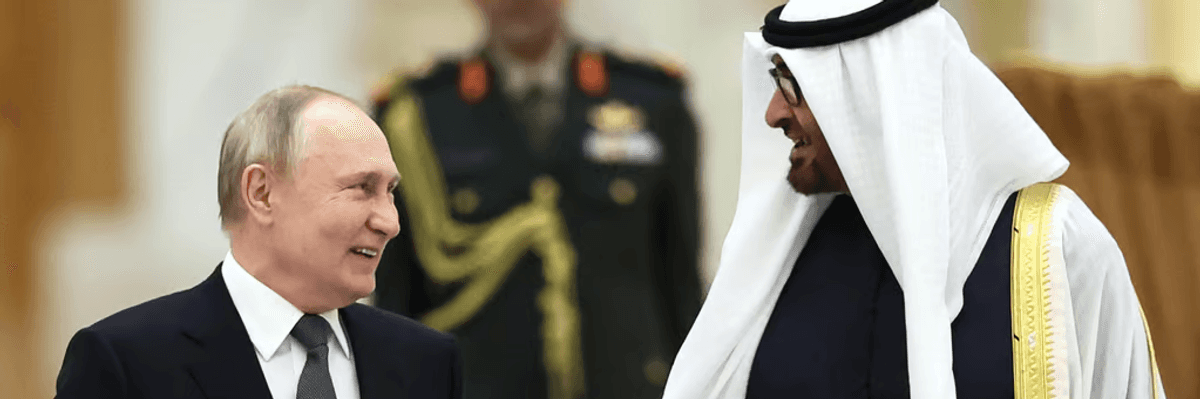
Russia's President Vladimir Putin and President of the United Arab Emirates Sheikh Mohamed bin Zayed Al Nahyan attending a welcoming ceremony ahead of their talks in Abu Dhabi on December 6, 2023.
As Russia's fossil fuel industry continues to fund its aggression against Ukraine, the U.S. must lead the world on a path towards justice and sustainability.
As the UN climate conference COP28 unveils deep ruptures between democratic governments and petro-dictatorship, the urgency for collective action among Western nations has never been more evident. The war in Ukraine, the proliferation of Russian fossil fuels, and strengthening ties between Russia and the Gulf petro-states underscore the urgency of accelerated clean energy transition, tightening the embargoes and international sanctions, and the dire need for resolute decisions.
The devastating war in Ukraine, a stark reminder of aggression and disregard for global peace, beckons the US, EU, and G7 to act decisively. While political rhetoric often clouds the urgency of action, the harsh reality remains: Russia's war machinery runs on revenues from fossil fuel exports.
Razom We Stand recently published a new report mapping Russian fossil fuel exports and the relevant international sanctions imposed, which reveals the shocking truth — over $600 billion has been amassed since the invasion of Ukraine in February 2022 because of weak sanctions and insufficient enforcement. These funds have been channeled to perpetuate violence while bolstering the fossil fuel industry, jeopardizing not only peace but also exacerbating the climate crisis and other conflicts.
The United Arab Emirates (UAE), which is hosting COP28, holds significant links to Russian fossil fuels, serving as a crucial nexus in global energy trade. Recent reports have unveiled the UAE's involvement in facilitating trade and services for Russian oil and gas. Companies registered in the Gulf state bought at least 39 million tonnes of Russian oil worth more than $17 billion between January and April — around a third of the country’s exports declared to customs during that period.
Russia is trying to strategically manipulate the negotiations at COP28 by utilizing its alliances with the UAE and other OPEC+ nations. While rallying other petro-dictatorships to its side, Russia is aiming to sabotage, weaken, or stall any significant climate action, impeding the UN talks from achieving consensus on an equitable and just phase-out of fossil fuels. The extent of this interference was painfully evident as Putin was welcomed with open arms in Dubai during COP28, sending a starkly hypocritical message to those advocating for an end to fossil fuel dependency and a peaceful future for all of us.
While we deliberate on climate action, we must not overlook the pressing need to rebuild Ukraine's economy based on clean energy and energy efficiency.
With COP28 proving to be nothing more than a roadshow for petro-dictators and the fossil fuel industry lobbyists, the USA must stand up to the challenge. The US's pivotal role in shaping climate policy cannot be overstated. As one of the largest economies globally, the US must wield its influence judiciously, prioritizing the curbing of fossil fuel dependencies. The sanctions placed on Russian fossil fuels underscore a necessary shift — a clarion call to reduce reliance on entities that fuel war and impede progress toward a sustainable future.
The findings from our report highlight the financial impact of curtailing fossil fuel exports on Russia, illuminating a path toward peace and climate action. The observed decline in export volumes since 2022 — 7.5% in coal and approximately 11% in oil — reflects the significant (yet insufficient) impact of international measures. However, the financial gains Russia continues to amass, despite reduced exports, necessitate more vigorous, united efforts. The US's measures, while significant, must be fortified to diminish the revenue inflow that fuels conflict.
The EU must overcome the subversive addiction to Russian fossil fuels together with the US and fast-track the energy transition and the clean energy investment, the most powerful adversary of fossil-fuelled dictatorships. This must start with the US, eliminating loopholes in sanctions and tightening the enforcement.
While we deliberate on climate action, we must not overlook the pressing need to rebuild Ukraine's economy based on clean energy and energy efficiency. My nation stands at a precipice, grappling with devastation on multiple fronts — humanitarian, economic, and environmental. Ukraine's reconstruction cannot be an afterthought. The world must come together to support Ukraine's revival, ensuring solidarity and aid to mend the scars of war. But before we rebuild in fully renewable, oligarch-free and clean energy, we need international solidarity and support to defeat Putin’s attack on Ukraine, which is more than a war of aggression - in essence, it is a linchpin of the fossil fuel industry onslaught against humanity.
The EU must overcome the subversive addiction to Russian fossil fuels together with the US and fast-track the energy transition and the clean energy investment, the most powerful adversary of fossil-fuelled dictatorships.
As the Global Stocktake exercise shows at COP28, in the words of King Charles III, the world “remains so dreadfully far off track” that the Western nations have an opportunity — a responsibility — to demonstrate unwavering commitment and action. A united front, fortified by stringent measures against fossil fuel dependencies and bolstered by steadfast support for Ukraine's restoration, will echo a resounding call for a sustainable, peaceful world.
The time for rhetoric is past. As the U.S. assumes the role of climate leader, it must lead with action — a commitment that transcends boardrooms and conference halls — an assurance to future generations that we chose a path of sustainability, peace, and justice, in practice that requires dismantling the Russian oil and gas business. Controlling profit-driven traders, banks, shippers, refineries, and all intermediaries sustaining the Kremlin’s financial lifeline is no simple feat. However, it’s an imperative task that the Biden administration and other Western leaders can't afford to dodge.
Dear Common Dreams reader, It’s been nearly 30 years since I co-founded Common Dreams with my late wife, Lina Newhouser. We had the radical notion that journalism should serve the public good, not corporate profits. It was clear to us from the outset what it would take to build such a project. No paid advertisements. No corporate sponsors. No millionaire publisher telling us what to think or do. Many people said we wouldn't last a year, but we proved those doubters wrong. Together with a tremendous team of journalists and dedicated staff, we built an independent media outlet free from the constraints of profits and corporate control. Our mission has always been simple: To inform. To inspire. To ignite change for the common good. Building Common Dreams was not easy. Our survival was never guaranteed. When you take on the most powerful forces—Wall Street greed, fossil fuel industry destruction, Big Tech lobbyists, and uber-rich oligarchs who have spent billions upon billions rigging the economy and democracy in their favor—the only bulwark you have is supporters who believe in your work. But here’s the urgent message from me today. It's never been this bad out there. And it's never been this hard to keep us going. At the very moment Common Dreams is most needed, the threats we face are intensifying. We need your support now more than ever. We don't accept corporate advertising and never will. We don't have a paywall because we don't think people should be blocked from critical news based on their ability to pay. Everything we do is funded by the donations of readers like you. When everyone does the little they can afford, we are strong. But if that support retreats or dries up, so do we. Will you donate now to make sure Common Dreams not only survives but thrives? —Craig Brown, Co-founder |
As the UN climate conference COP28 unveils deep ruptures between democratic governments and petro-dictatorship, the urgency for collective action among Western nations has never been more evident. The war in Ukraine, the proliferation of Russian fossil fuels, and strengthening ties between Russia and the Gulf petro-states underscore the urgency of accelerated clean energy transition, tightening the embargoes and international sanctions, and the dire need for resolute decisions.
The devastating war in Ukraine, a stark reminder of aggression and disregard for global peace, beckons the US, EU, and G7 to act decisively. While political rhetoric often clouds the urgency of action, the harsh reality remains: Russia's war machinery runs on revenues from fossil fuel exports.
Razom We Stand recently published a new report mapping Russian fossil fuel exports and the relevant international sanctions imposed, which reveals the shocking truth — over $600 billion has been amassed since the invasion of Ukraine in February 2022 because of weak sanctions and insufficient enforcement. These funds have been channeled to perpetuate violence while bolstering the fossil fuel industry, jeopardizing not only peace but also exacerbating the climate crisis and other conflicts.
The United Arab Emirates (UAE), which is hosting COP28, holds significant links to Russian fossil fuels, serving as a crucial nexus in global energy trade. Recent reports have unveiled the UAE's involvement in facilitating trade and services for Russian oil and gas. Companies registered in the Gulf state bought at least 39 million tonnes of Russian oil worth more than $17 billion between January and April — around a third of the country’s exports declared to customs during that period.
Russia is trying to strategically manipulate the negotiations at COP28 by utilizing its alliances with the UAE and other OPEC+ nations. While rallying other petro-dictatorships to its side, Russia is aiming to sabotage, weaken, or stall any significant climate action, impeding the UN talks from achieving consensus on an equitable and just phase-out of fossil fuels. The extent of this interference was painfully evident as Putin was welcomed with open arms in Dubai during COP28, sending a starkly hypocritical message to those advocating for an end to fossil fuel dependency and a peaceful future for all of us.
While we deliberate on climate action, we must not overlook the pressing need to rebuild Ukraine's economy based on clean energy and energy efficiency.
With COP28 proving to be nothing more than a roadshow for petro-dictators and the fossil fuel industry lobbyists, the USA must stand up to the challenge. The US's pivotal role in shaping climate policy cannot be overstated. As one of the largest economies globally, the US must wield its influence judiciously, prioritizing the curbing of fossil fuel dependencies. The sanctions placed on Russian fossil fuels underscore a necessary shift — a clarion call to reduce reliance on entities that fuel war and impede progress toward a sustainable future.
The findings from our report highlight the financial impact of curtailing fossil fuel exports on Russia, illuminating a path toward peace and climate action. The observed decline in export volumes since 2022 — 7.5% in coal and approximately 11% in oil — reflects the significant (yet insufficient) impact of international measures. However, the financial gains Russia continues to amass, despite reduced exports, necessitate more vigorous, united efforts. The US's measures, while significant, must be fortified to diminish the revenue inflow that fuels conflict.
The EU must overcome the subversive addiction to Russian fossil fuels together with the US and fast-track the energy transition and the clean energy investment, the most powerful adversary of fossil-fuelled dictatorships. This must start with the US, eliminating loopholes in sanctions and tightening the enforcement.
While we deliberate on climate action, we must not overlook the pressing need to rebuild Ukraine's economy based on clean energy and energy efficiency. My nation stands at a precipice, grappling with devastation on multiple fronts — humanitarian, economic, and environmental. Ukraine's reconstruction cannot be an afterthought. The world must come together to support Ukraine's revival, ensuring solidarity and aid to mend the scars of war. But before we rebuild in fully renewable, oligarch-free and clean energy, we need international solidarity and support to defeat Putin’s attack on Ukraine, which is more than a war of aggression - in essence, it is a linchpin of the fossil fuel industry onslaught against humanity.
The EU must overcome the subversive addiction to Russian fossil fuels together with the US and fast-track the energy transition and the clean energy investment, the most powerful adversary of fossil-fuelled dictatorships.
As the Global Stocktake exercise shows at COP28, in the words of King Charles III, the world “remains so dreadfully far off track” that the Western nations have an opportunity — a responsibility — to demonstrate unwavering commitment and action. A united front, fortified by stringent measures against fossil fuel dependencies and bolstered by steadfast support for Ukraine's restoration, will echo a resounding call for a sustainable, peaceful world.
The time for rhetoric is past. As the U.S. assumes the role of climate leader, it must lead with action — a commitment that transcends boardrooms and conference halls — an assurance to future generations that we chose a path of sustainability, peace, and justice, in practice that requires dismantling the Russian oil and gas business. Controlling profit-driven traders, banks, shippers, refineries, and all intermediaries sustaining the Kremlin’s financial lifeline is no simple feat. However, it’s an imperative task that the Biden administration and other Western leaders can't afford to dodge.
As the UN climate conference COP28 unveils deep ruptures between democratic governments and petro-dictatorship, the urgency for collective action among Western nations has never been more evident. The war in Ukraine, the proliferation of Russian fossil fuels, and strengthening ties between Russia and the Gulf petro-states underscore the urgency of accelerated clean energy transition, tightening the embargoes and international sanctions, and the dire need for resolute decisions.
The devastating war in Ukraine, a stark reminder of aggression and disregard for global peace, beckons the US, EU, and G7 to act decisively. While political rhetoric often clouds the urgency of action, the harsh reality remains: Russia's war machinery runs on revenues from fossil fuel exports.
Razom We Stand recently published a new report mapping Russian fossil fuel exports and the relevant international sanctions imposed, which reveals the shocking truth — over $600 billion has been amassed since the invasion of Ukraine in February 2022 because of weak sanctions and insufficient enforcement. These funds have been channeled to perpetuate violence while bolstering the fossil fuel industry, jeopardizing not only peace but also exacerbating the climate crisis and other conflicts.
The United Arab Emirates (UAE), which is hosting COP28, holds significant links to Russian fossil fuels, serving as a crucial nexus in global energy trade. Recent reports have unveiled the UAE's involvement in facilitating trade and services for Russian oil and gas. Companies registered in the Gulf state bought at least 39 million tonnes of Russian oil worth more than $17 billion between January and April — around a third of the country’s exports declared to customs during that period.
Russia is trying to strategically manipulate the negotiations at COP28 by utilizing its alliances with the UAE and other OPEC+ nations. While rallying other petro-dictatorships to its side, Russia is aiming to sabotage, weaken, or stall any significant climate action, impeding the UN talks from achieving consensus on an equitable and just phase-out of fossil fuels. The extent of this interference was painfully evident as Putin was welcomed with open arms in Dubai during COP28, sending a starkly hypocritical message to those advocating for an end to fossil fuel dependency and a peaceful future for all of us.
While we deliberate on climate action, we must not overlook the pressing need to rebuild Ukraine's economy based on clean energy and energy efficiency.
With COP28 proving to be nothing more than a roadshow for petro-dictators and the fossil fuel industry lobbyists, the USA must stand up to the challenge. The US's pivotal role in shaping climate policy cannot be overstated. As one of the largest economies globally, the US must wield its influence judiciously, prioritizing the curbing of fossil fuel dependencies. The sanctions placed on Russian fossil fuels underscore a necessary shift — a clarion call to reduce reliance on entities that fuel war and impede progress toward a sustainable future.
The findings from our report highlight the financial impact of curtailing fossil fuel exports on Russia, illuminating a path toward peace and climate action. The observed decline in export volumes since 2022 — 7.5% in coal and approximately 11% in oil — reflects the significant (yet insufficient) impact of international measures. However, the financial gains Russia continues to amass, despite reduced exports, necessitate more vigorous, united efforts. The US's measures, while significant, must be fortified to diminish the revenue inflow that fuels conflict.
The EU must overcome the subversive addiction to Russian fossil fuels together with the US and fast-track the energy transition and the clean energy investment, the most powerful adversary of fossil-fuelled dictatorships. This must start with the US, eliminating loopholes in sanctions and tightening the enforcement.
While we deliberate on climate action, we must not overlook the pressing need to rebuild Ukraine's economy based on clean energy and energy efficiency. My nation stands at a precipice, grappling with devastation on multiple fronts — humanitarian, economic, and environmental. Ukraine's reconstruction cannot be an afterthought. The world must come together to support Ukraine's revival, ensuring solidarity and aid to mend the scars of war. But before we rebuild in fully renewable, oligarch-free and clean energy, we need international solidarity and support to defeat Putin’s attack on Ukraine, which is more than a war of aggression - in essence, it is a linchpin of the fossil fuel industry onslaught against humanity.
The EU must overcome the subversive addiction to Russian fossil fuels together with the US and fast-track the energy transition and the clean energy investment, the most powerful adversary of fossil-fuelled dictatorships.
As the Global Stocktake exercise shows at COP28, in the words of King Charles III, the world “remains so dreadfully far off track” that the Western nations have an opportunity — a responsibility — to demonstrate unwavering commitment and action. A united front, fortified by stringent measures against fossil fuel dependencies and bolstered by steadfast support for Ukraine's restoration, will echo a resounding call for a sustainable, peaceful world.
The time for rhetoric is past. As the U.S. assumes the role of climate leader, it must lead with action — a commitment that transcends boardrooms and conference halls — an assurance to future generations that we chose a path of sustainability, peace, and justice, in practice that requires dismantling the Russian oil and gas business. Controlling profit-driven traders, banks, shippers, refineries, and all intermediaries sustaining the Kremlin’s financial lifeline is no simple feat. However, it’s an imperative task that the Biden administration and other Western leaders can't afford to dodge.