SUBSCRIBE TO OUR FREE NEWSLETTER
Daily news & progressive opinion—funded by the people, not the corporations—delivered straight to your inbox.
5
#000000
#FFFFFF
To donate by check, phone, or other method, see our More Ways to Give page.

Russia continues to grapple with severe challenges stemming from its brutal war on Ukraine, particularly in the economic realm. While Russia regards exports to China and India as pivotal, these exports are encountering obstacles, resulting in declining sales.
The downturn in India's oil imports from Russia, already underway, can be attributed to various factors. Since the beginning of the war in Ukraine, India has significantly increased its purchases of Russian oil due to the significant discounts offered by Russia to avoid price caps and sanctions on their exports. This became possible due to Western sanctions against Russian oil, which led to a decrease in oil prices. Russia became India's leading oil supplier, accounting for about 40% of the country's oil imports. However, the process is now reversed.
The historical background of relations between India and Russia in the context of oil trade is deeply rooted and has undergone significant changes over time.
Indian companies have invested heavily in Russia's oil industry, particularly in projects like the Vankor and Taas oil fields. These investments have strengthened economic ties between the two countries and helped India expand its access to energy resources.
In April 2023, Indian Foreign Minister Dr S. Jaishankar called the bilateral agreement with Russia one of the "most stable in the world." A month before his speech, the Kremlin's foreign policy document of March 2023 stated that Russia would "continue to build a particularly privileged strategic partnership" with India.
Following Russia's full-scale invasion of Ukraine and the imposition of Western sanctions against Russia, relations between India and Russia in the oil trade have undergone significant changes.
The initiation of Indian investment in Russia's energy sector traces back to when Videsh Oil and Gas Corporation (OVL) injected $1.6 billion for a 20% stake in the Sakhalin-1 oil project. Before the onset of the conflict in Ukraine, this project boasted a daily oil production of 220,000 barrels, with ONGC receiving a substantial share of 44,000 barrels.
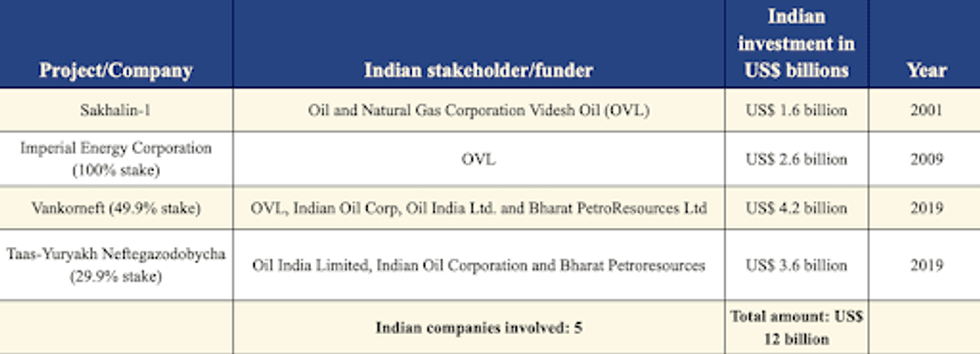
Thus, India has been investing in Russian projects for decades to diversify and increase its sources of supply.
In the wake of the brutal invasion of Ukraine, India seized the opportunity to secure Russian oil at significantly reduced prices, establishing Russia as one of its primary oil suppliers. Global sanctions against Russia have led to a substantial decline in demand for Russian oil and gas, prompting the United States, the European Union, Australia, and their allies to impose price limits on Russian oil, capping it at $60 per barrel.
India, heavily dependent on oil and gas imports with 87% of its oil and 65% of its gas sourced externally, strategically exploited the low prices by substantially raising its imports of Russian oil. This surge catapulted Russian oil's share in India's total oil imports from 1% to a substantial 40%. Even amid ongoing investigations into 120,000 Russian war crimes in Ukraine, India's enthusiasm for Russian fuels remained resilient. In the fiscal years 2022-2023, India imported a staggering $38.8 billion worth of Russian oil, translating to substantial savings of $3.6 billion on energy imports for the Indian government in the preceding fiscal year. Private oil refineries reaped even greater benefits, amounting to savings of up to $7.6 billion.
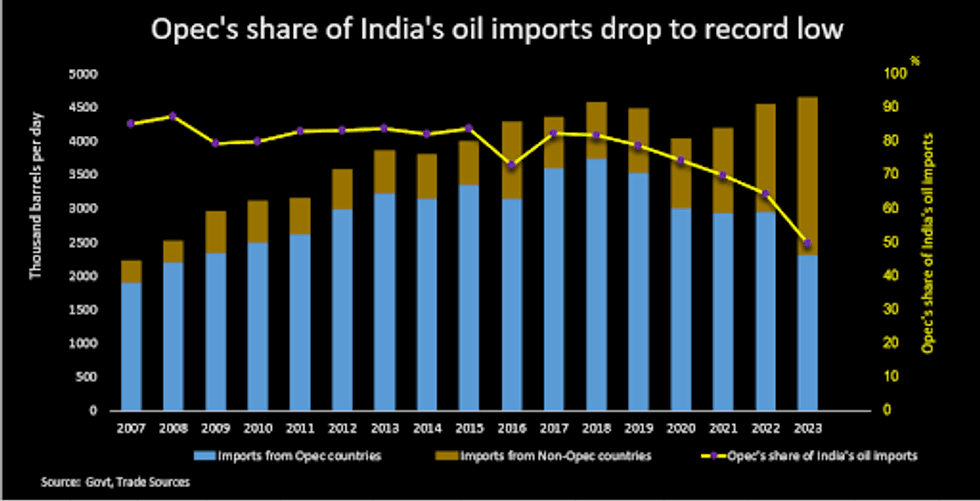
In the fiscal years 2022-2023, India exported 3.8 million tons of refined Russian oil to the E.U. countries for $20 billion. This amounted to about 10% of India's total exports of petroleum products.
Thus, India has taken advantage of Western sanctions against Russia by increasing its imports of Russian oil and saving significant money on energy imports.
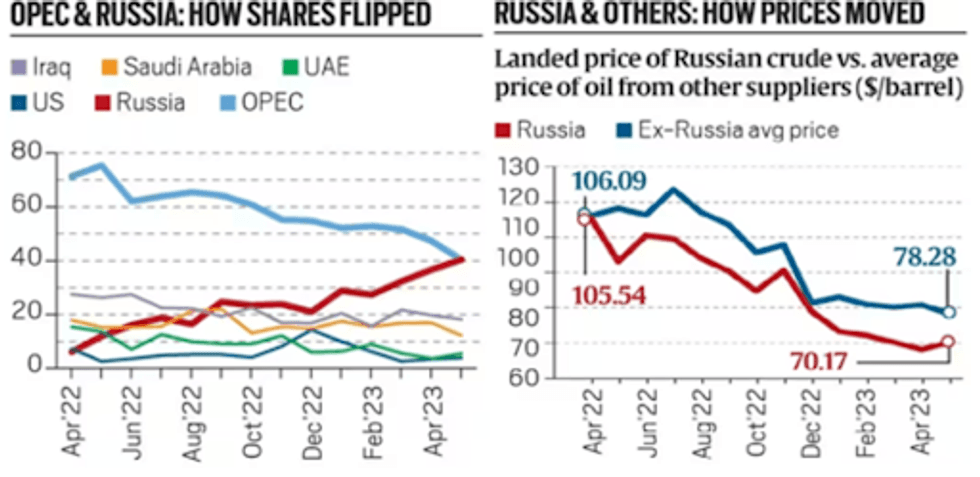
Conversely, India seeks to pursue an oil import policy that ensures a steady supply, diversifying its oil basket to reduce the impact of possible supply shocks.
Several key factors can explain the decline in India's oil imports from Russia.
Western sanctions: After Russia invaded Ukraine, Western countries imposed sanctions on Russian oil. However, rising prices for Russian oil on the one hand and stricter sanctions enforcement on the other hand have prompted a preference for alternative supplies.
Critical increase in the share of Russian oil in Indian imports: Due to these discounts, the share of Russian oil in India's total imports increased to 19.1% in the financial year 2022-2023, up from 2% in the previous year.
Doubtful discounts: Despite the declared discounts, the actual discounts on Russian oil remained unclear due to the lack of transparency in pricing for Russian oil cargoes. The actual cost of oil included freight and insurance costs, which were raised due to Western sanctions.
Diversification: India plans to pursue a policy of oil imports that provides equal supplies from the Persian Gulf countries and Russia. It is currently working on further diversifying its oil supplies. This is done to reduce the impact of possible supply shocks.
As a result, the decline in oil imports from Russia may be partly due to changes in global economic conditions, India's diversification of suppliers, and the complex effects of Western sanctions.
Following Russia's full-scale invasion of Ukraine and the imposition of Western sanctions against Russia, relations between India and Russia in the oil trade have undergone significant changes.
Since April 2023, Russian banks have been withholding Indian dividends totaling $400 million, which cannot be transferred due to Western sanctions. Additionally, four Russian oil and gas projects, including Sakhalin-1 and three oil fields of Taas, have suspended their operations. This was because these projects were previously managed by Western energy companies that left Russia after the conflict in Ukraine.
However, the pressure of sanctions, difficulties with settlements, and pressure on logistics chains are reducing this cooperation. Such actions can reduce Russia's income from fossil fuel exports and limit its ability to stock up Russian President Vladimir Putin's war chest. Therefore, this pressure must be further increased to reduce Russia's revenues and, consequently, its ability to wage it's brutal, aggressive war against Ukraine.
Russia continues to grapple with severe challenges stemming from its brutal war on Ukraine, particularly in the economic realm. While Russia regards exports to China and India as pivotal, these exports are encountering obstacles, resulting in declining sales.
The downturn in India's oil imports from Russia, already underway, can be attributed to various factors. Since the beginning of the war in Ukraine, India has significantly increased its purchases of Russian oil due to the significant discounts offered by Russia to avoid price caps and sanctions on their exports. This became possible due to Western sanctions against Russian oil, which led to a decrease in oil prices. Russia became India's leading oil supplier, accounting for about 40% of the country's oil imports. However, the process is now reversed.
The historical background of relations between India and Russia in the context of oil trade is deeply rooted and has undergone significant changes over time.
Indian companies have invested heavily in Russia's oil industry, particularly in projects like the Vankor and Taas oil fields. These investments have strengthened economic ties between the two countries and helped India expand its access to energy resources.
In April 2023, Indian Foreign Minister Dr S. Jaishankar called the bilateral agreement with Russia one of the "most stable in the world." A month before his speech, the Kremlin's foreign policy document of March 2023 stated that Russia would "continue to build a particularly privileged strategic partnership" with India.
Following Russia's full-scale invasion of Ukraine and the imposition of Western sanctions against Russia, relations between India and Russia in the oil trade have undergone significant changes.
The initiation of Indian investment in Russia's energy sector traces back to when Videsh Oil and Gas Corporation (OVL) injected $1.6 billion for a 20% stake in the Sakhalin-1 oil project. Before the onset of the conflict in Ukraine, this project boasted a daily oil production of 220,000 barrels, with ONGC receiving a substantial share of 44,000 barrels.
Thus, India has been investing in Russian projects for decades to diversify and increase its sources of supply.
In the wake of the brutal invasion of Ukraine, India seized the opportunity to secure Russian oil at significantly reduced prices, establishing Russia as one of its primary oil suppliers. Global sanctions against Russia have led to a substantial decline in demand for Russian oil and gas, prompting the United States, the European Union, Australia, and their allies to impose price limits on Russian oil, capping it at $60 per barrel.
India, heavily dependent on oil and gas imports with 87% of its oil and 65% of its gas sourced externally, strategically exploited the low prices by substantially raising its imports of Russian oil. This surge catapulted Russian oil's share in India's total oil imports from 1% to a substantial 40%. Even amid ongoing investigations into 120,000 Russian war crimes in Ukraine, India's enthusiasm for Russian fuels remained resilient. In the fiscal years 2022-2023, India imported a staggering $38.8 billion worth of Russian oil, translating to substantial savings of $3.6 billion on energy imports for the Indian government in the preceding fiscal year. Private oil refineries reaped even greater benefits, amounting to savings of up to $7.6 billion.
In the fiscal years 2022-2023, India exported 3.8 million tons of refined Russian oil to the E.U. countries for $20 billion. This amounted to about 10% of India's total exports of petroleum products.
Thus, India has taken advantage of Western sanctions against Russia by increasing its imports of Russian oil and saving significant money on energy imports.
Conversely, India seeks to pursue an oil import policy that ensures a steady supply, diversifying its oil basket to reduce the impact of possible supply shocks.
Several key factors can explain the decline in India's oil imports from Russia.
Western sanctions: After Russia invaded Ukraine, Western countries imposed sanctions on Russian oil. However, rising prices for Russian oil on the one hand and stricter sanctions enforcement on the other hand have prompted a preference for alternative supplies.
Critical increase in the share of Russian oil in Indian imports: Due to these discounts, the share of Russian oil in India's total imports increased to 19.1% in the financial year 2022-2023, up from 2% in the previous year.
Doubtful discounts: Despite the declared discounts, the actual discounts on Russian oil remained unclear due to the lack of transparency in pricing for Russian oil cargoes. The actual cost of oil included freight and insurance costs, which were raised due to Western sanctions.
Diversification: India plans to pursue a policy of oil imports that provides equal supplies from the Persian Gulf countries and Russia. It is currently working on further diversifying its oil supplies. This is done to reduce the impact of possible supply shocks.
As a result, the decline in oil imports from Russia may be partly due to changes in global economic conditions, India's diversification of suppliers, and the complex effects of Western sanctions.
Following Russia's full-scale invasion of Ukraine and the imposition of Western sanctions against Russia, relations between India and Russia in the oil trade have undergone significant changes.
Since April 2023, Russian banks have been withholding Indian dividends totaling $400 million, which cannot be transferred due to Western sanctions. Additionally, four Russian oil and gas projects, including Sakhalin-1 and three oil fields of Taas, have suspended their operations. This was because these projects were previously managed by Western energy companies that left Russia after the conflict in Ukraine.
However, the pressure of sanctions, difficulties with settlements, and pressure on logistics chains are reducing this cooperation. Such actions can reduce Russia's income from fossil fuel exports and limit its ability to stock up Russian President Vladimir Putin's war chest. Therefore, this pressure must be further increased to reduce Russia's revenues and, consequently, its ability to wage it's brutal, aggressive war against Ukraine.
Russia continues to grapple with severe challenges stemming from its brutal war on Ukraine, particularly in the economic realm. While Russia regards exports to China and India as pivotal, these exports are encountering obstacles, resulting in declining sales.
The downturn in India's oil imports from Russia, already underway, can be attributed to various factors. Since the beginning of the war in Ukraine, India has significantly increased its purchases of Russian oil due to the significant discounts offered by Russia to avoid price caps and sanctions on their exports. This became possible due to Western sanctions against Russian oil, which led to a decrease in oil prices. Russia became India's leading oil supplier, accounting for about 40% of the country's oil imports. However, the process is now reversed.
The historical background of relations between India and Russia in the context of oil trade is deeply rooted and has undergone significant changes over time.
Indian companies have invested heavily in Russia's oil industry, particularly in projects like the Vankor and Taas oil fields. These investments have strengthened economic ties between the two countries and helped India expand its access to energy resources.
In April 2023, Indian Foreign Minister Dr S. Jaishankar called the bilateral agreement with Russia one of the "most stable in the world." A month before his speech, the Kremlin's foreign policy document of March 2023 stated that Russia would "continue to build a particularly privileged strategic partnership" with India.
Following Russia's full-scale invasion of Ukraine and the imposition of Western sanctions against Russia, relations between India and Russia in the oil trade have undergone significant changes.
The initiation of Indian investment in Russia's energy sector traces back to when Videsh Oil and Gas Corporation (OVL) injected $1.6 billion for a 20% stake in the Sakhalin-1 oil project. Before the onset of the conflict in Ukraine, this project boasted a daily oil production of 220,000 barrels, with ONGC receiving a substantial share of 44,000 barrels.
Thus, India has been investing in Russian projects for decades to diversify and increase its sources of supply.
In the wake of the brutal invasion of Ukraine, India seized the opportunity to secure Russian oil at significantly reduced prices, establishing Russia as one of its primary oil suppliers. Global sanctions against Russia have led to a substantial decline in demand for Russian oil and gas, prompting the United States, the European Union, Australia, and their allies to impose price limits on Russian oil, capping it at $60 per barrel.
India, heavily dependent on oil and gas imports with 87% of its oil and 65% of its gas sourced externally, strategically exploited the low prices by substantially raising its imports of Russian oil. This surge catapulted Russian oil's share in India's total oil imports from 1% to a substantial 40%. Even amid ongoing investigations into 120,000 Russian war crimes in Ukraine, India's enthusiasm for Russian fuels remained resilient. In the fiscal years 2022-2023, India imported a staggering $38.8 billion worth of Russian oil, translating to substantial savings of $3.6 billion on energy imports for the Indian government in the preceding fiscal year. Private oil refineries reaped even greater benefits, amounting to savings of up to $7.6 billion.
In the fiscal years 2022-2023, India exported 3.8 million tons of refined Russian oil to the E.U. countries for $20 billion. This amounted to about 10% of India's total exports of petroleum products.
Thus, India has taken advantage of Western sanctions against Russia by increasing its imports of Russian oil and saving significant money on energy imports.
Conversely, India seeks to pursue an oil import policy that ensures a steady supply, diversifying its oil basket to reduce the impact of possible supply shocks.
Several key factors can explain the decline in India's oil imports from Russia.
Western sanctions: After Russia invaded Ukraine, Western countries imposed sanctions on Russian oil. However, rising prices for Russian oil on the one hand and stricter sanctions enforcement on the other hand have prompted a preference for alternative supplies.
Critical increase in the share of Russian oil in Indian imports: Due to these discounts, the share of Russian oil in India's total imports increased to 19.1% in the financial year 2022-2023, up from 2% in the previous year.
Doubtful discounts: Despite the declared discounts, the actual discounts on Russian oil remained unclear due to the lack of transparency in pricing for Russian oil cargoes. The actual cost of oil included freight and insurance costs, which were raised due to Western sanctions.
Diversification: India plans to pursue a policy of oil imports that provides equal supplies from the Persian Gulf countries and Russia. It is currently working on further diversifying its oil supplies. This is done to reduce the impact of possible supply shocks.
As a result, the decline in oil imports from Russia may be partly due to changes in global economic conditions, India's diversification of suppliers, and the complex effects of Western sanctions.
Following Russia's full-scale invasion of Ukraine and the imposition of Western sanctions against Russia, relations between India and Russia in the oil trade have undergone significant changes.
Since April 2023, Russian banks have been withholding Indian dividends totaling $400 million, which cannot be transferred due to Western sanctions. Additionally, four Russian oil and gas projects, including Sakhalin-1 and three oil fields of Taas, have suspended their operations. This was because these projects were previously managed by Western energy companies that left Russia after the conflict in Ukraine.
However, the pressure of sanctions, difficulties with settlements, and pressure on logistics chains are reducing this cooperation. Such actions can reduce Russia's income from fossil fuel exports and limit its ability to stock up Russian President Vladimir Putin's war chest. Therefore, this pressure must be further increased to reduce Russia's revenues and, consequently, its ability to wage it's brutal, aggressive war against Ukraine.