SUBSCRIBE TO OUR FREE NEWSLETTER
Daily news & progressive opinion—funded by the people, not the corporations—delivered straight to your inbox.
5
#000000
#FFFFFF
To donate by check, phone, or other method, see our More Ways to Give page.
Daily news & progressive opinion—funded by the people, not the corporations—delivered straight to your inbox.
"This would incentivize those companies to drop their Russian suppliers, while signaling to other companies looking to capitalize on cheap Russian oil that their products are not welcome in the U.S.," said Global Witness.
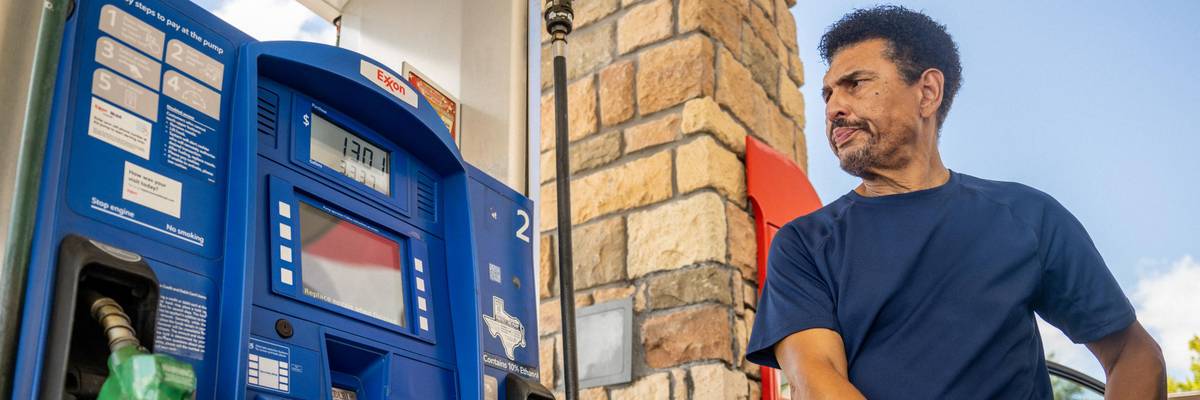
An international human rights organization on Thursday released a report revealing how a loophole in the Russian oil ban passed in the United States after President Vladimir Putin's military invaded Ukraine 16 months ago has allowed millions of barrels of oil from the country into unwitting Americans' gas tanks, as the group called on lawmakers to strengthen sanctions on the product.
Analyzing financial markets data, U.K.-based Global Witness found that in the first five months of 2023, the U.S. imported an estimated 12 million barrels of refined petroleum products from India, which is a top so-called "laundromat country" that refines Russian crude oil and ships it to the U.S., Europe, and elsewhere.
The practice is legal, as once Russian crude oil goes through the refining process in a third country it is no longer considered Russian.
But Global Witness denounced the loophole as "unacceptable."
"With Independence Day around the corner, the U.S. driving season is in full swing," said the group. "What vacationers filling their tanks don't know is that, despite everything the U.S. has done to support Ukraine, the gasoline they buy may still have originated in Russia and helped the Kremlin pay for the war."
The group determined that more than 80% of the refined petroleum that the U.S. imports comes from one port in Gujarat province, India. The Sikka port sends crude oil to the Jamnagar Refinery—the largest refinery in the world and the biggest importer of the product from Russia. In the first five months of 2023, 35% of the crude that arrived at Sikka was from Russia.
Of the 152 million barrels of oil the U.S. imported between January and June 2023, 8% came from India.
"This trade virtually ensures that some of the gasoline and diesel that the U.S. buys from India contain Russian molecules," said Global Witness. "On arrival from India, shipments of gasoline and other refined fuels are delivered to ports from New Jersey to Texas to California. From there, they will be sold to unwitting consumers who believe that no Russian oil has been allowed into the country for over a year."
Josep Borrell, high commissioner of the European Union for foreign affairs and security policy, called the continued use of refined Russian oil a "circumvention of sanctions" earlier this month, noting that the E.U. has also been continuing to purchase refined petroleum from India since banning Russian oil imports a year after Putin's invasion.
"If Indian refiners are selling, that is because European companies are buying, directly or through an intermediary." said Borrell.
Oleg Ustenko, an economic adviser to Ukrainian President Volodymyr Zelenskyy, told The New York Times that the U.S. is "indirectly supporting this insurrection" if it continues supporting Russia's oil export activity.
"I'm calling this strategy as a cockroach strategy, meaning they are trying to find all possible loopholes, as a cockroach trying to crawl through these holes into your apartment," he told the outlet. "And what you need to do, you need to close all these holes."
Global Witness, which sent several of its members to Washington, D.C. last week to lobby lawmakers on the issue, called closing the loophole through legislation "a no-brainer."
"First, it will indirectly squeeze Kremlin revenues, further hampering its ability to wage war on Ukraine and boosting America's efforts to support Ukrainian sovereignty," said the group. "Second, it will end a largely symbolic gap in the sanctions measures that the U.S. has already enacted."
The organization said lawmakers should ban the import of refined oil that have purchased any Russian crude within a certain time period, such as the previous six months.
"This would incentivize those companies to drop their Russian suppliers, while signaling to other companies looking to capitalize on cheap Russian oil that their products are not welcome in the U.S.," said Global Witness.
Anticipating that oil companies will use the strengthened sanctions "as a flimsy excuse to increase production in the U.S.," Global Witness said such a move would be "unjustified and unacceptable," considering the climate emergency and planetary heating.
"The U.S., which has emitted the most greenhouse gases of any country, bears far and away the most responsibility for speeding a global just transition to local renewable energy," said the group. "It should also use all the tools at its disposal to end the trade of oil funding the war on Ukraine."
Dear Common Dreams reader, It’s been nearly 30 years since I co-founded Common Dreams with my late wife, Lina Newhouser. We had the radical notion that journalism should serve the public good, not corporate profits. It was clear to us from the outset what it would take to build such a project. No paid advertisements. No corporate sponsors. No millionaire publisher telling us what to think or do. Many people said we wouldn't last a year, but we proved those doubters wrong. Together with a tremendous team of journalists and dedicated staff, we built an independent media outlet free from the constraints of profits and corporate control. Our mission has always been simple: To inform. To inspire. To ignite change for the common good. Building Common Dreams was not easy. Our survival was never guaranteed. When you take on the most powerful forces—Wall Street greed, fossil fuel industry destruction, Big Tech lobbyists, and uber-rich oligarchs who have spent billions upon billions rigging the economy and democracy in their favor—the only bulwark you have is supporters who believe in your work. But here’s the urgent message from me today. It's never been this bad out there. And it's never been this hard to keep us going. At the very moment Common Dreams is most needed, the threats we face are intensifying. We need your support now more than ever. We don't accept corporate advertising and never will. We don't have a paywall because we don't think people should be blocked from critical news based on their ability to pay. Everything we do is funded by the donations of readers like you. When everyone does the little they can afford, we are strong. But if that support retreats or dries up, so do we. Will you donate now to make sure Common Dreams not only survives but thrives? —Craig Brown, Co-founder |
An international human rights organization on Thursday released a report revealing how a loophole in the Russian oil ban passed in the United States after President Vladimir Putin's military invaded Ukraine 16 months ago has allowed millions of barrels of oil from the country into unwitting Americans' gas tanks, as the group called on lawmakers to strengthen sanctions on the product.
Analyzing financial markets data, U.K.-based Global Witness found that in the first five months of 2023, the U.S. imported an estimated 12 million barrels of refined petroleum products from India, which is a top so-called "laundromat country" that refines Russian crude oil and ships it to the U.S., Europe, and elsewhere.
The practice is legal, as once Russian crude oil goes through the refining process in a third country it is no longer considered Russian.
But Global Witness denounced the loophole as "unacceptable."
"With Independence Day around the corner, the U.S. driving season is in full swing," said the group. "What vacationers filling their tanks don't know is that, despite everything the U.S. has done to support Ukraine, the gasoline they buy may still have originated in Russia and helped the Kremlin pay for the war."
The group determined that more than 80% of the refined petroleum that the U.S. imports comes from one port in Gujarat province, India. The Sikka port sends crude oil to the Jamnagar Refinery—the largest refinery in the world and the biggest importer of the product from Russia. In the first five months of 2023, 35% of the crude that arrived at Sikka was from Russia.
Of the 152 million barrels of oil the U.S. imported between January and June 2023, 8% came from India.
"This trade virtually ensures that some of the gasoline and diesel that the U.S. buys from India contain Russian molecules," said Global Witness. "On arrival from India, shipments of gasoline and other refined fuels are delivered to ports from New Jersey to Texas to California. From there, they will be sold to unwitting consumers who believe that no Russian oil has been allowed into the country for over a year."
Josep Borrell, high commissioner of the European Union for foreign affairs and security policy, called the continued use of refined Russian oil a "circumvention of sanctions" earlier this month, noting that the E.U. has also been continuing to purchase refined petroleum from India since banning Russian oil imports a year after Putin's invasion.
"If Indian refiners are selling, that is because European companies are buying, directly or through an intermediary." said Borrell.
Oleg Ustenko, an economic adviser to Ukrainian President Volodymyr Zelenskyy, told The New York Times that the U.S. is "indirectly supporting this insurrection" if it continues supporting Russia's oil export activity.
"I'm calling this strategy as a cockroach strategy, meaning they are trying to find all possible loopholes, as a cockroach trying to crawl through these holes into your apartment," he told the outlet. "And what you need to do, you need to close all these holes."
Global Witness, which sent several of its members to Washington, D.C. last week to lobby lawmakers on the issue, called closing the loophole through legislation "a no-brainer."
"First, it will indirectly squeeze Kremlin revenues, further hampering its ability to wage war on Ukraine and boosting America's efforts to support Ukrainian sovereignty," said the group. "Second, it will end a largely symbolic gap in the sanctions measures that the U.S. has already enacted."
The organization said lawmakers should ban the import of refined oil that have purchased any Russian crude within a certain time period, such as the previous six months.
"This would incentivize those companies to drop their Russian suppliers, while signaling to other companies looking to capitalize on cheap Russian oil that their products are not welcome in the U.S.," said Global Witness.
Anticipating that oil companies will use the strengthened sanctions "as a flimsy excuse to increase production in the U.S.," Global Witness said such a move would be "unjustified and unacceptable," considering the climate emergency and planetary heating.
"The U.S., which has emitted the most greenhouse gases of any country, bears far and away the most responsibility for speeding a global just transition to local renewable energy," said the group. "It should also use all the tools at its disposal to end the trade of oil funding the war on Ukraine."
An international human rights organization on Thursday released a report revealing how a loophole in the Russian oil ban passed in the United States after President Vladimir Putin's military invaded Ukraine 16 months ago has allowed millions of barrels of oil from the country into unwitting Americans' gas tanks, as the group called on lawmakers to strengthen sanctions on the product.
Analyzing financial markets data, U.K.-based Global Witness found that in the first five months of 2023, the U.S. imported an estimated 12 million barrels of refined petroleum products from India, which is a top so-called "laundromat country" that refines Russian crude oil and ships it to the U.S., Europe, and elsewhere.
The practice is legal, as once Russian crude oil goes through the refining process in a third country it is no longer considered Russian.
But Global Witness denounced the loophole as "unacceptable."
"With Independence Day around the corner, the U.S. driving season is in full swing," said the group. "What vacationers filling their tanks don't know is that, despite everything the U.S. has done to support Ukraine, the gasoline they buy may still have originated in Russia and helped the Kremlin pay for the war."
The group determined that more than 80% of the refined petroleum that the U.S. imports comes from one port in Gujarat province, India. The Sikka port sends crude oil to the Jamnagar Refinery—the largest refinery in the world and the biggest importer of the product from Russia. In the first five months of 2023, 35% of the crude that arrived at Sikka was from Russia.
Of the 152 million barrels of oil the U.S. imported between January and June 2023, 8% came from India.
"This trade virtually ensures that some of the gasoline and diesel that the U.S. buys from India contain Russian molecules," said Global Witness. "On arrival from India, shipments of gasoline and other refined fuels are delivered to ports from New Jersey to Texas to California. From there, they will be sold to unwitting consumers who believe that no Russian oil has been allowed into the country for over a year."
Josep Borrell, high commissioner of the European Union for foreign affairs and security policy, called the continued use of refined Russian oil a "circumvention of sanctions" earlier this month, noting that the E.U. has also been continuing to purchase refined petroleum from India since banning Russian oil imports a year after Putin's invasion.
"If Indian refiners are selling, that is because European companies are buying, directly or through an intermediary." said Borrell.
Oleg Ustenko, an economic adviser to Ukrainian President Volodymyr Zelenskyy, told The New York Times that the U.S. is "indirectly supporting this insurrection" if it continues supporting Russia's oil export activity.
"I'm calling this strategy as a cockroach strategy, meaning they are trying to find all possible loopholes, as a cockroach trying to crawl through these holes into your apartment," he told the outlet. "And what you need to do, you need to close all these holes."
Global Witness, which sent several of its members to Washington, D.C. last week to lobby lawmakers on the issue, called closing the loophole through legislation "a no-brainer."
"First, it will indirectly squeeze Kremlin revenues, further hampering its ability to wage war on Ukraine and boosting America's efforts to support Ukrainian sovereignty," said the group. "Second, it will end a largely symbolic gap in the sanctions measures that the U.S. has already enacted."
The organization said lawmakers should ban the import of refined oil that have purchased any Russian crude within a certain time period, such as the previous six months.
"This would incentivize those companies to drop their Russian suppliers, while signaling to other companies looking to capitalize on cheap Russian oil that their products are not welcome in the U.S.," said Global Witness.
Anticipating that oil companies will use the strengthened sanctions "as a flimsy excuse to increase production in the U.S.," Global Witness said such a move would be "unjustified and unacceptable," considering the climate emergency and planetary heating.
"The U.S., which has emitted the most greenhouse gases of any country, bears far and away the most responsibility for speeding a global just transition to local renewable energy," said the group. "It should also use all the tools at its disposal to end the trade of oil funding the war on Ukraine."