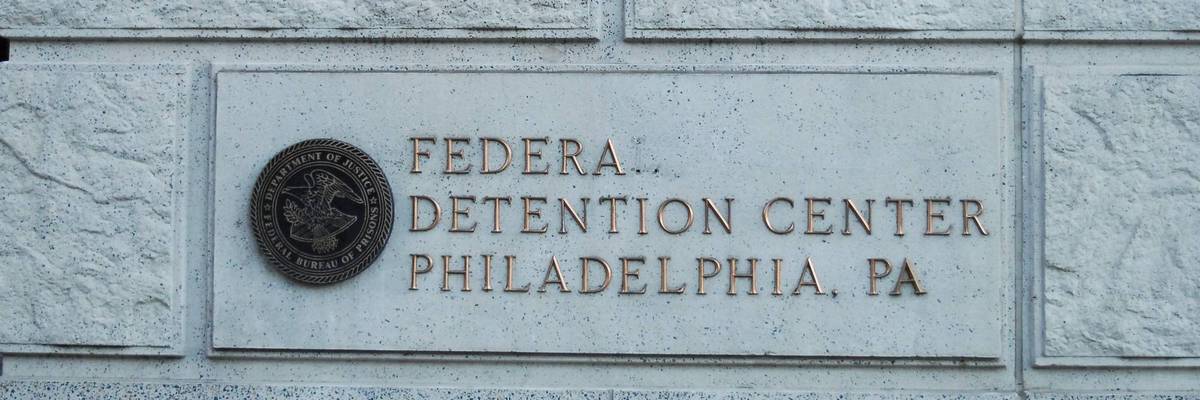
The Philadelphia Federal Detention Center in shown in Philadelphia, Pennsylvania on September 5, 2020.
Death in ICE Custody Reveals Preventable Systemic Failures
When the government takes custody of a person, it assumes total control over and liability for that individual’s safety, health, and survival. Unfortunately, in ICE detention, that obligation is being violated again and again.
In the wake of the shootings of Alex Pretti and Renee Good in Minneapolis, nationwide attention has been fixed on the deeply troubled aspects of federal immigration enforcement. But beyond the use of deadly force, the preventable death of Parady La in Immigration and Customs Enforcement detention reveals another serious, often overlooked set of failures that demand examination.
A little more than a month into 2026, eight people have already died at the hands of the US ICE, signaling yet another year of lethal systemic failure. La was the fourth fatality, a 46-year-old Cambodian refugee, who died of drug withdrawal just three days after entering ICE custody at a federal detention facility in Philadelphia. This death was entirely preventable. When the government takes custody of a person, it assumes total control over and liability for that individual’s safety, health, and survival. Unfortunately, in ICE detention, that obligation is being violated again and again.
According to reports from inmates later confirmed by medical experts, La told detention staff he was withdrawing and requested medical care, but his symptoms, including persistent vomiting, were left untreated, resulting in his death. Drug withdrawal is a predictable physiological response when a person who is chronically dependent on a substance is abruptly cut off, often involving severe nausea, vomiting, dehydration, physical pain and panic, cardiovascular strain, and escalating medical instability. Substance dependence is a chronic medical condition, no different in principle from other conditions that carry known risks when left unmanaged, such as diabetes, heart disease, or epilepsy. When symptoms of chronic conditions go untreated, particularly in custodial settings where people are confined, closely monitored, and unable to seek care on their own, the resulting harm is entirely foreseeable. Rather than explaining why someone reporting severe withdrawal symptoms was left without basic medical care in government custody, the official death notice on ICE’s website devotes significant space to detailing La’s past criminal history.
This lack of accountability is not surprising given the decades long history of preventable deaths in ICE. A Human Rights Watch analysis of 18 ICE detainee deaths between 2012 and 2015 found that independent medical experts concluded substandard medical care likely contributed to at least 7 of those deaths, with evidence of dangerous medical practices present in 16 of them. In several cases, detainees repeatedly reported severe symptoms only to be dismissed or accused of exaggeration, with hours-long delays before staff intervened. One man was found unresponsive in a pool of bloody vomit after officers failed to enter his cell for minutes, and emergency responders were not called until it was too late. A peer-reviewed analysis of 55 deaths in ICE custody between 2011 and 2018 found that nearly all involved serious medical failures, including delays in care in 95% of cases, poor care delivery in 95%, missed or ignored red flags in 80%, and failures in emergency response in 82% of deaths.
These repeated failures point to a detention system with limited transparency and little independent medical oversight.
More recent findings reinforce these earlier conclusions. A 2024 joint investigation by the American Civil Liberties Union, Physicians for Human Rights, and American Oversight examined 52 deaths in ICE custody from 2017-2021 and found that 95% were preventable or possibly preventable with appropriate medical care. Medical experts identified recurring failures across cases, including misdiagnosis, delayed or denied treatment, interrupted medications, and inadequate emergency responses, with people living with chronic health conditions disproportionately affected. Yet ICE continues to rely largely on internal death reviews, limiting transparency and meaningful corrective action and allowing the same preventable failures to recur.
What makes this lack of accountability even more disturbing is that the agency has recently halted payments to the third-party medical contractors responsible for providing care to people in custody. Reporting indicates that ICE stopped paying outside medical providers in October 2025, with claims processing not expected to resume until at least April 2026, even as the detained population has grown to more than 73,000 people nationwide. Because ICE relies heavily on these providers for specialty and off-site care, the payment freeze has already led some clinicians to stop treating detainees altogether and others to delay or deny essential services, including medications and treatment for chronic conditions. For people held in civil detention, this decision further erodes the already slim access to basic medical care inside facilities.
These repeated failures point to a detention system with limited transparency and little independent medical oversight. ICE detention facilities operate largely out of public view and are structured through layers of bureaucracy and private contracting that disperse responsibility across agencies and vendors. Medical care is often delivered by outside contractors, oversight is primarily internal, and meaningful external review is rare. In this environment, gaps in care are difficult to trace, accountability is easily diluted, and preventable deaths are allowed to recur without clear consequences.
When the government confines a person, whether in a prison, jail, or immigration detention facility, it assumes full control over that individual’s ability to access medical care. People in detention cannot seek emergency treatment on their own, choose their providers, refill prescriptions independently, or remove themselves from unsafe conditions. Their health and survival depend entirely on the state. Providing timely and adequate medical care in custody is therefore a baseline obligation that must be followed.
We are at a crossroads
This country and this world are at a monumental crossroads. In a few short weeks, US voters will have an opportunity to beat back the forces of fascism and confront the billionaires who are rigging the economy, our media system, and our democracy, making it increasingly impossible for ordinary people to get by. We’re not just talking about the election. We’re talking about what must be done once these fascist elements are vanquished from power. We need a bolder set of solutions than what either major party has so far been willing to offer and a working-class movement ready to fight like hell for it. Trump didn't emerge from nowhere. The conditions that fueled MAGA authoritarianism were created by decades of radical neoliberal economic policies and a corrupt political system dominated by corporate interests. They slashed taxes on the super-rich, promising that the benefits would trickle down. They said giveaways to the corporate titans would make life more affordable for the rest of us. It was all bullshit. And when a bitter, betrayed populace searches for someone to blame, right-wing demagogues have little trouble finding scapegoats. People know when they're being lied to, but you won't hear any of this from the corporate media. Only independent journalism—powered and funded by people who believe in building a better world—can deliver truly trustworthy daily news. Our Fall Campaign is underway, and we need your help. To power our newsroom through the rest of the year, we need to raise $125,000 by midnight on October 31. So if you share our vision, please contribute whatever you can to sustain our work. |
In the wake of the shootings of Alex Pretti and Renee Good in Minneapolis, nationwide attention has been fixed on the deeply troubled aspects of federal immigration enforcement. But beyond the use of deadly force, the preventable death of Parady La in Immigration and Customs Enforcement detention reveals another serious, often overlooked set of failures that demand examination.
A little more than a month into 2026, eight people have already died at the hands of the US ICE, signaling yet another year of lethal systemic failure. La was the fourth fatality, a 46-year-old Cambodian refugee, who died of drug withdrawal just three days after entering ICE custody at a federal detention facility in Philadelphia. This death was entirely preventable. When the government takes custody of a person, it assumes total control over and liability for that individual’s safety, health, and survival. Unfortunately, in ICE detention, that obligation is being violated again and again.
According to reports from inmates later confirmed by medical experts, La told detention staff he was withdrawing and requested medical care, but his symptoms, including persistent vomiting, were left untreated, resulting in his death. Drug withdrawal is a predictable physiological response when a person who is chronically dependent on a substance is abruptly cut off, often involving severe nausea, vomiting, dehydration, physical pain and panic, cardiovascular strain, and escalating medical instability. Substance dependence is a chronic medical condition, no different in principle from other conditions that carry known risks when left unmanaged, such as diabetes, heart disease, or epilepsy. When symptoms of chronic conditions go untreated, particularly in custodial settings where people are confined, closely monitored, and unable to seek care on their own, the resulting harm is entirely foreseeable. Rather than explaining why someone reporting severe withdrawal symptoms was left without basic medical care in government custody, the official death notice on ICE’s website devotes significant space to detailing La’s past criminal history.
This lack of accountability is not surprising given the decades long history of preventable deaths in ICE. A Human Rights Watch analysis of 18 ICE detainee deaths between 2012 and 2015 found that independent medical experts concluded substandard medical care likely contributed to at least 7 of those deaths, with evidence of dangerous medical practices present in 16 of them. In several cases, detainees repeatedly reported severe symptoms only to be dismissed or accused of exaggeration, with hours-long delays before staff intervened. One man was found unresponsive in a pool of bloody vomit after officers failed to enter his cell for minutes, and emergency responders were not called until it was too late. A peer-reviewed analysis of 55 deaths in ICE custody between 2011 and 2018 found that nearly all involved serious medical failures, including delays in care in 95% of cases, poor care delivery in 95%, missed or ignored red flags in 80%, and failures in emergency response in 82% of deaths.
These repeated failures point to a detention system with limited transparency and little independent medical oversight.
More recent findings reinforce these earlier conclusions. A 2024 joint investigation by the American Civil Liberties Union, Physicians for Human Rights, and American Oversight examined 52 deaths in ICE custody from 2017-2021 and found that 95% were preventable or possibly preventable with appropriate medical care. Medical experts identified recurring failures across cases, including misdiagnosis, delayed or denied treatment, interrupted medications, and inadequate emergency responses, with people living with chronic health conditions disproportionately affected. Yet ICE continues to rely largely on internal death reviews, limiting transparency and meaningful corrective action and allowing the same preventable failures to recur.
What makes this lack of accountability even more disturbing is that the agency has recently halted payments to the third-party medical contractors responsible for providing care to people in custody. Reporting indicates that ICE stopped paying outside medical providers in October 2025, with claims processing not expected to resume until at least April 2026, even as the detained population has grown to more than 73,000 people nationwide. Because ICE relies heavily on these providers for specialty and off-site care, the payment freeze has already led some clinicians to stop treating detainees altogether and others to delay or deny essential services, including medications and treatment for chronic conditions. For people held in civil detention, this decision further erodes the already slim access to basic medical care inside facilities.
These repeated failures point to a detention system with limited transparency and little independent medical oversight. ICE detention facilities operate largely out of public view and are structured through layers of bureaucracy and private contracting that disperse responsibility across agencies and vendors. Medical care is often delivered by outside contractors, oversight is primarily internal, and meaningful external review is rare. In this environment, gaps in care are difficult to trace, accountability is easily diluted, and preventable deaths are allowed to recur without clear consequences.
When the government confines a person, whether in a prison, jail, or immigration detention facility, it assumes full control over that individual’s ability to access medical care. People in detention cannot seek emergency treatment on their own, choose their providers, refill prescriptions independently, or remove themselves from unsafe conditions. Their health and survival depend entirely on the state. Providing timely and adequate medical care in custody is therefore a baseline obligation that must be followed.
- How Many More Deaths Will It Take for Congress to Hold ICE Accountable? ›
- Trans Woman Dies in ICE Custody On the First Day of Pride ›
- ICE Detainee's Death Officially Declared a Homicide in Autopsy Report ›
- 'ICE Kills': Guards Reportedly Choked Man to Death at El Paso Detention Center ›
- House Dems 'Deeply Concerned' About Death in For-Profit ICE Processing Center ›
- Investigation Demanded as ICE Reports Third Death at Texas Detention Center in 44 Days ›
- Opinion | As More People Die In Their Custody, ICE Is Working Hard To Hide Its Abuses | Common Dreams ›
In the wake of the shootings of Alex Pretti and Renee Good in Minneapolis, nationwide attention has been fixed on the deeply troubled aspects of federal immigration enforcement. But beyond the use of deadly force, the preventable death of Parady La in Immigration and Customs Enforcement detention reveals another serious, often overlooked set of failures that demand examination.
A little more than a month into 2026, eight people have already died at the hands of the US ICE, signaling yet another year of lethal systemic failure. La was the fourth fatality, a 46-year-old Cambodian refugee, who died of drug withdrawal just three days after entering ICE custody at a federal detention facility in Philadelphia. This death was entirely preventable. When the government takes custody of a person, it assumes total control over and liability for that individual’s safety, health, and survival. Unfortunately, in ICE detention, that obligation is being violated again and again.
According to reports from inmates later confirmed by medical experts, La told detention staff he was withdrawing and requested medical care, but his symptoms, including persistent vomiting, were left untreated, resulting in his death. Drug withdrawal is a predictable physiological response when a person who is chronically dependent on a substance is abruptly cut off, often involving severe nausea, vomiting, dehydration, physical pain and panic, cardiovascular strain, and escalating medical instability. Substance dependence is a chronic medical condition, no different in principle from other conditions that carry known risks when left unmanaged, such as diabetes, heart disease, or epilepsy. When symptoms of chronic conditions go untreated, particularly in custodial settings where people are confined, closely monitored, and unable to seek care on their own, the resulting harm is entirely foreseeable. Rather than explaining why someone reporting severe withdrawal symptoms was left without basic medical care in government custody, the official death notice on ICE’s website devotes significant space to detailing La’s past criminal history.
This lack of accountability is not surprising given the decades long history of preventable deaths in ICE. A Human Rights Watch analysis of 18 ICE detainee deaths between 2012 and 2015 found that independent medical experts concluded substandard medical care likely contributed to at least 7 of those deaths, with evidence of dangerous medical practices present in 16 of them. In several cases, detainees repeatedly reported severe symptoms only to be dismissed or accused of exaggeration, with hours-long delays before staff intervened. One man was found unresponsive in a pool of bloody vomit after officers failed to enter his cell for minutes, and emergency responders were not called until it was too late. A peer-reviewed analysis of 55 deaths in ICE custody between 2011 and 2018 found that nearly all involved serious medical failures, including delays in care in 95% of cases, poor care delivery in 95%, missed or ignored red flags in 80%, and failures in emergency response in 82% of deaths.
These repeated failures point to a detention system with limited transparency and little independent medical oversight.
More recent findings reinforce these earlier conclusions. A 2024 joint investigation by the American Civil Liberties Union, Physicians for Human Rights, and American Oversight examined 52 deaths in ICE custody from 2017-2021 and found that 95% were preventable or possibly preventable with appropriate medical care. Medical experts identified recurring failures across cases, including misdiagnosis, delayed or denied treatment, interrupted medications, and inadequate emergency responses, with people living with chronic health conditions disproportionately affected. Yet ICE continues to rely largely on internal death reviews, limiting transparency and meaningful corrective action and allowing the same preventable failures to recur.
What makes this lack of accountability even more disturbing is that the agency has recently halted payments to the third-party medical contractors responsible for providing care to people in custody. Reporting indicates that ICE stopped paying outside medical providers in October 2025, with claims processing not expected to resume until at least April 2026, even as the detained population has grown to more than 73,000 people nationwide. Because ICE relies heavily on these providers for specialty and off-site care, the payment freeze has already led some clinicians to stop treating detainees altogether and others to delay or deny essential services, including medications and treatment for chronic conditions. For people held in civil detention, this decision further erodes the already slim access to basic medical care inside facilities.
These repeated failures point to a detention system with limited transparency and little independent medical oversight. ICE detention facilities operate largely out of public view and are structured through layers of bureaucracy and private contracting that disperse responsibility across agencies and vendors. Medical care is often delivered by outside contractors, oversight is primarily internal, and meaningful external review is rare. In this environment, gaps in care are difficult to trace, accountability is easily diluted, and preventable deaths are allowed to recur without clear consequences.
When the government confines a person, whether in a prison, jail, or immigration detention facility, it assumes full control over that individual’s ability to access medical care. People in detention cannot seek emergency treatment on their own, choose their providers, refill prescriptions independently, or remove themselves from unsafe conditions. Their health and survival depend entirely on the state. Providing timely and adequate medical care in custody is therefore a baseline obligation that must be followed.
- How Many More Deaths Will It Take for Congress to Hold ICE Accountable? ›
- Trans Woman Dies in ICE Custody On the First Day of Pride ›
- ICE Detainee's Death Officially Declared a Homicide in Autopsy Report ›
- 'ICE Kills': Guards Reportedly Choked Man to Death at El Paso Detention Center ›
- House Dems 'Deeply Concerned' About Death in For-Profit ICE Processing Center ›
- Investigation Demanded as ICE Reports Third Death at Texas Detention Center in 44 Days ›
- Opinion | As More People Die In Their Custody, ICE Is Working Hard To Hide Its Abuses | Common Dreams ›