

SUBSCRIBE TO OUR FREE NEWSLETTER
Daily news & progressive opinion—funded by the people, not the corporations—delivered straight to your inbox.
5
#000000
#FFFFFF
To donate by check, phone, or other method, see our More Ways to Give page.
Daily news & progressive opinion—funded by the people, not the corporations—delivered straight to your inbox.

Adam Ginsburg: aginsburg@campaignlegalcenter.org
Today, Tennessee issued guidance to election officials that short-circuits the longstanding Certificate of Restoration (COR) process and creates a new requirement that all people with past felony convictions must also receive either a court order or gubernatorial clemency to restore their right to vote. In so doing, Tennessee joins only Mississippi and Virginia in imposing permanent felony disenfranchisement on its citizens.
In response, Blair Bowie, director of Campaign Legal Center’s Restore Your Vote initiative, issued the following statement:
“Campaign Legal Center strongly condemns the illogical guidance released today by the Tennessee Elections Division which effectively destroys the voting rights restoration process created by the Tennessee legislature.
Today’s guidance proves what the Elections Division has already shown to be true: Tennessee will use every tool imaginable to unlawfully and unfairly deny its citizens the freedom to vote. The decision flies in the face of the Tennessee legislature’s clear intent to create a voting rights restoration process that did not require going to court or a gubernatorial pardon. This deeply cynical move mirrors the Florida legislature’s 2019 law that undid voting rights restoration passed by the voters of the state.
The guidance states that individuals who have lost the right to vote because of a felony conviction must both go through Tennessee’s administrative voting rights restoration process (called a Certificate of Restoration) and restore their rights of citizenship through a pardon or court petition. This effectively closes the door to voting rights restoration for over 470,000 Tennesseans. Tennessee has the second largest disenfranchised population in the country, second only to Florida, and disenfranchises over 20% of its Black citizens, the highest rate of Black disenfranchisement in the country.
The guidance is a beyond-the-pale interpretation of a recent Tennessee Supreme Court decision, Falls v. Goins, which stated that a Tennessean with a Virginia state conviction who had been granted clemency by the Virginia governor also needed to show that he met the criteria for administrative rights restoration in Tennessee, including payment of court costs. The case arose because the Elections Division reversed its earlier position that an individual with an out-of-state conviction was only disenfranchised unless they had restored their citizenship rights in the state of conviction or Tennessee. The Elections Division never once argued during that case that individuals with out-of-state convictions would need to seek both a restoration of citizenship out-of-state AND voting rights restoration in Tennessee.”
CLC, along with Free Hearts, the Tennessee NAACP, and Baker Donelson, are fighting for a better process on behalf of all Tennesseans who have not been able to restore their voting rights through Tennessee's broken system.
Tennesseans with felony convictions, including out-of-state convictions, who need help with their voting rights can continue to visit RestoreYourVote.org for free and confidential assistance.
Campaign Legal Center (CLC) advances democracy through law, fighting for every American's right to participate in the democratic process. CLC uses tactics such as litigation, policy advocacy, communications and partnerships to win victories that result in a more transparent, accountable and inclusive democracy.
(202) 736-2200
"What the administration is proposing to do is take all of the force out of what we have all understood the act to mean: Don't kill endangered species."
"Hmmmm.... I've done a lot of horrible things lately. What is another evil, cruel, nonsensical idea? Ya know, one that would have irreversible generational consequences?"
That's how University of Alberta professor Timothy Caulfield responded to The New York Times' Wednesday reporting that President Donald Trump's administration "is quietly moving to strip a core protection" of the Endangered Species Act (ESA), according to an internal memo obtained by the newspaper.
Signed by US Fish and Wildlife Service Director Brian Nesvik, the memo interprets the law to mean that only the intentional killing or wounding of a protected species is illegal. The Times explained that excluding accidental acts "would be a seismic shift," because "the killing of endangered animals almost always happens incidentally, in the course of economic activity."
The memo is dated September 14—the same day that another Trump administration attack on the ESA took effect. That legally contested earlier policy rescinds the regulatory definition of "harm" under the 1973 law so that extractive industries can degrade crucial habitats. When the move was announced in July, critics called it "a death knell for America’s wildlife."
The effort revealed by the Times goes even further. Andrew Mergen, a Harvard University law professor who previously supervised ESA litigation at the US Department of Justice, told the paper that "this is really an assault on the act like we've never seen before."
"What the administration is proposing to do is take all of the force out of what we have all understood the act to mean: Don't kill endangered species," he said. "What they seem to be saying in this document is, it doesn't matter if you killed an endangered species if you didn't mean to."
Opponents of the plan called it "pure evil," and blasted the "perpetual villainy" of Trump's second administration—which has continued an assault on the landmark law launched during the Republican's first presidential term. All of his previous attacks on the ESA have faced resistance from conservation organizations and many members of Congress.
The rule on harm has sparked not only legal challenges from advocacy groups and state attorneys general, but also legislative pushback. In late July, US Reps. Brian Fitzpatrick (R-Pa.) and Mike Quigley (D-Ill.), co-chairs of the Congressional Animal Protection Caucus, introduced the Safeguarding Endangered Species Act, to nullify the policy.
Then, last month, Democratic US Sens. Adam Schiff (Calif.) and Sheldon Whitehouse (RI) introduced a Congressional Review Act resolution that, if passed, would repeal the policy. As the rule took effect on Monday, a Schiff spokesperson told CNN that "the senators will look to force a vote in the coming weeks."
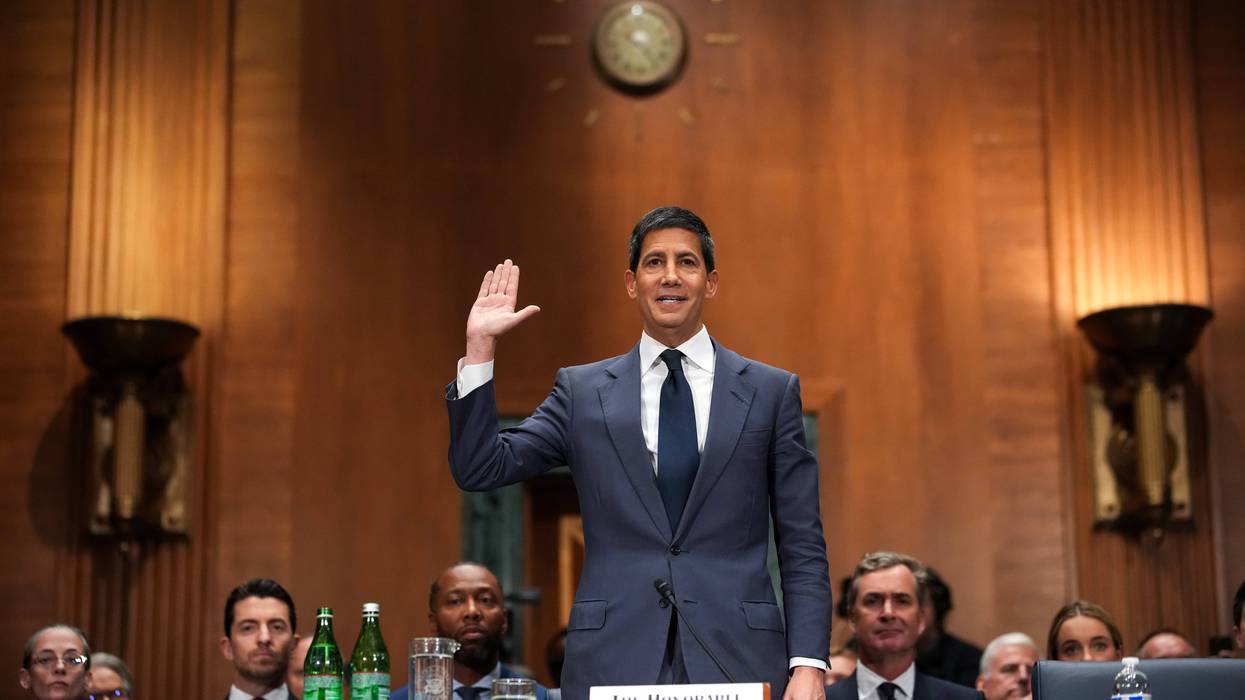
One campaigner asserted that Trump's "recklessness in the White House has pushed working families’ budgets to their breaking point."
The US Federal Reserve on Wednesday raised its benchmark interest rate for the first time since 2023, prompting renewed criticism from progressive economists and Democratic lawmakers who argue that President Donald Trump’s tariffs and warmongering are fueling inflation and further squeezing working families.
The 12-member Federal Open Market Committee unanimously lifted its federal funds target range by a quarter percentage point, to 3.75-4%, while signaling that it could raise the rate again to around 4.1% in the coming months. Fed officials cited persistently elevated inflation and said the move would support a “timelier return” to their 2% inflation target.
The increase came despite months of pressure from President Donald Trump for the central bank to cut rates. Trump has repeatedly demanded substantially lower borrowing costs, including calling for rates as low as 1%, while accusing the Fed of holding rates too high.
"Interest Rates in the United States should be 1%, or less, because we are the Best Credit in the World—BY FAR," Trump said on his Truth Social network in response to the hike. "Our Country is BOOMING with new Investment! If we stopped Trading with every country that we have a Deficit with, which is most of them, we would make, at least, 1.5 Trillion Dollars a year."
The United States is actually rated AA+ by S&P and Fitch—which is not the "best credit in the world" by any measure. Numerous nations have AAA ratings from major agencies, the highest level of creditworthiness.
"The word 'Deficit' is nothing more than a fancy word for LOSS," Trump added. "We are 'carrying' almost every country in the World, and that cannot go on any longer. LOWER THE INTEREST RATES FOR THE UNITED STATES OF AMERICA, AND FAST!"
Federal Reserve Chair Kevin Warsh—whom Trump tapped to lead the central bank—nonetheless backed the increase. The Fed's latest projections indicate that inflation will remain above its target and that most officials anticipate at least one additional rate increase before the end of the year.
The rate hike means consumers and businesses will face higher borrowing costs for mortgages, auto loans, and other debt. The average 30-year mortgage rate had already risen above 7% by Wednesday.
Referring to the worsening affordability crisis caused by Trump administration choices like tariffs and the illegal US-Israeli war on Iran, the progressive economic advocacy group Groundwork Collaborative lamented how "working families foot Trump's bill twice."
Trump's "never-ending war with Iran and his chaotic tariffs have driven inflation high enough that his own pick for chairman raised rates anyway, in a unanimous vote—a decision that will lead to higher borrowing costs for families and small businesses but does little to combat high prices from Trump’s economic mismanagement," the group said in a statement.
Groundwork Collaborative chief economist Breyon Williams said that "Trump can deny, disparage, and deflect from Americans’ economic reality all he wants, but there’s no hiding the truth: His recklessness in the White House has pushed working families’ budgets to their breaking point."
"Under his watch, inflation has skyrocketed, prices on essentials like gas and groceries have emptied wallets, and the labor market has lost steam," Williams added. "Today’s decision from the Federal Reserve confirms Americans’ fears of continued price pains to come, and its own forecast now says families will not see borrowing costs go down until 2028.”
Addressing the Fed rate hike, US Senate Minority Leader Chuck Schumer (D-NY) said Wednesday that "the chaos of Trump’s disastrous war and costly economic policies are drowning Americans in inflation. Trump has sown chaos in our economy, scared off potential investors, rattled our markets, and made it harder for American workers and businesses alike to succeed."
"Ever since taking office, Trump has taken aim at the Fed and other institutions designed to keep our economy stable and growing. That has only added to the economic chaos plaguing our country," he added. "But what does Trump care? Trump doesn’t care that Americans have to pay to more; he only cares about raking in as much money as he can off the presidency before Americans send him and his Republican Party packing."
Sen. Elizabeth Warren (D-Mass.) said during a Wednesday interview on CNN that "it's the American people who are paying the price" for Trump's policies.
"There is no happy solution at this moment based on interest rates," she added.
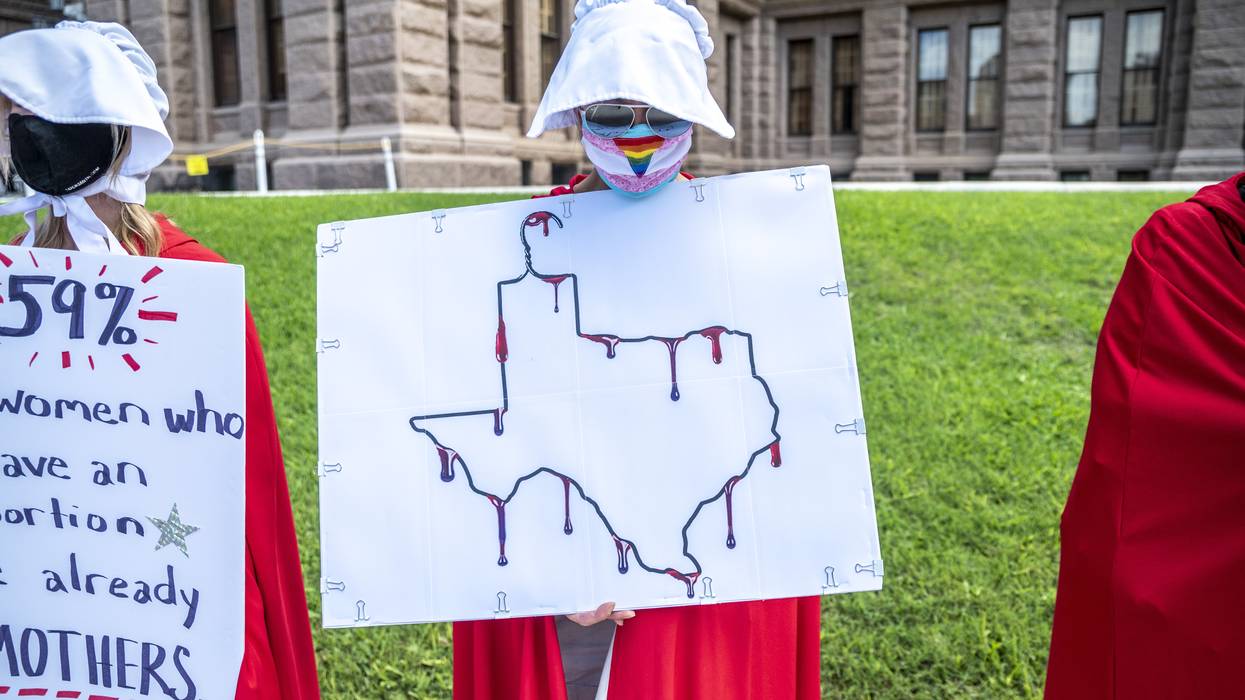
State officials "have imposed a merciless blanket prohibition on abortion that intimidates doctors into inaction," says the lawsuit. "Too many pregnant Texans have already died preventable deaths."
"Tierra Walker is dead, and those responsible must be held accountable."
That's the opening line of a lawsuit filed by Walker's family in San Bexar County, Texas this week against the state's Republican attorney general, Ken Paxton, and various others over the death of the 37-year-old pregnant San Antonio woman.
On December 30, 2024, Walker's son "found her in bed, not breathing," the complaint notes. "It was his 15th birthday."
The teenager, as well as Walker's husband, mother, and aunt, who is responsible for her estate, are all involved in the wrongful death suit—the first of its kind, linking a "preventable death" to an abortion ban, according to The 19th.
In addition to Paxton, who is running for US Senate with support from President Donald Trump, the family is suing Bexar County District Attorney Joe Gonzales, Texas Medical Board Executive Director Stephen Brint Carlton, the University of Texas Health Science Center at San Antonio, and three doctors who treated Walker before she died.
"During the four months of her pregnancy, as she suffered through seizures, blood clots, and one hypertensive crisis after another, Ms. Walker repeatedly asked for an abortion to save her life," explains the filing. "Defendants associated with University Health responded only 'your baby is fine,' disregarding Ms. Walker's deteriorating health and constitutionally protected right to life."
The document argues that "their deliberate indifference, discrimination, and medical mistreatment ultimately caused her horrific and tragic death. Now, Ms. Walker's husband is a widower. Her disabled mother has lost her daughter and caregiver. And her teenaged son has no mother."
"Meanwhile, from the moment Texas' first abortion ban went into effect in 2021, through the overturning of Roe v. Wade, through the present day, defendants Ken Paxton and Stephen Brint Carlton have imposed a merciless blanket prohibition on abortion that intimidates doctors into inaction and breeds extreme fear among Texas' medical establishment," the filing notes. "As a result, too many pregnant Texans have already died preventable deaths. Yet no one has held them accountable."
The suit—filed by the principal attorney at the Marynell Maloney Law Firm and Amplify Legal, the litigation arm of the nonprofit Abortion in America—is designed to do just that.
"Tierra had a treatable medical condition, the problem was that the treatment she needed was an abortion," said attorney Michelle Maloney in a statement. "She died a preventable death. Medical and political negligence killed Tierra Walker."
Defendants in the case have declined to comment or, in some cases, even respond to media outlets, including The Texas Tribune. As the newspaper detailed Wednesday:
Months after Walker died, the Texas Legislature passed Senate Bill 31 aimed at ensuring that pregnant women receive lifesaving care under the state’s near-total abortion ban. It says that a patient doesn’t have to be in "imminent" medical crisis for doctors to intervene and that a doctor can only be charged if the state can prove "no reasonable doctor" would have made the same call. It also requires the Texas Medical Board to create training for doctors, which was finalized in early 2026.
But Molly Duane, one of the lawyers representing the Walker family, said during a news conference on Wednesday that SB 31 would not have prevented Walker's death.
"I would love if the Texas Legislature would actually take their responsibility here seriously and get rid of the laws that are causing so many deaths. I just don't have any confidence that that is something that they can do in this environment, but ultimately, that's a political question," Duane said.
ProPublica first reported that Walker "died after she couldn't get an abortion in Texas" last November. The investigative outlet has exposed similar deaths in the state—those of Nevaeh Crain and Porsha Ngumezi—as well as the first known case of a fatal abortion care denial in the wake of the Roe reversal: Amber Nicole Thurman in Georgia.
"No one else should have to experience what my family has gone through. Tierra was the glue that held our family together, and now she's gone," said Walker's aunt, LaTanya Walker. "Doctors all turned a blind eye as Tierra was dying, and refused to give her the abortion she needed to save her life. She deserves justice."
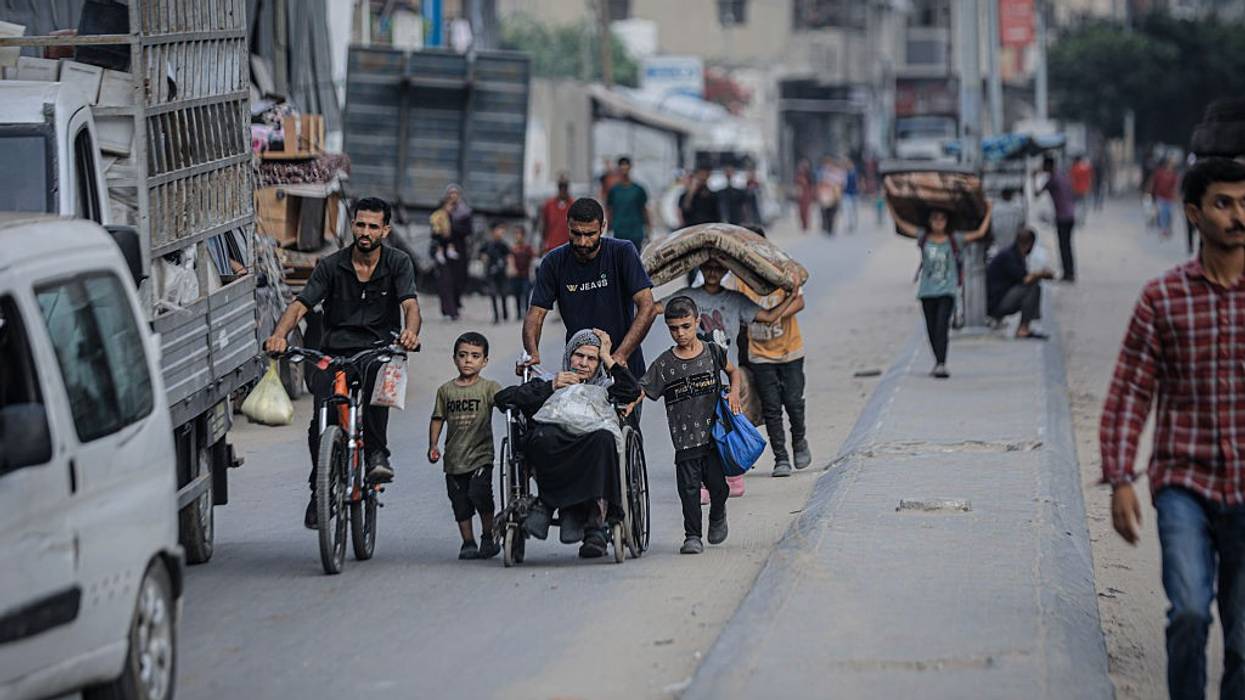
Citing the 70% depopulation of Gaza, Israeli Defense Minister Israel Katz vowed to "finish the job" of what he called Palestinian "migration"—a euphemism, say critics, for ethnic cleansing.
Amid a so-called "ceasefire" during which Israeli forces continue to kill and maim Palestinians, Israel's defense minister on Wednesday vowed to "finish the job" of depopulating the Gaza Strip—a plan human rights defenders have described as ethnic cleansing.
Responding to criticism from right-wing political rival Ofer Winter ahead of next month's Israeli elections, Defense Minister Israel Katz said the Israel Defense Forces (IDF) would soon resume the full-scale assault on Gaza—which has left more than 250,000 Palestinians dead, maimed, or missing since October 2023, 90% of the strip in ruins, and around 2 million people forcibly displaced, starved, or sickened.
Noting that 70% of Gaza has been forcibly depopulated, Katz said that "the IDF is prepared, once given the directive to eliminate Hamas, to finish the job so that we can also implement the migration plan," according to The Times of Israel.
Katz's remarks came after he said earlier this month that Israel was ready to implement plans to forcibly displace Palestinians from Gaza once US President Donald Trump gives his approval.
Trump has repeatedly backed the ethnic cleansing of Gaza's Palestinians. He said last year that the United States would "own" Gaza, "level it out," and build "the Riviera of the Middle East" there after the Palestinians—most of whom are descendants of people ethnically cleansed from the rest of Palestine during the bloody establishment of Israel in 1948—were gone.
While many proponents of expulsion claim it would be "voluntary," most Palestinians vehemently reject any relocation, voluntary or otherwise.
"Gaza is an integral part of our state," Palestinian Authority President Mahmoud Abbas stressed on Wednesday.
Numerous countries have been floated as possible destinations for Palestinians who are forced from or choose to leave Gaza, with Egypt—specifically the Sinai Peninsula—often topping such lists.
However, on Wednesday, Egyptian President Abdel Fattah el-Sisi reaffirmed his government's "firm stance against the displacement of the Palestinian people or any attempt to annihilate the Palestinian cause," drawing praise from Abbas.
Katz has repeatedly advocated the ethnic cleansing of Gaza. He said last year that IDF troops were “expanding to crush and clean” the strip. He also said the military was “seizing large areas that will be added to the security zones of the state of Israel for the protection of fighting forces and the settlements,” a reference to plans by far-right members of Israeli Prime Minister Benjamin Netanyahu’s government and leaders of the settler movement for the illegal recolonization of the Palestinian exclave.
Last year, Israeli lawyer Omer Shatz filed an incitement to genocide case at the International Criminal Court in The Hague against eight Israeli officials, including Netanyhau, Katz, and former Israeli Defense Minister Yoav Gallant. Netanyahu and Gallant are already fugitives from the ICC, where they are wanted for alleged crimes against humanity and war crimes in Gaza.
Israel is also the subject of a genocide case currently before the International Court of Justice filed by South Africa and formally supported by nearly 20 countries.
Katz's latest remarks come amid a nearly yearlong "ceasefire" during which more than 1,300 Palestinians have been killed by Israeli forces in Gaza. On Wednesday, a war-damaged apartment building in Gaza City collapsed, killing at least 21 Palestinians, including children. IDF airstrikes are also killing Palestinians on a daily basis.

"Doctors should be able to do what's best for their patients, not what's best for some wealthy investor."
Thanks to legislation passed in Oregon last year, physicians in the state have stopped corporate takeovers of medical practices—and six Democratic members of Congress on Wednesday introduced a bill to replicate the state law nationwide, arguing, as Sen. Elizabeth Warren said, that "patients want to know that decisions about their health are being made by their doctors, not by Wall Street investors."
The Massachusetts Democrat was joined by Sens. Ron Wyden (D-Ore.) and Jeff Merkley (D-Ore.), along with Reps. Val Hoyle (D-Ore.), Alexandria Ocasio-Cortez (D-NY), and Suhas Subramanyam (D-Va.) in introducing the Stop Corporate Takeovers of Physicians Act.
The bill would ban the corporate practice of medicine by making it illegal for private equity funds, insurance companies, and other for-profit corporations to own or control medical practices—as is increasingly the case in the profit-driven US healthcare system.
Over 80% of doctors in the US are employed by corporate entities including private equity firms—up from 62% just seven years ago, according to the lawmakers.
Corporations have also exploited legal loopholes that allow them to take over medical practices, despite laws in over 30 states banning the corporate practice of medicine.
“Americans want medical decisions to stay between patients and their doctor, not dictated by corporate actors and private equity firms focused on maximizing profits,” said Wyden. “I’m proud of Oregon’s pioneering state law that has been used by doctors to protect their independence, and it’s time to take that model to the federal level. Corporate medicine is making healthcare more expensive for everyone, and safeguards must be put in place to ensure healthcare decisions stay in the hands of physicians.”
The legislation would:
"But these actors often challenge the autonomy of acquired physicians once in control," they said. "For example, corporate entities often assume control over clinical operations, management and staffing decisions, and billing and coding practices—all of which can exert pressure on physicians to change care delivery."
Such entities "often cut corners, leading to patients paying more for significantly worse care," said Ocasio-Cortez. “I’m proud to co-lead the Stop Corporate Takeovers of Physicians Act to get Wall Street out of Americans’ doctors’ offices."
Warren added that "doctors should be able to do what's best for their patients, not what's best for some wealthy investor."
BREAKING: Today, I'm introducing a bill to BAN corporate takeovers of your doctor's office.
Doctors should be able to care for their patients without greedy private equity investors getting in the way.
Let's get this done. pic.twitter.com/e3gdamIotQ
— Elizabeth Warren (@SenWarren) September 16, 2026
The legislation is supported by several medical associations as well as economic justice advocates.
"A prohibition is only as strong as its enforcement, and this bill backs its corporate practice of medicine (CPOM) prohibition with three enforcement paths: the Federal Trade Commission, state attorneys general suing on behalf of residents, and physicians themselves through a private right of action with treble damages. That layered enforcement, paired with mandatory divestment, is what gives this bill teeth that earlier CPOM laws have often lacked,” said Dr. Marco Fernandez, president of the Association for Independent Medicine.
Alex Lawson, executive director of Social Security Works, said that the "groundbreaking legislation is absolutely needed to give health providers and patients a fighting chance against corporate greed."
"Congress must stop private equity from ripping the copper wires out of American healthcare and put patients first," said Lawson. "Social Security Works is proud to endorse this legislation."
Charles Idelson, the former communications director of National Nurses United, which advocates for Medicare for All, said the bill "would help close some, though not all, of the worst profiteering in healthcare."
"Exploiting sickness to enrich wealthy executives," said Idelson, "is obscene."

"This is a war chest that will likely fund the next generation of fossil fuel communications campaigns."
The fossil fuel industry is raking in big profits thanks to President Donald Trump's illegal war with Iran, and a new analysis finds that it's plugging a sizable chunk of these gains into propaganda.
A report published by Clean Creatives on Wednesday reveals that fossil fuel firms across the world have "engaged 802 advertising and PR agencies to shape corporate and public opinion about their products and services," over the last two years.
Clean Creatives, which has been tracking fossil fuel advertising contacts since 2021, said that the 1,321 contracts it recorded in 2025 and 2026 were the highest total it had ever recorded.
Laura Ranzato, executive director of Clean Creatives, pointed out that the industry's advertising splurge is coming on the backs of global consumers, who have been forced to shell out more money for gasoline and diesel after Iran shut down the Strait of Hormuz to commercial vessels in response to Trump's unlawful attacks.
"Shell, BP, and Saudi Aramco are posting their highest quarterly profits in years on the back of the war in Iran and the energy supply shocks that followed," Ranzato explained. "This is a war chest that will likely fund the next generation of fossil fuel communications campaigns."
Ranzato also slammed advertising firms for continuing to rake in fossil fuel cash even as the impacts of the climate crisis become more severe.
"With a Godzilla El Niño on the horizon, wildfire smoke, and record heatwaves... agencies face a real choice," she said. "They can take fossil fuel war profits and help oil majors maintain their social license a few more years, or they can get on the right side of a transition that is already winning on price, speed, and investment."
Nayantara Dutta, head of research at Clean Creatives, said it was "startling" to see the advertising industry lining up to take fossil fuel money "even as it acknowledges the need for climate solutions."
"All this time, creative work has continued to follow the same themes across different global markets," Duttas said, "rather than meaningfully responding to the climate crisis."
The Guardian last month published an analysis estimating that the world's eight largest oil producers raked in a combined $93 billion in the first three months of the Iran War, nearly double the profits they reported over the same period one year prior.
According to the most recent estimate from Brown University’s Watson School for International Public Affairs, the Iran War has now cost nearly $108 billion in additional fuel expenses for the public, averaging more than $823 per US household.
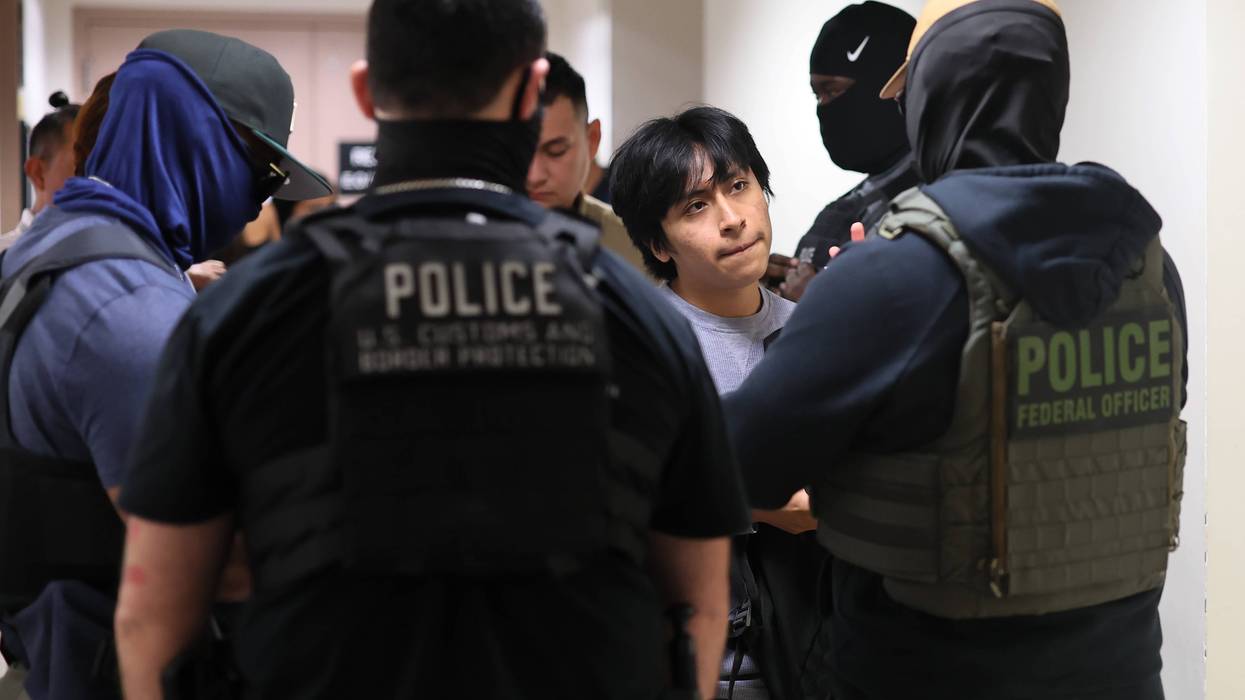
"When ICE continuously raids a community, everyone pays for it—in lost jobs, higher prices, and damaged businesses," said an advocate at the ACLU.
The Trump administration has billed its "mass deportation" agenda as a necessity to bring about an age of prosperity for US-born workers. But a new report suggests it's actually doing the opposite—exacerbating an already severe affordability crisis by suppressing wages, killing jobs, and raising costs.
On Wednesday, the ACLU and AFL-CIO published an analysis examining how the administration's unprecedented deployment of Immigration and Customs Enforcement (ICE) agents to communities around the country has not only created a climate of fear, but also caused labor shortages, reduced economic activity, and given employers new tools to suppress employees' wages.
"When ICE continuously raids a community, everyone pays for it—in lost jobs, higher prices, and damaged businesses," said Naureen Shah, director of government affairs at the ACLU's equality division.
Previous national data has already shown that, contrary to the Trump administration's argument that rounding up immigrant laborers simply creates room for those born in the US, areas that have experienced increases in ICE activity have also seen employment reductions for US-born workers.
"In our interdependent labor market, harm to one group of workers spills over to all those who labor alongside them or within the same supply chain, regardless of immigration status. Roughly 1 in 5 workers in our country is an immigrant, spanning all sectors of the economy," the report explains.
"Targeting this large and vital segment of the workforce sharply reduces the supply of labor, threatening the ability of employers to generate revenue and cover business expenses, including the wages of any remaining workers," it continues.
Reducing the labor supply consequently reduces production. The report argues that this is why industries with large numbers of immigrant laborers have seen skyrocketing costs for their products nationwide.
Data from previous deportation surges during the Obama administration shows that immigration enforcement has reduced construction labor, resulting in nearly 2,000 fewer completed homes on average and an 18% increase in home prices.
In June 2026, data showed that while core inflation was just 2.6% over the previous year, prices had shot up much more dramatically in immigrant-heavy sectors: The cost of lettuce was up 32.1%, landscaping was up 10.8%, home health care climbed 10.7%, whole milk increased 9%, and canned fruit jumped 7.9%.
The report also argues that ICE surges, which have often involved racial profiling and indiscriminate targeting, use of excessive force, and arrests of US citizens, have created terror in communities that suppresses economic activity.
A May working paper from the Wharton School of Business at the University of Pennsylvania, which examined nearly 5,400 raids around the country during 2025, showed that areas targeted by ICE raids experienced a 2.7% decline in foot traffic and a 6.2% decline in spending per business per week, which the author extrapolated would amount to 8.1 billion fewer visits and as much as $14 billion in forgone spending annually across the nation.
US-born employees in sectors with large numbers of immigrant workers were hit especially hard. Data from "Operation Metro Surge" in Minnesota earlier this year demonstrates this in miniature.
Research released in June by the Upjohn Institute estimated that the surge of immigration agents cost the state’s leisure-and-hospitality sector 4,600 jobs, 3.8 million work hours, and $71 million in wages between January and March.
Economist Exequiel Hernandez, quoted in the ACLU/AFL-CIO report, said these findings highlight the danger of creating an "economy of fear."
"If fewer people are showing up to work, they’re making less income, they’re spending less," he explained. "If they’re spending less, businesses have to cut back in hiring and selling, and it’s really quite damaging."
The report cites projections from the Economic Policy Institute (EPI) last year on what this could mean if the Trump administration meets its target of deporting 1 million people per year.
Using data from previous immigration enforcement studies, the EPI estimated that nearly 6 million fewer people could be employed by the end of President Donald Trump's second term if the administration follows through on its deportation promises. That includes 3.3 million immigrants, but also 2.6 million US-born workers, many of whom are working in immigrant-heavy sectors.
The report argues that a pathway to citizenship rather than deportation would not only be a more humane solution, but also deliver economic benefits that ripple through the economy, including for US-born residents.
It cites projections that allowing undocumented immigrants to become citizens would increase US gross domestic product (GDP) by nearly $2 trillion over a decade and generate hundreds of billions in new tax revenue.
This is because legalization would allow workers to move into jobs that better match their skills rather than being confined to low-paying jobs that tend to accept them. It would also remove immigration enforcement as a threat that employers could use to suppress wages, both for immigrant and US-born workers.
"Working people are paying the price for an immigration system that is destabilizing entire industries and communities and making it easier to exploit workers,” said AFL-CIO president Liz Shuler. “As this report demonstrates, a broad pathway to citizenship for all would raise wages, create more and better jobs, and strengthen our economy in ways that help all of us."

"These people are such incredible cowards," said Rep. Pramila Jayapal. "They know that what Pete Hegseth has done, his role in driving us into the war, is absolutely wrong."
US House Speaker Mike Johnson said Wednesday that with seven weeks to go until Election Day, it was time for lawmakers to "go home to their districts and make the case to the American people"—a day earlier than scheduled.
But with the US public overwhelmingly disapproving of President Donald Trump's war in Iran and demanding accountability for his bombing of boats in the Caribbean Sea, Republicans may be headed home hoping their constituents don't ask questions about those issues, particularly as Johnson (R-La.) faced accusations of ending the House session early in order to avoid a vote pertaining to them.
Johnson announced the early adjournment a day after Rep. Thomas Massie (R-Ky.) filed articles of impeachment against Defense Secretary Pete Hegseth, arguing in the resolution that Hegseth violated the War Powers Resolution of 1973 by initiating strikes against Iran without authorization from Congress and continuing to attack the country past the 60-day mark set by the law.
He also accused Hegseth of “ignoring laws that minimize civilian casualties," citing an attack that killed more than 150 children and teachers at a school in Minab, Iran, and of conducting an illegal campaign of extrajudicial killings by overseeing dozens of boat bombings in the Caribbean and eastern Pacific Ocean that have killed at least 230 people since last September.
Massie's resolution was privileged, meaning it had to be taken up by the House within two legislative days.
With House members now on their way back to their districts to campaign ahead of the midterm elections, lawmakers will be unable to pursue the impeachment effort until at least November. They are not set to return to Capitol Hill until after Americans vote on November 3.
"These people are such incredible cowards," said Rep. Pramila Jayapal (D-Wash.) of her Republican colleagues. "They know that what Pete Hegseth has done, his role in driving us into the war, is absolutely wrong."
Republicans just CANCELLED votes for tomorrow, the last legislative day before the midterms.
Why? Because they’re afraid we’ll impeach Pete Hegseth. What a bunch of cowards. pic.twitter.com/vTTfNNtpmP
— Rep. Pramila Jayapal (@RepJayapal) September 16, 2026
Johnson derided Massie's resolution as "ridiculous" and "a publicity stunt by someone who wants attention."
“It’s a publicity stunt by someone who wants attention," he said. "It will immediately be tabled, of course, but we probably won’t do that today. We’ll probably do it when we come back. But it’s a stunt. Secretary Hegseth has done an extraordinary job at the Department of War. We’re in the middle of international conflicts right now, and we should not be playing games with national security."
A motion to table a resolution immediately kills the measure without debate.
"We're calling off Congress," said Massie on the House floor Wednesday, "and we're in the majority... I would implore all of us to take it up with the leadership. Why are we going to be denied a debate on whether there should be an impeachment or not?"
Massie: We’re in the majority. Why are we whining about The Save Act? We won the elections. Why are we saying the elections were stolen if we won them all? pic.twitter.com/sab4GGViw3
— Acyn (@Acyn) September 16, 2026
Public polling suggests most Americans likely do not think Hegseth and other top officials are doing an "extraordinary job" regarding the war in Iran, as Johnson claimed.
A survey in late July showed that nearly two-thirds of Americans felt the war was not worth fighting, and an Associated Press poll in June found the same percentage of respondents disapproved of Trump's handling of issues concerning Iran. The war has sent oil and gas prices skyrocketing, and a majority of voters told Reuters/Ipsos in April that they blamed the Trump administration.
Massie noted that Johnson's maneuver would make it harder for supporters of a discharge petition to force a vote on the Epstein Files Transparency Act to gather the 218 signatures they need.
"I thought we’re supposed to be running a government here. Speaker Mike Johnson just sent the House home. Why? Because Rep. Thomas Massie filed articles of impeachment against Pete Hegseth," said Rep. Mike Levin (D-Calif.). "Speaker Johnson, the WEAKEST speaker of all time, was so scared that we had the votes to impeach Hegseth and hold him accountable that he’s sending us all home to make sure it doesn’t happen."

"When foreign aid retreats, Indigenous peoples and small-scale farmers can be left with fewer resources and less support as they defend the forests, rivers, and other ecosystems that sustain their communities and help keep the global climate stable,” one campaigner said.
A total of 124 people were killed defending the environment in 2025, according to a Global Witness report released Wednesday, as the global rise of authoritarianism and a dramatic decline in foreign aid makes the lives and work of environmental and humans rights advocates more challenging.
The report singles out the administration of US President Donald Trump—which dismantled the US Agency for International Development, delayed paying other United Nations fees, and has shown a broader disregard for international humans rights norms and the institutions that uphold them—for worsening the global climate for defenders. In 2025, total development aid plummeted by a record 23%, depleting the resources available to local communities and the organizations that support them.
“The effects of these budget cuts are not abstract," Juliana Vélez Echeverri, a senior campaigner at Global Witness, said in a statement. “In Colombia, projects working to promote and protect human rights and support defenders have been hit by the sudden drop in foreign aid, particularly from the US. When foreign aid retreats, Indigenous peoples and small-scale farmers can be left with fewer resources and less support as they defend the forests, rivers, and other ecosystems that sustain their communities and help keep the global climate stable.”
"We can’t prevent climate change when they kill those who protect the environment."
Colombia was the deadliest country for land defenders for the fourth year in a row with 39 killings, followed by Brazil with 26, and Honduras and the Philippines with 12 each. As the site of 85% of the killings, Latin America was the deadliest region, as it has been since Global Witness began counting the killings of environmental defenders in 2012. Indigenous people remain especially vulnerable to violence, as over three-quarters of the people killed in 2025 were either Indigenous, Afro-descendant, or small-scale farmers.
"For Indigenous peoples, land is life," said Joan Carling, executive director of Indigenous Peoples’ Rights International, in the report foreword. "Any threat to our lands, territories, and resources is a threat to our very existence—our cultures, our identities, our dignity, and our future generations. That is why our communities were willing to risk everything to protect them."
Seven of the Indigenous people killed in 2025 were members of Indigenous guards established to patrol and protect their territories from illegal encroachment. For example, the Indigenous Guard of the Kakataibo People of Peru was formed in 2022 to protect their rainforest home from illegal cocoa growing and logging.
“Defending our territory is important to us as a community and as a people, and we’re proud to support the climate that we all depend on," said Segundo Ispón, commander of Peru’s Kakataibo Indigenous Guard, in a statement. "In our culture, the work of defending our resources and territory is taught from an early age. But for this next generation coming up, the work is more dangerous than ever.”
The experience of the Kakataibo reflects another growing trend that endangers defenders: the rise of organized crime amid weakening state authority to oppose it. More than one-third of killings in 2025 were linked to organized crime or hitmen. And more than half of the killings were due to land disputes, "demonstrating how authorities’ failure to resolve competing land claims or demarcate territory paves the way for attacks on defenders and their communities," the report authors said.
As Ispón said in the report: “There is inaction from the state, inaction from the authorities. Faced with that, what do we do? We protect ourselves. We take care of each other.”
Yet the rise in lawlessness goes hand in hand with a rise in government repression against activists, making it difficult to get accurate information about the numbers of defenders killed. While the 124 figure is lower than the 142 killed in 2024 or the 196 killed in 2023, the report authors noted that "these figures are likely a significant underestimate, as many cases go unreported.
They added: "This is typical of situations involving serious armed conflict and genocide, where generalized insecurity and mass killings make identifying and verifying individual cases difficult. Research is also challenging in repressive contexts where victims and civil society groups face reprisals for reporting and documenting abuses."
Indeed, civic freedom tracker CIVICUS Monitor considers 10 of the 15 countries in which deaths were reported to be repressed.
Furthermore, the number killed does not reflect other forms of harassment and repression, such as the criminalization or weaponization of social media against activists, both of which are common in Asia.
The report comes as the state of the global environment is ever more dire, with the United Nations warning the planet is now on a path to overshoot the 1.5°C Paris Agreement goal even as the US, the No. 1 historical emitter, has jettisoned all attempts at climate policy under Trump.
"We can’t prevent climate change when they kill those who protect the environment," Amnesty Norway policy adviser Frank Conde Tangberg wrote on social media in response to the report.
The Indigenous and local voices being violently silenced could have a lot to teach global leaders at a crucial moment, if only they would listen.
As Carling wrote:
In today’s world, that ancestral knowledge is vindicated every day. From sustainable agriculture to climate-resilient water management, Indigenous peoples’ customs offer effective climate solutions.
But the climate crisis is testing our capacity to adapt to the natural world. It is too drastic, too vast in scale. Rather than try to respond to this emergency on our own, we want to contribute to collective global efforts.
Instead of being listened to, however, Indigenous peoples are being excluded from major decision-making spaces. As a result, the very projects touted as solutions—renewable energy, transition minerals—drive land grabs, dispossession, and violence. We call this “green colonialism.”
After land grabs, mining was the industry linked to the most deaths in 2025, followed by logging and agribusiness.
Yet another way forward is still possible. As Carling concluded: "Indigenous peoples and our knowledge must be at the heart of climate decision-making. Our role as custodians of land, our understanding of the consequences of climate breakdown, and our collective resistance to dispossession must have an influence on policy at the centre of power."
"But this can only happen when our territories are secure and our people protected from harm," she said. "States and leaders must work with us firstly to ensure that our communities are safe—and then to tackle the environmental crises that pose an existential threat to us all."

"With every additional centimeter of sea-level rise," the lead author noted, "about 2 to 3 million people are put at risk of annual coastal flooding."
Following fresh warnings from scientists about governments not doing nearly enough to cut fossil fuel pollution and what that could mean for the warming planet, an international team of experts on Wednesday published "the most complete picture of ice loss from Greenland and Antarctica to date."
The polar scientists compared and combined 42 independent estimates derived from satellite observations for Earth's two main ice sheets to determine their gains and losses from 1972 in Greenland and 1979 in Antarctica until 2023—then released their findings in the journal Scientific Data.
The Ice Sheet Mass Balance Inter-comparison Exercise (IMBIE) team found a collective loss of about 11.3 trillion metric tons, or 12.5 trillion US tons.
Inès Otosaka, the professor from England's Northumbria University who led the study, told Reuters that "to put this very large number into context, 11.3 trillion tons of ice is enough ice to fill in a cube that would be 23 kilometers (14.3 miles) in height."
The Associated Press pointed out that it is also "enough frozen water to stack ice 5 feet (1.5 meters) deep across the continental United States."
The ice loss led to around 3.1 centimeters, or 1.2 inches, of global sea-level rise. Study co-author, IMBIE founder, and Northumbria professor Andrew Shepherd said in a statement that the figure "may sound small, but that puts another 6 to 9 million people at risk of coastal flooding and erosion."
The study stresses that "since the 1990s, the pace of ice loss from the Antarctic and Greenland ice sheets has accelerated, contributing to the increase in global mean sea-level rise, with the ice sheets now representing almost a quarter of global sea-level rise."
"Our dataset shows that Antarctic mass loss continues to be dominated by ice discharge from West Antarctica," the scientists explained, "rising in every decade of our record," from 29 billion metric tons per year in the 1980s to 163 billion in the 2010s. Across the ice sheet, that rate rose from 48 metric tons in the 1980s to 202 billion in the 2010s. The team estimated that during the study period, Antarctica lost a total of 4.78 trillion metric tons.
"Greenland was close to a state of balance in the 1970s but started to lose mass in the following decades," they explained. While the ice sheet lost about 60 billion metric tons annually in the 1980s and 57 billion in the 1990s, "losses then accelerated, reaching a rate three times higher in the 2000s," at 192 billion metric tons, and climbing to 264 billion in the 2010s. Overall, Greenland lost 6,215 trillion metric tons of ice from 1972 to 2023.
TK said that "by reaching back to the 1970s, we can now see how the ice sheets have changed across half a century. More than four-fifths of the ice lost was discharged into the ocean by faster-flowing glaciers, rather than melted at the surface—which tells us the long-term trend is being driven by the dynamic response of the ice sheets to a warming ocean."
International scientists have previously found that the ocean stores an estimated 91% of the heat from excess greenhouse gases, and the rate of ocean warming has more than quadrupled over the past four decades, as humanity has largely ignored experts' warnings to urgently phase out fossil fuels.
The new study was released less than two months ahead of the next United Nations Climate Change Conference (COP31) in Türkiye—where recent deadly fires have reignited demands for a swift global transition away from fossil fuels and stronger efforts to prepare vulnerable communities around the world for what UN scientists now warn is an inevitable, but potentially temporary, overshoot of the Paris Agreement's 1.5°C target for temperature rise this century.
Otosaka told Reuters that "when ice sheets melt, they contribute to rising global sea levels. And with every additional centimeter of sea-level rise, about 2 to 3 million people are put at risk of annual coastal flooding."
"These findings have implications for coastal planning," she added, "showing that we urgently need to develop plans for protecting coastal communities around the world from the impact of ice sheet melting."