September, 14 2023, 12:43pm EDT

For Immediate Release
Contact:
Ashley Siefert Nunes
asiefert@ucsusa.org
The Union of Concerned Scientists is the leading science-based nonprofit working for a healthy environment and a safer world. UCS combines independent scientific research and citizen action to develop innovative, practical solutions and to secure responsible changes in government policy, corporate practices, and consumer choices.
LATEST NEWS
Trump-Ordered DOJ Lawsuit in Alaska Seen as First Salvo in GOP Effort to Undermine Midterm Elections
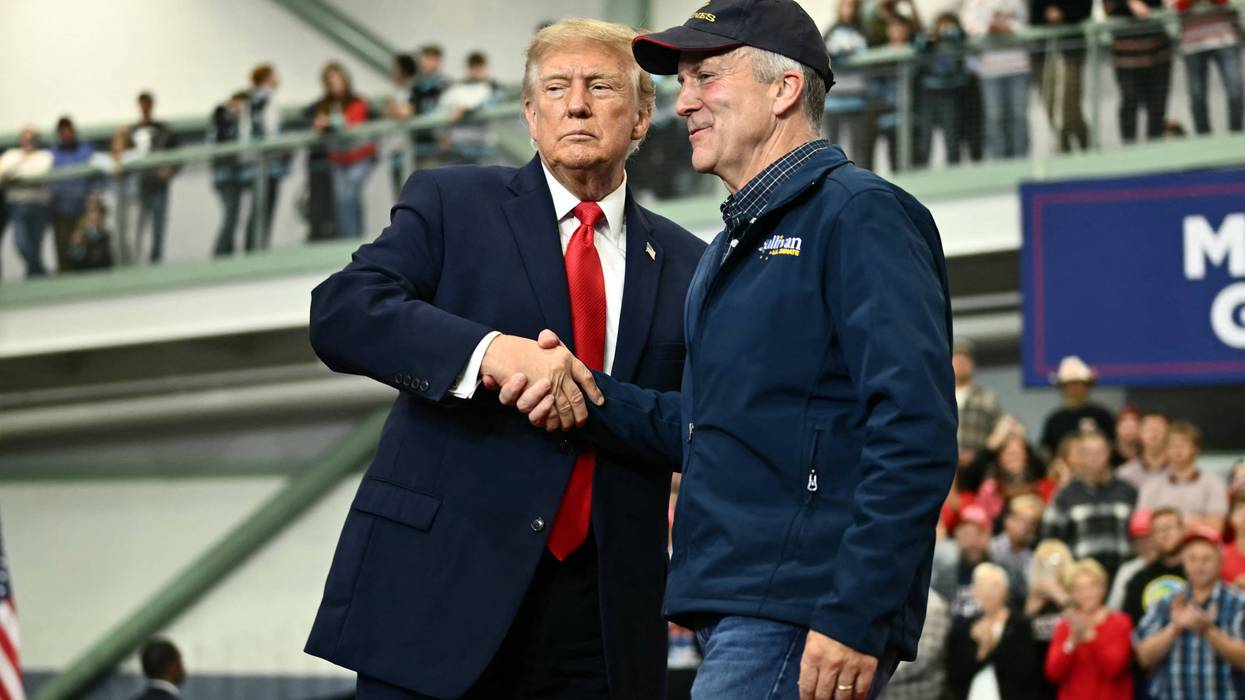
Filed just 12 days before Election Day and after voting had begun, the lawsuit claims voters intending to support the Republican incumbent may be confused into voting for a different person on the ballot, a retired teacher who is also named Dan Sullivan.
The second Sullivan, a registered Republican from Petersburg, Alaska, was initially kicked off the ballot over fears that he was trying to fool voters. But that decision was later reversed by a judge, whose decision was upheld by the Alaska Supreme Court.
Alaska's ballots distinguish between the two Dans Sullivan, with the senator listed as "registered Republican" and "incumbent," and the other listed without any identifiers.
"It's clearly marked which one is the GOP candidate and which one is just a guy," argued journalist Dave Weigel.
In its lawsuit, the DOJ claimed that the "sole purpose" of the other Sullivan's candidacy is to sow confusion and "benefit the Peltola campaign by reducing the number of votes for Sen. Sullivan."
As evidence of this, it points to Sullivan's statements that he voted for Democrats in the last three election cycles and supported Peltola's candidacy for the US House of Representatives, though it does not allege he directly coordinated with the Democratic candidate.
Instead of seeking to boot the alleged Sullivan impostor from the ballot again, the DOJ is pursuing a different remedy: It wants Alaska to delay the certification of a Peltola victory if giving all of the other Sullivan's votes to the senator would change the election outcome. Certification would remain on hold while investigators determine whether those voters meant to support the incumbent.
The latest polling average from FiftyPlusOne shows Peltola leading Sen. Sullivan by a margin of roughly two percentage points. The other Sullivan is currently polling at about 4%.
However, Alaska's ranked-choice voting system makes it considerably less likely that name-based confusion would actually cost Sen. Sullivan the election. Voters who mistakenly selected the wrong Sullivan as their first choice could still support the incumbent by ranking him second, reducing the potential for the two candidates to split the GOP vote.
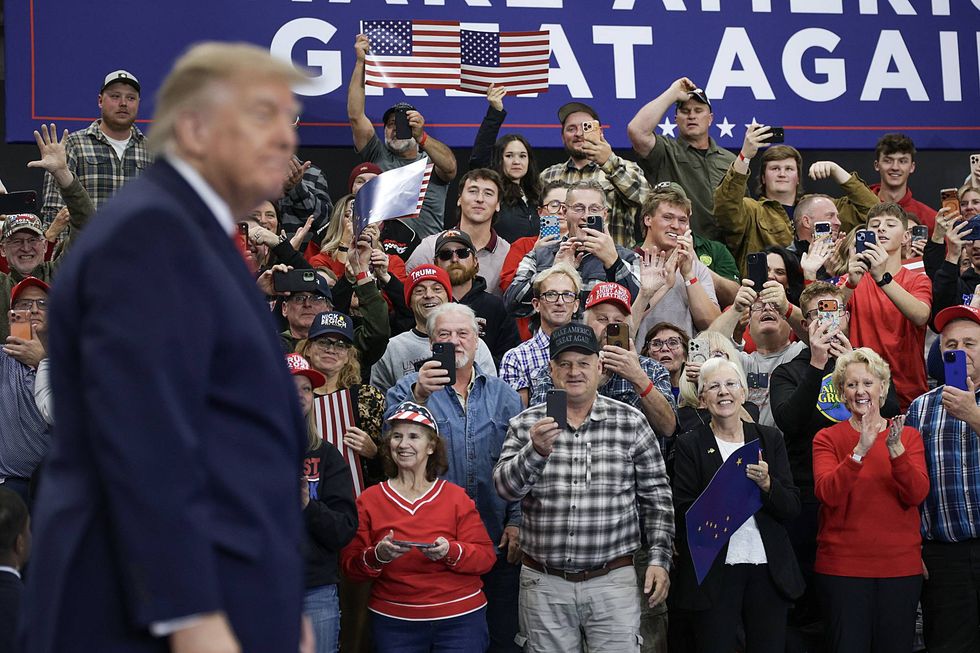 US President Donald Trump arrives for a campaign rally at the Menard Memorial Sports Center on October 13, 2026, in Wasilla, Alaska. (Photo by Alex Wong/Getty Images)
University of Notre Dame law professor Derek Muller said the DOJ's legal argument to suspend the certification of Alaska's election was "one of the worst ones I’ve ever seen."
In a blog post, he said the DOJ's request to probe whether voters accidentally cast their ballots for the wrong Sullivan was "essentially impossible" to fulfill because "the best evidence that voters preferred one Sullivan over another is how they marked their ballots."
"Some, in a panic, might react that the department is trying to deny certification of an election in a state," he said. "Of course that’s what the department is trying to do. But the legal claim is so absurdly thin, there’s essentially no likelihood of success."
Though the Alaska lawsuit is the first direct request to block an election result in 2026, Alaska is not the first state where Blanche's DOJ has filed an eleventh-hour lawsuit that critics argue is meant to interfere with election results.
The department sued California earlier this month, seeking to have the state exclude the ballots of around 20,000 voters it claimed were noncitizens based on a database known to be riddled with errors.
Election experts have pushed back on Blanche's assertion that the DOJ can intervene in states' election certification processes, even in what he described as a "doomsday scenario," since the US Constitution explicitly grants the power to run elections to states.
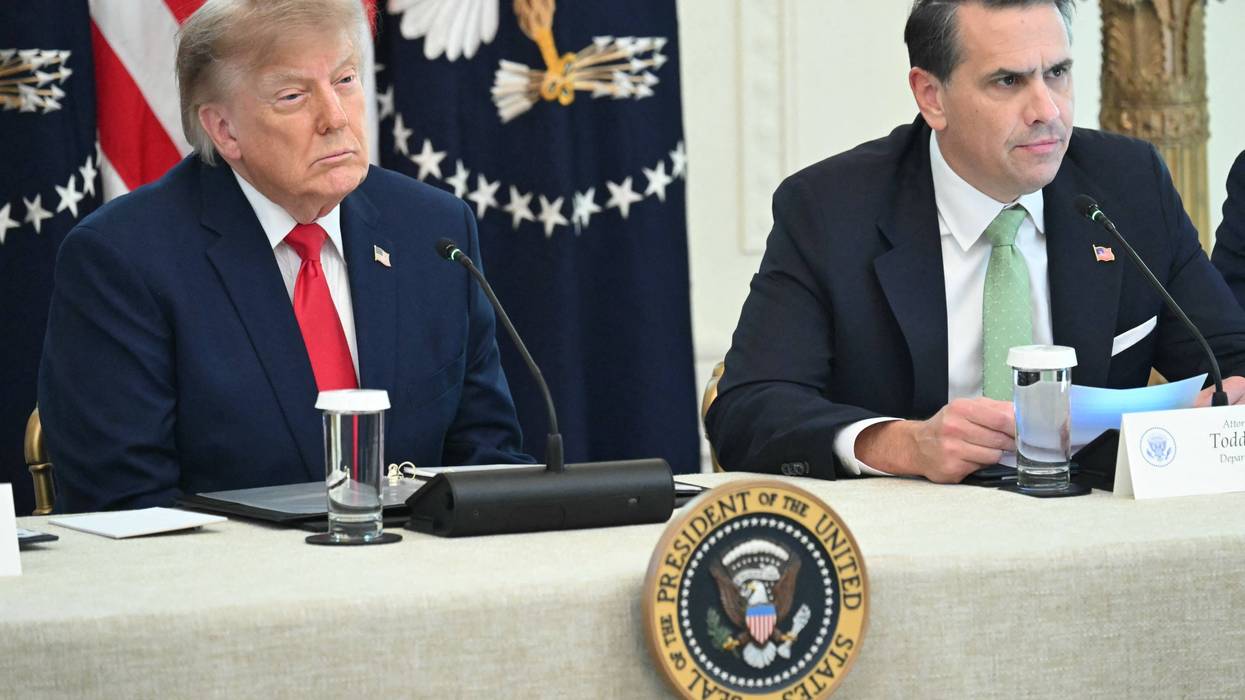
In stark contrast to previous US attorneys general, who have stressed their legal independence, Blanche said plainly earlier this week, "I work for President Trump."
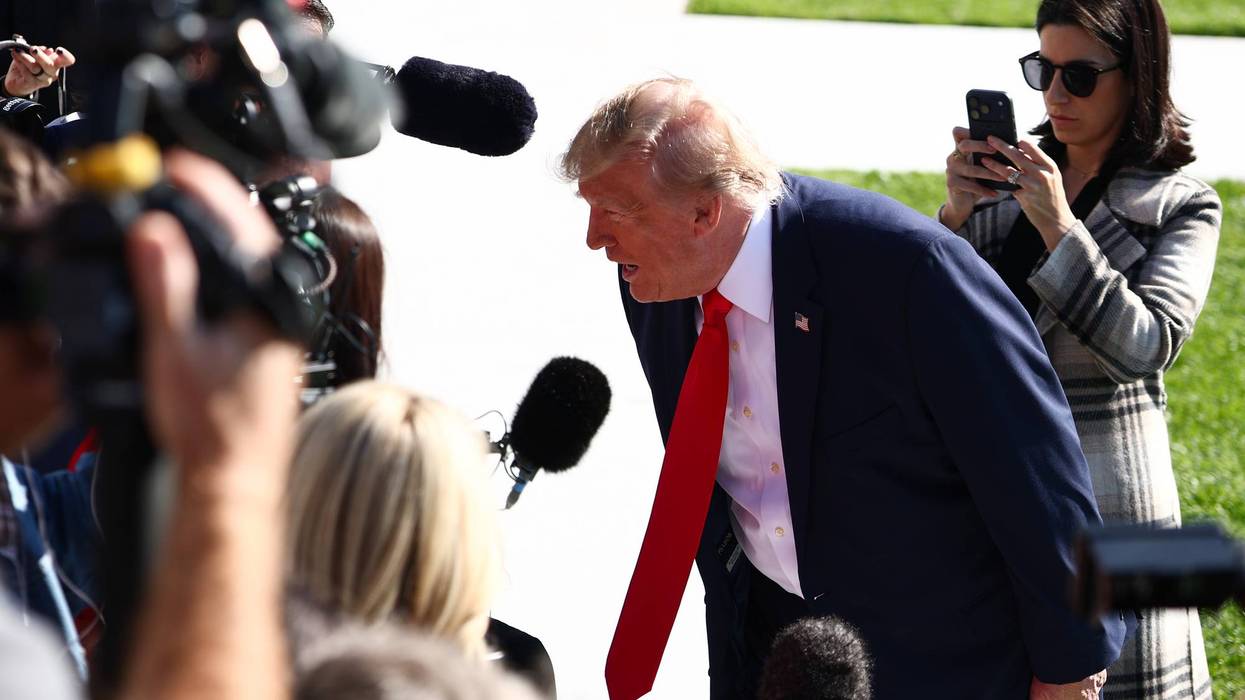
Asked about the Alaska lawsuit on Friday, Trump told reporters directly, "I'm the one that said do it."
With Republicans projected to suffer heavy losses in the House and Senate, DOJ lawsuits represent one of several ways Trump administration officials have suggested they may interfere with elections.
Blanche and Homeland Security Secretary Markwayne Mullin have floated the idea of dispatching armed agents to polling places in violation of federal law. Trump has raised the possibility of seizing voting machines, and he has ordered the US Postal Service to block mail ballots from being delivered in some states, an effort that has been halted in court.
Devan Barber, executive director of the Democratic Senatorial Campaign Committee, told The Associated Press that the Alaska lawsuit was yet another form of meddling.
"Donald Trump knows that Dan Sullivan is going to lose the election," Barber said, "so now his Department of Justice is filing a sham lawsuit to overturn the will of Alaska voters and steal an election when he loses."
‘Let’s Be Clear,’ Expert Says, There Is ‘No Role’ for DOJ or Todd Blanche in Election Certification
"I don’t think it’s proper to make any kind of conclusory statements about what’s going to happen in the future because I have no idea what’s going to happen in the future," he continued. "It is not DOJ’s intention—and it’s never our intention—to improperly interfere with elections or the state certification process, but to say that there’s no circumstances that we would ever do that—of course I’m not going to say that.”
“But am I planning my days around the election to be somewhere to not certify? Of course not,” added Blanche, who was previously President Donald Trump's personal attorney.
Lauren Miller Karalunas, senior counsel for democracy at the Brennan Center for Justice, emphasized on Friday that regardless of what hypothetical "scenario" Blanche may have been alluding to, there is no legitimate way for the DOJ to stop the certification of election results.
"Let's be clear: The state certification process is just that—a state process," Karalunas said. "There is no role for the federal government to play that's not inherently improper."
"Rest assured, state certification processes were created to meet this moment," she continued. "Centuries ago, state legislatures recognized that bad actors could use the process to manipulate election outcomes. They built in safeguards specifically designed to stop that from happening."
Blanche's refusal to categorically rule out federal intervention alarmed many observers, especially in light of Trump's threats to meddle in elections, including by having them "nationalized" against federal law.
Trump used false claims of widespread voter fraud to pressure states to decertify unfavorable election results in 2020 and pushed the DOJ to assist those efforts. In January, FBI agents seized 2020 election ballots and records from a voting hub in Fulton County, Georgia, in an attempt to legitimize the allegations, which had already been extensively investigated.
Under Blanche—who days ago declared "I work for President Trump"—the DOJ has already sued California in an attempt to prevent ballots from more than 20,000 registered voters from being counted, based on largely unsubstantiated claims that they were noncitizens.
On Thursday, the DOJ sued Alaska to potentially block certification of its Senate election if Democrat Mary Peltola defeats Republican Sen. Dan Sullivan and votes for another candidate—also named Dan Sullivan—could have changed the outcome. The DOJ alleges that the challenger entered the race to confuse the senator’s supporters into voting for him.
Armed agents from Homeland Security Investigations, a branch of Immigration and Customs Enforcement, have been going door to door in California and other states, questioning residents about their citizenship and voting histories.
On Wednesday, a federal court ruled that these operations likely violated the Voting Rights Act's prohibition on voter intimidation.
Blanche and Homeland Security Secretary Markwayne Mullin have also declined to rule out sending immigration or other federal agents to polling places, despite federal laws banning "troops or armed men" from places where elections are being held.
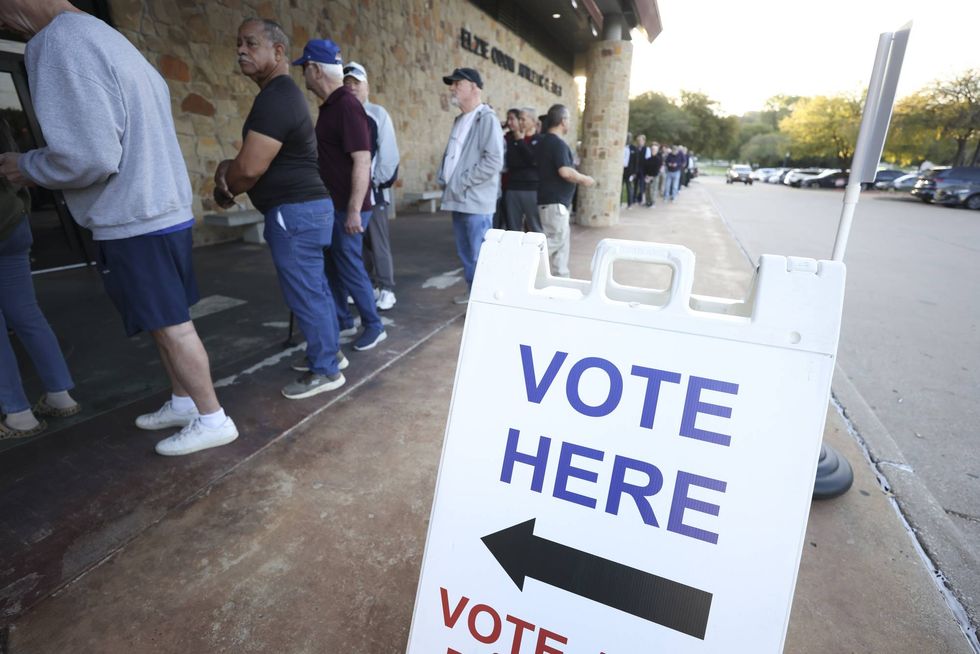 Voters line up outside the Elzie Odom Athletic Center in Arlington, Texas, on October 19, 2026, the first day of early voting for the November 3 midterm elections. (Photo by Chitose Suzuki/The Dallas Morning News via Getty Images)
Max Flugrath, communications director for the voting rights group Fair Fight Action, said Blanche's comments on Thursday were unprecedented.
"I don’t know of another US attorney general who has publicly entertained using the DOJ to block states from certifying an election," he said.
Senate Minority Leader Chuck Schumer (D-NY) responded that "Senate Democrats have been preparing" for potential election shenanigans by the Trump administration "for months, and will be ready for whatever they try."
"As Trump and his cronies attempt to steal this election, we are fighting them at every turn," he wrote on social media.
Sen. Brian Schatz (D-Hawaii) agreed during an interview with CNN that Democrats remained "vigilant" and were "ready for any scenario."
"We've got litigators ready," he told host Kasie Hunt. "We've got... organizers ready in case things get difficult... and so we're not going to have a failure of imagination in terms of what people are capable of in terms of overturning an election."
"But I also think—it's important to remember that part of the game here is that people are desirous of making voters feel like their vote won't count," Schatz added. "And so, the best way to overcome any kind of people screwing around is to get out there and vote in large enough numbers that these little marginal moves that they could or may or may not make won't work."
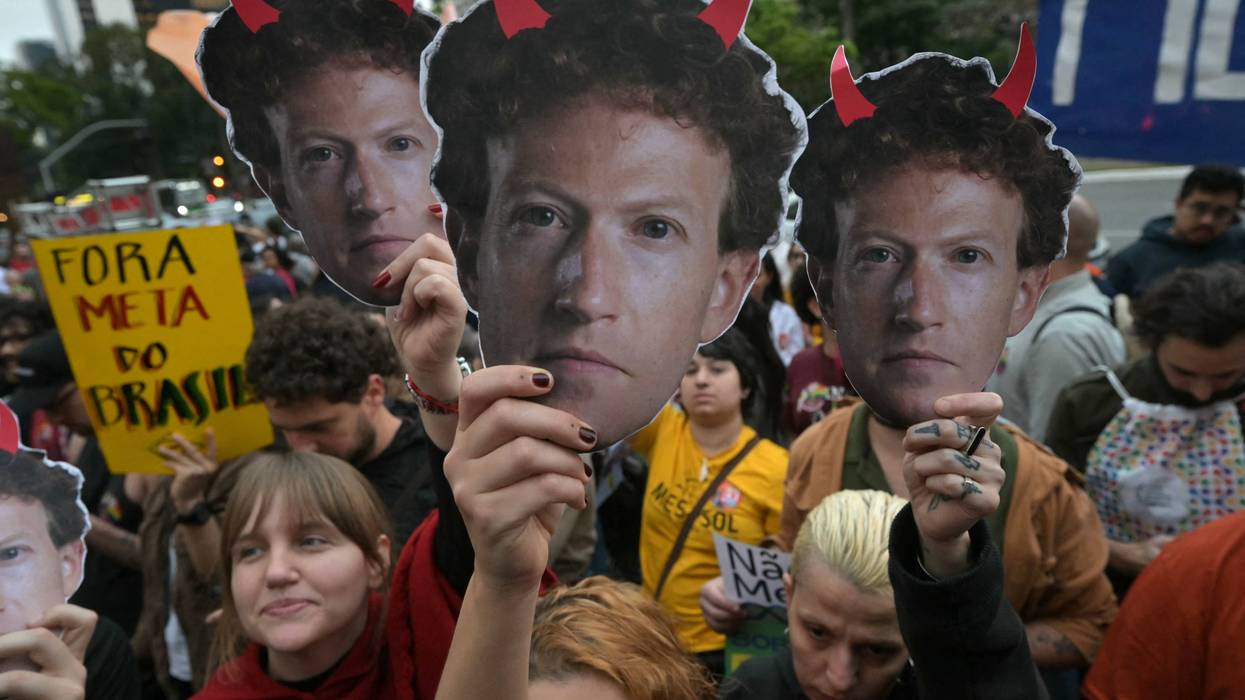
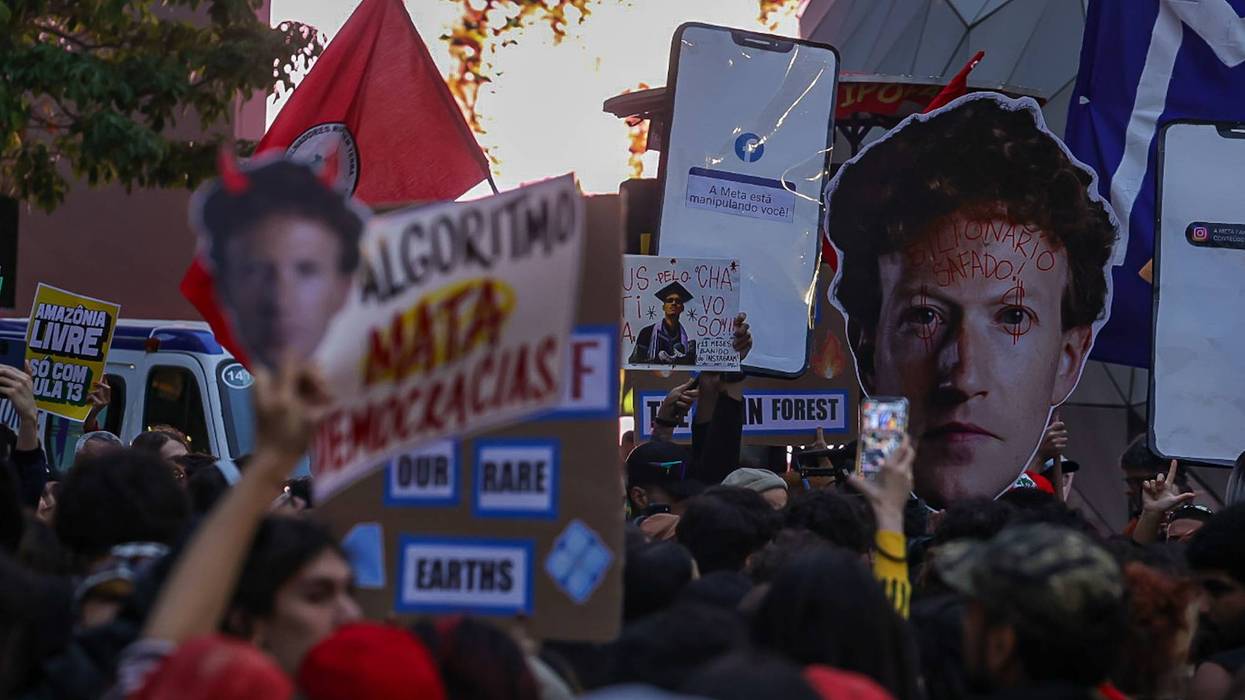
Research Shows Meta Algorithm 'Actively Boosting' Bolsonaro Ahead of Brazil Election
The researchers concluded at the end of their experiment that "Instagram’s algorithm aggressively promoted pro-Bolsonaro and right-leaning content" while "actively suppressing Lula’s official campaign account."
The content that Instagram's algorithm pushed toward the newly created account "was overwhelmingly political," the researchers found. "Of all 50 posts, 74%, were pro-Bolsonaro/right/leaning and only 18% were pro-Lula/left-leaning—glaring evidence of a significant right-wing bias in Instagram’s recommender systems."
"Pro-Lula/left-leaning content performed better per post on every engagement measure, yet was recommended far less often, undercutting any claim that Instagram’s algorithm is simply showing users content that is performing best," Ekō said. "Pro-Lula/left-leaning posts averaged 398,000 likes, around 64,000 comments, and 108,000 shares each—more than double the likes and over seven times the comments, and more than nine times the shares of the average pro-Bolsonaro/right-leaning post."
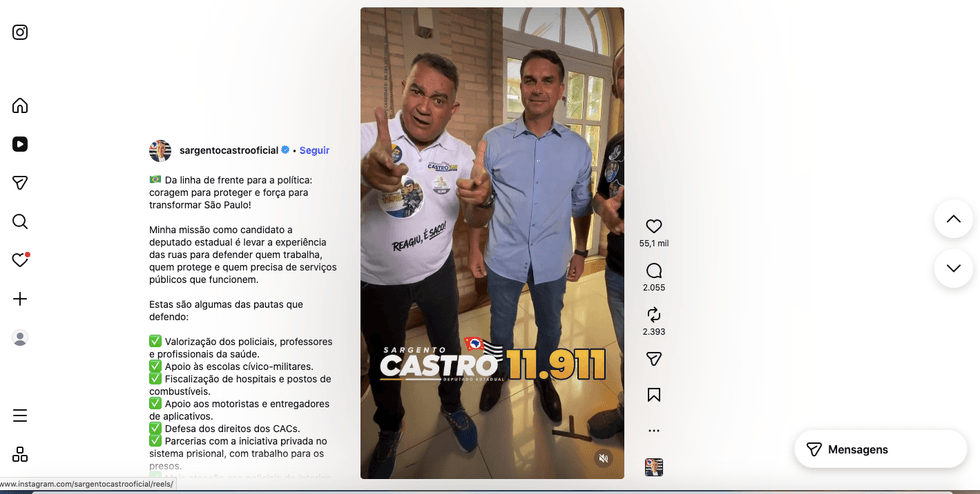
One of the posts that Instagram's algorithm served up to the new account features military police officer Sargento Castro standing alongside a smiling Bolsonaro.
"If you try to fight back," the caption of the post reads, "you’re going straight into a body bag."
Vanessa Lemos, a senior campaigner at Ekō, said the research shows Meta is "interfering in Brazil’s elections in plain sight—boosting Bolsonaro and suppressing Lula content."
"Meta must prove it is complying with the electoral court’s equal-treatment order, verify who pays for political ads, and make its moderation decisions appealable," said Lemos. "Unaccountable Big Tech cannot be allowed to derail democracy."
On Tuesday, Meta told Brazil's Superior Electoral Court that it "has adopted measures to ensure equal treatment," of Lula and Bolsonaro ahead of the October 25 runoff, Reuters reported. Lula has requested Bolsonaro's disqualification from the presidential race over Meta's alleged election interference. Meta employees have acknowledged internally that Lula's accounts have faced restrictions in the lead-up to the election.
Meta's conduct has drawn scrutiny from United Nations experts, who warned on Wednesday that "reports of restrictions on legitimate political expression on Meta platforms during Brazil’s elections raise concerns for freedom of expression, association, political participation and equal treatment of political viewpoints."
"Monitoring reports show thousands of accounts and posts have faced suspensions, reduced visibility, and sharing limits, including journalists, human rights defenders, civil society actors, and content creators,” the UN experts said. “Information, including from Meta employees, suggests that accounts linked to one side of the presidential race were disproportionately curtailed.”
Lawmakers from the US, where Meta is headquartered, wrote a letter to Meta CEO Mark Zuckerberg earlier this week demanding that the company "take immediate action to ensure that, going forward, candidates and their campaigns in democratic elections receive equal treatment and access on your platform."
Most Popular