June, 21 2021, 03:47pm EDT

For Immediate Release
Contact:
Amy van Saun, 585-747-0151, avansaun@centerforfoodsafety.
George Kimbrell, 571-527-8618, gkimbrell@centerforfoodsafety.
USDA to Reinstate Vital Organic Animal Welfare Protections Gutted by Trump Administration
WASHINGTON
In a victory for organic farmers, advocates, and animal welfare, the U.S. Department of Agriculture (USDA) announced last week that it will be reinstating animal welfare standards on farms producing organic meat that were withdrawn during the Trump Administration. Secretary Vilsack announced that the USDA will "reconsider the prior Administration's interpretation that the Organic Foods Production Act does not authorize USDA to regulate the practices that were the subject of the 2017 Organic Livestock and Poultry Practices (OLPP) final rule," including meaningful outdoor access for organic chickens and other animal welfare improvements. The Secretary "directed the National Organic Program to begin a rulemaking to address this statutory interpretation and to include a proposal to disallow the use of porches as outdoor space in organic production," and make other improvements to the original rule.
"After 4 years of hard-fought litigation, the Biden administration is recognizing that the Trump withdrawal decision was inconsistent with organic standards and principles. This is a major victory for all those who care about a meaningful organic label," said Amy van Saun, senior attorney at Center for Food Safety (CFS) and counsel in the litigation. "Finally, USDA will close the loophole allowing factory farms to produce 'organic' eggs and chicken, and level the playing field for real organic farmers already providing high welfare to their animals."
In January 2017, the Obama USDA published the Organic Livestock and Poultry Practice (OLPP) rule to improve animal welfare standards on farms producing organic meat, particularly requiring more space and outdoor access for egg-laying hens and chickens. Despite overwhelming support for the standards by the organic community, the Trump USDA withdrew the rule in 2018. In response, CFS filed a lawsuit challenging the withdrawal of the rule, currently in settlement discussions. Now, the Biden USDA is committing to reinstating the rule designed to strengthen the minimum requirements for the care and well-being of animals on organic farms and reaffirming its authority to set animal welfare standards in the National Organic Program. USDA will publish the rule for notice and comment, allowing for potential improvements to the OLPP.
"Consumer trust in the USDA Certified Organic label is vital and assures the success of the organic seal in the marketplace. Reinstating the organic animal welfare rule is a huge victory in securing the trust of consumers and farmers alike who expect meaningful and consistent standards for animal welfare under the Organic label," said Abby Youngblood, executive director at the National Organic Coalition, a plaintiff in the case.
CFS and allies sued the Trump USDA in March 2018. The Trump administration initially claimed the organizations lacked legal standing to challenge the withdrawal decision. In August 2018, a federal court rejected these arguments. The Court held that the withdrawal of the rule that set organic animal welfare standards injures the organizations' members because it "undermines the organic label" for consumers. In 2019, a federal court again sided with CFS and allies, ruling that USDA could not hide communications and documents that led to the controversial withdrawal. The case is currently stayed for settlement discussions.
"We're thrilled the Biden administration will reissue the organics rule and we urge them to do so as soon as possible to improve the lives of millions of farm animals," said Peter Brandt, managing attorney for Farm Animals at The Humane Society of the United States, a plaintiff in the case. "Like laws in California and many other states, the rule ensured that pigs, chickens, and other farm animals could not be tightly confined, and it closed a loophole that allowed large poultry companies to skirt the law by using skimpy screened-in porches to satisfy outdoor access requirements."
The OLPP rule was the culmination of over a decade of work by organic stakeholders and the National Organic Standards Board. Most notably, it ensured adequate space and outdoor access for organic poultry by establishing clear and enforceable minimum spacing requirements and specifying the quality of outdoor space that must be provided. It also clarified outdoor access for other organic animals, like cows, and prohibited inhumane physical alterations, like de-beaking and tail docking. The Trump administration delayed the final rule's effective date three times, and then formally withdrew it. USDA claimed the animal care regulations could not be issued because the agency lacked the authority to regulate practices such as animal space and preventative health care for livestock under the organic label.
"We are glad the court has cleared the way for the National Organic Program to finally align with the expectations of consumers. Confusing consumers is a hallmark of industrial animal agriculture, and restoring the intended meaning of the organic label is a welcome step toward increasing transparency," said Cristina Stella, managing attorney at the Animal Legal Defense Fund, a plaintiff in the case.
By gutting the rule, the Trump administration made a complete reversal of the legal and policy positions that the USDA has held for 28 years, since the inception of organic, and what organic consumers and farmers believe: that organic standards do include considerations of livestock care and welfare. It also claimed that the regulations would be costly, despite its own economic analysis finding only minor costs.
Represented by CFS legal counsel, the plaintiffs in the lawsuit are Animal Legal Defense Fund, Center for Food Safety, Center for Environmental Health, Cultivate Oregon, International Center for Technology Assessment, the Humane Society of the United States, and the National Organic Coalition, nonprofits with missions that include protecting the integrity of the organic label.
Center for Food Safety's mission is to empower people, support farmers, and protect the earth from the harmful impacts of industrial agriculture. Through groundbreaking legal, scientific, and grassroots action, we protect and promote your right to safe food and the environment. CFS's successful legal cases collectively represent a landmark body of case law on food and agricultural issues.
(202) 547-9359LATEST NEWS
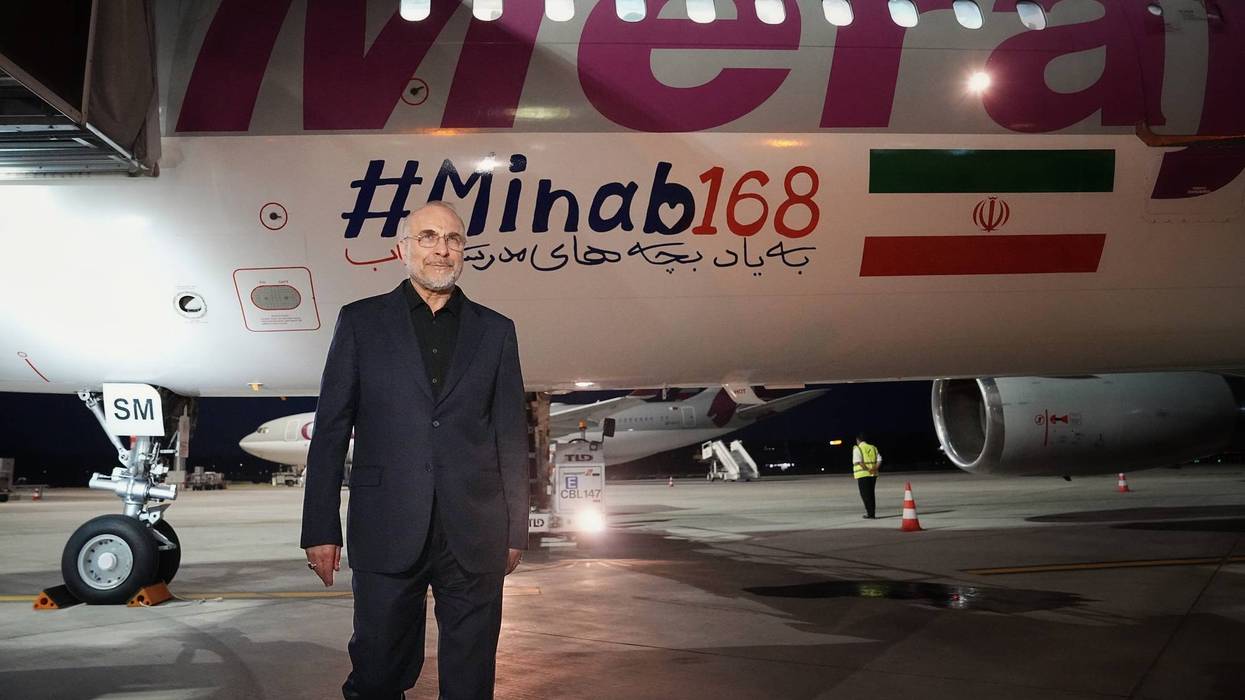
Insulted by Trump's Threats, Iranian Negotiators Walk Out of Peace Talks
"Don’t they think that if their threats had worked, they wouldn’t have ended up in today’s desperate situation?" said Iran's chief negotiator.
Jun 21, 2026
US President Donald Trump’s threats to destroy Iran and send US forces to occupy the country on Sunday appear to have derailed peace negotiations in Switzerland, with the Iranian delegation reportedly walking out and demanding an apology.
Following Iran’s announcement that it was closing the Strait of Hormuz again after Israel intensified its assault on Lebanon, Trump went on a tirade Sunday in which he threatened to assassinate negotiators and said Iran “won’t have a country” if access to the critical waterway was shut off, while also threatening to “take over” Iran with a full US invasion.
But after Trump’s threats—which broke the first clause of the memorandum of understanding—Iran’s negotiators filed a complaint with the Pakistani and Qatari mediators and stormed out of the mountain resort where talks were being held, according to several outlets.
While Trump clearly sought to project strength, Iran’s chief negotiator, Mohammad Bagher Ghalibaf, said his team “do not take American threats seriously.”
In previous months, as Trump sought to squeeze concessions from the Iranians, he issued escalatory threats to wipe out their “whole civilization” and “blow up” the whole country. However, he did not act on those threats, even as Iran refused to budge from its negotiating posture.
"Don’t they think that if their threats had worked, they wouldn’t have ended up in today’s desperate situation?" Ghalibaf said.
Ghalibaf said the US had “better be more careful with their statements,” adding that “our armed forces are ready to respond in a different way." He said, “No matter what they say, we are the ones who act.
While the Iranian delegation left the venue, talks are reportedly continuing via mediators. However, according to the Lebanese outlet Al Mayadeen, the delegation said it will not return until Trump apologizes for his threats and Israel fully withdraws from Lebanon.
According to senior Israeli officials cited by Channel 12, Israel is reportedly considering “limited withdrawals” from Lebanon, including in areas within its so-called “buffer zone.” Despite Iranian claims, the officials said the US has not requested Israel’s withdrawal from the country.
Previous peace talks have been derailed by Trump’s threats to commit indiscriminate war crimes in Iran. But this past week has seen perhaps the most violent swing yet in his approach toward Iran.
Where earlier this week, Trump acknowledged Iran's right to enrich uranium and maintain a nuclear energy program like that of other nations, his outburst Sunday appeared to have been prompted by a statement by Iranian President Masoud Pezeshkian, who said the US would be "forced to accept" its right to enrichment.
And while Trump has raged against Israel’s actions in Lebanon while privately claiming that Prime Minister Benjamin Netanyahu is trying to sabotage peace, he has not taken concrete action to force Israel to comply with the memorandum’s terms.
"The mixed messages coming out of the White House," remarked Jeet Heer, a writer at The Nation, "are going to make it much harder to end the war, and could in fact spark further conflict."
Keep ReadingShow Less
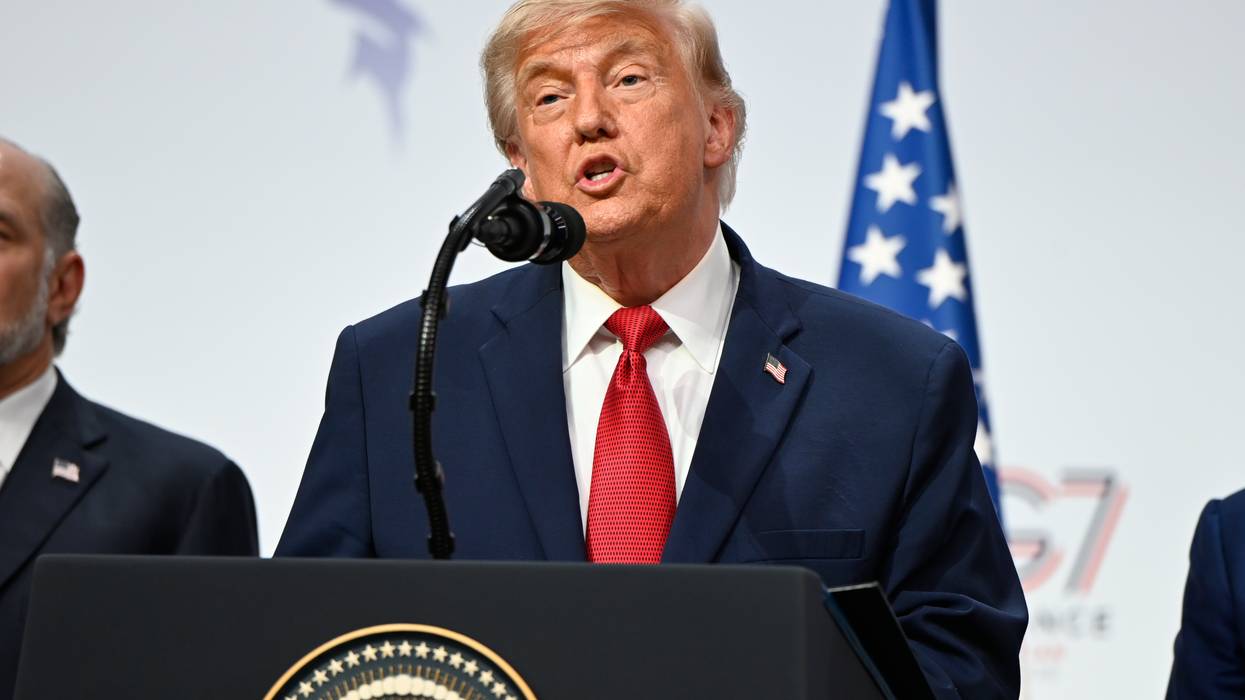
'You Won't Have a Country': Trump Threatens Full Ground Invasion and Destruction of Iran Amid Hormuz Closure
One expert said Israel's continued assault on Lebanon, which led Iran to announce its closure of the strait, posed an "existential threat" to the ceasefire.
Jun 21, 2026
Rather than force Israel to halt its occupation in Lebanon in accordance with the memorandum of understanding, President Donald Trump on Sunday responded to Iran's announcement that it was closing the Strait of Hormuz with a new litany of psychotic threats—claiming that if the waterway were closed, he would blow up the country, launch a full ground invasion to take it over, and assassinate Iranian negotiators.
According to Fox News correspondent Trey Yingst, Trump told the Iranian negotiators overnight that if they close the strait, which Iran claimed to have shuttered once again on Saturday, “you won’t have a country,” adding that they “won’t even make it back to their f***ing country,” in what appeared to be a threat to assassinate the negotiators, as happened during the initial phase of the war.
Responding to statements by Iranian President Masoud Pezeshkian, who said Iran would not give up its “right to enrich uranium” and that the US “will be forced to accept it,” Trump reportedly said Pezeshkian had better “watch his mouth” and “shape up,” or the US “will take over the rest of the country.”
It’s yet another sharp reversal from Trump, who—after months of claiming Iran must agree to “zero enrichment”—suddenly acknowledged this week that it was “common sense” for the nation to be allowed to have a nuclear energy program as other countries do.
Trump’s renewed threats against Iran, which mirror his genocidal threats earlier in the war to wipe out Iran’s “whole civilization” and “blow up” the entire country, also appear to violate the first clause of the memorandum of understanding, which calls on signatories to “refrain from the threat or use of force against each other.”
The threat to fully occupy Iran, which Trump made publicly for the first time on Sunday, stands in sharp contrast to his comments that continuing the war for much longer would cause “economic catastrophe” and that even limited ground operations, such as one he had proposed to seize Iran’s uranium, would be too big an effort to be worth it.
The war with Iran is already deeply unpopular among the American public, even without US boots on the ground. Polls have shown that even a majority of Republicans would be opposed to Trump escalating the war by deploying ground troops, and military officials have shelved planned operations to occupy certain strategic locations, including Kharg Island, fearing a large number of American casualties.
Nevertheless, Trump also told Yingst that the US could become the “guardian angel” of the Strait of Hormuz, collecting tolls and taking oil from countries using the waterway for exports. He did not make clear how the US would gain control of the strait under such a scenario.
Iran announced that it would close the strait again on Saturday after Israel deepened its occupation and escalated its bombing of southern Lebanon, despite the MOU’s ceasefire agreement covering all fronts.
Iranian negotiators have described an end to Israel’s Lebanon occupation, which has killed more than 4,000 people and forced more than 1.2 million Lebanese civilians from their homes in the south, as a red line for negotiating peace.
Behind the scenes, Trump has acknowledged that Israeli Prime Minister Benjamin Netanyahu is using Lebanon to sabotage the ceasefire and drag the US back into a full-scale war.
In the phone call with Yingst, Trump once again said he was “disappointed Israel can’t put Hezbollah away,” adding that Israel “can’t do anything without knocking buildings down.” He also said he was close to allowing Syrian President Ahmed al-Sharaa—the former leader of al-Qaeda’s Syrian affiliate—to take over the operation against Hezbollah.
While this is yet another instance of Trump using harsher rhetoric toward Israel—which Vice President JD Vance has also done in recent days—there is no indication yet that he is willing to take the next step of forcing Netanyahu to accept the ceasefire agreement by imposing material consequences, such as suspending military aid.
Even as Israel’s attacks continued unabated and threatened to derail the deal entirely, Vance did not indicate that he thought the US needed to exert more pressure.
“I think Trump and the US have done more to stop the conflict in Lebanon than any government anywhere in the world,” he said at a press conference in Switzerland on Sunday.
Trita Parsi, executive vice president at the Quincy Institute for Responsible Statecraft, described Israel’s continued escalations as “an existential threat” to the peace process between the US and Iran.
He told ABC News on Saturday that Iran’s threat to close the strait just before a meeting in Geneva this weekend was meant to be “part of a background of how serious they are” about ensuring that the US understands the stakes if Israel refuses to withdraw.
“Israel would prefer for this war to continue until you have a complete defeat of the Iranians, which, of course, is not in the cards,” Parsi said. “The Israelis sold this war to Trump as a quick, easy fix to the region’s problems that would take no more than four days, and they were dead wrong.”
“Now, Trump is recognizing that US interests necessitate that he pull out of this war and strikes this deal, but the Israelis are trying to sabotage it because they are afraid they’re going to be left out, that the balance in the region is going to shift against their interests,” he added. “They’re willing to essentially jeopardize their relationship with the United States over this.”
Keep ReadingShow Less
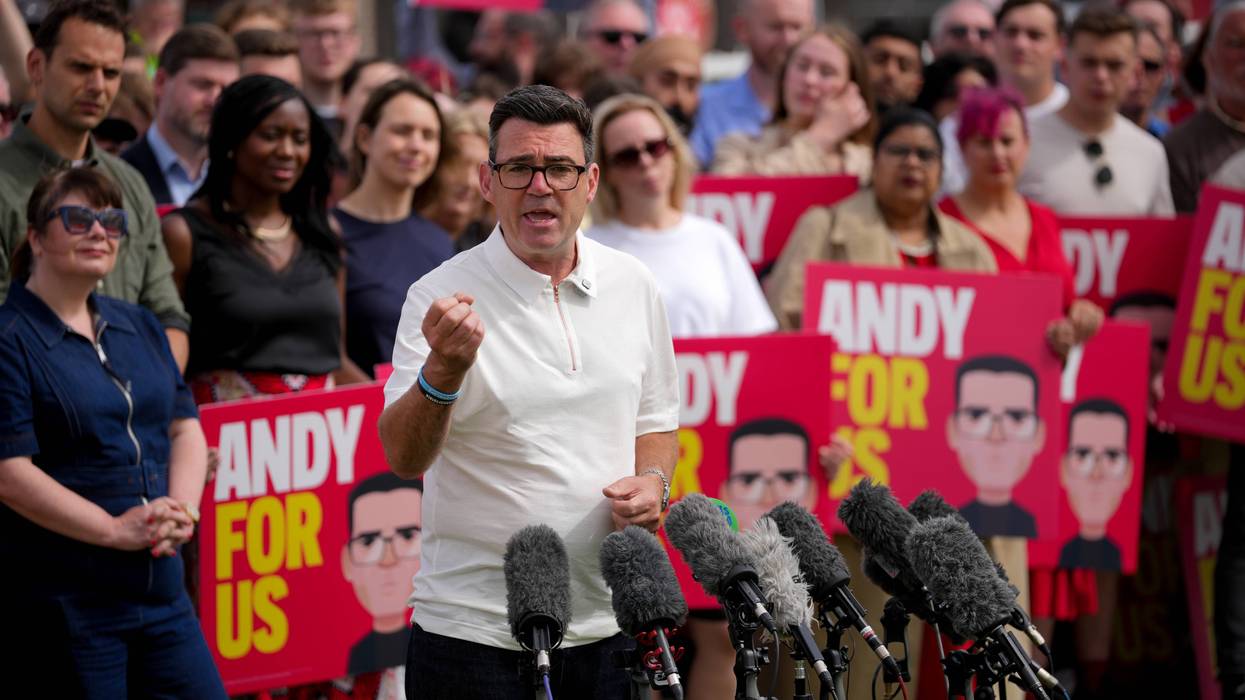
Starmer Expected to Resign as PM, But UK Left Warns of 'More of the Same' From His Replacement
Jeremy Corbyn said Andy Burnham would be "accepting too much of the austerity that we've had imposed upon us" and "doesn't appear to be doing anything different internationally."
Jun 20, 2026
UK Prime Minister Keir Starmer is expected to announce as soon as Monday that he will resign, according to new reports, as Labour supporters abandon the party.
But many on the left remain skeptical that his likely replacement, Andy Burnham, will truly bring the "change" he promises.
Britain's Observer newspaper reported on Saturday that the prime minister appeared "resigned" to stepping down, well aware that "support isn't there" for his continued leadership amid the party's dismal unpopularity.
Though Starmer swept away nearly a decade and a half of Conservative rule in 2024, his honeymoon has been short-lived. His embrace of austerity in the face of a cost-of-living crisis and his government's ferocious crackdowns on pro-Palestinian speech have left progressive supporters seeking alternatives like the ascendant Green Party.
Meanwhile, his hard-right pivot on immigration has done little to siphon votes from Brexiteer Nigel Farage's far-right Reform UK party, which currently leads in national polls.
The immediate trigger for Starmer's reported resignation was Burnham's victory in Thursday's Makerfield by-election, which marked the former mayor of Greater Manchester's return to Westminster. Burnham comfortably defeated a Reform UK candidate, and The Guardian reported that he was expected to have support from about 200 Labour MPs in a leadership challenge against Starmer.
Burnham emphasized during a victory rally that it was "a last chance to change" Labour as it heads for electoral oblivion.
Responding to what he said were requests from constituents to "do something to make life more affordable," Burnham called for an end to "trickle down economics," with government interventions to bring down utility bills and rail fares, public procurement of businesses, pushes for reindustrialization, and job guarantees for people ages 16 to 18.
But some leaders on the British left have warned that Burnham will do little to deviate from Starmer's failures.
While he has pledged to reverse Starmer's welfare cuts and privatizations of public services, Burnham has also committed to maintaining the party's spending limits, which may make significant changes impossible.
Islington North MP Jeremy Corbyn, who led the Labour Party from 2015-20, said that while he personally likes Burnham, "his basic economic strategy and views... seem to me to be accepting too much of the austerity that we've had imposed upon us."
The ex-leader also said Burnham "doesn't appear to be doing anything different internationally," noting that he has not given a straight answer on whether Britain should conduct an inquiry into the UK government's policy on Gaza and its supply of weapons to Israel.
Burnham has also drawn criticism for saying he would maintain Home Secretary Shabana Mahmood, who has spearheaded hard-line changes to UK asylum policies and has enforced the repressive ban on Palestine Action, which has led to the arrest of thousands of nonviolent protesters, many of whom have been charged with terrorism.
"The architect of Labour’s cruel plans on settled status and persecution of free speech and protest stays in place," said Green Party leader Zack Polanski, who said it was a sign of "more of the same."
Remarking on Burnham's team of economic advisers, who include former chief economists for the Bank of England and Goldman Sachs, Polanski said it "isn’t a team of advisers which looks like challenging wealth and power."
Keep ReadingShow Less
Most Popular