

SUBSCRIBE TO OUR FREE NEWSLETTER
Daily news & progressive opinion—funded by the people, not the corporations—delivered straight to your inbox.
5
#000000
#FFFFFF
To donate by check, phone, or other method, see our More Ways to Give page.
Daily news & progressive opinion—funded by the people, not the corporations—delivered straight to your inbox.

George Kimbrell,
gkimbrell@centerforfoodsafety.org
Sylvia Wu,
swu@centerforfoodsafety.org
Today, the U.S. Court of Appeals for the Fifth Circuit held illegal the Department of Commerce's federal regulations that would have permitted, for the very first time, large-scale industrial aquaculture operations offshore in U.S. federal waters. The appellate court affirmed a 2018 federal district court decision throwing those regulations out. The Trump Administration appealed the lower court's ruling, and recently reiterated the Administration's commitment to developing commercial offshore aquaculture in federal waters. The 5th Circuit heard the case in January 2020.
"This is a landmark victory protecting our oceans and fishing communities," said George Kimbrell, CFS legal director and lead counsel in the case. "Allowing net-pen aquaculture and its environmental harms in the Gulf of Mexico is a grave threat, and the Court properly held the government cannot do so without new and proper Congressional authority. Aquaculture harms cannot be shoehorned under existing law never intended for that purpose."
CFS filed the case in 2016 on behalf of a coalition of environmental and fishing organizations, shortly after the Department of Commerce issued regulations permitting industrial aquaculture in the Gulf of Mexico, as the test region for similar permitting schemes in all U.S. ocean waters. In 2018 the Federal District Court for the Eastern District of Louisiana ruled that the Department of Commerce did not have the authority to permit aquaculture, holding that existing fisheries management law were never intended to regulate aquaculture (the farming of fish in net-pens), which presents different types of harms than traditional fishing. Today's appellate decision upholds the lower court's decision that industrial aquaculture, with its potential harm to commercial and recreational fisheries, and environment and imperiled species, will not be permitted in the U.S. federal waters of the Gulf under existing law.
Repeatedly utilizing fishing puns to good use, the majority decision held that the Commerce arguments for establishing aquaculture do "not hold water," ran headlong into a "textual dead zone," and became "hopelessly snarled." Accordingly, the Court "would not bite" on Commerce's "slippery basis for empowering an agency to create an entire industry the statute does not even mention. If anyone is to expand the forty-year old Magnuson-Stevens Act to reach aquaculture for the first time, it must be Congress."
"We applaud today's vital ruling, which protects our ocean resources from the many threats posed by offshore aquaculture," said Cynthia Sarthou, Executive Director at Healthy Gulf, a plaintiff in the case.
If not struck down by the courts, the federal permitting scheme would have allowed up industrial facilities in the Gulf to collectively house 64 million pounds of farmed fish each year in the Gulf. These industrial aquaculture cause many serious environmental and health concerns, including: the escape of farmed fish into the wild; outcompeting wild fish for habitat; food and mates or intermixing with wild fish and altering their genetics and behaviors; the spread of diseases and parasites from farmed fish to wild fish and other marine life; and pollution from excess feed, wastes and any antibiotics or other chemicals used flowing through the open pens into natural waters.
"The appeals court correctly affirmed that there is no authority to develop a new offshore aquaculture industry under existing laws that regulate fishing." said Marianne Cufone, Executive Director of the Recirculating Farms Coalition, local counsel on the case. "Now, hopefully the administration will move forward with supporting our struggling fishing communities and work collaboratively with other agencies and the public on modern, sustainable methods of additional seafood production, like recirculating farming."
In addition to ecological and public health risks, industrial aquaculture can also come with significant socioeconomic costs. Large aquaculture structures often attract wild fish away from their usual habitats, but the buffer zones adopted by the Department of Commerce to protect aquaculture facilities would have prevented fishing near the farm facilities, depriving fishermen and women from accessing the displaced fish. Offshore aquaculture also creates market competition that drives down the price of wild fish, and results in the loss of fishing and fishing-related employment and income. Less money for fishermen and women means less money spent in coastal communities too, hurting other businesses.
"Today's decision makes clear what we have said all along: Congress never intended for the federal government to allow massive factory fish farms in federal waters," said Wenonah Hauter, Executive Director of Food and Water Watch, another of the plaintiff organizations. "The Court recognized that the agency that is supposed to protect the environment could not defy the will of the people by giving away our public resources to another polluting industry."
The plaintiff coalition CFS represents in the case are a broad array of Gulf of Mexico interests, including commercial, economic, recreational, and conservation purposes: the Gulf Fishermen's Association; Charter Fishermen's Association; Destin Charter Boat Association; Alabama Charter Fishing Association; Fish for America, USA, Inc.; Florida Wildlife Federation; Recirculating Farms Coalition; and Food & Water Watch.
Contrary to claims that farmed fish production will alleviate pressure on wild fish stocks, industrial aquaculture has actually exacerbated the population declines of wild fish. This will be especially true in offshore aquaculture facilities that farm carnivorous fish, which require a diet often derived from wild-caught fish such as menhaden, mackerel, herring, and anchovies. The industry's ever-growing demand for fish in feed jeopardizes the survival of wild fish and disrupts the balance of the marine ecosystem.
Center for Food Safety's mission is to empower people, support farmers, and protect the earth from the harmful impacts of industrial agriculture. Through groundbreaking legal, scientific, and grassroots action, we protect and promote your right to safe food and the environment. CFS's successful legal cases collectively represent a landmark body of case law on food and agricultural issues.
(202) 547-9359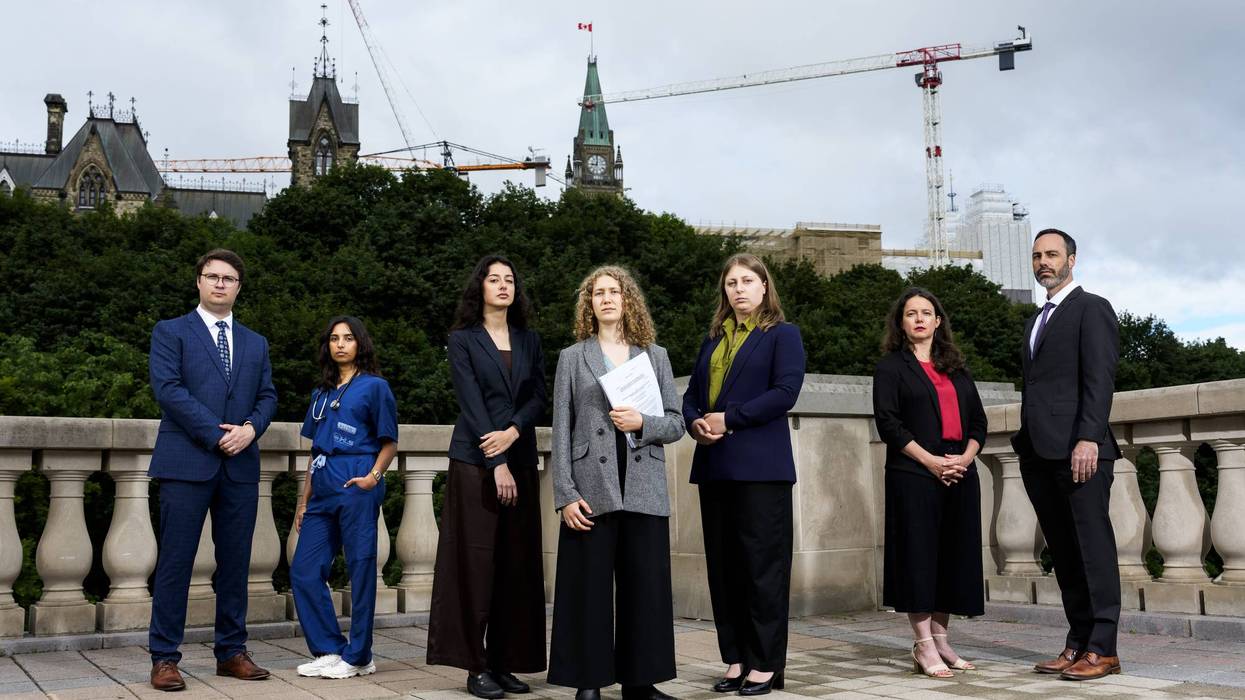
"Everyone in Canada deserves to be safe and healthy," said one organization leader. "Instead, our government is putting people at risk by dismantling key climate policies without a credible plan to reduce emissions."
"You cannot abandon the map and still expect to reach your destination. Yet that's exactly what the federal government has done with its 2030 climate plan."
That's according to Charlie Hatt, climate director at Ecojustice, Canada's largest environmental law charity and one of the groups that partnered with a trio of young citizens this week to challenge Prime Minister Mark Carney's "failure" to bring the country's 2030 emissions reduction plan into compliance with a key federal law.
"Right now, its only climate plan is a plan to fail—and that's not just irresponsible, it's unlawful under the Canadian Net-Zero Emissions Accountability Act," said Hatt. "Neither the climate nor the law can tolerate rollbacks today in exchange for promises of action many years from now."
The act requires the federal government to set science-based climate goals, create a plan to achieve them, and report on its progress. However, Carney has recently pursued various rollbacks and boosted fossil fuel development, putting his nation's 2030 emissions reduction target out of reach—which the groups and young people argued violates the law.
"Everyone in Canada deserves to be safe and healthy," said Dr. Samantha Green, president of the Canadian Association of Physicians for the Environment. "Instead, our government is putting people at risk by dismantling key climate policies without a credible plan to reduce emissions. Climate change is not an abstract future threat: It is a public health emergency that is already harming patients and communities across Canada. That's why CAPE is joining this lawsuit."
The fossil fuel-driven climate emergency isn't just a danger to public health. As Environmental Defence's Julia Levin noted, Canadians "are paying the price through wildfires, heat domes, rising food insecurity, and high costs of living."
"PM Carney is betraying Canadians by taking a wrecking ball to our hard-fought climate progress," Levin declared, accusing the Liberal Party leader of following in the footsteps of Big Oil-backed Republican US President Donald Trump.
"The rest of the world is rapidly adopting clean energy systems that are already more reliable, affordable, and secure than fossil fuels," she said. "Meanwhile, our prime minister is copying President Trump's playbook, ensuring that Canada will be left behind."
Carney's climate policies as prime minister—especially compared with how he talked about the crisis before rising to his current position last year—have frustrated many citizens and left "climate-anxious voters... feeling a major case of buyer's remorse, disoriented by the dissonance between who they thought they were supporting and a climate plan that is now a complete shambles," as Canadian climate writer and activist Seth Klein wrote for The Guardian last month.
Youth applicants in the new legal fight made that frustration clear on Tuesday. Montréal, Quebec-based climate organizer Shirley Barnea said that "the Carney government's gutting of climate policy is a massive insult. After presenting himself as a climate leader, our prime minister is now abdicating responsibility—to Canadians, to future generations, to the law. As long as governments continue ignoring climate science and rolling back protections for our futures, young people will continue taking them to court."
Marie Maltais, who is from Sainte-Catherine-de-la-Jacques-Cartier, Québec, and has advocated for the climate since her early teens, said that "my generation has grown up surrounded by climate disasters and broken political promises to address them. We're told to trust the government's climate commitments—but commitments mean nothing without a real plan behind them."
Sudbury, Ontario-based Sophia Mathur, an early participant in Greta Thunberg's Fridays for Future movement who recently met with Carney and urged him to keep his climate promises, added that "young people are being handed the consequences of decisions we didn't make. We are going to live with the impacts of unchecked climate change for the rest of our lives—so we're standing up for our futures, now."
The young citizens and advocacy groups are seeking a court order that would compel Carney to comply with the Canadian Net-Zero Emissions Accountability Act, stressing that "climate change is an existential threat to all Canadians."
Trump now faces a choice: Ending the war or giving Israel what it wants.
President Donald Trump is facing a choice: Ending the war with Iran, which is tanking his popularity and the economy, or continuing his deference to Israel.
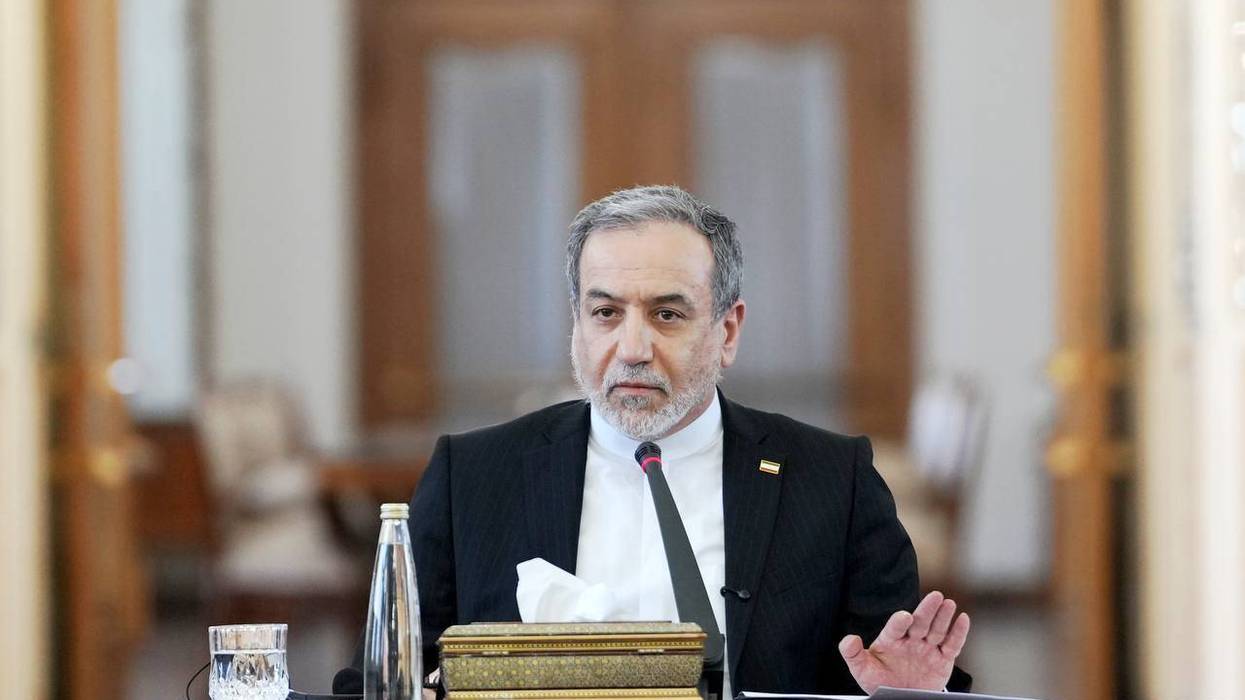
Iranian Foreign Minister Abbas Araghchi made it clear on Tuesday that he cannot have both.
Following assertions from Israeli leaders that it would not end its occupation of Lebanon, Araghchi reiterated that the memorandum of understanding signed virtually by the US and Iran required in no uncertain terms that "war will be ending everywhere, on all fronts, including Lebanon."
"Due to the relations between war in Lebanon and the aggression of Israel on south Lebanon and the war on Iran, these two fronts—Iran and Lebanon—are quite connected to each other," he said.
“End of the war will be the end of the occupation,” he continued. “And without retreating and withdrawing from the Lebanese occupied territories, then there will not be an end to the war.”
"So any military attack from the Zionist entity against Lebanon will never be accepted," he said. "The continuation of the Israeli occupation of the Lebanese territories is a violation of the memorandum of understanding."
It was a shot across the bow from Tehran following Israeli Prime Minister Benjamin Netanyahu’s assertion the day before that Israeli forces would remain in Lebanon "for as long as necessary” regardless of any US-Iran agreement.
“We established deep security zones around the state of Israel," he said, referring to the roughly 230 square mile occupation area where Israel has forcibly expelled more than 1 million Lebanese civilians and systematically demolished dozens of villages. "I want to make it clear: We will remain in these security zones… to protect our country.”
Other ministers were even blunter. Security Minister Itamar Ben-Gvir said flatly that “Trump’s agreement does not bind us. Israel is not subordinate to the United States. We are an independent and sovereign country.”
Defense Minister Israel Katz said the occupation would go on “without any time limit" while villages would continue to be “cleared of local residents.” He said there would be no withdrawal "despite all the existing pressures" from the US, adding that, "we are committed only to our citizens and to the security of the state of Israel."
Trump has regularly deferred to Israel's preferences and sided with Netanyahu as he's derailed previous ceasefire talks. But during a news conference at the Group of Seven summit in France on Tuesday, Trump took a noticeably different tone with his obstinate ally.
Trump: "Without me, there would be no Israel ... I've had a great relationship with Bibi, but now Bibi has to be more responsible with respect to Lebanon ... I'm not happy with the way Israel has handled themselves with Lebanon and Hezbollah." pic.twitter.com/xvLlEhYqWj
— Aaron Rupar (@atrupar) June 16, 2026
Trump criticizes Netanyahu and Israel: "Israel has been fighting Hezbollah too long and too many people are being killed. You don't need to knock down an apartment every time you're looking for somebody. I suggested to Israel to let Syria take care of Hezbollah, because too be… pic.twitter.com/NAmqoNkhpj
— Aaron Rupar (@atrupar) June 16, 2026
The president said he "didn't like" the attack Netanyahu launched against the southern suburbs of Beirut on Sunday, where Israeli forces bombed a five-story apartment building, killing three people. "I saw that attack. I saw where that bomb went," he said, describing the attack as "vicious" and "too much."
"You don't need to knock down an apartment every time you're looking for somebody," he said, making perhaps his most forceful criticism ever of Israel's rampant attacks on civilian infrastructure. He continued that "if Israel can't do the job without killing everyone else, Syria should do the job" of fighting Hezbollah.
"Without the United States, there would be no Israel," he went on. "Without me, there would be no Israel, because no other president was willing to do what I did."
Referring to Netanyahu, he said, "I've had a great relationship with Bibi, but now Bibi has to be more responsible with respect to Lebanon," adding that the ongoing invasion "throws a negative light on the big deal, and that's the deal with Iran."
Commentators noted this is hardly the first time a US president has vented their anger with Netanyahu, only for nothing to materially change.
Noting Trump's previous description of Netanyahu as a "very difficult guy" after he attempted to blow up ceasefire talks on Sunday, Kenneth Roth, the former executive director of Human Rights Watch, said, "The question is: why does Trump facilitate this obstruction by continuing to provide Israel with arms and military aid?"
Zeteo News editor Mehdi Hasan said: “Such is the madly erratic nature of Trump, that he can go from sounding like the most hawkish, pro-Israel president one day, to the most dovish, anti-Israel president the next day. Which is why listening to Trump is pointless; what matters is paying attention to what he does.”
Trump's comments served as an admission, said one observer, that "the uranium was a false justification for war."
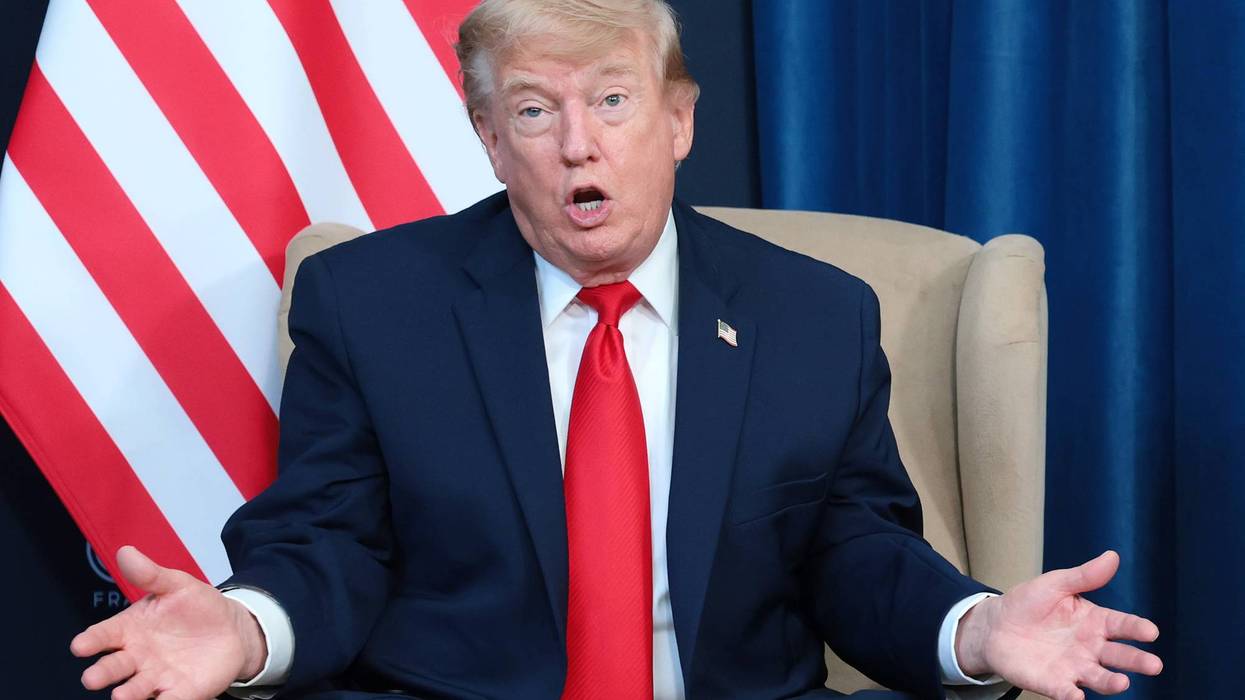
President Donald Trump and his top advisers have spent months insisting that extracting and confiscating highly enriched uranium from Iran was the top objective of the unprovoked war he and Israeli Prime Minister Benjamin Netanyahu began in February—but on Tuesday at the Group of Seven summit in France, he shrugged off the need to rapidly obtain the nuclear reactor component.
There is "no rush" to retrieve uranium from nuclear sites the US bombed in June 2025, Trump said, adding that taking the highly enriched uranium is something the US wants "psychologically," but not enough to prioritize extracting it right away.
One could make the argument, he said, that it wasn't worth the effort to take the material at all.
"Frankly, to go get it—we're going to go get it—but to go get it is a big deal, because they say only China and us have the equipment," said the president. "You could make the case, 'Why do you even bother?' because it's not very valuable, you know. It's probably half a million dollars worth, it's not very valuable stuff."
Trump is backing away from getting Iran's enriched material: "You could make the case, why even bother? It's not very valuable stuff." pic.twitter.com/CgNgnZCaMQ
— Aaron Rupar (@atrupar) June 16, 2026
Trump's comments came a day after he and the Iranian government announced they had reached a memorandum of understanding (MOU) to end the war. The president told The New York Times that the agreement includes a requirement that Iran will be limited to enriching uranium only to levels that "could never be used by the military."
White House officials, though, told The Washington Post that details of Iran's nuclear program will be subject to negotiations over the next two months. The question of whether talks on the nuclear program could be held separately, after a deal to end the war was reached, had been a major sticking point for the US leading up to the MOU.
Trump brushed off suggestions that the deal to end the war, in which Iran demonstrated its economic might by effectively closing the Strait of Hormuz and sending energy prices skyrocketing—obtained no guarantees on Iran's nuclear program that hadn't already been secured in 2015 in the Joint Comprehensive Plan of Action, which was brokered by the Obama administration and which limited Iran's nuclear program in exchange for sanctions relief. Trump exited the JCPOA during his first term.
Iran will only be able to enrich uranium “for nonmilitary purposes. Forever," said Trump on Monday.
On Fox News on Monday, former National Security Council chief of staff Alex Gray insisted the president had secured a deal that, for the first time, would stop Iran from developing a nuclear weapon. Before the US and Israel began attacking Iran in February, the Middle Eastern country maintained that its nuclear power program was not for military purposes.
While Trump's supporters insisted the war and the MOU had made clear Trump had drawn a hard line on Iran's nuclear capacity, his comments on Tuesday were taken by foreign policy analyst Logan McMillen as an admission that "the uranium was a false justification for war."
"The real purpose was to punish Iran for the crime of being an independent economic power that refused to participate in America’s petro economy," said McMillen.
At CNN, Aaron Blake noted that Trump has spent weeks sending inconsistent messages about his demand that Iran end its nuclear program.
Late last month, the president said on social media that Iran's uranium "will be unearthed by the United States... in close coordination and conjunction with the Islamic Republic of Iran, plus the International Atomic Energy Agency, and DESTROYED.”
But in April, Trump told Reuters that US strikes last year had left Iran's uranium "so far underground, I don’t care about that."
Two weeks later, he again said that the US had "to take that nuclear dust," before telling Fox News last month that destroying the uranium was not "necessary except from a public relations standpoint."