

SUBSCRIBE TO OUR FREE NEWSLETTER
Daily news & progressive opinion—funded by the people, not the corporations—delivered straight to your inbox.
5
#000000
#FFFFFF
To donate by check, phone, or other method, see our More Ways to Give page.
Daily news & progressive opinion—funded by the people, not the corporations—delivered straight to your inbox.
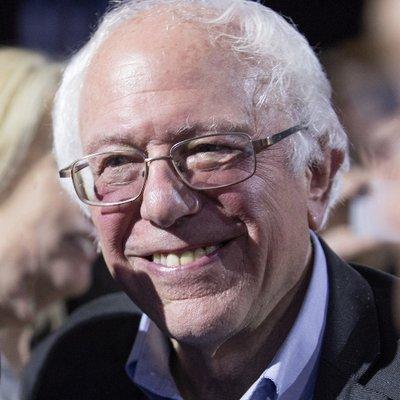
Sen. Bernie Sanders (I-Vt.) and Rep. Nydia M. Velazquez (D-N.Y.) introduced the Equitable Nutrition Assistance for the Territories Act of 2020 today to ensure that in the face of the economic, public-health, and food-security crises posed by the coronavirus pandemic, the people of Puerto Rico, the Northern Mariana Islands, and American Samoa receive equal access to the Supplemental Nutrition Assistance Program (SNAP).
Sen. Bernie Sanders (I-Vt.) and Rep. Nydia M. Velazquez (D-N.Y.) introduced the Equitable Nutrition Assistance for the Territories Act of 2020 today to ensure that in the face of the economic, public-health, and food-security crises posed by the coronavirus pandemic, the people of Puerto Rico, the Northern Mariana Islands, and American Samoa receive equal access to the Supplemental Nutrition Assistance Program (SNAP).
The federal SNAP program is designed to respond to meet the needs of food-insecure Americans during times of high poverty, unemployment, and economic downturns, automatically expanding coverage. Under SNAP, everyone who is eligible receives benefits. The block grant that exists for these three territories' nutrition assistance means that no matter how many people face food insecurity, the amount of funding remains flat.
Puerto Rico is in especially dire need of increased food assistance funding due to a decades-long economic crisis, hundreds of recent earthquakes, and the ongoing coronavirus pandemic, which has devastated certain parts of the island. Prior to the outbreak, one-third of adults experienced food insecurity. Since then, the island has seen an increase of over 10,000 new families applying for nutrition support.
In the early 1980s, Congress removed Puerto Rico from what was then the Food Stamp Program and replaced it with a block grant. A family of four in Puerto Rico receives a maximum basic benefit of $410 per month compared to $649 for a family of four living in the continental United States. The Equitable Nutrition Assistance for the Territories Act of 2020 transitions Puerto Rico, the Northern Mariana Islands, and American Samoa to SNAP benefits.
"Millions of families are struggling to put food on the table during this devastating pandemic. The people of Puerto Rico, the Northern Mariana Islands and American Samoa deserve the same help from the federal government as any state--period," Sanders said. "This bill would end unequal treatment of the territories, help Puerto Rico recover from the earthquakes, and aid some of the most vulnerable in our society during this time of global crisis. Right now, we are all in this together and we cannot tolerate American citizens going hungry, living on U.S. soil, being denied the support they are entitled to."
"Puerto Ricans are American citizens who fight and die in our wars," said Rep. Velazquez. "It is shameful and unconscionable that, when it comes to food security, they receive disparate treatment through a program that fails to help them when they need it most. No child in our nation should ever go hungry, but especially not after natural disasters or during a historic pandemic. Unfortunately, the current nutrition assistance program fails Puerto Rico when food demand is highest. This legislation would fix this longstanding injustice and I'm proud to join Bernie Sanders in introducing it," Velazquez added.
The bill is cosponsored by Senators Booker (D-N.J.), Markey (D-Mass.), Harris (D-Calif.), Blumenthal (D-Conn.), Gillibrand (D-N.Y.), Menendez (D-N.J.), Warren (D-Mass.) and Klobuchar (D-Minn.). Representatives Ocasio-Cortez (D-N.Y.), Moore (D-Wis.), Grijalva (D-Ariz.), Gonzalez-Colon (D-P.R.), Espaillat (D-N.Y.), Holmes Norton (D-D.C.), Serrano (D-N.Y.), Meng (D-N.Y.), and Lee (D-Calif.) are House cosponsors.
"We are in the midst of a historic public health and economic crisis and the people of Puerto Rico, the Northern Mariana Islands, and American Samoa are, like other Americans, struggling to put food on the table," said Harris. "It is time for Congress to take immediate action to end the discriminatory treatment of Americans living in U.S. territories and help give people the resources they need to afford food during tough times."
Menendez: "The COVID-19 pandemic doesn't discriminate based on the geographical location. All American citizens, no matter where they live, need and deserve support from the federal government," said Sen. Menendez."Providing equal access to the supplemental nutrition assistance program across states and territories is critical in helping families who are struggling during this crisis to put food on the table. I urge my colleagues from both sides of the aisle to join us and pass this bill. These American families have no time to wait."
"The COVID-19 pandemic has made even more apparent the unacceptable disparity in federal nutrition assistance provided to Americans in Puerto Rico and other territories," Blumenthal said. "As families across the United States struggle to make ends meet and put food on the table, our fellow citizens living in territories deserve the same help the federal government provides residents of any state. I am proud to support this legislation to ensure that federal funds are distributed justly and to help all Americans tackle food insecurity during these unprecedented times."
"Long before this pandemic, families in Puerto Rico have suffered from natural disasters, economic crises, and unacceptable responses from the Trump administration. But enough is enough," said Senator Warren. "I'm glad to support this bill to ensure communities in Puerto Rico, the Northern Mariana Islands, and American Samoa have equal access to food assistance programs, like SNAP, that they need and deserve." "This bill should not be controversial or partisan. The richest country in the world should feed its people. These are Americans - and we must stop treating them as second-class citizens," said Ocasio-Cortez.
"Puerto Ricans need and deserve reliable access to nutrition assistance," said Rep. Gonzalez-Colon. "The natural disasters that have recently taken place, including the ongoing COVID-19 pandemic, demonstrate how the block grant formula established for Puerto Rico is inadequate and incommensurate with need. Participation in SNAP will provide truly lasting relief to residents who currently do not have access to nutrition benefits due to limited funding, and will allow equitable distribution of benefits, similar our counterparts in the 50 states, USVI and Guam."
"Millions of American citizens in Puerto Rico and the territories depend on nutritional assistance," said Congressman Jose E. Serrano. "Puerto Ricans, in particular, has suffered due to the coronavirus pandemic, the aftermath of Hurricanes Irma and Maria and numerous earthquakes in 2020 in addition to the ongoing economic crisis. Every American citizen residing in any of the territories deserves equal treatment and this bill does just that. The Equitable Nutrition Assistance for the Territories Act of 2020 grants equal treatment under SNAP to Puerto Rico, American Samoa, and the Northern Mariana Islands. As a longtime champion in Congress of equal treatment for Puerto Rico and the territories, I am proud to support this bill."
"The people of Puerto Rico and other U.S. territories are American citizens and nationals with urgent needs and a legitimate claim to government aid," said Grijalva. "Congress needs to fix this inequity as quickly and comprehensively as possible, and I'm proud to join my colleagues in offering badly needed food assistance before more children go hungry."
"As communities around the global face ongoing challenges due to the coronavirus, our efforts to provide relief and recovery must first address the needs of the most vulnerable among us," said Rep. Adriano Espaillat. "It is long past time that Puerto Rico receives equal federal treatment to support individuals and families in need, and the global COVID-19 pandemic only further exacerbates the many hardships families face. We must extend SNAP benefits to ensure these families do not face further barriers when providing food for their families during these challenging times."
"COVID-19 has forced families across the nation to endure financial hardships including our brothers and sisters in Puerto Rico, the Northern Mariana Islands and American Samoa," said U.S. Rep. Grace Meng. "We must make sure they have the help they need so that families can purchase food during this crisis and in future disasters. Nobody deserves to go hungry. I'm proud to join Senator Sanders and Congresswoman Velazquez in calling for equal access to SNAP, and I commend them for leading this critical effort."
"For decades, Puerto Rico has been excluded from SNAP which has resulted in increasing levels of food insecurity and poverty levels for families and individuals. As Americans, it is unacceptable to continue to fund nutrition aid in Puerto Rico in such an inequitable and unfair manner," said Lillian Rodriguez Lopez, representing the Coalition for Food Security Puerto Rico.
To read a summary of the bill, click here.
To read the text of the bill, click here.
To see a video on the legislation, click here.

Republicans' cuts to Medicaid and their refusal to extend enhanced Affordable Care Act subsidies are key factors in the coverage drop.
Independent healthcare analyst Charles Gaba on Thursday published an updated analysis estimating that up to 12 million Americans have lost their insurance coverage since the start of President Donald Trump's second term.
Gaba based his new estimate on updated data he compiled from recent reports for Medicare, Medicaid, and the Children's Health Insurance Program (CHIP), as well as some state enrollment data for Affordable Care Act (ACA) insurance exchanges.
In total, Gaba found that enrollment in Medicaid and CHIP has dropped by 6.2 million people since the start of Trump's second term, while enrollment in ACA exchanges is down by anywhere from 4.6 million to 6.1 million people, and enrollment in Basic Health Plans (BHP) is down by nearly 275,000 people over the same period.
While there are around 1.8 million more people enrolled in Medicare now than there were at the start of Trump's term, Gaba noted that this isn't nearly enough to make up for the loss of enrollment in other programs.
Adding everything up, Gaba estimated that "between 10.88 million and 12.40 million fewer Americans enrolled in a public healthcare coverage program as of June 2026 than in were as of January 2025."
As in prior analyses, Gaba examined the possibility that some of the people who lost coverage through these programs transitioned to employer-sponsored insurance, but deemed it "extremely unlikely... since unemployment is higher than it was in January 2025."
Over the last two years, Trump and congressional Republicans have taken a number of actions that have made healthcare less affordable and pushed people off coverage.
First, they cut spending on Medicaid by an estimated $900 billion over a 10-year period when they enacted the One Big Beautiful Bill Act in 2025. The Congressional Budget Office projects these cuts will leave more than 10 million fewer people enrolled in the program by 2034.
GOP lawmakers last year also refused to extend enhanced subsidies for insurance plans purchased through the ACA, even as insurers raised premiums on those plans by an average of 26% this year, according to an analysis published by KFF.
In a Thursday article published by Time, scholars Neale Mahoney and Abigail Sanchez of the Stanford Institute for Economic Research warned that the costs of private health insurance are set to spike even further in 2027.
"Employer health plan costs are projected to rise 8 to 10% next year," Mahoney and Sanchez explained, "the largest increase in more than 20 years and double the average increase of the 2010s."
The two researchers said there are three major reasons for the surge in insurance costs: The expiration of the enhanced ACA subsidies, an increase in premiums and out-of-pocket costs for employer-based insurance plans, and the upcoming Medicaid work requirements projected to push millions of people off the program.

A petition signed by nearly 6,500 healthcare workers demands accountability for the Israeli Medical Association, accusing the organization of complicity in human rights violations.
Thousands of healthcare workers from across the globe are calling on the World Medical Association to suspend Israel’s membership in the organization over the government's mass killing and detention of medical professionals in Gaza, destruction of the Palestinian territory's healthcare system, and ongoing genocide.
The demand came as the WMA's General Assembly gathered in The Netherlands for its annual meeting, which runs through Saturday. A petition addressed to WMA leadership and signed by around 6,500 healthcare workers declares that the Israeli Medical Association (IMA) has "failed to uphold core medical ethical standards" and is "complicit in serious violations of medical neutrality and human rights, committed by the Israeli military and government."
The petition points to Israel's systematic attacks on Palestinian healthcare infrastructure and personnel, detention and torture of medical professionals such as Dr. Hussam Abu Safiya, obstruction of medicine and other humanitarian aid in the occupied Palestinian territories, and the ongoing genocide in Gaza.
Supporters of the petition campaign demanded that the WMA suspend the IMA "until it publicly upholds medical ethics and humanitarian law, condemns murder and torture of Palestinian health workers and takes action against violations by its members." They also called on individual national members of the WMA to follow the example of the South African Medical Association, the British Medical Association, and the Turkish Medical Association in cutting institutional ties with the IMA.
"Medical ethics are the foundation of trust in healthcare," the petition states. "The international medical community has acted before, including during apartheid in South Africa. If medical ethics are to mean anything in the future, and we are to have confidence that the WMA can fulfill its role as the international guardian of medical ethics, then it must take concerted action to hold the IMA to account."
The Israeli military has killed around 1,700 healthcare workers and detained hundreds more without charge since it began its massive assault on Gaza in the aftermath of the Hamas-led October 7, 2023 attacks.
Last year, the IMA defeated a similar effort to suspend its WMA membership. Instead, the WMA General Assembly adopted a toothless resolution calling on the Israeli government to "instantly halt all forms of attacks on healthcare personnel, patients, healthcare facilities, and food and medical aid logistics."
“Thirty years of WMA dialogue with the IMA has done nothing but give the IMA a sense of impunity. Why should they change?” Jonathan Fluxman, a British Medical Association member and retired doctor, said in a statement on Friday. “It is time for national medical associations and the WMA to speak out and take action. Break your ties with the IMA and suspend the IMA from the WMA now.”
"Either a white coat is worth protecting everywhere, or it is protected nowhere."
Earlier this week, Doctors Without Borders—known internationally as Médecins Sans Frontières (MSF)—called on the WMA to "join the calls to conduct swift, transparent, and impartial investigations into attacks on healthcare in Gaza and the West Bank, while reiterating its call for the release of all arbitrarily detained healthcare workers."
Dr. Javid Abdelmoneim, MSF's international president, highlighted the case of Abu Safiya, the former head of Gaza's Kamal Adwan hospital who has been detained by Israeli authorities for over 18 months without charge.
"He continues to endure prolonged solitary confinement, severe weight loss, and untreated pre-existing conditions; an international petition for his release has drawn signatories from 41 countries," Abdelmoneim noted. "Alongside him stands Dr Mazen Al-Rantisi, the 71-year-old family physician from Ramallah, known as the ‘doctor of the poor,' arrested in June 2026 in a pre-dawn raid on his home. In addition, our long-time Médecins Sans Frontières colleague, Dr Mohammed Hassan Ali Obeid, a respected 43-year-old Palestinian orthopedic surgeon and father of three children, has been detained under the Unlawful Combatant Law in Israel for more than 600 days without charges."
"Healthcare workers are not targets," wrote Abdelmoneim. "Either a white coat is worth protecting everywhere, or it is protected nowhere. The test is not simply whether we affirm these principles, but whether we uphold them when it matters most."

“I love my Somali friends and neighbors," said one former Democratic official in the state. “If Trump tries to come for them, he needs to come through all of us.”
Fear is running high in Minnesota after President Donald Trump went on yet another racist tirade against the state's Somali community on Thursday—this time verging into what was widely interpreted as a call for vigilante violence.
"The once Great State of Minnesota is being taken over by Somali Immigrants," Trump wrote Thursday afternoon on Truth Social. "There is Violence, Murder, and Mayhem all over the State. The people of Minnesota must fight back."
Trump raged against Democratic Gov. Tim Walz, whom he described as an "incompetent thief who doesn't want to get involved," and seemed to suggest that if ordinary Minnesotans took matters into their own hands, they'd have the blessing of the federal government.
"The Somalians [sic] should not be allowed to get away with what they are doing," Trump said. "They view you as weak and stupid people. Fight back, Minnesota, fight back! If you need, the Federal Government will come to your rescue."
It's hardly the first time Trump has slurred Somali immigrants. He's previously referred to them as "garbage," "very low-IQ people," and "pirates," and said they should all be deported from the country.
But Trump’s comments on Thursday went a step further than that, leaving community members on edge about the possibility that they could instigate violent attacks by his supporters.
“President Trump is placing a target on the backs of Somali Americans," said Jaylani Hussein, the executive director of the Council on American-Islamic Relations in Minnesota, in a statement. "His words are not simply political rhetoric. They are a dangerous invitation to hatred and potentially violence."
"Minnesota has led the nation in attacks on mosques, including fire-bombings," he said. "We know firsthand what happens when hateful rhetoric turns into violence.”
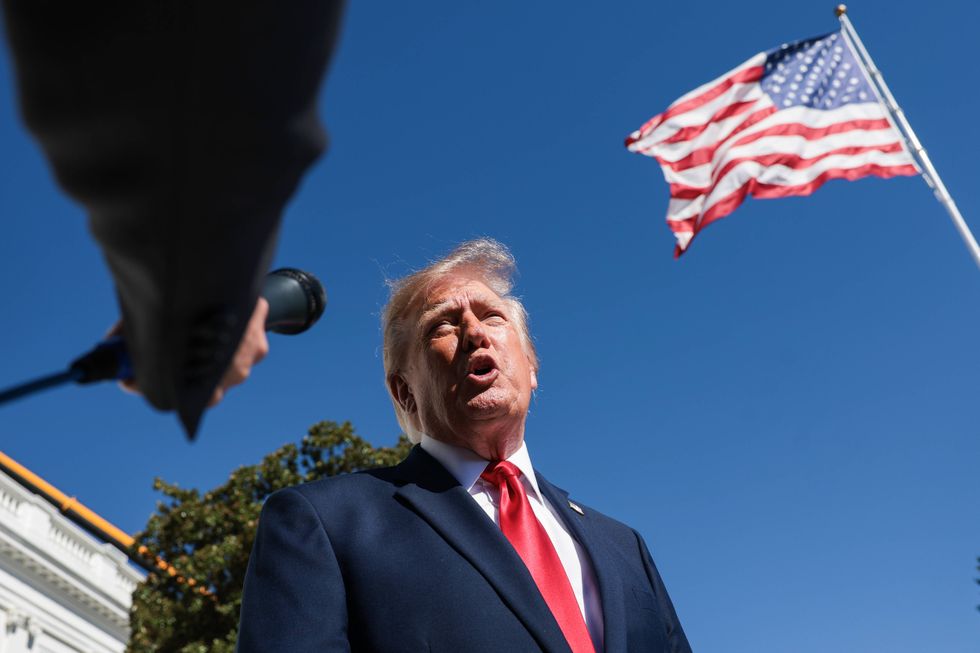 President Donald Trump speaks to reporters before boarding Marine One on the South Lawn of the White House on October 7, 2026 in Washington, DC. (Photo by Anna Moneymaker/Getty Images)
Faisa Ahmed, a Somali American political organizer and senior adviser to the reelection campaign of Minnesota Attorney General Keith Ellison, said unease ran deep in her home city of Minneapolis on Thursday night.
"Every Somali I know is walking through our own neighborhoods scared tonight," she said.
"The president just told Minnesotans to 'fight back' against Somalis by name," she added. "This is incitement, and everyone should call it that."
Though most of them are US citizens, Somalis were aggressively targeted when thousands of immigration agents descended on Minnesota during Trump's Operation Metro Surge earlier this year.
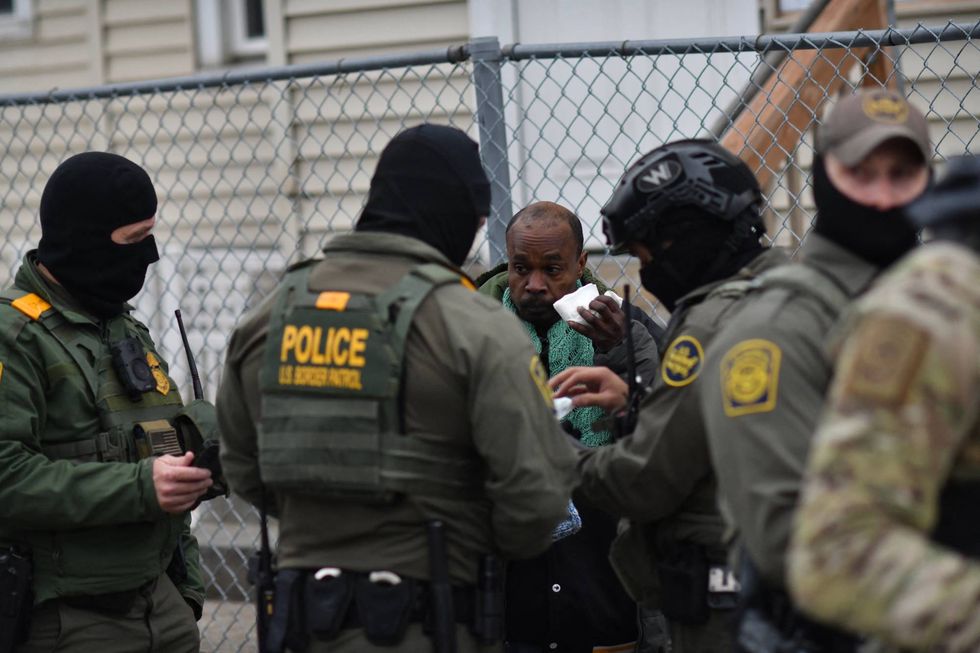 US Border Patrol agents detain an unidentified man of Somali descent in Minneapolis, Minnesota, on January 8, 2026. (Photo by Octavio Jones/AFP via Getty Images)
In numerous cases, Immigration and Customs Enforcement (ICE) and other federal agents were documented engaging in explicit racial profiling directed at Somali citizens—as well as other immigrants—many of whom were detained arbitrarily and attacked with physical violence.
Ellison, who has sued the administration for civil rights violations and pushed for agents to be investigated under state law, said he would not let this happen again.
"We've seen what Trump's government coming to the 'rescue' looks like," he wrote on social media Thursday. "It ended with two Minnesotans shot dead by federal agents, racial profiling, assaults, and the violation of our rights."
"Never again. If Trump tries, I'll drag him back to court," he said. "Somali Minnesotans are our neighbors. They are part of Minnesota. And the Minnesota I know and love is so much better than this bigotry."
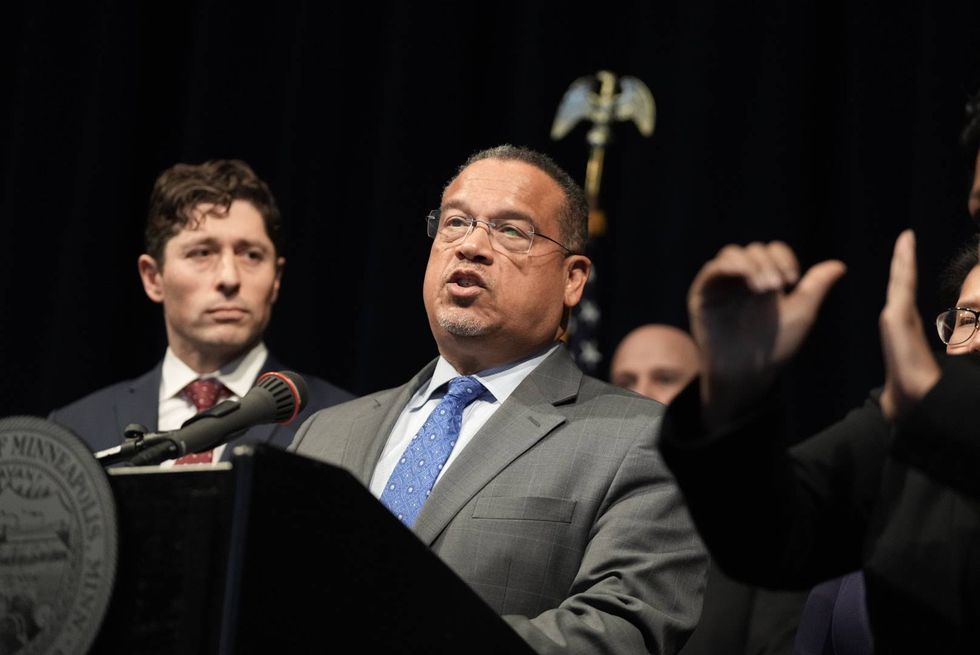 Minnesota Attorney General Keith Ellison, along with Minneapolis Mayor Jacob Frey, announced a lawsuit against the Trump administration's deployment of ICE agents to the Twin Cities during a press conference at Minneapolis City Hall on Monday, January 12, 2026. (Photo by Richard Tsong-Taatarii/The Minnesota Star Tribune via Getty Images)
With less than a month to go before the midterm elections, Minnesota Republicans have sought to harness bigotry against Somalis to rally support.
Democratic candidate Doug Chapin, who is trying to unseat Republican House Majority Whip Tom Emmer in Minnesota's 6th district, put it plainly during an event on Thursday night.
"I'll call it what it is," Chapin said. "The president is trying to foment a race war here in Minnesota."
But as the violent rhetoric has ramped back up, so have expressions of solidarity from community members who have called it out as a cynical political tactic.
"This is KGB-style fear-mongering before an election. Trump’s terrified he’s going to lose the House and Senate and get impeached," said Mike Norton, the former vice chair of the Democratic Farmer-Labor Party in Minneapolis.
"I love my Somali friends and neighbors. They make Minnesota a better place," Norton said. "If Trump tries to come for them, he needs to come through all of us."
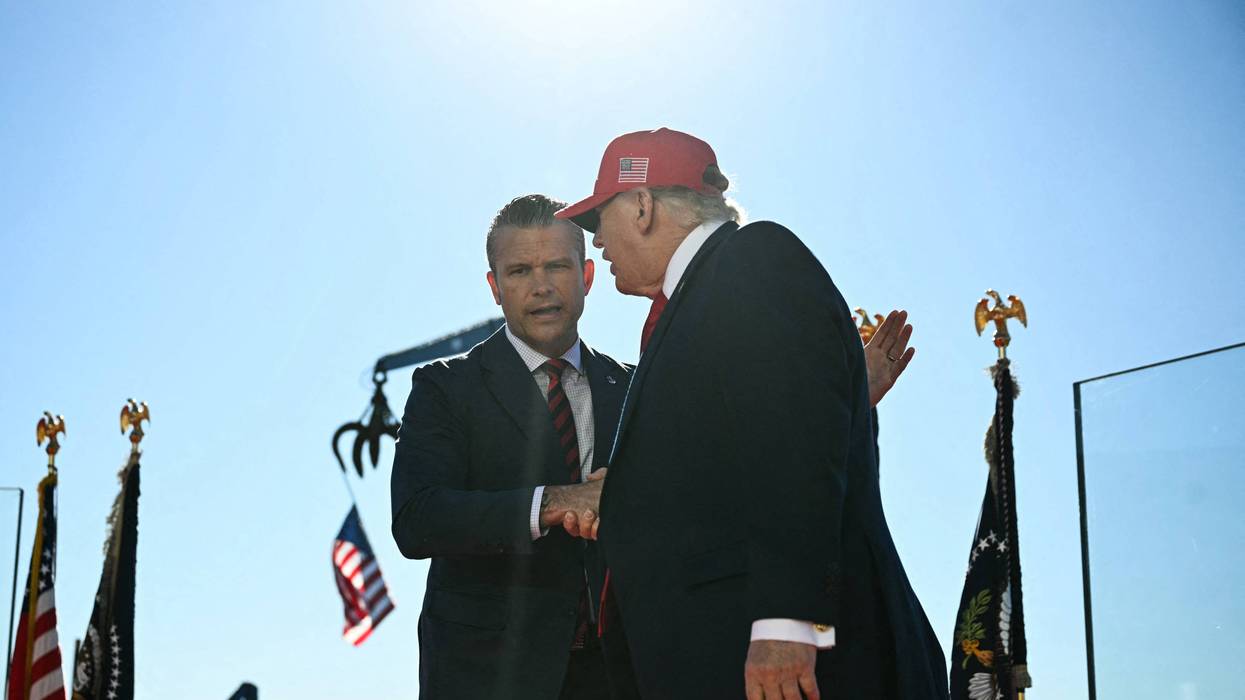
"The world’s supposedly greatest (or formerly greatest) democracy has arrived at a horrific new moral nadir," said one columnist of the plan to livestream the killing by firing squad of Nidal Hasan.
As rights advocates across the US expressed horror at the Trump administration's confirmed plans to publicly broadcast the execution of Nidal Hasan, the former military psychiatrist who was convicted of killing 13 people in a mass shooting at Fort Hood in 2009, the top United Nations human rights expert warned that the public state killing would violate international laws prohibiting torture.
“The livestreaming of an execution is tantamount to a public execution and would breach the absolute prohibition of torture,” the Office of the High Commissioner for Human Rights (OHCHR) told Agence France-Presse Friday.
As Common Dreams reported Thursday, the US Army announced that Hasan would be executed by firing squad at Fort Hood on December 3, with the Trump administration inviting the public to watch the shooting via livestream.
The UN special rapporteur on extrajudicial, summary, or arbitrary executions said in a report to the UN Human Rights Council in June that all capital punishment must be abolished worldwide, as "severe physical pain and psychological distress are an inherent part of the design and implementation" of the practice.
The OHCHR has particularly spoken out against public executions, such as those that have been carried out in Afghanistan and Iran.
Public killings by the state "constitute a form of cruel, inhuman, or degrading treatment or punishment," the office has said.
"This planned livestreamed execution says it all about what is happening in America today, opening the window ever wider on the Trump administration’s moral vacuity and its paucity of human decency."
Should the livestream go forward, Hasan's execution will be the first public state-sanctioned killing in the US in 90 years, according to Michael L. Radelet, professor emeritus at the University of Colorado Boulder, an expert on capital punishment.
Rainey Bethea, a Black man, was hanged in Kentucky in 1936 after reportedly confessing to the killing of a white woman. He was never charged with murder. Thousands of people attended his execution outside a courthouse.
As Edmarverson A. Santos wrote at the independent research platform Diplomacy & Law, the Trump administration's proposed execution livestream "raises substantial concerns under international human rights law."
"The UN Human Rights Committee expressly interprets Article 7 of the [International Covenant on Civil and Political Rights] as prohibiting public executions and considers executions conducted in violation of that provision to constitute arbitrary deprivations of life under Article 6," wrote Santos. "A government-sponsored livestream accessible to the general public could fall within that interpretation, particularly where the condemned person's death is deliberately displayed as part of the state's punitive message."
"Hasan's conviction for intentional murder and the presidential approval of his death sentence do not independently establish the legality of publicly broadcasting his execution," Santos added.
Paul Daley, a columnist for The Guardian Australia, wrote Thursday that the planned livestream—and Defense Secretary Pete Hegseth's statement that the execution will be made viewable to all to show that "there’s serious consequences for these types of things"—amounted to "state-sanctioned killing as entertainment."
"The world’s supposedly greatest (or formerly greatest) democracy has arrived at a horrific new moral nadir," wrote Daley. "This represents a significant lurch in the US from civilization towards savagery... And this planned livestreamed execution says it all about what is happening in America today, opening the window ever wider on the Trump administration’s moral vacuity and its paucity of human decency."

"We are seeing the limitations of the US military’s training program and ability to maintain discipline, and have to say that it is not functioning as an organization."
The Okinawa Prefectural Assembly on Friday adopted a resolution calling for a formal review of its Status of Forces agreement with the US military amid outrage over the alleged murder of local woman by an American Marine.
As reported by Kyodo News, the assembly passed the resolution by an overwhelming margin, with 45 members in favor and just two opposed.
According to Kyodo News, the two opponents of the resolution said that it didn't go far enough and demanded language calling for the dismissal of the head of the US military in Okinawa.
The Status of Forces agreement, established in 1960, has been criticized for being too preferential to US service members, who are seen as being totally outside the reach of Japan's domestic law enforcement.
Kyodo News noted that the Okinawa assembly "passed a similar protest resolution and opinion statement in 2024 when a series of sexual assaults by US servicemen in Okinawa came to light."
Ryotaro Odo, leader of the assembly's special committee on US military bases, said the resolution was necessary because "we are seeing the limitations of the US military’s training program and ability to maintain discipline, and have to say that it is not functioning as an organization."
The resolution will now be delivered to the US embassy in Japan.
Authorities on Sunday arrested 20-year-old US Lance Cpl. Devin Jacob Ballard on suspicion of murdering 39-year-old Anna Yagi, whom Okinawa police say died from asphyxiation caused by pressure to her neck. In addition to facing murder accusations, Ballard also faces charges that he stole Yagi's wallet and backpack.
The US Marine has denied all allegations.
The alleged murder sparked angry protests and led right-wing Japanese Prime Minister Sanae Takaichi, who supports US military presence in Japan, to condemn what she called a "heinous crime" in a speech delivered in Japan's parliament.
“The Japanese government has lodged a strong protest with the US side," said Takaichi, "and has strongly demanded full cooperation with the investigation, as well as strict disciplinary action against US military personnel and thorough measures to prevent a recurrence of such incidents."

"Thank you so much," said the international jurist in a moment of jest. "If you clap a little bit more, I may share this prize with Trump."
The international reputation of the Nobel Peace Prize, which has suffered in progressive and human rights circles over recent years, may be on the path to improvement after Friday's announcement that this year's award has been given to Navi Pillay, a person of "exceptional courage" who has been at the forefront of accountability efforts for apartheid, prosecuting war crimes, and upholding international law for decades.
In its statement, The Norwegian Nobel Committee said Pillay—who during her career served as a judge on the High Court in South Africa, her native country, and later the International Criminal Tribunal for Rwanda and the International Criminal Court (ICC)—"has been instrumental in ensuring that war crimes, crimes against humanity and genocide are prosecuted."
Pillay also served for six years as the United Nations High Commissioner for Human Rights, from 2008 to 2014, and more recently chaired the UN Independent International Commission of Inquiry on the Occupied Palestinian Territory, which generated a 2025 report concluding that the Israeli government had committed genocide in Gaza.
"The last thing I did is the report on Gaza naming what is happening there as genocide. One of the main reactions to that report [was] paying tribute to me for my courage.. why would you need courage to speak the truth?" Navi Pillay upon winning the 2026 Nobel peace prize https://t.co/hYPA94eFLe
— Saul Staniforth (@SaulStaniforth) October 9, 2026
"The last thing I did is the report on Gaza naming what is happening there as genocide," Pillay said Friday. "One of the main reactions to that report is paying tribute to me for my 'courage.' And you can imagine our surprise—why would you need courage to speak the truth?"
"Is it true?" asked Pillay when first notified of the award, fittingly while at the Nuremburg Court where Nazi's were tried for their atrocities of last century.
In a moment of levity, surrounded by colleagues applauding her achievement, Pillay said, "Thank you so much. If you clap a little bit more, I may share this prize with [US President Donald] Trump."
Trump, accused of war crimes himself, has notoriously said he deserves the Nobel Peace Prize despite his record of violating international laws, kidnapping or assassinating foreign heads of state, initiating wars of aggression, and carrying out a lawless campaign of lethal attacks in the Pacific Ocean and Caribbean which human rights experts have denounced as "murder spree."
Volker Türk, the current UN high commissioner for human rights, said the award going to Pillay represents "a proud moment for the global human rights movement," and that to call it "well-deserved" would be "a understatement."
"At a time when human rights are under attack on so many fronts, including from those who wield enormous power, this award is particularly poignant," Türk continued. "It is an award to all those who, around the world, dedicate their lives to the defense of human rights—at great risk to their security."
Agnes Callamard, secretary general of Amnesty International, called Pillay's selection an "amazing moment" for human rights.
"We are at the Nuremberg Court; I cannot think of a stronger symbol for her Nobel prize," said Callamard. "We are all so thrilled!"
Amazing moment. Navi Pillay has received the Nobel Peace Prize ! https://t.co/HL3r1PJzLOWe are at the Nuremberg Court; I cannot think of a stronger symbol for her Nobel prize. We are all so thrilled! This is her first reactions upon hearing the news: https://t.co/Crbj6XdiyQ
— Agnes Callamard (@AgnesCallamard) October 9, 2026
"At a time of existential challenges—including more wars and conflicts than the world has seen in a long time—international law is no longer just a supplement to peace and security. It is an absolute necessity," the Nobel Committee said in its announcement.
Warning that "the system of international law is under tremendous pressure, and its institutions are under attack," the committee said "a shift towards power politics at the expense of legal frameworks and global respect for law and justice" threatens peace and stability worldwide, a veiled but clear reference to the antagonism the US government under Trump has shown to the ICC, the United Nations, and other legal institutions and frameworks.
"Whenever might overtakes right, it undermines stability, trust and peaceful co-existence," the statement said. And continued:
History has shown that a world operating without the rule of law is unjust, unwise and inhumane. The judges – those who guard the thin red line between order and chaos—are therefore highly deserving of our praise. But today, as these same judges are sanctioned, and their institutions are attacked, we need people of courage, vision and determination—qualities that Navi Pillay demonstrates in her work on the bench.
Pillay, it concluded, "is one of the great defenders of international legal principles in our time. Her distinguished career reminds us of the need to support, fortify and expand the global rule of law. Navi Pillay’s commitment to justice and human dignity is a source of hope and inspiration to all who seek to bring about a more peaceful world."
As Türk put it in his remarks, recognition of Pillay's work and legacy by the Nobel committee is "a reaffirmation that human rights, the rule of law and justice and accountability are fundamental to everything—to peace, security and prosperity."

"This is a guy who wants to do service for the corporations," the Democratic US Senate candidate said of his Republican opponent.
Democratic US Senate candidate Abdul El-Sayed said during a televised debate Thursday night that his opponent, Mike Rogers, is "bought off," pointing to the Republican's financial support from the pharmaceutical industry and his opposition to legislative efforts to lower prescription drug prices and provide healthcare to all Americans as a right.
El-Sayed noted that Rogers once described himself as a "champion" of the pharmaceutical industry, which benefited from the Republican's tenure in the US House.
"This is what you can expect from a guy who's bought off: $5 million from corporations to run his previous campaigns," El-Sayed said of Rogers, who opposed the push to let Medicare negotiate drug prices directly with pharmaceutical companies.
El-Sayed said that Rogers "voted to raise your prescription drug prices or to keep them high 19 times" during his seven congressional terms.
"He has the audacity to do an ad looking at the drug prices in Canada," the Democratic candidate continued. "Except for he voted four times to keep you from buying the prescription drugs in Canada."
El-Sayed also touted his support for Medicare for All—which, according to new polling, is backed by two-thirds of US adults—and contrasted that position with Rogers'.
"He voted against the ACA, for God's sake," said El-Sayed, referring to Rogers' opposition to the Affordable Care Act. "I want to guarantee every single person in this country cradle-to-grave coverage, without premiums, co-pays, deductibles. That doesn't have a network. That does not pay a corporate CEO tens of millions of dollars a year."
"This is a guy who wants to do service for the corporations," the Democrat said of Rogers.
Later in the debate, El-Sayed accused Rogers of vying for the "Peeping Tom" vote, citing the Republican's consistent support for mass surveillance.
El-Sayed said he "absolutely" supports putting federal guardrails on Flock cameras and questioned why "we continue to have a situation in which we're watching more and more technology steal more and more data."
"The very Big Tech corporations that are buying his campaigns," El-Sayed added.
Ravi Mangla, national press secretary for the Working Families Party, applauded El-Sayed's performance in Thursday's debate and said that Rogers "has spent his career doing the bidding of Wall Street and Big Pharma CEOs, while watching jobs in Michigan get shipped overseas and prescription drugs grow more and more expensive."
"Tonight’s debate made it crystal clear that Abdul El-Sayed is the only candidate who will fight to put money back in the people's pockets, end the reckless wars abroad, and stand up to the billionaire CEOs who think they should be able to call the shots in Washington," said Mangla.

“Our New York communities have been built by generations of immigrant love, ingenuity, creativity, and resilience," said one organizer. "Trump can’t take that from us."
Outraged community members gathered in New York City's Marble Hill neighborhood Thursday night to demand that federal immigration agents leave the city after a US Immigration and Customs Enforcement officer fired at least seven shots into a vehicle on a bustling street, wounding the driver while a five-year-old boy sat in the back seat.
Mayor Zohran Mamdani expressed anger at the shooting that had left the child "traumatized and terrified," and accused the Trump administration of "terrorizing" the city.
“Tonight, millions of our neighbors are wondering whether they will be safe on our streets, in our schools, at their work sites," said Mamdani, a democratic socialist. "We know that ICE is rotten to its core. Tonight's shooting is only further confirmation of what we have long known, which is that ICE operates with impunity... that they have killed far more of our neighbors than they have ever claimed to save."
Mamdani: What happened today was an outrage. Today's shooting is only further devastating confirmation of what we have long known, which is that ICE operates with impunity, that they sow chaos and terror across our country, that they have killed far more of our neighbors than they could ever have claimed to save. This is an agency that must be abolished.
— Acyn (@Acyn) October 9, 2026
Mamdani said he had spent two hours on the phone with President Donald Trump and Secretary of Homeland Security Markwayne Mullin in an attempt to negotiate the release of the man who was shot, identified as 28-year-old Oscar Belgal, but ICE instead "put the man in an unmarked vehicle and whisked him away" after he was treated at a hospital for his injuries.
The shooting took place around 4:00 pm on West 225th Street, as children were being let out of numerous schools in the neighborhood, Mamdani emphasized.
According to surveillance footage, Belgal was parked in front of a fire hydrant when a plainclothes ICE officer, dressed in a construction vest and wearing a face mask, approached the driver's side window of the car with his gun drawn.
After another plainclothes agent approached the front of Belgal's car, he began pulling away from the curb. One of the ICE officers then opened fire, hitting Belgal in the neck as the boy, whom New York City authorities believe to be the man's son, sat feet away.
An eyewitness, Viely Herrera, told The New York Times that she had heard several gunshots before seeing Belgal's SUV crash into a concrete barrier. Belgal then exited the car, holding his neck and shouting in Spanish.
Herrera added that the boy in the car was crying, and the officers would not allow a woman to remove him from the scene.
With limited exceptions, Department of Homeland Security (DHS) officers are prohibited from shooting into a moving vehicle to stop or apprehend the driver.
Mamdani demanded to know how DHS is "keeping anyone safe" by having "individuals in construction vests, wearing masks, with long guns? Residents have no idea if these are law enforcement agents or if they are simply attacking someone on the street. And when it comes to ICE, it begs the question, what's the difference?"
I am angry tonight.Because today ICE shot a New Yorker. They shot a New Yorker while his five year old child was in the car.ICE makes this city less safe.We want them out. Now. https://t.co/ZizKB0OP7S
— Mayor Zohran Kwame Mamdani (@NYCMayor) October 9, 2026
DHS did not explain why its agent had fired into a moving vehicle against department policy, or mention the child who was inside the car. Officials said in a social media post that Belgal was a "criminal illegal alien" from the Dominican Republic with a prior conviction for grand larceny and a history of arrests for other crimes.
The agency said New York City authorities had previously released Belgal after his arrests.
Darializa Avila Chevalier, who is running to represent New York's 13th Congressional District, where Marble Hill lies, joined Mamdani in demanding that ICE be abolished—a call that is supported by 50% of Americans, according to a YouGov poll taken earlier this year.
Revulsion over the agency's practices has grown as Trump's mass deportation operations have intensified. DHS officers have fatally shot at least six people during enforcement operations, including three US citizens. Two of them were protesting the anti-immigration crackdown in Minneapolis.
In the past three months, two immigrants have been killed during enforcement operations—Lorenzo Salgado Araujo in Houston and Johan Sebastián Durán Guerrero in Biddeford, Maine. Like Belgal, the two men were operating their vehicles when the shootings took place.
Chevalier emphasized that Trump is overseeing his violent nationwide crackdown on immigrant communities "to make us feel powerless."
https://t.co/qdrtxkPNP1
— Darializa for Congress (@DarializaforNY) October 9, 2026
"But I want us to look around and look at how many people came out for this community. That is how powerful this community is," she said. "He messed with the wrong fucking city."
Donna Lieberman, executive director of the New York Civil Liberties Union, said New Yorkers had shown up to rally against ICE "because ICE is a rogue, unaccountable, violent, and racist plague on our communities. Because Trump is the fascist-in-chief. We are here to bear witness and be in solidarity with our immigrant friends and neighbors."
“Our New York communities have been built by generations of immigrant love, ingenuity, creativity, and resilience," she said. "Trump can’t take that from us. ICE cannot scare, brutalize, or shoot that out of New York. And no one—no one—has the right to terrorize our communities and traumatize our kids. We are immigrant New York!"
“We demand a full investigation. We demand humanity. We demand our rights," she added. "We demand ICE get the fuck out of New York.”

"The death penalty on its own is morally indefensible," said one critic. "Turning it into a public spectacle is an abomination."
The Pentagon on Thursday confirmed plans to livestream an execution by firing squad in December—a revelation that came amid fresh calls for the United States to end the death penalty after Tennessee botched two attempts to kill Christa Pike with injections of pentobarbital.
The US Army announced Wednesday that Nidal Hasan—a former military psychiatrist convicted of killing 13 people and injuring 32 more in a 2009 mass shooting at Fort Hood—will be executed at the Texas base at 1:00 pm Central Standard Time on December 3.
Secretary of Defense Pete Hegseth told the right-wing outlet Real America's Voice News that "we'll make sure that people are able to watch it, that it's public, because people need to understand that... there's serious consequences for these types of things."
Then, other outlets, including The Associated Press, reported that "officials in the Pentagon clarified Thursday that the execution would be livestreamed and that more details would follow."
The Washington Post reported that "if Hasan's execution is carried out, it would mark the first US military execution since April 13, 1961, when Army Pvt. John A. Bennett was hanged after being convicted of rape and attempted murder, according to the nonprofit Death Penalty Information Center, which monitors capital punishment. The military's last known firing squad execution was carried out by 'musketry' on November 9, 1945."
Hegseth's comments and the subsequent confirmation from the US Department of Defense were met with disgust and outrage.
"What a sick man," former National Nurses United communications director Charles Idelson said of the Pentagon chief on social media. "A. Executions have never been proven to be a deterrent to capital crimes. B. The spectacle of a public execution is morbid, it recalls the public lynchings so common during the Jim Crow era. C. If the shooter was white, I don't believe this would be public."
Hasan is a US citizen born to Palestinian immigrant parents. Just before he opened fire on soldiers who were set to deploy to Afghanistan, he shouted "Allahu akbar," an Arabic phrase commonly used by Muslims that translates to "God is great!"
While some critics called out Hesgeth, Obama administration speechwriter-turned-podcaster Jon Favreau took aim at Vice President JD Vance, who recently published a book about his faith journey, including his conversion to Catholicism. Favreau said that "I would like to hear our Catholic vice president explain why they're intentionally choosing to broadcast the death of a human being for the entire world to see, including children."
Producer and journalist Simon Thompson wrote on social media: "Just when I think this administration couldn't get any worse. Livestreaming executions by firing squad? This administration, a Christian administration apparently, is making a snuff movie and treating it like a [pay-per-view] event."
Journalist Séamus Malekafzali similarly said, "Content with having desensitized the American public by broadcasting faceless images of Iranian sailors dying and buildings full of people leveled to the soundtrack to Halo, the government is now moving to livestreaming snuff films, faces and all."
"I know people hate when people make comparisons to American adversaries, but this is literally what ISIS did, save for the live aspect," he added. "Those executions were also done on camera under the auspices of nominally government institutions, just a different kind of government."
Although Trump left office the first time after overseeing a federal execution spree, American Immigration Council senior fellow Aaron Reichlin-Melnick said Thursday, "Jesus Christ, I didn't think we'd actually get to the 'public executions' stage of Trump's project to roll back the last 100 years of societal development."
Corbin Trent, co-founder of Justice Democrats, suggested it could backfire for the Republican administration. He wrote: "I'm completely in favor of this. I think more of this would go a long way to ending the death penalty."
"The Trump administration is putting corporate profits ahead of people and the planet, and the Western Arctic will pay the price."
Just over a week after a leading US Senate Democrat described President Donald Trump's relationship with fossil fuel giants as "old-fashioned corruption, by a thuggish government and a desperate industry," his administration on Thursday announced yet another giveaway to climate polluters who want to exploit the Arctic.
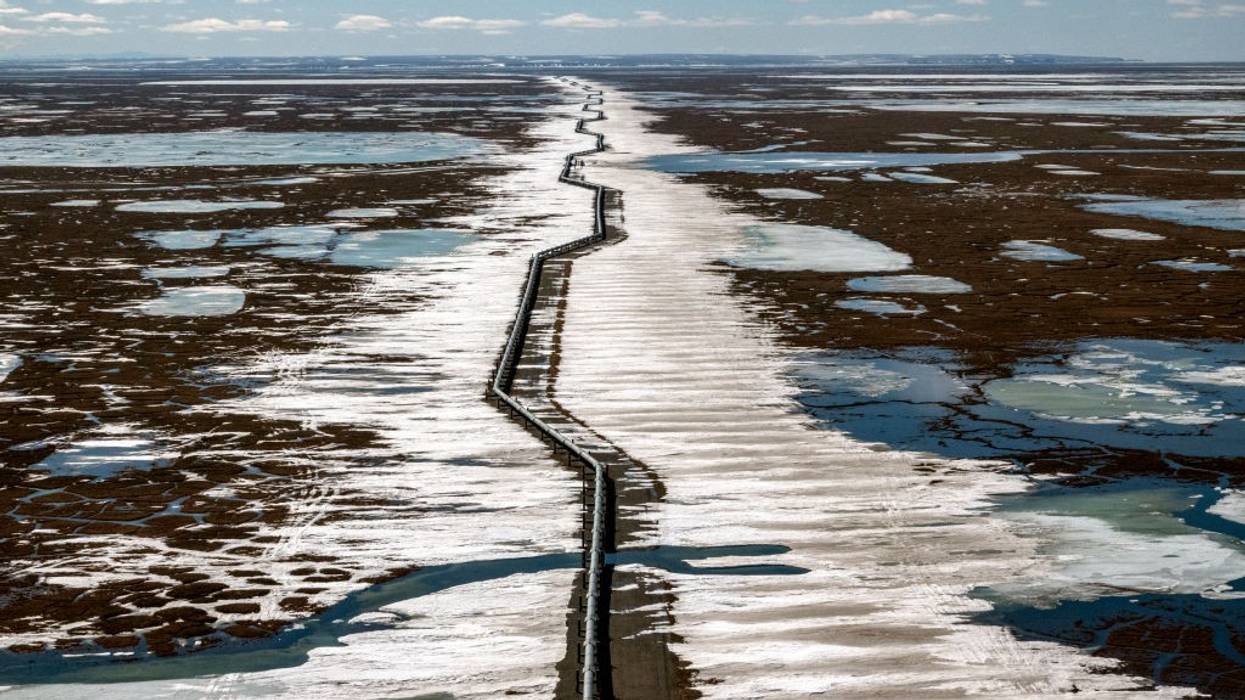
The US Department of the Interior is moving forward with a plan to allow oil and gas companies to conduct certain wintertime activities at the National Petroleum Reserve in Alaska without reviews generally required by the National Environmental Policy Act—a landmark law long targeted by Trump's Republican Party.
"In issuing this categorical exclusion, this administration is seeking to fast-track large-scale oil drilling and seismic exploration without any further environmental analysis or public input," warned Earthjustice attorney Janet Bering. "It is cutting the public out of this decision and future decisions."
"The administration finalized this new approach with zero public input," Bering noted. "Combined with a similar proposal that rubber-stamps new oil production, this is a one-two punch. It's bad policy, and it is unlawful."
The 60-day public comment period is ongoing for the earlier proposal she cited, which is designed to streamline decision-making for construction and operation of oil and gas production sites in the same 23-million-acre Alaska reserve.
When the Interior Department unveiled that policy in early September, Earthjustice Attorney Erik Grafe declared that "what we're seeing here is a concerted attack by the Trump administration to greenlight oil and gas drilling in the Western Arctic while ignoring the harm it will cause to these irreplaceable public lands and also the government's obligation to protect these lands for wildlife and future generations."
"These are large-scale, industrial activities that cause permanent damage to sensitive Arctic ecosystems, nearby communities, and the climate," Grafe stressed. "The administration's proposal flaunts basic environmental laws meant to protect land, wildlife, and people and allow for fully informed decision-making."
Earthjustice is far from alone in blasting Trump's recent attacks on the Arctic. Dan Ritzman, director of Sierra Club's conservation campaign, condemned last month's proposal as "another piece of the administration’s relentless effort to expand drilling across Alaska's public lands."
"The Western Arctic is home to caribou, migratory birds, and countless other wildlife, and decisions about its future deserve careful scrutiny—not a permitting process designed around the demands of the oil and gas industry," Ritzman said at the time.
His colleague Mike Scott, Sierra Club's national oil and gas campaign manager, was similarly critical of Thursday's announcement.
"The Trump administration is handing Big Oil another free pass to exploit America’s public lands, this time by gutting environmental oversight in one of the most fragile ecosystems on the planet," said Scott. "Oil companies have already shown the risks they pose to the Western Arctic, and now this administration wants to make it even easier for them to drill without scrutiny."
"This isn't about lowering energy costs or helping Alaskans," he continued—as the president drives up fuel costs with an illegal war on Iran. "It's about doing the fossil fuel industry's bidding at the expense of wildlife, Alaska Native communities, and our public lands. The Trump administration is putting corporate profits ahead of people and the planet, and the Western Arctic will pay the price."
Trump campaigned for a second term on a pledge to serve fossil fuel interests—even telling industry executives that he'd roll back climate policies if they poured $1 billion into his campaign. Last week, US Senate Minority Leader Chuck Schumer (D-NY) and Committee on Environment and Public Works Ranking Member Sheldon Whitehouse (D-RI) released a report detailing how the president has delivered on that promise since returning to power last year.
"The fossil fuel industry and their allies bought their way into the Trump White House with hundreds of millions of dollars in political donations, after Trump promised fossil fuel bigwigs at a Mar-a-Lago fundraiser that he'd do anything and everything they wanted, for the right price," Whitehouse said. "Now, their minions run the government from the inside, driving up energy bills to deliver payouts to the donors that put Trump back in office."