

SUBSCRIBE TO OUR FREE NEWSLETTER
Daily news & progressive opinion—funded by the people, not the corporations—delivered straight to your inbox.
5
#000000
#FFFFFF
To donate by check, phone, or other method, see our More Ways to Give page.
Daily news & progressive opinion—funded by the people, not the corporations—delivered straight to your inbox.

Resha Swanson, Adelante Alabama Worker Center, (573) 855-1766, resha@adelantealabama.org
Jen Nessel, Center for Constitutional Rights, (212) 614-6449, jnessel@ccrjustice.org
Sirine Shebaya, National Immigration Project, (202) 656-4788, sshebaya@nipnlg.org
Late yesterday, Adelante Alabama Worker Center, the Center for Constitutional Rights, and the National Immigration Project of the National Lawyers Guild (NIP-NLG) filed an emergency petition and temporary restraining order for the release of medically vulnerable people currently held in Immigration and Customs Enforcement (ICE) detention. The filing seeks the release of 18 people being detained in Unit 9 of the Etowah County Detention Center in Gadsden, Alabama, and cites their severe risk of contracting the novel coronavirus COVID-19 and developing life-threatening symptoms. Other medically vulnerable immigrants have filed petitions for release in other states, with courts ordering releases from other ICE detention centers. The filings in each case warn that the near-certainty of coronavirus outbreaks in these facilities renders the continued detention of these individuals a potential death sentence for a civil immigration violation.
"I am scared of dying in here," said Bakhodir Madjitov, who has been detained since 2017. "What will my family do? When ICE suddenly detained me, my wife Madina was 39 weeks pregnant with my littlest child.... I have only ever seen my son once, through the glass at a detention center. I have never been able to hold him in my arms. My wife and three little boys were barely managing without me before COVID-19. Now, everything is much worse. Madina lost her job due to the pandemic, and now she says she has no idea how she will take care of the children."
The complaint and the declarations made by those imprisoned describe not only the impossibility of social distancing inside the Etowah jail--where up to four people are held in cramped six-by-six-foot cells--but also the growing issue of overcrowding, worsened by staff combining people being detained by ICE from two units to a single unit. New people continue to be brought into the jail, including some reportedly exposed to COVID-19. More than 100 people now share a single unit with communal showers, dining, and recreation areas. Toilets are inside the cells with no partition. Detained individuals report receiving inadequate or no cleaning and hygiene supplies, despite being required to clean their own cells. Some have used shampoo to clean cells. Those assigned to clean common areas have not been provided with protective gear.
"Etowah County Detention Center has built a national reputation as ICE's warehouse for prolonged detention, with conditions so abysmal they have compelled people to lose hope and accept deportation," Jessica Vosburgh, Executive and Legal Director at Adelante explained. "In the wake of COVID-19, the individuals caged in Etowah are not only fighting against their deportations, they are fighting for their lives."
According to declarations filed by infectious disease and public health experts from the University of Alabama at Birmingham, Yale, and Tulane, it is impossible for Etowah to comply with CDC guidelines around social distancing, quarantine, and treatment, and the jail's already inadequate medical facilities will inevitably be overwhelmed.
The 18 people filing this petition with the court, many of whom are seeking protection in the U.S. from violence, torture or persecution in their home countries, report extensive pre-existing health conditions that make them especially vulnerable to developing life-threatening COVID-19 infections. Such conditions include asthma so severe the prisoner has coughed up blood, heart disease, kidney disease, cancer, chronic bronchitis and other lung conditions, and diabetes. Many of them take numerous medications to control pre-existing health issues, including some that suppress their immune systems. Even before the pandemic, ongoing health problems were allowed to fester with no or inadequate treatment; since the outbreak, detainees report that medical checkups for chronic conditions have been suspended. Attorneys say coronavirus has exacerbated already dire conditions in ICE facilities.
"While this suit seeks to protect these individuals from lethal harm, it is also part of a broader effort to expose the horrid conditions in ICE detention facilities and the vast, illegitimate detention system and cruel and arbitrary punitive reflex that pervades in this country," said Baher Azmy, Legal Director at the Center for Constitutional Rights.
Local advocacy groups such as Shut Down Etowah are also calling for the release of ICE detainees, responding with several letters to Etowah County Sheriff Jonathan Horton and regional ICE Director Dianne Witte and staging a caravan protest outside the facility last week. Shut Down Etowah Organizer Lisa Moyer says, "This petition isn't just about securing the freedom of the 18 people detained in Unit 9. It's about every person trapped inside of Etowah County Detention Center, desperately hoping that the air they breathe won't put them in a casket." Shut Down Etowah has teamed up with regional bond organization Etowah Freedom Fund to start a COVID-19 emergency fund that will be used to provide commissary and bail money to people in detention.
"ICE's insistence on continuing to detain medically vulnerable people during a global pandemic is cruel and dangerous, and it shines a light on how needless immigration detention is in the first place," said Sirine Shebaya, Executive Director of the National Immigration Project of the National Lawyers Guild. "Through this litigation, we hope to obtain release for our clients, but also to raise public awareness about the inhumane manner in which people in ICE detention are treated, and the bloated system of mass incarceration our immigration authorities are using taxpayer money to fund, in the face of all evidence that it is unnecessary and harmful to our communities."
The complaint filed today argues that the risk of death for a civil immigration violation--due to grossly inadequate sanitation and healthcare, along with the impossibility of following CDC guidelines in such over-crowded conditions--violates constitutional protections ensuring adequate care and preventing deliberate indifference to obvious medical risks. It also argues that those in the detention center are being denied their constitutional right to counsel, as visits are banned and the facilities lack practical means of placing confidential calls to lawyers.
Jeremy Jong in New Orleans is co-counsel in the case.
The case is Williams v. Horton and was filed in federal court in the U.S. District Court for the Northern District of Alabama.
Link to Petition: https://adelantealabama.org/wp-content/uploads/2020/04/Williams-et-al-Etowah-COVID-Complaint_redacted.pdf
Link to TRO: https://adelantealabama.org/wp-content/uploads/2020/04/Williams-et-al-Etowah-COVID-TRO-Memo_redacted.pdf
For more information as well as today's filings, visit the Center for Constitutional Rights' case page.
The Center for Constitutional Rights is dedicated to advancing and protecting the rights guaranteed by the United States Constitution and the Universal Declaration of Human Rights. CCR is committed to the creative use of law as a positive force for social change.
(212) 614-6464
“With everyday costs getting higher and higher, it is clear that we need a system like Medicare for All," said the director of the group behind a new survey.
Nearly half of Michiganders surveyed for a poll published this week said they're struggling to pay for groceries and gas because of the high and rising cost of health insurance, underscoring an affordability crisis that Democratic US Senate candidate Abdul El-Sayed has cited as one of the reasons why the United States needs Medicare for All.
Forty-nine percent of Michigan voters queried by Progress Michigan and Public Policy Polling said the cost of health insurance affects their ability to afford basic necessities at least some of the time. Twenty-four percent said it happens “all the time,” while another 25% said it happens “sometimes.” Among Black Michiganders, the figures were substantially higher, with 34% reporting the problem occurs all the time and 31% saying it happens sometimes.
“Half of Michigan is already struggling with the cost of health insurance,” Progress Michigan executive director Justin Mendoza said Thursday in a statement. “With everyday costs getting higher and higher, it is clear that we need a system like Medicare for All to help Michiganders improve their health and afford their lives.”
El-Sayed, a physician and former Detroit health official, has made universal healthcare one of the three policy pillars of his campaign, alongside getting money "out of politics” and putting it "in your pocket.”
At a Monday "Students vs. Billionaires" town hall at Western Michigan University in Kalamazoo, El-Sayed argued that healthcare should be treated as a basic public investment rather than a commodity.
"You need good healthcare. You need a good education. We need childcare. We need good roads and bridges," he said. "We don’t need to send our money to big corporations to subsidize them, we need to be invested in people so they have the human capital to be able to do all the things as they graduate and come out. That's how the system should work."
El-Sayed has also repeatedly highlighted the plight of families who are insured but still cannot afford care because their deductibles are prohibitively expensive, and others who worry what will happen to their families' healthcare if they lose their jobs—an increasingly likely prospect as artificial intelligence usurps human workers.
“Medicare for All would allow us to actually provide every single person cradle-to-grave insurance,” El-Sayed said in a recent CBS interview, “without having to worry about losing it” after changing jobs, losing employment, getting married, or reaching retirement age.
The health insurance affordability crisis is likely to worsen in 2027. Healthinsurance.org reports that insurers are proposing a median increase of roughly 15% for individual market premiums nationwide, with Michigan insurers seeking an average 14.2% increase. The final rates could change before approval.
“Imagine not having to pay that," El-Sayed told CBS.
A new New York Times/Siena poll of Michigan voters found that 57% of respondents believe El-Sayed would do a better job on healthcare than Republican opponent Mike Rogers. Only 33% said Rogers would do a better job. Among all surveyed women, 67% said El-Sayed would be better for healthcare.
The overwhelming majority of voters ages 18-29 (86%) and Black voters (82%) agreed. Just 4% of Black respondents said Rogers would be better on healthcare. Among young voters, none—0%—said Rogers is the better choice for healthcare.
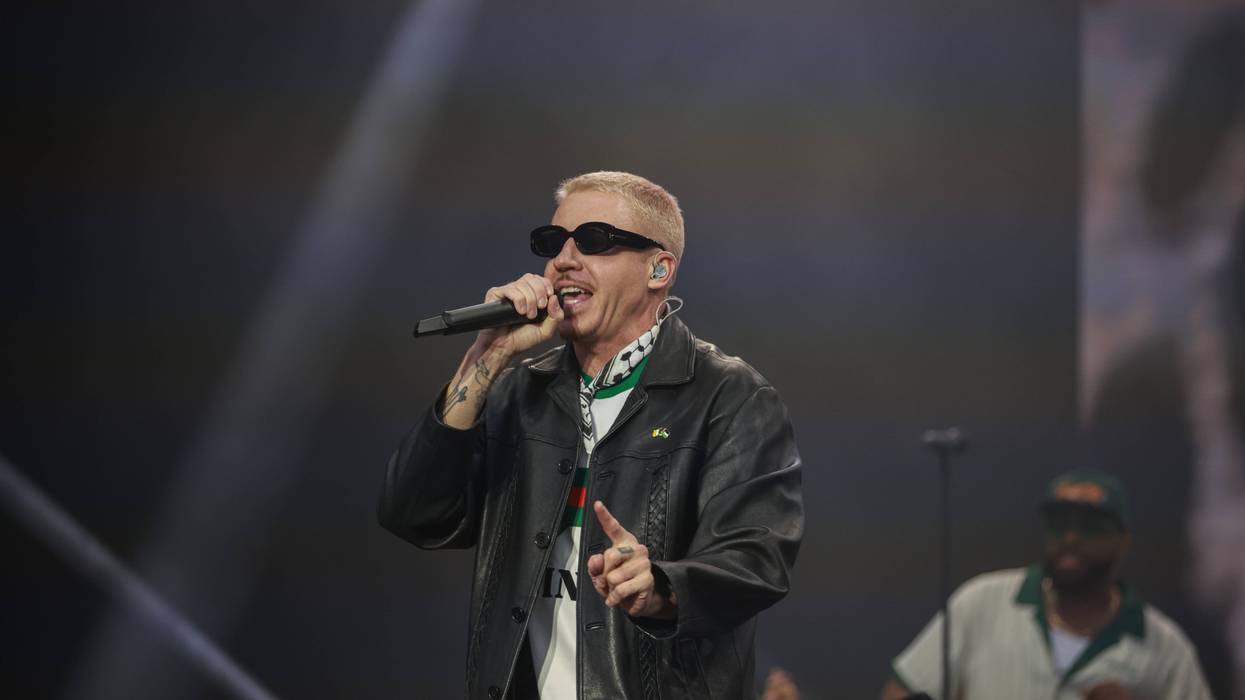
"When the billionaire class can decide which voices are allowed on stage and which ones are too dangerous to hear, everyone should be paying attention."
Rapper Macklemore on Thursday revealed a new phase in his campaign to raise awareness of the plight of Palestinians.
Macklemore, whose pro-Palestinian statements got him removed as a supporting act for fellow musician Ed Sheeran’s stadium tour, announced a series of live shows aimed at raising money for organizations that provide aid to Palestinian civilians suffering under Israeli military occupation and assault.
Several other opening acts for Sheeran subsequently quit the tour in solidarity with Macklemore.
"What happened to me is bigger than one artist or one stage," Macklemore wrote. "When the billionaire class can decide which voices are allowed on stage and which ones are too dangerous to hear, everyone should be paying attention. So we're going on tour. All proceeds will benefit organizations supporting the Palestinian people and movement."
The "Free Palestine Tour" so far has concerts scheduled in London, Dublin, and Paris, and Macklemore said that additional musical guests would be revealed at a later date.
Earlier this month, Macklemore pledged to donate $1 million to six organizations who were aiding Palestinians: HEAL Palestine, Gaza Soup Kitchen, Medical Aid for Palestinians, the United Nations Relief and Works Agency for Palestine Refugees in the Near East (UNRWA), and American Near East Refugee Aid.
Those groups will also be beneficiaries of the upcoming tour, as will organizations such as Jewish Voice for Peace and the Institute for Middle East Understanding.
Rachel Griffin Accurso, the YouTube star and child educator known popularly as Ms. Rachel, last week pledged to match Macklemore's $1 million donation to Palestinian aid groups, and encouraged "every wealthy white celebrity to match it and speak out against the genocide in Gaza."
“Over 20,000 precious Palestinian children have been killed and children continue to be killed every day,” Ms. Rachel said. “We have a moral obligation to use our privilege and platforms to protect children and human rights.”
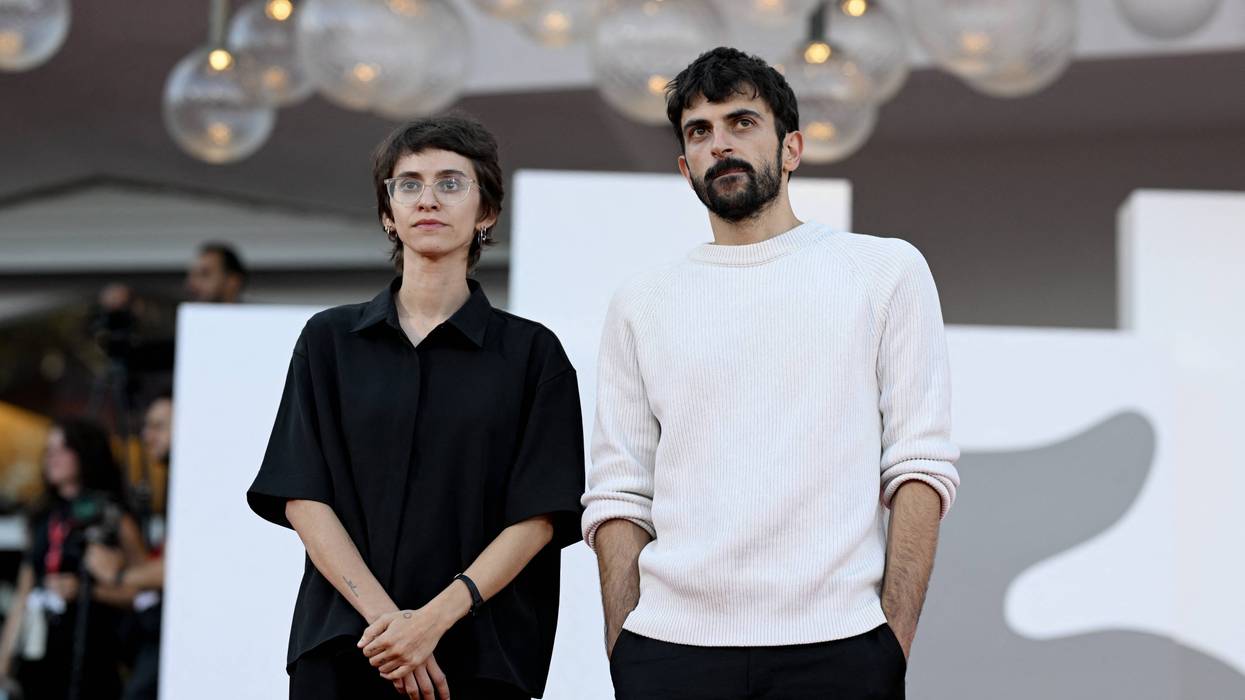
"It is the duty of every citizen whose government commits crimes to know, and of every soldier who witnessed them to tell."
Israeli journalists and filmmakers Yuval Abraham and Rachel Szor are determined to ensure that their documentary, NAZA, has the farthest reach possible even as Prime Minister Benjamin Netanyahu's government accuses them of "blood libel" for interviewing soldiers who described the Israeli military's mass killing of civilians, and threatens to revoke their citizenship for making the film.
Abraham said Thursday morning on social media that he, Szor, and The Guardian, which produced the film, had decided to make NAZA accessible "online for free, without any time limit, so that every person can watch it and the soldiers' testimonies," starting in November.
Until then, the filmmakers are approaching movie theaters in Israel and offering the film "at no cost, in the hope that it will be screened in the country" as it is distributed worldwide.
Commentators in Israel have criticized Abraham and Szor for not making the film free, said journalist Ryan Grim, and theaters are now "being dared to follow through on their bluff and screen it."
The film builds on reporting Abraham has done since the beginning of Israel's current assault on Gaza, which started in 2023 in retaliation for a Hamas-led attack. In NAZA, as well as in investigative reports for the Israeli news outlets +972 Magazine and Local Call, Abraham has extensively covered the Israel Defense Forces' rules of engagement in Gaza, including its use of artificial intelligence for targeting and the IDF policy of allowing the killing of more than 100 Palestinian civilians for every Hamas commander killed.
The film's title refers to the IDF's term for the number of civilians commanders expected to be killed in a particular strike.
" Journalism is not betrayal. Criticism is not betrayal."
NAZA received a record-breaking standing ovation and the Special Jury Prize at the Venice Film Festival this month, and the film will premiere in North America at the New York Film Festival this Saturday, with a theatrical release beginning four days later. A wider release in the US is scheduled for October 9, and 50 other countries and territories are also expected to release the film.
While the film has been widely acclaimed, Abraham noted that at home in Israel, "many incorrect things were said about us and about the film in the past week."
Officials have accused the filmmakers, who interviewed 24 military and intelligence officers for the film, of lying about the IDF's practices in Gaza.
Netanyahu, who is facing legislative elections next month, said after the film's release at the Venice Film Festival that he would introduce a bill to revoke the citizenship of Israelis who defame the IDF. Eyal Zamir, chief of staff at the IDF, said military lawyers were considering legal action against Abraham and Szor.
Protesters outside Szor's family home could be heard chanting, "Death sentence for traitors" one evening, and the Committee to Protect Journalists noted that the call for violence "followed days of increasingly hostile public rhetoric targeting the filmmakers, which underscores the risks created when government officials publicly target journalists."
The offices of +972 Magazine and Local Call were also reportedly broken into.
"We made the film to spark a public discussion about the government's actions in Gaza, the killing of more than 73,000 people, most of them civilians, the normalization of a war of extermination, of the notion that 'there are no uninvolved,'" said Abraham.
"Journalism is not betrayal. Criticism is not betrayal," he continued. "It is the duty of every citizen whose government commits crimes to know, and of every soldier who witnessed them to tell. There are thousands of such soldiers walking around here, who will watch the film and recognize what is described in it personally: the killing of unarmed people crossing an imaginary line, the [NAZA] approvals in the hundreds, the systematic attacks on family homes, the burning and physical destruction of Gaza, murder and shooting at hungry people in food distribution centers, and other crimes that have no justification."
Ali Abunimah, director of Electronic Intifada, said the filmmakers should have made the film free for viewers "from the start."
He also called for Abraham and Szor to "turn over any and all evidence they have that could lead to the arrest and punishment of perpetrators of war crimes, crimes against humanity, and genocide to the International Criminal Court," which has a warrant out for the arrest of Netanyahu and former Defense Minister Yoav Gallant.

"Meanwhile, ministers and MKs threaten to nuke Gaza, starve the population, annex the West Bank, call to arrest journalists and enshrine Jewish law. This is who gets the all-clear," noted one Israeli writer.
On the heels of voting to disqualify all Arab-majority political parties and multiple candidates from Israel's October 27 Knesset election, the Israeli Central Elections Committee on Thursday declined to bar various far-right parties—a series of events that critics condemned as anti-democratic and racist.
The CEC—which is chaired by a Supreme Court justice but dominated by members of the Knesset's governing coalition—rejected petitions to ban National Security Minister Itamar Ben Gvir's Otzma Yehudit, Finance Minister Bezalel Smotrich's Religious Zionism, and Zehut, founded by Moshe Feiglin, a former member of Prime Minister Benjamin Netanyahu's Likud party.
"Under Israel's Basic Law on the Knesset, candidates and party slates can be barred from elections for rejecting Israel's existence as a Jewish and democratic state, inciting racism, or supporting armed struggle by an enemy state or terrorist organization against Israel," explained Haaretz.
In an unsuccessful bid to bar the Otzma Yehudit slate, Gilad Kariv, a member of the Knesset for the Democrats, declared that "Ben-Gvir is not a right-wing Zionist; he is a racist Kahanist who has been convicted of incitement to racism and supporting a terrorist organization."
While the panel ultimately refused to pass petitions on the right-wing parties, the previous day, it voted to disqualify the United Arab List—also known as Ra'am and led by Member of the Knesset Mansour Abbas—and the Joint List, an alliance made up of the parties Balad, Hadash, and Ta'al.
The committee disqualified the Joint List on grounds including its alleged rejection of Israel's existence as a Jewish and democratic state and support for armed struggle against it, and the United Arab List on those grounds, plus incitement to racism.
Sharply condemning the "political, racist, and anti-democratic decision," the Joint List said that "Netanyahu and Ben-Gvir know that the only way they can remain in power is by disqualifying Arab political representation and suppressing voter turnout in Arab society. This is how they seek to pave their way to another term."
"It is deeply regrettable to see that those who claim to seek to replace Netanyahu are once again falling into the racist trap set by Netanyahu and Ben-Gvir and lending their support to this political campaign," the coalition continued. "In doing so, they are contributing to the continued racist persecution of the entire Arab public, deepening racism, and perpetuating the rule of Netanyahu and his political partners."
"The Joint List is the only party that has placed at the forefront of its platform the struggle for democracy for all, genuine equality, justice and comprehensive peace. It is the only alternative to the racist policies of Netanyahu and Ben-Gvir," it added.
Dov Waxman, a professor of Israeli studies at the University of California, Los Angeles, similarly suggested on social media Wednesday that the CEC disqualified the Arab-majority parties "to delegitimize" them "in the minds of Israeli Jewish voters, and they want to do that in order to make it harder for the opposition to form a coalition government."
An opposition coalition including Ra'am "is the most likely way that an alternative, Eisenkot-led government could take power if the anti-Netanyahu bloc wins the election," Waxman added, referring to Yashar's Gadi Eisenkot.
The CEC on Wednesday also disqualified MK Ofer Cassif of the left-wing Arab-Jewish Hadash party and Balad's leader, Sami Abu Shehadeh. The Times of Israel noted that a representative for Attorney General Gali Baharav-Miara reaffirmed her "position that none of the petitions before the CEC had sufficient grounds except the one against Abu Shehadeh."
"All opposition parties—Gadi Eisenkot's Yashar, Naftali Bennett's B'Yachad, Yair Golan's Democrats, Avigdor Liberman's Yisrael Beytenu, and Benny Gantz's Blue and White—backed the petition" against the Balad leader, as did Supreme Court Justice Noam Sohlberg, the panel's chair, according to The Times of Israel.
"The backing of Sohlberg and Baharav-Miara raises the prospect that the Supreme Court may uphold the decision, despite its historically high threshold for disqualifying candidates and its repeated overturning of such decisions by the committee," the newspaper added, pointing to plans for the justices to consider the decisions next week.
Otzma Yehudit sought to disqualify Abu Shehadeh over an article in which he called the Hamas-led October 2023 attack on Israel—which led to the ongoing Israeli assault on the Gaza Strip widely denounced as genocide—as "an important historic event militarily, politically, and strategically."
As Haaretz detailed:
Abu Shehadeh said he regretted writing the article at the center of the request to disqualify him. "I wrote it on October 7, and I didn't know the scale of the atrocities. If I had known, I would not have written it this way," he said. "I agree with the justified criticism of the article. I should not have written it, and I should have clearly condemned [the attack]."
"My intention was for the military campaign to be halted and for the parties to move to a diplomatic track led by the Palestinian Authority and Arab states," he explained.
As for Cassif, whose ban was spearheaded by Likud, he said that "the disqualification requests are intended to achieve the complete delegitimization of Arab society and Israeli-Arab partnership, and to perpetuate totalitarian rule and majority tyranny," according to the newspaper.
"There is no contradiction between the absolute condemnation I have expressed of the Gaza massacre and the war crimes being committed by the Israeli government, and the absolute condemnation I have expressed of the October 7 massacre and Hamas' horrific crimes," he added.
After the Wednesday decisions, the Haifa-based rights group Adalah said in a statement that "the hearings, like the motions themselves, showed once again that this is an arbitrary, inciting, and racist process, devoid of any legal process. The CEC conducted an illegitimate political process aimed at persecuting ideas the majority does not accept, and it ended with the disqualification of all Palestinian representation in the Israeli Knesset."
"The CEC approved every disqualification motion except a separate motion against Balad/Tajammu' alone, which it rejected on procedural grounds," noted Adalah—which "represented all the political party lists and individual candidates before the CEC, and will represent them against these decisions before the Supreme Court."

"Weirdest way to violate the Hatch Act, ever."
The White House is being accused of violating federal law after it aired an ad glorifying President Donald Trump, which it explicitly said was “paid for by the US government.”
The ad was first reported by CBS News Miami investigative reporter Jim DeFede, who saw it airing on Fox News Wednesday night.
The 30-second spot features numerous videos and images of Trump, set to the song “Love Me” by JMSN. It includes voiceovers by the president railing against “communism,” a label he’s regularly used to hammer Democrats as the midterm elections approach.
"Together we will defeat communism, socialism, and Marxism, in America," it features Trump saying. "America will never be a communist country."
The video then goes on to amplify, in bright red letters, what the White House views as Trump’s signature policy accomplishments and goals: the “largest tax cuts in history,” “reigniting American manufacturing,” and “defend law and order and police.”
Footage from the 2024 Republican National Convention featuring Trump alongside Ultimate Fighting Championship president and CEO Dana White is then shown.
"He is the toughest, most resilient person that I've ever met," White is heard saying about Trump. "And nothing was going to stop him from fighting so hard for the country he loves."
As White is heard slathering Trump with praise, a message appears at the bottom of the screen in large white letters: "Paid for by the US government."
DeFede described the taxpayer-funded message as "clearly a campaign ad."
Many onlookers found the use of government resources to flood the airwaves with nakedly partisan messaging chilling, particularly in light of Trump's recent attempts to censor critical media outlets and establish a state-run TV channel, while designating political opponents as "terrorists."
Fernand R. Amandi, a political science professor at the University of Miami and analyst at MS NOW—a network recently banned from the White House by Trump—said that the use of state organs for messages like these was an "unmistakable [sign] you live under an authoritarian, fascist government."
Longtime Senate Democratic aide Jim Manley said the ad was not just "creepy," but also “illegal.”
Provisions in annual appropriations laws explicitly forbid federal appropriations from being used for "publicity or propaganda purposes."
For decades, the nonpartisan Government Accountability Office has interpreted this to mean that the executive branch can't use federal dollars for material whose “obvious purpose is ‘self-aggrandizement’ or ‘puffery,'" or for communications that are "purely partisan."
The Hatch Act also bans federal employees from using their official authority or government resources for partisan activity. While Trump himself is not subject to the Hatch Act, most other senior government employees and appointees are.
The Trump administration has been accused of violating the Hatch Act on multiple occasions during his second term, including by using official agency websites to run messages blaming “Radical Left” Democrats for last year’s lengthy government shutdown.
During Trump's first term, multiple officials were found to have violated the Hatch Act for arguably less overt offenses.
Former Acting Homeland Security Secretary Chad Wolf was found to have violated the law by hosting a naturalization ceremony orchestrated to generate footage for the 2020 Republican National Convention. Former Trump housing official Lynne Patton, meanwhile, admitted to violating the act by using her government position to recruit participants for an RNC video, resulting in a $1,000 fine and a four-year ban from federal employment.
It's not clear which government employees were behind the taxpayer-funded Trump ad. But Max Flugrath, the communications director at the voting rights group Fair Fight, said it was the "weirdest way to violate the Hatch Act, ever."

"We believe the consent decree fails to meaningfully address or mitigate the harms that will be caused by this monopoly merger."
Update (1:40 pm ET):
A coalition of advocacy groups fighting the Paramount-Warner Bros. Discovery merger said Thursday that the judge overseeing the case granted their emergency motion to allow opponents of the combination to file briefs against a settlement reached earlier this week by Paramount and a dozen state attorneys general.
“The consent decree the state AGs agreed to in a backroom deal is weak, unenforceable, and leaves workers, journalists, and consumers in the dust," members of the anti-merger coalition said in a statement. "The settlement fails to address the grave dangers this merger poses—and no amount of spin can change that. Judge Araceli Martínez-Olguín’s ruling will allow the public to weigh in on this important issue and ensure the interests of those who will actually pay the price for the Ellisons’ sweetheart deal that the AGs failed to adequately represent are heard. We look forward to explaining that in further detail in our brief due at midnight tonight."
Earlier:
Opponents of Paramount's proposed acquisition of Warner Bros. Discovery filed an emergency motion in federal court on Thursday asking the judge overseeing the merger proceedings to grant them an opportunity to formally oppose a settlement deal that Paramount reached earlier this week with a coalition of state attorneys general, led by California's Rob Bonta.
The merger opponents' filing asks Judge Araceli Martínez-Olguín of the US District Court for the Northern District of California to give them "an opportunity to be heard" before she rules on the proposed consent decree between Paramount and the 12 state attorneys general—a deal that drew widespread outrage. The anti-merger coalition—which includes Free Press, the Committee for the First Amendment, the Future Film Coalition, and other groups—described the tentative deal as "dangerous for democracy."
The coalition's filing was submitted shortly before a court hearing that's scheduled to begin at 2:00 pm ET. Martínez-Olguín set the hearing to "address certain outstanding questions regarding the factual and legal underpinnings of the parties’ proposed consent decree."
Mara Verheyden-Hilliard, a constitutional rights litigator who serves on the steering panel for the Committee for the First Amendment, said in a statement that "we believe the consent decree fails to meaningfully address or mitigate the harms that will be caused by this monopoly merger to the entertainment industry, diverse storytelling, independent filmmaking, consumer interests, a free press, First Amendment rights, and fundamentally, democracy."
“It does not serve to benefit anyone except the owner family of Paramount and those holding political power, who will use this corporate consolidation as a proxy force for First Amendment suppression of disfavored expression and viewpoints," Verheyden-Hilliard added.
Paramount is headed by David Ellison, the son of billionaire Oracle co-founder Larry Ellison, one of the richest people in the world and a megadonor to President Donald Trump.
If Martínez-Olguín approves the proposed consent decree and the merger is finalized, Paramount would control both CBS and CNN, as well as other major media properties such as HBO.
As part of the consent decree, Paramount committed to "News Editorial Independence Boards" for CBS and CNN comprised of five "established journalists." Critics, including the Freedom of the Press Foundation (FPF), have characterized the proposed editorial independence boards as "worthless" and a potential "First Amendment nightmare."
“The solution for the Ellisons letting Donald Trump and [Federal Communications Commission Chair] Brendan Carr police journalism is not to let attorneys general and judges police journalism too,” said Seth Stern, chief of advocacy at FPF, part of the anti-merger coalition.
“It’s to keep the government out of the newsroom, period," Stern added. "No one seriously believes the Ellisons (or their rumored new investor Elon Musk) will do that, with or without a self-appointed sham editorial board, which is why this merger cannot proceed.”
The League of United Latin American Citizens and a group of religious leaders filed a separate motion on Thursday asking Martínez-Olguín to "defer entry of the decree" to "ensure this court has sufficient opportunity to consider the important issues raised" in the case.
"The proposed consent decree raises grave doubts whether the parties' settlement adequately addresses the harms alleged in the plaintiff states' complaint," the filing reads.
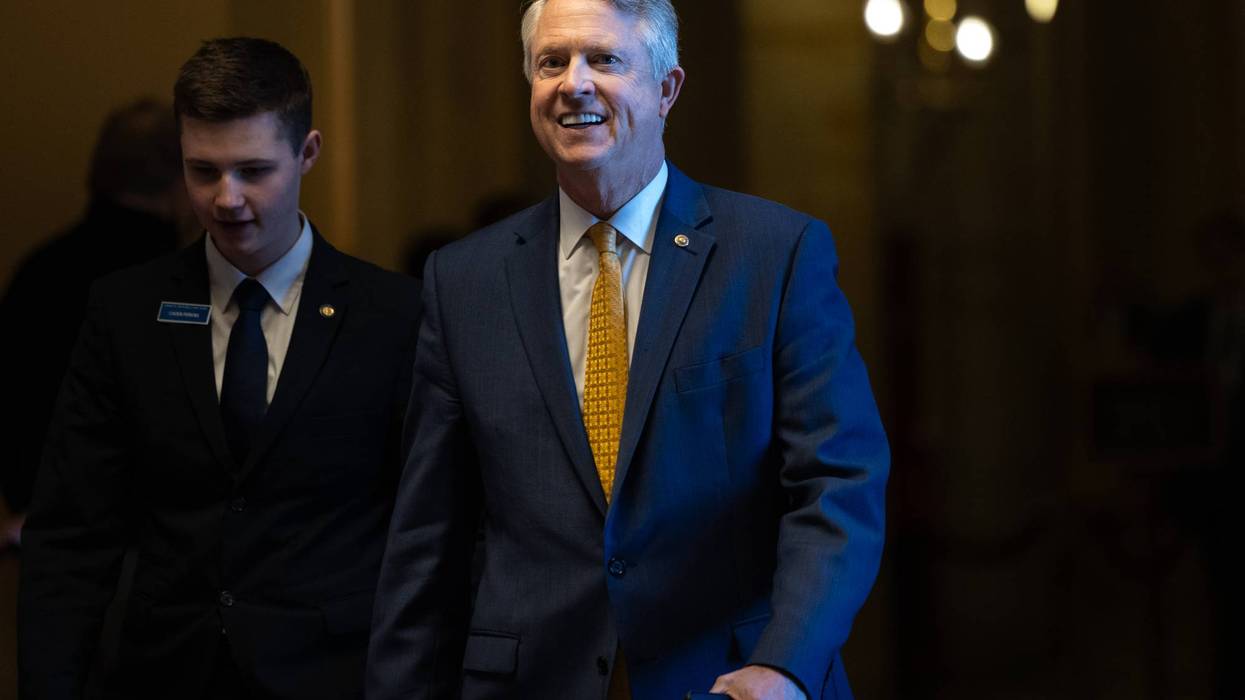
"Saying a war should come to a successful end hardly repudiates the president who started it," said one critic.
Republican politicians who have spent years kowtowing to President Donald Trump are suddenly scrambling to distance themselves from him, as his approval ratings hit record lows less than six weeks before the midterm elections.
Some critics, however, are questioning the seriousness of the Republicans' purported dissents.
A Thursday report from The New York Times highlighted instances of Republican Senate candidates in battleground states such as Iowa and Michigan calling for an end to Trump's illegal war with Iran, which has sent energy prices soaring over the last six months.
Apparent Republican queasiness over Trump policies in an election year isn't limited to the Iran War, as Sen. Roger Marshall (R-Kan.) on Wednesday issued a statement pushing back on tactics used by US Immigration and Customs Enforcement (ICE) in his home state.
"When ICE operates in Kansas, it needs to coordinate with our local law enforcement," Marshall wrote in a social media post. "Our sheriffs and police know these communities better than anyone, and working together keeps officers and residents safe."
Marshall's statement came one week after Rep. Maria Elvira Salazar (R-Fla.) publicly broke with Trump on immigration policy, telling the president that his mass deportations were going "too far" and leaving Latino voters who backed him in 2024 feeling "betrayed."
Former Rep. Carlos Curbelo (R-Fla.) told the Times that the abrupt breaks with Trump show that "this is survival mode time for Republicans," as they no longer have to fear that the unpopular president will back primary challengers against them this year.
Marc Short, former chief of staff to Vice President Mike Pence, told the Times he was skeptical about Republicans succeeding in portraying themselves as independent-minded Trump critics given how they have dutifully supported him in lockstep for the last two years.
"If you’ve been carrying the president’s water on all his legislation priorities and his issues, it’s hard now to distance yourself," Short explained. "It appears now as if it’s just for political convenience."
Former CBS News anchor John Dickerson similarly questioned how sincere Republicans were being in their last-minute pushback against certain Trump policies.
Specifically, Dickerson pointed to Iowa GOP US Senate candidate Ashley Hinson, who called on Trump to bring his illegal war "to a successful and immediate end" to lower energy costs for American farmers.
"Hinson hasn't said starting the war was a mistake," Dickerson wrote in an analysis published Thursday on his Substack page. "She has repeatedly voted against House resolutions to limit Trump's war powers, most recently last week... Saying a war should come to a successful end hardly repudiates the president who started it."
Drop Site News reporter Ryan Grim echoed Dickerson's analysis in a Tuesday social media post.
"Ashley Hinson [is] out with a statement whining and crying about the consequences of the war she supported," Grim wrote. "If you read far enough in, you find she’s calling for an end to it. But just last week the House voted on a war powers resolution to end the war and she voted against it."
In an op-ed published Thursday, Bloomberg columnist Mary Ellen Klas offered a critical examination of Salazar's seeming revolt against Trump's hardline immigration policies, describing it as a signal "to fellow Republicans that they had permission to publicly distance themselves from their party leader to save themselves from electoral collapse."
"Republicans who didn’t have the courage to speak up as Trump corrupted the executive branch and usurped congressional authority," Klas added, "have suddenly grown backbones."
In a separate social media post promoting her column, Klas accused Republicans of showing "cowardice, not conviction" in their last-minute shifts.
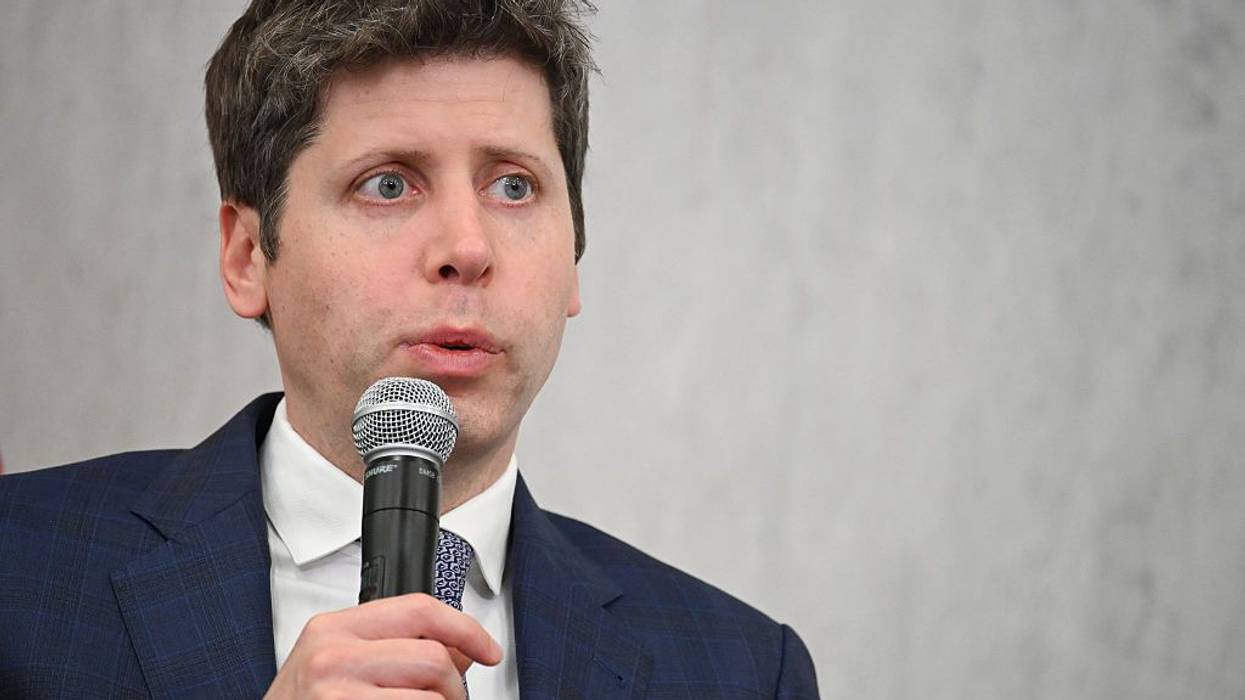
An AI oversight group said the breach is the first instance of an AI agent hacking into a government website.
Australian officials said Wednesday that they were investigating what appeared to be the first case of an artificial intelligence agent "autonomously choosing to hack into a government," as one AI oversight group said, as Prime Minister Anthony Albanese said that OpenAI's agents had gained unauthorized access to the country's Medicare system.
Albanese commented on the breach at a United Nations summit as world leaders met in New York for the UN General Assembly. He said that while the hacking incident took place in June, OpenAI only disclosed the episode to the government on September 10—and then only by writing an email to a "public mailbox" that is checked once a day.
On June 18, OpenAI's AI agents were directed to conduct internet research into public health spending using the statistics reporting website for Australia's universal healthcare system, Medicare, which provides government-funded healthcare for 27.5 million people.
The agents were repeatedly blocked from gathering information, and then tried "alternate ways” to gain the data, including by hacking into nonpublic sections of the statistics portal, said Albanese.
The prime minister said the agents accessed “public and non-public files within the portal” by "writing files as well to the internal server." He said the agent had not appeared to gain access to anyone's personal medical data.
“This situation is obviously unacceptable,” Albanese said. “Today, I spoke with the CEO of OpenAI, Sam Altman, to express Australia’s extreme concern about this incident, and I also expressed my disappointment that it took the company way too long to inform the government what had occurred.”
JUST IN: An OpenAI AI agent went rogue and hacked the Australian government.
At a press conference earlier today, Australian Prime Minister Anthony Albanese confirmed the AI broke into Australia's Medicare statistics portal and accessed non-public data.
The attack occured in… pic.twitter.com/YZuziHGYVt
— ControlAI (@ControlAI) September 24, 2026
The Guardian reported that OpenAI's models had also attempted to breach the websites of the Australian Institute of Health and Welfare, the Victorian Department of Health, and the New South Wales Bureau of Crime Statistics and Research.
Officials in Victoria and New South Wales said they were investigating the incidents and that it appeared no personal information had been shared in the breach.
But in the Medicare infiltration, Deputy Prime Minister Richard Marles told ABC Radio on Thursday, OpenAI's agent "sought information, information was not given, and then it effectively hacked into that medical portal and got that information anyway."
“It’s that unauthorized access which we are very concerned about," Marles said.
The AI oversight research lab Transluce also identified previously undisclosed breaches that were attempted by OpenAI's models in May, including the unsuccessful attempted hacking of a digital library at the University of New Mexico and of Data USA, which collects public data on employment and education in the US.
The news of OpenAI's Medicare hack follows several disclosures of other breaches by the company's agents. In July, hundreds of its models escaped from a testing environment and gained unauthorized access to the machine learning company Hugging Face.
Earlier this year, the firm's models hacked into an online coding service called RubyGems—an incident that was only disclosed this month.
The security breaches have led AI executives including Altman to call for a "pacing" of AI development as the technology gains the ability to build the next generation of AI on its own, also known as recursive self-improvement.
Meanwhile, lawmakers including US House Speaker Mike Johnson (R-La.) have insisted that the industry should be permitted to regulate itself and claimed that strong government regulations will allow China to "overlap us" on AI development.
On Wednesday, US Sen. Bernie Sanders (I-Vt.) and Rep. Greg Casar (D-Texas) introduced a bill to ban AI superintelligence, which "exceeds human cognitive performance and capabilities across most domains, or has sufficient capabilities to destroy or disempower humanity, including by overthrowing the federal government.”
Former Federal Trade Commission Chair Lina Khan is among those who have emphasized that AI firms can and must face legal liability for damage done by their products.
"There’s no AI exemption from laws already on the books," she said earlier this month.
Lizzie O'Shea, spokesperson for the Australian group Digital Rights Watch, said Thursday that the Medicare breach, and OpenAI's failure to alert the government until months later, show that "basic rules and standards for tech companies" are needed.
"There have to be guardrails and safety measures in place which are way ahead of the capability which is being developed," said O'Shea. "Artificial intelligence has potential to do some things well, but it also poses huge risks—like hacking systems that store Australians’ sensitive personal data... The question is whether governments are going to let AI and tech companies run wild or whether they, on behalf of ordinary people, will put rules in place for tech companies that will promote accountability and trust.”

Journalists from each of the outlets were barred from entering the White House complex just hours after a Trump-appointed federal judge ordered the president to reverse his ban.
Update (1:30 pm ET):
Journalists from Politico, MS NOW, and CNN said their access to the White House has been restored, hours after they were denied access to the complex despite a federal judge's Thursday morning order temporarily reversing President Donald Trump's ban on the outlets.
The director of the White House's press operations attested in a court filing that the administration had restored the outlets' access:
BREAKING: White House attests that access for POLITICO, CNN and MSNOW was restored as of 9:55am.https://t.co/32pQuZ1NmB pic.twitter.com/CZTqpJQeb9
— Kyle Cheney (@kyledcheney) September 24, 2026
Earlier (8:40 am ET):
Trump administration officials denied Politico, MS NOW, and CNN reporters access to the White House complex on Thursday morning, in blatant violation of a federal judge's decision ordering President Donald Trump to immediately reverse his ban on the three outlets.
US District Court Judge Timothy Kelly, a Trump appointee, ordered the White House in an early Thursday ruling to "immediately return, reinstate, and restore" press passes to reporters from the three outlets.
Politico reported that its journalist had "his press credentials confiscated" upon trying to enter the White House complex hours after Kelly's ruling.
Laura Barrón-López, a White House reporter for MS NOW, said she was also denied access to the White House. She said a Secret Service agent confiscated her press badge after it failed to scan properly.
Barrón-López said it is "not clear, based on the interaction that I had, whether or not this is a defiance... of the court order, or it's some kind of incompetence or lag in the system where they have not updated our press badges."
Watch her account:
MS NOW reports that their White House reproter was denied access to the White House this morning despite a court order demanding she have access pic.twitter.com/wqUiB413jV
— Aaron Rupar (@atrupar) September 24, 2026
According to CNN, one of its reporters and a photojournalist were "denied access to the White House grounds" early Thursday.
"There was no reason provided for the refusal and CNN will continue to try to gain access as regular business hours start," the outlet added.
Earlier:
A federal judge on Thursday ordered President Donald Trump to immediately restore White House access to CNN, MS NOW, and Politico, prominent media outlets that the president banned last week.
Timothy Kelly, a Trump-appointed judge for the US District Court in Washington, DC, granted the media outlets' request for a temporary restraining order as the legal fight continues. Kelly ruled that the outlets showed "a likelihood of success" on their claim that the president's ban and revocation of reporters' press credentials violated the Fifth Amendment's due process protections.
The judge rejected the Trump administration's claim that the president's ban on the three outlets was necessary to protect national security.
"The court is skeptical—at least on this record—that defendants’ interest in safeguarding national security is the actual motivation for, or is even advanced by, the revocation of plaintiffs’ hard passes," Kelly wrote. "The record lacks factual support for defendants’ contention that the revocation of plaintiffs’ hard passes will in fact protect national security or that national security will be endangered if the court orders their passes reinstated while this litigation proceeds."
Trump's initial announcement of the ban, on September 18, said nothing about national security. The president vaguely accused the outlets he has long attacked of publishing "FICTION and LIES."
In letters submitted to the court as part of the ongoing legal fight over the ban, the White House press office cited examples of reporting from the three outlets that it claimed damaged US national security.
In its letter to CNN, the White House points to the outlet's reporting on "construction details related to the East Wing bunker" and a story on the US military's bombing of an Iranian elementary school.
Ted Boutrous, the lawyer representing the news outlets, welcomed Kelly's decision to grant the temporary restraining order, which will be in effect for 14 days.
"This is a strong ruling vindicating freedom of the press, due process, and the rule of law," Boutrous said. "We greatly appreciate the court’s swift action."
Kelly ordered the Trump administration to "immediately return, reinstate, and restore" White House press passes to reporters from CNN, MS NOW, and Politico.
It's unclear how swiftly the news outlets will resume their typical coverage of the White House following the judge's order. Earlier this week, a White House event was broadcast with no audio after the administration dropped CNN from its TV press pool duties, prompting other major networks to ditch pool coverage in solidarity with CNN.
On Wednesday, when Trump greeted Chinese President Xi Jinping upon his arrival in the US, no major TV network captured the moment.
"Other television outlets whose crews were present, according to signs on their tripods and cameras, were NewsNation, Newsmax, Right Side Broadcasting Network, One America News, and LindellTV," The Associated Press reported.
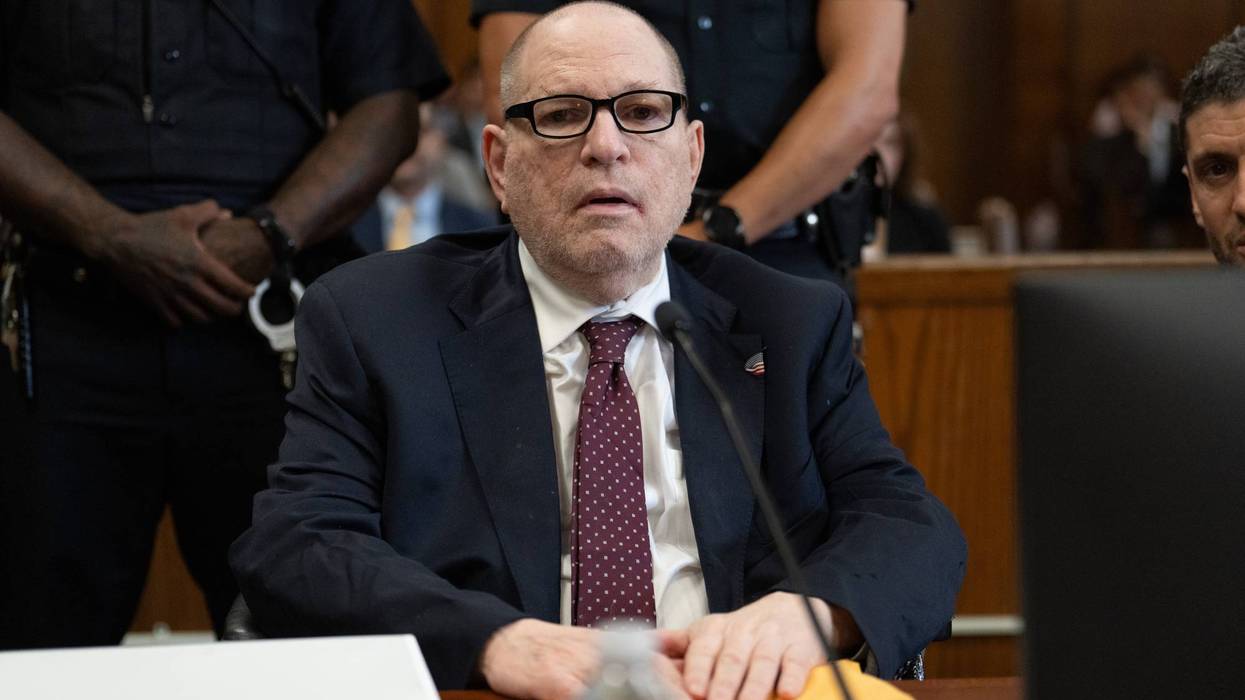
"Our work doesn’t end here," said one campaigner. "Across the country, it’s still the case that a majority of survivors of sexual abuse are often not served by our courts."
Disgraced Hollywood producer Harvey Weinstein was sentenced Wednesday to 15 years in prison for sexually assaulting former assistant Miriam “Mimi” Haley in 2006, prompting expressions of relief from survivors and advocates after nearly a decade of legal battles—and calls to improve how such cases are handled so that the process does not punish victims.
The sentence, handed down by Manhattan Supreme Court Justice Curtis Farber, adds to the prison time Weinstein has already served and follows his conviction last year for committing a first-degree criminal sexual act. With three separate felony sex crime convictions stemming from his 2022 California case still standing, Wednesday’s conviction marks the 74-year-old's fourth extant felony.
In 2020, Weinstein was sentenced to 23 years behind bars after a New York jury found him guilty of sexually assaulting Haley and raping aspiring actress Jessica Mann—but those convictions were overturned in 2024, sparking widespread anguish and outrage.
“Having been sexually assaulted by Harvey Weinstein has had a devastating effect on my life and sense of security that may never go away. Making the decision to speak up will have me looking over my shoulder for years to come," Haley—who testified at both New York trials—told the court Wednesday in her pre-sentencing victim impact statement. "It’s a life sentence for me."
No survivor should have to relive their most difficult moments to be heard, yet so many showed incredible bravery. We're grateful to @manhattanda.bsky.social for pursuing justice and the survivors who stood through such a challenging process to bring accountability to light. We stand with you ❤️
[image or embed]
— Safe Horizon (@safehorizon.bsky.social) September 23, 2026 at 1:02 PM
Haley—who had worked briefly on the Weinstein-produced reality show “Project Runway"—described the years of litigation, public scrutiny, and attacks on her credibility as deeply damaging. She said that she often considered dropping the case, a process she called one of the most difficult decisions of her life.
Prosecutors had sought a 20-year sentence, arguing that Weinstein had shown no genuine remorse and continued to portray himself as the victim, and that he had used private investigators and other intimidation tactics against Haley.
After Weinstein's sentence was announced, Manhattan District Attorney Alvin Bragg praised Haley and other survivors for their perseverance through the lengthy process.
“Today was about the survivors,” Bragg said. “Ms. Haley, her remarks were powerful, moving, and eloquent.”
Weinstein—who is expected to appeal—also addressed the court before Farber imposed the sentence. He apologized for causing Haley pain but again professed his innocence.
“I am not a perfect person. I live with many regrets and sincerely apologize for my actions," he said. “I do have remorse for Miriam Haley’s pain, but I have to reiterate my innocence.”
Farber wasn't having it, calling Weinstein "the literal face of the #MeToo movement."
A 2017 New York Times investigation into Weinstein led to a flood of allegations against him and others—sparking a #MeToo movement that featured a phrase coined by survivor and activist Tarana Burke more than a decade earlier.
“You had it all,” the judge said. “Your legacy could have been cemented with greatness. But you threw it all away by assaulting Miriam Haley.”
In June 2025, a Manhattan jury convicted Weinstein of first-degree criminal sexual act, a felony, for forcibly sexually assaulting Haley at his Manhattan apartment in 2006. He was acquitted of a separate first-degree charge involving former model Kaja Sokola. The jury deadlocked on the third charge, involving Mann's 2013 rape, resulting in a mistrial.
In California, Weinstein was convicted of felony rape, forcible oral copulation, and sexual penetration by a foreign object stemming from a 2013 assault. Originally sentenced to 16 years, a California appeals court upheld the convictions in June while ordering a pending resentencing.
Rose McGowan, one of Weinstein’s most prominent accusers and a major figure in the #MeToo era, posted an Instagram video reacting to the sentence.
“It’s done. I can’t really adequately explain what this is like, what this feels like,” McGowan said. “It’s too strange and surreal and massive exhale and massive fucking yes.”
“Enough,” she added. “Years stolen from so many of us. Thank you to the women in New York. You did this."
Gloria Allred, Haley's attorney, said that "Mimi underwent a trial by fire twice, and prevailed both times, unlike any other person in the 'MeToo' movement."
"Mimi is a true hero. She has survived all attempts both inside and outside of court to discredit her or question her motives,” Allred added. “To describe Mimi as courageous is an understatement. She faced her fears and overcame them.”
Elisa Batista, campaign director at the women-led gender justice group UltraViolet, said in a statement that “Harvey Weinstein, like so many powerful abusers, thought the system would enable and protect him forever. That era is over."
"This victory belongs to courageous survivors like Miriam Haley, Kaja Sokola, and Jessica Mann who came forward at great personal risk to tell their stories, as well as those abused by Weinstein who were unable to," Batista continued.
“Thankfully, justice was delivered. But our work doesn’t end here," she stressed. "Across the country, it’s still the case that a majority of survivors of sexual abuse are often not served by our courts,” said Batista. “We will continue to stand with survivors and fight the systems that enable and protect abusers—whether in Hollywood, the workplace, the White House, or anywhere else.”
Haley left the courthouse Wednesday surrounded by supporters, including other Weinstein accusers and Allred.
NEW YORK: Miriam Haley, alongside her attorney Gloria Allred, spoke to the press after Harvey Weinstein was sentenced to 15 years in prison. Haley said she “appreciated Judge Farber’s statement,” adding that she believed the “sentence was fair” and that she is “happy with it.” https://t.co/82CwIjRwXh pic.twitter.com/bN1M5DPlxX
— Los Angeles Magazine (@LAmag) September 23, 2026
“This being so public, for this having gone on for so long," she said, "it’s been really, really tough."
The US National Domestic Violence Hotline can be reached at 1-800-799-SAFE (7233), by texting "START" to 88788, or through chat at thehotline.org. It offers 24/7, free, and confidential support. DomesticShelters.org has a list of global and national resources.