

SUBSCRIBE TO OUR FREE NEWSLETTER
Daily news & progressive opinion—funded by the people, not the corporations—delivered straight to your inbox.
5
#000000
#FFFFFF
To donate by check, phone, or other method, see our More Ways to Give page.
Daily news & progressive opinion—funded by the people, not the corporations—delivered straight to your inbox.

Today the Trump administration will finalize its plan to repeal critical safeguards that prohibit the dumping of industrial and agricultural pollution into sensitive waterways that provide tap water for more than 117 million A
Today the Trump administration will finalize its plan to repeal critical safeguards that prohibit the dumping of industrial and agricultural pollution into sensitive waterways that provide tap water for more than 117 million Americans.
The Washington Post reports that Environmental Protection Agency chief Andrew Wheeler will announce the rollback at the headquarters of the National Association of Manufacturers.
The repeal of the Waters of the U.S. rule, or WOTUS, will remove protections for many small streams and wetlands, which were put in place under President Obama, in 2015. The rule determines which streams, rivers and lakes are protected from pollution by the federal Clean Water Act and extends protection for millions of acres of wetlands that filter drinking water.
Small streams are where big rivers start, and the best science confirms that dirty streams lead to even dirtier rivers. Millions of Americans drink water directly connected to 234,000 miles of small streams that will now be unprotected as a result of the repeal.
In 30 states, small streams provide some percentage of drinking water for 1 million or more people. As a 2017 analysis by EWG showed, more than 40 million of those people are in New York, Texas, Pennsylvania, Ohio and California.
"Much of the nation's drinking water sources, already threatened by pollution from industry and agribusiness, will now be left unprotected as a result of this action," said Craig Cox, EWG's senior vice president for agriculture and natural resources. "The decision to announce the repeal of the water rule from the headquarters of an industry lobby group that represents many of the nation's worst polluters says it all: Under President Trump, the EPA is no longer in the business of safeguarding our resources and protecting us from pollution, but is openly working to advance the agenda of those who profit from fouling our water and threatening our health."
The Environmental Working Group is a community 30 million strong, working to protect our environmental health by changing industry standards.
(202) 667-6982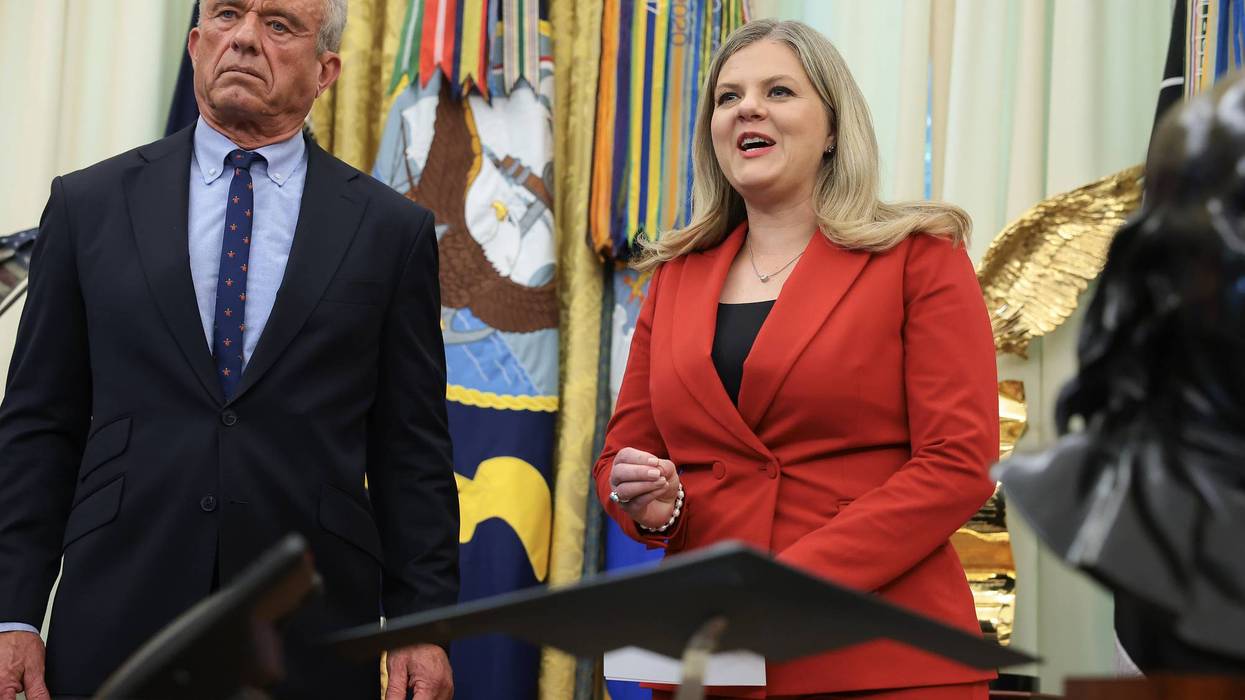
"The American people deserve someone who will put science and facts FIRST, not another Trump sycophant who will make it their mission to attack medication abortion," said one Democratic senator.
President Donald Trump on Wednesday tapped White House health policy adviser Dr. Heidi Overton to lead the Food and Drug Administration, a move that drew fierce opposition from Democratic lawmakers, reproductive rights advocates, and public health experts, who pointed to her opposition to abortion rights and support for controversial changes to federal vaccine policy as cause for alarm.
Trump took to his Truth Social network to announce his pick of Overton, a physician and deputy director of the White House Domestic Policy Council, to replace former FDA Commissioner Marty Makary, who resigned in May following months of turmoil at the agency. The president described Overton as a "ROCKSTAR" in his administration who will "deliver on the MOST TRANSFORMATIVE Health Agenda in History."
"Heidi is 'ALWAYS RIGHT,' Secretary Kennedy recently said in the Oval Office!" Trump continued, referring to Health and Human Services chief Robert F. Kennedy Jr. "We need her leadership at the FDA now to ensure that the US remains the WORLD LEADER for Scientific Discovery and CURES."
The president also said Overton would work with Centers for Medicare & Medicaid Services Administrator Mehmet Oz to advance his agenda of faster drug approvals, increased innovation, clinical trial reforms, and lower prescription drug prices.
However, skeptics argue that Overton’s policy record raises serious questions about whether she would maintain the FDA’s scientific and regulatory independence in an administration in which critics say loyalty to Trump is of paramount importance.
Reproductive Freedom for All—formerly the National Association for the Repeal of Abortion Laws and NARAL Pro-Choice America—noted that "Overton has an extensive anti-abortion record."
The group continued:
She celebrated the overturning of Roe v. Wade as a “huge victory,” and has advocated for the politicization of government agencies to help advance a nationwide anti-abortion agenda. She previously worked at America First Policy Institute, an extreme conservative think tank made up of former Trump administration officials, where she authored a brief pushing disinformation about the safety of medication abortion and calling for additional, medically unnecessary restrictions on access to mifepristone.
“Donald Trump is trying to put an anti-abortion extremist in charge of any agency that could seriously undermine reproductive healthcare—including the agency that could roll back access to mifepristone nationwide," Reproductive Freedom for All president and CEO Mini Timmaraju said. "Her nomination is another alarming step in Trump’s plan to weaponize every part of the federal government to restrict abortion nationwide.”
Overton's shifting stance on vaccines also raised eyebrows.
Endpoints News senior senior reporter Max Bayer highlighted how, while working at AFPI, Overton "and others praised Operation Warp Speed, the massive government initiative to expedite development and manufacturing of the Covid-19 vaccines" during Trump's first administration.
But less than a year later, Bayer said, Overton "advocated against Covid-19 school vaccine mandates, writing in an editorial the data supported more parental choice in the decision."
"Overton stood by Trump earlier in August as he announced a sweeping and contentious new executive order amending the childhood vaccine schedule and advising that the [measles, mumps, and rubella] vaccine be broken up into individual components," he added. "Makers of the vaccine pushed back on the directive, but now with Overton in line to lead the FDA, there could be enhanced pressure for drugmakers to follow through on the request."
Democratic US lawmakers also voiced opposition to Overton's nomination.
"Heidi Overton is a far-right, anti-abortion extremist who has no business leading the FDA," Sen. Patty Murray (D-Wash.) said on social media. "The American people deserve someone who will put science and facts FIRST, not another Trump sycophant who will make it their mission to attack medication abortion. I will vote NO."
At least one Republican lawmaker—who chairs the Senate Health, Education, Labor, and Pensions Committee—also questioned Trump's pick.
"While I respect Dr. Overton’s experience as a physician, I have strong concerns about her nomination to be FDA commissioner," Sen. Bill Cassidy (R-La.), a gastroenterologist, said on X. "Her lack of managerial experience does not prepare her well for leading a large organization that is already dealing with staffing and morale issues."
"Additionally, Dr. Overton’s active role in last week’s nonsensical vaccine executive order calls into question her commitment to standing up for sound science and protecting children’s health. That alone is almost disqualifying," added Casisdy, who earlier this year lost a primary race to a Trump-backed challenger.
Overton's nomination comes amid turmoil at an agency that has seen thousands of employees fired by Kennedy since last year amid Trump administration efforts to shrink the government in line with Project 2025, the Heritage Foundation-led framework for a far-right federal overhaul.
Chris Meekins, a former Trump health official who is now an analyst at the investment bank Raymond James, told clients that Overton would be "like Makary, but probably worse."
“Being seemingly inexperienced and unqualified is fine if you have self-awareness and humility and a strong team around you,” Meekins wrote. “Based off of our DC channel checks, she does not seem to have either."
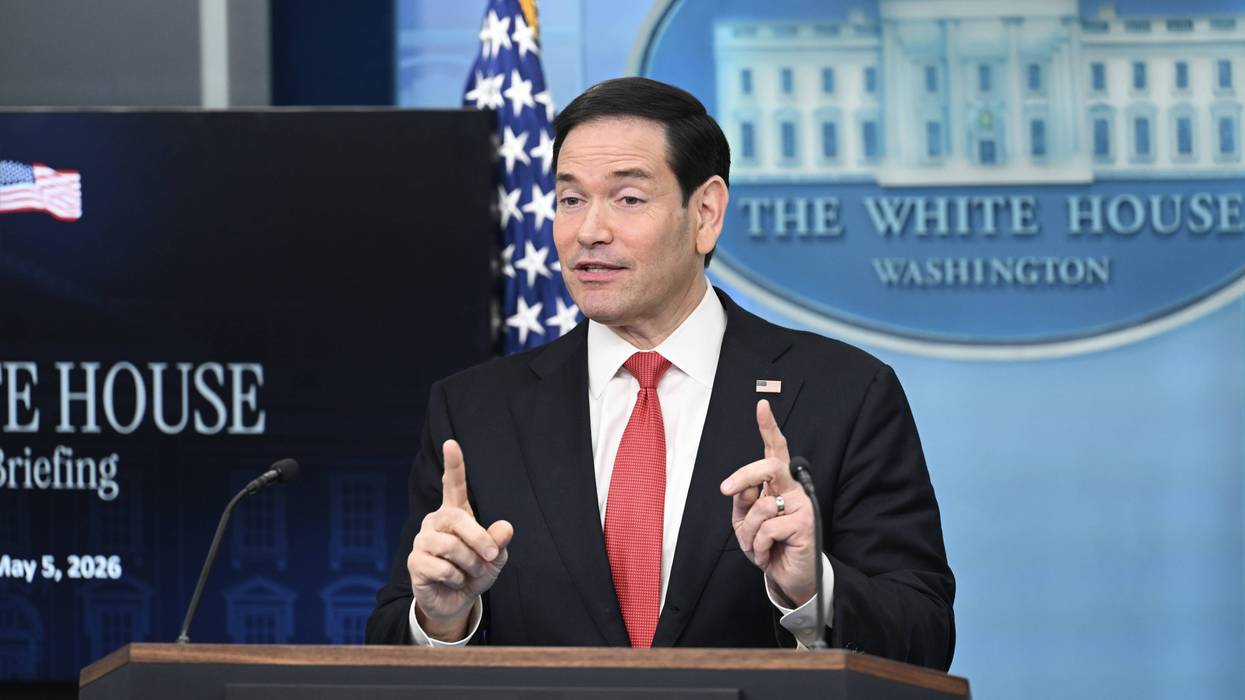
"We are deeply troubled by public commitments to deploy the full force of the State and Treasury departments against loosely defined 'far-left networks' and their alleged 'enablers.'"
Dozens of Democrats in the US House of Representatives this week announced a congressional inquiry into the use of a widely decried memo from President Donald Trump to persecute "political dissent" and target "left-leaning political groups."
Democratic Reps. Jim McGovern (Mass.), Ayanna Pressley (Mass.), and Delia Ramirez (Ill.) revealed Tuesday that they, along with over 20 others, wrote to Secretary of State Marco Rubio and Treasury Secretary Scott Bessent earlier this month to demand answers about the recent "Ministerial on the Resurgence of Political Terrorism" and directives under National Security Presidential Memorandum 7 (NSPM-7).
"Specifically, we are alarmed by the Department of State's new ideologically driven visa restriction policy and the Department of Treasury's pledged financial enforcement mechanisms directed against civil society," they wrote. "These policies dramatically escalate the administration's deliberate and targeted attempts to silence any person, organization, or institution critical of its policies and abuses of power on a global scale."
"We are deeply troubled by public commitments to deploy the full force of the State and Treasury departments against loosely defined 'far-left networks' and their alleged 'enablers' and urge you to immediately reverse course," the lawmakers continued. "Rather than relying on law enforcement data—which consistently identifies right-wing violent extremists and white supremacist organizations as the predominant domestic terrorism threat—this administration has instead taken actions that manufacture an ideological enemy."
The visa policy "bars foreign nationals from entry who 'finance, recruit, incite, or otherwise enable terrorist, violent, and criminal far-left terrorist networks' and defines 'far-left terrorist networks' as those with explicit aims to 'undermine the political foundations of free and self-governing societies,'" the letter details. "This rhetoric and policy embody the core characteristics of fascist statecraft—using the security apparatus of the state to repress and criminalize political opponents and dissenters rather than specific violent acts."
The letter notes the impacts of the administration's policies beyond the United States, warning that "seeking to export an ideological mandate to more than 65 countries creates a dangerous precedent that authoritarian governments will eagerly exploit to delegitimize and criminalize political dissent and justify their own crackdowns on peaceful opposition."
"Foreign nationals fleeing political persecution abroad—including persecution by governments that label peaceful dissidents 'leftist terrorists' to discredit them—may find themselves barred from the United States under the very same vague and subjective standard," the lawmakers wrote. "Expanding transnational intelligence-sharing under this ill-defined and hyper-politicized definition of violent extremism opens the door to transnational repression—including cross-border monitoring and harassment—of international activists, researchers, and political dissidents, as well as potentially any individual within their networks."
"We also risk fracturing critical alliances with governments whose own laws strictly protect political speech, civil liberties, and human rights—protections that these very policies are undermining here at home," the Democrats stressed.
The letter also calls out White House Deputy Chief of Staff Stephen Miller's description of leftists as "the enemies of civilization" and a "cancer" that can "destroy a society," as well as Bessent's comparison of leftists to the Islamic State and al-Qaeda—when he said that "the unified front between international Marxism and the radical Islamic movement need not share the same ultimate vision to share the same immediate enemy of free and self-governing societies."
Rubio has similarly called leftists "the enemies of civilization" and recently faced criticism for a "McCarthyite" State Department report claiming that the Cuban government has, for decades, "infiltrated the highest reaches of the US government, recruited and cultivated generations of American activists, backed an unprecedented wave of left-wing terrorism on American soil, and carried out one of the most durable and damaging foreign intelligence penetrations in American history." The document is seen as a signal that Trump may deliver on his threat to try to take over the island nation by force.
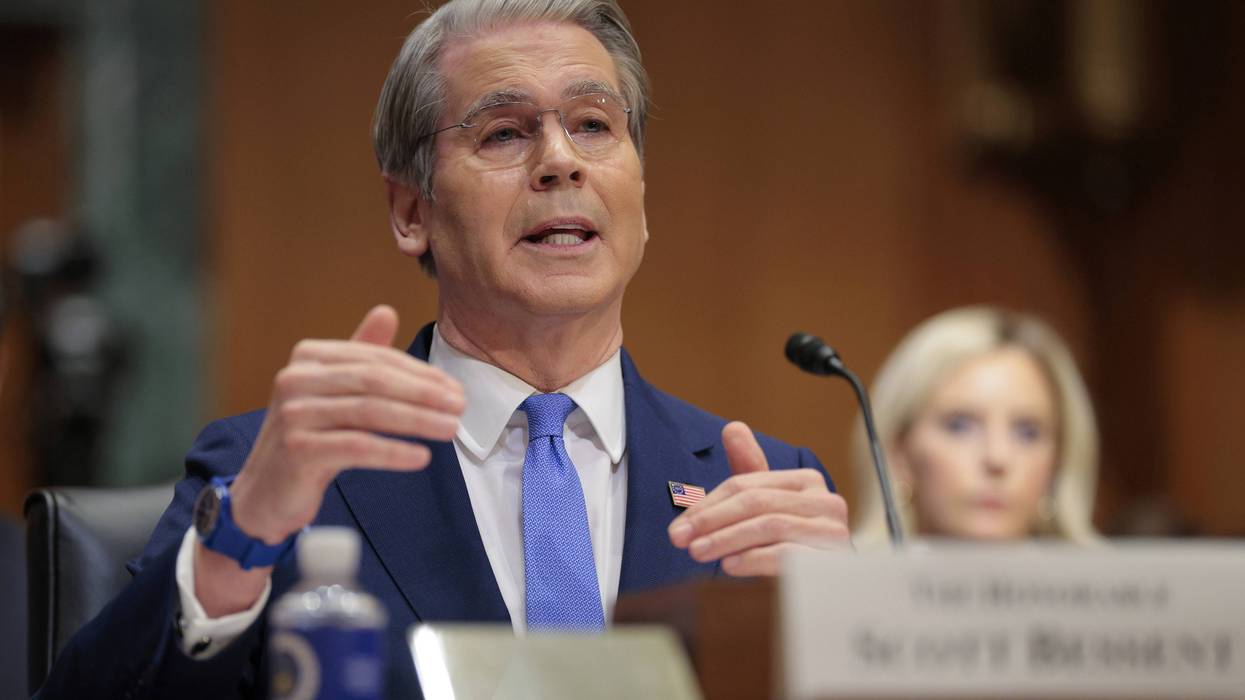
"Trump is going to pump billions of dollars into the bond market to push down interest rates through the election, then let everything fall apart again," said one critic.
The Trump administration on Wednesday unveiled a plan to ease upward pressure on the cost of US debt by doubling its bond buybacks through November.
In announcing that it will buy back "at least" $4 billion worth of bonds over a two-month period, the US Department of Treasury said it was seeking "to provide greater liquidity support in longer-dated nominal sectors where there is consistent strong sponsorship from market participants."
While the announcement did result in interest rates for US treasuries dropping, economists and other political observers are warning that Treasury Secretary Scott Bessent's scheme to stop spiking yields will prove ineffective over the long term.
In a Wednesday interview with NOTUS, Joseph Brusuelas, principal and chief economist for RSM US LLP, said that Bessent was making decisions based solely on the political fortunes of the Republican Party.
"Bessent is a political actor," Brusuelas said. "His interest is purely short-term and is organized around the upcoming election and not a return to price stability. This is what fiscal dominance looks like as the fiscal authority leans on the central bank to subordinate its goal of price stability to the government’s borrowing and political needs."
The economist's analysis was echoed by Drop Site News reporter Ryan Grim, who argued in a social media post that President Donald Trump's administration was scrambling to save its endangered GOP congressional majority.
"Trump is going to pump billions of dollars into the bond market to push down interest rates through the election, then let everything fall apart again," Grim wrote. "Not sure I’ve seen a more nakedly electoral use of this amount of money before, for such a targeted amount of time."
Krishna Guha, head of global policy and central bank strategy at Evercore ISI, argued in a Wednesday research note flagged by CNBC that the bond buyback scheme "changes almost nothing in terms of the fundamentals in particular the unchanged need to finance the tidal wave of hyperscaler debt in addition to very large government deficits."
Adam Josephson, founder of Sakonnet Research, also expressed skepticism of the buyback plan's effectiveness in a Wednesday interview with Politico.
“They’re trying everything possible to limit upward pressure on long-term yields,” Josephson said. “Nothing has worked. And why would this work? It’s too small to matter.”
Experts say that bond yields have been spiking to highs not seen since the start of the Great Recession due to investor anxiety over a number of factors, including inflation, the size of the US government's debt, and Trump's illegal war with Iran.
The ruling, said the government watchdog Public Citizen, is "a win for young Americans' well-being."
The Teen Pregnancy Prevention program, first authorized through bipartisan legislation in 2009, has been credited with helping to dramatically reduce the number of American teenagers who have experienced unwanted pregnancies in the past decade and a half, dropping by more than 65% over 16 years, according to one congressional report.
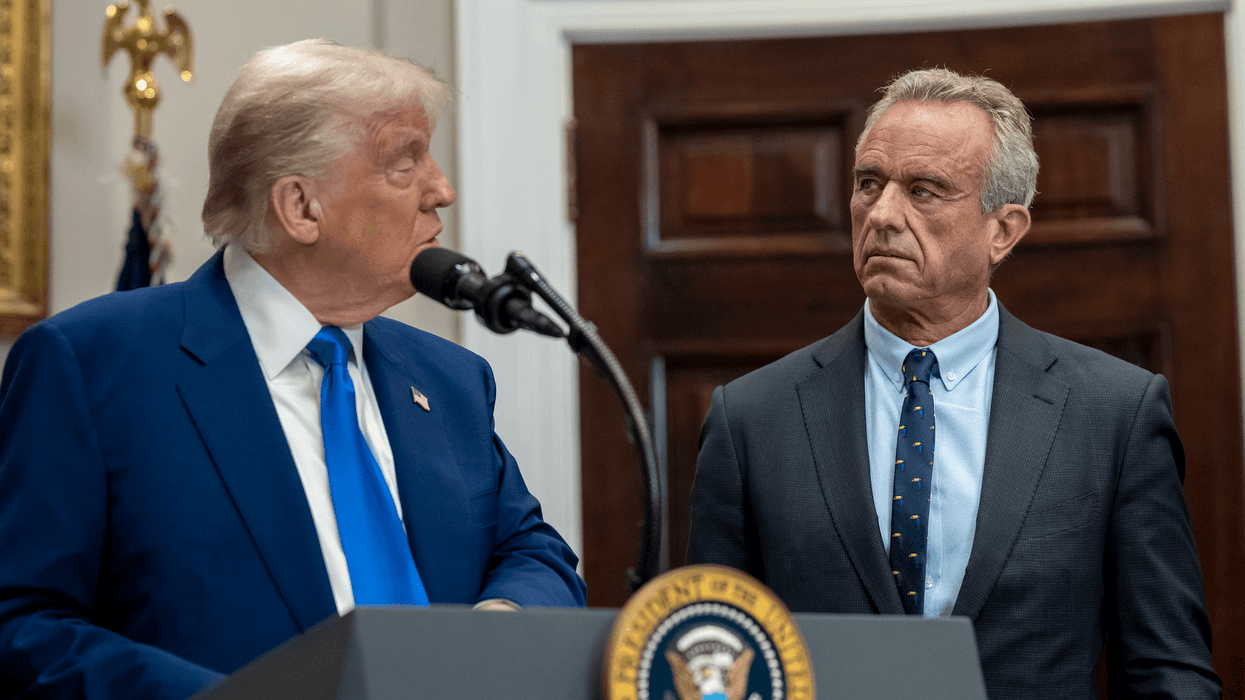
Despite the best efforts of President Donald Trump and Health and Human Services Secretary Robert F. Kennedy Jr., a federal judge's ruling on Wednesday sent the message that the push to reduce teen pregnancy in the US will continue, with the administration's limits on the program's federal grants paused.
Judge Christopher Cooper of the US District Court for the District of Columbia granted a preliminary injunction in the case of Hennepin County, Minnesota v. US Department of Health and Human Services, in which officials joined King County in Washingtin state, Planned Parenthood of the Heartland, and the Sexuality Information and Education Council of the United States (SIECUS) in challenging HHS's changes to the program's grant policy. The plaintiffs were represented by Public Citizen and Democracy Forward.
The changes, said Cooper, were “likely arbitrary and capricious.”
The new policy, announced in June, canceled 53 of 66 active grants that had gone to public universities, health departments, and nonprofits for programming related to sex education, including information that was given to teens on contraception and communication with sexual partners.
In Trump's 2027 budget, the grants are described as promoting "radical leftist ideology," and officials claim there is no evidence that teen pregnancy prevention programs that go beyond educating young people about abstinence have "contributed to the historic decline in teen pregnancy, which is now at an all-time low."
Under new guidance issued in June, Teen Pregnancy Prevention (TPP) program grantees are required to focus lessons on abstinence, deemphasize contraception, and teach teens about fertility and "body literacy."
“HHS is perfectly entitled to formulate its own views about how to stem teen pregnancy—or even whether it is worth preventing at all—and to pursue policy initiatives consistent with its viewpoint. But it is not at liberty, under the Administrative Procedure Act (APA), to impose conditions on grant recipients that Congress did not intend or that are unreasonable or unexplained. The preliminary record suggests that HHS has done just that,” wrote Cooper in the ruling.
"Through the TPP, Congress sought to fund a range of evidence-based teen pregnancy prevention strategies, not just abstinence. According to unrebutted record evidence, programs that teach abstinence to the exclusion of all other approaches are ineffective in delaying sexual initiation and reducing adolescent pregnancy, at least as a general matter," Cooper continued.
The judge took aim at the administration's promotion of "body literacy," which he called “a nebulous concept that appears to elevate fertility and marital procreation over well-tested forms of contraception and pregnancy prevention.”
Cooper also suggested that HHS had not bothered to find genuine evidence of its claims about "body literacy," instead "remarkably" referencing "public health studies that appear either not to exist or not to support the propositions for which they are cited—a hallmark of AI-generated citations.”
The judge stopped short of reinstating the dozens of grants, amounting to about $67 million, that have been terminated, saying it was unclear whether he had the authority to do so.
The plaintiffs and other advocates of comprehensive sex education have called for a permanent injunction; Cooper called on both parties in the case to propose a schedule for next steps by September 1.
Callie Simon, executive director of SIECUS, said the group was "encouraged that the court has halted implementation of the new harmful policy" but emphasized that "the impacts of terminating existing grants remain."
“Today’s decision sends a clear message that the Trump-Vance administration cannot replace the proven, bipartisan Teen Pregnancy Prevention program with an ideologically driven alternative that harms young people,” said Simon. "Communities across the country are still without the evidence-based programs they relied on, and we will continue fighting to ensure young people have access to the sex education they deserve.”
Sandra J. Valenciano, director and health officer for public health in Seattle and King counties, said local communities were facing a measurable loss due to HHS' stripping of TPP grants
“This federal action threatened our ability to complete a study on a new science-based, community-informed sex education curriculum specifically for young men and boys,” said Valenciano. “This ruling gives us hope that we may still be able to get to the finish line with this study and ultimately empower more young people to build healthy families if, when, and how they choose.”
Ruth Richardson, president and CEO of Planned Parenthood North Central States, said the ruling "reaffirms the value of trusted, evidence-based education programs that help youth make informed choices and plan for their futures."
"Attacks on the Teen Pregnancy Prevention program not only put young people at risk, they also risk increasing costs for taxpayers," said Richardson. "No one benefits from these politically motivated attacks. It’s time for them to end.”

"Policymakers must pursue creative, tangible, and lasting solutions that bring homeownership back into reach."
As young families are increasingly priced out of the housing market, a group of economic researchers is pushing to revive an idea from the past to bring the distant dream of homeownership back within reach: mass-produced homes.
A report published Wednesday by the Groundwork Collaborative proposes a federal program to subsidize the creation of 500,000 prefabricated houses over the next eight years—starter homes that they estimate would be drastically more affordable than the ones currently on the market.
The report was written by three economic policy analysts who served under former President Joe Biden: Noah Ball-Burack and Emily DiVito, who worked on policy for the Treasury Department, and Alex Jacquez, who was Biden's special assistant for economic development and industrial strategy at the White House National Economic Council.
The proposal draws from history: From 1908-40, around 75,000 Americans ordered mass-produced homebuilding kits from Sears, Roebuck & Co. through catalogs, which provided pre-cut lumber, doors, windows, and other materials to construct a home that ended up being considerably cheaper to build than those constructed conventionally.
These "Sears homes" were not only fully functional but also durable: More than 80 years after the program was discontinued, thousands of them are still standing today.
Groundwork's researchers argued that marshaling the government's resources, a modern Sears home program could go great lengths toward combating the housing affordability crisis.
"For too many families, homeownership has gone from a milestone to a mirage. Decades of under-building have left us with an affordable housing shortage that’s pricing people out of their communities," DiVito said. "Policymakers must pursue creative, tangible, and lasting solutions that bring homeownership back into reach. The Modern Sears Home program does just that.”
The group called for the Congress to appropriate between $44 billion and $75 billion over eight years---less than the US spends on the military in a single month---to guarantee large orders of factory-built homes, acquire and prepare land for them, and then sell the completed houses to eligible buyers with government-backed affordable mortgages.
They estimate that factory-produced single-family homes could be sold for roughly $170,000-$215,000 each. That's around half the median price of a new single-family home, which has increased nearly 25% since the start of the decade.
"Sears offered these homes for profit," the researchers wrote. "The federal government—with greater resources, lower borrowing costs, and unmatched power to scale—can do it better."
Unlike private capital, the Department of Housing and Urban Development (HUD), which would administer the program, doesn't have a profit motive and is capable of guaranteeing large amounts of demand so that manufacturers can build scale.
And since the goal is to ensure that people are housed rather than to increase profit margins, the researchers argued that the homes are less vulnerable to the fluctuations of the housing market, which currently disincentivizes lowering rent.
"Private developers build only when projects pencil, meaning that expected rents, net of construction, and financing costs, clear the rate of return their investors demand," the report explains. "This math ties new housing supply to high rents. If rents begin to fall, private capital will walk away.”
The researchers argued that their proposal would not just benefit those who are able to purchase new Sears homes, which HUD would target at households earning 60%-100% of a local area's median income, but everyone in the housing market, by driving up supply.
"Sustainably lowering housing prices relative to other prices in the economy requires public investment," they wrote. "The government can either build housing itself or finance private construction at below-market returns. It should do both.”
The proposal comes as pre-fab homes are being viewed increasingly as a policy solution to confront the housing crisis and as an opportunity for developers looking to attract young homebuyers.
Eager to build cheap starter homes fast, developers are experimenting with entire subdivisions of factory-built houses, as The Washington Post reported on Wednesday.
New York state, meanwhile, is trying out a miniature version of what Groundwork has proposed, building 1,500-square-foot homes in Syracuse, Schenectady, and Newcomb. The state has completed three homes so far and awarded funding for 211 more.
According to a 2023 report by the Harvard Joint Center for Housing Studies, these kinds of higher-end manufactured homes, known as "CrossMods," cost 27% less on average compared to an identical home built on-site.
The ones that have gone up in New York have borne out these cost-saving projections. They took about a third of the time to construct as traditional homes and cost about $250,000 to build and install, about half the cost for a comparable house, according to the state's affordable housing agency.
An affordable housing law that passed Congress in June also took steps toward expanding factory-built housing with a bipartisan bill passed last month that removed regulatory barriers to manufactured homes and sought to make construction easier to finance. However, the law does not provide any new federal funding for housing production.
The researchers said this was a good start that could help speed up the process of building homes. But they said it was far too narrow to really address the problem.
"It will take a government willing to act not at the margins of the market, but at its center—financing cheaply, building at scale,” they wrote. "The technology and policy levers to realize this vision already exist. The question is not whether the federal government can act at this scale—but whether it will."

"When powerful people don’t want accountability, they attack those who ask questions and use whatever is at their disposal to monitor, control, and repress."
Amnesty International on Wednesday released a report detailing how the Argentine government under the leadership of right-wing President Javier Milei has created a massive artificial intelligence surveillance state that the human rights group described as "a techno-authoritarian infrastructure of social control."
According to Amnesty, Argentina's Military of National Security invested in several pieces of surveillance technology between 2024 and 2025, including licenses for Maltego, an open-source investigator platform that collects and organizes data from "social media, websites, the dark web, personal data, technical infrastructure, and other open sources"; and Clearview AI, a facial recognition platform with "a widely known track record of mass exploitation of biometric data without sufficient legal grounds."
The government also procured drones equipped with automated tracking capabilities and thermal cameras capable of providing real-time image transmission, Amnesty found.
This surveillance state, Amnesty said, has created a "chilling effect" across the country that has reduced participation in protests and forced activists to reduce their public exposure and take further precautions when planning demonstrations.
Ana Tapia, an activist who has been protesting against pension cuts made by Milei's government, described the government's aggressive surveillance tactics against herself and her fellow demonstrators.
"We’ve all been fully identified for a long time now," Tapia explained. "Sometimes as you’re walking... and suddenly you see the drone hovering just above your head. Sometimes within six feet. Why so close? Why is it so invasive?”
Matías Darabós, an activist who documents police abuses, similarly described the omnipresence of the surveillance state.
"There is a very strong feeling that you are being controlled and watched," said Darabós. "In fact, when we go to marches to record what goes on, they are constantly pointing at us or filming us."
Journalists described being subjected to what they believe are coordinated harassment campaigns in which they are swarmed with violent rhetoric and threats which they believe are related to increased state surveillance.
Paula Cejas, director of the Latin America Office of the International Federation of Journalists (IFJ), told Amnesty that "social media and the streets are no longer a safe space for journalists."
"Even I myself think about what I’m going to post to the IFJ account," Cejas explained, "what language to use so that I’m not put on a list and get us all harassed."
Another journalist who spoke anonymously with Amnesty similarly said she had grown incredibly careful of what she posts on social media compared to the past.
"Before, I used to comment and give my opinion on everything, now I just use it recreationally," the journalist said. "I think a lot about the words I use, I moderated my rhetoric and reduced my interaction 100%, especially on Twitter," the platform Elon Musk renamed X.
Paola Garcia Ray, deputy director of Amnesty International Argentina, summed up the report by arguing that "pervasive surveillance is being used against Argentinians in both physical and digital spaces, to devastating effect" on civil society.
"These technologies have become an integral part of the infrastructure of state control, targeting dissent, deterring protest movements, and harassing marginalized groups, among other authoritarian practices,” Garcia Ray emphasized. "When powerful people don’t want accountability, they attack those who ask questions and use whatever is at their disposal to monitor, control, and repress."
Milei is a political ally of US tech billionaire Peter Thiel, a co-founder of AI surveillance company Palantir whose presence in Argentina has resulted in protests demanding his ouster from the country.

"933 days since Hind Rajab and her family were killed. All that time, Israel lied, denied, deflected, distorted, gaslit," said one critic. "This is their modus operandi with high-profile crimes. The 'criminal probe' will be a sham."
After years of denying responsibility, the Israel Defense Forces announced Wednesday that it is opening what critics fear will be sham criminal investigations into numerous high-profile killings of Palestinians in Gaza, while separately clearing troops involved in other deadly attacks, including a massacre of World Central Kitchen aid workers.
The IDF Military Advocate-General’s Corps published its first war crimes report since October 2023 on Wednesday, covering more than 150 probes into massacres and other killings of Palestinians.
The most infamous case involves the January 2024 attack in which invading IDF troops fired hundreds of rounds of ammunition at a car carrying 5-year-old Hind Rajab and six relatives as they tried to flee Gaza City, and then attacked a Palestine Red Crescent Society ambulance dispatched to rescue survivors. The ambulance attack killed two PRCS medics.
Other "exceptional operational incidents" by IDF troops are also under investigation, including the apparent execution-style killing of 15 on-duty first responders—among them PRCS medics, Civil Defense personnel, and a United Nations worker—traveling in a convoy of ambulances and other vehicles in Rafah in March 2025.
The IDF cleared troops involved in the April 2024 attack on a World Central Kitchen humanitarian convoy in Deir al-Balah that killed seven members of an international aid team working to feed Palestinians amid the burgeoning famine caused by Israel's "complete siege" of Gaza.
The military also cleared troops involved in a February 2024 tank attack on a house in al-Mawasi where Doctors Without Borders/Médecins Sans Frontières (MSF) staff and their families were sheltering. Two women were killed and seven others were wounded in the attack.
Israeli officials had initially either denied carrying out these attacks or claimed the victims were members of or associated with Hamas, the Palestinian resistance group that led the October 7, 2023 attack on Israel.
"The Israeli army lied through their teeth. They claimed no Israeli troops were operating in the area where Hind Rajab and her family were killed," British journalist Owen Jones wrote Wednesday on X. "They lie and lie and lie again—yet Western media outlets still treat Israeli claims as credible."
Few critics of Israel welcomed the IDF probes, while many said they won't accomplish anything.
"Investigations into violations committed by Israeli forces overwhelmingly end without meaningful examination, prosecution, or punishment," the Brussels-based Hind Rajab Foundation (HRF), which was established to challenge Israeli impunity, said Wednesday in a statement. "In the small number of cases in which soldiers have been convicted of crimes, the punishments imposed have often been exceptionally lenient or administrative in nature."
HRF continued:
The killing of Palestinian-American journalist Shireen Abu Akleh provides a stark example. After conducting its own investigation into her May 2022 killing, the Israeli military acknowledged in September 2022 that there was a “high possibility” that Abu Akleh had been shot by Israeli military fire. Yet the Military Advocate General concluded that there was no suspicion of a criminal offense warranting a Military Police investigation. No criminal investigation was opened.
"This is not new," HRF stressed. "It is the continuation of a decadeslong pattern in which announcements of internal investigations have repeatedly failed to produce meaningful accountability for crimes committed against Palestinians."
HRF noted that 88% of publicly reported Israeli probes into alleged IDF crimes in Gaza "had either been closed without a finding of wrongdoing or remained under review without any publicly reported outcome. Only one resulted in a prison sentence."
"Against this record, the sudden announcement of criminal investigations into the murders of Hind Rajab and the 15 Palestinian paramedics should not be mistaken for a genuine turn toward justice," the group said. "These investigations come amid mounting international scrutiny... Their purpose is not to deliver accountability, but to preserve its appearance while perpetuating impunity."
In the United States—which backs Israel's war with billions of dollars in annual armed aid, diplomatic cover, and genocide denial—Council on American Islamic Relations national deputy director Edward Ahmed Mitchell said Wednesday that “everyone, including the Israeli government and its supporters, have long known that Israel was responsible for deliberately murdering Hind Rajab, her family, and the paramedics who tried to save her."
"The Netanyahu regime’s belated admission that it murdered Hind and will open a token criminal investigation is worthless. No one should take it seriously," he added, referring to Israeli Prime Minister Benjamin Netanyahu, who is wanted by the International Criminal Court (ICC) for alleged crimes against humanity and war crimes in Gaza.
“Instead, our nation should hold the Israeli government accountable for killing Hind and tens of thousands of other innocent people during the ongoing genocide in Gaza by suspending military aid and imposing sanctions on Israel," Mitchell added. "So should the international community.”
Israeli scholar Shaiel Ben-Ephraim asked on X: "After spending over two years denying even having been in the area, Israel finally admitted to shooting Hind Rajab. Why?"
"Certainly not because of accountability," he continued. "A source in the IDF legal department told the Jerusalem Post that issuing real decisions, including ones critical of soldiers, is 'critical to defend Israel' in those forums and to 'preserve receiving military weapons overseas from the US and other allies.'"
"And because this is the highest profile case of Israeli murder in this genocide, and the most difficult to defend, since Israel had advance knowledge that there was a child in the car, this is the one they chose," Ben-Ephraim added.
Israel's 1,047-day assault on Gaza has left more than 250,000 Palestinians dead, maimed, or missing, including thousands who are believed to be dead and buried beneath rubble. Around 2 million other Gazans have been forcibly displaced, starved, or sickened.
Attacks on Palestinian children—more than 21,500 of whom have been killed by Israeli forces—and aid workers, as well as the obliteration of Gaza's healthcare infrastructure, have been defining features of a war that United Nations experts, human rights groups, scholars, and a South Africa-led case currently before the International Court of Justice call a genocide.
The plight of Hind Rajab drew worldwide attention after the PRCS published a recording of a desperate phone call made by Hind and her 15-year-old cousin Layan Hamadeh, who was also killed in the car. The recording, which continues for several hours while the mortally wounded child slowly died, was the basis of the award-winning 2025 film "The Voice of Hind Rajab."
Exhaustive investigations, especially into the Hind Rajab massacre, have already occurred. Forensic Architecture, Earshot, and Al Jazeera published the most detailed reconstruction of the attack; The Washington Post, Sky News, and others also documented the events of the massacre.
In the case of the 15 first responders, Forensic Architecture and Earshot, The Washington Post, Bellingcat, The New York Times, and other media outlets investigated the massacre, with some of the reports refuting the IDF's initial claim that the convoy vehicles—at which Israeli forces fired around 1,000 rounds of ammunition—had approached without headlights or emergency signals. The Times affirmed that victims were shot in the head execution-style, while the Post also documented the burial of the responders and their destroyed vehicles in a mass grave.
Despite these exhaustive reports, many Israelis and their international supporters called the Hind Rajab story a fabrication, pointing to discrepancies in reporting about the child's age and other ultimately inconsequential details. Many media outlets, including Common Dreams, initially reported that Rajab was 6 years old. Some supporters of Israel denied that Hind Rajab ever existed; others claimed she was killed by Hamas.
"We know who killed Hind. We know the responsibility of the 401st Armoured Brigade under Beni Aharon, the 52nd Battalion commanded by Daniel Ella, and the Vampire Empire Company commanded by Sean Glass," HRF director general Dyab Abou Jahjah said Wednesday. "These people should be behind bars."
However, he added that “we have no trust whatsoever in the Israeli judicial system. This is a charade aimed at whitewashing and exonerating the criminals who killed Hind Rajab and her family."
"We believe justice will be served, but not by a system responsible for justifying crimes committed during the genocide," Jahjah added. "Justice will be served through international justice, through the ICC, and through national jurisdictions abroad. HRF will continue on this path, and we will not be fooled by these maneuvers.”
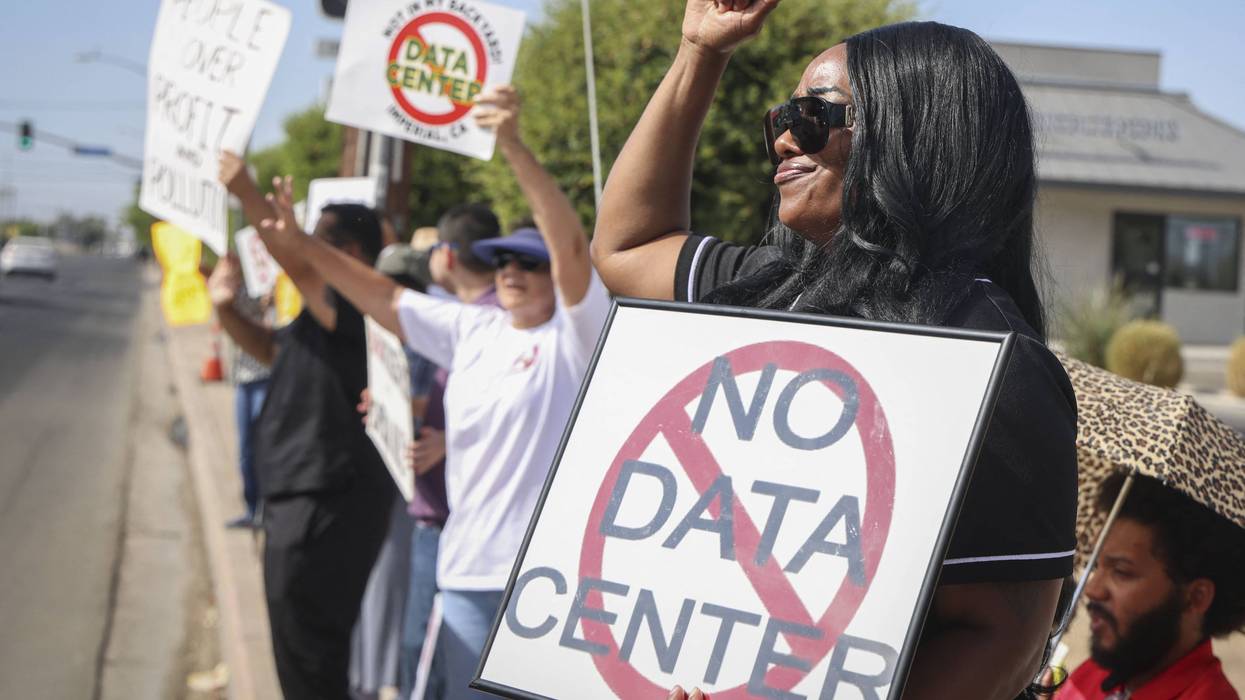
"If voters' perceptions of data centers are not fixed quickly, the campaign against them will expand far beyond Ohio."
A leaked memo written by the National Republican Senatorial Committee is warning Silicon Valley that its artificial intelligence data firms are becoming a massive political liability.
Axios reported on Wednesday that the GOP memo centers on the US Senate race in Ohio, where former Democratic Sen. Sherrod Brown has made opposition to data centers central to his campaign against incumbent Republican Sen. Jon Husted.
The memo argues that if Brown's campaign is successful in a state that President Donald Trump won by double digits in 2024, it will send a signal that support for data centers is a losing position across the US.
"If he loses and data centers get the blame, politicians across the country will take notice—and they will not go near the next one," the memo says. "This has become a sleeper issue for the entire election cycle."
The memo goes on to argue that the tech industry needs to do more to show Americans the benefits they will get from data centers, which have been criticized for raising people's utility bills and generating large amounts of pollution.
"If voters' perceptions of data centers are not fixed quickly," the memo cautions, "the campaign against them will expand far beyond Ohio."
According to Axios, AI CEOs and GOP insiders have become unnerved by internal polls showing that "data centers are as popular as spent nuclear waste, and more broadly have become a proxy for feelings about AI."
A poll released in June by Echelon Insights found that only 27% of Americans said they would want an AI data center built in their nieghborhood, with 62% opposed. This made data centers even less popular than nuclear power plants, which 34% of Americans said they would welcome in their neighborhoods.
A separate Axios report published Wednesday described AI CEOs being in "full panic mode" over the backlash to data centers. What's more, reported Axios, tech insiders privately acknowledge that "they can't find a compelling message to shift opinion fast enough" ahead of the 2026 midterm elections.
In fact, noted Axios, Wisconsin Republican gubernatorial nominee Tom Tiffany has even come out against AI data center construction in his state, which the report described as "a striking crack" in President Donald Trump's "pro-AI coalition."
In a Wednesday social media post, pollster Adam Carlson predicted that any Big Tech public relations campaign to change Americans' minds about data centers was likely doomed.
"Charm offensives from tech firms... would’ve been more effective if they did them proactively instead of in response to (very predictable) local backlash," Carlson explained. "They got greedy. Now they’re trying to play catch-up and it's probably too late. No one to blame but themselves."

Bolivian Vice President Edmand Lara said the attack "threatens life, democracy, and freedom of expression."
Fernando Cerimedo, an Argentine political operative who has worked on right-wing campaigns across Latin America, was arrested in Bolivia this week in connection with the attempted murder of a woman with whom he reportedly had a romantic relationship.
Cerimedo was arrested Tuesday morning at Viru Viru Airport after an attack on Bolivian lawyer and activist Nadia Beller.
Video footage circulating online shows two people dressed as delivery workers approaching Beller outside of a hotel in Santa Cruz de la Sierra and shooting her at close range. The 33-year-old was taken to a hospital and survived.
Cerimedo has connections to Argentina's President Javier Milei, former Brazilian President Jair Bolsonaro, and Bolivian President Rodrigo Paz.
As Drop Site News pointed out, he is business partners with President Donald Trump's former campaign manager Brad Parscale, and The Economist has called him "MAGA's man in LatAm" for "forging close ties" to the US leader's right-wing movement.
The 42-year-old operative is "credited with helping secure the US president's endorsement of the right-wing Nasry 'Tito' Asfura, who won Honduras' presidential election in December," The Guardian noted Wednesday.
The newspaper also reported that "Cerimedo's lawyer, Ernesto Giraldes, said his client had not been... trying to flee to Argentina and had traveled to Santa Cruz de la Sierra specifically to visit Beller in hospital, and denied he was behind the attack."
According to Al Jazeera, "Beller, who was four weeks pregnant, believes she was targeted for her opposition to a pack of unconstitutional laws under Decree 5503, which were being prepared by Cerimedo and the government, and for witnessing high-level corruption."
As the outlet detailed:
Decree 5503 introduces radical economic reforms, such as eliminating state fuel subsidies, that target policies put in place under Bolivia's former socialist government.
Beller is also understood to have had a romantic relationship with Cerimedo. She admitted to her relationship with him in a video appearance from her hospital bed, and highlighted Cerimedo's significant political influence.
She said she decided to speak out as she believes that "until I speak directly to the Bolivian people, they are going to finish what they attempted to do. They are going to end up taking my life."
The arrest is not the first time Cerimedo has attracted negative attention in Bolivia. Reuters reported that "in May, the vice presidency accused him of interfering in the country's internal affairs over a social media post, an allegation he denied," and last month, "Cerimedo said on X that he was being wrongfully accused on the internet of domestic violence."
Bolivian Vice President Edmand Lara said that the attack on Beller "threatens life, democracy, and freedom of expression," while the president, Paz, wrote in Spanish on X that "acts of violence are reaching unprecedented extremes, with repercussions at both national and international levels. As president and on behalf of the government, we are deeply dismayed by these events and are calling for cooperation at all levels—both national and international—to address this situation."
"I wish to express my solidarity with Ms. Nadia Beller regarding these events," he said. "I have instructed the relevant authorities to conduct a thorough, transparent, and exhaustive investigation until the facts are fully clarified. Ms. Beller must be provided with all necessary security and guarantees, as must the investigation itself, which must be conducted with absolute transparency and independence. The truth must come above all else so that justice prevails and is served—without exceptions and regardless of the circumstances."

A majority of aid workers who were killed last year died in attacks in Gaza, despite a ceasefire that was reached last October.
"The technology may change, but the laws of war do not," said the United Nations' top humanitarian official on Wednesday as the international community marked World Humanitarian Day—and a record number of violent attacks against aid workers in 2025, with the expanded use of drones partially driving the increased threat to workers' safety.
According to the Aid Worker Security Database and the UN Office for the Coordination of Humanitarian Affairs (OCHA), 907 aid workers were killed, injured, or kidnapped last year.
Nearly 300 more were detained or arrested, said OCHA.
The number of humanitarians who were killed dropped slightly from the previous year, down to 350 from 387. But the death toll was the second highest ever recorded, and a majority of those killed—186—were attacked in Gaza, despite a "ceasefire" agreement that was reached last October.
More than two-thirds of those killed in Gaza were victims of aerial bombardment.
OCHA noted that "cheap and adaptable armed drones are putting lethal capabilities into more hands," with armies now able to wage more explosive attacks from afar and reach "deeper into towns and cities."
The prevalence of armed drones has been linked to 80% of civilian deaths in Sudan in the first four months of this year, while in Colombia, weaponized drone attacks quadrupled between 2024-25.
As the technology of war changes, said OCHA, "our humanity must not... Civilians, including humanitarians, must be protected."
One aid worker was killed in March in the Democratic Republic of Congo when a drone struck a residential building, while four humanitarian convoys were attacked by drones in a single week in May in Ukraine.
"Weaponized drones have become the new face of an old danger: the deliberate or reckless destruction of civilian life,” said Tom Fletcher, the UN humanitarian chief.
“But just calling it out will not protect the next aid worker," Fletcher added. "States must uphold international humanitarian law and use every tool to protect civilians and our colleagues. And for those who break the rules, there must be real consequences."
So far in 2026, 82 aid workers have already been killed, while 322 have been injured and 235 have been kidnapped.
"On World Humanitarian Day, we honor humanitarian workers everywhere, and the courage and sacrifices they make every day to help others," said the global humanitarian group Oxfam. "We stand in solidarity with our staff and partners on the frontlines, often working at immense personal risk, and urge governments to uphold their obligations to protect them."