

SUBSCRIBE TO OUR FREE NEWSLETTER
Daily news & progressive opinion—funded by the people, not the corporations—delivered straight to your inbox.
5
#000000
#FFFFFF
To donate by check, phone, or other method, see our More Ways to Give page.
Daily news & progressive opinion—funded by the people, not the corporations—delivered straight to your inbox.

David Rosen, drosen@citizen.org, (202) 588-7742
Don Owens, dowens@citizen.org, (202) 588-7767
Note: In January 2017, Public Citizen filed a complaint against U.S. Rep. Chris Collins (R-N.Y.) alleging congressional insider trading. The 116th Congress amended its ethics rules to prohibit members from sitting on the boards of public corporations and directed the U.S. House Ethics Committee to address other potential conflicts of interest related to outside service or positions. Today, Public Citizen submitted recommendations to the committee calling for further reforms.
In the wake of Collins' insider trading scandal, the nation was stunned to discover that congressional ethics rules allowed a lawmaker to sit on the board of directors of a corporation, buy and sell stock of that company and promote legislation that could benefit the bottom line of the company and its stock holders.
Congress promptly changed its rules to prohibit members from sitting on boards of public companies, but that is not enough. The same conflicts of interest arise when a lawmaker sits on the board of a private company or a non-profit organization that employs family members of the lawmaker, or when the lawmaker owns stock in a company their committee oversees and regulates.
Congress must strengthen its ethics rules by extending the ban on serving on a board of directors of a public company to LLCs and private corporations, establishing recusal requirements for members who serve as an officer or director of a non-profit organization and requiring that members and senior staff avoid individual stock ownership in entities they oversee from their official committee positions.
Public Citizen is a nonprofit consumer advocacy organization that champions the public interest in the halls of power. We defend democracy, resist corporate power and work to ensure that government works for the people - not for big corporations. Founded in 1971, we now have 500,000 members and supporters throughout the country.
(202) 588-1000
"As long as we continue to burn fossil fuels," said one scientist, El Niño "occurs on an increasingly hotter baseline, making it much more difficult for communities to deal with the consequences.”
Although “El Niño comes and goes," as one climate scientist said of the naturally occurring warm-weather phenomenon on Monday, experts are in agreement that this year is different—with meteorologists already recording a temperature rise of 3.07°C in the Pacific Ocean, putting it at a statistical tie with November 2015, when El Niño caused the ocean to warm by 3.08°C.
The temperature rise is not expected to peak until November and December, when an average of 14 models examined by Zeke Hausfather of Carbon Brief and Berkeley Earth found that a temperature rise of 4.1°C is forecast.
The event has been underway since June, Hausfather wrote, and has been gathering strength "faster than any previous event on record."
Scientists typically track the strength of El Niño—which leads to heavy rainfall, higher global temperatures, and other extreme weather as warmer Pacific waters are pushed to the south—using the Niño 3.4 anomaly, or ONI, which determines how much hotter the central Pacific is compared with a 30-year rolling average.
A temperature rise above 2.0°C is considered a "very strong" El Niño, and scientists and policymakers are already calling this year's event a "super El Niño," with some experts using the terms "Godzilla-level" and "jaw-dropping" to describe the weather conditions that can be expected in the coming months due to the warmer climate.
As Common Dreams reported late last month, planetary heating driven by fossil fuel emissions is intensifying El Niño, while the naturally occurring phenomenon can in turn worsen the impacts of the climate emergency.
In the last 40 years scientists have recorded a 16% increase in the strength of El Niño events, according to a study published in Science last month. They've also gotten 36% stronger than they were before industrialization began.
The "double whammy," as The Guardian called it, could make 2027 the hottest year ever recorded, blowing through heat records that have just been set this year—and that have been linked to the deaths of people around the world from extreme heat and flooding.
“This event is a huge redistribution of energy in the climate system and is dangerous because it is unfolding on top of a much warmer, human-influenced climate system," climate scientist Friederike Otto of Imperial College London told The Guardian. “So, in many places around the world we will see never-before-experienced heat extremes, with all their consequences on health, food security, and water stress."
Despite the fact that El Niño predates the human-caused climate emergency, Otto said, "as long as we continue to burn fossil fuels, it occurs on an increasingly hotter baseline, making it much more difficult for communities to deal with the consequences.”
This year's event is likely to be the most intense El Niño in 1,000 years, reported to The Guardian, with hotter and drier conditions already linked to deadly wildfires in Indonesia and crop losses in Central America and the Caribbean region due to drought conditions. Rice production this season is expected to fail in Indonesia, according to the Salata Institute for Climate and Sustainability at Harvard University.
As the Southern Hemisphere's summer months approach, southern Africa and Australia are at heightened risk of wildfires and droughts as well. Meanwhile, cocoa production could be damaged by extreme rainfall in parts of South America.
"All strong El Niño events on record have continued to strengthen well into the winter—and the models are in near-unanimous agreement that this one will, too," wrote Hausfather at Carbon Brief. "If the forecast holds, the current event will peak between November and January at a level far beyond any event previously observed in the instrumental record."
In California on Monday, Democratic Gov. Gavin Newsom declared a state of emergency in an effort to prepare communities for El Niño's impacts in the coming months, which could include coastal flooding and heavy snow in mountain regions.
Hausfather noted that strong El Niño events like those that occurred in 1997 and 2015 were also "associated with hundreds of billions of dollars in damages globally."
"This event," he told The Guardian, "is leaving those past ones in the dust."

"Standing up to Elon Musk should be an easy layup for any Democrat."
SpaceX CEO Elon Musk reportedly plans to spend at least $100 million to help Republicans in the 2026 midterms, and some critics are questioning why Democrats aren't doing more to highlight the efforts of the far-right billionaire—so central to President Donald Trump's destructive second term—to buy elections and further corrupt the nation's political process.
A Monday report from NBC News highlighted how Musk has taken a quieter approach to campaigning for the GOP than he did in 2024, when he personally appeared at campaign rallies and promised $1 million checks to voters.
Republican operatives who spoke with NBC said they worried that Musk getting more publicly involved in the campaign could backfire, with one consultant saying it could be a "mistake" if the South African-born billionaire became "the story" in the closing weeks of the election.
While Republicans might want to keep Musk's campaign contributions quiet, critics pointed out that Democratic candidates are under no obligation to do the same.
In a Tuesday social media post, Princeton historian Kevin Kruse expressed bewilderment that Musk was not a central issue for many Democratic campaigns, despite the fact that he's spending tens of millions of dollars trying to defeat them.
"Many Democrats just refuse to take the open shot at Musk," wrote Kruse. "He's a ripe, rich target, and an obvious way to dramatize key issues and mobilize key voters, but some of them are still sitting on their hands. Not sure if they're cowards who don't want to take him on or if they're complicit in taking money from him and people like him, but it's staggering."
"Standing up to Elon Musk," Kruse emphasized, "should be an easy layup for any Democrat."
Journalist Julian Sanchez endorsed Kruse's analysis, describing Democrats' reluctance to go all in against Musk as "a weird unforced error," while pointing to polling showing that the SpaceX CEO is "almost as unpopular" as Trump.
Sanchez also offered up a mock response for any Democratic candidate targeted by Musk's money cannon.
"You’ve probably seen some ads lying about my position on trans issues," Sanchez wrote, imagining a Democratic ad. "Maybe you’re wondering why the campaign is about a tiny fraction of the population when a failed illegal war is skyrocketing gas prices. It’s because a weird billionaire hates his trans daughter and can't shut up about it."
As reported by journalist Judd Legum on Tuesday, Musk's super political action committee has been obsessively attacking transgender rights by "blanketing the internet with digital ads falsely accusing Democratic Senate candidates of supporting 'taxpayer-funded sex changes for kids.'"
Daily Kos reporter Oliver Willis argued that Democrats' reluctance to put Musk front and center raises red flags about how they'll govern should they re-take Congress
"The refusal to go after Musk is a serious validator of the notion democrats have no real interest in winning," Willis wrote. "No serious party would let someone like him emerge as a major funder of the opposition and just… not say anything about it."
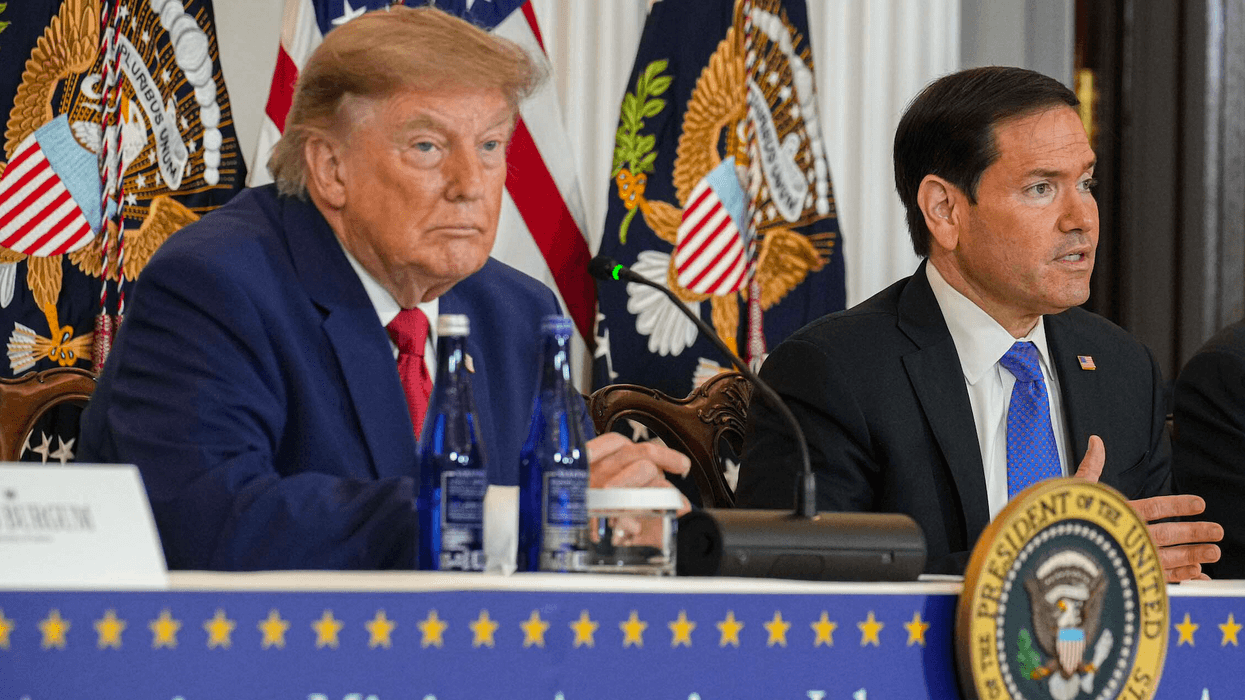
In what the Democratic senator called an effort at “obstructing investigations of Netanyahu’s war crimes,” the Trump administration is planning a dramatic escalation of its sanctions against the court.
As the United Nations General Assembly prepared to meet, a US senator said President Donald Trump and Secretary of State Marco Rubio should face sanctions for their role in trying to destroy the International Criminal Court in order to protect Israeli Prime Minister Benjamin Netanyahu.
"If European countries and other signatories to the International Criminal Court (ICC) have any self-respect, they'd sanction Rubio and Trump for obstructing investigations of Netanyahu's war crimes," wrote Sen. Chris Van Hollen (D-Md.) Monday on social media.
He was responding to a report from the Wall Street Journal detailing "a sharp escalation" in the Trump administration's efforts to, in Rubio's words, "dismantle" the ICC, which issued an arrest warrant for Netanyahu in 2024. The body accused the prime minister and then-Defense Minister Yoav Gallant of war crimes and crimes against humanity in Gaza, including the deliberate use of starvation as a weapon of war.
The ICC has also reportedly launched investigations into two other far-right ministers in Netanyahu's cabinet, Finance Minister Bezalel Smotrich and National Security Minister Itamar Ben-Gvir, for their roles in aggressively expanding Israeli settlements in the occupied West Bank, which are considered illegal under international law.
The Trump administration had already aggressively sanctioned ICC officials involved in efforts to prosecute Americans or Israelis, including then-chief prosecutor Karim Khan and several judges and prosecutors. It had also sanctioned UN special rapporteur on Palestine Francesca Albanese and several Palestinian human rights organizations that had brought evidence of alleged Israeli crimes before the tribunal.
Now, The Journal reports that:
The Trump administration is preparing to impose sweeping sanctions on the [ICC]...
The sanctions would forbid most transactions with the ICC after a grace period of six to seven months... That could potentially cripple the court by prohibiting it from conducting transactions in US dollars, cutting it off from much of the global financial system.
It is unclear when a final decision and announcement might come, though some US officials said the move could be finalized as soon as this week during the United Nations General Assembly meeting or in the following days.
Several world leaders have been vocally critical of the US attack on the ICC, though they've stopped short of calling for sanctions against US officials.
Responding to Rubio's sanctions in August, European Commission President Ursula von der Leyen and European Council President António Costa said that the ICC's "judges and officials must be able to act independently and without external pressure."
Dutch Foreign Minister Tom Berendsen, whose nation is home to the ICC, said the Netherlands disapproves of efforts to sanction the court, adding that Dutch officials were actively working with the EU to protect the court from institution-wide US sanctions. Possible protective measures reportedly include alternative banking and payment arrangements outside the US dollar system.
There have also been calls within the European Parliament, including from Spanish socialist politician Iratxe García Pérez and others, to activate the EU's so-called "blocking statute," which would prohibit European companies from complying with the US sanctions.
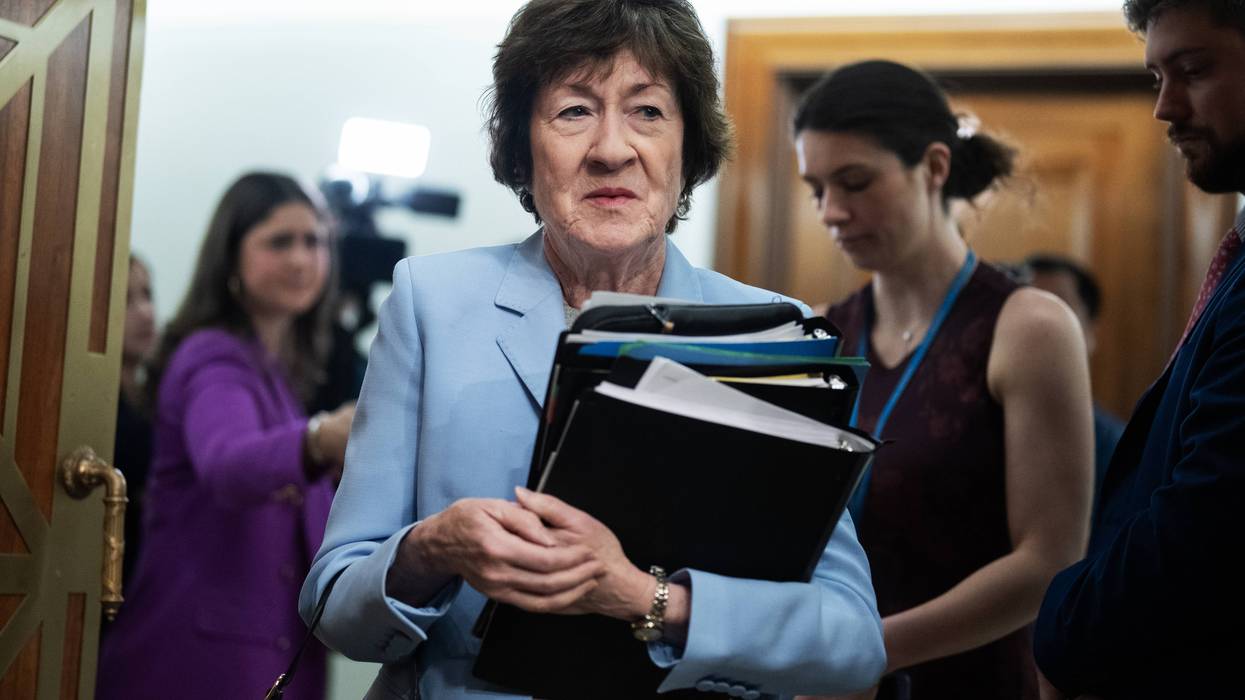
ProPublica reported that the US senator from Maine, now running for a sixth term, was the "most important patron" of a defense company accused of bribing members of Congress for federal contracts.
Explosive reporting published Tuesday by the investigative outlet ProPublica details how US Sen. Susan Collins was at the center of a "sprawling pay-to-play operation" under which the chief executive of a Hawaii-based defense contractor allegedly funneled campaign cash to lawmakers in exchange for lucrative federal contracts.
ProPublica's story—based on internal emails, thousands of pages of legal records, interviews, and other evidence—reveals for the first time the existence of an FBI investigation into possible bribery of members of Congress, including Collins, by the defense contractor Navatek, a probe that was shuttered after President Donald Trump took office for his second term.
In late 2019, according to ProPublica, the head of a pro-Collins super PAC, Scott Reed, met with then-Navatek CEO Martin Kao and other executives at a Washington, DC bakery and asked them for a $500,000 donation to the longtime Maine senator's 2020 reelection bid.
"If they cut a big check, the CEO told Reed, Navatek wanted Collins to guarantee tens of millions of dollars in additional federal funding," ProPublica reported. "After the Corner Bakery meeting, [Kao] sent an initial $150,000 to the Collins super PAC using the shell company. Two months later, he told Navatek executives that Collins committed to getting the company $32 million in naval contracts, according to an internal company email."
In 2022, Kao pleaded guilty to making illegal campaign contributions. The $150,000 check to the pro-Collins group, the 1820 PAC, was funneled through an entity titled "the Society of Young Women Scientist [sic] and Engineers." The money flowed from Navatek's account, violating the ban on federal government contractors making campaign donations.
This is an incredible story of corruption.
I kinda love that the fake shell company the weapons maker used to bribe Susan Collins was called “Society of Young Women Scientist and Engineers LLC.” https://t.co/I06XpPHIO9
— Ryan Grim (@ryangrim) September 22, 2026
ProPubulica revealed that Kao, facing years in federal prison, handed FBI agents "a 50-page document naming dozens of lobbyists, congressional staffers, and members of Congress who he said helped him trade cash for contracts." Kao also told federal agents that Navatek’s federally funded research "was of no real value," according to ProPublica.
"Of all the politicians Navatek courted under Kao’s leadership, Collins was its most important patron," the investigative outlet reported. "The senator’s office steered government contracts worth millions toward the company while her campaign was pumping Kao and his network for donations, according to emails seen by ProPublica. Sometimes they cut checks within 24 hours of the annual defense spending bill, which funds military contracts, clearing a key Senate hurdle."
Collins, who is currently running for a sixth Senate term, denied allegations of bribery through a spokesperson, who dismissed Kao's claims as "outlandish" and said the Collins campaign "disgorged the illegal contributions that Martin Kao had made without our knowledge."
But ProPublica's reporting details, with documentary evidence, Collins' yearslong relationship with Kao, who first met the Maine senator face-to-face in 2018.
"In that first meeting with Collins and her staff, Kao pitched an $8 million boat hull research project for Navatek and [the University of Maine]. Collins seemed supportive," the outlet noted. Kao funneled donations to Collins' campaign, and the senator later included funding for Navatek's project in the annual US military budget.
"Emails showed her staff made it clear to the Navy that it should send the money to Navatek," ProPublica reported.
The outlet also revealed the details of a 2019 meeting between Kao, Collins, and Amy Abbott, who was then serving as the campaign finance director for the senator's 2020 reelection campaign. The meeting took place before an event at Navatek's Maine headquarters, where Collins posed for pictures with Kao.
"Before the event, Kao said, Collins, Abbott, and another staffer met with him in private," ProPublica reported. "One of the staffers told Kao the campaign expected more donations. It was in this meeting that Collins said, 'You’ve seen me deliver,' he told the FBI."
 Martin Kao, second from left, was pictured with Sen. Susan Collins during an event in August 2019. (Photo: Sen. Susan Collins/Facebook)
Avi Asher-Schapiro, one of four ProPublica reporters who bylined the bombshell story, lamented that "we may never know the full story" of the large-scale bribery scheme alleged by Kao because the Trump administration "took a wrecking ball to the FBI teams and DOJ lawyers specializing in these cases—everyone who worked it is gone."
"And as far as we know," Asher-Schapiro added, "the FBI abandoned a witness who might have been able to expose a generational corruption scandal."
The report was published just weeks before the November midterms, when Collins will attempt to retain her seat against former Maine Senate candidate Troy Jackson, who has said that billionaires and corporate-funded super PACs "have her in their pockets."

"This isn't law enforcement," said US Senate candidate James Talarico. "It's lawlessness."
Democrats in Congress on Monday evening were demanding a full, independent investigation into US Immigration and Customs Enforcement's shooting on Sunday of Wilber Rafael Garces Perez, as it was reported that he had been held in an ICE detention center with a bullet still lodged in his back—close to his spine—and that he was finally being taken to a hospital only after he lost feeling in the left side of his body.
In a video posted on social media, US Rep. Joaquin Castro (D-Texas) recounted how Perez was initially hospitalized after ICE agents in an unmarked SUV sideswiped his car as he was making DoorDash deliveries in Austin, Texas, and then shot him through his windshield as he was trying to pull over.
But "only a few hours after being shot, he was forced out of the hospital," said Castro, "and sent over to what is known as STIPC, in Pearsall, Texas, along I-35, the South Texas ICE Processing Center."
Castro and Rep. Greg Casar (D-Texas) spent Monday attempting to gain permission to visit with Perez and raising alarm over the fact that ICE's bullet had not been removed from his back before he was taken to STIPC, where he was reportedly forced to sleep on a floor.
"He reported that he's in incredible pain, that he'd not been given any medication," said Castro. "It's basically abuse that you would take somebody who has been shot and move them from a hospital to a prison, that kind of prison, within a matter of hours, and then also, it looks like, start the process to deport them immediately."
Update on the condition of Wilber Rafael Garcés Pérez at the South Texas Ice Processing Center. He’s being taken to the hospital. He is in tremendous pain and tells us that the bullet is still inside his left side. He can’t move the left side of his body. pic.twitter.com/SWquC2AOrj
— Joaquin Castro (@JoaquinCastrotx) September 21, 2026
Perez entered the country two years agoafter using the CBP One application to set up an appointment with immigration agents. The app was introduced by the Biden administration, but President Donald Trump abruptly terminated it immediately after he took office last year. Perez was permitted to enter the country, applied for asylum, and received a work permit.
As Common Dreams reported Monday, Perez's lawyer, Kate Goldfinch-Lincoln, and his wife were unable to make contact with him when he was first taken from the hospital on Sunday.
After Perez briefly called in from the detention center to a press conference held by Goldfinch-Lincoln on Monday, she said she received a call from another detainee who told her "that officers came in and handled Wilber roughly."
"According to this detainee, Wilber then lost feeling on the left side of his body, including his arm and leg," she said. "Wilber has a bullet lodged near his spine. I was told that he was handcuffed, shackled at the feet, placed in a waist chain, and taken to a hospital. I am waiting to find out how he is doing and what his current condition is. We need answers. We need to know that Wilber is safe and receiving appropriate medical care. So far, he has not."
In response to the update on Perez's condition, Democratic US Senate candidate James Talarico said: "This isn't law enforcement. It's lawlessness."
Casar called Perez's transfer back to the hospital "a positive first step," and credited immigrant rights advocates and community members for "speaking up."
"Now, we have to make sure he fully recovers, is reunited with his family, and gets to tell law enforcement the full story of how he was shot in the back by ICE," said Casar.
Reps. Rashida Tlaib (D-Mich.), Ro Khanna (D-Calif.), and Maxwell Frost (D-Fla.) were among the lawmakers calling for a full investigation into the shooting and ICE's treatment of Perez.
"This is absolutely horrific," said Frost. "ICE must be stopped. Their regime of cruelty will continue until they are held accountable."

"If there was ever a time in human history, in our country and throughout the world, that we have got to come together and create a world not based on greed but based on justice, based on decency, now is the time."
US Sen. Bernie Sanders warned in a speech late Monday that the world is hurtling toward "an extremely dangerous global oligarchy" whose unprecedented concentration of wealth and political power endangers democratic institutions, the environment, and humanity's collective future as artificial intelligence rapidly advances.
"The oligarchs of today, worth hundreds and hundreds of billions of dollars, having investments all over the world, fervently believe that they are the masters of the universe, and that they, through their enormous wealth and power, have been ordained to rule the world," Sanders (I-Vt.) said in an address at the historic Riverside Church in Manhattan, where Martin Luther King Jr. delivered a famous speech condemning the Vietnam War. "Today we say to those oligarchs: This country, this world, belongs to all of us, not just you."
Sanders used his remarks, delivered as world leaders arrived in New York City for the United Nations General Assembly, to decry a massively unequal status quo under which political leaders cater to the needs of billionaire donors and corporate interests rather than the broader population, whose wages are being swallowed by rising costs and whose communities are increasingly devastated by pollution and war.
Sanders also warned about the rise of "right-wing demagogues" who are exploiting real material struggles and government failures to advance nefarious agendas that pit "working people against each other based on the color of their skin, where they were born, or their religion."
"Instead of producing more bombs and weapons and seeing the military-industrial complex enjoy huge profits, governments throughout the world need to come together to feed the children, take care of the vulnerable, and protect our planet from the ravages of climate change," said Sanders, calling for an end to US military assistance to Israel, which is using American-made weaponry to carry out its genocidal assault on the Gaza Strip.
"Never before in human history have so few people held so much wealth and so much power, never before in human history have we had such enormous concentration of ownership," the senator said, warning that advancements in AI technology could dramatically intensify the crises facing humanity if control isn't wrested from "a handful of Big Tech oligarchs."
Watch Sanders' full speech:
Sanders called on US President Donald Trump, a billionaire who has dismissed warnings about the threats posed by AI, and Chinese President Xi Jinping to "begin the process of negotiating a comprehensive treaty to establish a pause on advanced AI and a ban on AI superintelligence" when the leaders meet this week.
The progressive senator also cautioned against "despair and depression" in the face of pressing global challenges, saying, "We got to stand up, we got to fight back, we've got to create the kind of nation and world that you and I know we can create."
"If there was ever a time in human history, in our country and throughout the world, that we have got to come together and create a world not based on greed but based on justice, based on decency, now is the time," said Sanders.
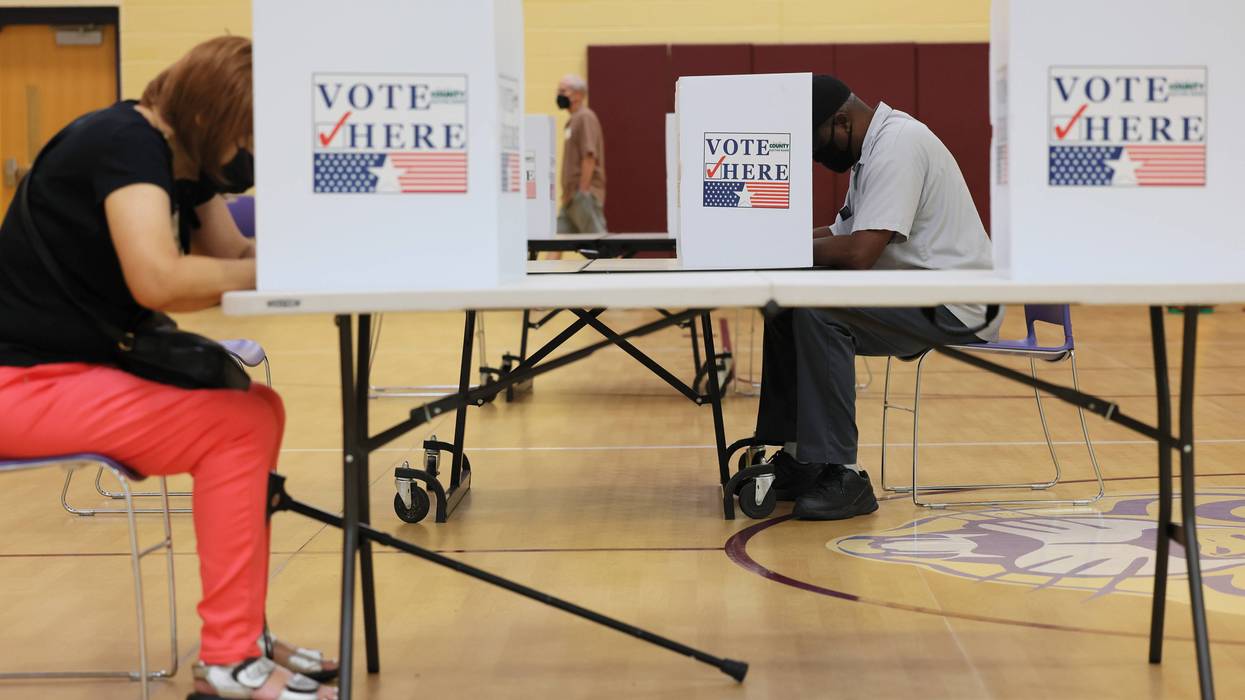
"Officials should stop wasting taxpayers' money on pointless legal action and instead focus on administering our elections," said the head of People Not Politicians Missouri.
Despite its right-wing supermajority, the US Supreme Court has twice struck down Missouri Republicans' rigged congressional districts for the November midterm elections, but after an appellate panel's Monday decision, the map fight is headed back to the justices.
Less than two weeks after the justices delivered their second blow to the Missouri GOP's gerrymandering effort with no noted dissents, a three-judge panel from the US Court of Appeals for the 8th Circuit ruled that the state's "current plan to use the 2022 map in the November 2026 general election violates the Constitution," and "only use of the 2025 map complies with the Constitution and federal law."
All three panel members were appointed by Republicans: Judge James Loken by former President George HW Bush, and Judges David Stras and Justin Smith by President Donald Trump. The Associated Press reported that "prior to his June appointment, Smith was an attorney who represented Trump as he unsuccessfully appealed a $5 million jury verdict in a lawsuit filed by the writer E. Jean Carroll to the US Supreme Court."
People Not Politicians Missouri, which has been battling the gerrymandering scheme since state lawmakers passed House Bill 1 during last September's special session, pledged to immediately file an emergency appeal with the nation's top court.
"Everyone is aligned on what is true. HB 1 is not the law and cannot be the law unless voters ratify it," said the campaign's executive director, Richard von Glahn, in a statement. "The Supreme Court of Missouri, the United States Supreme Court, the Missouri attorney general, Missouri secretary of state, and People Not Politicians all have agreed on this."
"Ballots have been printed, and Missourians have already voted," he stressed. "Thousands more will vote before this order seeks to take effect. Officials should stop wasting taxpayers' money on pointless legal action and instead focus on administering our elections. Missourians are already voting and will continue to vote no on Proposition A through November 3."
The 8th Circuit's decision also drew attention from beyond Missouri. Politico reporter Kyle Cheney said that "it's the gerrymander that won't die," while Democratic Texas Congressman Christian Menefee—whose state was the first to pass a new rigged map at Trump's request—declared that "this is outrageous."
"The Supreme Court already stepped in twice to block Missouri's rigged map," Menefee added. "Ballots are already in the mail. Now, at the eleventh hour, an appeals court is letting Missouri Republicans force that rigged map on voters anyway. All to erase a Kansas City district and silence Black and Brown voters. Catastrophic for confidence in our elections."
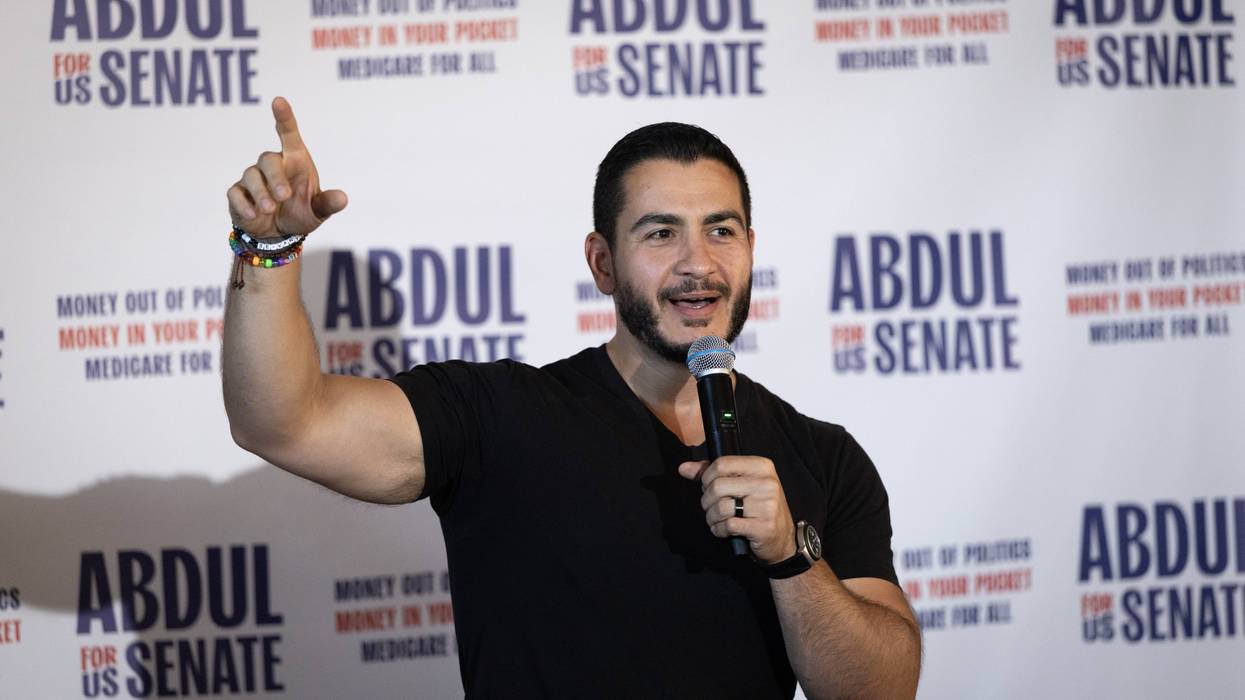
"Honestly, this goes further than a lot of poll data to show you that GOPs are cooked," one journalist said of the Republican candidates claiming to oppose the president's unpopular conflict before the midterms.
With US President Donald Trump's approval rating tanking—largely due to his illegal war on Iran and the resulting economic fallout—Michigan's Republican US Senate candidate, Mike Rogers, on Monday afternoon called for an end to the conflict, and his Democratic opponent, Abdul El-Sayed, wasted no time turning to the receipts.
Rogers posted a 75-second video on social media: He's in a grocery store, noting the need to bring down food prices. He also says that "the war with Iran needs to end," and in the meantime, the United States should impose a temporary embargo on exports of diesel—which has hit a record high of $6.51 per gallon.
El-Sayed responded with a pair of clips from the Republican's previous interviews and wrote: "You've spent your entire campaign supporting the war in Iran. Liar, coward, fraud."
The Democratic super political action committee Senate Majority PAC also called out Rogers, writing in response to his ad: "No one’s buying this. You supported the war in Iran every step of the way. Rogers six months ago: 'How anyone says [the war] is a bad idea, I don't know what is.'"
Michigan Democratic Party spokesperson Joey Hannum similarly stressed that "Mike Rogers has been all-in on Trump's Iran War from day one, repeatedly dismissed Michiganders' pain as gas prices skyrocketed, and has vowed to hand Trump a blank check to keep this war going indefinitely."
"Every time a Michigander fills up their gas tank, they're paying the price for the Rogers-Trump war in Iran," Hannum continued, as the average cost of gasoline stood at $4.48 a gallon. "Price Hike Mike promised he would give Trump the authority to keep his cost-raising war going, and Michiganders won't forget it."
Track AIPAC, which documents political spending by the American Israel Public Affairs Committee and related groups, responded to Rogers' post with another clip of his previous comments on the war, which has dragged on for nearly seven months—with no end in sight—and killed thousands of people.
Mike Rogers pledges to support unconditional military aid to the country that dragged us into this war: pic.twitter.com/GluXUGKk3X
— AIPAC Tracker (@TrackAIPAC) September 21, 2026
Journalists and pollsters highlighted that Rogers isn't the only Republican running in the November midterms who is now calling for an end to the war, which polling has shown is deeply unpopular with the US public.
Republican Iowa Congresswoman Ashley Hinson—who has repeatedly voted against war powers resolutions intended to end the conflict in Iran—wrote on social media Monday morning that "Iowans are being squeezed and shouldn't have to foot the bill at the pump or the checkout line for the war in Iran. We need to use every option at our disposal to provide some relief from high prices."
"That includes suspending the gas tax, pausing diesel exports, unleashing E-15 everywhere we can, reinstating the $1/gallon biodiesel tax credit, and creating a diesel relief program to help our farmers and truckers being crushed by the high costs," Hinson continued, adding that "the war needs to be brought to a successful and immediate end."
In response, her Democratic opponent, Josh Turek, said that "it's easy to send a tweet, but when you had the chance to vote to end this war, you chose not to. You voted seven times to continue it, including just last week. It's time to actually end the forever wars and put Iowa and Iowans first. Glad you're finally following my lead after waffling on the proposals I put forward last week to address the rising costs of the war in Iran."
Ryan Costello, policy director at the National Iranian American Council, wrote to Hinson: "It's good you're calling for the Iran War to end, though you've also voted against six war powers resolutions directing an end to the war, including just six days ago. Will you vote for the next one, and commit to cut off funding for the backfiring war?"
Sen. Chris Murphy (D-Conn.) asked: "How dumb does she think voters are? If Hinson wins, then Republicans control the Senate. And they've pledged to Trump to kill any legislative effort to end the war as long as they keep power."
Noting that "first Hinson, now Rogers" is claiming to want an end to the war, Punchbowl News senior congressional reporter Andrew Desiderio said that it "will be fascinating to see which way vulnerable R incumbents," such as Sens. Jon Husted (Ohio) and Dan Sullivan (Alaska), "vote on the Iran war powers resolution expected to come up this week."
Following Rogers' post, longtime Capitol Hill journalist Jamie Dupree wrote: "Wow. The war in Iran + high gas/diesel costs must be killing Republicans in their internal polling."
Zenith Research founding partner Adam Carlson posited: "The Republican strategy memo must have gone out this weekend. And the numbers must have been dire, particularly in the already tariff-battered Midwest."
Talking Points Memo founder Josh Marshal suggested, "Honestly, this goes further than a lot of poll data to show you that GOPs are cooked."
Republicans are trying to hang on to their slim majorities in both chambers of Congress for the latter half of Trump's second term, and with the midterms less than two months away, The Cook Political Report currently ranks seven Senate seats as a "toss-up." In addition to the contests in Iowa and Michigan, there is Sullivan's race against former Democratic Congresswoman Mary Peltola in Alaska and Husted versus former Democratic Sen. Sherrod Brown in Ohio.
There's also former Democratic Maine Senate President Troy Jackson's challenge to Republican Sen. Susan Collins, the race between Democratic New Hampshire Congressman Chris Pappas and former Republican Sen. John Sununu, and Texas' contest between Democratic state Rep. James Talarico and Trump-backed state Attorney General Ken Paxton.
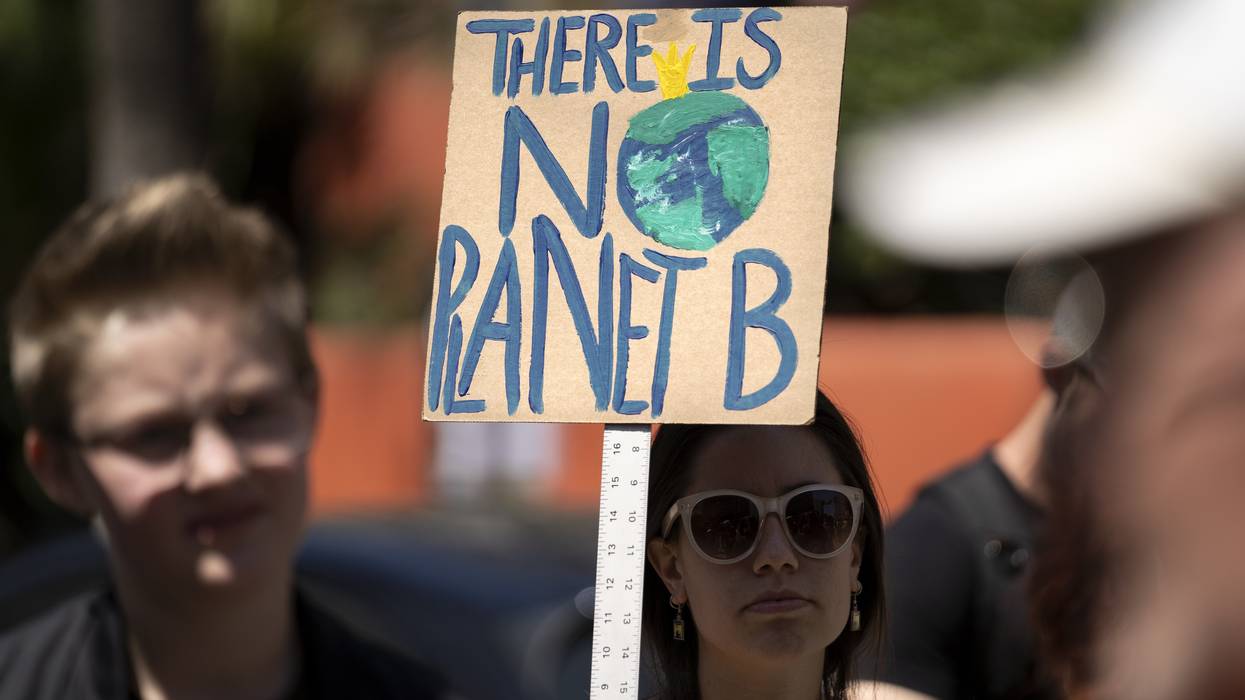
"Seven of nine planetary boundaries are transgressed, and pressure on all seven is at its highest recorded level," said one scientist.
Like other recent warnings from climate scientists, the message sent by the latest Planetary Health Check report on Monday was clear: "We need to move fast," as the director of the Potsdam Institute for Climate Impact Research, the group behind the report, said.
"Seven of nine planetary boundaries are transgressed, and pressure on all seven is at its highest recorded level," said Johan Rockström, director of the Potsdam Institute (PIK).
The report finds that seven measures of the Earth's health are no longer within the "safe operating space": ocean acidification, freshwater change, land system change, climate change, modification of biogeochemical flows, introduction of novel entities, and change in biosphere integrity.
Just two markers, stratospheric ozone depletion and the increase in atmospheric aerosol loading, have shown improvement over the last decade, said the Planetary Boundaries Science Lab at PIK.
“The diagnosis is unambiguous," said Boris Sakschewski, the lead author of the report. "Pressure is rising across every planetary boundary already outside the safe operating space. It means that the risk of large-scale, persistent, and potentially irreversible change is increasing, while our margin for error in tackling these problems is shrinking."
The scientists behind the report emphasized that with recent news regarding the state of the planet's crucial coral reefs, forests, and extreme weather events like heatwaves and flooding, it should come as no surprise that the Earth's boundaries have been transgressed, as continued fossil fuel emissions have caused runaway planetary heating.
Earlier this month, United Nations scientists said the planet can no longer avoid at least a temporary temperature rise above 1.5°C over preindustrial levels.
Oceans have also become so warm that stressed coral reefs have less and less time to recover from climate damage, as Common Dreams reported last month, and a UN report last year found that the world's governments are not moving fast enough to end the destruction of forests.
Last month and the summer of 2026 both set heat records, with extreme heat killing more than 1,000 people across Europe, and wildfires spreading across the continent and Canada. Record-breaking heat was also recorded in parts of Asia and the Middle East.
In June, the UN Children's Fund found that nearly every child on Earth is now exposed to at least one climate hazard driven by fossil fuel emissions, including flooding, heatwaves, and drought.
"Pakistan’s 2025 monsoon floods affected more than 6.9 million people," said PIK. "Global ocean heat content reached a new record in 2025, with Hurricane Melissa rapidly ramping up to a Category 5 hurricane and striking Jamaica after passing over exceptionally warm seas. From January 2023 to September 2025, bleaching-level heat stress impacted about 84.4% of the world’s coral reef area, making it the largest global coral-bleaching event observed to date."
Hindou Oumarou Ibrahim, chair of Planetary Guardians, implored readers of the Planetary Health Check report to "read that list again: Pakistan, the Caribbean, Europe, the reefs beneath our oceans. These are not separate emergencies; the planet is telling us, in every region at once, that it is out of balance."
"As chair of Planetary Guardians, I hear this same story wherever I go, whether from a pastoralist watching the rains fail season after season or a coastal community watching the sea rise," said Ibrahim. "The 2026 Planetary Health Check puts data behind what communities on the frontlines already know from living it. We do not have the luxury of treating these as separate crises any longer.”
Rockström emphasized that while "we do not have the luxury of time... we do have the knowledge, capacity, and solutions to change course."
"Accelerating action to return to the safe operating space across all planetary boundaries is essential to protect lives and livelihoods," said Rockström, "and to deliver on the promise of shared future prosperity."
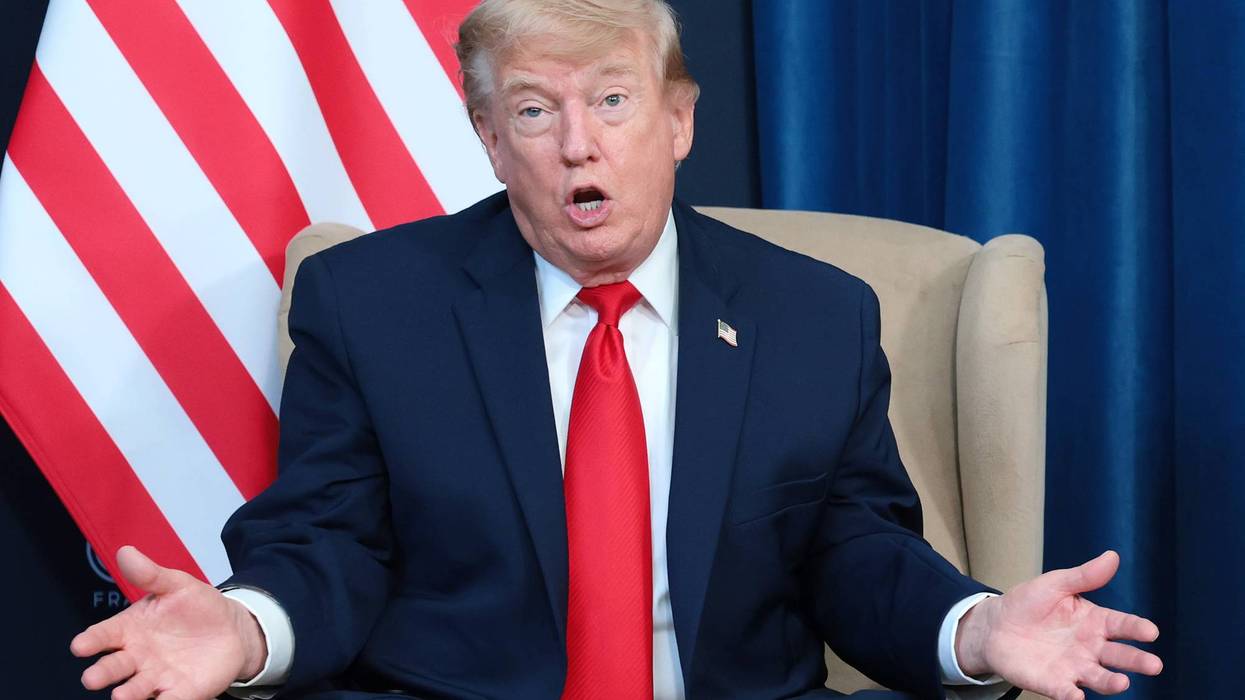
"It’s clear: Americans are fed up with Trump and Republicans."
As US diesel prices are hitting record highs, President Donald Trump's approval ratings are hitting record lows.
A poll from Reuters released on Monday shows Trump's approval rating clocking in at just 32%, the worst rating recorded over either of his two terms.
One reason for Trump's rock-bottom ratings has been increasing dissatisfaction from Republican voters, who in the past have stood by him even after he incited a violent attack on the US Capitol that sent lawmakers running for their lives.
Overall, Trump's job approval ratings among Republicans fell by nine points in the span of a week, going from 82% to 73%. The survey also finds for the first time that Republican voters disapprove of Trump's handling of the cost of living, with 51% registering dissatisfaction.
The Reuters survey wasn't even the worst poll for Trump released on Monday, as a poll from American Research Group shows the president with an approval rating of 29% and a disapproval rating of 68%.
Notably, American Research Group said Trump's approval rating now is 10 points lower than it was in September 2018, shortly before the Republican Party lost 41 seats in the US House of Representatives in that year's midterm election.
The next midterm elections are less than two months away, and the biggest difference between 2018 and 2026 is the state of the economy, as Trump's illegal war with Iran has led to skyrocketing energy prices with no end in sight.
Data released by the American Automobile Association on Monday shows the average price of gasoline in the US rising to $4.48 per gallon, with the average price of diesel fuel hitting another record high of $6.51 per gallon.
Economists say the record diesel prices are likely to lead to further increases in grocery prices, as the fuel is used to power both farm equipment and delivery trucks. According to a Monday report from Axios, higher costs for farmers are set to "reach store shelves in the coming months, starting with bread, meat, dairy, and eggs."
In a Monday social media post, Trump tried to cast blame for high diesel prices exclusively on Russia's war with Ukraine, without mentioning the illegal war with Iran he started more than six months ago.
"Russia has unfortunately lost control of its Diesel Oil Industry due to its War with Ukraine," Trump wrote. "A large number of their Diesel refineries have been blown up and are, at least temporarily, out of commission. This ridiculous and never ending War with Ukraine must be ended."
The social media account for House Democrats pounced on the record-low approval numbers for the president.
"It’s clear: Americans are fed up with Trump and Republicans," they wrote.