April, 04 2016, 11:45am EDT
For Immediate Release
Contact:
Reprieve’s London office can be contacted on: communications [at] reprieve.org.uk / +44 (0) 207 553 8140. Reprieve US, based in New York City, can be contacted on Katherine [dot] oshea [at] reprieve.org / +1 917 855 8064.
Saudi Executions Pass 80 for First Quarter of 2016--on Course to Double 2015 Total
This year has seen Saudi Arabia execute 82 people so far, according to new research by international human rights organization Reprieve - which suggests the Kingdom is on course to behead twice as many prisoners as last year.
This year has seen Saudi Arabia execute 82 people so far, according to new research by international human rights organization Reprieve - which suggests the Kingdom is on course to behead twice as many prisoners as last year.
This week saw three executions take place, and last week four, according to statements from the Saudi Government and reports in local media. The latest executions come in the wake of a visit to the Kingdom last week by UK Defence Secretary Michael Fallon, during which he met with the country's Interior Minister.
The British Government has previously raised the cases of three people sentenced to death as children over their alleged involvement in political protest, but it is not clear whether Mr Fallon discussed the matter during his meeting with Crown Prince Mohammed bin Naif, who runs the ministry responsible for carrying out executions.
Dawoud al Marhoon, Ali al Nimr and Abdullah al Zaher were all sentenced to death despite having been children at the time of the alleged offences, and could be executed at any time without warning. All three were convicted for alleged offences relating to protests calling for reform in the Kingdom. On January 2 Ali Saeed al-Ribh was executed for his alleged involvement in the same political protests when he was 17 years old.
The UK Government told Members of Parliament last month that: "We have raised these cases with the Saudi Arabian authorities, most recently on 12 March, at a very senior level. Our expectation remains that they will not be executed."
However, under the Saudi system there is no requirement for prisoners' lawyers or families to be informed before they are executed, and British ministers have not provided any explanation of what their expectation is based on.
If maintained, the current pace of executions in Saudi Arabia would see the Kingdom kill a total of over 320 prisoners in 2016 - more than double 2015's toll of 158, which itself was nearly twice 2014's total of 88.
Commenting, Maya Foa, director of the death penalty team at Reprieve, said:
"As Saudi Arabia looks set for yet another record-breaking year of beheadings, it is more important than ever that its allies in the UK, Europe and the US call for it to stop. The deep injustices of the Saudi system mean that those being sent to the swordsman's blade are in many cases tortured into 'confessing,' guilty of nothing more than calling peacefully for reform, or even sentenced to death as children. The UK and US must immediately call for Ali, Dawoud and Abdullah's sentences to be commuted before it is too late - given the rising tide of beheadings, vague reassurances are not enough."
Reprieve is a UK-based human rights organization that uses the law to enforce the human rights of prisoners, from death row to Guantanamo Bay.
LATEST NEWS
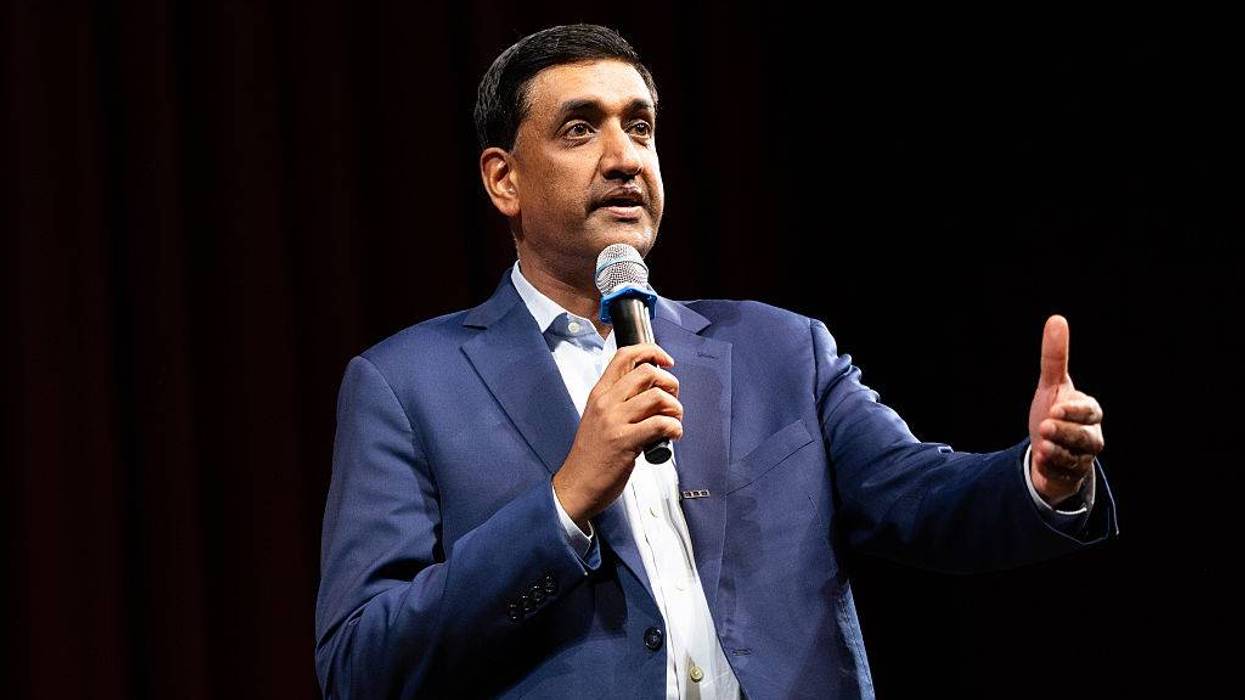
‘Time to Sue This Liar’: Trillionaire Elon Musk Threatens Ro Khanna for Warning of 4.5 Million Child Deaths From DOGE Cuts
"The Dems should have a leader who Elon Musk is threatening to sue and wants imprisoned," said one political observer. "That's the right guy."
Jun 22, 2026
The recently crowned world's first trillionaire Elon Musk threatened Rep. Ro Khanna with legal action on Monday after the California Democrat pointed out the life-ending potential of foreign aid cuts made by the Department of Government Efficiency.
During an appearance on the "I've Had It" podcast on Saturday, Khanna (D-Calif.) said that there must be consequences for Musk, who in February 2025 used DOGE to curtail programs and cut funding for the United States Agency for International Development (USAID).
"There needs to be accountability for Elon Musk," Khanna emphasized. "You know, they’re celebrating that he created 4,400 millionaires, but they don’t talk about the 4.5 million children around the world who he possibly sentenced to death by dismantling USAID.”
A peer-reviewed study published by The Lancet in July 2025 estimated that proposed cuts to USAID could lead to as many as 14 million preventable deaths by 2030 worldwide, including the deaths of 4.5 million children under the ages of five years old.
Musk, who earlier this month became the world's first trillionaire, wrote in response to Khanna's interview that it was "time to sue this liar."
It's not clear how Khanna's statement could be defamatory given that it was based on research published by a prestigious medical journal.
Musk, in a separate reaction to Khanna's remarks about USAID, later added that the US lawmaker "should be in prison."
On Monday afternoon, Khanna posted a video in which he challenged Musk to debate him on the impact the DOGE cuts have had on people throughout the Global South who had previously benefited from USAID.
"The world's richest person has spent all day... going after me," Khanna said. "Why? Because I cited an academic study that his DOGE cuts may lead to the deaths of millions of children overseas. You know, Elon, I thought you were a free speech guy. Why not debate me on these issues instead of threatening lawfare?"
"You're not going to be able to intimidate me," Khanna added.
.@elonmusk let's debate. You game?
I am for free speech, not lawfare. pic.twitter.com/gThLggxiOW
— Ro Khanna (@RoKhanna) June 22, 2026
Mehdi Hasan, editor-in-chief of Zeteo News, said that Khanna’s willingness to directly take on Musk exhibited qualities that Democrats could use more of in leadership positions.
"He is picking/making the right enemies on the right, and really pissing them off," Hasan wrote of Khanna. "The Dems should have a leader who Elon Musk is threatening to sue and wants imprisoned. That's the right guy."
Keep ReadingShow Less
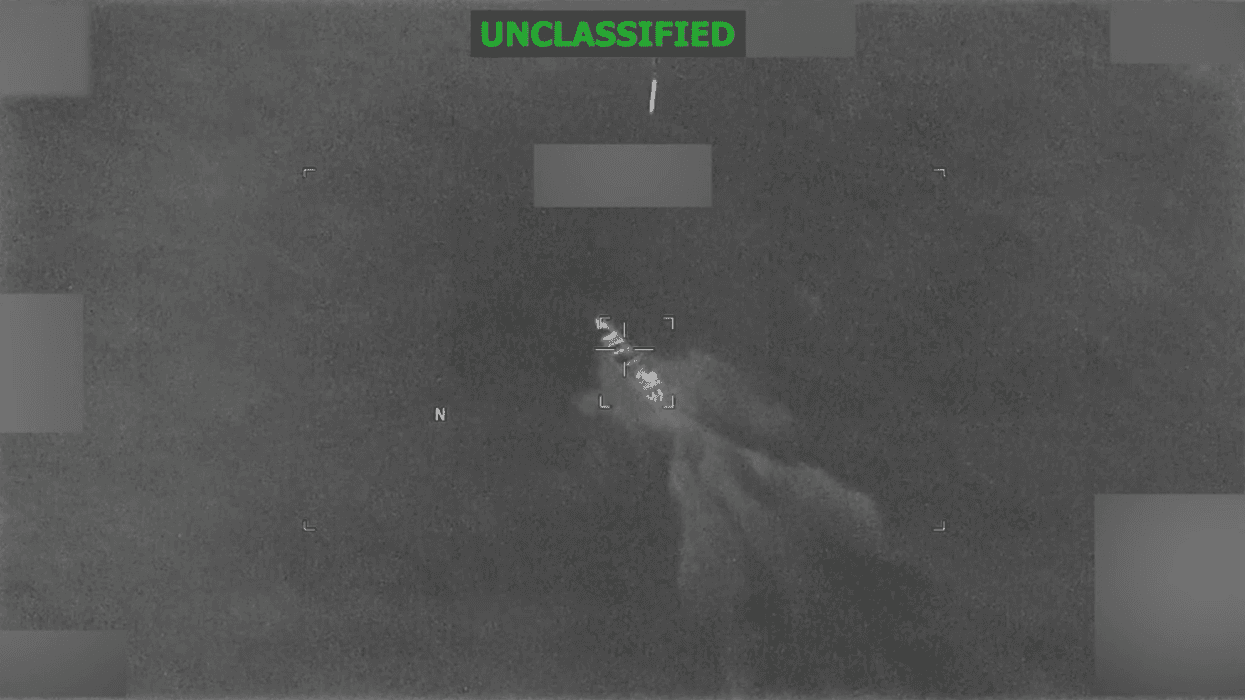
'There Will Come a Day When He Faces Prosecution': Trump Condemned After US Murders Two More at Sea
"The summary execution of two more in an alleged drug boat brings the number of murders ordered by Trump to more than 210," noted one human rights defender.
Jun 22, 2026
Two people were killed, and six others survived, a strike on Sunday that the US military claimed—without providing evidence—targeted a boat full of "narco-terrorists," but that human rights defenders called another summary execution worthy of prosecution.
"On June 21, at the direction of the commander of US Southern Command, Gen. Francis L. Donovan, Joint Task Force Southern Spear conducted a lethal kinetic strike on a vessel operated by Designated Terrorist Organizations," USSOUTHCOM said in a statement. "Intelligence confirmed the vessel was transiting along known narco-trafficking routes in the Caribbean and was engaged in narco-trafficking operations."
"Two male narco-terrorists were killed during this action, and there were six male survivors," the statement added. "Following the engagement, USSOUTHCOM immediately notified US Coast Guard to activate the Search and Rescue system for the survivors."
More lawless killing in the Trump administration’s boat bombing campaign.Real killing in a phony armed conflict with “narco-terrorists.”This strike reportedly left 6 survivors.US record for rescuing survivors alive is…not great.
[image or embed]
— Brian Finucane (@bcfinucane.bsky.social) June 21, 2026 at 11:28 PM
According to The Intercept's Nick Turse, who has tracked all of the reported US boat bombings in the Caribbean Sea and Pacific Ocean, there have now been 66 such strikes, which have killed 215 people and left 12 survivors, based on USSOUTHCOM data.
The fate of previous boat strike survivors is not completely clear. After one April bombing, the US Coast Guard told UPI that search-and-rescue operations were called off after no signs of survivors were found. Last October, President Donald Trump said two strike survivors were repatriated to their home countries of Ecuador and Colombia, where they faced prosecution.
Survivors of some of the strikes have accused US forces of torturing them.
Relatives of people killed in previous US boat bombings, as well as officials in Venezuela and Colombia, have said that numerous victims were fishers who were not involved in the illicit drug trade.
In January, relatives of two Trinidadian fishers killed in the strikes filed a federal wrongful death lawsuit in Massachusetts.
"The summary execution of two more in an alleged drug boat brings the number of murders ordered by Trump to more than 210," former Human Rights Watch executive director Kenneth Roth said on social media. "There will come a day when he faces prosecution for these crimes."
Keep ReadingShow Less
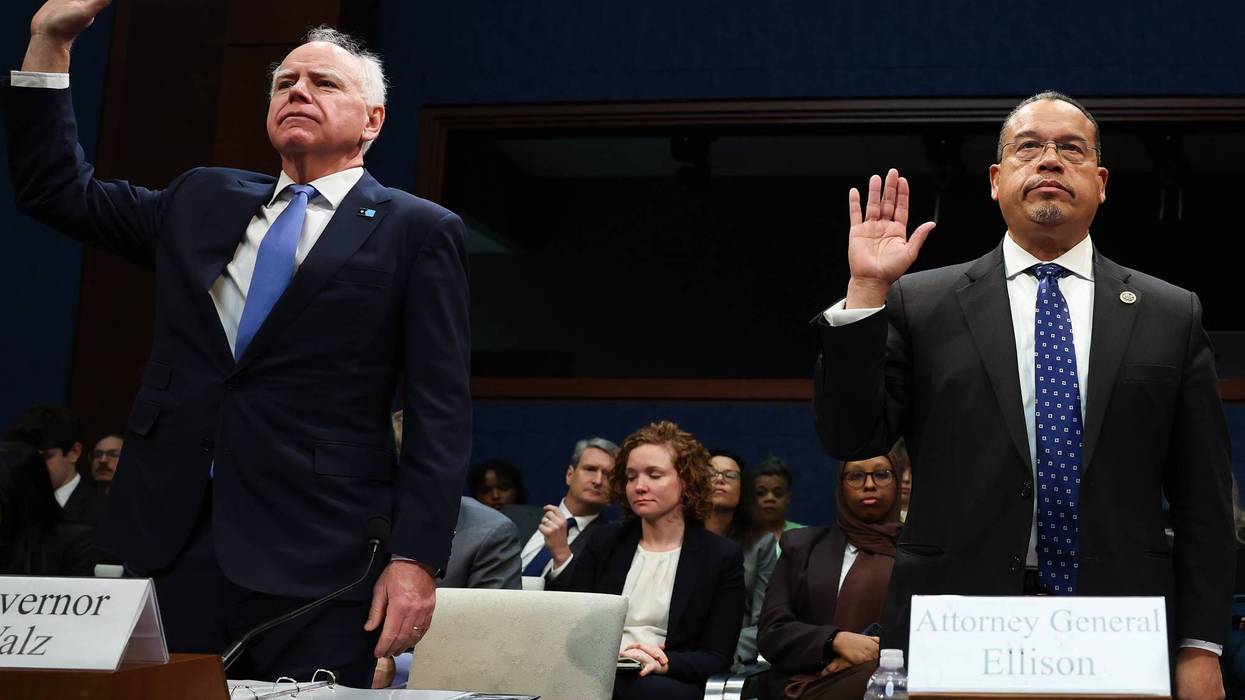
Judge Finds Trump DOJ Abused Subpoenas in Attempt to ‘Coerce’ Minnesota Leaders
"I will never stop exercising my constitutional rights to stand up for Minnesotans and the American freedoms we hold dear," Minnesota Gov. Tim Walz said after the ruling.
Jun 22, 2026
A federal judge on Monday quashed multiple grand jury subpoenas issued by the US Department of Justice aimed at political leaders in Minnesota, including Gov. Tim Walz and Minneapolis Mayor Jacob Frey.
In his ruling, Judge Patrick Schiltz of the United States District Court for the District of Minnesota found there was "no doubt" that the DOJ had initiated "a criminal investigation in order to harass political opponents or to coerce them into taking official action," which he described as "a blatantly unlawful and unethical use of the grand-jury process."
Finding that "the evidence that the challenged subpoenas were issued for unlawful reasons is overwhelming," Schiltz, an appointee of former President George W. Bush, cited multiple instances of Trump administration officials "threatening and attempting to punish states and localities that have adopted 'sanctuary' policies."
The judge then quoted several social media posts by President Donald Trump in which he warned that "retribution" was coming for Minnesota officials, as well as statements from Trump DOJ officials linking grand jury subpoenas to the state's lack of cooperation with federal immigration enforcement operations.
Schiltz also said it was "risible" for the DOJ to justify the subpoenas on the grounds that it is investigating officials' refusal to devote state and local resources to assisting federal law enforcement, which he described as "constitutionally protected conduct."
"A grand-jury subpoena cannot be issued for an improper purpose," Schiltz emphasized. "The fact that connections between the information sought in the subpoenas and any possible criminal violation range from extremely weak to nonexistent only adds to the overwhelming evidence that these subpoenas were not issued to investigate, but to harass, coerce, and retaliate."
In a statement released after Schiltz's ruling, Walz hailed the decision as "a victory for the rule of law and our democracy," depicting the DOJ probe as yet another example of the department "pursuing criminal investigations into the president's political opponents."
"I will never stop exercising my constitutional rights to stand up for Minnesotans and the American freedoms we hold dear," Walz added.
Frey also released a statement after the ruling, accusing the DOJ of "subpoenaing political opponents because they spoke out on behalf of their constituents."
"My job is not to stay silent when Minneapolis residents are killed, families are torn apart, and businesses are closed," Frey said. "My job is to stand up for the people I represent, the families who call our city home, and the thousands of people who showed up and spoke out."
Rep. Angie Craig (D-Minn.) celebrated the ruling, which she said "confirms what we knew all along—that this was nothing but a baseless political attack on Minnesota’s leaders."
Aaron Reichlin-Melnick, senior fellow at the American Immigration Council, noted in a social media post just how far off the rails the Trump DOJ has gone.
"The Trump administration’s efforts to use the criminal grand jury process to retaliate against Minnesota and Minneapolis has floundered badly," he wrote. "It's a sign of how they are willing to toss aside basic rules to get at their enemies, and how the courts have largely smacked them down when they tried."
Keep ReadingShow Less
Most Popular