

SUBSCRIBE TO OUR FREE NEWSLETTER
Daily news & progressive opinion—funded by the people, not the corporations—delivered straight to your inbox.
5
#000000
#FFFFFF
To donate by check, phone, or other method, see our More Ways to Give page.
Daily news & progressive opinion—funded by the people, not the corporations—delivered straight to your inbox.

Shane Levy - shane.levy@sierraclub.org, 201-679-9507
The Sierra Club yesterday moved to intervene in Pacific Power's request before the Oregon Public Utility Commission that would stifle the expansion of clean energy in Oregon by undermining state policies that foster renewable energy growth locally. PacifiCorp, through their subsidiary Pacific Power based in Portland, has proposed dramatically shortening the length of contracts it secures to purchase clean energy like wind and solar from 15 years to only three years, which would have a chilling effect on Oregon's burgeoning clean energy industry.
The Sierra Club yesterday moved to intervene in Pacific Power's request before the Oregon Public Utility Commission that would stifle the expansion of clean energy in Oregon by undermining state policies that foster renewable energy growth locally. PacifiCorp, through their subsidiary Pacific Power based in Portland, has proposed dramatically shortening the length of contracts it secures to purchase clean energy like wind and solar from 15 years to only three years, which would have a chilling effect on Oregon's burgeoning clean energy industry. Sierra Club joins other clean energy supporters in the proceeding, including Renewable Northwest, the City of Portland, Renewable Energy Coalition (REC), and the Community Renewable Energy Association (CREA).
The filing can be found here.
"Oregon families want and deserve more local clean energy like wind and solar to power our homes and communities," said Bill Arthur, Associate Regional Campaign Director for the Sierra Club's Beyond Coal campaign.. "Instead of supporting more investment into clean energy that creates jobs here in Oregon, Pacific Power instead wants to pull the rug out from under this growing industry and prevent the expansion of clean energy jobs and businesses that benefit our communities here at home."
The federal Public Utility Regulatory Policies Act (PURPA) requires utility monopolies to purchase power from qualifying renewable energy producers if the projects can offer a price that is at or below what ratepayers would otherwise pay. The cost for solar and wind projects has dropped steeply in recent years, which has encouraged a burst of new clean energy projects that are able to offer competitive pricing. Unfortunately, in an attempt to protect their own profits, utilities like PacifiCorp have sought to undermine these projects by pushing states to shorten the required contract terms, which in turn makes financing for the projects more difficult, if not impossible. At the same time, PacifiCorp is doing next to nothing beyond what's required to invest in and develop wind and solar projects in Oregon. In fact, according to PacifiCorp's 20-year energy plan that is currently being developed, the utility has no plans to invest in any other clean energy beyond what falls under PURPA.
PacifiCorp's latest attack on PURPA in Oregon follows a trend across the country. The utility, owned by Warren Buffett's Berkshire Hathaway Energy, has sought similar changes before state bodies in Idaho, Utah and Wyoming, and earlier this year failed to push through a bill in Congress that would have allowed an end run around PURPA.
Oregon's last in-state coal plant is scheduled to retire in 2020. Yet Oregon still gets one-third of its energy from coal, much of that coming from out-of-state coal plants. $295 million leaves Oregon every year to pay for out-of-state coal energy.
"While Oregonians across the state demand more leadership from their utility company to advance clean, affordable energy solutions, Pacific Power still gets two-thirds of its energy from out-of-state coal plants that put our families at risk and prevents the expansion of locally produced clean energy," continued Arthur. "Now, Pacific Power wants to gut one of the most important tools we have to foster the growth of clean energy, and which has been an important driver in Pacific Power actually investing in the clean energy our communities want. We deserve better, and our officials need to protect clean energy jobs and businesses for our state."
Renewable energy has already brought more than $9 billion of investment to the Oregon economy, and the wind and solar industries combined have created an estimated 5,000 family-wage jobs throughout Oregon. According to data from the Department of Energy, even a fraction of Oregon's solar and wind resources could provide electricity to all Oregonians and allow the state to sell excess energy to other states. PacifiCorp's own expert, Bruce Griswold, acknowledged in documents provided to the Public Utilities Commission that clean energy projects proposed in Oregon could supply more than half of Oregon's average electricity demand: "The 925 MW of executed and proposed PURPA contracts in Oregon...could supply 56 percent of [PacifiCorp's] average Oregon retail load..."
The Sierra Club is the most enduring and influential grassroots environmental organization in the United States. We amplify the power of our 3.8 million members and supporters to defend everyone's right to a healthy world.
(415) 977-5500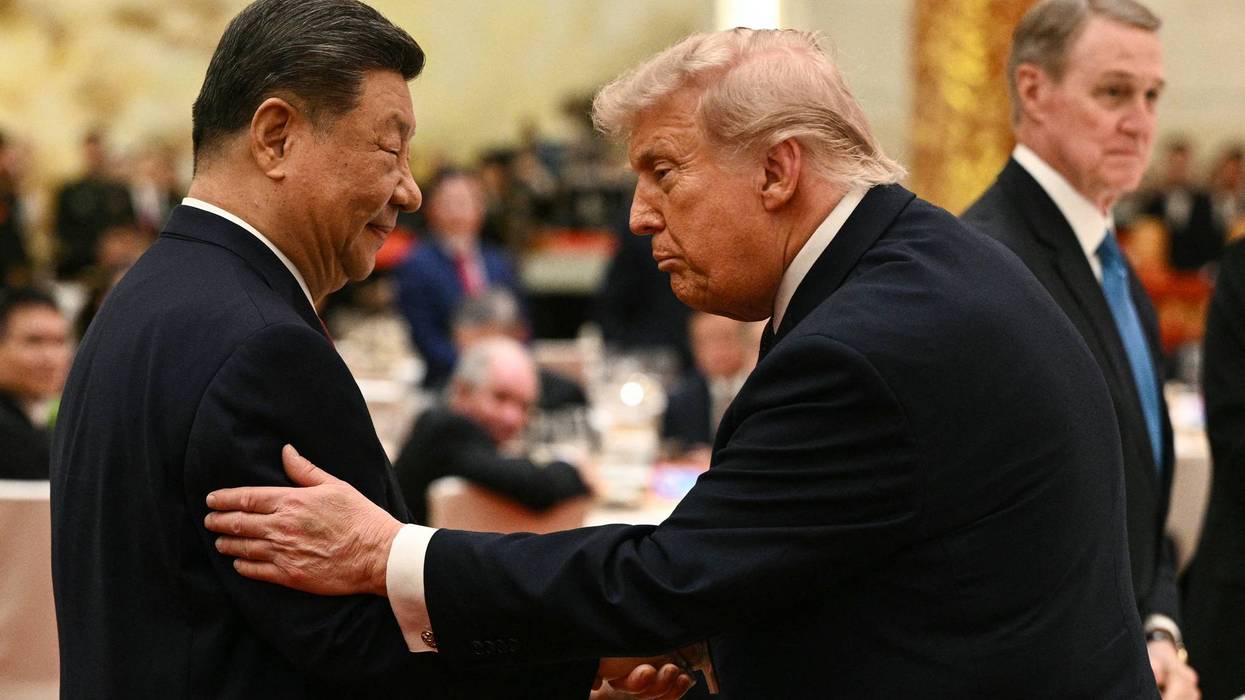
“Americans are increasingly supportive of US-China cooperation, while tensions with China do not serve American interests,” said dozens of anti-war groups as President Trump met with Chinese President Xi.
As US President Donald Trump meets with Chinese President Xi Jinping, a coalition of anti-war groups is calling on Congress to pressure the administration to "prioritize peace, cooperation, and stability" at a time when the US-China relationship is increasingly hostile.
“Americans are increasingly supportive of US-China cooperation, while tensions with China do not serve American interests,” argued the coalition, which includes Just Foreign Policy, Win Without War, the Friends Committee on National Legislation, Our Revolution, and dozens of other groups in a letter sent to members of Congress on Thursday.
They cited recent surveys showing that negative perceptions of China are consistently falling among Americans, including a Pew Research poll from January, which showed that just 28% of Americans viewed China as an "enemy" compared with 42% who saw it that way in 2024.
“At a time when so many domestic needs are going unmet, a confrontational posture toward China is costing untold billions of dollars in military build-up, trade and energy disruption, and securitization of technology—money that could and should be spent on the things Americans need at home," the coalition continued.
Trump's first visit to China in nearly a decade comes amid a global energy crisis caused by his war in Iran, a conflict where China has expressed a desire to act as a mediator.
While the coalition denounced Trump's war as "an unauthorized war of choice" that has led the world to a "deeply dangerous and uncertain place," it also said it presented an opportunity for the US and China to engage in diplomacy in hopes of putting the relationship "on a more stable footing."
Xi said that Taiwan remains the "most important issue in China-US relations” as the talks kicked off, warning that if mishandled, it could create a "very dangerous situation."
Secretary of State Marco Rubio said after a meeting on Thursday that the decadesold "One China Policy," which takes no explicit view on Taiwan's sovereignty, hasn't changed. Though he warned that it would be “a terrible mistake” for China to attempt to seize the island by force.
Friction between the US and China has only been heightened after Trump announced the sale of more than $11 billion worth of weapons to Taiwan in December, the largest ever arms sale to the island. At the time, China said the sale "gravely violates" the One China Policy.
The anti-war coalition warned that "current military and political trends in the United States, China, and Taiwan are moving us closer to a serious crisis or conflict over the island" and called on the US to "revitalize its One China Policy and press Beijing to reaffirm its focus on peaceful unification, with no timeline."
“Diplomacy with Beijing, rather than military posturing or arms racing across the Taiwan Strait,” they said, “is the only realistic path forward, especially since the American public has little interest in participating in a military conflict against China in defense of Taiwan.”
According to a survey by the Institute for Global Affairs in November, just 35% of Americans said they'd support the US sending troops to defend Taiwan if it were to be attacked by China. In a January poll commissioned by The New Republic, just 10% of Democratic voters said they wanted their party to support sending troops, and 30% wanted it to support sending weapons.
But Democratic leadership has pressured Trump to take the opposite approach and ramp up hostility toward Beijing in advance of this week's talks.
On Wednesday, Rep. Gregory Meeks (D-NY), the ranking member of the House Foreign Affairs Committee, was joined by Reps. Ro Khanna (D-Calif.), Jim Himes (D-Ct.), and Rep. Adam Smith (D-Wash.) to send a letter urging Trump to approve a delayed $14 billion arms sale to Taiwan ahead of his visit.
The Democrats on the House Foreign Affairs Committee joined in support for the sale, saying that "Trump must reaffirm in his meeting with Xi that the US will continue to uphold our longstanding One-China policy while standing firmly with Taiwan’s democracy and security. And he must make that clear by notifying Congress of the $14 billion arms sales to Taiwan. Anything else would undermine American credibility."
Just Foreign Policy (JFP) countered that the request to send more weapons just before talks were set to begin was "deeply unserious" and an "absurdly ill-timed move that would sabotage diplomacy—or worse."
Jake Werner, the director of the East Asia program at the Quincy Institute for Responsible Statecraft—another signatory to the anti-war letter—warned that while Democrats should confront Trump on the issue of China, they shouldn't goad him into an even more hawkish approach.
“If you want to attack Trump, that's great, but you should attack Trump on the basis of prudent, conflict-avoiding principles,” Werner said. “They should be criticizing him not for engaging in diplomacy, but for engaging in the wrong kind of diplomacy.”
In their letter to Congress, these and the other anti-war groups pushed for a similar diplomatic approach to other sources of tension with China, arguing that the US should take no position on the sovereignty of disputed territory in the South China Sea.
They also encouraged members of Congress to avoid creating "incentives" for other nations to adopt more confrontational stances toward China.
They singled out a first-ever test launch of an American Tomahawk missile in the Philippines last week, which had the capability to reach the Chinese mainland. Chinese military observers described it as the “worst provocation” in years by the US and suggested that Beijing should ramp up its air-defense and stealth-strike drone capabilities in response, according to the South China Morning Post.
The anti-war coalition said they "urge Congress to press the administration to avoid further escalatory signals and to instead pursue diplomacy to restore and expand non-proliferation agreements that can prevent a wasteful and dangerous arms race."
The proposed deal "would represent a direct wealth transfer—one that would further strain the already challenging economic circumstances facing New York City’s immigrant communities," said the city's mayor.
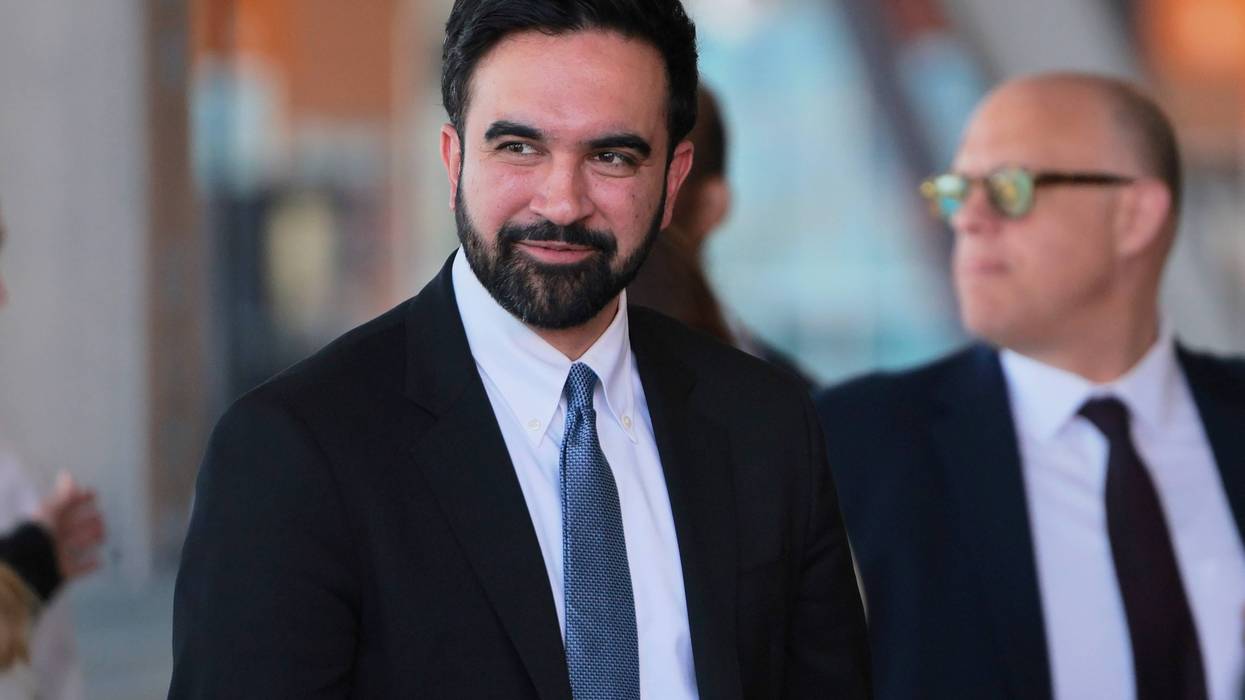
With the Trump administration refusing to take substantive antitrust action—reaching a recent deal with a meat company accused of price fixing and settling a Biden-era lawsuit that accused Live Nation of monopolizing live entertainment—New York City Mayor Zohran Mamdani is using his influential position to urge the blocking of a corporate merger that he says would harm working families across the city.
Mamdani wrote to the New York State Department of Financial Services (DFS) late last month, outlets are reporting this week, urging the state financial regulator to block Western Union's $500 million merger with International Money Express, or Intermex.
With 4.5 million users, Intermex has a small fraction of Western Union's customer base of 150 million people who use wire transfer services. But Mamdani wrote that over the past decade the smaller company has "nearly tripled its share of remittances sent from the United States"—transfers of money that immigrants send back to their families in their home countries.
"In the US-to-Ecuador and US-to-Nicaragua corridors, Intermex’s market shares are 34% and 36%, respectively," wrote the mayor, showing that it is "winning customers away from Western Union, the historic market leader."
With immigrants increasingly using remittances to secure financial stability in case they are swept up in the Trump administration's mass deportation operation, "remittances are a crucial lifeline for New Yorkers and their communities abroad," wrote Mamdani.
On social media Thursday, Mamdani added that "families shouldn’t pay the price for corporate monopolies."
He told DFS that maintaining competition between providers of the service keeps prices for families "more competitive, encourages compliance with relevant consumer protection and disclosure requirements, and incentivizes reliability."
"The proposed merger would change that. By eliminating competition between Western Union and Intermex, the deal could lead to
higher fees (including those the businesses may fail to disclose), disadvantageous rates, worse terms, poorer service, and other impacts to these communities," wrote Mamdani, who has centered his agenda as mayor on making New York City more affordable for working families. "In short, it would represent a direct wealth transfer—one that would further strain the already challenging economic circumstances facing New York City’s immigrant communities."
The mayor noted that immigrants' access to affordable remittance services are already under threat, after the Republican Party's One Big Beautiful Bill Act imposed a 1% excise tax on cash remittance transactions.
"Now, this merger threatens to impose a new private tax on these same remittances, in the form of higher, supracompetitive prices that will flow directly to Western Union’s corporate coffers," said Mamdani.
Responding to the mayor's call for the merger to be blocked, Western Union claimed in a statement to DFS this week that the companies, should they be permitted to merge, would still provide "accessible and affordable" remittance services.
The mayor cited several US Supreme Court rulings that have found corporate mergers that would substantially lessen competition to be illegal and said that despite legal precedent, "the Trump administration has declined to challenge the merger on antitrust grounds."
"But that is not where the story ends," wrote Mamdani. "Instead, the deal still requires a series of money transmitter license approvals, including from the New York State Department of Financial Services."
"The conditions for disapproval are clearly met here," the mayor continued. "The transaction is manifestly against the public
interest, as it would lead to higher fees and worse rates for hard-working, disproportionately immigrant families, across New York City and the state—all to inflate Western Union’s balance sheet."
Semafor and The New York Times suggested that the influence of former Federal Trade Commission Chair Lina Khan may have pushed the mayor to lobby DFS to reject the merger. Khan is an outside adviser to Mamdani and served as co-chair of his transition team.
While working in the Biden administration, Khan blocked and challenged major corporate mergers including Kroger's attempt to acquire Albertsons, Meta's bid to buy virtual reality app company Within, and JetBlue's proposed merger with Spirit Airlines.
Daniel Hanley, a senior legal analyst at the anti-monopoly group Open Markets Institute applauded Mamdani's decision to wade into the debate over Western Union's proposed merger.
"State and local officials can supplement law enforcement," said Hanley, "while the federal government abdicates its fiduciary responsibilities."

"It is outrageous that, while the billionaire class has never had it so good, one in five children will go hungry in America this year," said Sen. Bernie Sanders.
As federal food aid cuts enacted by President Donald Trump and congressional Republicans wreak havoc across the US, Sen. Bernie Sanders and Rep. Ilhan Omar on Wednesday led the reintroduction of legislation that would make free school meals available to every student in the country—regardless of family income.
The Universal School Meals Program Act of 2026 would offer free breakfast, lunch, dinner, and a snack to every student—including during the summer months—without forcing parents to fill out burdensome applications proving their income level.
The legislation would also reimburse schools for unpaid school meal debt, ending "the harassment of parents and students," according to a fact sheet released by Sanders' (I-Vt.) office. Supporters say the bill, if enacted, would "end child hunger in the United States."
“It is outrageous that, while the billionaire class has never had it so good, one in five children will go hungry in America this year,” the Vermont senator said in a statement Wednesday. “The United States is the richest country in the history of the world. Nobody should be going hungry. And what we learned during the pandemic is that a universal approach to school meals works and helps kids do better in school. States across the country continue to prove this every day. It is time for Congress to reinstate universal school meals at the national level to finally ensure no student goes hungry."
Omar (D-Minn.), a leading congressional champion of universal free school meals, said that "no child should have to sit in a classroom hungry or worried about where their next meal will come from."
"As a former nutrition educator and someone who experienced hunger firsthand, this fight is deeply personal to me," said Omar. "I have always believed you must feed kids’ bellies before you can feed their brains. That is why I am proud to partner again with Bernie Sanders to introduce the Universal School Meals Program Act, which would provide free breakfast, lunch, dinner, and snacks to students year-round. Universal school meals are not a luxury—they are a necessity.”
The updated legislation, which is backed by more than 100 lawmakers in the House and Senate, comes as Trump and the GOP's unprecedented cuts to the Supplemental Nutrition Assistance Program (SNAP) take hold nationwide, sending food bank demand surging as tens of thousands of families lose benefits. The Center on Budget and Policy Priorities (CBPP) has estimated that the SNAP cuts enacted as part of the 2025 Trump-GOP budget law would slash nutrition benefits for around a million children.
The School Nutrition Association said following passage of the Trump-GOP budget package that the law's SNAP cuts would mean that "fewer children are automatically eligible for free school meals as families lose SNAP and Medicaid benefits."
"As this bill is implemented and families lose access to food assistance through SNAP benefits, their children will also lose automatic eligibility for school meals, making access to nutrition more difficult or out of reach completely," SNA warned last summer. "Meanwhile, schools facing staff shortages and budget constraints will struggle to manage increased paperwork and application processing requirements."
Trump and Republicans are also pursuing additional food aid cuts by moving to slash funding for the Special Supplemental Nutrition Program for Women, Infants, and Children (WIC) in the coming fiscal year. A recent CBPP analysis found that congressional Republicans' proposed WIC cuts would strip "fruit and vegetable benefits from nearly 5.4 million toddlers, preschoolers, and pregnant and postpartum WIC participants."