

SUBSCRIBE TO OUR FREE NEWSLETTER
Daily news & progressive opinion—funded by the people, not the corporations—delivered straight to your inbox.
5
#000000
#FFFFFF
To donate by check, phone, or other method, see our More Ways to Give page.
Daily news & progressive opinion—funded by the people, not the corporations—delivered straight to your inbox.
Ahead of today's US Senate hearing on Guantanamo, human rights charity Reprieve has set out the key steps the Obama administration can take now to start closing the prison. Guantanamo is currently in crisis, with over a quarter of detainees being force-fed daily in a process federal judges have described as 'degrading'.
In a roadmap for closing the prison, Reprieve sets out several basic steps that the Administration can - and urgently should - take to resolve the situation and shut Gitmo.
Ahead of today's US Senate hearing on Guantanamo, human rights charity Reprieve has set out the key steps the Obama administration can take now to start closing the prison. Guantanamo is currently in crisis, with over a quarter of detainees being force-fed daily in a process federal judges have described as 'degrading'.
In a roadmap for closing the prison, Reprieve sets out several basic steps that the Administration can - and urgently should - take to resolve the situation and shut Gitmo.
Reprieve has also provided the Senate Judiciary Committee, which is conducting the hearing, testimony from the family members of several cleared prisoners who remain in Guantanamo.
Among the key steps the President can take now is to direct the Secretary of Defense to issue 'national security waivers' for the 86 detainees who have been cleared, beginning immediately with those slated to go to dependable allies - in, for example, Western Europe. Detainees have told their attorneys at Reprieve that, once they see this starting to happen, they will bring their long-running hunger-strike to an end.
Among US allies which would be willing to accept Guantanamo detainees is the UK. The country's Prime Minister, David Cameron, has specifically asked President Obama to allow Shaker Aamer, a Londoner, to return home to his wife and four children. Yet, according to the Associated Press, the US Government has said "it has been unable to find stable countries to transfer [cleared prisoners] to."
Guantanamo Attorney and Reprieve Strategic Director Cori Crider said: "It is increasingly difficult to square the Obama administration's excuses on Guantanamo with reality. The situation at the base right now is untenable, and the President's failure to address the men's desperation may well taint his legacy. Officials say they can't find 'stable countries' to send detainees home to - does that mean they consider the UK, which has asked repeatedly to have Shaker Aamer back, to be 'unstable?' Reprieve has published a roadmap with nine steps the President ought to take tomorrow if he's serious about closing Gitmo."
ENDS
Notes to editors
1. For further information, please contact Donald Campbell in Reprieve's press office: +44 (0) 207 553 8166 / donald.campbell@reprieve.org.uk
2. Reprieve's "How to close Gitmo: A roadmap" was published in July this year, and can be found on Reprieve's website.
3. The Associated Press reported on July 18 that "more than half of the prison's population has been cleared for release, but the government has said it has been unable to find stable countries to transfer them to."
Sign up to join our press mailing list.
Reprieve is a UK-based human rights organization that uses the law to enforce the human rights of prisoners, from death row to Guantanamo Bay.
"The vaults are open and the arms trade is thriving before the war and after it," said one Nobel Peace Prize laureate.
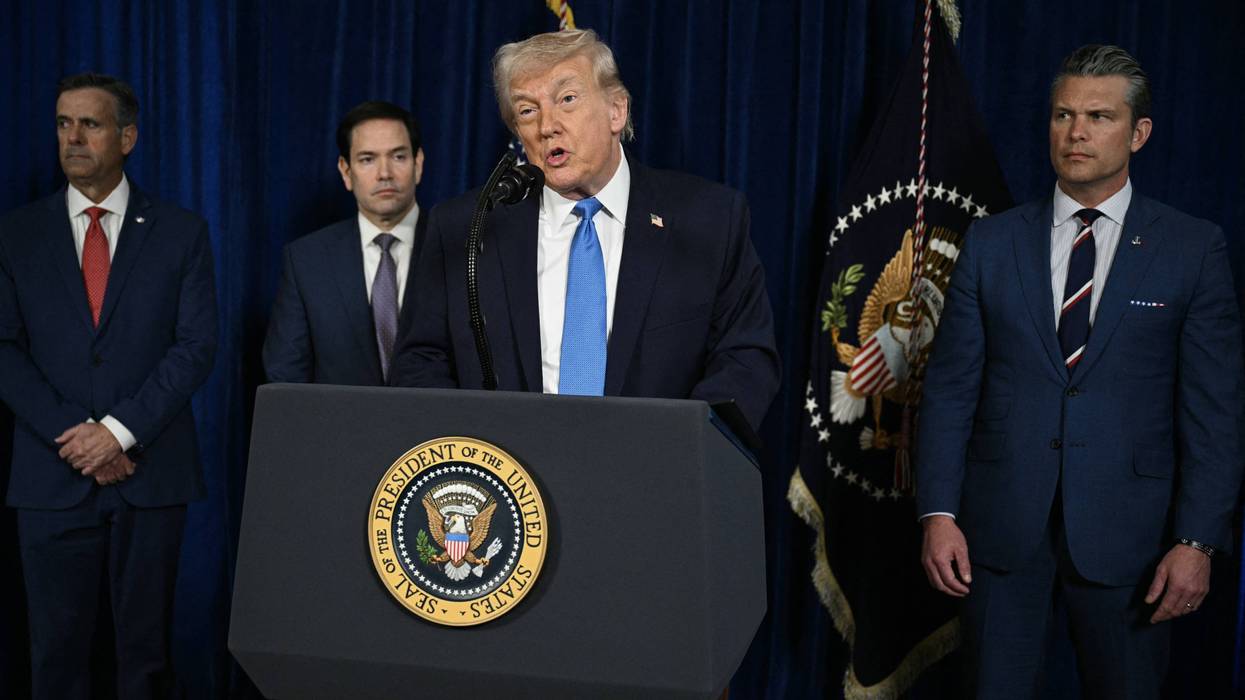
As the US voting public continues to express its discontent over the disastrous war of choice against Iran that US President Donald Trump launched just over two months ago, fresh criticism followed after weekend reporting revealed the administration skirted congressional review to approve an $8.6 billion weapons deal with the United Arab Emirates and other allies in the Middle East.
Announced Friday night quietly by the US State Department, as the New York Times reports, the "sales would entail the transfer of rockets to Israel, Qatar, and the United Arab Emirates and air-defense equipment to Qatar and Kuwait."
According to the Times:
Under the terms of the deal with Qatar, the Gulf country would pay more than $4 billion for American-made Patriot missile interceptors — global stockpiles of which have dwindled during the war with Iran.
Israel, the Emirates and Qatar would receive an Advanced Precision Kill Weapon System, which fires laser-guided rockets. Kuwait also purchased an advanced aerial defense system for about $2.5 billion.
Secretary of State Marco Rubio expedited the deals under an emergency provision allowing the “immediate sale” of the weapons, the State Department said, bypassing standard congressional review and prompting criticism from Democratic lawmakers. This is the third time the second Trump administration has invoked an emergency authorization during the Iran war to bypass Congress on arms sales.
"No comment," said Mohamed ElBaradei, a Nobel Peace Prize winner and the former head of the International Atomic Energy Agency (IAEA), in an eye-rolling response to the news on social media.
After a commenter suggested that "America opened the door to war for [the countries taking part in the sale] so they would open their treasuries and the Israeli-American arms trade would boom after a slump," ElBaradei seemed to agree.
"The vaults are open, and the arms trade is thriving before the war and after it," he said.
Kenneth Roth, former executive director of Human Rights Watch and now a visiting professor at Princeton University, said: "Trump is bypassing Congress to fast-track arms sales to the United Arab Emirates, apparently without receiving any promise that the UAE would stop arming the genocidal Rapid Support Forces (RSF) in Sudan."
The RSF has been accused of atrocities in the ongoing Sudanese civil war, and the backing it has received from the US, with the UAE as its closely allied proxy, has been the source of outrage and criticism.
"Over and over again, the Trump administration is exposing private Social Security data," said one watchdog group who called the leak of personal information "a goldmine for identity thieves" and other fraudsters.
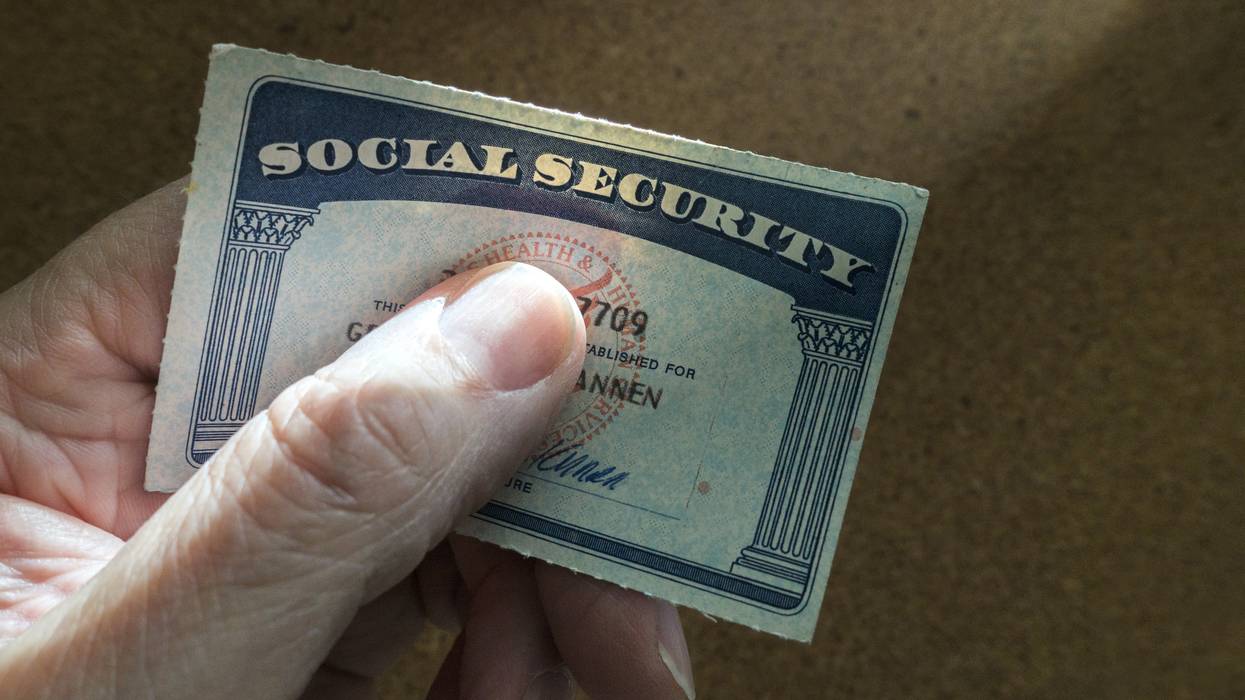
A newly reported failure of the Trump administration's ability to handle sensitive private information in the social programs it is tasked with operating triggered a fresh wave of anger over the weekend after it was revealed that healthcare providers' Social Security numbers were made public as part of a faulty Medicare portal rollout.
The Washington Post discovered the compromised database and alerted the administration last week, before publishing a story about it on Friday, after efforts had been made to protect the sensitive information from further compromise.
According to the Post:
The Centers for Medicare and Medicaid Services (CMS) last year created a directory to help seniors look up which doctors and medical providers accept which insurance plans, framing it as an overdue improvement and part of the Trump administration’s initiative to modernize health care technology.
But a publicly accessible database used to populate the directory contains some of the providers’ Social Security numbers, linked to their names and other identifying information. For at least several weeks, CMS made the database available for public use as part of its data transparency efforts.
While the reporting noted that the files were "not immediately visible to users who [visited] the provider directory," lawmakers and experts said the compromised information would be a treasure trove for fraudsters.
“The more we learn about how the Trump Administration handles the people’s most sensitive data, the clearer their incompetence becomes."
Critics pounced on the new reporting, calling it "yet another mess-up by the Team Trump" and only the latest evidence that the administration cannot and should not be trusted to protect the nation's most successful anti-poverty programs or the sensitive personal data of the American people who entrust the government with that information.
"Over and over again, the Trump administration is exposing private Social Security data," said Social Security Works, an advocacy group that serves as a public watchdog for the nation's social programs.
The compromised database, said the group, "is a goldmine for identity thieves, scammers, and foreign governments. And it is undermining the very foundation of our Social Security system."
"This is a failure by this administration," said Sen. Ruben Gallego (D-Ariz.) in response to the reporting. "Exposing Social Security numbers, whether patients or providers, is unacceptable."
Rep. Richard Neal (D-Mass.), the ranking member of the House committee that oversees the Medicare program, put the onus on his Republican colleagues in Congress.
“The more we learn about how the Trump Administration handles the people’s most sensitive data, the clearer their incompetence becomes,” Neal told the Post in a statement. “Do House Republicans need to see their own data exposed before they do right by their constituents and act?”
In March, as Common Dreams reported at the time, a whistleblower filed a complaint with the Social Security Administration accusing a former staffer with Trump's Department of Government Efficiency (DOGE), run for a time by right-wing billionaire Elon Musk, of trying to share information from SSA databases with his private employer.
Since the outset of Trump's second term, DOGE's meddling with Social Security and Trump's undermining of the program have been the source of deep anger and concerns among the program's defenders.
In a social media post on Saturday citing the whistleblower allegations from March, Rep. John Larson (D-Conn.) said, "For more than a year, 'DOGE' has been combing through the American people's records. They want to use your data to overturn elections and profit in the private sector. Enough! This administration must be held accountable for this massive data breach!
On Friday, responding to the Post's new reporting about the compromised database of physicians' private information, Larsen condemned Republicans for their ongoing and pervasive failures in the face of Trump's malfeasance and incompetence.
DOGE, said Larsen, "has been in your data for more than a year. We just learned that physicians' Social Security numbers were publicly exposed in an online portal launched by ‘DOGE’ officials."
"If this isn't enough for Republicans to act," he asked, "where will they draw the line?"

"Your dignity stands taller than the place you stood, and it will live forever in our memory."
Explosive Media, one of the independent outfits generating the viral videos about the war in Iran, created a short piece on Saturday to honor the American father of two who climbed atop a bridge in the Washington, DC this weekend to demand an end to the conflict.
"In honor of Guido Reichstadter, the man who climbed the Frederick Douglass Memorial Bridge to make his voice of protest heard," the group said in a post alongside the video short. "Your dignity stands taller than the place you stood, and it will live forever in our memory."
As Common Dreams reported, Reichstadter climbed the bridge wearing a t-shirt that simply read "End War" beginning on Friday afternoon, remained in protest overnight, and told one reporter he intends to remain "for a few days at least."
In honor of Guido Reichstadter,
the man who climbed the Frederick Douglass Memorial Bridge to make his voice of protest heard.
Your dignity stands taller than the place you stood,
and it will live forever in our memory. 🫡🏔️ pic.twitter.com/WANYzS7kIh
— Explosive Media (@ExplosiveMediaa) May 2, 2026
Reichstadter said he climbed the 168-foot-tall bridge “because the government of the United States is engaged in acts of mass murder in my name. And I refuse to be complicit in that.”
"The world is proud of you, Guido," Explosive Media said in a separate post on social media. "Soon, side by side, we will celebrate peace and victory together."