April, 11 2012, 12:44pm EDT

For Immediate Release
Contact:
Darcey Rakestraw, 202-683-2467; drakestraw(at)fwwatch(dot)org
Food & Water Watch Announces New Program Scrutinizing Market-Based Schemes Affecting Common Resources
WASHINGTON
Today, national consumer organization Food & Water Watch announced a new program to scrutinize the largely unchallenged claims that market-based schemes like pollution trading, water markets, privatization and commodification of common resources will help reduce pollution and manage our water resources.
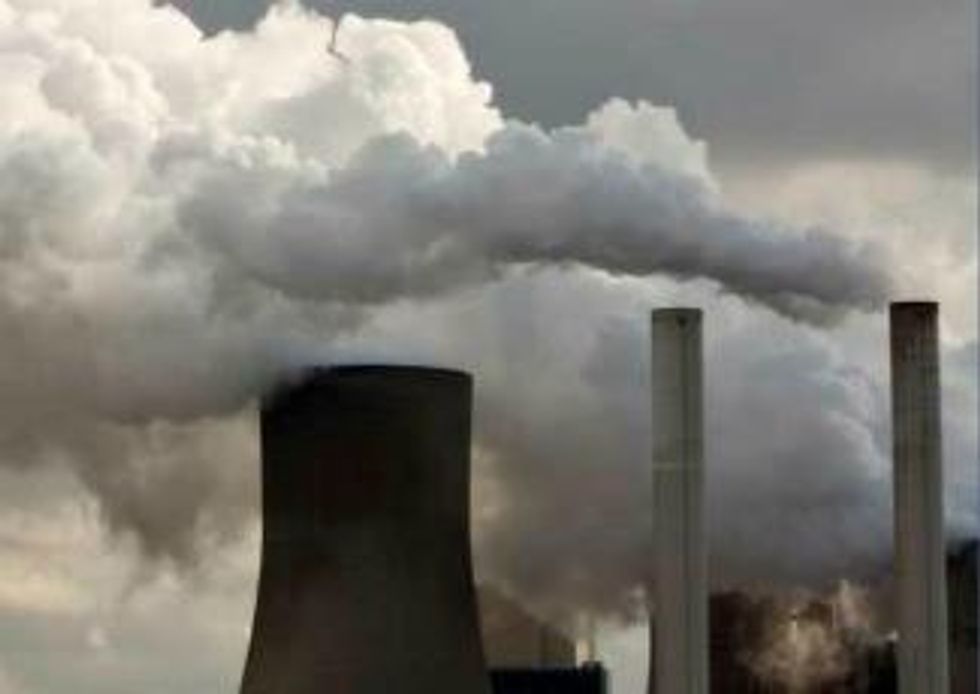
"Unfortunately, the most powerful financial interests have determined that trading money, risk and related financial products outperforms the profitability of manufacturing products or even trading goods and services," said Wenonah Hauter, Executive Director of Food & Water Watch. "And in this age of increased competition for natural resources, these interests have their eye on placing natural resources, like clean water and clean air, at the mercy of the market."
To address the global financial crisis, powerful financial interests and their allies are touting the "green economy," a vague and ill-defined program promoted by the United Nations as the solution to the global climate crisis. They define nature in terms of capital, prices, profits and markets. Much lauded by the banking industry, this "financialization of nature" reduces the value of water and other life-giving resources to exchangeable financial instruments. It opens the door to the future prophesied by Citibank chief economist Willem Buiter, who predicts that water will become the most important physical commodity-based asset class in 25 to 30 years. He predicts that spot markets for water will be integrated and that other derivative water-based financial instruments will be exchange-traded and traded over the counter.
But these market-based schemes are largely voluntary and entirely unregulated, representing a drastic departure from the regulation of pollution that helped clean our air and water in the latter half of the 20th century. Food & Water Watch and its allies will be present at Rio+20, the United Nations forum that marks the 20th anniversary of the first UN Conference on Sustainable Development, to protect the UN-recognized human right to water and to reveal how cap-and-trade schemes represent a commodification of nature, not an earnest attempt to address greenhouse gas emissions.
"It's dangerous to cede regulation of polluters to these schemes that essentially turn one company or farm's pollution -- or lack thereof -- into an opportunity for others to keep polluting," said Hauter. "What's even more upsetting is that a few non-profit organizations with corporate ties are paving the way to lock natural resources management into the future structure of capital markets. It is not too late to turn back the clock and to move away from these unverifiable schemes and to advocate for a regulatory system that prevents pollution."
According to a Food & Water Watch report released today, Bad Credit: How Pollution Trading Fails the Environment, cap-and-trade relies on unverifiable offsets and a permit allocation scheme that benefits current polluters at the expense of everyone else. Furthermore, the price volatility of pollution credits fails to incentivize companies to actually change their operations to limit pollution. Meanwhile, the same investment houses that made a profit from the deregulation of the housing and finance sectors and the energy sector have supported cap-and-trade legislation.
Even though many environmentalists cite industry opposition as a key factor in the defeat of U.S. cap-and-trade legislation to control greenhouse gas emissions at the federal level, industry players have long lobbied on behalf of such market-based approaches to pollution regulation. According to the report, cap-and-trade is based on an obscure economic theory that gained prominence when it was embraced by the Reagan administration as a replacement for regulating air emissions.
"There is an ideological battle being fought that is affecting our common resources. If we let market fundamentalists and industry-funded non-profits tout market-based mechanisms as innovative solutions to our resource problems, we're ignoring proven methods of reducing pollution and simply speculating on nature," said Mitch Jones, Director of the Common Resources Program at Food & Water Watch. "These schemes are a smokescreen, giving the appearance of regulation and action while at the same time giving industries carte blanche to continue using and abusing our precious resources -- and letting the banking industry profit from it."
In its effort to scrutinize cap-and-trade and the "green economy," the Common Resources program will largely focus on the following issues:
- Pollution Trading Schemes in the Chesapeake Bay and Beyond: Water quality trading, a type of cap-and-trade scheme that does not effectively address the issue of agricultural run-off or industrial pollution, is being promoted by the U.S. Department of Agriculture and the U.S. Environmental Protection Agency in places like the Ohio River Basin and the Chesapeake Bay.
- Water Markets: Water markets are another step in the privatization of public resources. But water is essential for all life, and pricing water like a widget is inappropriate and inhumane, subjecting the essential human need for water to the indifference of the marketplace. At the most extreme, companies cornering the water market will price out the poor.
- Public-Public Partnerships: Privatization has failed to increase investment in our water services or improve efficiency. Instead, it often has led to deteriorating infrastructure, service disruptions and higher prices for poorer service. A different model, called public-public partnerships (PUPs), can be a more effective method for providing services. PUPs bring together public officials, workers and communities to provide better service for all users more efficiently.
- Catch Shares and Offshore Aquaculture: Food & Water Watch's fisheries work, which includes catch shares -- a cap-and-trade scheme for fisheries management -- and factory fish farming, will be under the Common Resources program. Privatizing our fisheries is devastating fishermen and their communities.
For more information, read the following Food & Water Watch reports:
Bad Credit: How Pollution Trading Fails the Environment
Fish Inc.: The Privatization of U.S. Fisheries Through Catch Share Programs
Public-Public Partnerships: An Alternative Model to Leverage the Capacity of Municipal Water Utilities
Priceless: The Market Myth of Water Pricing
Water = Life: How Privatization Undermines the Human Right to Water
Casino of Hunger: How Wall Street Speculators Fueled the Global Food Crisis
Food & Water Watch mobilizes regular people to build political power to move bold and uncompromised solutions to the most pressing food, water, and climate problems of our time. We work to protect people's health, communities, and democracy from the growing destructive power of the most powerful economic interests.
(202) 683-2500LATEST NEWS
UN Experts Say Those Ordering and Carrying Out US Boat Strikes Should Be 'Prosecuted for Homicide'
“US military attacks on alleged drug traffickers at sea," said two human rights experts, "are grave violations of the right to life and the international law of the sea."
Dec 04, 2025
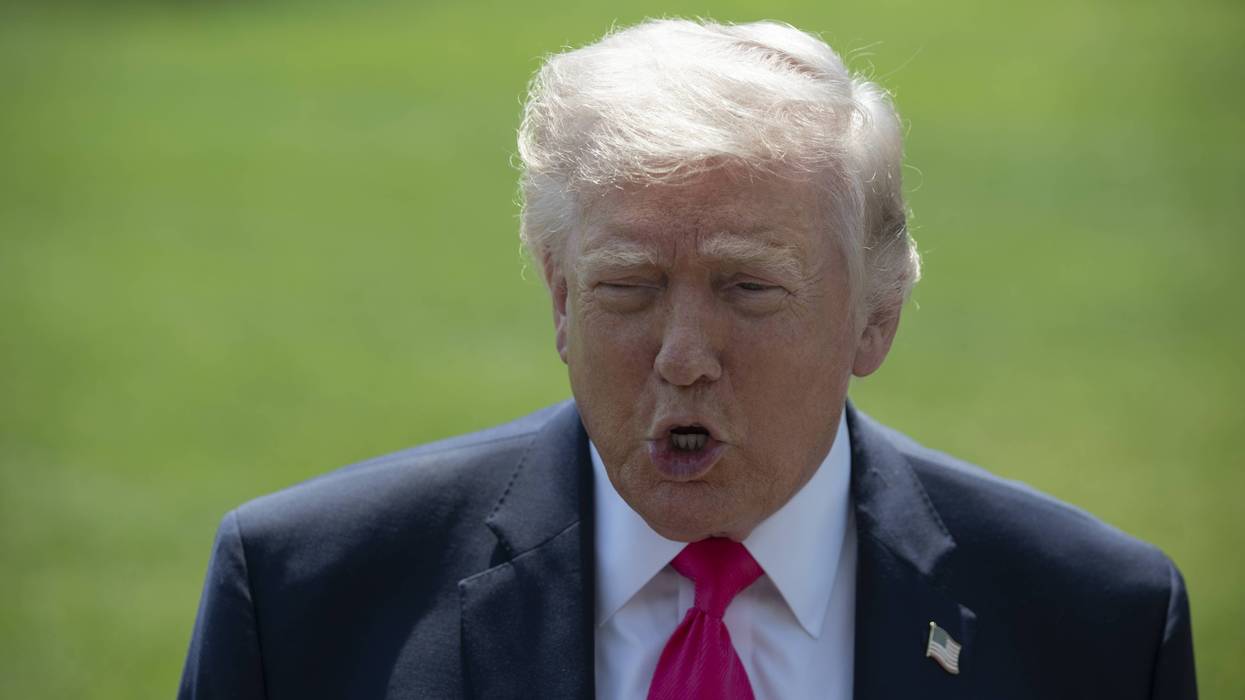
Two United Nations rights experts warned that in numerous ways in recent weeks, the Trump administration's escalation toward Venezuela has violated international law—most recently when President Donald Trump said he had ordered the South American country's airspace closed following a military buildup in the Caribbean Sea.
But the two officials, independent expert on democratic and international order George Katrougalos and Ben Saul, the UN special rapporteur on protecting human rights while countering terrorism, reserved their strongest condemnation and warning to the US for the administration's repeated bombings of boats in the Caribbean and the Pacific, which have targeted at least 22 boats and killed 83 people since September as the White House has claimed without evidence it is combating drug traffickers.
The strikes, said Katrougalos and Saul, "are grave violations of the right to life and the international law of the sea. Those involved in ordering and carrying out these extrajudicial killings must be investigated and prosecuted for homicide.”
Human rights advocates have warned for months that the strikes are extrajudicial killings. Trump has claimed the US is in an "armed conflict" with drug cartels in Venezuela—even though the country is not significantly involved in drug trafficking—but Congress has not authorized any military action in the Caribbean.
Typically, the US has approached drug trafficking in the region as a criminal issue, with the Coast Guard and other agencies intercepting boats suspected of carrying illegal substances, arresting those on board, and ensuring they receive due process in accordance with the Constitution.
The Trump administration instead has bombed the boats, with the first operation on September 2 recently the subject of particular concern due to reports that Defense Secretary Pete Hegseth issued an order for military officers to "kill everybody" on board a vessel, leading a commander to direct a second "double-tap" strike to kill two survivors of the initial blast.
Hegseth and Trump have sought to shift responsibility for the second strike onto Adm. Frank "Mitch" Bradley, the commander who oversaw the attack under Hegseth's orders. Bradley was scheduled to brief lawmakers Thursday on the incident.
The White House has maintained Bradley had the authority to kill the survivors of the strike and to carry out all the other bombings of boats, even as reporting on the identities of the victims has shown the US has killed civilians including an out-of-work bus driver and a fisherman, and the family of one Colombian man killed in a strike filed a formal complaint accusing Hegseth himself of murder.
The UN experts suggested that everyone involved in ordering the nearly two dozen boat strikes, from Trump and Hegseth to any of the service members who have helped carry out the operations, should be investigated for alleged murder.
After Hegseth defended the September 2 strike earlier this week, Saul emphasized in a social media post that contrary to the defense secretary's rhetoric about how the boat attacks are "protecting" Americans, he is carrying out "state murder of civilians in peacetime, like executing alleged drug traffickers on the streets of New York or DC."
As Common Dreams reported last month, a top military lawyer advised the White House against beginning the boat bombings weeks before the September 2 attack, saying they could expose service members involved in the strikes to legal challenges.
Katrougalos and Saul urged the administration to "refrain from actions that could further aggravate the situation and ensure that any measures taken fully comply with the UN Charter, the Chicago Convention, and relevant rules of customary international law."
They also emphasized that Trump had no authority to declare that Venezuela's airspace was closed last week—an action that many experts feared could portend imminent US strikes in the South American country.
“International law is clear: States have complete and exclusive sovereignty over the airspace above their territory. Any measures that seek to regulate, restrict, or ‘close’ another state’s airspace are in blatant violation of the Chicago Convention,” said the experts. “Unilateral measures that interfere with a state’s territorial domain, including its airspace, risk fully undermining the stability of the region and are seriously undermining Venezuela’s economy."
Saul and Katrougalos further called on the White House not to repeat "the long history of external interventions in Latin America."
“Respect for sovereignty, nonintervention, and the peaceful settlement of disputes," they said, "are essential to preserving international stability and preventing further deterioration of the situation.”
Keep ReadingShow Less
Human Rights Group Warns US Gaza Plan Will Impose 'Unlawful Collective Imprisonment' of Palestinians as New Details Emerge
“The design of these proposed cities mirrors the historical model of ghettos,” said the Euro-Mediterranean Human Rights Monitor, which said the US plans to cram 25,000 people into areas smaller than a square kilometer.
Dec 04, 2025
A prominent international human rights organization is warning that the United States' plan for postwar Gaza will impose "unlawful collective imprisonment" on the Palestinian civilians who have survived two years of genocide.
In November, several news outlets reported on the Trump administration's plan to carve Gaza in two: a so-called “green zone” controlled by Israel and a “red zone” controlled by the militant group Hamas.
The US would construct what it called “Alternative Safe Communities” for Palestinians to live in the Israeli-controlled portion of Gaza, which is over half of the territory under the current "ceasefire" agreement.
The New York Times described these communities as "compounds" of 20,000 to 25,000 people, where Israeli officials reportedly argued they should not be allowed to leave.
The initial reporting raised fears that the US and Israel were constructing what would amount to a "concentration camp," where Palestinians would be forced to live in squalid conditions without freedom of movement.
On Wednesday, the Euro-Mediterranean Human Rights Monitor released new details on how Palestinians, currently facing mass displacement from their homes in the portion of the strip not occupied by Israel, would be corralled into the green zone under the US proposal.
The Geneva-based group issued a stark warning about the plan, which it said carried "grave risks, including the effective displacement of Palestinians from their homes and the transformation of large parts of Gaza into closed military zones under the direct control of the Israeli army."
“Entry and exit would be permitted only through security screening, effectively converting these sites into overcrowded detention camps that impose severe restrictions on residents’ freedom of movement and daily life."
Euro-Med's report explains that the transfer of Palestinians would be carried out using "various pressure tactics."
"This is done by creating a coercive environment in the red zone and making access to relative protection and basic services conditional on relocating to designated areas within the green zone, following extensive security screening and vetting," the report says. "This removes any genuine element of consent and places the process squarely within the scope of forced displacement prohibited under international humanitarian law."
It also provides new details on the conditions Palestinians would be subject to once they've arrived: "The plan includes the establishment of 'cities' of prefabricated container homes (caravans) in the green zone, each housing around 25,000 people within an area of no more than one square kilometer and enclosed by walls and checkpoints."
This means these Palestinian cantons would be over three times as densely populated as the Tel Aviv District, the most crowded in Israel, which has about 8,130 people per square kilometer.
"Entry and exit would be permitted only through security screening, effectively converting these sites into overcrowded detention camps that impose severe restrictions on residents’ freedom of movement and daily life," the report continues.
This is not the first proposal to use the promise of safety to lure Palestinians into an enclosed space without the right to leave.
Earlier this year, following US President Donald Trump's call for the people of Palestine to be forcibly removed from the Gaza Strip, Israeli Defense Minister Israel Katz proposed the creation of a massive “humanitarian city” built on the ruins of Rafah that would be used as part of an “emigration plan” for hundreds of thousands of displaced people.
Under that plan, Palestinians would have been given “security screenings” and once inside would not be allowed to leave. Humanitarian organizations, including those inside Israel, roundly condemned the plan as essentially a “concentration camp.”
Euro-Med said that the design laid out in the new US plan "mirrors the historical model of ghettos, in which colonial and racist regimes confined specific groups to sealed areas surrounded by walls and guard posts, with movement and resources controlled externally, as seen in Europe during World War II and in other colonial contexts."
Keep ReadingShow Less
‘Somebody’s Getting Rich’: Senator Suggests Trump Pardon Spree Is Yet Another Grift
"There's clearly a whole group of people around him that are making millions of dollars, and they're handing out favors to folks in the form of pardons," said Democratic Sen. Chris Murphy.
Dec 04, 2025
A Democratic US senator suggested during a television appearance late Wednesday that President Donald Trump's flurry of pardons for fraudsters and other white-collar criminals—from disgraced politicians to former corporate executives—is yet another cash grab concocted by the president's inner circle and lobbyists with ties to the White House.
“My sense is that somebody is getting rich, ultimately,“ Sen. Chris Murphy (D-Conn.) told MSNBC's Chris Hayes shortly after Trump pardoned a former entertainment venue executive who was indicted by the president's own Justice Department over the summer.
"There is a cabal of administration officials and MAGA-friendly lobbyists that are in league together," Murphy continued. "They all huddle together at these elite restaurants and clubs in Washington, DC, and they likely hatch deals in which, if somebody pays a MAGA-affiliated lobbyist a couple hundred thousand dollars, then maybe you’ll be able to get a pardon.”
"There's clearly a whole group of people around him that are making millions of dollars, and they're handing out favors to folks in the form of pardons in order to make sure that they get their pockets lined," the senator added. "That's just, like, bread and butter corruption."
Watch:
The pardons Trump is handing out are a huge, growing scandal that not enough people are talking about. This is a money making operation - for for Trump, his family, his crypto pals, and the Trump-affiliated lobbyists and grifters who the pardon seekers pay. pic.twitter.com/FwLRyHDMqN
— Chris Murphy 🟧 (@ChrisMurphyCT) December 4, 2025
Since the start of his second term, Trump has used his pardon power to rescue well-connected executives and political allies from accountability, invariably claiming—without evidence—that the Biden administration manufactured the charges.
Many of those pardoned have been accused or convicted of white-collar crimes; "fraud" appears 57 times on the Justice Department page listing the names and offenses of those who have received clemency from the president this year.
Trump's willingness to unthinkingly pardon fraudsters has spawned a lucrative business for lobbyists and consultants linked to the administration. NBC News reported earlier this year that "two people directly familiar with proposals to lobbying firms said they knew of a client’s offer of $5 million to help get a case to Trump."
Changpeng Zhao, the billionaire founder of the cryptocurrency exchange Binance, reportedly had a lobbyist working to secure his pardon, which came in late October.
"I don't know who he is," Trump said when asked about the decision, adding that "a lot of people asked me" to pardon Zhao, who pleaded guilty in 2023 to "failing to maintain an effective anti-money laundering program."
Trump also made history with what's believed to be the nation's first-ever presidential pardon of a corporation: HDR Global Trading, the owner and operator of crypto exchange BitMEX. The company was sentenced earlier this year to a $100 million fine for violating anti-money laundering laws.
In a report published in September, Murphy detailed how corporate pardons "are happening throughout the federal government, in the form of rescinded orders, dropped cases, and the first-ever presidential pardon for a corporation." The watchdog group Public Citizen estimates that the Trump administration has halted or dropped more than 160 corporate enforcement cases since the start of the president's second term.
"Corporate pardons are just one of the ways that Trump is replacing democracy and rule of law with authoritarian power and rule by personal favor," Murphy wrote in his report. "If we are going to save our democracy, we need to act now."
Keep ReadingShow Less
Most Popular