

SUBSCRIBE TO OUR FREE NEWSLETTER
Daily news & progressive opinion—funded by the people, not the corporations—delivered straight to your inbox.
5
#000000
#FFFFFF
To donate by check, phone, or other method, see our More Ways to Give page.
Daily news & progressive opinion—funded by the people, not the corporations—delivered straight to your inbox.

A survey of more than 350 bank branches released today by the U.S. Public Interest Research Group revealed that fewer than half of branches obeyed their legal duty to fully disclose fees to prospective customers, while one in four provided no fee information at all.
The report, Big Banks, Bigger Fees: A National Survey of Bank Fees and Fee Disclosure Policies, which includes a bank fee tips guide for consumers, also found that despite widespread stories about the "death" of free checking, free and low-cost checking choices are still widely available, if consumers shop around.
"Shopping for banks is harder when banks fail to obey the law and provide up front information about the fees they charge," said Ed Mierzwinski, U.S. PIRG Consumer Program Director and report author. "We look forward to July 21, when the CFPB, the new consumer cop with only one job, protecting consumers, steps onto the financial beat and starts keeping the banks honest about their fees."
Surveyors visited 392 bank branches in 21 states to compare fees and determine whether banks were complying with the 1991 Truth In Savings Act, which requires disclosure of all account-related fees to prospective customers. In 2008, the U.S. Government Accountability Office (GAO) issued a report finding that researchers "could not obtain" complete fee schedules at 22% of branches visited. Three years later that number is virtually the same, according to the new U.S. PIRG report.
"The Truth In Savings Act is a simple law that is supposed to help consumers shop around," said Mierzwinski. "But banks would rather hide the truth from consumers than give them better information to help the market work. What do the banks have to hide?"
Among the findings of Big Banks, Bigger Fees:
* Only 38% of banks visited provided researchers with fee schedules as required by law on their first request. After two or more requests, eventually a total of 55% complied with the law.
* In a finding nearly identical to the GAO report, nearly one-quarter of branches (23%) never complied and refused to provide fee information, claimed that they didn't have it, or told researchers to "go online."
* Researchers found a wide variety of free or low-cost checking options, at more than half of branches surveyed. Although the biggest banks have recently tightened requirements to obtain free checking, they have not eliminated it.
The shopping guide included in the report compares banking options, directs consumers to free and low-cost checking choices, and provides a list of fees that consumers should look out for when picking a bank. The group urged consumers to vote with their feet when they find that bank fees are too high.
"Big banks are blaming regulation for doing what they always do, which is raise fees," said Mierzwinski, "But free checking is still there for consumers who look for it and there are lots of ways to avoid high bank fees."
U.S. PIRG also made a series of recommendations to the Consumer Financial Protection Bureau, which takes over most consumer law writing and enforcement on July 21. It called on the CFPB to enforce the Truth In Savings Act, and to require banks to post fees on the web in searchable formats and make fee disclosures in a clear, tabular format - not buried in cumbersome multi-page brochures.
"Banks will continue to ignore the Truth In Savings Act and other consumer laws until the CFPB takes over in July, " concluded Mierzwinski. "But the banks don't want consumers to have their own tough cop. That's why they've launched a relentless Congressional campaign to weaken the CFPB, deny it a strong director and delay its startup date, because the banks like it better when there are no cops on the beat."
U.S. PIRG, the federation of state Public Interest Research Groups (PIRGs), stands up to powerful special interests on behalf of the American public, working to win concrete results for our health and our well-being. With a strong network of researchers, advocates, organizers and students in state capitols across the country, we take on the special interests on issues, such as product safety,political corruption, prescription drugs and voting rights,where these interests stand in the way of reform and progress.
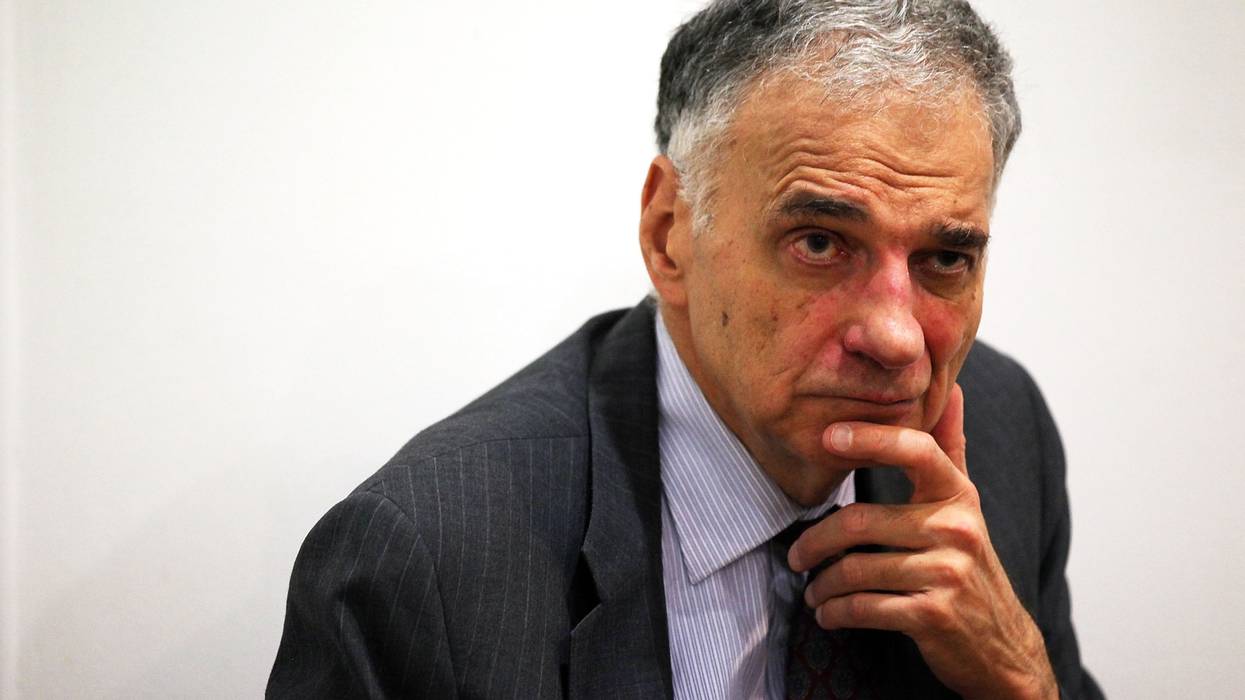
"The Democrats and electorally frightened Republicans pushed Richard Nixon out in 1974 for far, far lesser transgressions than those committed by Trump in a week."
As Democrats campaign for the November midterm elections after helping kill the latest congressional effort to impeach President Donald Trump, progressive consumer advocate and four-time presidential candidate Ralph Nader this week renewed attacks on the party's leadership for abandoning their constitutional responsibility to hold the president accountable.
In a September 14 essay published by Current Affairs, Nader argued that Democratic leaders have effectively given up on impeachment even as Trump's second administration faces continuing allegations of executive overreach and misconduct.
"The chronic prevaricator and delusionist Donald J. Trump knows that the worse his outlaw actions become, the less likely the Democrats in Congress are to impeach him," the Public Citizen co-founder wrote. "The massive number of blatant, impeachable acts by the lawless, corrupt, violent, systemically racist, unstable, dangerous tyrant increases by the day."
"The American public knows it," Nader continued. "The majority of Americans favor impeaching Trump. Among Democrats, it’s 84% in favor, as well as a majority of independents. Polling even shows that most Americans think Trump is a 'dangerous dictator whose power should be limited before he destroys American democracy.'"
Yet, "when asked about impeachment, House minority leader Hakeem Jeffries [D-NY] replied: 'We haven’t ruled anything in and we haven’t ruled anything out,'" he noted. "What? Every day, the mega-arsonist is burning down our republic and its Constitution, with tens of millions of Americans suffering and endangered. Yet Jeffries has been noncommittal about whether Democrats would pursue impeachment even if they had a congressional majority."
In a column republished by Common Dreams earlier this month, Nader wrote, “What must Tyrant Trump be thinking about his opponents’ feeble, weak, cowardly responses to his daily torrent of serious, impeachable offenses?”
“Even his egomaniacal narcissism cannot fully explain his amazing good luck," he opined.
Earlier this week, the House of Representatives voted 232-147 to table an impeachment resolution introduced by Rep. Al Green (D-Texas), effectively ending the measure's consideration. Eighteen Democrats joined Republicans in voting to table it, while 46 Democrats—including House Minority Leader Hakeem Jeffries—voted “present.”
Green's resolution accused Trump of high crimes and misdemeanors arising from the administration's deadly anti-immigrant crackdown, including alleged violations of civil liberties and due process. Green said before the vote that the Constitution contains no provision requiring Congress to wait before confronting impeachable conduct.
Democratic leaders have attempted to justify their decision not to support Green's resolution by arguing that impeachment requires a substantial investigative record, hearings, witness testimony, and document review. Jeffries, along with Democratic leaders Katherine Clark of Massachusetts—the House minority whip—and Pete Aguilar of California, the House Democratic Caucus chair, said they would vote “present” because “none of that serious work has been done," as they jointly explained.
Nader rejects that reasoning. In Current Affairs, he argued that saying Democrats “don’t have the votes” misses the purpose of a sustained impeachment campaign, which he described as a way of building public pressure and organizing voters.
“Impeachment is a mobilizer for get-out-the-vote efforts," he wrote, as well as "for educating and energizing the people back home."
Trump has already been impeached twice by the House, although the Senate failed to convict him either time. No other president has been impeached multiple times. Nader has pointed out that Trump's high crimes and misdemeanors are more grave than those for which then-President Nixon resigned from office in 1974 rather than face impeachment, and that Democrats' fear of the consequences for impeaching Trump again is no excuse for their cowardice.
"The Democrats and electorally frightened Republicans pushed Richard Nixon out in 1974 for far, far lesser transgressions than those committed by Trump in a week," he wrote.
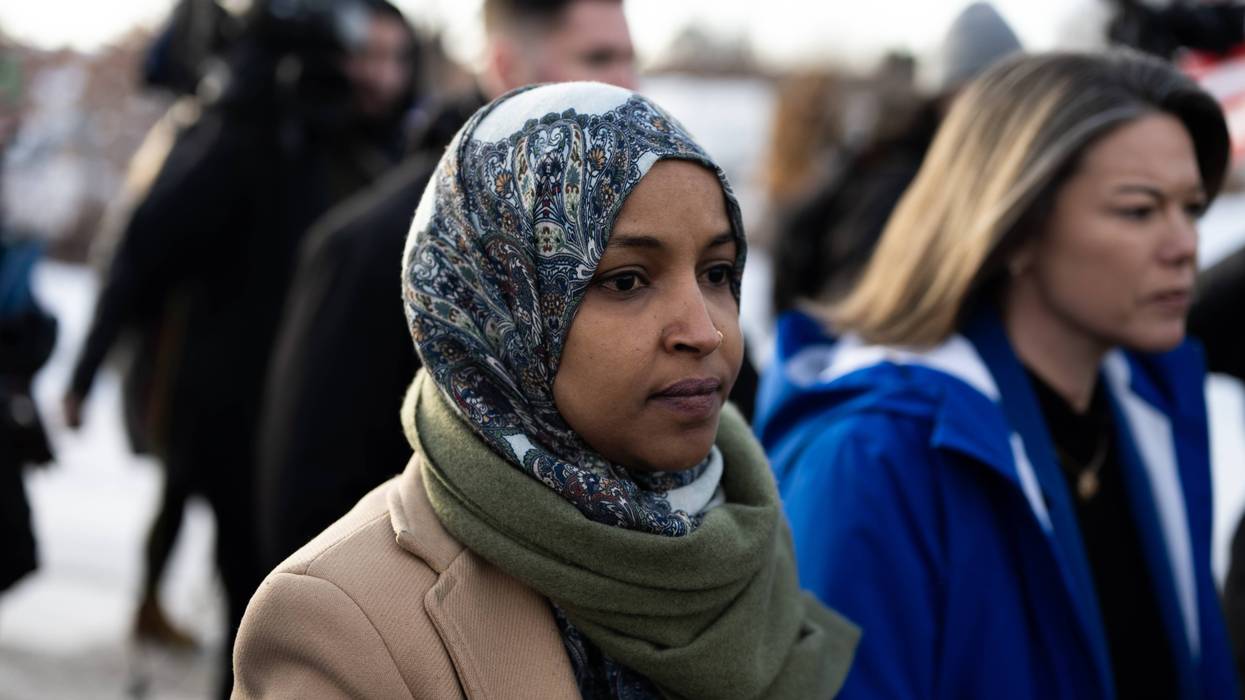
"Our bill will force ICE to pay the price for the damage they’ve left in their wake and ensure that these devastating operations can never be repeated," said the Minneapolis congresswoman.
On January 10, days after US Immigration and Customs Enforcement agents fatally shot US citizen and mother of three Renee Nicole Good in Minneapolis, US Rep. Ilhan Omar stood in the bitter cold of her home city, surrounded by a crowd of angry residents who'd taken to the streets.
It was just over a month into the Trump administration's "Operation Metro Surge"—a campaign that would come to be marked by the staggering scale of racial profiling that led to the arrests of US citizens, brazen defiance of court orders, and stunning displays of force, including two more shootings, one of them fatal.
Of the thousands of armed and masked agents who'd arrived to inflict terror upon the Twin Cities, Omar (D-Minn.) declared, "We are going to make sure that these people pay for what they have done to us." A cheer erupted from the crowd.
On Thursday, Omar introduced a piece of legislation aimed at fulfilling that promise. Titled the Make ICE Pay Act, the bill would block the roughly $140 billion allocated to immigration enforcement in last year's massive Republican budget law and redirect it to recovery efforts in communities reeling from ICE sieges.
"For over a year, ICE has been tearing through our nation, leading racist terror campaigns that have caused devastating damage to our cities, to our businesses, and to the lives of our constituents," Omar said.
"In Minneapolis, Operation Metro Surge cost our community nearly $700 million," she said, citing an estimate by the city of Minneapolis. "We have a moral responsibility to end this abuse of power. Our bill will force ICE to pay the price for the damage they’ve left in their wake and ensure that these devastating operations can never be repeated."
The Trump administration has used this funding to construct an enormous network of detention camps that have often held people in squalid conditions without contact with their loved ones or lawyers and to launch a hiring blitz that has swelled the agency's ranks with poorly vetted recruits, some of whom have gone on to commit deadly abuses of their newfound power.
It has also been used to supercharge ICE's footprint nationwide. With 51,000 arrests, August was the third consecutive month in which the agency set detention records.
And more than ever, the agency has gone after immigrants without criminal records, as well as asylum seekers, green card and visa holders, and Haitian and Syrian immigrants the administration abruptly stripped of Temporary Protected Status.
Through the US Department of Housing and Urban Development, Omar's bill would redirect this funding to states and cities on the receiving end of ICE abuses.
It would be used to provide them with economic relief, reimburse them for extra costs and lost economic activity resulting from raids, support schools and colleges that were disrupted, and provide mental health and social support to those affected.
Funds could also be allocated to support record-keeping and investigations into immigration agencies' conduct and to commissions that allow members of the public to testify about their experiences.
In addition to Minnesota, Omar's bill identifies several other localities that would be eligible for funding after being besieged by ICE, including California, Illinois, Louisiana, Maine, North Carolina, and Oregon, where numerous incidents of misconduct have also been documented.
The legislation is co-sponsored by Rep. Jesús "Chuy" García (D-Ill.), Rep. Rashida Tlaib (D-Mich.), Rep. Chellie Pingree (D-Maine), Rep. Sydney Kamlager-Dove (D-Calif.), Rep. Janelle Bynum (D-Ore.), and Rep. Angie Craig (D-Minn.).
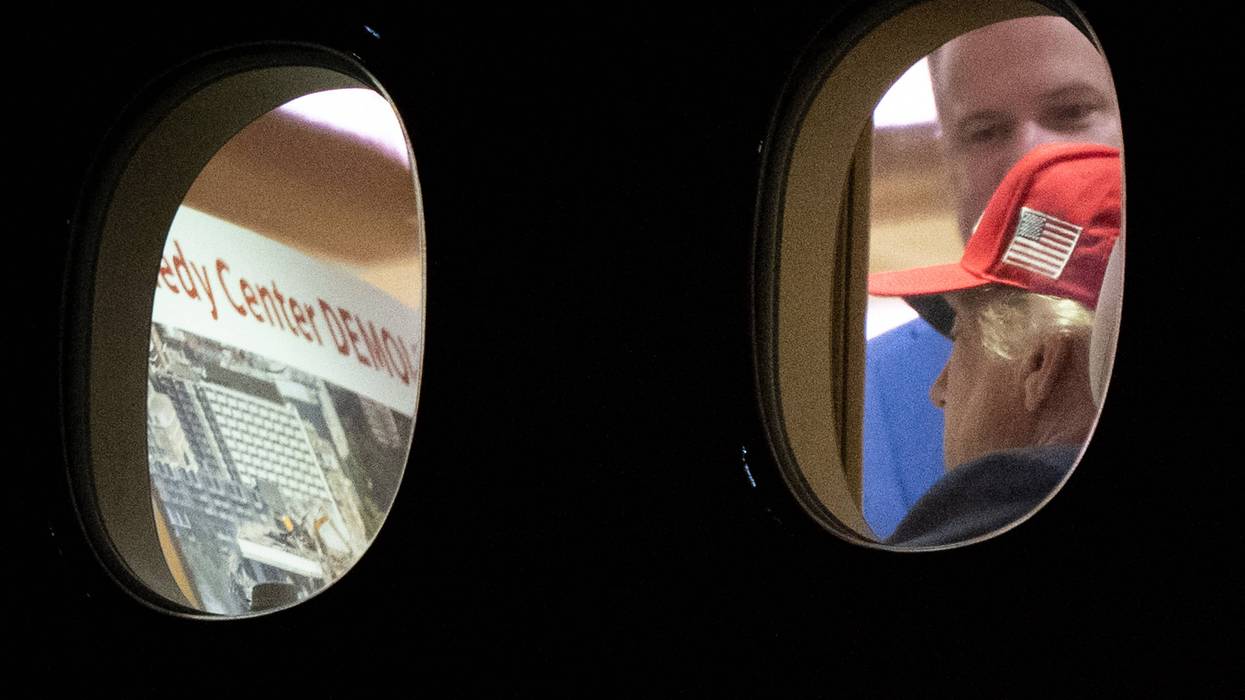
A federal judge has ordered the Kennedy Center board to provide 30 days' notice ahead of any attempt to knock down the building.
President Donald Trump is coming under heavy criticism after a photograph taken on Wednesday suggested that his threats to destroy the John F. Kennedy Memorial Center for the Performing Arts are very real.
Shortly after attending a Wednesday night rally in North Carolina, Trump was caught on camera by photographer Brendan Smialowski sitting on Air Force One and looking at a large printout of a graphic that appeared to read, "Kennedy Center DEMOLISHED."
Hours before the photo was taken, Trump told reporters that the Kennedy Center would "end up being ripped down" if he was not allowed to put his name on the side of the building in "recognition" for the work he purports to have done to improve it.
Trump basically saying The Kennedy Center will be ripped down unless his name is placed on it because in order for him to want to maintain it, his name should be on it.
(Cleaner audio version) https://t.co/wmkH2JTS7I pic.twitter.com/NEyeS17jhb
— Acyn (@Acyn) September 16, 2026
In a Tuesday social media post, Trump similarly said that the center was "destined to doom" unless he is allowed to add his name to it.
Alarmed by these developments, attorneys representing Rep. Joyce Beatty (D-Ohio), a Kennedy Center trustee, went to US District Judge Christopher Cooper on Thursday and asked him to intervene and prevent the president from unilaterally destroying the center.
Cooper subsequently ordered the Kennedy Center board to give 30 days' notice "before the implementation of any changes... including but not limited to any 'demolition' of the center's main building."
Rep. Don Beyer (D-Va.) noted in a Thursday social media post that demolishing the Kennedy Center "would be flagrantly illegal," and vowed to protect the building, which he described as "one of the crown jewels of our nation's capital."
"Trump's narcissism and incompetence are putting our national heritage and iconic sites at risk," Beyer added, "and Republicans' silence and acquiescence to this corruption speaks volumes."
Sen. Sheldon Whitehouse (D-RI) pointed to news from earlier in the week about the resignation of Kennedy Center chief financial officer Donna Kauranen as a particularly ominous development.
"If the Kennedy Center CFO has packed bags and fled," wrote Whitehouse, "that's another warning about center fiduciary failures of due diligence."
The new interpretation of the 1973 law "is not conservation," warned one critic. "It is a license to destroy habitat, disrupt migration, pollute ecosystems, and drive endangered species toward extinction."
Wildlife defenders continued to call out President Donald Trump on Thursday after The New York Times exposed his administration's latest attack on endangered species and the landmark law intended to protect them.
The Times reported late Wednesday that as the administration's rule rescinding the regulatory definition of "harm" under the Endangered Species Act took effect earlier this week, the US Fish and Wildlife Service (FWS) internally circulated a memo interpreting the ESA to mean that only the intentional killing or wounding of a protected species is illegal.
"This memorandum—and other recent Endangered Species Act regulatory rollbacks such as the rescission of the long-standing interpretation of 'harm'—make clear that the Trump administration has declared an all-out war on America's wildlife," said Andrew Bowman, president and CEO at Defenders of Wildlife.
"The administration's absurdly narrow statutory reinterpretation hamstrings the ESA's effectiveness and makes a mockery of our nation's half-century commitment to saving and recovering America’s imperiled wildlife," Bowman charged. "This reinterpretation flies in the face of the ESA's plain language and common sense, as well as Congress' intent more than 50 years ago in enacting the ESA to achieve the goal of protecting and fully recovering listed species."
Oceana vice president Beth Lowell highlighted that "the proposed changes to the Endangered Species Act will remove the core safeguards that have prevented the extinction of 99% of species protected under the act."
"Federally permitted activities that incidentally injure and kill endangered species currently need to take into account their unintended impacts on wildlife, including nesting beaches for sea turtles or North Atlantic mother and calf pairs as they swim to their feeding grounds," Lowell noted. "These changes upend the Endangered Species Act's balance of economic activity and needed protections, pushing species to the brink of extinction."
The US Department of the Interior, which oversees FWS, told The Hill that the memo "accurately reflects the US Fish and Wildlife Service's guidance for implementing the Endangered Species Act following the final rule rescinding the regulatory definition of 'harm.'"
"Under the guidance, the ESA's prohibition on 'take' continues to prohibit conduct including harassing, pursuing, hunting, shooting, wounding, killing, trapping, capturing or collecting protected wildlife," the department said.
Susan Holmes, executive director of the Endangered Species Coalition—which includes 475 member organizations and over half a million activists—argued that the new interpretation of the law "is not conservation. It is a license to destroy habitat, disrupt migration, pollute ecosystems, and drive endangered species toward extinction."
"The administration has already eliminated habitat protection for endangered species with its extreme ESA 'harm' rule. It is using the so-called 'God Squad' to exempt oil and gas drilling in the Gulf from the ESA, and is threatening to eliminate protections for wolves," she pointed out. "This coordinated effort aims to strip the ESA of its power."
"If the Trump administration has its way, piping plovers will lose the beaches where they nest," Holmes warned. "Salmon will be pushed closer to extinction by dams, pollution, water diversions, and destroyed habitat. Grizzly bears will lose the connected landscapes they need to survive as roads, energy development, logging, and other activities fragment their habitat. Rice's whale—the only whale to live only in American waters—will be lost forever."
The coalition leader added that "the Endangered Species Act is our most popular and effective wildlife law, with support from 84% of Americans. We must not accept the destruction of a law that has protected our natural heritage for generations. The ESA must be defended, strengthened, and fully enforced—not gutted by political appointees acting on behalf of powerful industries."
Humane World for Animals president and CEO Kitty Block and Sara Amundson, head of Humane World Action Fund, also cataloged the administration's various attacks on protected species—and drew attention to a clear pattern regarding "who stands to benefit from these continued assaults on one of America's most popular laws for animals."
"It's certainly not the average American," they wrote in a Thursday blog post. "Instead, the beneficiaries are the massive industries that profit from destroying vital habitat and the animals who depend on it for survival. Oil and gas companies and other developers that have to (horror of horrors!) apply for a permit when their activities [pose] a risk of killing animals with federal endangered species protections—such as North Atlantic right whales, gray wolves, and black-footed ferrets, to name just a few—could be handed a pass."
"If this reinterpretation takes effect, more endangered animals will surely die," the pair declared. "And we will all be worse off for it."

"The buffers that have historically protected water security—snow, ice, groundwater—are eroding in many regions on a timescale of years, not overnight," the agency leader said, stressing "a sense of urgency, not panic."
The world's water cycle "has become more erratic and unpredictable," and recent trends have "serious implications for people and economies in the future," the United Nations' weather agency said Thursday, announcing the release of its annual report on one of the planet's most important natural resources.
Speaking at the launch of the "State of Global Water Resources 2025," World Meteorological Organization (WMO) Secretary-General Celeste Saulo explained that "some parts of this cycle—such as precipitation, river flow, soil moisture—are fast. They respond to weather within hours, days, weeks. Others, like groundwater and glaciers, are slow. They accumulate or decline over seasons to decades or longer."
"Traditionally, these slow reserves have acted as the planet's savings account: a buffer that absorbs bad years so that a single drought or a single dry season does not translate directly into a water crisis," she continued. "One of the central stories of the 2025 report is what is happening to that savings account. And the simple answer is that we are depleting it. We are spending our reserves."
According to the WMO's new report, terrestrial water storage—or the total stored in groundwater, lakes, rivers, soil moisture, vegetation, ice, and snow—has been falling since the mid-2010s. Saulo stressed that "this is not a single bad year, but it is a persistent, decadelong signal."
The agency also found that 2025 was among the driest years for river discharge worldwide in more than three decades, with below-normal flows over a third of the global basin area—and for the seventh straight year in a row, the number of river basins with "normal" conditions was in the minority.
Last year was also the fourth straight to feature widespread glacier loss across all regions. The WMO noted that the losses from 2023-25 could fill about 560 million Olympic-sized swimming pools—or about a third of annual freshwater withdrawals.
The report also "shows that water-related extreme events continue to devastate communities and economies," Saulo noted, highlighting the Early Warnings for All Initiative. "Over the past five years, Asia and Africa have accounted for at least half of all reported hydrological extreme events and more than 80% of associated deaths. And precisely these regions often lack the observations necessary for forecasts and early warnings."
Her comments came a day after the death toll from the flooding disaster in Tibet and Nepal topped 1,400. Experts have emphasized that tragedy's connection to the fossil fuel-driven climate crisis, with University of Pennsylvania professor Michael Mann writing that the "glacial collapse and deluge... was not a freak weather event; it was the structural failure of a mountain itself, nature's latest commentary on the deadly consequences of human-caused planetary warming."
That warming has also intensified the naturally occurring warm phase of a key pattern in the Pacific Ocean called El Niño, according to a study published last month. The WMO chief warned in her Wednesday remarks that "the strengthening El Niño will increase the extremes—drought in some countries and floods in others."
The agency's latest forecast, also released Wednesday, anticipates an "exceptionally high likelihood of nearly 100%" that the warm phase will persist through to February 2027. UN Secretary-General António Guterres said that "El Niño is being supersized before our eyes. The science leaves no room for doubt: The planet is in uncharted waters, and those waters are heating up."
Only when the last glacier has melted and the last reservoir has dried up will you realize that you can't drink gasoline…#climatecrisis#climatecollapse
[image or embed]
— Jürgen Döschner (@jdoeschner.bsky.social) September 17, 2026 at 4:01 PM
While the related releases generated calls for action, Saulo said that "it is not all bad news. Some regions showed improvement in 2025," pointing out that "parts of South America saw a partial recovery in water storage during 2025 after a severe multiyear deficit," while "Central and Southern Africa maintained much-above-normal water levels across several major lakes."
Still, action is needed. As Saulo put it: "The State of Global Water Resources report calls for a sense of urgency, not panic. The buffers that have historically protected water security—snow, ice, groundwater—are eroding in many regions on a timescale of years, not overnight. We have a genuine window for action: expanding early warning coverage; investing in the hydrological monitoring infrastructure; and opting for water management policies to address both water supply and use/overuse."
"My concluding message is that this report exists because members share their data and their science," she said. "This level of understanding—global, standardized, comparable year to year—did not exist a decade ago. It is the product of sustained international cooperation under WMO's mandate. And my last call is for all of you to continue to invest in it."

The organizers said the "culture of bipartisan elite immunity" was why "Biden officials knew they could arm, defend, and cover up the genocide in Gaza for 15 months, and simply move back into liberal spaces."
As another presidential election approaches and a new Democratic administration may be on the horizon, human rights campaigners are trying to ensure that it won't be staffed with the same policy officials who architected former President Joe Biden's Gaza policy.
Most Democratic voters are now appalled by Israel's military campaign in Gaza, which leading human rights groups and scholars have recognized as a genocide. It has led to the deaths of at least 73,000 Palestinians, including more than 21,000 children, according to official totals, and left most of the population displaced and living amongst rubble.
But many of the Biden advisers and appointees who gave cover to Israel during its pivotal, exceptionally deadly early months have settled comfortably back into the respectable liberal intelligentsia, with roles at universities, think tanks, and media outlets.
As 2028 inches closer, a coalition of peace groups is urging these institutions to pledge that they will "drop the Genocide 20," a group of 20 ex-Biden officials they deemed "responsible for promoting, lying about, and covering up the Gaza genocide," even as Israeli officials made numerous statements indicating intent to fully destroy Gaza and its people.
The list, published Thursday on the coalition's website, includes:
"The purpose of the list is to demand these officials be removed from future Democratic administrations, as well as think tanks and academic and liberal spaces," said the coalition, which includes Just Foreign Policy; Palestinian Youth Movement; Track AIPAC, which tracks lobbying by pro-Israel donors; Peace Action; the Democratic Socialists of America; and About Face, a group representing anti-war veterans.
"The culture of bipartisan elite immunity is what drives US war crimes and support for war crimes. From the Vietnam War to post-9/11 torture to the Iraq War, elite war criminality never receives any meaningful sanction from either party. It is treated as a mere policy disagreement among friends," the coalition said. "This dynamic is a key reason Biden officials knew they could arm, defend, and cover up the genocide in Gaza for 15 months, and simply move back into liberal spaces, nonprofits, and future governments."
The campaign urged these organizations to oppose any efforts to give the 20 people on the list "institutional or political power that positions them to continue to perpetrate harm."
Rep. Rashida Tlaib (D-Mich.), the only Palestinian American lawmaker in the US House of Representatives, has signed the pledge, as has Pennsylvania state Rep. Chris Rabb, who is likely to enter the US House in January after winning the Democratic primary for Pennsylvania's 3rd Congressional District earlier this year.
Zeteo reporter Prem Thakker, who first broke news of the coalition's effort, said more lawmakers were expected to join in support.
The coalition noted that there were "far more than 20 people in the US government responsible for the US-backed genocide in Gaza" but acknowledged that it needed to limit itself to those most responsible to remain actionable.
It also said that a parallel effort was in the works to hold members of the Trump administration accountable for their own policies in Gaza and elsewhere.
"The Trump administration’s time will come, especially given its attack on Iran and war crimes against the Iranian people," the coalition said.
But for now, the activists are putting their focus on the Biden administration because “that’s who is currently out of power and actively engaging in reputation laundering and historical revisionism.”
The pledge comes as increasing numbers of Democratic politicians describe Israel's conduct in Gaza as constituting a genocide, a position shared by the majority of Democratic voters. The coalition said that without consequences, this is meaningless.
“The word ‘genocide’ has certain implications and obligations. It’s not a buzzword,” the coalition said. “If an elected [official] says Israel committed genocide, as 22 members of Congress have, then it logically follows they would agree to not hire, work with, or otherwise validate those most responsible for that which they themselves argue is a genocide. It’s common sense.”
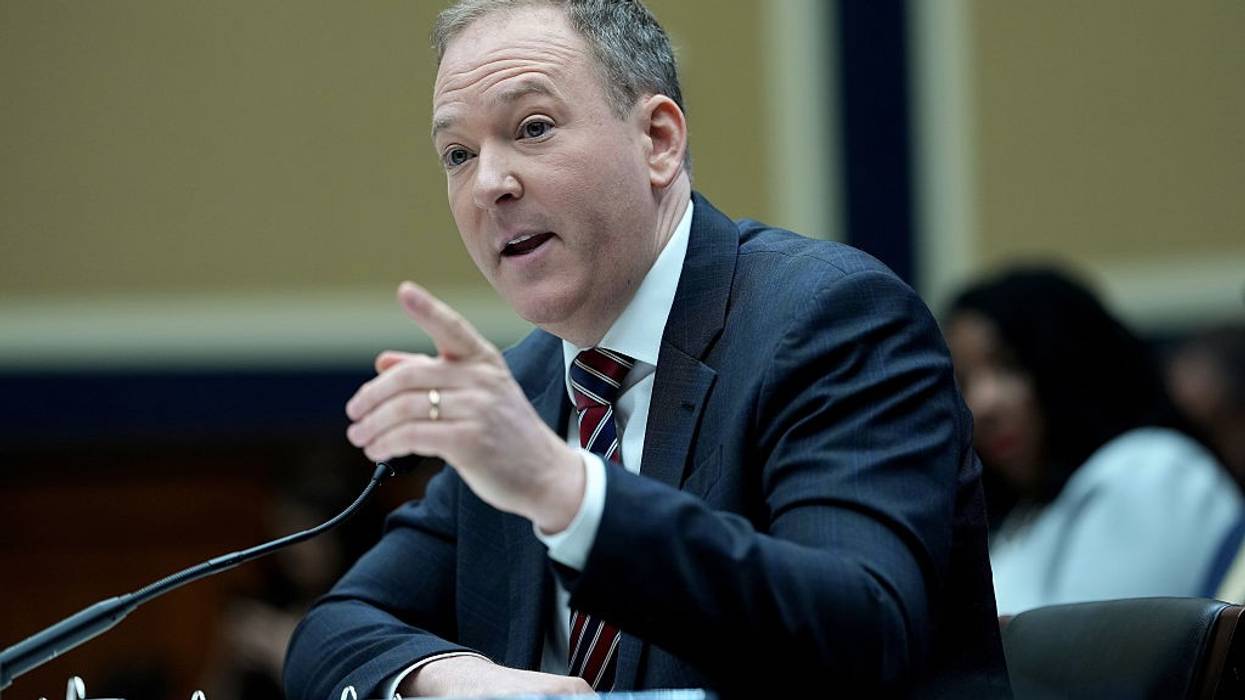
"Singling out medication abortion while ignoring the agricultural and industrial pollutants that are proven threats to our health makes clear that these efforts are about restricting access to abortion, not protecting our water.”
After a yearslong pressure campaign led by Students for Life, President Donald Trump's top environmental agency is including pills used in medication abortions in a new study of drinking water pollutants—part of what one rights advocate called a ramped-up effort to weaponize "environmental protections to restrict abortion medication"—and potentially birth control, as well.
Environmental Protection Agency (EPA) Administrator Lee Zeldin announced the study last week, saying that the agency has "heard loud and clear that Americans are concerned about potential unknown pollutants lurking in their drinking water."
But as Mother Jones pointed out, the Trump administration has shown little concern for drinking water safety as it has gutted the Clean Water Act as recently as this month, pushed for the expansion of artificial intelligence data centers despite evidence that they pollute water, and sought a reversal of rules to protect people from "forever chemicals" in drinking water.
In fact, the outlet noted, the announcement of the abortion pill study came days after Zeldin announced an elimination of pollution standards for power plants.
"The EPA’s unrelated but tandem announcements reveal an agency that has fundamentally overhauled its policies toward environmental and human health in pursuit of the Trump administration’s 'energy dominance' and 'Make America Healthy Again' agendas," wrote Rachel Santasiero at Mother Jones.
The MAHA agenda at the EPA appears to mean a study that will test for mifepristone and misoprostol, the drugs used in medication abortions, as well as levonorgestrel, which is used in contraception, including emergency contraception pills such as Plan B.
"This is the latest tactic of trying to weaponize laws that are meant to protect our environment and protect our wastewater.”
Nathan Donley, director of environmental science at the Center for Biological Diversity, emphasized in an interview with The Cut that the EPA's water-testing approach won't determine how much of a chemical is in drinking water—just that it exists at all in a sample, even in trace amounts.
"That doesn’t matter much, though, in terms of the politics," wrote Jessica Valenti, author of the blog Abortion, Every Day. "If the test finds any trace of abortion pills, conservatives will use it to legitimize their new legal front in the war on reproductive rights—one that includes weaponizing environmental protections to restrict abortion medication (and possibly contraception)."
Anna Bernstein, a federal policy adviser at the Guttmacher Institute, told The Cut that the study is part of an effort to convince Americans that medication abortions are unsafe, at a time when the number of abortions in the US has actually gone up since the Supreme Court overturned Roe v. Wade. Experts have attributed the increase to the expanded use of telehealth and the ability to mail medication abortion pill regimens to patients.
“The anti-abortion movement has become increasingly frustrated with that fact, so they really are throwing everything at the wall and seeing what sticks,” Bernstein told The Cut. “They are really ramping up disinformation campaigns about the safety of medication abortion. This is the latest tactic of trying to weaponize laws that are meant to protect our environment and protect our wastewater.”
She added that she is "concerned about the risk of added surveillance that testing for these chemicals could create in an environment where criminalization is already a factor."
Valenti noted that Kristi Hamrick, the vice president of Students for Life, has acknowledged that attempting to crack down on medication abortion access via environmental protections is "all bullshit."
"This is not because the environment was my first weapon of choice—it’s because it’s the one we have now," Hamrick said last year of the group's Clean Water campaign. "Environmental law has teeth. It already exists. And, frankly, I’m for using the devil’s own tools against them.”
The water study is part of an effort that also includes a push for legislation requiring women who have abortions and miscarriages to collect their pregnancy remains in "catch kits," which has been proposed by state lawmakers in Wisconsin and at the federal level earlier this year.
The Food and Drug Administration already confirmed decades ago—before mifepristone was approved—that it was safe to use “without any expected adverse environmental effects."
A study by Students for Life—published in a journal run by anti-abortion doctors—was called "misleading" by experts who told Politico earlier this year that the research "should not be considered in environmental or public health decision-making.”
Donley called the notion that a one-time dose of mifepristone—a drug that's been taken by about 1% of the US population—could be contaminating water supplies "a joke."
“If you think of most pharmaceutical drugs, you’re not just taking one pill. You’re taking a pill on a daily or semi-regular basis,” Donley told The Cut. What that means is that those drugs used by tens of thousands—sometimes millions—of Americans every day enter our wastewater system at a much larger scale than abortion pills."
“I’ve seen no credible evidence that these drugs are causing widespread environmental harm. There’s just no data to support that whatsoever. Including mifepristone and misoprostol on this list is just stupid, but then again, we’re in a stupid administration,” he added. “It’s completely ideologically driven."
Bernstein told Abortion, Every Day that "singling out medication abortion while ignoring the agricultural and industrial pollutants that are proven threats to our health makes clear that these efforts are about restricting access to abortion, not protecting our water.”
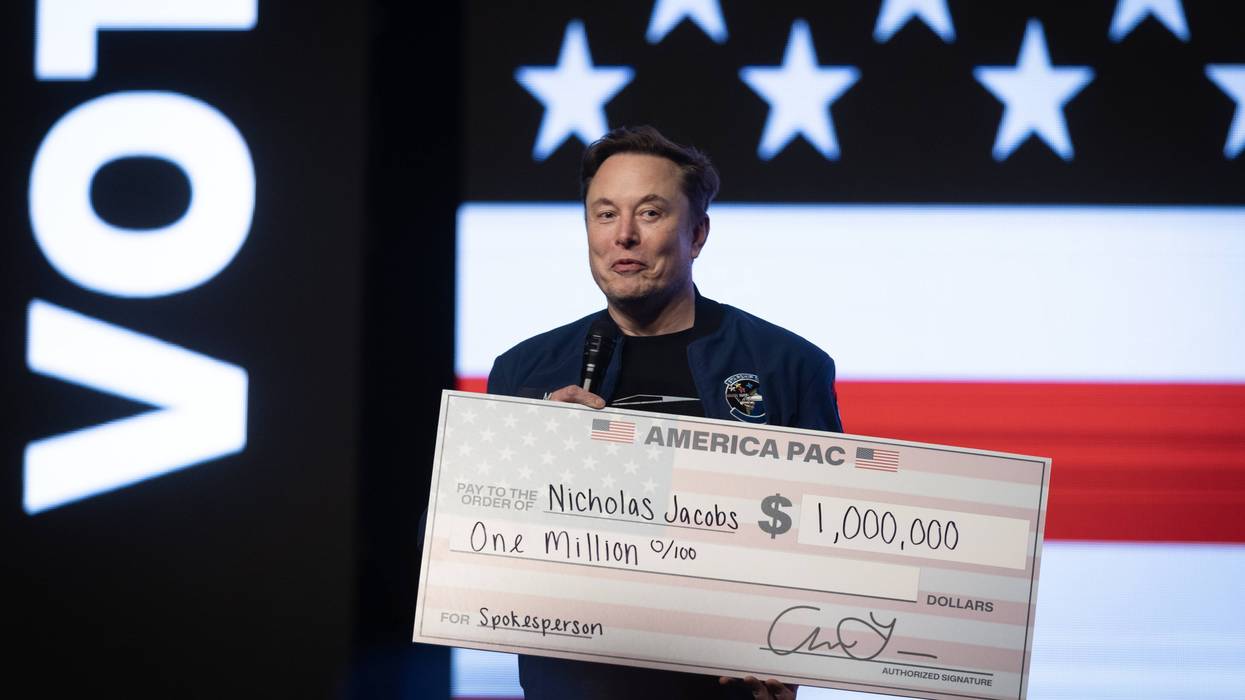
"Have I mentioned lately that oligarch-owned media consolidation is bad?" said one critic.
Filmmaker Alex Gibney's scathing four-hour documentary about SpaceX CEO Elon Musk has received rave reviews since its debut at the Venice Film Festival earlier this month, but it could soon be without an international distributor.
According to a Wednesday report from The Hollywood Reporter, Comcast-owned Universal Pictures, which holds distribution rights to the film outside the North American market, is getting "cold feet" about releasing it.
"The company has not dated the movie," explained The Hollywood Reporter, "has not communicated with the filmmaking team about its plans, and generally appears to be rethinking the release of a project that it once showed high enthusiasm for but is now politically sensitive for parts of the Trump administration."
Two sources told the publication that they wouldn't be surprised if Universal decided to not release the movie and returned its distribution rights to the filmmakers, even though doing so would require the studio to pay a kill fee.
The Hollywood Reporter noted, however, that it's unlikely that the film would be without an international distributor for long because "distributors in individual countries have been salivating over the film ever since the four-hour project began gaining buzz in recent weeks."
Slate culture writer Sam Adams pointed out in a social media post that independent distributor Bleecker Street "is holding steady on releasing Musk in the US, and actually moved up the opening to October 9."
Emmy Award-winning sports broadcaster Brian Webber noted that there is past precedent for Hollywood studios coming under pressure to not release a movie that is critical of a wealthy oligarch.
"William Randolph Hearst famously tried to... suppress Citizen Kane from being released," Webber explained in a social media post. "Hollywood had more guts in the 1940s—probably because there was real competition among the studios and not today's oligopoly problem."
Tech journalist Karl Bode reacted with dismay to news that Universal might spike its release of the documentary.
"Have I mentioned lately that oligarch-owned media consolidation is bad?" he asked rhetorically.

“Nobody tell us that we’re going to Guantánamo Bay,” said one victim. “Just like kidnapping.”
Anger is growing this week as more details emerge about the Trump administration's detention of Somali immigrants at Guantánamo Bay, including people with no criminal records and, in at least one case, a legal US resident.
At least eight Somali men are being held at the notorious US military base in Cuba, while as many as 12 Somali deportees have passed through the facility in recent weeks, according to Sahan Journal. Seven of those still there are being held at Camp 6, which was originally opened under the George W. Bush administration during the so-called War on Terror to imprison men and at least one child in a facility rife with torture and other abuse.
“I never expected to be arrested in a prison established for the terrorists who I fled from,” 31-year-old Hassan Abdi Abtidoon told Sahan Journal's Mohamud Farah on Tuesday.
Among the other Somalis held at Guantánamo is 31-year-old Adam Abdullah, a St. Paul, Minnesota, resident who came to the United States as a legal asylum seeker in 2023. Abdullah had a work permit and Social Security number, operated an auto repair business, and had no criminal record, according to Minnesota court records. His past involvement with law enforcement appeared to include nothing more than two parking tickets.
US Immigration and Customs Enforcement (ICE) agents arrested Abdullah in December during the Trump administration's deadly Operation Metro Surge campaign, which targeted Minnesota's large Somali community amid widespread racist demonization and dehumanization by Republicans, including President Donald Trump.
After months of detention in Minnesota, Kentucky, and Louisiana, Abdullah said officials told him he was being deported to Somalia.
"From Miami, they say, 'OK, now we go to Somalia. Then, first we go to Cuba for refueling, and then we go to some other countries to Somalia,'" Abdullah told Minnesota Public Radio (MPR) earlier this month.
The flight never left Cuba. Abdullah was taken to Camp 6, where he has remained.
Another Somali detainee, Sakariye Abdi Mohamed, described Camp 6 as "the worst place ever I've been in my life."
Mother Jones reported Wednesday that Mohamed was one of 12 Somali men forced onto a plane last month by ICE agents, who told them they were being deported to Somalia.
"Nobody tell us that we're going to Guantánamo Bay," Mohamed said. "Just like kidnapping."
This is APPALLING. The Trump administration is detaining multiple random Somali immigrants with no criminal record at Guantanamo Bay, seemingly because the White House ordered ICE specifically to detain Somalis at Gitmo as part of its effort to punish an ethnic group Trump has attacked.
[image or embed]
— Aaron Reichlin-Melnick (@reichlinmelnick.bsky.social) September 16, 2026 at 12:36 PM
Seven or eight of the men reportedly remain at Guantánamo, where some of them have described being shackled and subjected to frigid temperatures. Detainees also said they are subjected to constant surveillance, including cameras inside bathrooms.
The US Department of Homeland Security claimed the flight included "some of the worst of the worst" with criminal histories including assault, weapons offenses, robbery, theft, drug charges, and drunken driving.
However, Sahan Journal reported that the attorney for six of the eight detainees had found that all had final deportation orders but no additional criminal charges. Four were recent asylum seekers, and two had lived in the United States for decades.
“The administration says we send the worst of the worst to Guantánamo,” US Sen. Tina Smith (D-Minn.) told MPR Wednesday. “Yet in the case of Mr. Abdullah, there has been no evidence presented about what he has done, no explanation for why he has been detained. I mean, there is really has been no due process.”
The Trump administration's use of Guantánamo for immigration detention is not unprecedented. The facility—which experts have placed within the centuries-long story of American concentration camps—has a long history as an offshore immigration detention site that predates the post-9/11 military prison camp.
During the George H.W. Bush administration, thousands of Haitian refugees fleeing political violence were intercepted at sea and taken to Guantánamo. The Clinton administration continued the policy and, at its peak in 1994, roughly 14,300 Haitians were held there. Clinton officials subsequently used Guantánamo for Cuban migrants, more than 30,000 of whom were jailed at the base.
The treatment of Somali immigrants at Guantánamo has also drawn renewed criticism regarding who has and has not been targeted for deportation from the United States.
Human rights activist Suleiman Bolaleh, who has documented atrocities committed under former US-backed Somali President Mohamed Siad Barre, noted in a recent social media post that Somali immigrants with no criminal records are being rounded up and sent to Guantánamo, while members of the former dictatorship's ruling family and senior figures have lived in the United States.
"Men once positioned at the heart of a regime accused of mass killings, war crimes, and ethnic cleansing continue to reside openly in American communities," Bolaleh wrote. "The contrast is jarring: An immigrant [who] has no criminal record is detained at Guantánamo, while figures tied to that dictatorship’s violent apparatus remain unexamined and unaccountable."
Multiple legal challenges to the Trump administration's use of Guantánamo Bay for immigrant detention have been launched.
Meanwhile, the longstanding habeas litigation involving War on Terror detainees at Guantánamo continues. In May, Somali national Guled Hassan Duran—who has been held at Guantánamo since 2006 without being charged—asked a federal court to order his release after years of inaction on his habeas petition.
Duran was approved for release by senior US officials in 2021, but remains imprisoned at Guantánamo along with 14 other men—none of whom has ever been convicted of any terrorism-related crimes. Former Bush administration and US military officials have said that most of the men and boys who were ever imprisoned at Guantánamo were innocent, and that senior administration officials knew it but kept them locked up for political purposes.

With that additional $930 per household spent on energy, the analysis says the total cost due to higher prices from the war is closer to $1760.
A recently published economic analysis estimates that President Donald Trump’s illegal war with Iran has cost US consumers an average of $1,760 per household—including a total of $121 billion in extra spending on energy alone—since the conflict began less than 8 months ago.
The war, which Trump launched without congressional authorization in February, has sent energy prices spiking across the world, as Iran responded to US attacks by shutting down commercial shipping traffic in the Strait of Hormuz.
According to the estimate by Moody’s Analytics, US consumers have spent over $121 billion—or $930 per household—more on energy since the start of the war, accounting for more than half of the total added expenses imposed by the conflict.
Mark Zandi, chief economist at Moody’s, told CNBC in an interview published Wednesday that the analysis reflects the fact that "consumers are under a lot of financial pressure."
The analysis also finds that the average US household has spent an additional $425 due to higher interest rates caused by the war, as well as $405 for higher military spending, which Zandi explained to CNBC would come from footing the bill through either national debt expansion or increased taxes.
Karthik Sankaran, senior research fellow in geoeconomics at the Quincy Institute for Responsible Statecraft, argued in an analysis published Thursday that relief for US energy consumers could be a long way off given recent developments in the Middle East, including Houthi fighters seizing a key port city along the Red Sea and a drone strike on a Saudi oil pipeline.
Sankaran warned that nations worldwide have far fewer options now to cushion against energy shocks than they did at the start of the war.
"Seaborne storage on tankers has been depleted," Sankaran wrote, "the US Strategic Petroleum Reserve has released about 130 million barrels, and the world’s largest importer, China, is increasing imports to 7.2 million barrels per day, up from a low of 6 million barrels in June."
Sankaran noted that, as uncomfortable as high energy prices are for Americans, the situation is even more dire in the Global South.
"The spike in diesel prices is likely to hit countries in the Global South especially hard," Sankaran explained. "The higher energy density of diesel means that it is used to power trucks, buses, and agricultural equipment, making it the most important fuel in poorer countries where individual ownership of automobiles is much less widespread."
A Tuesday report from CNN highlighted how high fuel prices have led to protests across the globe, including in Syria, Guatemala, France, Portugal, and the Philippines.
The protests in Syria have been particularly intense, CNN noted, as demonstrators on Sunday "blocked the Hasaka–Deir ez-Zor highway, where they burned tires and stopped oil tankers."
Muaz Al Abdullah, Syria analyst at global conflict monitor Armed Conflict Location and Event Data (ACLED), told CNN that "fuel availability, rising prices, falling purchasing power, and poor services are all reasons that have accumulated public resentment," which have led to demands that the country oust its energy minister.