June, 18 2010, 03:58pm EDT
For Immediate Release
Contact:
Sam Husseini, (202) 347-0020; or David Zupan, (541) 484-9167
Rowley, McGovern and Ellsberg -- Statement on Wikileaks
WASHINGTON
The British Guardian reports: "The whistleblowing website WikiLeaks says it plans to release a secret military video of one of the deadliest U.S. air strikes in Afghanistan in which scores of children are believed to have been killed."
In April, Wikileaks released the "Collateral Murder" video showing U.S. soldiers in Iraq killing civilians including a Reuters photographer and then shooting at people, including children, in a van attempting to rescue the wounded.
The following statement was released today by Coleen Rowley, an FBI whistleblower who was one of Time Magazine's people of the year in 2002; Ray McGovern, CIA analyst for 27 years; and Daniel Ellsberg, who leaked the Pentagon Papers (top-secret government documents that showed a pattern of governmental deceit about the Vietnam War):
"Today, Washington is trying to shut down what it clearly regards as the most effective and dangerous purveyor of embarrassing information -- Wikileaks, a self-styled global resource for whistleblowers. It is a safe bet that NSA, CIA, FBI and other agencies have been instructed to do all possible to make an example of Wikileaks leader, Australian-born Julian Assange, and his colleagues. Much is at stake -- for both Pentagon and freedom of the press.
"Those who own and operate the corporate media face a distasteful dilemma, both in terms of business decision and of conscience. They must choose between the easier but soulless task of transcribing government press releases, on the one hand; or, on the other, following Wikileaks into the 21st century by adapting high-tech methods to protect sources while acquiring authentic stories unadulterated by government pressure, real or perceived.
"Deference to the government seems largely responsible for the failure to explore the implications of particularly riveting reportage that gets millions of hits on the Web but has been, up to now, largely ignored by mainstream media. The best recent example of this is the gun-barrel video showing a merciless turkey-shoot of Baghdad civilians by helicopter gunship-borne U.S. soldiers on July 12, 2007. Like the humiliating and graphic but actual photos of Abu Ghraib, the publication of which Pullitzer-prize winning Seymour Hersh repeatedly defended as necessary to the story of Iraqi prisoner abuse, such raw footage is essential to people's understanding of what is happening. Like Daniel Ellsberg's copying of 7,000 pages of the 'Pentagon Papers,' such whistleblowers are a great means of exposing the lies upon which the current wars are based.
"Assange went public this week with an email announcement that Wikileaks is preparing to release a classified Pentagon video of a U.S. airstrike in Afghanistan in May 2009, which left as many as 140 civilians dead -- most of them children and teenagers. He added that Wikileaks has 'a lot of other material that exposes human rights abuses by the United States government.'
"Wikileaks has also published a secret U.S. Army report of March 2008 evaluating the threat from Wikileaks itself and possible U.S. countermeasures against it. This will undoubtedly prompt American officials to redouble efforts to find Assange and to prevent Wikileaks from posting additional information they have classified to avoid embarrassment.
"Americans have a right to know what is being done in our name, and how important it is to protect members of the now-fledgling Fifth Estate so that it can continue to provide information shunned or distorted.
"Assange ended his email with an unabashed appeal for donations for his website. 'Please donate ... and encourage all your friends to follow the example you set; after all, courage is contagious.' His words sounded a bit like those of Edmund Burke: 'When bad men combine, the good must associate; else they will fall one by one, an unpitied sacrifice in a contemptible struggle.'
"For the good to associate effectively, they need to know what is going on. It's our hope the old Fourth Estate press will recall the good and high-calling that Burke, Jefferson and other leaders of democracy have extolled through the centuries and catch some of that 'contagious courage'."
See on Ellsberg.net: "Daniel Ellsberg Fears WikiLeaks Founder Julian Assange's Life In Danger"; (on MSNBC) and today on Democracy Now.
Available for interviews:
RAY McGOVERN
McGovern was a CIA analyst for 27 years.
COLEEN ROWLEY
Rowley, an FBI whistleblower, was named one of Time Magazine's people of the year in 2002. She recently co-wrote the piece "Wikileak Case Echoes Pentagon Papers."
Wired reports: "An Army intelligence analyst suspected of leaking classified information to Wikileaks has still not been charged with any crime, three weeks after being arrested and put in pre-trial confinement.
"PFC Bradley Manning, 22, is being held at Camp Arifjan in Kuwait and has been assigned a military defense attorney while the Army and State Department investigate claims Manning made to an ex-hacker in online chats that he disclosed classified information."
The New York Times reports today: "Iceland's Parliament, the Althing, voted unanimously in favor of a package of legislation aimed at making the country a haven for freedom of expression by offering legal protection to whistle-blower Web sites like WikiLeaks, which helped to craft the proposal."
A nationwide consortium, the Institute for Public Accuracy (IPA) represents an unprecedented effort to bring other voices to the mass-media table often dominated by a few major think tanks. IPA works to broaden public discourse in mainstream media, while building communication with alternative media outlets and grassroots activists.
LATEST NEWS
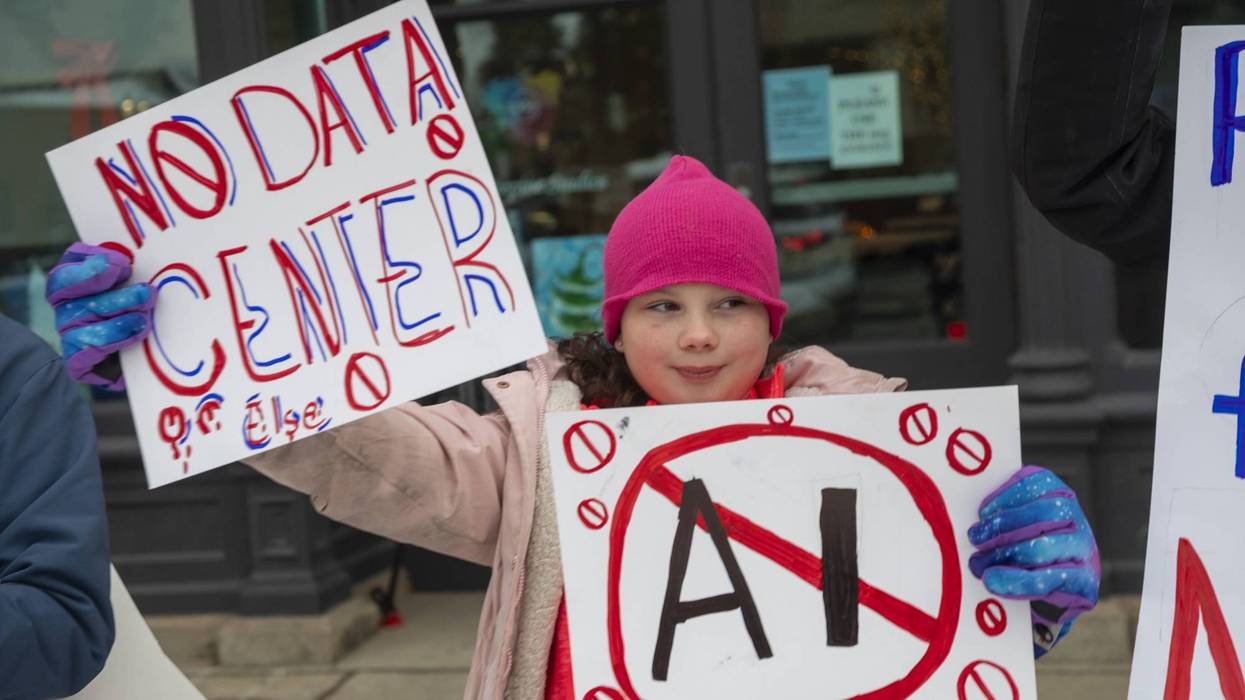
Citing 'Irreversible Harm,' 100+ Groups Urge Congress to Reject Rushed Data Center Approvals
"Congress must not let Big Tech block oversight and hide data centers’ real harms from the public, including their immense energy and water use, dangerous pollution, and rising local costs," said one campaigner.
Apr 29, 2026
Nearly 120 civil society groups on Wednesday urged US lawmakers to reject Republican-led efforts to fast-track approval of artificial intelligence and conventional data centers, including by slipping provisions for these facilities into permitting reform legislation or "must-pass" bills.
Fossil fuel companies "are pushing to fast-track data center build-outs while ignoring the impacts on communities and the environment," the groups said in a letter to congressional leaders. "Proposals disguised as 'commonsense' reforms would weaken the National Environmental Policy Act (NEPA), the Clean Water Act, the Clean Air Act, and the Endangered Species Act, while also stripping residents of their right to participate in decisions affecting their health, water, and air."
"Congress cannot allow these industries to externalize costs while claiming progress," the letter states. "Lawmakers must prioritize public health, environmental sustainability, and community resilience, and reject rollbacks that hand corporations unchecked control over land, energy, and local resources."
If Joni Mitchell's iconic "Big Yellow Taxi" was written today the lyrics would say, "they paved paradise and put up a data center."We'd like to preserve paradise. So, the Center and our allies just urged Congress to reject fast-tracking harmful data centers. More info: biodiv.us/4cHWF4g
— Center for Biological Diversity (@biologicaldiversity.org) April 29, 2026 at 11:23 AM
The groups further called on lawmakers to eschew inclusion of data center provisions in "must-pass" legislation such as appropriations bills, the National Defense Authorization Act, Water Resources Development Act, and Farm Bill.
“Our democratic process was sidelined when our most powerful leaders both elected and unelected championed a data center while community voices were shut out,” said LaTricea Adams, CEO and president of Young, Gifted & Green, a national civil and environmental justice group that signed the letter.
Young, Gifted & Green is one of the frontline groups fighting Colossus, an enormous Memphis data center operated by Elon Musk's xAI to train its Grok AI chatbot using over 100,000 Nvidia H100 graphics processing units. The NAACP and Southern Environmental Law Center are suing xAI for alleged violations of the Clean Air Act related to the massive facility.
“What happens in Memphis can happen in cities and states across the country," Adams said. "We need the US Congress to do its job now to preserve and protect our rights as constituents and fight for our democracy.”
The letter's signers include 350.org, the Center for Biological Diversity, CodePink, Food and Water Watch, Friends of the Earth, Greenpeace USA, Oil Change International, Third Act, Turtle Island Restoration Network, Waterkeeper Alliance, and more than 100 other organizations.
The groups' letter comes as more and more communities are successfully opposing the proliferation of data centers across the nation. In Maine, state lawmakers recently passed legislation that would have enacted the nation’s first statewide moratorium on AI data centers had Democratic Gov. Janet Mills not vetoed the move.
Developers want to build 51 data warehouses, each the size of a Walmart Supercenter, in a Pennsylvania town of just 7,000.And they are refusing to tell the community what technology firms will occupy the buildings.Is it any wonder why a nationwide backlash against AI data centers is brewing?
[image or embed]
— Robert Reich (@rbreich.bsky.social) April 27, 2026 at 9:58 AM
At the federal level, Sen. Bernie Sanders (I-Vt.) and Rep. Alexandria Ocasio-Cortez (D-NY) last month introduced a bill for a national moratorium on AI data centers “until strong national safeguards are in place to protect workers, consumers, and communities, defend privacy and civil rights, and ensure these technologies do not harm our environment.”
Center for Biological Diversity senior climate and energy policy specialist Camden Weber said in a statement Wednesday that "Congress must not let Big Tech block oversight and hide data centers’ real harms from the public, including their immense energy and water use, dangerous pollution, and rising local costs."
“Data center giants spend consumers’ money to gut regulations, buy up utilities, and avoid accountability, enriching billionaires while shifting risks to everyone else," Weber added. "Members of Congress are supposed to represent their communities, not strip the people who elected them of the power to protect themselves from these massive operations moving into their neighborhoods.”
Keep ReadingShow Less
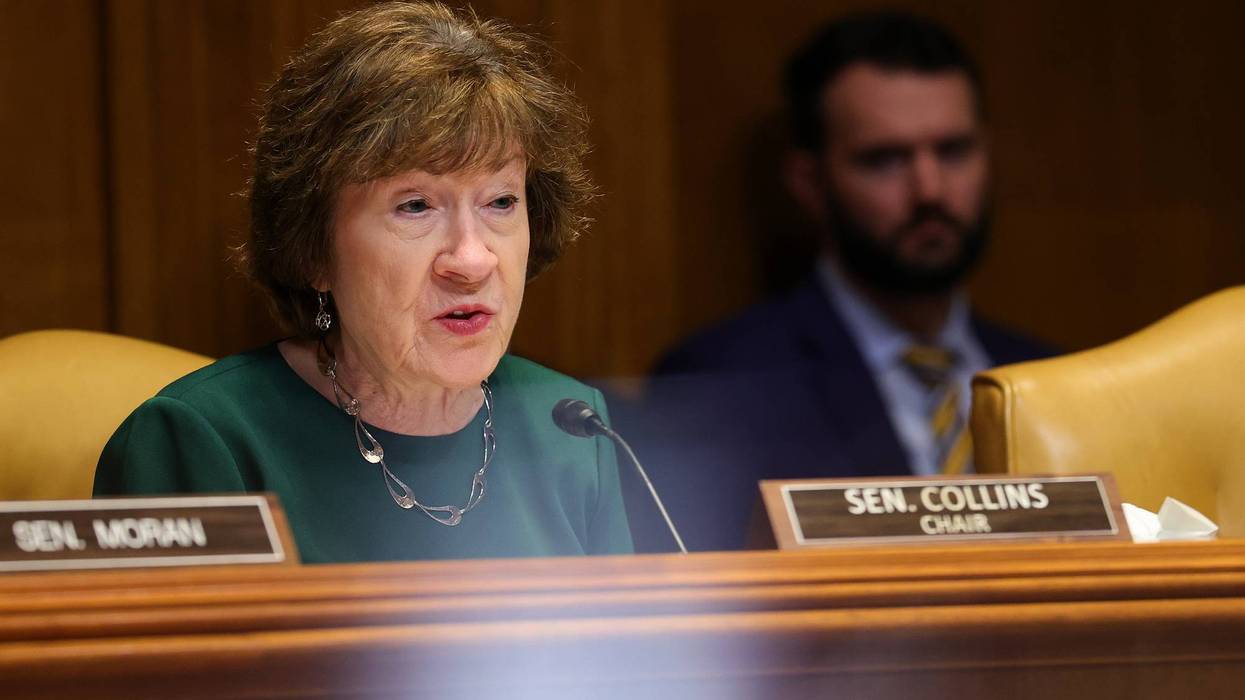
Graham Platner Says Gutting of Voting Rights Act 'Brought to You by the Court Susan Collins Built'
"Don't piss on our boots and tell us it's raining," said the Maine Democrat running to replace the state's Republican US senator.
Apr 29, 2026
As it struck down the last remaining provision of the Voting Rights Act that allowed voters of color to challenge racially discriminatory electoral maps, the right-wing majority on the US Supreme Court argued Wednesday that it was simply preventing racial discrimination.
“Allowing race to play any part in government decision-making represents a departure from the constitutional rule that applies in almost every other context,” Justice Samuel Alito wrote in the majority opinion, agreeing with the Trump administration and a group of voters who challenged an electoral map Louisiana lawmakers were forced to redraw in 2024, after the previous map was found to be racially gerrymandered and to discriminate against Black voters.
In Maine, Democratic US Senate candidate Graham Platner made clear that he—and many others—didn't buy it.
"Don't piss on our boots and tell us it's raining: Under their bullshit legalese, the far-right Supreme Court gutted the Voting Rights Act today," said Platner, a combat veteran and oyster farmer who is running a campaign focused on working families and taking on oligarchy.
Platner pointed the finger at the lawmaker he hopes to challenge following the Democratic primary, which is set for June 9—Sen. Susan Collins (R-Maine).
"Another disastrous decision brought to you by the court Susan Collins built," said Platner.
Collins cast the deciding vote in the Senate in 2018 during Justice Brett Kavanaugh's contentious confirmation process, solidifying his lifetime appointment. She also voted to advance Justice Amy Coney Barrett's nomination to the Senate floor just prior to the 2020 election, even as she said she did not believe a vote on the confirmation should take place right before Americans voted.
Platner said earlier this month that should Democrats retake Congress in the November elections, the party should "deal with" the Supreme Court by "exercising ethics oversight" over the court and potentially taking steps to impeach and remove "at least two" justices—likely a reference to Justices Clarence Thomas and Samuel Alito, who according to investigations by ProPublica have failed to disclose gifts from a GOP megadonor and a billionaire hedge fund owner who had business before the court, respectively.
The 6-3 ruling on Wednesday effectively voided what remained of Section 2 of the landmark Voting Right Act (VRA), and is likely to clear the way for new Republican districts to be created across the South ahead of the 2028 presidential election.
The case centered on the congressional map Republican lawmakers in Louisiana drew, which a federal judge found in 2022 did not fairly reflect the population of the state, in which one-third of residents are Black. Section 2 of the VRA states that minority voters must have the same opportunity as other voters to elect the candidates of their choice.
The non-Black voters who later challenged the map that was redrawn in response to the 2022 ruling claimed the new map was racially gerrymandered because it created a second majority-minority district. There are six congressional districts in the state in total.
Writing for the court's minority, Justice Elena Kagan said the consequences of the ruling "are likely to be far-reaching and grave."
“I dissent because the court betrays its duty to faithfully implement the great statute Congress wrote," said Kagan. "I dissent because the court’s decision will set back the foundational right Congress granted of racial equality in electoral opportunity. I dissent.”
Keep ReadingShow Less
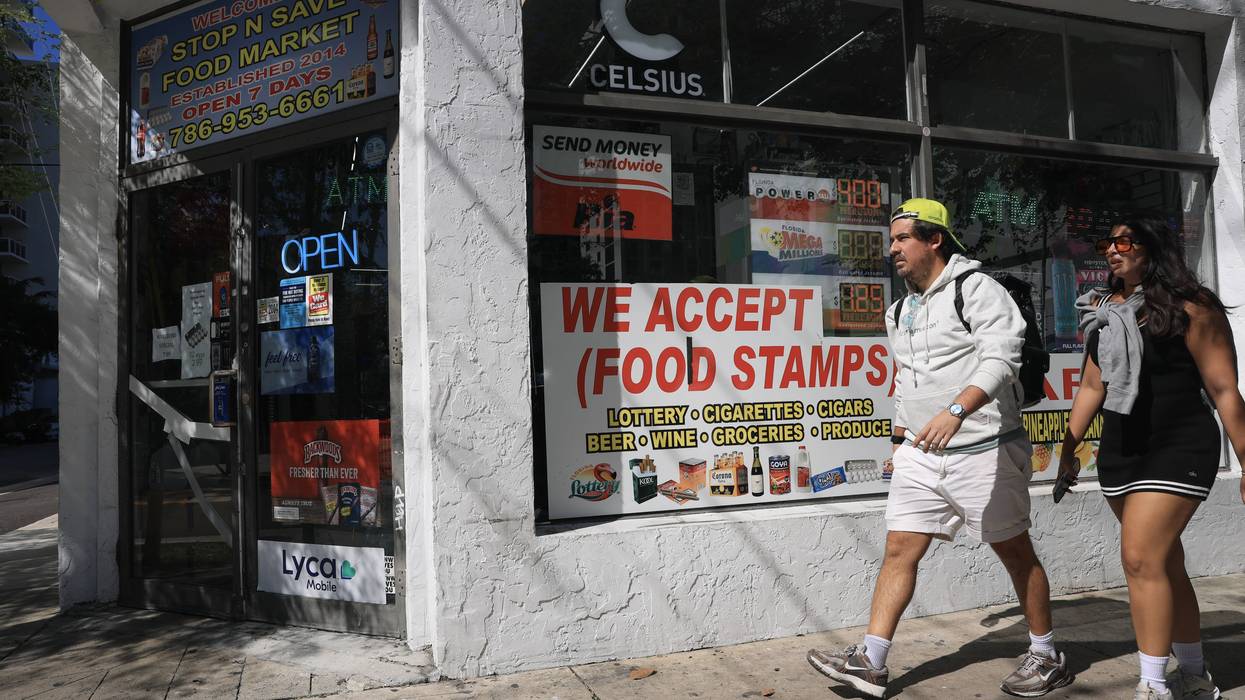
Trump-GOP Law Spurs Largest Loss of Food Aid in Decades
One food assistance policy expert said that “the harm will only grow as the full brunt of HR 1’s SNAP cuts takes effect.”
Apr 29, 2026
Within just six months of President Donald Trump signing last year's Republican mega budget bill and enacting an unprecedented cut to federal food assistance, more than 3 million low-income Americans lost benefits.
According to data from the US Department of Agriculture, cataloged by the Center on Budget and Policy Priorities (CBPP), participation in the Supplemental Nutrition Assistance Program (SNAP) dropped by 8% nationwide in the six months following the bill's passage in July 2025.
It is the steepest drop recorded in more than three decades, even greater than that experienced amid the recovery from the Great Recession, when millions of Americans left the program as their economic conditions rebounded after a period of widespread unemployment and economic precarity.
Enrollment levels have fallen in every single state over the past year, with some drops particularly startling. In Arizona, where nearly 900,000 people received benefits in January 2025, just over 500,000 were on SNAP a year later—a 43% drop.
Levels of enrollment in SNAP, which provides monthly funds to Americans with incomes at or below 130% of the federal poverty line to pay for food, have often been a reliable indicator of poverty in America, with more people enrolling during hard times.
But unlike during that period of mass disenrollment from 2012-16, Joseph Llobrera, CBPP's senior director of research, said in a report on Wednesday that the dramatic fall in SNAP participation "cannot be explained by a rapid improvement in people’s economic well-being or reduced need for help affording food."
"Labor force data show that the unemployment rate was flat between July 2025 and March 2026, the most recent data available," Llobrera said. In Arizona, where nearly half of SNAP recipients lost their benefits, unemployment actually increased during the same period.
"A more likely explanation for why people are losing access to food assistance," he said, "is that states are now facing new challenges as they respond to the cuts in HR 1—the largest in the program’s history."
While funding more than $1 trillion worth of tax breaks for the wealthiest 1% of Americans, HR 1—known as the One Big Beautiful Bill Act—mandated around $186 billion worth of cuts to SNAP over a decade, including through harsher work requirements for older adults, parents, veterans, and homeless people.
Katie Bergh, a senior food assistance policy analyst at CBPP, noted that "the harm will only grow as the full brunt of HR 1's SNAP cuts takes effect."
Beginning in 2027, the law will require states to cover 75% of SNAP administrative costs, up from the previous 50%. They will also have to cover a larger share of the benefit costs if they provide benefits to large numbers of ineligible people.
"States will soon be required to pay for part of SNAP benefits costs—totaling billions of dollars across all states—creating enormous fiscal challenges," explained Llobrera. "Many steps states are taking to lower error rates in response to this cost shift could make it harder for eligible people to access SNAP, driving down caseloads."
He noted that some states like Illinois and Georgia are now expending more resources on means testing, requiring households to recertify their eligibility for SNAP twice as often and "putting families at risk of losing SNAP if they can’t navigate the additional red tape."
Other states have made cuts preemptively. In the year leading up to the GOP bill's passage, Arizona cut staffing at its SNAP agency by more than a third, creating a major backlog of cases. While the state remains an outlier, Llobrera and research analyst Catlin Nchako said that "other states may not be far behind."
"In the face of massive new costs," Llobrera warned, "states may even withdraw from the program altogether, terminating food assistance for all low-income people, including children, seniors, people with disabilities, and veterans."
He said, "Congress must delay the cost shift before even more people lose the food assistance they need."
Keep ReadingShow Less
Most Popular