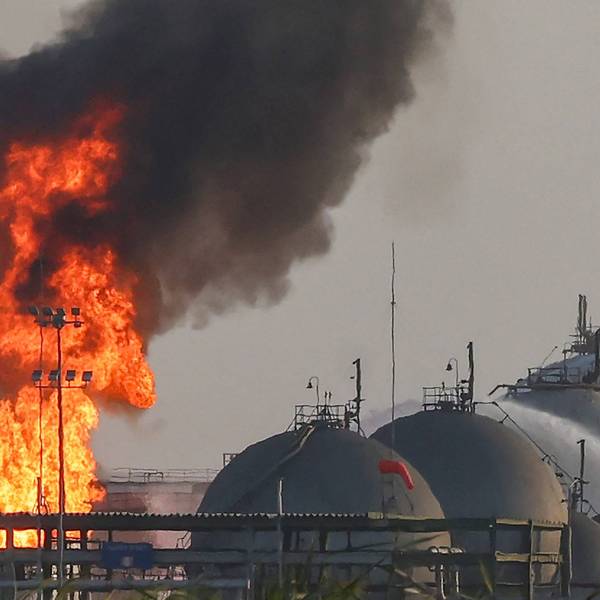
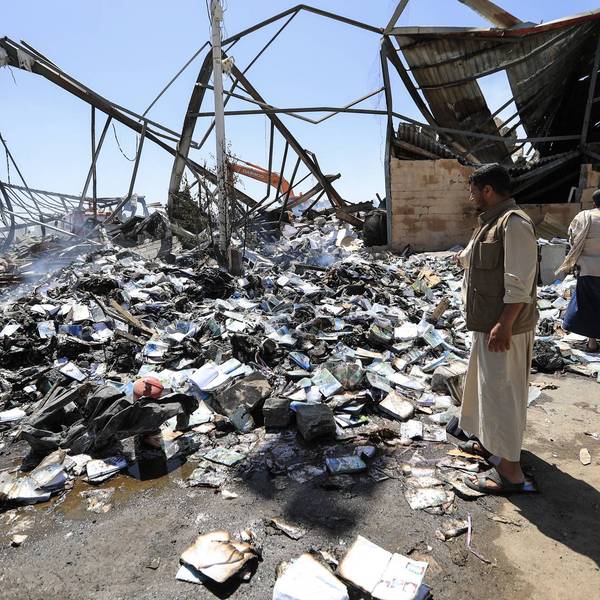

The Northrop B-2 Spirit stealth bomber is pictured on May 26, 2023 over Miami Beach, Florida.
US Deploys B-2 Stealth Bombers to Attack Yemen Without Congressional Approval
"Why is the U.S. bombing Yemen—with a B-2 bomber no less—with zero congressional authorization?"
The Biden administration on Wednesday deployed B-2 stealth bombers to launch multiple airstrikes on Yemen, attacks that underscored the United States' deep involvement in a deadly regional war that is threatening to engulf the entire Middle East.
The U.S. Central Command (CENTCOM) said in a statement that the strikes targeted "numerous Iran-backed Houthi weapons storage facilities within Houthi-controlled areas of Yemen that contained various advanced conventional weapons used to target U.S. and international military and civilian vessels navigating international waters throughout the Red Sea and Gulf of Aden."
CENTCOM said its assessment of the damage inflicted by the strikes is ongoing and does not thus far "indicate civilian casualties." The U.S. military has routinely refused to investigate, acknowledge, or apologize for killing civilians in Yemen and elsewhere in the world.
The Houthis have repeatedly attacked vessels in the Red Sea this year in what they say is an effort to stop Israel's decimation of the Gaza Strip. The Biden administration has, in turn, bombed Yemen multiple times this year, strikes that progressive U.S. lawmakers have denounced as dangerous as well as illegal given that the White House did not seek congressional authorization, as required by the Constitution.
"Why is the U.S. bombing Yemen—with a B-2 bomber no less—with zero congressional authorization?" asked Sarah Leah Whitson, executive director of Democracy for the Arab World Now (DAWN), following Wednesday's strikes. "Are these members of Congress literally asleep or drugged?"
U.S. Secretary of Defense Lloyd Austin said Wednesday that "at the direction" of President Joe Biden, he "authorized these targeted strikes to further degrade the Houthis' capability to continue their destabilizing behavior and to protect and defend U.S. forces and personnel in one of the world's most critical waterways."
The strikes on one of the poorest nations in the world, Austin said, were "a unique demonstration of the United States' ability to target facilities that our adversaries seek to keep out of reach, no matter how deeply buried underground, hardened, or fortified"—a message that observers interpreted as a warning to Iran.
"The employment of U.S. Air Force B-2 Spirit long-range stealth bombers demonstrate U.S. global strike capabilities to take action against these targets when necessary, anytime, anywhere," Austin added.
Wednesday's airstrikes reportedly marked the United States' first use of the stealth bombers against Yemen, a country that has been devastated by years of relentless attacks by a U.S.-backed, Saudi-led coalition.
The strikes came days after the Pentagon announced the deployment of American troops and an advanced antimissile system to Israel ahead of the Israeli military's expected attack on Iran.
A coalition of progressive lawmakers warned in response to the troop deployment that "military force will not solve the challenge posed by Iran."
"We need meaningful de-escalation and diplomacy—not a wider war," the lawmakers said. "Addressing the root causes is the only route to achieving long-term security and stability in the region. Nothing in current law authorizes the United States to conduct offensive military action against Iran. We risk becoming entangled in another catastrophic war that will inevitably harm innocent civilians and may cost billions of U.S. taxpayer dollars."
We are at a crossroads
This country and this world are at a monumental crossroads. In a few short weeks, US voters will have an opportunity to beat back the forces of fascism and confront the billionaires who are rigging the economy, our media system, and our democracy, making it increasingly impossible for ordinary people to get by. We’re not just talking about the election. We’re talking about what must be done once these fascist elements are vanquished from power. We need a bolder set of solutions than what either major party has so far been willing to offer and a working-class movement ready to fight like hell for it. Trump didn't emerge from nowhere. The conditions that fueled MAGA authoritarianism were created by decades of radical neoliberal economic policies and a corrupt political system dominated by corporate interests. They slashed taxes on the super-rich, promising that the benefits would trickle down. They said giveaways to the corporate titans would make life more affordable for the rest of us. It was all bullshit. And when a bitter, betrayed populace searches for someone to blame, right-wing demagogues have little trouble finding scapegoats. People know when they're being lied to, but you won't hear any of this from the corporate media. Only independent journalism—powered and funded by people who believe in building a better world—can deliver truly trustworthy daily news. Our Fall Campaign is underway, and we need your help. To power our newsroom through the rest of the year, we need to raise $125,000 by midnight on October 31. So if you share our vision, please contribute whatever you can to sustain our work. |
The Biden administration on Wednesday deployed B-2 stealth bombers to launch multiple airstrikes on Yemen, attacks that underscored the United States' deep involvement in a deadly regional war that is threatening to engulf the entire Middle East.
The U.S. Central Command (CENTCOM) said in a statement that the strikes targeted "numerous Iran-backed Houthi weapons storage facilities within Houthi-controlled areas of Yemen that contained various advanced conventional weapons used to target U.S. and international military and civilian vessels navigating international waters throughout the Red Sea and Gulf of Aden."
CENTCOM said its assessment of the damage inflicted by the strikes is ongoing and does not thus far "indicate civilian casualties." The U.S. military has routinely refused to investigate, acknowledge, or apologize for killing civilians in Yemen and elsewhere in the world.
The Houthis have repeatedly attacked vessels in the Red Sea this year in what they say is an effort to stop Israel's decimation of the Gaza Strip. The Biden administration has, in turn, bombed Yemen multiple times this year, strikes that progressive U.S. lawmakers have denounced as dangerous as well as illegal given that the White House did not seek congressional authorization, as required by the Constitution.
"Why is the U.S. bombing Yemen—with a B-2 bomber no less—with zero congressional authorization?" asked Sarah Leah Whitson, executive director of Democracy for the Arab World Now (DAWN), following Wednesday's strikes. "Are these members of Congress literally asleep or drugged?"
U.S. Secretary of Defense Lloyd Austin said Wednesday that "at the direction" of President Joe Biden, he "authorized these targeted strikes to further degrade the Houthis' capability to continue their destabilizing behavior and to protect and defend U.S. forces and personnel in one of the world's most critical waterways."
The strikes on one of the poorest nations in the world, Austin said, were "a unique demonstration of the United States' ability to target facilities that our adversaries seek to keep out of reach, no matter how deeply buried underground, hardened, or fortified"—a message that observers interpreted as a warning to Iran.
"The employment of U.S. Air Force B-2 Spirit long-range stealth bombers demonstrate U.S. global strike capabilities to take action against these targets when necessary, anytime, anywhere," Austin added.
Wednesday's airstrikes reportedly marked the United States' first use of the stealth bombers against Yemen, a country that has been devastated by years of relentless attacks by a U.S.-backed, Saudi-led coalition.
The strikes came days after the Pentagon announced the deployment of American troops and an advanced antimissile system to Israel ahead of the Israeli military's expected attack on Iran.
A coalition of progressive lawmakers warned in response to the troop deployment that "military force will not solve the challenge posed by Iran."
"We need meaningful de-escalation and diplomacy—not a wider war," the lawmakers said. "Addressing the root causes is the only route to achieving long-term security and stability in the region. Nothing in current law authorizes the United States to conduct offensive military action against Iran. We risk becoming entangled in another catastrophic war that will inevitably harm innocent civilians and may cost billions of U.S. taxpayer dollars."
The Biden administration on Wednesday deployed B-2 stealth bombers to launch multiple airstrikes on Yemen, attacks that underscored the United States' deep involvement in a deadly regional war that is threatening to engulf the entire Middle East.
The U.S. Central Command (CENTCOM) said in a statement that the strikes targeted "numerous Iran-backed Houthi weapons storage facilities within Houthi-controlled areas of Yemen that contained various advanced conventional weapons used to target U.S. and international military and civilian vessels navigating international waters throughout the Red Sea and Gulf of Aden."
CENTCOM said its assessment of the damage inflicted by the strikes is ongoing and does not thus far "indicate civilian casualties." The U.S. military has routinely refused to investigate, acknowledge, or apologize for killing civilians in Yemen and elsewhere in the world.
The Houthis have repeatedly attacked vessels in the Red Sea this year in what they say is an effort to stop Israel's decimation of the Gaza Strip. The Biden administration has, in turn, bombed Yemen multiple times this year, strikes that progressive U.S. lawmakers have denounced as dangerous as well as illegal given that the White House did not seek congressional authorization, as required by the Constitution.
"Why is the U.S. bombing Yemen—with a B-2 bomber no less—with zero congressional authorization?" asked Sarah Leah Whitson, executive director of Democracy for the Arab World Now (DAWN), following Wednesday's strikes. "Are these members of Congress literally asleep or drugged?"
U.S. Secretary of Defense Lloyd Austin said Wednesday that "at the direction" of President Joe Biden, he "authorized these targeted strikes to further degrade the Houthis' capability to continue their destabilizing behavior and to protect and defend U.S. forces and personnel in one of the world's most critical waterways."
The strikes on one of the poorest nations in the world, Austin said, were "a unique demonstration of the United States' ability to target facilities that our adversaries seek to keep out of reach, no matter how deeply buried underground, hardened, or fortified"—a message that observers interpreted as a warning to Iran.
"The employment of U.S. Air Force B-2 Spirit long-range stealth bombers demonstrate U.S. global strike capabilities to take action against these targets when necessary, anytime, anywhere," Austin added.
Wednesday's airstrikes reportedly marked the United States' first use of the stealth bombers against Yemen, a country that has been devastated by years of relentless attacks by a U.S.-backed, Saudi-led coalition.
The strikes came days after the Pentagon announced the deployment of American troops and an advanced antimissile system to Israel ahead of the Israeli military's expected attack on Iran.
A coalition of progressive lawmakers warned in response to the troop deployment that "military force will not solve the challenge posed by Iran."
"We need meaningful de-escalation and diplomacy—not a wider war," the lawmakers said. "Addressing the root causes is the only route to achieving long-term security and stability in the region. Nothing in current law authorizes the United States to conduct offensive military action against Iran. We risk becoming entangled in another catastrophic war that will inevitably harm innocent civilians and may cost billions of U.S. taxpayer dollars."