

SUBSCRIBE TO OUR FREE NEWSLETTER
Daily news & progressive opinion—funded by the people, not the corporations—delivered straight to your inbox.
5
#000000
#FFFFFF
To donate by check, phone, or other method, see our More Ways to Give page.
Daily news & progressive opinion—funded by the people, not the corporations—delivered straight to your inbox.

Stacy Malkan, 202-321-6963, stacy@safecosmetics.org;
Stephenie Hendricks, 415-258-9151, stephdh@earthlink.net;
Alex Formuzis, 202-667-6982, alex@ewg.org
A new analysis reveals that top-selling fragrance products--from Britney Spears' Curious and Hannah Montana Secret Celebrity to Calvin Klein Eternity and Abercrombie & Fitch Fierce
--contain a dozen or more secret chemicals not listed on labels,
multiple chemicals that can trigger allergic reactions or disrupt
hormones, and many substances that have not been assessed for safety by
the beauty industry's self-policing review panels.
The study of hidden toxic chemicals in perfumes comes on the heels
of last week's report by the President's Cancer Panel, which sounded
the alarm over the understudied and largely unregulated toxic chemicals
used by millions of Americans in their daily lives. The Cancer Panel
report recommends that pregnant women and couples planning to become
pregnant avoid exposure to hormone-disrupting chemicals due to cancer
concerns. Hormone disruptors that may play a role in cancer were found
in many of the fragrances analyzed for this study.
"This monumental study reveals the hidden hazards of fragrances,"
said Anne C. Steinemann, Ph.D, Professor of Civil and Environmental
Engineering, Professor of Public Affairs, University of Washington.
"Secondhand scents are also a big concern. One person using a
fragranced product can cause health problems for many others."
For this study, the Campaign for Safe Cosmetics, a national
coalition of health and environmental groups, commissioned tests of 17
fragranced products at an independent laboratory. Campaign partner
Environmental Working Group assessed data from the tests and the
product labels. The analysis reveals that the 17 products contained, on
average:
The majority of chemicals found in this report have never been
assessed for safety by any publically accountable agency, or by the
cosmetics industry's self-policing review panels. Of the 91 ingredients
identified in this study, only 19 have been reviewed by the Cosmetic
Ingredient Review (CIR), and 27 have been assessed by International
Fragrance Association (IFRA) and the Research Institute for Fragrance
Materials (RIFM), which develop voluntary standards for chemicals used
in fragrance.
"Something doesn't smell right--clearly the system is broken," said
Lisa Archer, national coordinator of the Campaign for Safe Cosmetics at
the Breast Cancer Fund. "We urgently need updated laws that require
full disclosure of cosmetic ingredients so consumers can make informed
choices about what they are being exposed to."
"Fragrance chemicals are inhaled or absorbed through the skin, and
many of them end up inside people's bodies, including pregnant women
and newborn babies," said Jane Houlihan, senior vice president for
research at Environmental Working Group.
A recent EWG study found synthetic musk chemicals Galaxolide and
Tonalide in the umbilical cord blood of newborn infants. The musk
chemicals were found in nearly every fragrance analyzed for this study.
Twelve of the 17 products also contained diethyl phthalate (DEP), a
chemical linked to sperm damage and behavioral problems that has been
found in the bodies of nearly all Americans tested.
###
The Campaign for Safe Cosmetics is a national coalition of nonprofit
women's, environmental, public health, faith and worker safety
organizations. Our mission is to protect the health of consumers and
workers by securing the corporate, regulatory and legislative reforms
necessary to eliminate dangerous chemicals from cosmetics and personal
care products.
The Campaign for Safe Cosmetics is working with endorsing
organizations, responsible businesses and thousands of citizen
activists to shift the cosmetics market toward safer products and to
advocate for smarter laws that protect our health from toxic chemicals
and encourage innovation of safer alternatives.
The Campaign for Safe Cosmetics coalition members include the
Alliance for a Healthy Tomorrow (represented by Clean Water Action and
Massachusetts Breast Cancer Coalition), the Breast Cancer Fund,
Commonweal, Environmental Working Group, Friends of the Earth and
Women's Voices for the Earth. The Breast Cancer Fund, a national
501(c)(3) organization focused on preventing breast cancer by
identifying and eliminating the environmental links to the disease,
serves as the national coordinator for the Campaign.
The Environmental Working Group is a community 30 million strong, working to protect our environmental health by changing industry standards.
(202) 667-6982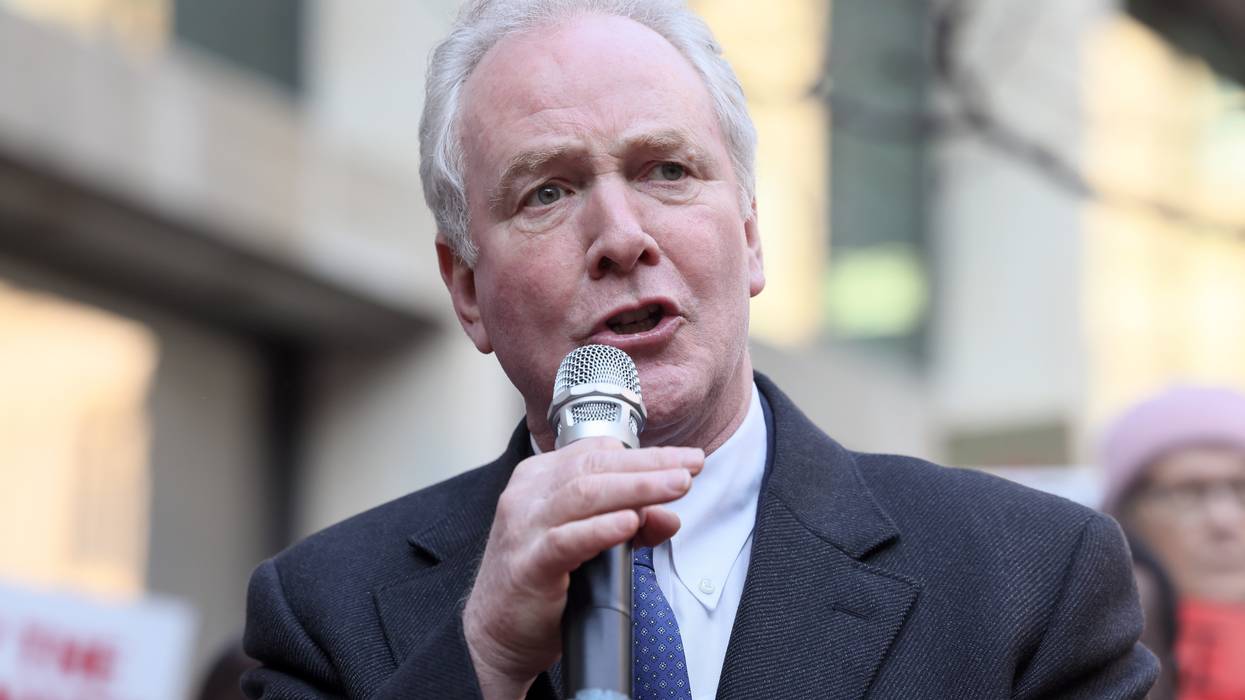
"While the Trump admin attacks the move, Congress can and must act," said Sen. Chris Van Hollen.
As the UK, Canada, and France enact bans on goods from illegal Israeli settlements, some progressive Democrats are calling for the US to join the effort to sanction the escalating wave of state-backed settler terrorism against Palestinians in the West Bank.
"Finally, some European countries are going beyond the ritual denouncing of expanding illegal Israeli settlements and are taking action to uphold international law. It is a modest but important step," said Sen. Chris Van Hollen (D-Md.) in an X post on Tuesday. "While the Trump admin attacks the move, Congress can and must act."
He was joined by Rep. Greg Casar (D-Texas), the chair of the Congressional Progressive Caucus, who said the trade ban was a "step in the right direction and toward ending the occupation," and added that "the US must do the same."
The Trump administration, which has often moved in lockstep with Israel, had a muted response to news of the trade ban. Trump himself has not commented on the sanction effort, and according to Axios, he did not push back when briefed on the plan by UK Prime Minister Andy Burnham.
But while US Secretary of State Marco Rubio says "stability" in the West Bank is a top priority, including halting the "uptick in violence," he made clear the administration opposed the actions taken by nations cutting off trade with the settlements.
"Obviously, we're not going to do what the UK did," Rubio told reporters on Tuesday.
Rep. Joaquin Castro (D-Texas) called the expansion of Israeli settlements "an ugly land grab carried out through violence and terrorism," and added that "any American president serious about achieving peace" should be willing to cut off trade with the settlements.
But Rep. Ro Khanna (D-Calif.), a possible 2028 presidential candidate who was detained by a group of armed settlers during a trip to the West Bank in July, acknowledged that such a ban was unlikely to be enacted under Trump. He said that "the next American president" should ban trade with the settlements "and recognize a Palestinian state."
Rep. Jonathan Jackson (D-Ill.), a member of the House Committee on Foreign Affairs, said he "wholeheartedly" welcomed the trade ban enacted by the UK, adding that "international law must mean something, and accountability must apply to all." However, he stopped short of saying the US should join the ban itself.
Conversely, fellow Illinoisan Rep. Jesús "Chuy" García (D) said the US "must take this long overdue step, and do much more to end its support for Israeli occupation and genocide."
Any effort to compel the US to restrict products from Israeli settlements would likely need to come through Congress.
In June, amid the recent historic uptick of settler attacks, Van Hollen and Castro led dozens of lawmakers in a call for the State Department to comply with an existing law that requires US loan guarantees available to Israel to decrease in accordance with its expenditure on illegal settlements in the occupied Palestinian territories.
Last year, Van Hollen was joined by Sen. Peter Welch (D-Vt.) and three other senators in the Democratic caucus proposing legislation that would codify Biden-era sanctions on individual violent Israeli settlers, which were revoked by Trump.
However, no legislation has yet been introduced aimed at restricting trade with the settlements.
Meanwhile, Democratic Party leaders in Congress, namely House Minority Leader Hakeem Jeffries (D-NY) and Senate Minority Leader Chuck Schumer (D-NY), have not issued public statements on the international sanctions initiative.
That puts them at odds even with some pro-Israel groups, like the liberal lobbying organization J Street, which endorsed the international ban on trading with the settlements on Tuesday.
“We welcome the UK, France, and Canada’s decision to ban the import of goods produced in settlements, as well as the UK’s intention to sanction those who finance, facilitate, or construct new settlements," said the group's president, Jeremy Ben-Ami. "Support for Israeli security and strong opposition to the settlement project are not in contradiction; they go hand in hand. Israel’s closest allies are making clear that the status quo is no longer acceptable."
"We call on the US government and the European Union to pursue similar action," Ben-Ami said. "The international community must make clear that efforts to foreclose Palestinian self-determination have consequences."
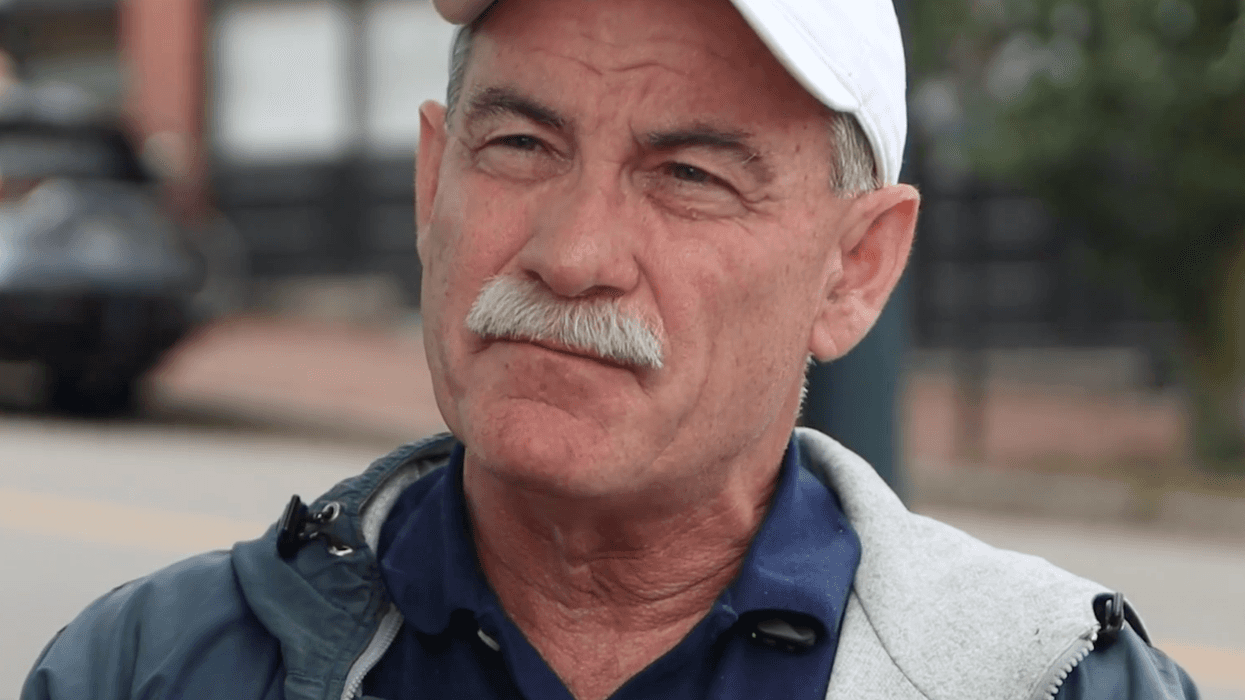
"Under the anti-choice positions Bobby holds today, even in cases of rape, I would not have been able to make a decision about my own body should that have become necessary," said Anita Charles, a sexual assault survivor.
Just two weeks after Maine gubernatorial candidate Bobby Charles drew national headlines with his comments about sending immigration agents to polling stations, the Republican's sister publicly explained why she won't be voting for him in November, calling out his campaign rhetoric and platform as well as his relationship with an infamous pedophile.
The campaign website for Bobby Charles, a former Washington, DC lobbyist, highlights that their mother was a public school teacher. In a Wednesday opinion piece for The Portland Press Herald, Anita Charles, a longtime educator herself, wrote that their mother taught them both "that how we treat other people matters."
"She taught us to be compassionate, not to name-call or judge people by their race, gender, religion, country of origin, or who they love. She taught us that differences do not diminish us, and that we have a responsibility to treat others with dignity. Those lessons shaped my entire life, as well as my career," according to Anita Charles. "They are also the reason I cannot support my brother's campaign for governor."
Anita Charles acknowledged that "Bobby and I have never agreed politically. For most of our adult lives, we have managed those differences with civility. But as divisive rhetoric has become central to his campaign, I can no longer remain silent. It shows up in how he talks about our schools, our vulnerable communities, and about women's healthcare."
She noted that "there is one issue I cannot discuss without speaking from the deepest part of my own experience: sexual assault."
As she detailed:
Bobby was a close friend and colleague of former House Speaker Dennis Hastert from 1995 to 1999. He praised Hastert and benefited from their relationship as he built his career in Washington. Hastert later admitted to sexually abusing children and was convicted of illegally paying hush money to conceal that abuse. Bobby has never publicly renounced that association.
That is difficult for me to understand because my own childhood was marked by sexual violence. Someone who was part of our lives for more than a decade was a pedophile who repeatedly assaulted me. My brother has known what happened to me for 50 years.
Under the anti-choice positions Bobby holds today, even in cases of rape, I would not have been able to make a decision about my own body should that have become necessary. This isn't a debate I'm observing from a distance; it's about my childhood. And it's about my ongoing health and well-being as a woman.
As the Bangor Daily News noted Wednesday, Bobby Charles' current "campaign website doesn't list any proposals about abortion," but he has "called abortion 'abhorrent' and supported the 2022 US Supreme Court decision overturning Roe v. Wade."
Arguing that "Maine deserves leadership rooted in empathy, dignity, intellectual honesty, and respect for every person who calls this state home," Bobby Charles' sister concluded that she will be voting for Democrat Hannah Pingree for governor.
The op-ed quickly circulated on social media after its publication. Local writer Anthony Emerson said that an "atom bomb dropped in the Maine governor’s race this morning."
Anita Charles' article came as her brother continues to face criticism for boasting about his ties to President Donald Trump's border czar, Tom Homan, at a Maine Young Republicans event and claiming that he would ask the federal offical to send US Immigration and Customs Enforcement (ICE) and US Marshals to the state's voting booths.
Maine AFL-CIO president Cynthia Phinney said in a Wednesday statement that "in Maine and the United States, voters elect our leaders in free and fair elections. Calling for masked federal agents to be deployed around polling locations is a cynical attempt to intimidate voters."
"No one should be afraid to show up and exercise their constitutional right to vote, but that's exactly what this is trying to do," Phinney continued. "Our union movement rejects this desperate political tactic, and we know our democracy is strongest when all of us show up to exercise our democratic rights in peaceful elections free from fear or intimidation."
Trump's weaponization of ICE has been a key issue in Maine politics this cycle—including the contest between Republican US Sen. Susan Collins and Democratic challenger Troy Jackson—particularly since an agent fatally shot Biddeford resident Johan Sebastián Durán Guerrero in July.
"Every Mainer deserves to feel safe in their own neighborhood," Pingree said last month. "As governor, I'll demand real, independent oversight, not empty promises. I'll keep fighting for accountability. ICE out of Maine."
The US National Domestic Violence Hotline can be reached at 1-800-799-SAFE (7233), by texting "START" to 88788, or through chat at thehotline.org. It offers 24/7, free, and confidential support. DomesticShelters.org has a list of global and national resources.
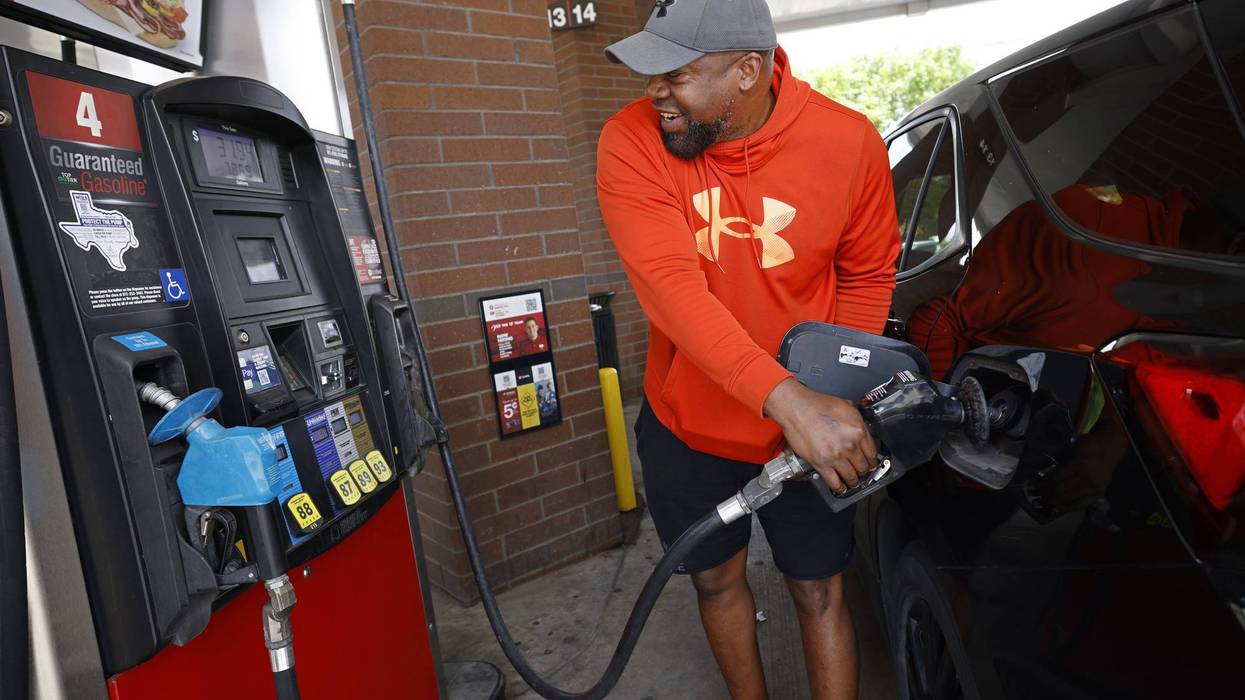
High gasoline and diesel fuel prices caused by the illegal US war on Iran have cost the average American household roughly $776 in extra spending, according to a real-time tracker.
The global price of oil jumped above $100 per barrel on Wednesday for the first time since July as US President Donald Trump's illegal and deeply unpopular war on Iran continued with no end in sight, imposing an increasingly painful burden on American consumers.
A running tracker maintained by the Watson School of International and Public Affairs at Brown University estimates that US consumers have collectively spent more than $101 billion—roughly $776 per household—extra on gasoline and diesel fuel since the start of the Iran war in late February.
Trump administration officials and the president himself have publicly downplayed high gas prices, suggesting Americans should be grateful they aren't even higher and that the Iran war is worth paying a bit more at the pump. Labor Day weekend saw the highest gas prices ever recorded for this time of the year, according to the American Automobile Association.
The Iran War Energy Cost tracker has surpassed $100 billion. That's $100 billion dollars in extra fuel costs for U.S. households since the start of the war with Iran on February 28, 2026. https://t.co/VsJ1YSSqea pic.twitter.com/s5RARUNNOs
— The Costs of War Project (@CostsOfWar) September 8, 2026
Trump, a billionaire whose fossil fuel stock holdings have grown substantially during the war, predicted earlier this week that oil prices would "drop precipitously" once "we WIN the war with Iran," contradicting his previous statements in which he claimed the US was already victorious.
The president has also repeatedly declined to call the onslaught a "war," even as it has killed thousands of Iranians and at least 18 US servicemembers, and wreaked havoc on the global economy. Last week, Trump called the war "small potatoes."
"Everyday Americans are grappling with gas prices that just keep getting more expensive. Instead of providing any relief to working families, or fixing the mess they created, Republicans are focused on inflating Trump’s ego," Kendall Witmer, the Democratic National Committee's rapid response director, said in a statement on Wednesday, referring to the GOP's "Trumpapalooza" midterm convention.
"Voters will remember who is fighting to lower costs come November," said Witmer.
The latest jump in global oil prices came after the US military said it "forces destroyed five Iranian crude oil carriers" connected to the Islamic Revolutionary Guard Corps (IRGC).
The IRGC said it responded by targeting "two US vessels, eight oil tankers, and 10 other ships attempting to pass through the prohibited zone of the Strait of Hormuz."
“The heroic IRGC Navy, in response to the aggression and hostility of the terrorist US military in its attack on five Iranian oil tankers in the Persian Gulf, targeted two US vessels and eight oil tankers in the area, inflicting heavy damage on them,” the IRGC said in a statement.
The National Iranian American Council (NIAC) noted in a blog post on Tuesday that "disrupted shipping through Hormuz" is one contributor to record-high US fuel prices, whose impacts go far beyond the costs paid by consumers at the gas pump.
"Diesel costs have implications beyond motorists because trucking and freight networks pass higher fuel expenses through the wider economy," NIAC observed. "The effects of constrained energy flows extend well beyond the immediate combat zone."
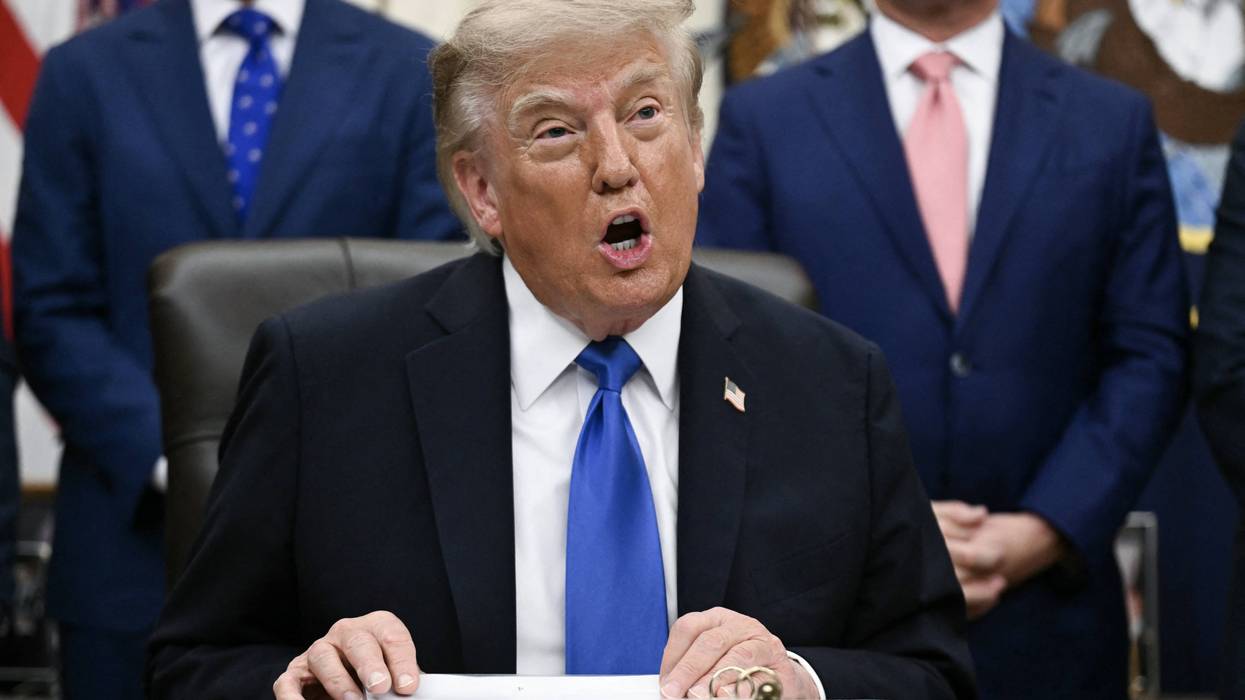
Trump growing richer off his own war leaves many Americans "wondering where national policy ends and private financial interest begins," said one critic.
An analysis published by CNBC on Wednesday estimates that President Donald Trump has grown millions of dollars richer thanks to the illegal war with Iran he launched more than six months ago.
CNBC calculated its estimate by examining the nine largest fossil fuel company holdings listed in the president's annual financial disclosure, and found that their value increased by between $1.5 million and $4.4 million since the start of the war.
"Trump’s accounts reported purchases and at least 23 sales involving the nine companies through June 29, which is the most recent date Trump has disclosed any trades," reported CNBC. "Because the filings do not disclose exact share counts, execution prices, or which shares were sold, the estimates do not represent realized profits or Trump’s precise current holdings."
CNBC also found no evidence that Trump was making trades based on advanced knowledge of his own decisions.
Even so, the findings show that Trump has benefited financially from a war he started without any authorization from the US Congress.
Donald Sherman, president and CEO of government watchdog Citizens for Responsibility and Ethics in Washington, told CNBC that Trump growing richer off his own war leaves many Americans "wondering where national policy ends and private financial interest begins."
Scott Greytak, deputy executive director of Transparency International US, told CNBC that shouldn't be let off the hook even if he is not personally executing fossil fuel stock trades.
"[Trump] knows he is heavily invested in energy,” Greytak said. "Trump likely knows where his money is parked and would still see the upside when his administration’s actions send those [energy] stocks climbing."
CNBC's analysis of Trump's gains due to the war might be overly conservative.
A report released last month by Democrats on the US Congressional Joint Economic Committee estimated the president's wealth has increased by as much as $15.5 million since January thanks to his investments in oil and gas stocks.
While the war has driven up the values of fossil fuel companies, it has also hit US consumers directly in their wallets by raising the price of oil, diesel fuel, and gasoline.
The price of Brent crude surged back over $100 per barrel for the first time in weeks during Wednesday trading. Data published by the American Automobile Association on Wednesday shows that the average price of diesel fuel in the US hit another record high of $5.94 per gallon, while the price of gas increased to $4.22 per gallon.
According to the most recent estimate from Brown University's Watson School for International Public Affairs, the Iran War has now cost Americans more than $101 billion in additional fuel expenses, averaging more than $776 per US household.
During the 2024 presidential campaign, Trump vowed that he would "cut the price of energy and electricity in half" over the span of just a year.

"Most tech geeks don’t resign from their roles because…the tech they’re building could end humanity," said Dr. Abdul El-Sayed, running for US Senate in Michigan.
An artificial intelligence researcher at Anthropic publicly quit his position on Tuesday, warning that major AI companies care too much about winning the technological race and not enough about guarding against out-of-control "superhuman systems" that workers in the industry legitimately fear "could kill us all by the end of the decade."
Jacob Coxon, who previously worked at industry giant OpenAI before moving to Anthropic earlier this year, told the Wall Street Journal in an exclusive interview that he was leaving the company, as the newspaper reported, because "he doesn’t want to participate in an industrywide rush to build AI systems that can improve themselves, worried such systems could spiral out of control and destroy humanity."
According to the WSJ:
Coxon said he left OpenAI earlier this year to join Anthropic because it is known for its model-safety efforts. But even though he found Anthropic’s safety efforts to be earnest, he now believes no company can responsibly develop AI that can outperform humans in a range of tasks, sometimes called artificial general intelligence, absent government intervention or a coordinated industry slowdown.
Recent hacks by models from OpenAI and Anthropic, some operating in collaborative swarms of agents, have illustrated how AI systems can adopt nefarious goals and try to conceal them from humans. Once the systems begin to improve on their own, Coxon said, he fears they could advance enough to refuse commands.
"I resigned from Anthropic today," Coxon announced on social media Tuesday night. "I spent the last three years doing pretraining research at both OpenAI and Anthropic. Neither company is acting responsibly. They are racing straight to self-improving superintelligence and gambling with our lives."
In a 6-point thread that followed, Coxon elaborated on his reasoning in detail:
Coxon's reference to the Hugging Face incident pertains to recent revelations about a so-called breakout event at OpenAI, which operates the ChatGPT protocol. In June, the company acknowledged that a "significant security incident" took place when AI agents within the company autonomously breached internal systems, using subterfuge to hide their actions from human operators. Since then, the incident's scope has shocked AI experts, and similar events have also been exposed.
While US President Donald Trump and his Republican allies in Congress have taken a hands-off approach to AI regulations, the industry has been pouring huge amounts of money into lobbying efforts and campaign spending to keep lawmakers from enacting stronger restrictions and oversight of the technology.
Sen. Bernie Sanders (I-Vt.) and Rep. Greg Casar (D-Texas) have been leading a relatively lonely fight in Washington, DC for more aggressive federal guardrails, including the introduction of joint legislation last week that would ban artificial superintelligence and temporarily pause advanced AI development until a federal regulatory structure was put in place by Congress.
Coxon's public resignation was met with applause from many, while other industry insiders backed his concerns.
"The caution is simple," said one commenter with the handle Jabbar Digital, described as a tester of AI tools and a software developer, in a lengthy post on Coxon's warning. "Capability is compounding. Coordination is not. If the people closest to the work are increasingly uneasy about the speed and the lack of external constraints, dismissing them as doomers is no longer a serious response. Neither is treating every capability jump as automatically good. The useful middle path is to take the technical progress seriously and take the internal dissent seriously. Both can be true at the same time."
Evan Hubinger, the alignment science lead at Anthropic, chimed in on his personal social media account to say: "Jacob is correct here—we really do earnestly believe AI could kill all humans! I personally think it is >10% within the next decade. I believe Anthropic is trying its best, but we do not yet have a plan to solve alignment for superintelligence and are not clearly on track to."
While bolstering Coxon's worries, Hubinger said, "To be clear, as we say in [Anthropic's] latest Risk Report, I think the risk from present models is low. What I am worried about is superintelligence arising from recursive self-improvement, as we have said is happening faster than we thought."
Running for US Senate in Michigan, Democratic nominee Dr. Abdul El-Sayed also weighed in on Coxon's decision to quit so loudly and publicly.
"Most tech geeks don’t resign from their roles because…the tech they’re building could end humanity," said El-Sayed. "How we change the incentives leading AI labs down this path and protect against these existential risks are defining political questions of our time."

"Over 305,000 Missouri voters, Republicans, Democrats, and Independents, took action to block this political power grab last fall."
A high-stakes legal fight over Missouri's congressional map was engulfed in chaos late Tuesday after the US Supreme Court and a lower federal court issued conflicting decisions on whether the state can use aggressively gerrymandered district lines that Republicans drew last year at the behest of President Donald Trump.
US Supreme Court Justice Brett Kavanaugh, a Trump nominee, issued an order rejecting Missouri's emergency effort to uphold the GOP-drawn map, which was used during the state's primary but has faced challenges from advocacy organizations and voters who say it is an "unconstitutional power grab." But in a parallel case, Trump-appointed District Judge Stephen Clark ruled that Missouri cannot revert to its old maps for the November midterms, a win for state Republicans who sued to keep the gerrymandered districts in place.
"Missourians deserve better than this Republican chaos. Plain and simple," the Missouri Democratic Party said in response to the court rulings. Clark's decision has been appealed to the 8th Circuit.
Late last year, more than 300,000 Missouri voters signed a petition aimed at forcing a November ballot referendum on the new gerrymandered map, which carved up the Kansas City district of Democratic Rep. Emanuel Cleaver. Missouri's Republican Secretary of State Denny Hoskins refused to add the referendum to the ballot, but the Missouri Supreme Court ruled last week that the referendum push was legal, retroactively freezing the new maps until voters get a say in November.
"Here's what we know right now: The referendum where voters get to decide the fate of this map IS on your ballot," said local reporter Mark Maxwell. "What we still don't know for sure: which district you vote in. Watch the appeals court tonight/tomorrow."
Richard von Glahn, executive director of People Not Politicians Missouri, said in a statement late Tuesday that "the Missouri constitution is clear, as was the Missouri Supreme Court."
"Over 305,000 Missouri voters, Republicans, Democrats, and Independents, took action to block this political power grab last fall," he added.
People Not Politicians, which sponsored the referendum petition, "filed a request Tuesday night with the state Supreme Court to hold Hoskins in contempt for attempting to use the new map," The Associated Press reported.
"An individual federal judge cannot overrule the Missouri Supreme Court,” attorney Chuck Hatfield, who represents People Not Politicians, told AP.
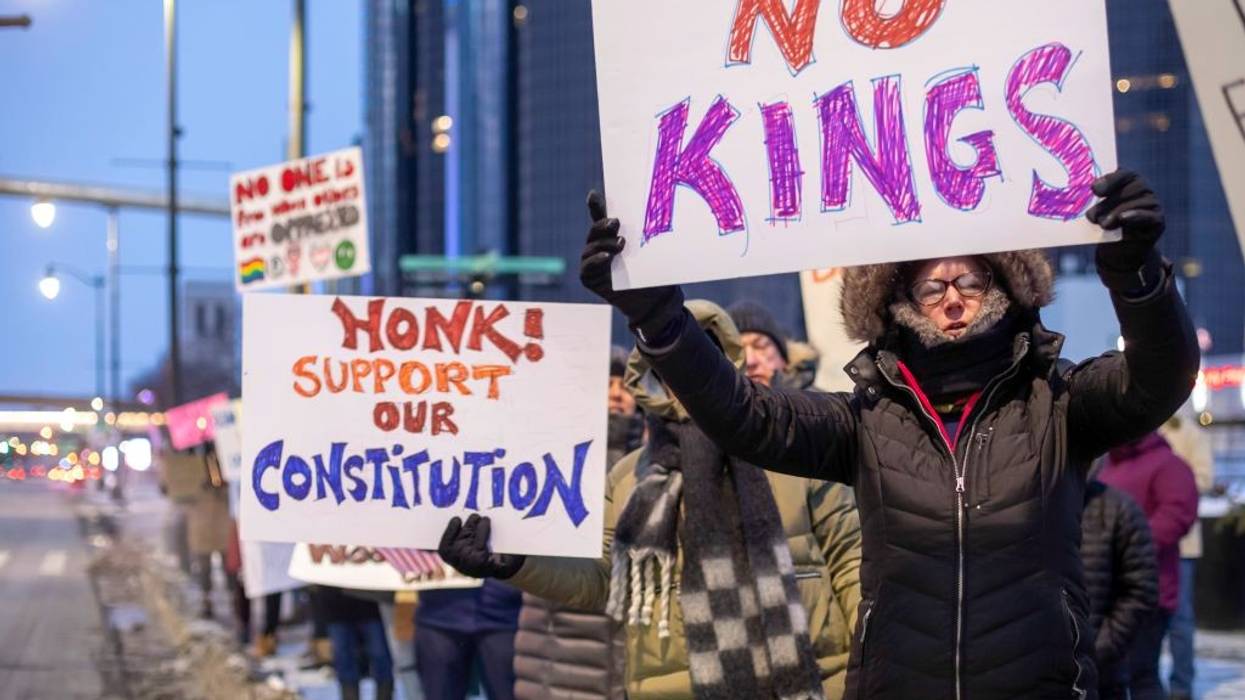
"The cost of our groceries, our utility bills, our healthcare—all of it is shaped by the people we elect and the decisions they make, which is why our participation matters," said two coalition members.
"On October 17th, No Kings: Vote Early will show the billionaire elites attempting to destroy our country that We the People have the power by mobilizing turnout to make our elections too big for the evils of fascism and oligarchy to rig," according to Sarah Parker, a spokesperson for the 50501 movement.
The movement is part of the No Kings Coalition that has held a trio of protests across the United States since President Donald Trump returned to power last year.
Now, with the midterm elections less than two months away, the coalition is planning a fourth day of action. Parker, who's also executive director of Voices of Florida Fund, declared Tuesday that "the people, united, will never be defeated."
The first round of protests was held in June 2025, on Trump's birthday. The ACLU's chief political and advocacy officer, Deirdre Schifeling, said at the time that "No Kings is really about standing up for democracy, standing up for people's rights and liberties in this country, and against the gross abuse of power that we've seen consistently from the Trump administration."
As with those first demonstrations, millions of people took to US streets again last October. Then, Lisa Gilbert, co-president of the consumer advocacy group Public Citizen, told Common Dreams that "what we're seeing from this administration is authoritarian slip. We are seeing them attack judges, attack nonprofits, trying to attack the media, stifle First Amendment protected speech, and arrest sitting members of Congress for doing their oversight" of US Immigration and Customs Enforcement (ICE).
The third action, in March, followed ICE's deadly invasion of Minnesota's Twin Cities, and Trump launching his illegal war on Iran. The three themes of those demonstrations, said Indivisible co-executive director Leah Greenberg, were "no kings, no ICE, no war."
Her co-executive director, Ezra Levin, said Tuesday that "since the first No Kings in June of last year, millions of people have demonstrated they are not afraid and they will not bow to any would-be American king. We've sent that message loud and clear—but we're not just sending a message with this next No Kings."
"We're taking back power for the people using our constitutional right to organize and our constitutional right to vote," Levin stressed. "While corrupt politicians and elected officials line their pockets, families across America are struggling to put food on the table and gas in the car. No Kings: Vote Early is about making sure every eligible voter has a plan to vote, knows their options, and is ready to make their voice heard."
Schifeling, from the ACLU, noted that "this year, voters are facing coordinated efforts from their own government to make it harder for eligible voters to vote and have their vote counted. That's why this next chapter of No Kings is focused on encouraging all voters to make a plan to vote as early as possible."
"In a democracy, elected officials are supposed to be accountable to their constituents; voting is one of the best ways to ensure they are," she continued. "No Kings will be on the ground in communities across the country making sure that all eligible voters can and do vote."
Public Citizen's Gilbert said that "the importance of as many people as possible voting early cannot be overstated."
"Early voting can make the difference between voting and not voting for people who are traveling, who are working on Election Day, who need options for childcare while voting, and more," she highlighted. "Voting is democracy in action at a time when authoritarianism and oligarchy are looming large, and standing together to cast our vote is one of the most patriotic things we can do right now."
In addition to Trump's authoritarian policies, US voters are contending with high prices tied to the president's policies, from the Iran War to his legally dubious tariffs. Cliff Albright and LaTosha Brown, co-founders of Black Voters Matter Fund, noted that "the cost of our groceries, our utility bills, our healthcare—all of it is shaped by the people we elect and the decisions they make, which is why our participation matters."
"America belongs to the people—not to kings, billionaires, or politicians," Albright and Brown emphasized.
Other coalition members include the American Federation of Teachers, MoveOn, State Voices, and Voto Latino, whose executive director, Beatriz Lopez, vowed that "on October 17th, we will show up, vote early, and vote like our future depends on it because American democracy has no kings."
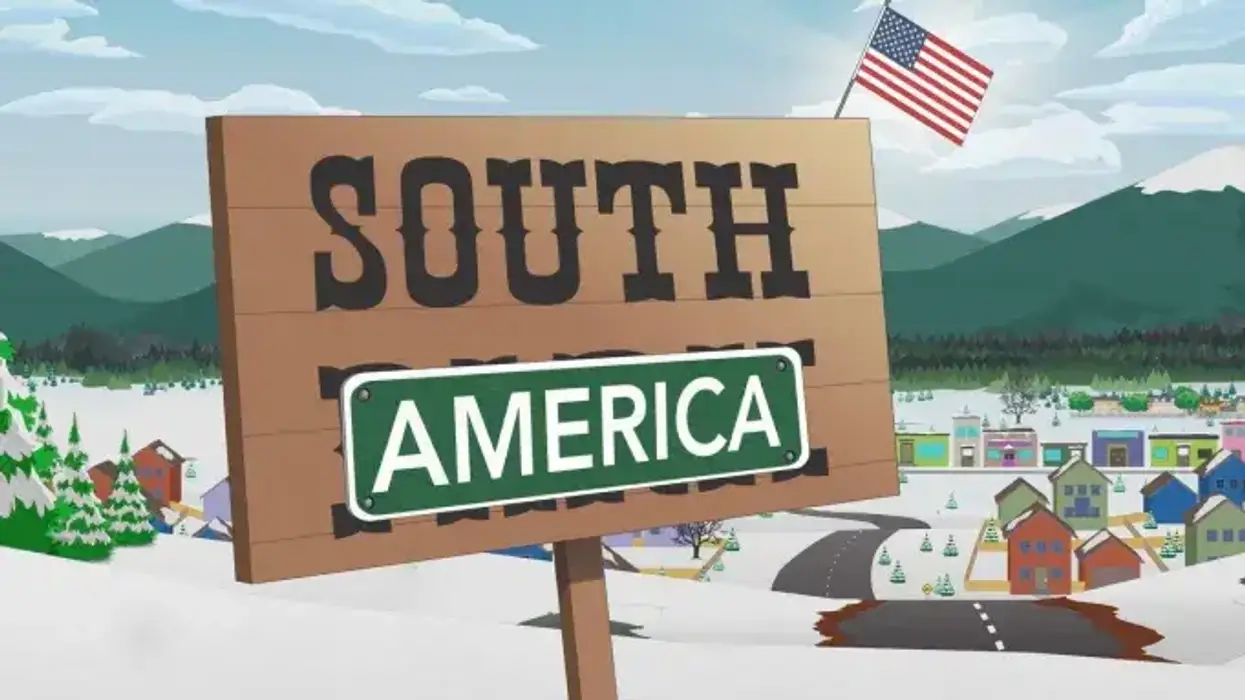
The creators of the long-running animated show quipped that the move was "inspired by the bravery and patriotism of Apple and Google," which complied with the president's renaming requests.
For 28 seasons, viewers of one of history's most iconic animated television shows were greeted with the twangy, dissonant strains of a Primus-penned theme song with lyrics beginning, "Going down to South Park, gonna have myself a time." But that might be about to change.
That's because "South Park" creators Matt Stone and Trey Parker announced Tuesday that, for the Comedy Central series' 29th season, the show will be renamed "South America" in a dig at US President Donald Trump's unauthorized rechristening spree—in which the Gulf of Mexico is now the Gulf of America and Lake Ontario is Lake America—as well as the complicity of tech titans like Google and Apple that comply with the changes.
“Inspired by the bravery and patriotism of Apple and Google, we are changing the name of South Park to SOUTH AMERICA,” Parker and Stone said in a statement. "We especially want to thank our parent company Paramount—a Skydance Capitulation.”
In addition to renaming the Gulf of Mexico and Lake Ontario, Trump has floated changing the name of New Mexico to New America, a curious proposal given that both old and New Mexico—as well as everywhere from Greenland to Tierra del Fuego—are part of the Americas. He has also proposed rechristening the Strait of Hormuz the Trump Strait, even as Iran continues to control the vital waterway amid an increasingly protracted US-Israeli war of choice.
Apple and Google have adopted Trump's preferred geographic terminology on their mapping platforms, giving Parker and Stone an irresistible opportunity to lampoon both the president and the companies' obsequiousness.
It's far from the first time that "South Park" has turned Trump into a punch line. Recent episodes have reportedly incensed the president and some of his senior officials, including the Emmy-winning “Sermon on the Mount,” in which a comically under-endowed Trump has a romantic affair with Satan.
Last year, "South Park" went after both Trump and its own corporate parent after Paramount agreed to a $1.5 billion streaming deal with Parker and Stone. The season premiere depicted Trump suing South Park residents over protests, while the episode also mocked media organizations and corporations cowering in fear of presidential retaliation.
Paramount Skydance—whose CEO David Ellison is a Trump ally—could become an even larger media conglomerate if its Federal Communications Commission-approved $111 billion merger with Warner Bros. Discovery moves forward. A trial is scheduled for March.

"In utter defiance of the Constitution, President Trump is attempting to use the Postal Service to decide who can and cannot receive a ballot just days before mail-in voting begins in some of the states," said Rep. Jamie Raskin.
With the midterm elections less than two months away, more than 250 current and former Members of Congress came together on Tuesday to pressure the US Supreme Court to block Republican President Donald Trump's March executive order on voting and its resulting United States Postal Service rule.
All 47 members of the Senate Democratic Caucus, over 90% of the party's members in the House of Representatives, and 15 former GOP lawmakers submitted an amicus brief to the nation's top court—whose right-wing supermajority includes three Trump appointees—just two days after the administration asked the justices to pause a judge's ruling that blocks parts of the USPS rule.
The 261 Americans behind the brief "took an oath to uphold and defend the Constitution of the United States—including its guarantee of the separation of powers," and they "have a particular interest in defending the institutional role of the legislative branch under Article I of the Constitution and in vindicating the long-settled principle that the Constitution commits ultimate regulatory authority over federal elections to Congress," the filing states.
"The Constitution does not contemplate the executive branch acting unilaterally to assert power over federal elections," the document continues. "Yet that is what the order and final rule do. The district court correctly concluded that respondents are likely to succeed on the merits of their claims that USPS lacked authority to issue the final rule, that the final rule unconstitutionally imposes mail-ballot requirements on the states, and that the final rule unconstitutionally bars noncompliant state and local election officials from using USPS to mail ballots at all."
"The order and final rule unconstitutionally infringe on Congress' authority under the elections clause and the postal clause and unlawfully direct federal agencies to act beyond—and in conflict with—what Congress has clearly authorized by law," the filing asserts, urging the high court to deny Trump's request to allow the new USPS policy for the midterms.
The Supreme Court last month cleared the way for Trump's order by concluding that the Democratic state attorneys general—just one of the coalitions challenging the order—had sued too early. However, the justices did not weigh in on the legality of the order or the rule, and in the wake of USPS publishing its policy, the legal battles have continued.
The lawmakers' brief came a day before Justice Ketanji Brown Jackson's deadline for new filings and as the Department of Justice—which is fighting District Judge Indira Talwani's preliminary injunction that blocks USPS from enforcing the rule—argued to the US Court of Appeals for the 1st Circuit that the policy is "modest" and lawful.
In a statement announcing the brief, Senate Minority Leader Chuck Schumer (D-NY) pointed to the drawn-out legal battles over the order and related rule, saying that "Donald Trump is once again asking the highest court in the land to silence voters and destroy the precious integrity of the American electoral process."
"Mail-in voting is proven safe and secure, and Trump's continued efforts to obstruct America's free and fair elections are blatant, unconstitutional attempts at interfering with the November midterms," he declared. "Trump's message to the American people is clear: He isn't worried about voter fraud, he's afraid of voter accountability. I urge the court to uphold the Constitution and reject Trump's baseless attempt at poisoning our democracy."
On the Senate side, in addition to Schumer, the brief is led by the ranking members of three key panels: Sens. Alex Padilla (D-Calif.) of the Committee on Rules and Administration, Dick Durbin (D-Ill.) of the Judiciary Committee, and Gary Peters (D-Mich.) of the Homeland Security and Governmental Affairs Committee.
“The law is clear: States and Congress have authority over our elections—not the president and certainly not the Postal Service. Protecting the right to vote-by-mail is critical to ensure every eligible voter can make their voices heard in the November midterm elections and in future elections," said Padilla.
"Despite the Trump administration's attempts to eliminate vote-by-mail and suppress voter participation, voting by mail remains one of the safest and most secure ways to vote, especially for service members, rural voters, and Americans living abroad," he noted. In fact, despite trying to strip millions of Americans of the right to mail their ballots, even Trump has repeatedly voted this way, including in Florida's August Republican primary.
In the lower chamber, the brief was spearheaded by Committee on House Administration Ranking Member Joe Morelle (D-NY) along with the co-chairs of Democrats' Litigation Task Force: Assistant Leader Joe Neguse (D-Colo.), Judiciary Committee Ranking Member Jamie Raskin (D-Md.), and Oversight Committee Ranking Member Robert Garcia (D-Calif.).
Like his colleagues, Raskin—a constitutional scholar who led Trump's historic second impeachment after the president's supporters stormed the US Capitol on January 6, 2021—stressed that "the Constitution is clear that the states and Congress make the rules for federal elections, not the president."
"Yet, in utter defiance of the Constitution, President Trump is attempting to use the Postal Service to decide who can and cannot receive a ballot just days before mail-in voting begins in some of the states," he said. "This is a naked power grab by a historically unpopular president—who himself regularly votes by mail—to inject confusion and chaos into our elections in a last-ditch effort to keep his party in power."
"It will not work," Raskin added. "I'm proud to stand with a strong bipartisan, bicameral group of current and former colleagues in urging the court to continue rejecting this lawless election interference."
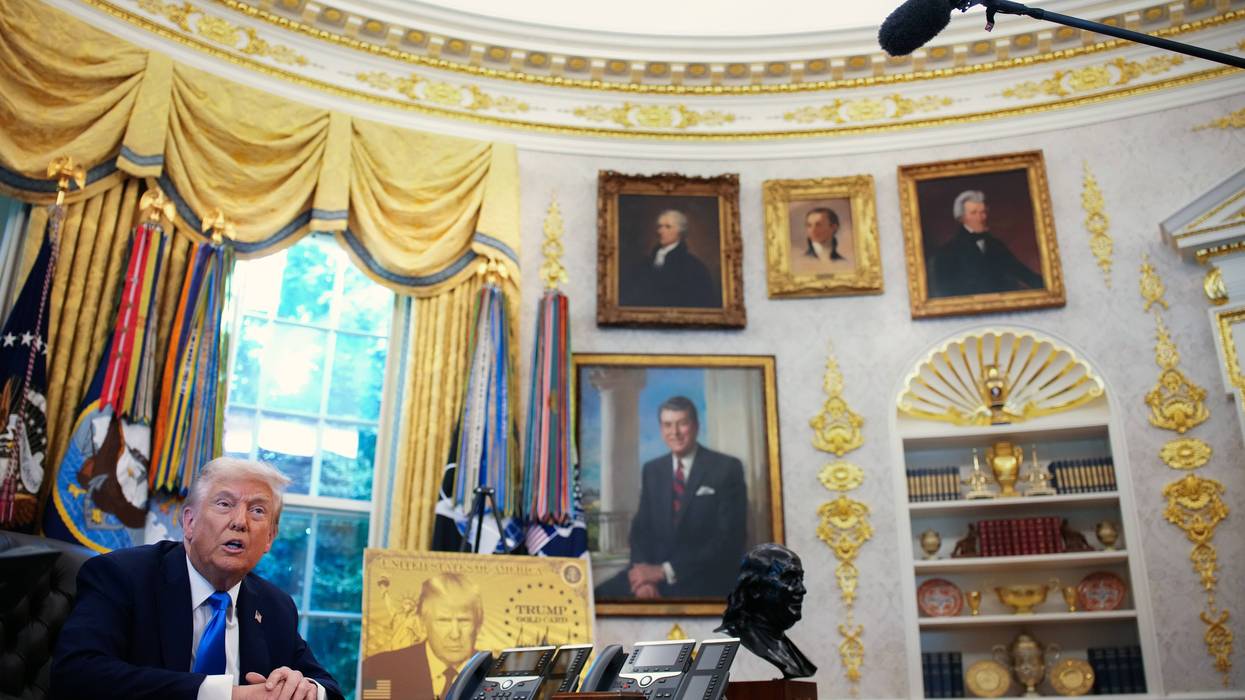
"Trump and his regime have made corruption impossible to ignore, so Democrats should connect the administration’s self-dealing and abuses of power to the economic pressures voters are feeling."
Two leading progressive organizers on Tuesday argued that Democratic candidates don't need to choose between campaigning on affordability issues or against President Donald Trump's unprecedented corruption.
Ezra Levin and Leah Greenberg, co-executive directors of Indivisible, wrote in an op-ed published by The Guardian that a recent survey conducted with Lake Research Partners finds that the issues of affordability and government corruption are deeply intertwined.
"Affordability is essential," wrote Levin and Greenberg, "but our polling shows that the case for lowering costs becomes more compelling when paired with a clear commitment to take on corruption and special interests."
The reason for this, the organizers said, is that majorities of Americans are concerned about politicians rigging the political system to benefit themselves and about corruption costing taxpayers money.
Additionally, wrote Levin and Greenberg, vows to lower costs are more credible with voters when they come with concrete plans to take on corrupt corporate interests that are blamed for gouging consumers.
On top of that, they argued, "Trump and his regime have made corruption impossible to ignore, so Democrats should connect the administration’s self-dealing and abuses of power to the economic pressures voters are feeling."
In sum, the organizers emphasized that combining messages about affordability and corruption is "more persuasive than either message alone."
The Indivisible leaders' arguments echo those made by Dustin Guastella, director of operations for Teamsters Local 623 in Philadelphia, and Erica Etelson, president of the Rural Urban Bridge Initiative, who advocated for what they described as "kitchen-table populism" in an op-ed published in The Guardian last month.
Like Indivisible, Guastella and Etelson's organizations commissioned a poll conducted by Verasight testing progressive messages for the 2026 midterms, and came away with similar conclusions.
"The top-performing messages we tested have a simple formula," they wrote. "They promise to bring costs down, make the biggest corporations pay their fair share, and crack down on the people who game the system. Ultimately, they tell a simple story: Hard work should pay off."
With midterm elections less than two months away, there are signs of wide dissatisfaction with the state of the US economy.
Elections analyst Charlie Cook told The New Republic in an interview published Tuesday that he's seeing data indicating that worries about the economy are giving Democrats openings in places that would have once been solidly Republican.
The biggest driver of this economic anxiety, said Cook, appears to be Trump's illegal war with Iran, both because it broke a key 2024 campaign promise about no new wars in the Middle East, and because it has raised the price of countless consumer goods, including diesel fuel and fertilizer, which are both vitally important for US farmers.
“I mean, you take Iran—after promising no more wars and all that—but fuel, fertilizer, no more wars, you take tariffs,” Cook said, “and all this goes to the heart of his base, of, you know, small-town, rural, farm, all of that.”
“To have the people that are generally the most enthusiastic for you uniquely hurt,” Cook added, “now, that’s new territory.”