

SUBSCRIBE TO OUR FREE NEWSLETTER
Daily news & progressive opinion—funded by the people, not the corporations—delivered straight to your inbox.
5
#000000
#FFFFFF
To donate by check, phone, or other method, see our More Ways to Give page.
Daily news & progressive opinion—funded by the people, not the corporations—delivered straight to your inbox.

Jen Corlew on +92 300 856 5350 / +44 (0) 787 925 5705 or jcorlew@oxfam.org.uk.
Three months after the
clashes in Pakistan's Northwest Frontier Province (NWFP) began, aid
agency Oxfam International emphasized the right of Internally Displaced
People (IDPs) to return voluntarily and the need to establish
sustainable security in their home villages. Oxfam International
praised the Government for agreeing to uphold international standards
on the return of IDPs, but said a clear information campaign is needed
to help displaced people make informed decisions about returning. Now
in the third week of the Government's phased plan for returns, there
are an estimated 1.5 million displaced people yet to be repatriated who
need reassurance that their safety will be respected and humanitarian
assistance will continue.
After speaking to nearly 100 IDP women in focus group discussions
held in camps and host communities over the last two weeks, Oxfam
International found that despite a strong desire to return home, many
still fear for the safety of their families. The displaced women living
in Swabi and Mardan districts said that relatives in Swat district
contacted them by mobile phones to say that homes and livelihoods have
been destroyed and sporadic fighting is continuing. Others spoke of
confusion on the returns process and its implications, with only
limited information provided at short notice. "We hear that we should
return to Swat. But there are no options for us except to go and sit on
our destroyed house," said Zemit, 52, after she learned that her family
home was bombed last week.
Oxfam Country Director in Pakistan Neva Khan said, "After the
largest internal displacement crisis in Pakistan's history, everyone
wants to see a return to normalcy including a secure and dignified
return for all displaced people. We are encouraged that the Government
has agreed to international guidelines but stress that the information
campaign is also vital to the repatriation process."
The voluntary, safe, informed and dignified return of the IDPs is a
paramount consideration for Oxfam International which, along with other
members of the humanitarian community, is working with the government
to help meet the needs of displaced people and particularly vulnerable
women. Oxfam International is providing water, cash, cooking materials,
latrines and hygiene kits for up to 360,000 men, women and children
affected by fighting.
Adhering to the three-phase plan of return set up by the government,
buses and security vehicles have been taking families back to the NWFP
since 13 July, first from displacement and spontaneous camps followed
by those staying with host families. As the IDPs return to their
villages, Oxfam International will shift its focus with local partners
to help provide shelter in devastated areas. In particular, assisting
people who have lost their crops, livestock, shops and other
livelihoods.
Between 15th and 25th July, Oxfam International staff spoke to
nearly 100 IDP women in focus groups discussions in Yar Hussain camp in
Swabi district and in three host communities in Mardan district. The
displaced women came from Upper Swat villages including Aliadab, Khalam
and Khabal. Their stories include:
Zwahara (70) from Upper Swat
"I fear my husband and son are dead. I have no income and five
daughters so I must get them married quickly." When Zwahara and her
five daughters were given just 30 minutes notice to vacate their
village, she had to leave her paralyzed son behind with his father.
Taken in by a distant relative living in Swabi district, her family
and 20 others of the extended family are sharing one toilet and water
tap. The women are sleeping on the ground in the courtyard and
desperately want to be allowed into one of the official camps for
displaced families, where they believe conditions will be better.
Because Zwahara has no male family member with her and no official
ID card, the family have been turned away from the camps. Every member
of the family suffers from diarrhea and skin infections due to the heat
and poor hygiene. Zwahara has learned from former neighbors that her
house has been destroyed. No one has seen her husband or son for
several weeks. The family do not plan to return to Swat.
Rahmatun (22) from Upper Swat
Rahmatun's husband returned to their village several weeks ago. He
told her that there is shooting in their village and the curfew makes
it too dangerous for him to go out to buy food. He plans to leave their
village and travel south to join her in Mardan if they can find a place
to live.
Rahmatun said, "The militants will behead us if we peek our heads
outside of the door - we cannot send our girl children to school or
anywhere with this being the case. They warned communities that if they
fled during the fighting that would mean that they had sided with the
Government." Rahmatun and her three small children were staying in Yar
Husseim displacement camp in Swabi district.
Sahib (80) from near Mingora in Swat district
Eighty-year-old Sahib, her daughter and granddaughter walked for two
days and two nights to escape the fighting in Swat. For the last three
months they have been living in the empty home of a wealthy family in
Swabi district, the relatives of a family friend in their home village.
All the family suffer from diarrhoea and the skin rash scabies
because of the intense heat and lack of mobility from living in purdah.
Sahib said: "I don't know what will happen to us if we go back. I want
to stay here - there are too many problems in Swat."
Zemit (50) from Upper Swat
"We hear that everyone should return to Swat. But there are no
options for us except to go and sit on our destroyed house," said
Zemit, 52, after she learned that her family home was destroyed by
bombing last week.
Living with 90 family members in a temporary home, Zemit says that
she misses baking bread for her family at home and desperately wishes
to return. But family members who remained in Swat tell her not to
return because fresh hostilities coupled with a volatile curfew order
makes it dangerous for them to get food and other necessities.
A local administrator in Marden district invited Zemit and her large
family to stay in his guesthouse, where they've lived for nearly three
months and relied on the generosity of neighbors.
1.
Between 15th and 25th July, Oxfam International staff spoke to nearly
100 IDP women in focus groups discussions in Yar Hussain camp in Swabi
district and in three host communities in Mardan district. The
displaced women came from Upper Swat villages including Aliadab, Khalam
and Khabal.
2. The Government's national response plan outlined in May sketches
a positive picture in many respects, with progressive references to
safe, voluntary returns, community ownership, transparency and
accountability, as well as the distinct needs of women and other
vulnerable groups. This requires sustained support and commitment to be
turned into a detailed reality. Recovery and rehabilitation plans must
involve the active participation of affected. On 27 July 2009, the
Government estimated that 700,000 people had returned to NWFP.
3. The Pakistani army's operations against militants in NWFP
beginning in late April triggered an exodus of over two million women,
men and children especially after 2 May. The flight of civilians from
the province's Malakand Division (mainly the districts of Swat, Dir,
Malakand and Buner) represents the biggest conflict-induced
displacement in the country's 62-year history.
4. Oxfam International is a relief agency working in more than 100
countries to find lasting solutions to poverty and injustice. Oxfam
International has funded relief and development work in Pakistan since
1973 and two affiliates, Oxfam Great Britain and Oxfam Novib, are
working in the country.
Oxfam International is a global movement of people who are fighting inequality to end poverty and injustice. We are working across regions in about 70 countries, with thousands of partners, and allies, supporting communities to build better lives for themselves, grow resilience and protect lives and livelihoods also in times of crisis.
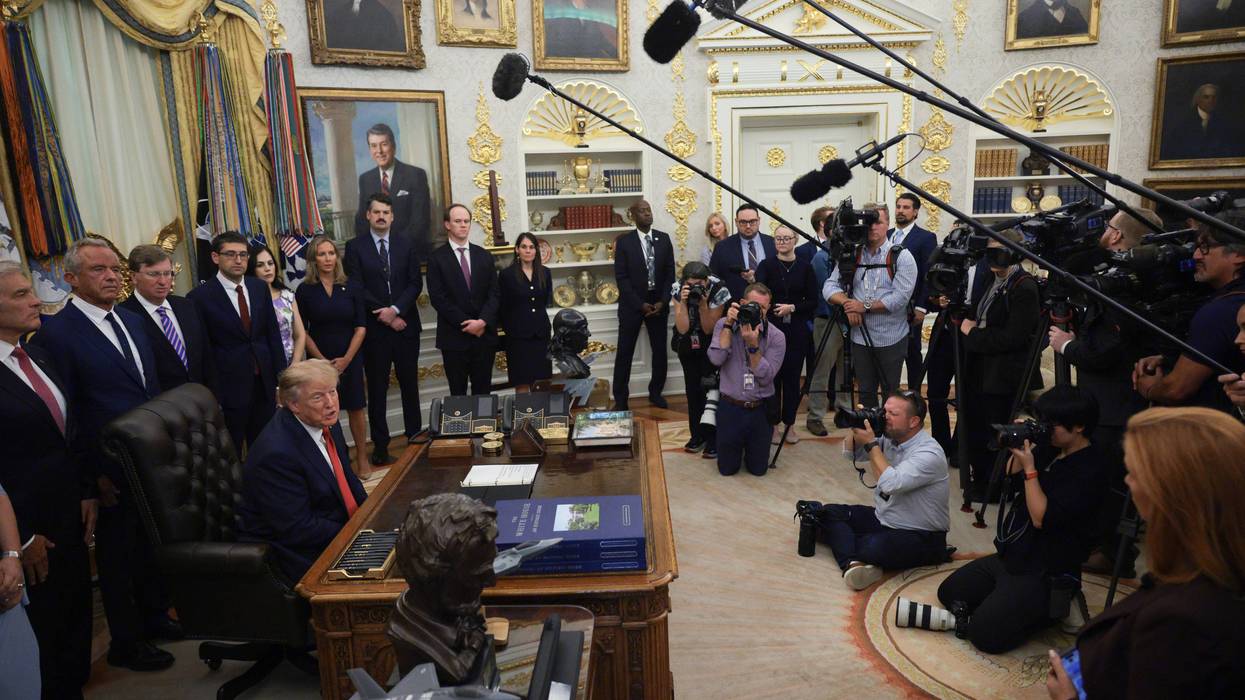
"This is about the First Amendment, not White House access," said one legal expert.
At an emergency hearing scheduled for Wednesday afternoon, a federal judge appointed by President Donald Trump is set to hear three media outlets' request for a temporary restraining order blocking the administration's denial of press access to the White House—and is likely to hear from government lawyers the "dangerous" argument officials have made to defend the ban on news coverage.
"Access to the White House is a privilege—not a right," government lawyers wrote in a court filing on Tuesday evening, in response to a lawsuit filed by CNN, MS NOW, and Politico after journalists with the three outlets had their press passes confiscated by White House officials and were denied access to the government building.
The administration claimed in the filing that the decision to block reporters from covering the president at the White House was "lawful under the First Amendment" because Trump "has 'compelling interest[s]' in enforcing minimum standards for bona fide journalists and safeguarding national security information."
The president had concluded that CNN, MS NOW, and Politico had failed to "maintain basic minimum 'standards of professionalism and decorum expected of those given access to the White House Complex, including' by 'publishing sensitive or classified information," reads the filing.
Letters attached to the filing cite specific news stories in which the outlets were accused of endangering national security, including CNN's reporting on "‘top-secret’ construction details related to the East Wing bunker" that is part of Trump's $400 million ballroom. MS NOW was accused of endangering national security when it reported in June that “a source said that President Trump ‘underestimated the willingness of Iran to resume conflict.’”
The news outlet MeidasTouch said the arguments made in the filing were "deeply embarrassing and un-American."
"The Trump regime is afraid of the American people learning the realities of the failed war in Iran and Trump’s disastrous presidency," said MeidasTouch.
While claiming CNN, MS NOW, and Politico have threatened national security with their reporting, Trump also said last week when he first announced he was planning to ban the outlets that they “shouldn’t be able to constantly write or report FICTION and LIES.”
Legal expert and political commentator Harry Litman called on US District Judge Timothy Kelly, who was nominated in 2017 by Trump and who in 2018 rejected the president's attempt to bar then-CNN reporter Jim Acosta from the White House grounds, to grant the outlets the restraining order.
"When an administration punishes the outlets that scrutinize it, it is dismantling a safeguard," wrote Litman on Substack. "The state is perfectly free to express its own preferences (though limits come in—as we’ve found honored in the breach—with false speech by government). But it can’t use the machinery of the state to punish the people who hold the view it dislikes. It’s the difference between persuasion, which is fine, and coercion, which is a fundamental abuse of government power, the classic tactic of authoritarian government."
"In sum, viewpoint discrimination is forbidden because it betrays an illegitimate government motive and because it uses the coercive power of the state to suppress speech that a free society depends on to keep government honest," he wrote.
In the lawsuit the three news organizations filed on Monday, they argued that the ban “brazenly discriminates based on editorial viewpoint,” and violates their First Amendment rights as well as their right to due process, as they were not permitted to contest the ban when their reporters were blocked from entering the White House on Saturday.
"The idea that fundamental rights are a 'privilege' granted at the whim of the king is dangerous," said former US Attorney Joyce White Vance, who is now a law professor and MS NOW legal analyst. "This is about the First Amendment, not White House access."
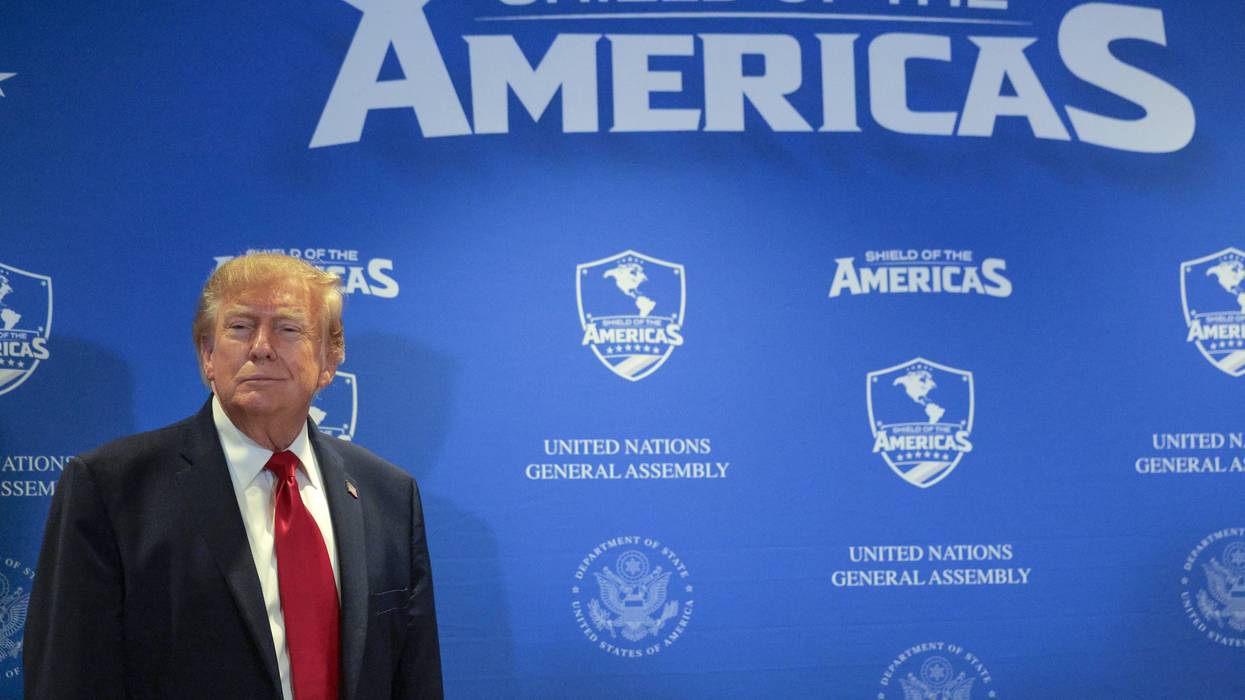
Critics have described Trump's boat strikes as extrajudicial killings that violate due process. At a meeting during this week's gathering of the UN General Assembly, he seemed to agree.
Critics have often described President Donald Trump's campaign of boat strikes in the Caribbean and Pacific—which have taken the lives of at least 234 mostly unknown people—as extrajudicial killings that flout the very basics of due process.
On Tuesday, Trump essentially described them that way too, seeming to suggest that killing people outside the law is the whole point.
"For years, administrations just played games, and they'd bring them to a court in Miami or something, and the judge would release them immediately, and they'd go back to selling drugs," Trump said. "But now, we don't waste our time doing it."
He was speaking at a meeting of the Washington-led "Shield of the Americas" coalition, an alliance of leaders and foreign ministers ostensibly dedicated to stamping out drug cartels and other criminal organizations across the Americas.
The boat strike campaign—known first by the Defense Department as “Operation Southern Spear” before it was rebranded last month as Joint Task Force Western Hemisphere—is part of this effort. The administration says the more than 70 vessels it has targeted with lethal strikes since last September were engaged in “narco-trafficking,” and that killing their operators is a justifiable form of self-defense.
The principal illicit cargo on the maritime routes targeted by Southern Spear is cocaine. But the White House rarely provides any evidence publicly to substantiate that the boats it targets are involved with drug trafficking, and members of Congress have complained that even classified briefings lacked hard evidence. Some of those killed in the strikes have later been identified as ordinary fishermen and other civilians with no known ties to the drug trade.
An investigation from the Washington Office on Latin America found in July that the military has relied on extraordinarily broad criteria to launch the strikes against anyone deemed to be "affiliated" with a secret list of designated terrorist groups. They do not require the commanders launching them to know the identities of those aboard a vessel or have any evidence that it is carrying drugs at all.
Even if the boats were engaged in drug trafficking as the administration claims, wrote Ben Saul, the United Nations special rapporteur on human rights and counterterrorism, in a report released earlier this week, there are no “international legal rights to unilaterally use military force” to counter drug cartels or other organized crime groups that have not mounted any “armed attack” against the US.
The strikes, Saul added, were not a “last resort” or “necessary or proportionate” since the US had not tried to use non-lethal means like intercepting or boarding them before resorting to bombings.
Concurring with several other UN experts, he said that the strikes were "contrary to international law, violate the human right to life, and plausibly constitute crimes against humanity," including "murder."
Trump's comments on Tuesday seemed to underscore what Saul and others critical of the boat bombings have emphasized: that rather than using lethal force as a last resort to repel an immediate threat, his administration was simply killing suspects as an alternative to avoid a cumbersome legal process.
Norman Ornstein, a political scientist and scholar at the conservative American Enterprise Institute, said in a post on social media that Trump's comments were "worthy of the International Criminal Court."
Defense Secretary Pete Hegseth has suggested the administration’s calls to “dismantle” the ICC are in part out of concern that the court, which prosecutes war crimes and other international criminality, could be used to prosecute members of the Trump administration over the boat strikes.
Trump described the ICC as “anti-American” and “evil" during a speech at the UN General Assembly earlier on Tuesday, in which he also threatened to "annihilate" Iran and celebrated that he was claiming the "spoils" of war from Venezuela.
During that same speech, he also boasted that his administration “has carried out dozens of strikes on cartel drug boats, destroying 97% of the drugs coming into the ocean and sea," a claim that his administration has not provided evidence to substantiate.
An internal analysis by the US Drug Enforcement Agency (DEA), reported on in July by the Washington Post, found the opposite, in fact, stating that the strikes “failed to affect the supply or price of cocaine in the United States.”
As Trump heralded the boat strike campaign before the eyes of the world on Tuesday, a coalition of more than 70 lawmakers across the Americas called for the US to end what it said were "hundreds of extrajudicial killings of civilians."
The statement was signed by 15 Democratic members of the US Congress, including Reps. Jesús “Chuy” García (D-Ill.), Greg Casar (D-Texas), Alexandria Ocasio-Cortez (D-NY), Ilhan Omar (D-Minn.), Rashida Tlaib (D-Mich.) and Pramila Jayapal (D-Wash.). It was also signed by lawmakers from Puerto Rico as well as 12 other countries across the Americas—Argentina, Brazil, Canada, Chile, Colombia, Ecuador, Guatemala, Honduras, Mexico, Paraguay, Peru, and Uruguay.
"The identities of nearly all the victims remain publicly unknown, and many families lack effective or safe avenues to obtain information or redress. Coastal and fishing communities face fear and uncertainty as these attacks put lives and livelihoods at risk," the lawmakers wrote.
"The rights to life, due process, and protections against the arbitrary use of force are core principles of democratic rule of law that our countries have committed to uphold," they added. "Allegations of drug trafficking, however serious, do not circumvent or override these protections, nor do they justify lethal force against people who pose no imminent threat."
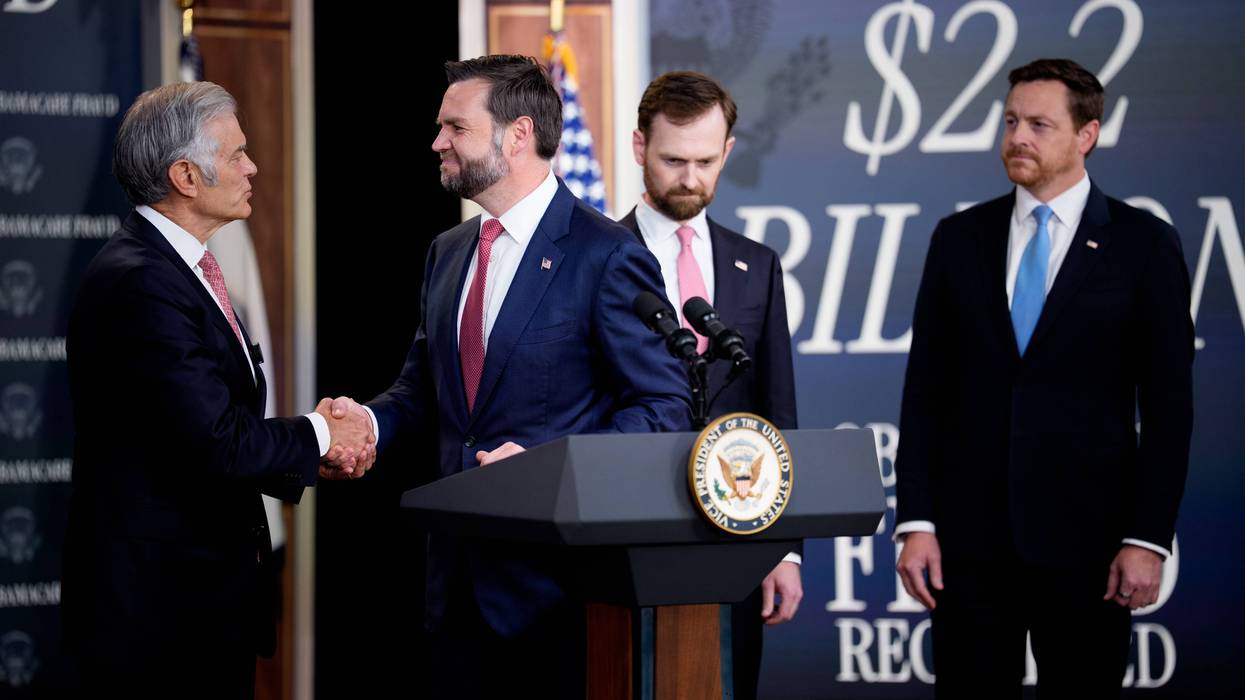
"Just six weeks out from the election, the Trump administration continues to kick working Americans while they’re down."
Anger and alarm are growing over the Trump administration's Tuesday announcement that it is removing at least 750,000 people from their Affordable Care Act coverage because they were "fraudulently" enrolled, a claim that drew deep skepticism from health policy experts and advocates.
Cynthia Cox, senior vice president at KFF, said fraud undoubtedly exists in the ACA marketplaces, noting that "some brokers have enrolled people without their knowledge or switched their plans so the broker could get a commission on the sale." But she warned that at least some of the hundreds of thousands of people targeted by the Trump administration "were likely legitimately enrolled."
Leading Trump administration officials, including Vice President JD Vance and Centers for Medicare and Medicaid Services Administrator Mehmet Oz, announced the large-scale disenrollment during a celebratory press conference on Tuesday, proclaiming that the ACA purge would save American taxpayers $2.2 billion.
“Rather than addressing rising healthcare costs, the administration is forcing more Americans to become uninsured, live sicker, die younger, and risk being one emergency away from financial ruin," said Anthony Wright, executive director of the advocacy group Families USA. "People are uninsured because of this administration’s own aggressive policies to push and price people out of their health plans, making it harder to get on and stay on coverage."
Among the criteria the administration used to determine whether someone was fraudulently enrolled in the ACA, according to Oz, was if they had "never filed a claim." But health policy experts say it is hardly uncommon for healthy people to not use their insurance in a given year.
The Trump administration did not provide specific breakdowns of why the roughly 750,000 people were stripped of ACA coverage. Vance said during Tuesday's press conference that the federal government uncovered a "fraud ring" involving 40 brokerage agents who funneled around 50,000 people into market place coverage—but the vice president admitted that "some of those people were probably legitimate."
Oz and Vance insisted that the administration went to great lengths to contact those they suspected were enrolled without their knowledge or consent. The officials also said the administration was scrutinizing more than 400,000 additional ACA enrollees for purported fraud, potentially pushing the number of people removed from the program above 1 million.
Ailen Arreaza, executive director of ParentsTogether, said in a statement Tuesday that "while millions of families across the country struggle to afford groceries, housing, childcare, and healthcare, this administration is celebrating taking health coverage away from three-quarters of a million people."
"That tells us everything we need to know," Arreaza added.
Analysts estimate that around 10 million people have lost health insurance coverage since the start of President Donald Trump's term, due in large part a Republican budget package that slashed Medicaid by around $800 billion and did nothing to extend enhanced ACA subsidies, sending premiums soaring for millions of marketplace enrollees—and pricing many people out of coverage.
American voters have consistently ranked healthcare costs as a top concern heading into the 2026 midterm elections. Joel Payne, chief communications officer at MoveOn Political Action, said Tuesday that "just six weeks out from the election, the Trump administration continues to kick working Americans while they’re down."
"It is sickening and unacceptable for this administration to boot 750,000 Americans off their healthcare instead of focusing on lowering costs and ending the war in Iran," said Payne. "The American people and MoveOn members won't forget this betrayal when polls open in November."
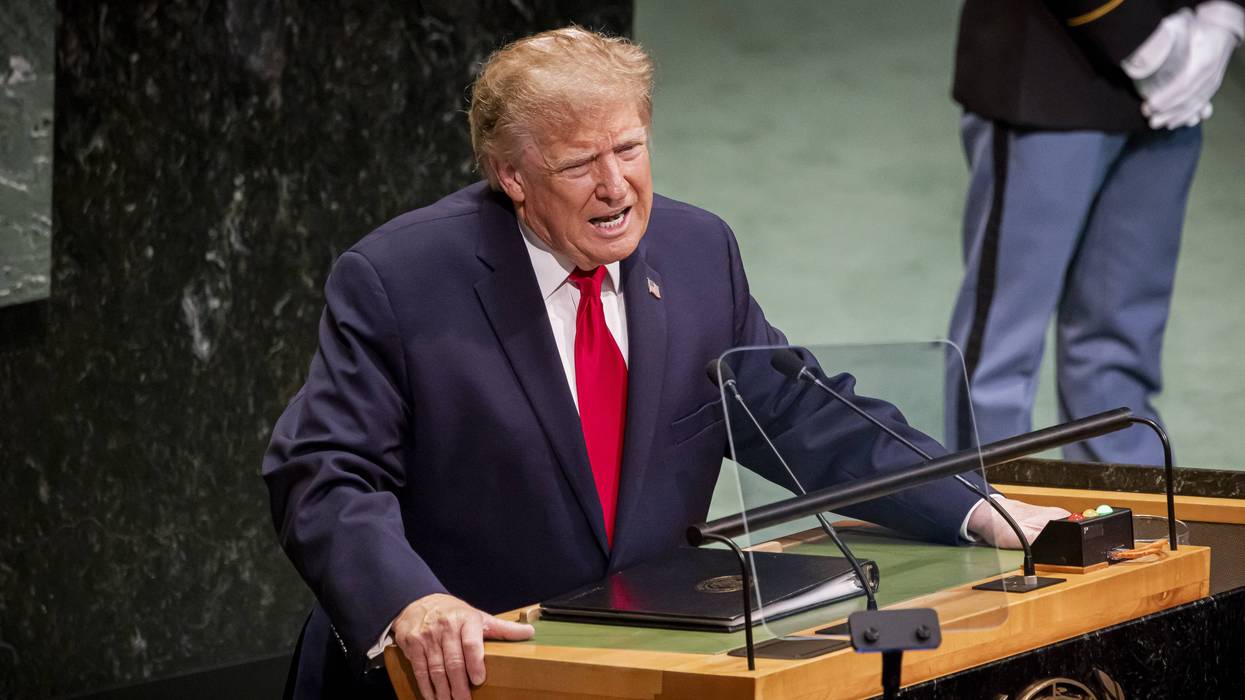
"We must stop this madman," said US Sen. Ed Markey.
President Donald Trump is facing global condemnation for his threat to "annihilate" Iran during a Tuesday speech at the United Nations General Assembly.
Dr. Tara Drozdenko, director of the Global Security Program at the Union of Concerned Scientists (UCS), said on Tuesday that the president's speech "clearly constitutes an implied threat to use overwhelming nuclear force against Iran and the Iranian people broadly."
"This would be a nuclear genocide," Drozdenko emphasized. "Any threat to use nuclear weapons is unacceptable, and his decision to do so should be strongly condemned by government, military, and civil society leaders."
Drozdenko acknowledged that Trump's long history of unhinged rhetoric might make his statements easy to dismiss, but warned even empty threats involving nuclear weapons can have serious real-world ramifications.
"President Trump’s nuclear threats against Iran reinforce a counterproductive lesson also imparted by President Vladimir Putin’s nuclear threats against Ukraine," she said. "Specifically, these threats encourage other countries to conclude that protecting and securing themselves from authoritarians with nuclear weapons requires obtaining their own nuclear arsenal."
Sen. Ed Markey (D-Mass.) also said that Trump's menacing rhetoric toward Iran must be taken seriously.
"Trump threatened to 'annihilate' Iran," Markey wrote in a social media post. "His 'October surprise' must not be a mushroom cloud from a nuclear attack. With these threats and assistance to Saudi Arabia, Trump is inferring mass slaughter and escalating an arms race in the Middle East. We must stop this madman."
Robert Tait, US correspondent for The Guardian, wrote an analysis on Tuesday arguing that Trump's threat against Iran was "stunning, even for him."
Tait noted that it has been decades since the UN General Assembly has "witnessed such a display of bellicosity from a superpower leader," especially since it was delivered in a "forum created in the aftermath of the Second World War, with the explicit aim of preventing future conflicts."
"Whether or not the latest threat should be taken literally," Tait added, "little of what he said about Iran seemed reassuring."

"The path forward is difficult, but the way is clear. We want solar for everyone, everywhere, before the decade is out."
As the world braces for the impacts of what's been described as a "Godzilla El Niño" cycle—one projected to drive extreme weather events that could kill nearly half a million people in the months ahead—and heat record after heat record is shattered due to rising global temperatures, a group of global leaders published an open letter Wednesday urging people yearning for a solution to the climate crisis to look up—though reminding them to protect their eyes—to see that renewable energy remains the key to humanity turning things around.
Set to be delivered to the United Nations during this week's meeting of the General Assembly, the open letter—which can also be endorsed by anyone who supports its demands—calls for global cooperation on "universal access" to solar power, one of the three key pillars of the renewable energy triad that also includes wind energy and battery storage.
"That clean energy trinity has broken out of its Chinese base and over the last few years expanded quickly across the planet—from Karachi to California to Cuba, solar panels are going up faster than any energy source has ever grown," writes author and climate activist Bill McKibben, a signatory to the open letter, in a Guardian op-ed Wednesday.
"At the last possible moment, with backs to the wall, we still have our face to the sun." —Bill McKibben
The letter speaks of "great fear" matched with "great hope" about whether humanity can or will act in time to avoid the worst impacts of a rapidly warming planet.
The letter states:
Over the last few months, we’ve seen the world set ablaze by both war and warming. From the conflict in Iran, which has claimed thousands of lives and disrupted billions more, to the series of ever worsening climate disasters, from wildfires in Europe to collapsing glaciers in Nepal, the world seems to be falling apart exactly when it needs to be coming together.
We know that these crises are connected. The oil that governments fight over is also the carbon pollution that is warming our climate. The bad air quality in Delhi, the high price of fuel in Vietnam, the cost of electricity in the United States, the terrifying floods in the Himalayas – they all connect back to fossil fuels.
Until we end that dependence, we’ll never be able to address the climate emergency and stop fighting these endless oil-soaked wars. That’s why today we are inviting the world to unite around a common cause: repowering the world with cheap, clean energy.
The signatories call on "governments, businesses, institutions and the public to work together to provide clean, affordable energy to everyone, everywhere by 2030."
"The path forward is difficult, but the way is clear," the letter states. "We want solar for everyone, everywhere, before the decade is out."
As McKibben notes, the coalition behind the effort is international and diverse. The signatories to the letter, he explains,
range from the most popular active politician in the US (that would be Bernie Sanders) to the most morally grounded spokesperson of the global south (Yeb Saño of the Philippines, say, whose witness after devastating hurricanes helped produce the Paris accords). It comes from great diplomats such as Laurence Tubiana (who helped midwife those Paris agreements) and celebrities and activists such as Jane Fonda. There are leaders from the world of clean energy (Danny Kennedy, for instance, the secretary of the Global Solar Council), and stalwarts from the continents most damaged by rising temperatures (South Africa’s Kumi Naidoo, president of the Fossil Fuel Treaty Initiative). Clean energy entrepreneurs, such as Muhammad Mustafa Amjad of Renewables First in Pakistan, but also the world’s most famous rock climber, Alex Honnold, who runs his own solar non-profit.
The message of their letter, explains McKibben, "is simple, but its three words convey the solution to so many of the interlocking crises we now face: clean energy now."
"If a resurgent movement demands action, we finally have the tools to make that demand matter – a working planet that runs mostly on sun and wind is in tantalizing reach," he concludes. "At the last possible moment, with backs to the wall, we still have our face to the sun."
The full text of the letter and its signatories follows:
We, the undersigned, write this letter out of great fear and great hope.
Over the last few months, we’ve seen the world set ablaze by both war and warming. From the conflict in Iran, which has claimed thousands of lives and disrupted billions more, to the series of ever-worsening climate disasters, from wildfires in Europe to collapsing glaciers in Nepal, the world seems to be falling apart exactly when it needs to be coming together.
We know that these crises are connected. The oil that governments fight over is also the carbon pollution that is warming our climate. The bad air quality in Delhi, the high price of fuel in Vietnam, the cost of electricity in the United States, the terrifying floods in the Himalayas – they all connect back to fossil fuels.
Until we end that dependence, we’ll never be able to address the climate emergency and stop fighting these endless oil-soaked wars. That’s why today we are inviting the world to unite around a common cause: repowering the world with cheap, clean energy.
We are calling on governments, businesses, institutions, and the public to work together to provide clean, affordable energy to everyone, everywhere by 2030.
From the nearly 1 billion people who still lack access to reliable electricity, to the billions more of us who pay too much for dirty fossil fuels.
We know this world is within reach.
Building clean energy is now the cheapest and fastest way to slash energy bills, reduce pollution, and provide electricity access to the places that need it most.
With cheap solar, wind and batteries, we can create huge and rapid change.
California is already using just half as much natural gas to generate electricity as it did three years ago, thanks to solar and batteries. In Pakistan, people have put up millions of solar panels in just months, relying on social media for instruction. Each month, millions more people across sub-Saharan Africa are getting electricity for the first time with home solar kits.
This energy transition is already moving quickly - but we need it to go much quicker. And so we come together to urge two steps.
First, we must build clean power for everyone. For the first time ever, we can reliably bring electricity to the 1 in 10 people on Earth living without regular access.
We ask everyone who can afford it to donate something so that others can turn the lights on for studying, cooking, and medical care - and never have to think about a gallon of diesel or gas again. It takes just $15 to give access to clean electricity for one person for a generation.
Second, we need to build clean power everywhere, and to make that happen we need to build a movement powerful and beautiful enough to force governments to take large-scale action.
Individual steps alone are not enough: too many of our leaders will resist action, until we demonstrate together how much we want them to move. We must demand that governments stop building coal, oil, and gas projects we no longer need, and start building the clean-energy systems that works - no pollution or wars required.
One important day along this path will be 20 June, as the summer solstice approaches in the Northern Hemisphere, generating the most solar power of any day on earth yet. We will celebrate that day as Sun Day, coming together to celebrate and accelerate this great shift.
The path forward is difficult, but the way is clear. We want solar for everyone, everywhere, before the decade is out.
We know that standing up to the powerful can be scary. But if there is one thing that unites us, it is that we live beneath the same sun. That unity is our strength, and we must use it to act now.
Muhammad Mustafa Amjad- Director of Programs, Renewables First
Alyssa Barber - Content Creator, @NewLifestyleABB
Lauren Bash - Content creator and filmmaker
Rachel Bender - Disability rights advocate, @rachcutiepie
Tzeporah Berman - Chair, Fossil Fuel Treaty Initiative
Caitlin Blunnie - Content Creator, 2Liberal Jane
Jessica Craven - Content Creator, @jesscraven101
Nick Cutsumpas - Founder @ Farmer Nick
Summer Dean - Founder, Climate Diva Media
Christiana Figueres - Former UN Climate Secretary and Founding Partner, Global Optimism
Jane Fonda - Actor, activist, and founder, Jane Fonda Climate PAC
Nela Cadinanos Gonzalez
Saul Griffith - Engineer and co-founder, Rewiring America
Malynda Hale - Actor, Filmmaker, Creator
Fletcher Harper - Executive Director, Greenfaith
Alex Honnold - Professional climber and founder, Honnold Foundation
Danny Kennedy - Chair, Global Solar Council
Catherine McKenna - Founder, Climate and Nature Solutions & Women Lead on Climate
Bill McKibben - Author, climate activist, and co-founder, Third Act
Kumi Naidoo - President, Fossil Fuel Non-Proliferation Treaty Initiative
Ky Polanco - Co-Founder, @Feminist
Sean Taylor Pugerude - Creator & Community Organizer, @heyseantaylor
Abbie Richards - Researcher and Educator, @abbiesr
Tom Rivett-Carnac - Founding Partner, Global Optimism
Bernie Sanders - U.S. Senator for Vermont
Yeb Saño - Board Chair, Laudato Si’ Movement
Jacob Simon - Creator and Educator - @jacobsimonsays
Laurence Tubiana - CEO, European Climate Foundation

"This is such a large number that it can be numbing, but it is made up of parents and children, grandparents and neighbors, people going to work, caring for families, and living their lives."
A report published Wednesday by researchers at the University of Chicago's Climate Impact Lab estimates that extreme heat fueled by this year's "Super El Niño" event could kill more than 450,000 people in the coming months, in addition to deaths from drought, wildfires, and other extreme weather.
The report notes that "anomalously warm conditions" caused by the record-shattering El Niño—which refers to the warming of ocean-surface temperatures in the Pacific—"will resemble the higher temperatures that climate change is projected to deliver 20 years in the future... and will lead to 44% more extremely hot days than we would expect in a normal year."
Climate Impact Lab researchers projected that the extreme heat will result in 451,000 more lives lost through February 2027, compared to a typical year.
"This is about 65 times larger than the 6,800 people believed to be dead or missing from the recent Nepal flash flood," the new report observes. "With current forecasts suggesting El Niño will remain in place through spring 2027, we expect all of these numbers to grow even higher, particularly as impacts such as higher-than-average temperatures and heat-related deaths will linger into June and July."
Nigeria is expected to see the largest number of El Niño-related deaths over roughly the next five months, at 31,400. Indonesia, Sudan, India, and Brazil will see more than 10,000 deaths each through February, according to the Climate Impact Lab.
"This is such a large number that it can be numbing, but it is made up of parents and children, grandparents and neighbors, people going to work, caring for families, and living their lives,” Michael Greenstone, a co-founder of the Climate Impact Lab, said in a statement. "This report allows decisionmakers to see exactly where emergency actions can be taken now to save tens of thousands of lives in the coming months."
The impact lab's report describes this year's El Niño as a "postcard from our future," noting that "it is bringing temperatures climate change is projected to deliver 20 years in the future."
"Twenty years from now, once today’s extreme temperatures become the new normal," said Tamma Carleton, faculty head of research for the Climate Impact Lab and co-author of the new report. "We don’t want to be in a constant state of emergency."
The report was released shortly after United Nations Secretary-General António Guterres warned in his final address to the UN General Assembly in New York on Tuesday that "a supersized El Niño" is "speeding straight for humanity."
"As tragic events have shown, impacts are arriving sooner, hitting harder, and spreading further than many anticipated," said Guterres. "Now we face a near-certain breach of the 1.5°C limit."
On Saturday, The Washington Post observed, the average ocean-surface temperature in a portion of the central equatorial Pacific Ocean reached 3.05°C, "the highest peak sea surface temperature anomaly on record."
"The record anomalous reading occurred two months earlier in the year than the previous peak in November 2015 and an El Niño in 1877 that contributed to a famine that wiped out 3 to 4% of the global population," the Post added.

"Billionaires have yet again bribed, censored, and bullied their way to the top," said one critic.
"A settlement that promises less than nothing."
That's how one critic of Paramount Skydance's planned acquisition of Warner Bros. Discovery on Tuesday described the paltry concessions extracted by Democratic California Attorney General Rob Bonta and other state officials to enable the proposed $111 billion media megamerger.
Critics argue that the proposed settlement agreement lacks meaningful antitrust enforcement and hands control of major news and entertainment properties to a billionaire family closely aligned with President Donald Trump.
“Every! single! one! of these concessions is meaningless bullshit,” writer Cory Doctorow said Tuesday on Medium. “Bonta just handed the American movie and TV sector to two of the most odious creeps to draw breath, surrendering without firing a shot."
The settlement, which was announced Monday, clears a major roadblock to Paramount CEO David Ellison's takeover of Warner Bros. Discovery, which owns CNN, HBO, Warner Bros. Pictures, and numerous cable networks. The combined company would control nearly 30% of both US theatrical film distribution and basic cable channel licensing.
The agreement contains a pledge to distribute at least 30 films annually for the first two years, then 32 movies each year after, invest hundreds of millions of dollars in US film production, maintain existing theater rental terms for three years, not sell Paramount and Warner Bros. studio lots for five years, and create an editorial independence board for CBS News and CNN.
In a Monday Substack post, American Economic Liberties Project research director Matt Stoller pointed out an apparent loophole in the settlement's film distribution requirement.
“They only have to distribute that many films,” he wrote. “They can make half as many. And those can be co-produced. So in fact, if you add up the numbers, Ellison promised to make fewer films going forward than Paramount and Warner are putting out today."
The settlement's editorial oversight board for CBS News and CNN have also come under fire. The five-member board overseeing the two entities will be appointed and paid by the combined company. Reuters reported Tuesday that the board would have no explicit investigative authority and that the company would be empowered to fill vacancies.
“As we learned from the failed and widely panned Facebook oversight board, a fake bipartisan oversight committee won’t save CNN,” Jessica González, the co-chief executive of the advocacy organization Free Press, said Monday. “We have all the evidence we need from the Ellisons’ destruction of CBS about what they do to warp journalism at Donald Trump’s request.”
David Ellison's father, tech billionaire Larry Ellison, is a Republican megadonor.
Seth Stern, a media attorney and chief of advocacy at the Freedom of the Press Foundation, said that "it's unclear how the attorneys general or courts can constitutionally hold Paramount accountable for the board's actions or inaction without themselves interfering in content."
Stoller noted that the agreement's force-majeure clause, which would reportedly allow Paramount-Warner to dodge its commitments in the event of economic recessions, strikes, and other labor disruptions.
Other opponents of the proposed deal bristle at the Federal Communications Commission’s approval of Saudi and Emirati investment in the new company that would be created if the merger is approved.
Alvaro Bedoya, a senior adviser to the American Economic Liberties Project, lamented that “today, billionaires have yet again bribed, censored, and bullied their way to the top."
“Layoffs will follow. People from [Los Angeles] to Atlanta will lose their jobs, small businesses will lose their contracts, your cable bill and movie ticket will be even more expensive,” he continued. “Dissent against money and power will be even harder to find.”
“This did not have to happen," Bedoya stressed. "Thanks to an extraordinary outpouring of grassroots anger against the merger, a coalition of 12 state attorneys general sued to block it. They beat Paramount in court, winning a court-ordered pause on the merger, and beat them again at the negotiating table, getting the conglomerate to agree to pause the merger until as late as next June.”
“But the Ellison family does not care about the law. Instead, they loudly threatened to leave California if their merger did not go through immediately," he added. "[Gov.] Gavin Newsom caved to that pressure. So did [former state Attorney General] Xavier Becerra. And eventually, so did Attorney General Rob Bonta, agreeing to a weak settlement that will be exceedingly difficult to enforce.”
Stoller said that "there are a bunch of reasons they cleared the deal, such as threats to move the studio out of California, corruption, and general incompetence."
"I personally think CNN is terrible, and I’m glad it’s going to be discredited," Stoller wrote. "I also find it embarrassing that the Democratic AGs used antitrust law in an attempt to shade news coverage. But it’s downright comical they demanded that David Ellison not corrupt CNN by having David Ellison appoint a board ensuring that David Ellison not do that."
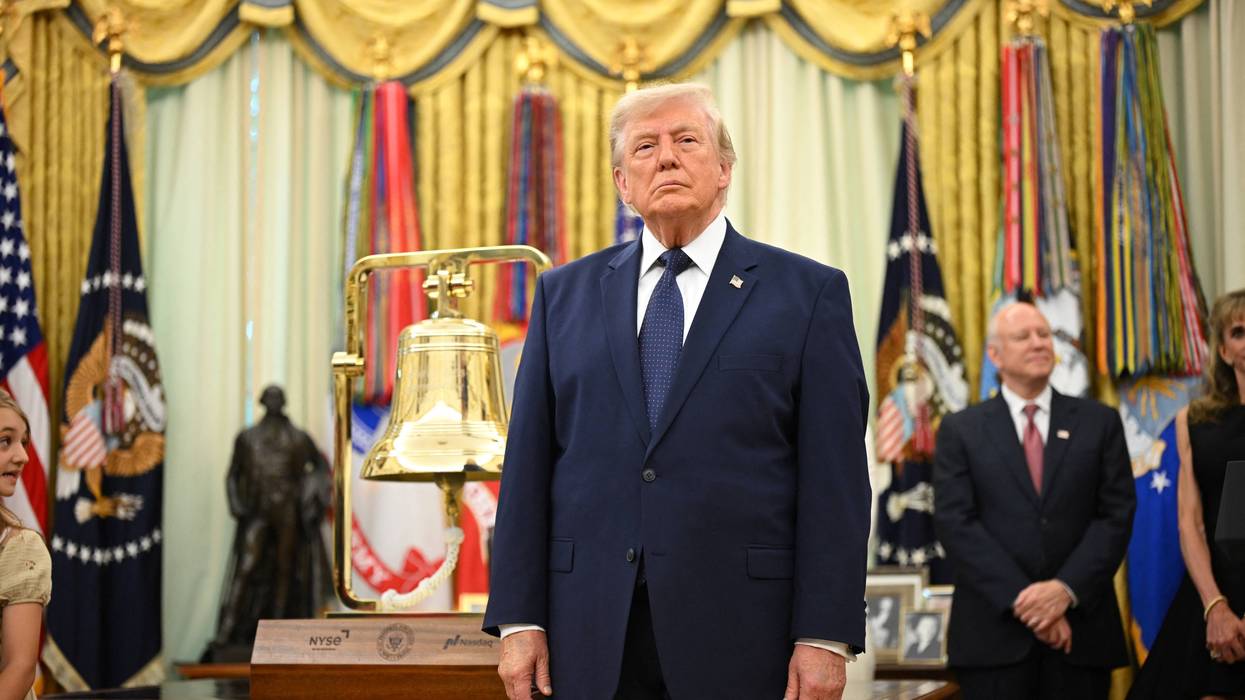
By failing to report some transactions within 45 days, the president appears to have violated a key federal law, again.
Donald Trump has been repeatedly ripped as "the most openly corrupt president in American history" by a range of critics, and the Republican faced fresh criticism on Tuesday after disclosing more than 1,100 securities transactions from July.
"The 1,156 purchases and sales totaled between roughly $79 million and $270 million," CNBC reported. "Purchases totaled at least $43.6 million, while sales came to at least $35.6 million... in what appears to be a broad reshuffling of his portfolio."
US Sen. Elizabeth Warren (D-Mass.), who has previously sounded the alarm over Trump's "unprecedented" trading, said on social media Tuesday that "it should be illegal for the president to trade individual stocks—period."
As Trump continues to rail against regulations on artificial intelligence, the filing with the Office of Government Ethics shows recent transactions involving tech giants including Alphabet, Amazon, Meta, Microsoft, Nvidia, and Oracle.
The president is also waging an illegal war on Iran with no end in sight, and those who manage his portfolio made trades involving military contractors such as GE Aerospace, Lockheed Martin, Northrop Grumman, Palantir, and SpaceX.
CNBC highlighted that the Northrop Grumman sale—worth $250,001 to $500,000—occurred the same day that "Trump signed an executive order tightening supply chain requirements for defense contractors and restricting waivers for certain critical materials sourced from China and other covered countries," though the disclosure does not include timing.
Iran has responded to Trump's war by restricting ship traffic through the Strait of Hormuz, which has caused fuel prices to surge worldwide. The president was accused of cashing in on the crisis he has created after he disclosed June stock transactions. The new filing shows more trades in oil and gas giants, including Chevron and ExxonMobil.
The Washington Sun pointed out that "Trump also purchased up to $500,000 worth of stock in Axon Enterprise, the manufacturer of Tasers, which has done tens of millions of dollars worth of business with US Immigration and Customs Enforcement and US Customs and Border Protection."
While "Trump is ostensibly aware of the contents of his portfolio, given that he personally certified his most recent disclosure, which bears his signature," the Sun noted, White House spokesperson Davis Ingle tried to dismiss any allegations of corruption in a statement to multiple outlets.
"President Trump's stock and bond portfolio is independently managed by third-party financial institutions," Ingle said. "All holdings are maintained in discretionary accounts and invested through computer-based model portfolios that automatically replicate recognized indexes, such as the Schwab 1000."
"Neither President Trump nor any member of his family has any ability to direct, influence, or provide input regarding how the portfolio is invested or when investments are bought or sold," he added. "All investment decisions are made entirely by independent managers. There are no conflicts of interest."
However, as the Sun highlighted, "a number of Trump's trades were disclosed more than 45 days after they were made—in violation of the Stop Trading on Congressional Knowledge Act, which also applies to top officials in the executive branch. It’s not the first time the president has run afoul of the stock trading law."
Just in: Trump reported making another 1,158 stock trades in July 2026.It appears he violated the Stock Act, again, by failing to report all of his trades within 45 days. extapps2.oge.gov/201/Presiden...
[image or embed]
— Zach Everson (@zacheverson.com) September 22, 2026 at 4:10 PM
Despite bipartisan support at times, congressional efforts to fully ban trading by lawmakers, their dependents, and the president and vice president have been unsuccessful.
In July, 13 Democrats in the US House of Representatives helped Republicans pass a purported congressional stock trading ban— even though the bill wouldn't apply to Trump or Vice President JD Vance, and the GOP tacked on a voter suppression provision demanded by the president.
The Senate has not yet acted on the bill, officially called the Stop Insider Trading Act, and condemned by critics as "a Trojan horse."
Trump's disclosure came a week after Bloomberg reported that "Trump has traded more securities than every member of Congress combined since he returned to office" last year. From January 2025 to June 2026, lawmakers reported a collective 22,200 transactions while the president made nearly 28,700.
Donald Trump and every member of Congress should be working for the American people — NOT their stock portfolio.
[image or embed]
— Elizabeth Warren (@warren.senate.gov) September 18, 2026 at 6:03 PM
Sharing the reporting on social media last week, House Democrats wrote: "The American people deserve a president that serves their interests, not his own wallet."
Annual financial disclosures released this summer show that Trump pocketed at least $2.2 billion—over half of it from his family’s cryptocurrency grift—during his first year back in the White House.
Following that revelation, Warren, ranking member of the Senate Banking Committee, called on the chamber to pass legislation aimed at stopping "the president, vice president, senior administration officials, members of Congress, and their families from profiting off the crypto industry," and warned that a failure to do so "will only turbocharge Donald Trump's brazen crypto corruption."
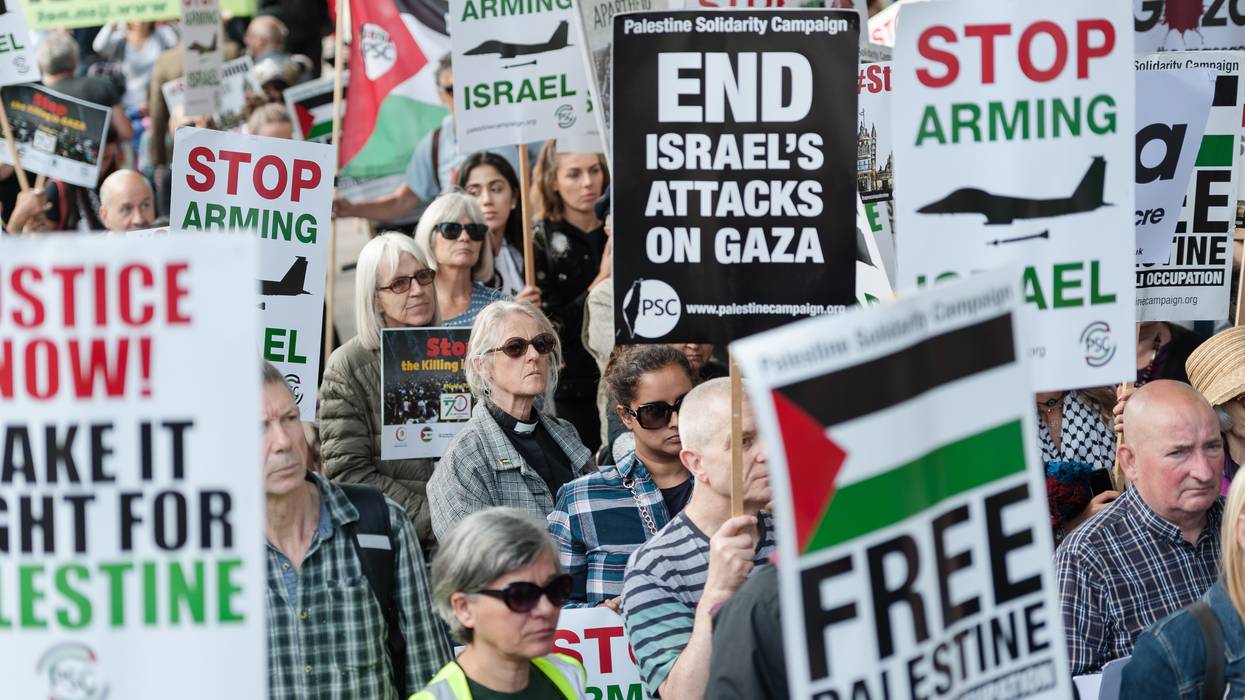
"The beautiful game should bring people together, not rubber-stamp apartheid."
Human rights group Amnesty International on Tuesday slammed the Union of European Football Associations for allowing the Israel men's team to participate in upcoming Nations League matches despite the Israeli government's continued systemic human rights abuses against Palestinians.
Steve Cockburn, Amnesty International’s regional director for Europe, called Israel's participation in the UEFA games "unconscionable," citing "clear evidence that Israel’s football association continues to support illegal settlements."
Cockburn said that UEFA should have long ago suspended the Israel Football Association (IFA) over its "refusal to exclude clubs based in illegal settlements" in the occupied Palestinian territories.
"As the money keeps flowing from FIFA and UEFA to the IFA," Cockburn said, "they risk contributing to the sustainability of illegal settlements and of Israel’s unlawful occupation... and therefore Israel’s violations of Palestinians’ human rights."
"Sport should never be used as a public relations spectacle for states committing atrocities," Cockburn added. "As the Israel team travels to Europe, Palestinian families are being displaced and dispossessed, their land stolen, their olive trees uprooted, and their histories erased by settlers with the support of the Israeli military. The beautiful game should bring people together, not rubber-stamp apartheid."
As explained in a Tuesday report from BBC, Israeli's inclusion in the Nations League has been a source of controversy for months.
Delegates for the Football Association of Ireland (FAI), which faced signifiant public pressure to boycott matches between Ireland and Israel, recently voted in favor of playing the matches, although roughly 30% of delegates voted in favor of a boycott.
Regardless, more than 160 Irish athletes on Monday signed an open letter organized by Irish Sport for Palestine urging FAI to reconsider its vote in favor of the matches.
Heimer Hallgrimsson, manager of the Irish men's team, tried to justify the matches by arguing that Ireland was playing against Israel, which meant it was really playing "against genocide."
The IFA shot back at Hallgrimsson, accusing him of "ignorance, hypocrisy, and stupidity."
The BBC also noted that the two scheduled matches between Israel and Ireland will be played on neutral cites in Hungary and Serbia "against a backdrop of ongoing and increasingly volatile disagreement between the two countries about Israel's military offensive in Gaza."
Cockburn praised efforts by sports fans to keep pressure on the UEFA to "demand accountability, justice and, fair play."
"When rules are broken, when occupation, apartheid, and genocide are ongoing," he emphasized, "we cannot look the other way.”
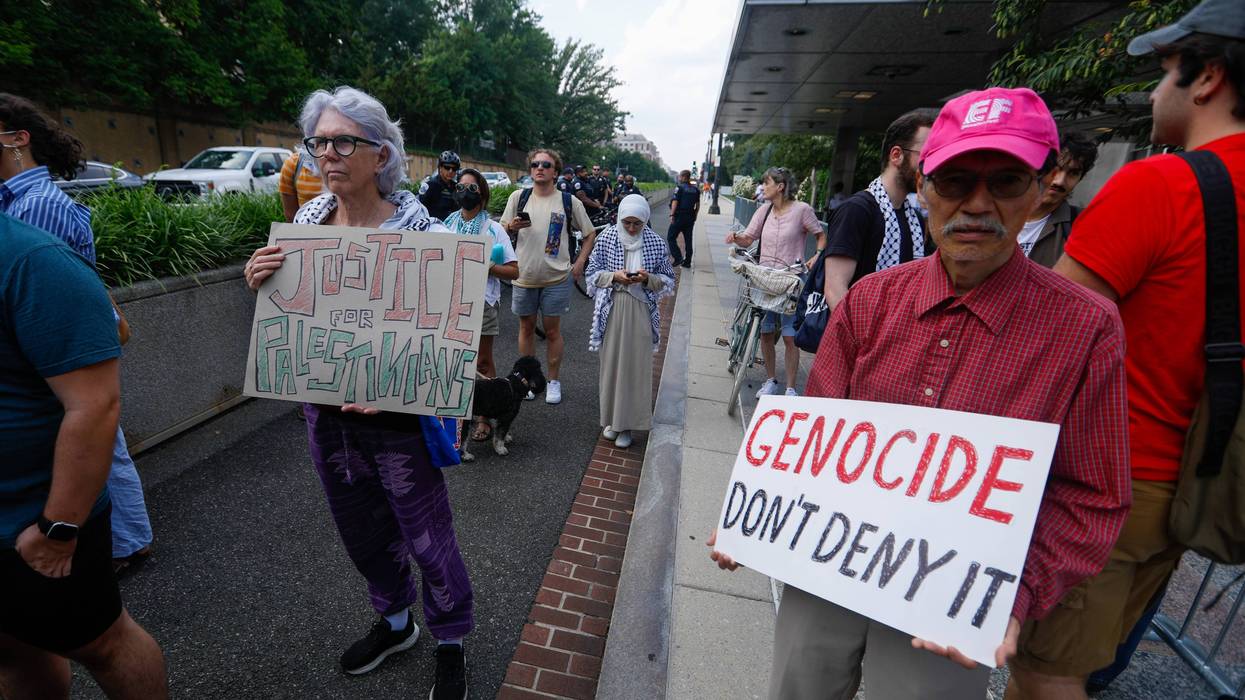
The vast majority of Democratic voters believe Israel has committed a genocide in Gaza and want its supporters in both parties to face consequences.
The majority of Democratic voters believe Israel has committed genocide in Gaza for the past three years. And they want the American politicians in both parties who supported it to pay.
In a poll released on Monday by the Center for Strategic Politics and commissioned by the magazine Liberal Currents, 683 Democratic voters were asked whether the next Democratic administration should "pursue criminal prosecution of members of the Trump and Biden administrations for actions taken related to Israel’s genocide in Gaza."
More than half, 57%, of the Democrats surveyed answered "yes," while only 22% answered "no" and another 22% said they "don't know."
Self-described "socialists" and "progressives" were most bullish on Gaza-focused prosecutions. But so were 52% of "liberals" and even 48% of Democrats who called themselves "moderate" or "conservative."
It is one of several questions in the poll about a hypothetical Democratic administration prosecuting its predecessors over policies considered deadly and destructive.
About two-thirds, 66%, said they wanted to see Trump administration officials prosecuted for actions taken during its aggressive war with Iran, which has led to the deaths of more than 1,700 civilians and wrought economic turmoil.
Nearly three-quarters, 72%, believed Trump officials should face similar accountability for their campaign of extrajudicial strikes on boats in the Caribbean and Pacific, which have killed more than 234 people in what a top United Nations official recently said may constitute "crimes against humanity."
And more than three-quarters said they wanted to see Trump officials face legal penalties for actions committed by US Immigration and Customs Enforcement (ICE) and Customs and Border Protection (CBP), which have waged a violent mass deportation campaign that has entailed numerous documented due process violations, instances of racial profiling, and several shootings of immigrants and US citizens without clear justification.
The question about Gaza is the only one in the survey in which Democrats were asked about the prospect of prosecuting members of their own party as well as Republicans. And while fewer Democrats ultimately answered yes, it indicates that their ire toward the American politicians supporting the genocide transcends party loyalty.
The poll results come as some activists pursue accountability for the Biden administration in other ways. Last week, organizers launched a campaign to pressure universities and other prominent institutions to cut ties with what they called the "Genocide 20."
These are officials like former Secretary of State Tony Blinken and former National Security Adviser Jake Sullivan who crafted and defended the administration's policy of unrestricted military aid for Israel despite mounting evidence that it was killing scores of civilians and enacting a campaign of starvation against the people of Gaza.
The United States provided Israel with at least $17.9 billion in military assistance between October 7, 2023, and the end of former President Joe Biden's term in January 2025, according to Brown University’s Costs of War project. During that period, more than 47,000 Palestinians were confirmed killed, according to the Gaza Ministry of Health.
Since President Donald Trump returned to office, the US has continued to provide Israel with billions of dollars in military assistance, including $3.8 billion in regular annual military aid, while the Trump administration has approved billions more in arms sales and expedited weapons deliveries. The death toll has risen to nearly 74,000, according to official figures, but independent experts have suggested this may be a significant undercount.
According to Monday's poll, more than 4 in 5 Democrats said that “foreign policy (including Israel and Iran)” is important to them in deciding which candidates to support, compared with just 4% who said it is not.
Foreign policy has been a critical dividing line in several recent Democratic primaries, in which voters have revolted against candidates backed by the American Israel Public Affairs Committee (AIPAC).
This includes Democratic Michigan Congresswoman Haley Stevens, who was defeated by Abdul El-Sayed in a contest for the US Senate despite her more than $30 million in backing from AIPAC, which helped to turn it into the most expensive Democratic primary ever.
AIPAC-backed House candidates have similarly suffered high-profile defeats at the hands of progressives calling to cut off US funding for Israel. Some of the victors include Chris Rabb in Pennsylvania, Brad Lander and Darializa Avila Chevalier in New York, and Aisha Wahab, who won a special election in California.