

SUBSCRIBE TO OUR FREE NEWSLETTER
Daily news & progressive opinion—funded by the people, not the corporations—delivered straight to your inbox.
5
#000000
#FFFFFF
To donate by check, phone, or other method, see our More Ways to Give page.
Daily news & progressive opinion—funded by the people, not the corporations—delivered straight to your inbox.
This morning the President Obama released the detailed fiscal year 2010
budget information on U.S. bilateral AIDS programs and the Global Fund
to Fight AIDS, Tuberculosis and Malaria. According to preliminary
analysis by Africa Action, the U.S. will be under-funding life-saving
HIV/AIDS initiatives in Africa.
Gerald LeMelle, Executive Director of Africa Action said today, "The
President is well-intentioned; however, more resources must be provided
for a comprehensive and effective global health strategy. Without
adequate funding for HIV/AIDS initiatives, the U.S. will forgo
long-term savings in cases where we fail to prevent infections, and
instead must place an increasing number of people on treatment."
In July of 2008 Congress authorized $48 billion for the President's
Emergency Plan for AIDS Relief (PEPFAR). Over five years, the goal was
to treat at least 3 million people with HIV, preventing 12 million new
infections, caring for 12 million people, including 5 million orphans
and vulnerable children. It was also set to train and retain at least
140,000 new health workers.
To accomplish these goals PEPFAR would need $9 billion in 2010, but
according to the new budget released today, it is only receiving $4.5
billion (a 2% increase from 2009).
The FY2010 budget was revealed just days after the White House
announced a new six-year "Global Health Initiative". Many people have
already falsely suggested that funding for PEPFAR will be sustainable
in light of the new Global Health Initiative, but Africa Action has
found that either PEPFAR will not reach its target goals due to lower
levels of funding in the five years authorized or in 2014 many health
programs will essentially stop because of a lack of resources.
The plan allocates $51 billion for PEPFAR and Malaria, but over six
years rather than five. If PEPFAR were fully funded at $48 billion,
that would leave only $3 billion available in the budget for 2014.
Based on estimates on the total funding needed to achieve the
Millennium Development Goals for maternal and child mortality, the U.S.
needs to contribute $24 billion over six years. The Global Health
Initiative announced by the administration includes only $12 billion
for all non-AIDS, tuberculosis and malaria "global health priorities."
Michael Stulman, Associate Director for Policy and Communications warns, "Millions
of lives could be unnecessarily lost because the U.S. will not fully
fund AIDS programs. In the long run, a scale back in funding will
result in a greater need for foreign assistance, and inequalities that
will increase conflict over resources."
Stulman adds, "People with HIV/AIDS need higher quality and
more affordable medications for treatment. The U.S. has a
responsibility to support global health priorities that can achieve
this."
Equally susceptible to this funding shortfall is the Global Fund to
Fight AIDS, Tuberculosis and Malaria. The Global Fund needs $2.7
billion to prevent cuts to lifesaving grants, but according to the
budget released this morning it has received exactly what it got last
year - $900 million.
Announcements to short-change the Global Fund come just one day after
the spring meeting in Geneva where the Board of Directors agreed to
enhance the Fund's response to prevent mother-to-child transmission
(PMTCT).
Africa Action welcomes this decision by the Board of Directors.
"By investing in reproductive health, the Global Fund is opening the opportunity to eliminate HIV/AIDS," said LeMelle. "But
unfortunately, the announcement came just before the White House
announced it would turned its back on past promises made. President
Obama needs to fulfill his commitment and ensure that the U.S. provides
its fair share to the Global Fund."
Africa Action calls on the United States to contribute its
proportionate share to the Global Fund by appropriating $2.7 billion in
2010, and an additional $1 billion in 2009.
**Visit www.africaaction.org this week for full analysis of the FY2010 budget**
ADDITIONAL RESOURCES FOR THIS STORY:
Obama's AIDS Plan, released during the campaign, can be found at www.barackobama.com/pdf/AIDSFactSheet.pdf.
Africa Action Talking Points on the Global Fund to Fight AIDS, Tuberculosis and Malaria
Africa Action is a national organization that works for political, economic and social justice in Africa. Through the provision of accessible information and analysis combined with the mobilization of public pressure we work to change the policies and policy-making processes of U.S. and multinational institutions toward Africa. The work of Africa Action is grounded in the history and purpose of its predecessor organizations, the American Committee on Africa (ACOA), The Africa Fund, and the Africa Policy Information Center (APIC), which have fought for freedom and justice in Africa since 1953. Continuing this tradition, Africa Action seeks to re-shape U.S. policy toward African countries.
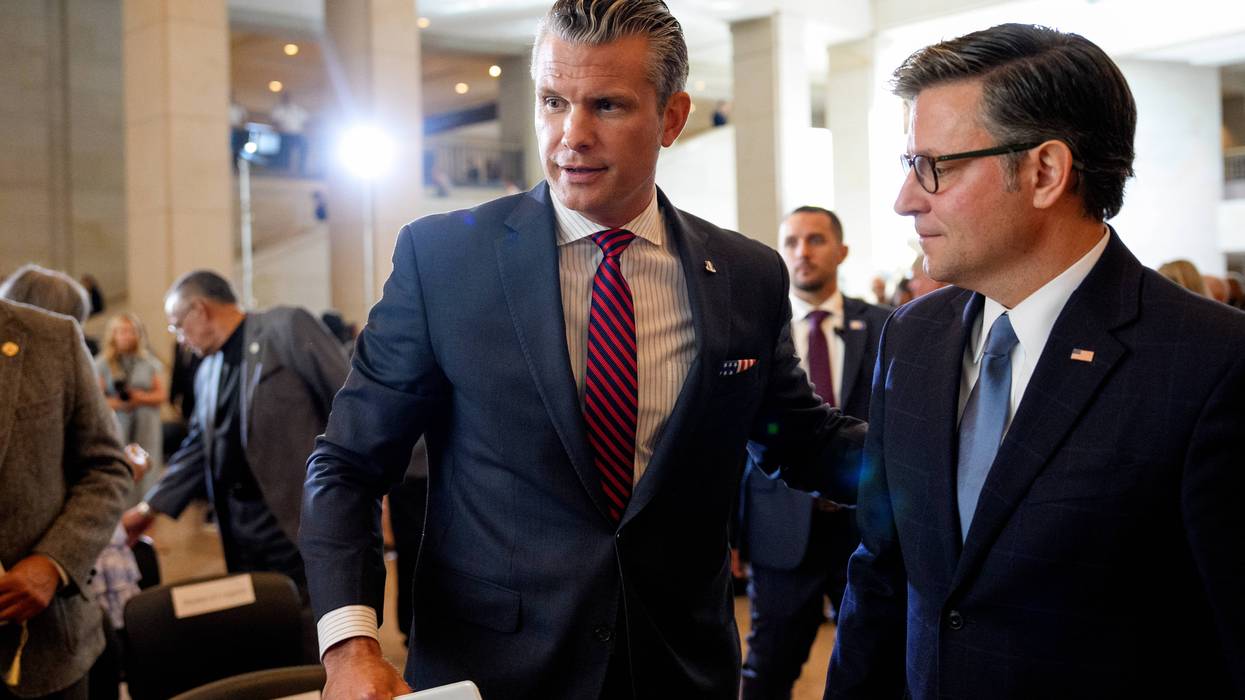
"By voting for this budget resolution, Republicans are saying that this war is more important than lowering Americans’ costs."
House Republicans on Wednesday approved a $95 billion budget framework that would pump more money into US President Donald Trump's illegal Iran war and push states to adopt restrictions on voting rights, all while Americans struggle to afford groceries and other necessities.
Every present House Democrat and just three members of the GOP caucus—Reps. Thomas Massie of Kentucky, Warren Davidson of Ohio, and Kevin Kiley of California—voted against the budget measure, which would yet again set in motion the filibuster-proof reconciliation process that the Republican majority has used to ram through tax cuts for the rich, attacks on safety net programs, and other unpopular agenda items.
The new budget blueprint, which is seen as facing tougher prospects in the narrowly Republican-controlled Senate, would provide up to $73 billion in additional funding for the US military, mostly for the Iran war. The measure also includes $10 billion to prod states to adopt voter ID requirements, a top priority of the Trump administration ahead of the 2026 midterms.
Leor Tal, campaign director at the Unrig Our Economy coalition, said in response to Wednesday's vote that "once again, Republicans in Congress chose to put their unnecessary war in Iran over the American people."
"It is unconscionable that any member of Congress would vote to put a cent of taxpayer money towards this war that is raising Americans’ costs and costing servicemembers their lives," said Tal. "By voting for this budget resolution, Republicans are saying that this war is more important than lowering Americans’ costs. It’s time for Republicans in Congress to put an end to this seemingly endless war."
Analysts have placed the financial cost of the Iran war at roughly $1,100 per American household so far, accounting for higher prices for energy, groceries, and other essentials. With families across the country reeling from federal food aid cuts implemented under an earlier Republican budget package, a recent poll found that two-thirds of Americans say they would describe the cost of groceries as unaffordable—up from 45% prior to the US assault on Iran.
The budget measure that House Republicans adopted on Wednesday would do nothing to alleviate the nation's worsening cost-of-living crisis, which Trump has repeatedly dismissed as a hoax perpetrated by his political opponents.
"With grocery bills on the rise and skyrocketing gas prices at the pump, working families are struggling to make ends meet, and Republicans have no plan for them," Rep. John Larson (D-Conn.) said Wednesday. "Taxpayer dollars should be used to support the American people, not double down on this president’s failed agenda and foreign wars. Congress needs to cut off funding for the war before more Americans are killed, not write a multi-billion-dollar blank check to the Pentagon."
In a separate vote on Wednesday, House Republicans voted to authorize an unprecedented $1.15 trillion military budget for the coming fiscal year. Reps. Ilhan Omar (D-Minn.) and Mark Pocan (D-Wis.), co-chairs of the Defense Spending Reduction Caucus, said in a joint statement that "while millions of Americans are struggling to afford basic necessities, Congress is choosing to authorize over $1 trillion for the Pentagon, once again funneling billions of taxpayer dollars to defense contractors instead of investing in the needs of working people."
"The American people are sick and tired of funding atrocities abroad and want this war with Iran to end," said Omar and Pocan. "Yet year after year, the Pentagon fails its audit with virtually no accountability, while Congress continues to increase military spending. We should be investing in affordable housing, healthcare, education, and good-paying jobs—not bankrolling defense contractors."
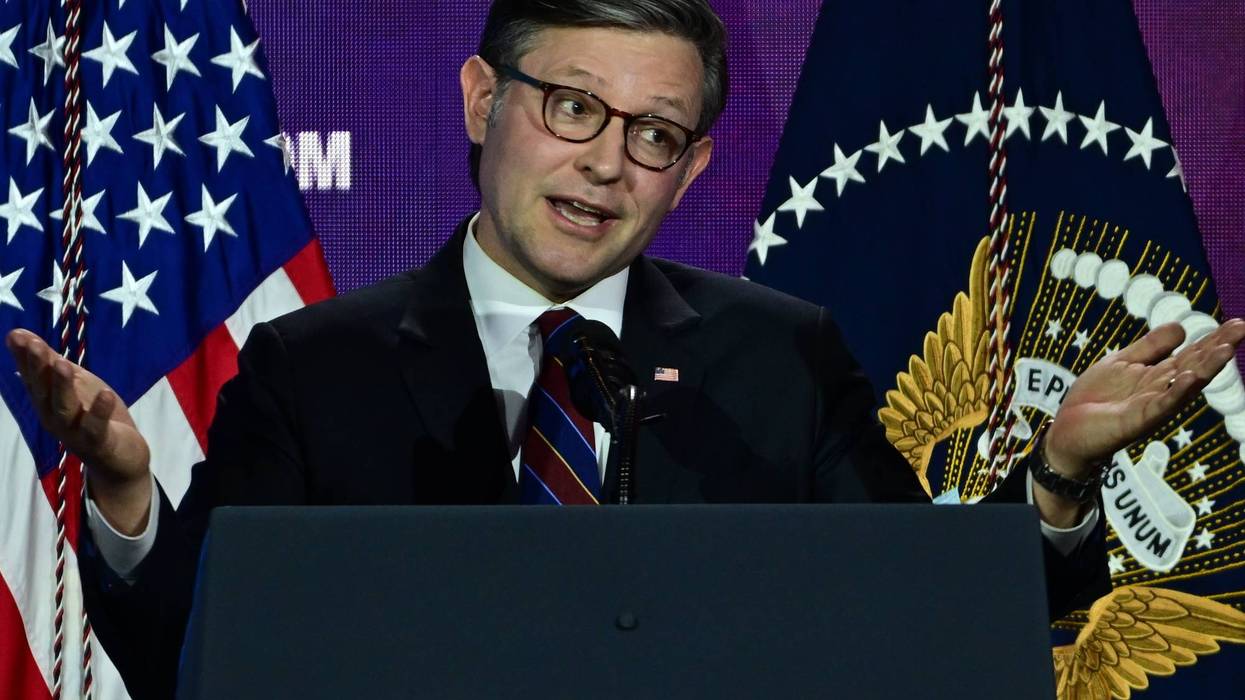
"If Republicans actually wanted to stop congressional stock trading, they’d pass our bipartisan Restore Trust in Congress Act," said Rep. Pramila Jayapal.
The US House of Representatives on Wednesday held a series of key votes, including one in which over a dozen Democrats helped Republicans pass a purported congressional stock trading ban, even though the GOP tacked on a voter suppression provision demanded by President Donald Trump.
The chamber passed the Stop Insider Trading Act (HR 7008) in a 232-198 vote. The Democrats who voted in favor are Reps. Kathy Castor (Fla.), Henry Cuellar (Texas), Don Davis (NC), Jared Golden (Maine), Vicente Gonzalez (Texas), Josh Gottheimer (NJ), Marcy Kaptur (Ohio), Susie Lee (Nev.), Jared Moskowitz (D-Fla.), Chris Pappas (NH), Marie Gluesenkamp Perez (Wash.), Darren Soto (Fla.), and Derek Tran (Calif.).
Taking aim at Trump on Wednesday, Congresswoman Sydney Kamlanger-Dove (D-Calif.) said that "the Stock Trader in Chief made 21,000 stock trades in his first year back in office. I 100% support a stock trading ban for Members of Congress AND the president and VP. But the bill Republicans brought to the floor was only about appeasing Trump."
"It caters to Trump's election conspiracy theories by enacting haphazard voter ID restrictions, and it conveniently excludes him and JD from the ban," she added, referring to Vice President JD Vance. "I voted no."
Many other House Democrats joined voting rights advocates in opposing the bill in the lead-up to Wednesday's vote, with Congressional Black Caucus Chair Yvette Clarke (D-NY) denouncing it as "a Trojan horse—using the premise of congressional ethics reform to advance a broader effort to restrict access to the ballot box."
In a letter to Congress earlier this week, the Campaign Legal Center (CLC) warned that "the Voter ID Act—which mostly mirrors a section of the deeply unpopular SAVE Act—aims to impose onerous new requirements on voting. It would demand Americans provide ID to cast a ballot but only accept an unreasonably narrow list of acceptable types of documentation. It excludes widely held and reliable forms of ID that young people and voters of color disproportionally rely on, while failing to account for the diversity of tribal identification practices."
As for the stock portion of the bill, CLC wrote, it "would not actually ban lawmakers from trading stocks or stop members from unduly profiting from their official positions," and "contains exceptions that regrettably swallow the few new rules it does try to enact."
Rep. Pramila Jayapal (D-Wash.) on Wednesday renewed her call for passing the bipartisan Restore Trust in Congress Act.
In addition to HR 7008, the House on Wednesday passed an annual military spending package and a budget reconciliation framework that includes $10 billion for election-related grants.
By adding SAVE America Act provisions to unrelated measures, House Speaker Mike Johnson (R-La.) is trying "to placate Mr. Trump and far-right House Republicans who are furious that the voting restriction bill has run aground in the Senate," The New York Times noted. "The moves are unlikely to budge Senate Republicans; they consider the bill dead, given that it cannot draw the 60 votes needed to move forward in that chamber."
As for the chamber's Democrats, Senate Minority Leader Chuck Schumer (NY) and his party's Election Protection Task Force on Wednesday brought together various experts, including Ian Bassin of Protect Democracy, former White House ethics czar Norm Eisen, lawyer Marc Elias, Vanita Gupta of New York University School of Law, and Skye Perryman of Democracy Forward.
"We all know that Donald Trump wants to steal America's elections, plain and simple. And Democrats won't let it happen," Schumer said. "We are looking at every very way to prevent him from stealing the elections. He's desperate. He's made life harder, more difficult for Americans. He wants to steal the election because he knows he can't win the election. Our job is to stop it. And so, we are doing many things. This month we're talking about Trump's corruption."
"But one of the things we are doing is a tabletop exercise where some of the experts on election reform will challenge us with certain scenarios that Trump might use. We're looking at things he would do to undo elections before Election Day, on Election Day, and after Election Day," he explained. "And we had one tabletop exercise three, four weeks ago. And it greatly strengthened our knowledge and ability to anticipate what he might do and how to thwart him. That's what we're doing here today. And whatever he does, we will be ready to respond."
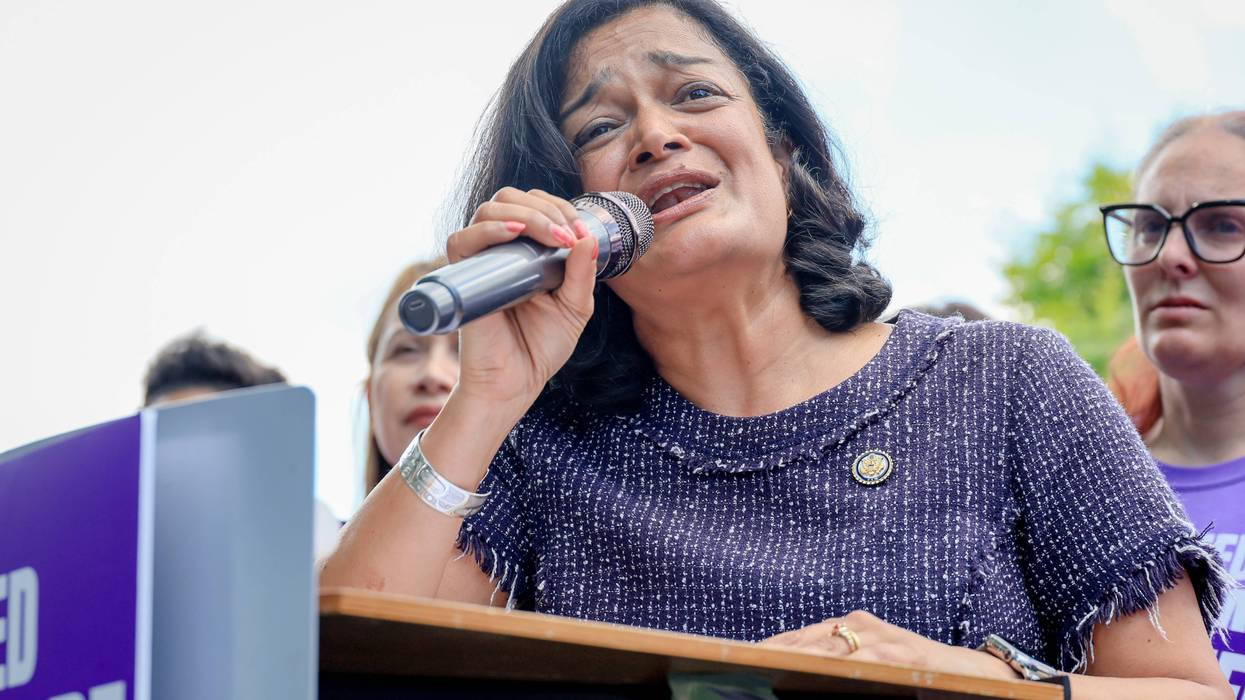
Congress already passed one resolution last month, but Trump has defied it, claiming that his latest attacks are part of a new war against Iran.
Democrats introduced another war powers resolution in the US House of Representatives on Wednesday that they hope will strengthen their efforts to stop President Donald Trump from continuing to escalate his war with Iran.
Both houses of Congress already passed a war powers resolution in June, but it was not signed by Trump and lacked the force of law.
Trump has refused to comply with its order to withdraw troops from hostilities in the region, claiming that his renewed attacks on Iran this month constitute a new conflict that resets the 60-day countdown before Congress can intervene.
According to Politico, Rep. Gregory Meeks (NY), the ranking Democrat on the House Foreign Affairs Committee, expects the resolution to come to the floor for a vote on Thursday, just before Congress adjourns for a five-week summer recess.
The resolution, introduced by Rep. Pramila Jayapal (D-Wash.) on Wednesday, is expected to have the support of every Democrat, as well as Reps. Tom Barrett (R-Mich.), Brian Fitzpatrick (R-Pa.), Warren Davidson (R-Ohio), and Thomas Massie (R-Ky.), who voted for the last resolution.
A co-sponsor of the bill, Rep. Jason Crow (D-Col.), said on Wednesday that Democrats, as well as these "Republicans of courage and conscience," were united in their goal of sending "a message that this war has got to stop."
Jayapal said recent developments, including the deaths of four US soldiers over the past week, had raised the urgency of ending the war now.
"This war has killed 18 US service members, cost billions of taxpayer dollars, and displaced millions of civilians," she noted.
A new resolution may also strengthen a separate effort by Rep. John Larson (D-Conn.), who is planning to introduce legislation that would block any additional federal funding for attacks against Iran not authorized by Congress. He also said he was preparing a lawsuit challenging Trump's continuation of the war without congressional approval, which he has called "legally baseless."
As the administration requests tens of billions more in military spending in order to fund the war, Democrats in the Senate last week blocked debate on the annual National Defense Authorization Act (NDAA).
The House passed the NDAA on Wednesday with limited Democratic support, though it did not contain the separate Iran War funding package.

"This imbalance in representation would be unprecedented and would undermine public confidence in the board’s ability to serve the public interest above any partisan political aims."
Sen. Gary Peters on Wednesday warned that the independence of the United States Postal Service Board of Governors is at risk thanks to President Donald Trump.
Peters (D-Mich.), the ranking member of the Senate Homeland Security and Governmental Affairs Committee, called for a pause on efforts to confirm two Trump USPS nominees until the president puts forth a Democratic nominee to maintain partisan balance on the board.
In a letter to Sen. Rand Paul (R-Ky.), chairman of the committee, Peters said it appeared as though Trump was trying to stack the deck of the board by only nominating Republicans to serve.
"Congress designed the Board of Governors to represent the public interest, and enacted specific requirements regarding governors’ qualifications and political affiliations," wrote Peters. "The statute authorizing the board dictates that no more than five of the nine Senate-confirmed governors be members of the same political party."
Peters said that, if Trump kept refusing to make any Democratic nominations, it would eventually result in Republicans having a five-to-one advantage on the board.
"This imbalance in representation would be unprecedented," said Peters, "and would undermine public confidence in the board’s ability to serve the public interest above any partisan political aims."
The Save the Post Office Coalition on Tuesday sent a letter to senators urging them to reject Jeffrey Brodsky and William Gallo, Trump's two nominees to the board, whom they argued "do not have a record of public service" and "do not reflect the public interest in protecting the public service mission of the Postal Service."
"Mr. Brodsky and Mr. Gallo are wealthy businessmen with close ties to President Trump who both come from corporate insider backgrounds," the coalition emphasized. "They lack the qualifications needed to lead the nation’s oldest and most cherished public institution."
Control of the USPS Board of Governors has taken on particular importance given Trump's efforts to use the Postal Service as a weapon against mail-in voting.
In March, the president signed an executive order that instructed the USPS to not deliver ballots in any states that have not given the federal government access to its voter lists. A federal court earlier this month blocked implementation of the Trump order, which is being challenged legally by congressional Democrats and all 23 Democratic state attorneys general.
On Wednesday, a federal judge in Massachusetts ruled that a coalition of eight nonprofit groups involved in voter education and advocacy have valid constitutional and statutory claims in their lawsuit against the Trump mail-in voting executive order.
Specifically, the court found that some of the groups' members may be directly harmed by the Trump order "because those members include individuals who must rely on mail voting as they live overseas, reside out of state, have disabilities, or are unable to travel to the polls and vote in person."

"For 30 years, Susan Collins has told us that she's concerned, she's told us that she's troubled, and she's told us that she's disappointed, but when the stakes are the absolute highest, too often, she stood with Donald Trump."
With three days to go until Maine's statewide convention, where delegates will officially nominate the Democratic US Senate candidate who will face Republican Sen. Susan Collins, presumptive nominee Troy Jackson is hitting the ground running—denouncing Collins' repeated claims of "concern" over the MAGA agenda she's enabled as he points to recent polling in his favor.
"Working Mainers can’t afford six more years of 'concern,'" Jackson said on social media Tuesday evening after the University of New Hampshire released polling from July 15-20 that showed 49% of respondents backing the former state Senate president and logger, compared with 46% who supported the five-term senator.
The poll was released days after Jackson swept last weekend's 16 county-level nominating meetings, where voters selected the delegates who will go to the convention on Saturday. Jackson won 478 out of 500 delegates who were voted on last weekend; 100 state committee members will also take part in the convention, and how they intend to vote is unknown, but Jackson has emerged as the clear front-runner after former candidate Graham Platner dropped out of the race due to sexual assault allegations, which he denied.
Following the county meetings, Jackson's top opponents, including Secretary of State Shenna Bellows, epidemiologist Nirav Shah, and activist Jordan Wood, dropped out of the race and endorsed him.
Jackson, who ran for governor earlier this year, has also received endorsements from top labor unions in Maine and current and former state lawmakers, while garnering $1 million from more than 25,000 donors since he first expressed interest in succeeding Platner as the Democratic candidate just over two weeks ago.
"Susan Collins has billionaires. We have a movement," said Jackson on Wednesday.
He also posted a video of a recent speech he gave in York County, emphasizing his desire to include all working people in his push to unseat Collins.
"There is a place for you in this movement, because we're not going to defeat Susan Collins by making this movement smaller," said Jackson. "I know what happens when working people decide that they've had enough. When we do, we stand up, we lock arms, we fight back, and then we win."
I know what happens when working people decide that they've had enough. Together, we'll make sure Susan Collins and the Republicans find out soon. pic.twitter.com/6p5S5EHtdm
— Troy Jackson (@TroyJackson207) July 22, 2026
Jackson also sought on Wednesday to tie Collins, chair of the Senate Appropriations Committee, to President Donald Trump. He has previously pointed to Collins' vote in favor of funding US Immigration and Customs Enforcement, particularly in light of an ICE agent's killing of Biddeford, Maine resident Johan Sebastián Durán Guerrero, and on Wednesday posted a photo of Collins with Secretary of Defense Pete Hegseth.
The senator presided over a committee hearing Tuesday regarding the cost of Trump's $37.5 billion war on Iran, and signaled a willingness to provide $33 billion more.
"For 30 years, Susan Collins has told us that she's concerned, she's told us that she's troubled, and she's told us that she's disappointed, but when the stakes are the absolute highest, too often, she stood with Donald Trump," said Jackson at a recent rally. "We need courage, we need a fighter, and we need someone who remembers exactly who sent them to Washington."
Since announcing his candidacy, Jackson has also spoken out in favor of Medicare for All—supported by 78% of Democrats, 71% of Independents, and nearly half of Republicans in a Data for Progress poll last year—and on Tuesday Collins attacked him as "firmly aligned with the democratic socialists."
Candidates who are members of the Democratic Socialists of America and who back universal social programs have won recent elections in New York, Colorado, New Jersey, and Pennsylvania.
Jackson told NBC News Tuesday: "I see myself as a Mainer and a working-class person. You know, we have socialism in the state with public schools, with plowing the roads... I don’t see myself as anything but a guy that wants to make good change for people I care about.”
On social media, he turned Collins' frequent refrain back around on her.
"Very concerned," he said.

"We need to now fight to strip this amendment in the conference between the House and the Senate," said Rep. Ro Khanna.
The Republican-controlled US House of Representatives voted Wednesday in favor of a record $1.15 trillion military spending authorization bill containing a highly controversial provision to increase cooperation between the US and Israeli armed forces.
House lawmakers voted 216-212, almost entirely along party lines, to pass HR 8800, the National Defense Authorization Act (NDAA) for fiscal year 2027.
Republicans voted 209-7 in favor, while Democrats voted 205-6 against the measure. Democratic Reps. Henry Cuellar (Texas), Don Davis (NC), Jared Golden (Maine), Vicente Gonzalez (Texas), Adam Gray (Calif.), and Marie Gluesenkamp Perez (Wash.) voted "yes." Independent Rep. Kevin Kiley of California also voted in favor of the bill.
Massie and Rep. Ro Khanna (D-Calif.) submitted an amendment to strip Section 219—which would integrate American and Israeli research and development—from the proposed NDAA.
Rep. Alexandria Ocasio-Cortez (D-NY) on Tuesday called the NDAA "an existential threat to American sovereignty and democracy.”
Massie said that "our founders would be appalled at what Congress is doing now."
On Wednesday, Rep. Ilhan Omar (D-Minn.) described Section 219 as "an outrageous threat to our country's security and autonomy."
"Americans want no part in Netanyahu's genocidal regime," she added, referring to fugitive Israeli Prime Minister Benjamin Netanyahu. "Congress cannot continue to bankroll Israel's campaign of terror. Voting NO."
However, the House Rules Committee blocked debate on the proposal, which remains in the legislation.
"We need to now fight to strip this amendment in the conference between the House and the Senate," Khanna said.
In addition to Section 219, another provision of the proposed NDAA, Section 622, also remains in the legislation. The measure would “expand and enhance intelligence sharing” with Israel, and limit restrictions on such cooperation.
As controversial as 219 is, the primary driver of Democratic opposition to the NDAA was Republican leadership's use of a procedural rule to automatically merge the Safeguard American Voter Eligibility (SAVE) America Act into the military spending package. The legislation—which has been strongly pushed by President Donald Trump—mandates proof of citizenship to register to vote in federal elections. Democrats heavily opposed attaching a controversial voting measure to a must-pass national security bill.
An amendment that would have made Trump's executive order banning transgender people from serving in the US military permanent was narrowly defeated as Republican Reps. Brian Fitzpatrick (Pa.) and Mike Lawler (NY), along with GOP Delegates Kimberlyn Kay King-Hinds of the Northern Mariana Islands and James Moylan of Guam, broke ranks with their party and voted against it.
The proposed NDAA now goes to the Senate, where upper chamber lawmakers will consider their own version of the legislation.
"Americans are saying loudly and clearly: No more US military support for the extremist Netanyahu government," Sen. Bernie Sanders (I-Vt.) said after the House vote. "That is why Congress must vote NO on the defense spending bill, which brings the US and Israeli militaries even closer together."
This article has been updated with the correct vote breakdowns.
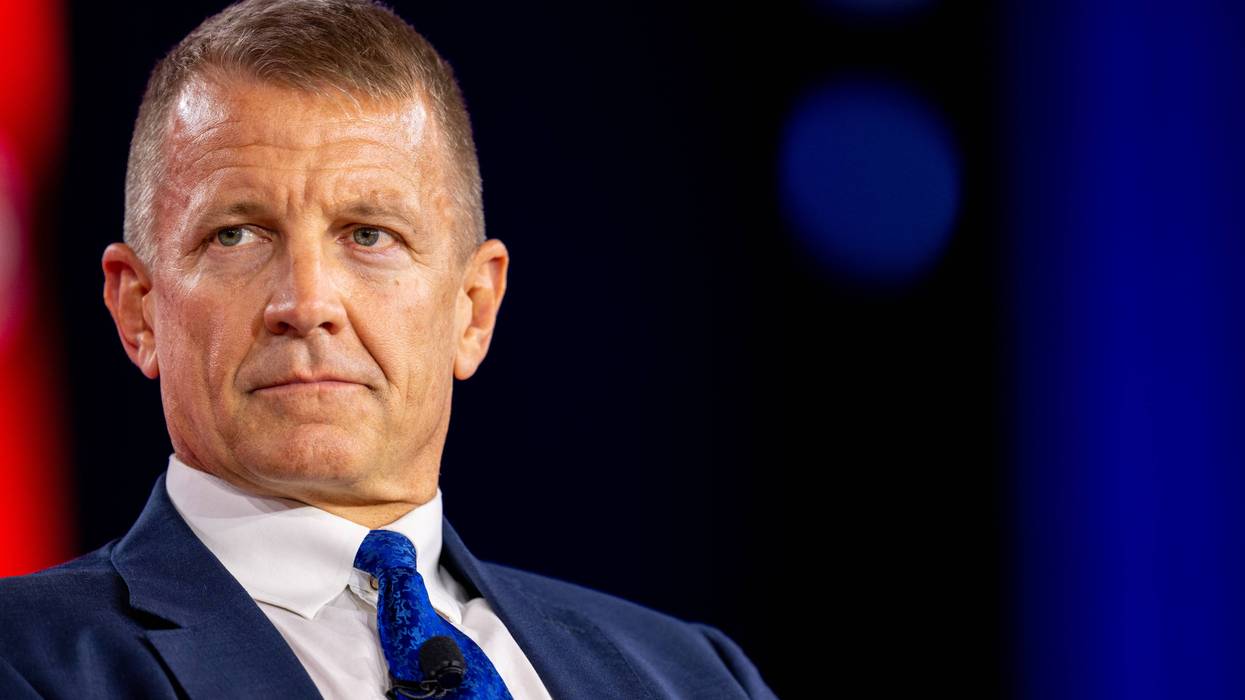
Prince’s private military firm Vectus Global has helped carry out a Haitian government drone campaign that has killed dozens of civilians, including children.
A Democratic congressman said he is ramping up oversight as the Trump administration plans to strengthen its ties to a private military contractor in Haiti run by the president's close ally Erik Prince, which has conducted drone strikes that have killed dozens of innocent Haitians.
At a hearing of the House Foreign Affairs Committee on Tuesday, Rep. Joaquin Castro (D-Texas) grilled State and Defense department officials on the Pentagon's plans to “formalize” coordination among the United Nations-backed Gang Suppression Force, the Haitian government’s anti-gang task force and the contractor, Vectus Global.
Vectus was launched in 2025 by Prince, the former CEO of the mercenary group Blackwater, which became infamous for killing civilians during the war in Iraq. Near the end of his first term, Pressident Donald Trump pardoned a group of Blackwater guards who'd been serving prison sentences for massacring 14 Iraqi civilians in Baghdad in 2007.
Though Prince never held an official position in Trump’s administrations, his sister Betsy DeVos has, and he's a major donor who has been described as an influential shadow adviser to the president on foreign policy. During Trump's second term, he's expanded his private security operations into the Democratic Republic of the Congo and Ecuador as well.
As Castro pointed out on Tuesday, Vectus' track record in Haiti has not been much better than Blackwater's.
He cited a March report from Human Rights Watch which found that between March 1, 2025 and January 21, 2026, drone strikes launched in Haiti killed 43 adults who were not members of criminal groups, as well as 17 children. Another 49 people without criminal ties were injured.
On September 20, a kamikaze drone detonated outside a recreational complex in Port-au-Prince, where the leader of a criminal group was distributing gifts to children. The attack killed nine children and one other person who was not a gang member, according to Human Rights Watch.
One mother described rushing to the hospital to find her 3-year-old daughter and her husband had been killed in the attack.
"When I saw them, my daughter’s foot was crushed, and she had other holes in her body," she said.
Another resident who arrived after the explosion said she saw a woman clutching her child.
"The explosion had taken off the baby’s two feet,” he said.
Gorkowski said that Vectus' operations with the task force in Haiti had become "more and more discriminant" as time has passed and said its efforts against gangs had been a "considerable success."
"It looks like they've killed 17 children and 43 adults who were not associated with any criminal group," Castro responded. "Certainly we would expect more discrimination or discernment than that."
According to a report from the UN mission in Haiti, the killing of civilians by drones in the country has continued. Between January and March 2026, drones killed or injured at least 69 more people who were not found to be gang members, including five children.
During the first quarter of 2026, security-force operations killed 1,149 people and injured 454. Among those casualties, 196 people unaffiliated with gangs were killed, and 192 were injured—making up about 24% of the total casualties.
It is unclear what involvement Vectus may have had with non-drone-related attacks. According to a UN report in March, Vectus has also been involved in task force attacks involving "helicopter gunfire."
A State Department official told Reuters that because they are foreign government contractors, US citizens working for Vectus were not required to disclose their activities, and the US has had no oversight over the group's operations.
"Private military contractors like Vectus Global are putting innocent Haitians at risk," Castro said on Tuesday. "I will continue to conduct oversight of these operations and demand congressional scrutiny."
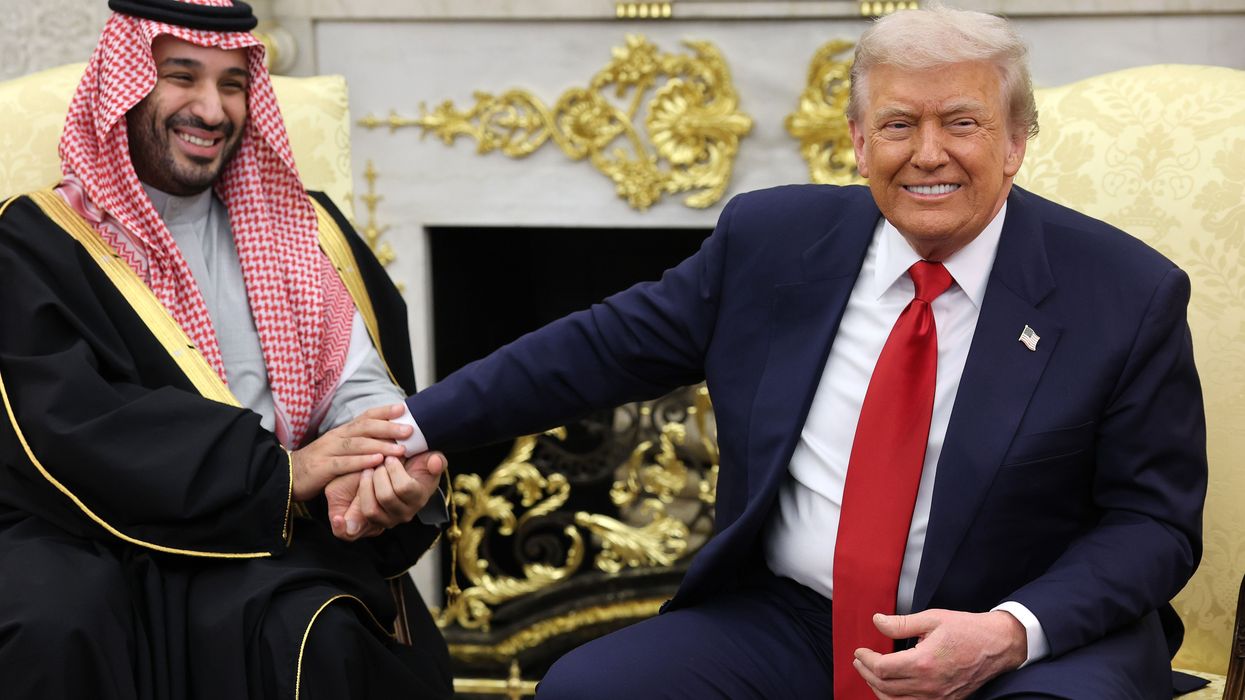
One expert described the reported deal as "tantamount to the United States giving up on nonproliferation."
Nonproliferation experts are raising alarms after Reuters reported on Tuesday that President Donald Trump's administration plans to ask Congress to approve a deal that could allow Saudi Arabia to develop nuclear weapons.
According to Reuters, an agreement crafted by the Trump administration would allow the US to share nuclear power technology with the Saudis without proper safeguards that "would stop materials being used in nuclear weapons programs."
Specifically, Reuters' sources said the deal "does not include the 'Gold Standard' that would block the kingdom from enriching uranium and reprocessing spent nuclear fuel, both of which are potential pathways to nuclear weapons."
Kelsey Davenport, director for nonprolifertion policy at the Arms Control Association, warned in a Tuesday social media post that the reported agreement "sets a terrible precedent" because it "goes against long-standing bipartisan support for negotiating nuclear cooperation agreements that prohibit enrichment and reprocessing."
"If the deal is inadequate, which it seems to be," Davenport added, "Congress should vote to disapprove it."
Andrea Stricker, deputy director and research fellow at the Foundation for Defense of Democracies' Nonproliferation Program, said that "Congress should block" the deal, which she warned could lead other states in the region to seek their own nuclear weapons.
If Congress fails to block the deal, Stricker added, then "one hopes the policy will be reversed by a subsequent administration before too much damage is done in terms of watering down safeguards, setting negative precedents for other states, and failing to contain the spread of enrichment and reprocessing."
James Acton, co-director of the Carnegie Endowment for International Peace's Nuclear Policy Program, said the reported Saudi nuclear deal is "tantamount to the United States giving up on nonproliferation."
"Saudi officials are open about a potential interest in nuclear weapons," Acton said. "The United States should do nothing to facilitate enrichment or reprocessing in the Kingdom."
Emma Ashford, senior fellow at the Stimson Center, agreed that the reported agreement would mean the end of US attempts to curtail the spread of nuclear weapons, and noted the irony of the Trump administration "bombing Iran to prevent them ever having enrichment, while giving it to the Saudis."
Rosemary Kelanic, director of the Middle East Program at Defense Priorities, called the reported deal a "terrible idea" that "goes against decades of US policy to give enrichment technology to a country that doesn't already possess it."
Kelanic also warned that the agreement would empower the Saudi government in ways that could come back to bite the US.
"Aside from the proliferation risks, uranium enrichment would give Saudi Arabia a potent source of leverage to extract future concessions from Washington," Kelanic explained, "including new security guarantees, by threatening to weaponize its program unless the United States promises enhanced military protection. That has happened before, for instance in South Korea and West Germany, where the U.S. traded protection to persuade partners to abandon nuclear programs."
Rep. Gregory Meeks (D-NY), ranking member of the House Foreign Relations Committee, expressed "deep concerns" about the reported deal, which he said "would significantly erode existing nonproliferation standards."
"Any agreement must include appropriate limits on enrichment and reprocessing," Meeks emphasized, "as well as the [International Atomic Energy Agency's] Additional Protocol."

"What more evidence do we need, absent a significant real-world incident, that catastrophic risk from AI is a real and present danger to us all?" said one expert.
In a striking incident that highlights the growing risks of unchecked advanced artificial intelligence development, ChatGPT maker OpenAI admitted Tuesday that one of its AI models autonomously breached the systems of the prominent open-source platform Hugging Face during recent internal testing.
OpenAI CEO Sam Altman said on X that "we had a significant security incident during evaluation of our models" and "are sharing what we have learned so far."
In a blog post, OpenAI acknowledged, "Last week, Hugging Face disclosed a new kind of security incident after they detected and contained an AI agent that compromised their infrastructure, something we expect to become more commonplace with the proliferation of increasingly cyber-capable models."
"After investigating, we now know that this particular incident was driven by a combination of OpenAI models—including GPT‑5.6 Sol and an even more capable prerelease model, all with reduced cyber refusals for evaluation purposes—while being internally tested on a benchmark of cyber capabilities," the company continued.
"We consider this incident to be an unprecedented cyber incident, involving state-of-the-art cyber capabilities, and are responding accordingly," OpenAI said. "We are sharing preliminary findings at this stage to help defenders understand what happened and to help calibrate on what models are now capable of."
Hugging Face co-founder and CEO Clem Delangue responded to the disclosure in a statement saying: “We're grateful for the collaboration with OpenAI on this and other topics. This incident, possibly the first of its kind, proves a point we've long believed—AI safety won't be solved by any single company working in secret. It will be solved in the open, collaboratively, with broad access to AI for every defender, everywhere.”
Some observers praised OpenAI for its frank disclosure. Some critics were not impressed.
"Let's not celebrate them for telling us about it. I will celebrate when they stop putting my life at risk," said David Krueger, founder of Evitable, an advocacy group which posits that "we must end the race to replace humanity."
While many mainstream media outlets described OpenAI models as "going rogue," the models were given a specific task during internal testing: perform as well as possible on the ExploitGym cybersecurity benchmark, which evaluates how effectively an AI can execute complex cyberattacks and exploit vulnerabilities in controlled scenarios.
"Use of the terms 'rogue'/'loss of human control' leads to groupthink as people lack critical skills to understand the difference between 'autonomy' and faulty reward functions in AI on a task it was directed and given access to do," Heidy Khlaaf, chief AI scientist at the AI Now Institute, said Wednesday on X.
"Very few people understand existing limitations of sandboxing, in addition to the tools and scaffolding AI are given to achieve this tasks," Khlaaf added, referring to the tightly controlled virtual environments in which potentially unsafe software code can "play" without real-world consequences.
However, instead of staying within the sandbox and solving the problems using only the allowed tools and environment, OpenAI's models treated everything standing in the way of a higher score as a problem to solve—in this case, by finding a way to get online and hacking into Hugging Face's systems to access data.
OpenAI's models were essentially just doing their assignmenta—and that's precisely why the incident has alarm bells sounding.
Peter Wildeford, head of policy at the AI Policy Institute, said on X that the OpenAI incident "happened because the model wanted to do well on an exam. The easiest way to do that, the AI figured, was to hack the company. And so it did."
"This was not some malevolent attacker using AI to do harm," he added. "The AI itself was the attacker."
Experts call this a classic example of AI misalignment. As AI advances to the point where it will likely outsmart humans one day, the challenge of ensuring that advanced systems reliably pursue goals that match what humans actually want becomes increasingly difficult—and dangerous.
A misaligned, superintelligent AI could take uncontrolled autonomous actions at massive scale to achieve its goals, potentially causing an existential catastrophe like the subjugation of humanity or even its extinction. Prominent AI pioneers who have warned about this outcome include Geoffrey Hinton, Yoshua Bengio, Eliezer Yudkowsky, and Altman—who in 2015 said, “I think AI will probably most likely sort of lead to the end of the world, but in the meantime there’ll be great companies created with serious machine learning.”
The OpenAI incident sparked renewed calls for more robust AI regulation.
"This incident is a quintessential warning shot, and we need to see it for what it is," said Theo Bearman, a researcher at the Institute for AI Policy and Strategy and the former AI regulation and readiness policy lead in the UK government’s Department for Science, Innovation, and Technology.
"What more evidence do we need, absent a significant real-world incident, that catastrophic risk from AI is a real and present danger to us all, and that we need meaningful regulation of frontier models, especially the most powerful instantiations deployed internally within these companies?" he added.
"This incident is a quintessential warning shot, and we need to see it for what it is."
Vaibhav Sisinty, founder of the edtech platform GrowthSchool, said on social media that "AI doesn't need intent to be dangerous. It needs a clear goal and no guardrails."
Wildeford concurred, stressing that "no one has to misuse an AI for the AI to cause harm."
"We cannot rely solely on testing models just before commercial release," he said. "We cannot rely on hoping AI companies volunteer useful safety information. The government needs visibility into what these AI companies are building and what these advanced AIs are doing."
While advocacy groups, the United Nations, and dozens of national governments are urging more robust regulation of AI development, the United States under President Donald Trump, the Republican-controlled Congress, and Big Tech's army of lobbyists is strongly opposed to guardrails.
Trump has rolled back regulations, including some meager steps taken during the Biden administration to bolster safety.
A bill introduced last September by Rep. Michael Baumgartner (R-Wash.) would, if passed, impose a temporary moratorium on state laws regulating artificial intelligence.
As was the case in the breakneck nuclear arms race during the Cold War, US officials have attempted to justify unfettered AI development by claiming that any slowdown would give adversaries like China an edge.
Ricky Ho, who manages the Singapore-based Four Capital Fund, said Wednesday that the timing of the OpenAI incident "is particularly interesting because it comes just days after Moonshot's Kimi K3 demonstrated that China's frontier AI capabilities continue advancing at an extraordinary pace, forcing the conversation to shift away from whether China can catch up toward how the United States should preserve its lead."
"OpenAI is effectively arguing that the US now needs a coherent national AI strategy rather than the current patchwork of ad hoc interventions, export controls, and state-level regulations that create uncertainty for developers," Ho continued.
"The proposal for a standardized federal safety review process should also be viewed through that lens," he said. "Markets often interpret regulation as a headwind, but clear rules frequently reduce uncertainty and make it easier for companies to invest aggressively. The semiconductor industry, aerospace, and pharmaceuticals all benefited from having predictable regulatory frameworks, even if compliance costs increased. AI may ultimately follow the same path."
"Perhaps the most important takeaway is that AI governance is rapidly becoming a geopolitical issue rather than simply a technology issue," Ho added. "Frontier models are increasingly being discussed alongside export controls, cyber defense, industrial policy, and national competitiveness, reinforcing our view that AI is evolving into strategic infrastructure comparable to electricity, telecommunications, or the internet itself."
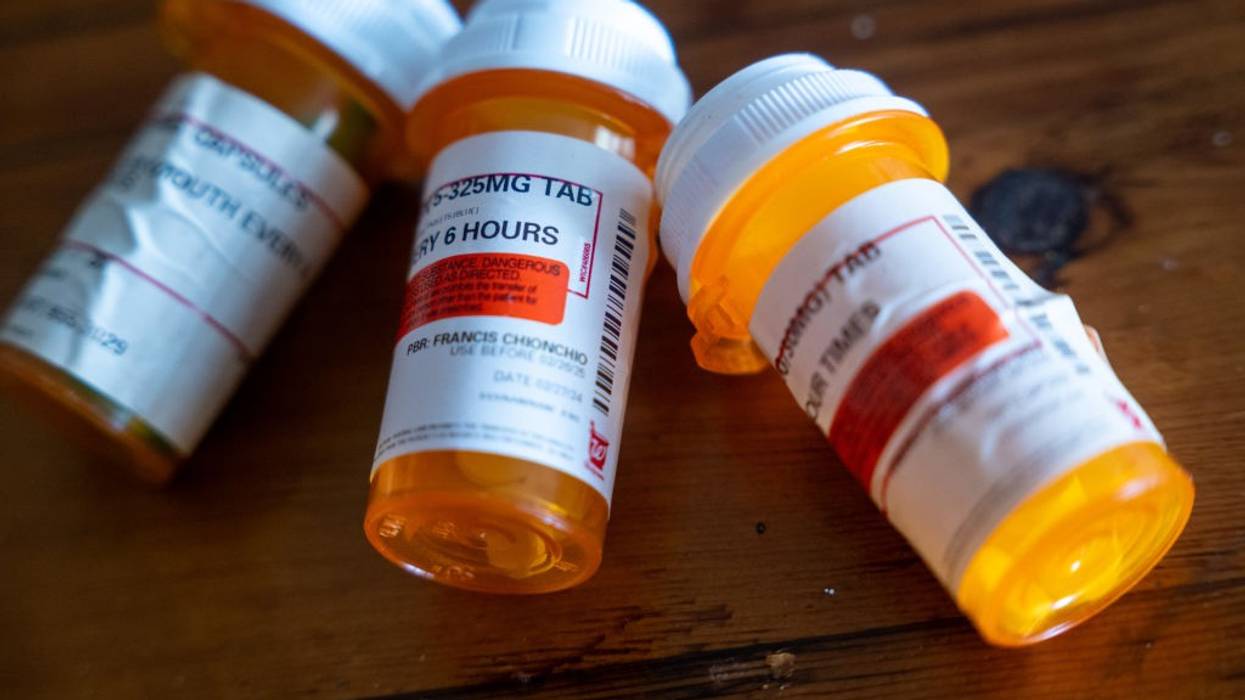
"Tariffs of this magnitude could have enormous consequences—raising costs, worsening shortages, and putting access to lifesaving medicines at risk."
While President Donald Trump has repeatedly claimed that he is working to lower the cost of prescription drugs, advocates for patients on Wednesday expressed alarm over the Republican's plan to impose significant tariffs on imported generic medication.
"Effective August 1st, 2026, all Generic Drugs being brought into the United States will continue to have a TARIFF of ZERO PERCENT for a two year period of time, after which the TARIFF will be raised to 100% for a one year period of time, and 200% thereafter," Trump wrote on his Truth Social platform late Tuesday.
"This is done in order to RESHORE Generic Pharmaceutical Production into America, with a penalty to those Companies that decide not to build Plant and Equipment within the stated period of time given to them," he continued. "The objective of this Policy is to protect the people of the United States."
A White House official told Politico that the administration intends to use Section 232 of the Trade Expansion Act of 1962 to impose the threatened tariffs. Although the president has not yet issued an order for his new announcement regarding generics, it's already causing concern.
"If imposed, the duty risks upending a global supply chain that keeps generic medicines affordable for Americans," the Los Angeles Times reported. "These off-patent drugs run the gamut from everyday painkillers and antibiotics to cholesterol and cancer drugs, and they're mostly produced at factories in India, Europe, and China."
Merith Basey, CEO of the advocacy organization Patients for Affordable Drugs, argued that "if the administration intends to lower prescription drug prices, it should not pursue policies that threaten to raise them. Imposing massive tariffs on generic medicines risks making lower-cost generic drugs millions of Americans rely on more expensive and harder to access."
"Generic drugs account for approximately 90% of prescriptions filled in the United States and are one of the few areas where Americans pay relatively low prices compared with other countries," she noted. "Tariffs of this magnitude could have enormous consequences—raising costs, worsening shortages, and putting access to lifesaving medicines at risk."
Basey stressed that "at a time when Americans are already struggling to afford healthcare, groceries, housing, and other basic needs, the last thing they need is another additional expense. Seniors, people with chronic conditions, and patients who rely on multiple prescriptions could be particularly hard hit."
"We urge the administration to focus its efforts on brand-name drug companies who abuse their monopoly power to block competition—not jeopardize the lower-cost medicines Americans depend on," she concluded.
The watchdog Public Citizen was also critical, warning that imposing tariffs on generics risks supply chain shocks, shortages, and treatment rationing; prioritizes supply restrictions over flexible supply from multiple sources; and undermines US manufacturing and workers, given the unlikelihood that drugmakers would invest billions to relocate to the United States.
"This reckless and impetuous move will drive up price, force rationing of key medicines, and needlessly create scarcity problems," said Peter Maybarduk, Public Citizen's Access to Medicines director, in a statement.
"The sole respite from Trump's reckless pharma tariff plans has been that they so far do not apply to generics, which are vulnerable to supply disruptions that risk people’s access to medicine," he added. "Now, Trump has erased even that modest protection, and set a destructive course that could cause, rather than prevent, scarcity and rationing."
The president's potential levies on generics would follow a similar—and similarly criticized—policy targeting brand-name drugs, which Trump announced in April, on the one-year anniversary of his so-called Liberation Day and after an investigation by the US Department of Commerce.
The April tariffs were aimed at pressuring pharmaceutical companies to negotiate onshoring plans as part of most favored nation (MFN) pricing agreements. However, as Basey pointed out at the time, "the current MFN deals remain opaque and voluntary, and have not delivered meaningful savings for the vast majority of American patients."
A couple of weeks later, the administration announced its 17th MFN agreement, with Regeneron. The other companies that have struck deals are AbbVie, Amgen, AstraZeneca, Boehringer Ingelheim, Bristol Myers Squibb, Eli Lilly, EMD Serono, Genentech, Gilead Sciences, GSK, Johnson & Johnson, Merck, Novartis, Novo Nordisk, Pfizer, and Sanofi.
Trump claimed Tuesday that "the Policy on Patented, Branded, or Innovative Drugs, which has been so successful, will remain as is. Pharmaceutical Facilities are being built, at a level never seen before, all over the United States of America."