

5
#000000
#FFFFFF
To donate by check, phone, or other method, see our More Ways to Give page.
Daily news & progressive opinion—funded by the people, not the corporations—delivered straight to your inbox.
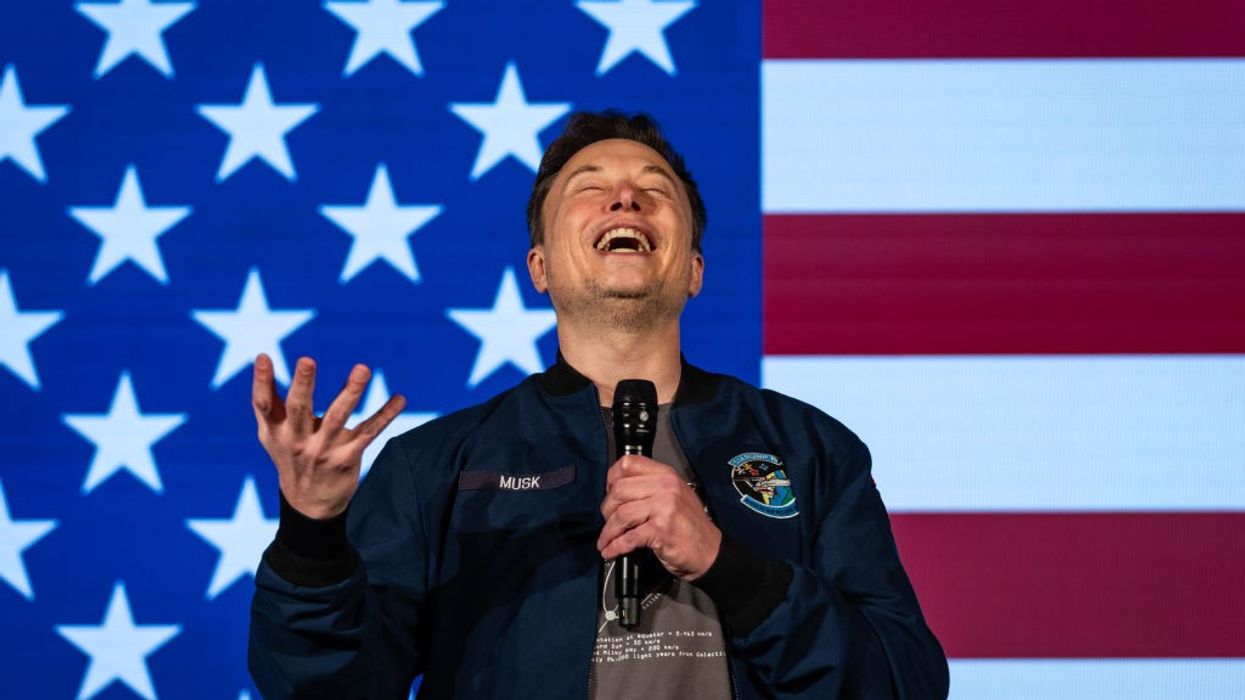
"We’re not letting Trump and his political cronies lock the American people out of Texas’ cherished public lands just to give Elon Musk another payday.”
Several environmental organizations are suing the US Fish and Wildlife Service to stop the agency from handing over hundreds of acres of the Lower Rio Grande Valley National Wildlife Refuge to Elon Musk's company SpaceX.
The complaint—which was filed by the Center for Biological Diversity, Save RGV, the Carrizo/Comecrudo Nation of Texas, and South Texas Environmental Justice Network—alleges that the government is violating federal law that requires any transfers of wildlife refuge lands to private ownership to result in net conservation benefits.
Instead, the complaint says the proposed deal with SpaceX would lead to a loss of more 715 acres of wildlife refuge land in exchange for 683 acres of private land.
Bekah Hinojosa, co-founder of the South Texas Environmental Justice Network, expressed particular concerns about SpaceX building facilities on the land given that the company's rockets regularly cause environmental damage by exploding.
"Elon Musk has built his explosive SpaceX facility in the middle of a major wildlife corridor home to endangered and threatened species like ocelots and wetlands," said Hinojosa. "There was never supposed to be space rockets blowing up here."
Laiken Jordahl, national public lands advocate at the Center for Biological Diversity, accused President Donald Trump's administration of handing over vital public lands to "the world’s richest man, who could trash them while playing with his exploding rockets."
"We’re not letting Trump and his political cronies lock the American people out of Texas’ cherished public lands," added Jordahl, "just to give Elon Musk another payday.”
Mary Angela Branch, board member at Save RGV, said that SpaceX's presence in the area has already been an "unmitigated disaster" for the local environment, and she warned the land transfer plan would "permanently sever the very heart of the wildlife corridor established by Congress in 1979."
"This corridor, running along the Rio Grande... is prime wildlife habitat, and nothing gained in this ‘swap’ will be equal," Branch emphasized. "This will be a huge loss."
In addition to opposition from the plaintiffs in the lawsuit, the proposed transfer to SpaceX has drawn significant opposition from some local residents. According to a report published last week by the San Antonio Express-News, more than 3,400 letters have been submitted to the US Fish and Wildlife Service expressing opposition to the transfer.
Musk, who on Wednesday was accused by politicians in the UK of stoking racial hatred that led to violent pogroms in the city of Belfast, is aiming to become the world's first trillionaire ty making SpaceX a publicly traded company this month.
"With AI Money Watch, Americans can see which candidates the biggest AI Super PAC is buying, who they are trying to stop, and how much they are spending.”
The artificial intelligence industry's super political action committees are dumping a heap of dark money into electing candidates from both parties to protect their interests on Capitol Hill amid growing public skepticism and backlash.
On Wednesday, the progressive advocacy group Demand Progress unveiled a new tool to help voters keep track of which midterm candidates are on the take.
The website, known as "AI Money Watch," is using Federal Election Commission (FEC) filings to track spending by the largest AI super PAC, Leading the Future (LTF), which has raised $125 million for into this year's midterms after being created last August to oust critics of the industry and protect allies.
"AI chatbots have been accused of flirting with children, discouraging people in distress from seeking help, and even offering instructions on how to plan a mass shooting—and billionaire AI CEOs are doling out millions to kill any safeguards that would stop this," said Demand Progress Action's AI policy adviser, Colin McGlynn, in a statement announcing the tracker. "With AI Money Watch, Americans can see which candidates the biggest AI Super PAC is buying, who they are trying to stop, and how much they are spending.”
The tracker allows users to view all 21 races in which LTF has spent money through its affiliated Democratic and Republican PACs and the 13 candidates it has endorsed.
While LTF has said it supports common-sense AI regulations to protect children and improve privacy, its affiliated nonprofit, Build American AI, has voiced opposition to state-level regulations and urged Congress to adopt a White House framework unveiled in March that calls for the federal government to preempt state AI laws.
Among LTF's principal backers are top MAGA donors, including OpenAI president and co-founder Greg Brockman, the venture capital firm Andreessen Horowitz, as well as Palantir co-founder Joe Lonsdale and CEO Alex Karp.
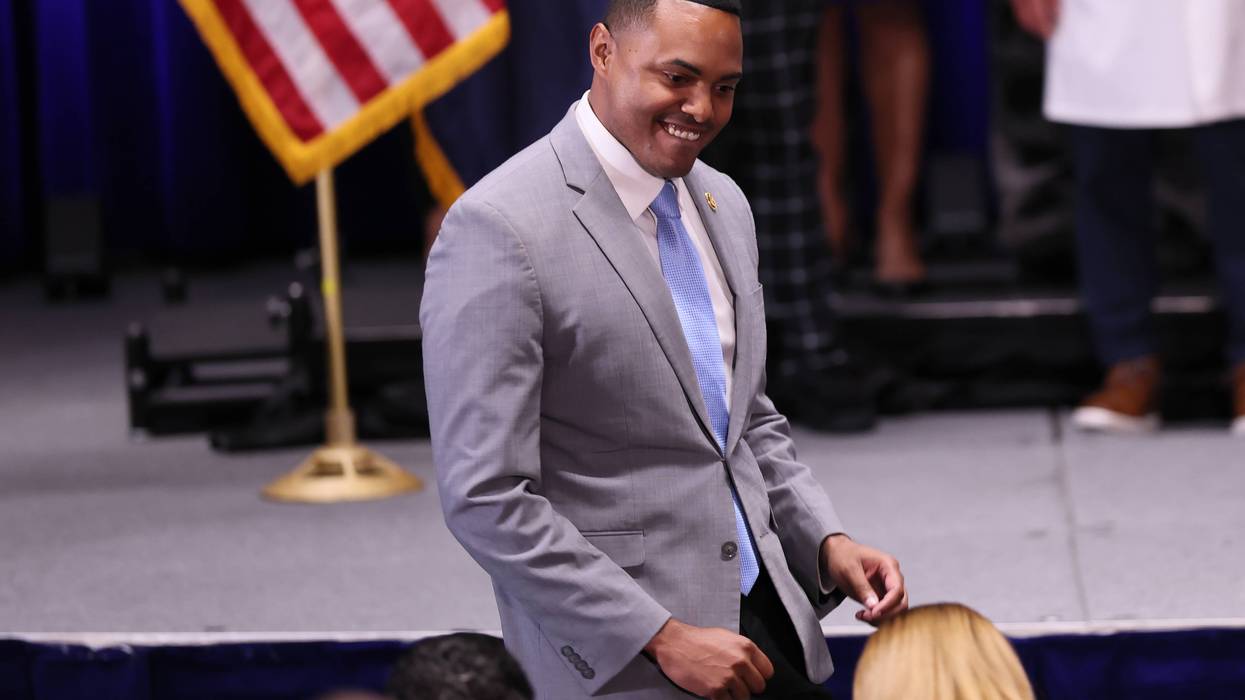
But its top three beneficiaries are all Democrats. The group has spent more than $982,000 on advertising through its Democratic affiliate Think Big in support of Rep. Ritchie Torres (D-NY), a centrist facing a progressive primary challenger, Michael Blake, in his Bronx district. Torres, whom LTF has endorsed, has been one of the most active legislators in the realm of AI, introducing a regulatory bill last year aimed at "unleashing AI innovation" that was described by critics as too industry-friendly.
LTF also threw over $1.1 million behind former Rep. Melissa Bean, an ex-investment banker, who won the Democratic primary for the open seat in Illinois' 8th congressional district with additional help from cryptocurrency and pro-Israel groups, which gave her the edge over her Justice Democrats-backed opponent Junaid Ahmed.
The group poured even more money, $1.4 million, into backing former Rep. Jesse Jackson, Jr.—the son of the late civil rights icon—as he attempted a comeback after nearly 14 years out of Congress. The Democrat had said he wanted Illinois' economically marginalized 2nd District to be on the ground floor of the AI economic revolution.
By far the super PAC's biggest target has been New York State Assemblymember Alex Bores (D-73), whom it has bombarded with $5.7 million worth of negative ads to fight off his run in the state's 12th congressional district.
Bores, a former Palantir employee, has run proudly on his role in helping to enact one of the strongest state-level AI regulation frameworks in the country and made himself a target for LTF's benefactors. Think Big has described his legislation as “ideological and politically motivated" while Lonsdale has degraded him as a "random legislator in New York state" seeking to "harass and slow us down, and make us lose to China.”
LTF has also backed two pro-AI Republicans for US Senate through its GOP PAC American Mission—the hawkish Sen. Lindsey Graham, who fought off an anti-interventionist primary challenger in South Carolina, and Rep. Andy Barr, who is gunning for the Kentucky seat long held by Sen. Mitch McConnell after comfortably winning his primary.
In a similar fashion to the cryptocurrency industry's $245 million push to put its allies in Congress and the White House in 2024, the AI industry's titanic effort to influence the midterms comes as its unchecked growth has left voters feeling increasingly uneasy and angry.
As Ryan Cooper explained on Wednesday for The American Prospect, "any messaging the PAC produces will almost certainly be dishonest."
AI as a business is quite unpopular, with 56% negative sentiment and just 38% approval in a recent NBC News poll. The data centers AI requires are even more unpopular, with a recent Heatmap News poll finding that Americans oppose them by a 71-21 margin—a 49-point swing in just one year.
When something is this unpopular, its associated PACs tend to carefully avoid mentioning what they actually care about. Instead, they run pretextual ads that raise unrelated pseudo-objections against their enemies. That’s how crypto took down Sen. [Sherrod] Brown (D-Ohio), and it’s how the Israel lobby took down Reps. Jamaal Bowman (D-NY), Cori Bush (D-Mo.), and Thomas Massie (R-Ky.). So, when some ad campaign is talking about housing, jobs, or whatever, and it’s funded by LTF, it will be vitally important to point out what is really going on.
McGlynn told Cooper that it's especially important to keep an eye on candidates like Torres, who claim to be in favor of some regulation but are receiving massive support from an industry that wants none.
“If you are going to take the money from the people that say, ‘No, don’t regulate anything,’ then you’ve lost credibility,” said McGlynn.
"Did 700,000 children simply not apply?" asked one advocate in response to USDA chief Brooke Rollins' Senate testimony.
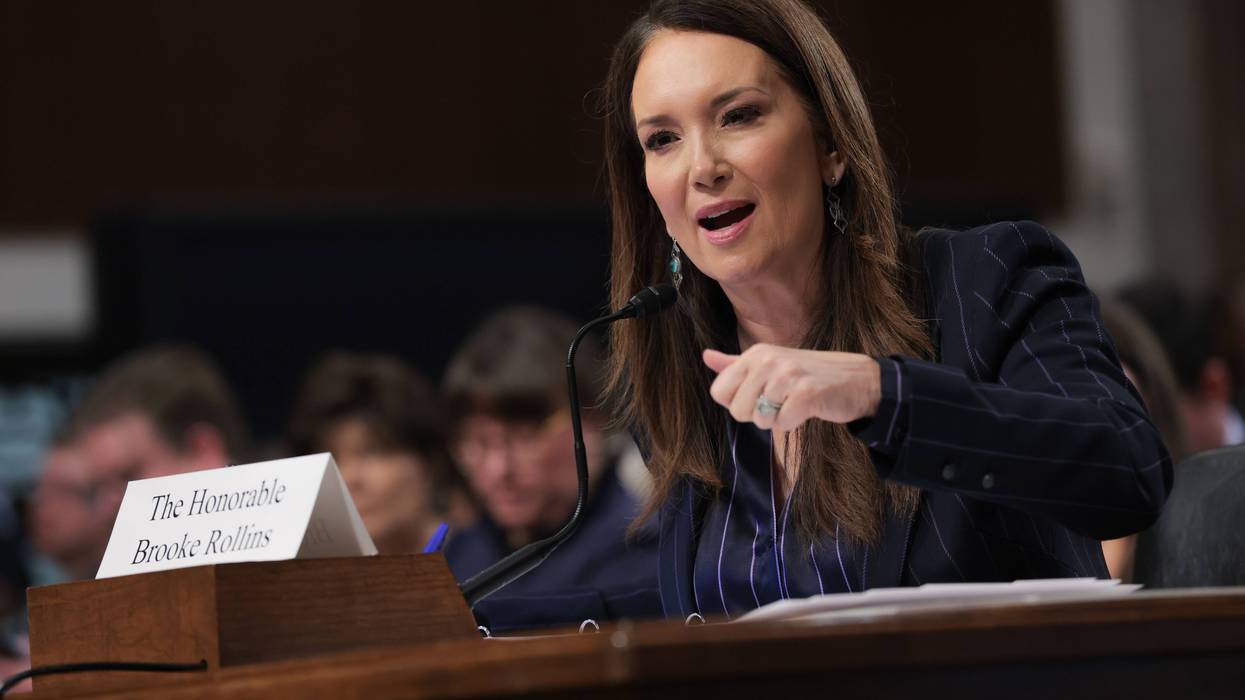
The head of the US Department of Agriculture on Wednesday falsely told senators that "no one was kicked off" the Supplemental Nutrition Assistance Program, claiming that the millions of people—including many children—who have lost federal nutrition assistance in recent months were no longer eligible for aid or decided not to apply for it.
USDA Secretary Brooke Rollins declared that "no one in Washington or in America wants to see a family go hungry," but insisted that anyone who is no longer receiving SNAP benefits has "chosen not to reapply or they're an able-bodied adult that can either work for 20 hours a week or volunteer."
Rollins' testimony conflicts with a growing number of anecdotal reports and expert analyses showing that families across the United States are losing SNAP benefits at the fastest rate in decades. The Center on Budget and Policy Priorities (CBPP) estimates that at least 700,000 children have lost SNAP since President Donald Trump signed into law a Republican budget package last summer, enacting the largest-ever cuts to the federal nutrition program.
Rollins: No one was kicked off of SNAP. If they are not on SNAP, they have chosen not to reapply or they are an able bodied adult that can work. pic.twitter.com/eaiVO9XRwb
— Acyn (@Acyn) June 10, 2026
"Did 700,000 children simply not apply?" Rachel Sabella, director of the No Kid Hungry New York campaign, asked in response to Rollins' remarks.
Katie Bergh, a CBPP policy analyst, pointed to recent reporting by NBC News, which spoke to a mother of two in Arizona who said her "benefits stopped without warning three months ago" after the state began implementing new eligibility requirements included in the Republican budget law.
"It's been really hard," the mother said. "We've been going to food banks every week... We're eating less, we're eating more frozen stuff."
Rollins, a multimillionaire, has openly celebrated the massive and rapid decline in SNAP participation during Trump's second White House term, claiming that the roughly 4 million people who have been "moved" off the program are closer to realizing "the American dream"—even as hunger grows to levels not seen since the height of the Covid-19 pandemic.
"This is a celebration of work and the dignity of work," Rollins told senators on Wednesday.
But CBPP concluded in an analysis released in late April that the "dramatic" loss of SNAP benefits across the country "cannot be explained by a rapid improvement in people’s economic well-being or reduced need for help affording food."
"Labor force data show that the unemployment rate was flat between July 2025 and March 2026, the most recent data available," the think tank observed. "A more likely explanation for why people are losing access to food assistance is that states are now facing new challenges as they respond to the cuts in [the Republican budget law]—the largest in the program’s history."