UN Tax Convention Presents Historic 'Opportunity to Create Well-Being for All'
"At the U.N., low- and middle-income countries are in the majority, and they want a fair system where their voices are heard."
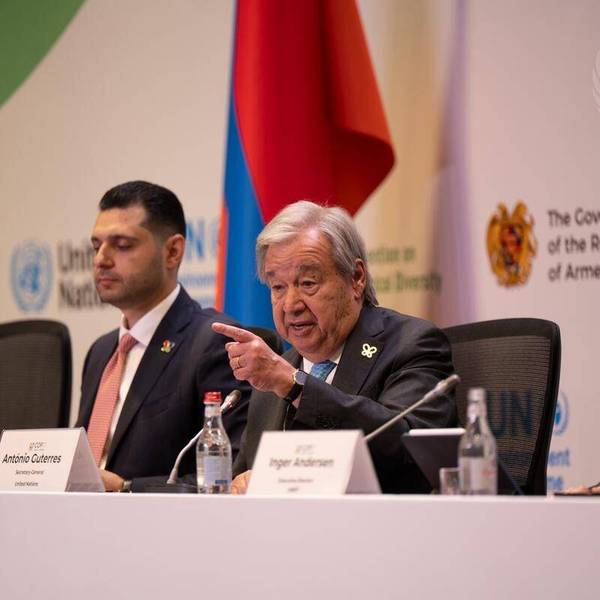
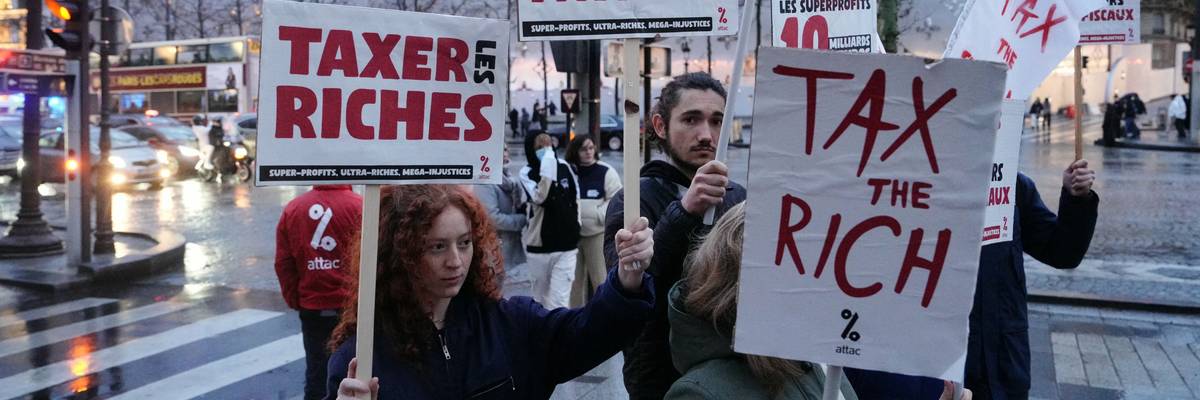
Tax justice advocates this week are expressing hope that delegates at a United Nations summit aimed at drafting an international tax convention will take the "once-in-a-century opportunity," as one campaigner and researcher said, to place the common good at the center of the global tax system instead of individual and corporate greed.
Representatives of U.N. member states are meeting for the Ad Hoc Committee to Draft Terms of Reference for a United Nations Framework on International Tax Cooperation, following decades of campaigning by countries in the Global South.
"It's happening," said Rebecca Riddell, policy lead for Oxfam America. "The start of historic negotiations for a fairer global tax system. We're here because of the leadership of African countries. Because of the 125 states that voted yes. And because of tireless civil society efforts."
The U.N. General Assembly passed a resolution last November calling for the meeting, with the committee required to submit "terms of reference to the General Assembly by August and a final vote on a tax convention framework expected by the end of 2025.
At the Tax Justice Network (TJN), Sergio Chaparro-Hernandez wrote last week that the negotiations are taking place with an "unprecedented level of transparency," with civil society groups able to account for the positions adopted by each state.
Another "noteworthy development" as the meeting gets underway, said Chaparro-Hernandez, is that "several of the 48 countries that had voted against Resolution 78/230 last year are now actively participating in the process."
"The European Union, for example, which voted as a bloc against the resolution last year, accepted the path set out by the resolution by stating in its initial statement at the organizational session that, 'the UN framework convention on tax cooperation can and should serve to further promote tax transparency and fair taxation,'" he added.
Along with TJN, other civil society groups including the Center for Economic and Social Rights (CESR), Eurodad, and Greenpeace are participating in the committee meeting and lobbying for a far-reaching convention framework that will "redefine the pillars of the international tax system and to make it fully inclusive, just, and effective."
"At the U.N., low- and middle-income countries are in the majority, and they want a fair system where their voices are heard," said Maria Ron Balsera, a researcher at CESR.
Under current global tax rules, the wealthiest individuals and corporations pocket $480 billion each year through the use of tax havens and other forms of tax evasion, said Greenpeace on Tuesday, "most countries just can't cover people's basic needs, nor meet their climate and biodiversity targets and commitments."
"The U.N. Tax Convention is a historical opportunity to create well-being for all, by moving decision-making power from a few rich [Organization for Economic Cooperation and Development] countries to the U.N. where every country has a vote," said the group.
Chenai Mukumba, executive director of Tax Justice Network Africa, spoke to attendees of the committee meeting about prioritizing mechanisms to crack down on tax evasion.
"While we flag the importance of this work to developing countries, we cannot overemphasize that inclusive and effective tax cooperation is important that has benefits for our global community," said Mukumba. "The international community as a whole is better off when we have more countries that have resources and capacity to provide their citizens with essential services."
On Monday, Greenpeace Africa's pan-African political strategist Fred Njehu wrote to Ramy Mohamed Youssef, chair of the U.N. Tax Convention Committee, and addressed him not only as an advocate but as "a dad, a concerned citizen, and a taxpayer."
Changing global tax rules and ensuring the wealthy pay their fair share, said Njehu would unlock "the money for everyone’s basic needs and the recovery of climate and nature."
"We both know that this is mostly because multinational corporations have been exploiting the majority of the world for way too long, and governments in some rich countries have facilitated it," said Njehu. "They're making billions on the destruction of the world and our suffering. And then, they hide their profits in tax havens. A downward spiral where wealth and power have become so concentrated as to threaten democracy, civilization, and the living world we're part of."
"Mr. Youssef, you have a big responsibility and a unique opportunity to turn things around this year," he added. "Civil society, academics, and countries that represent 80% of the world’s population are backing you and your colleagues at the U.N. Tax Convention Committee to change the global tax rules, which are critical for how the global economy works... Now we need equality, transparency and accountability. Polluters must pay and the wealthy must be taxed fairly."
We are at a crossroads
This country and this world are at a monumental crossroads. In a few short weeks, US voters will have an opportunity to beat back the forces of fascism and confront the billionaires who are rigging the economy, our media system, and our democracy, making it increasingly impossible for ordinary people to get by. We’re not just talking about the election. We’re talking about what must be done once these fascist elements are vanquished from power. We need a bolder set of solutions than what either major party has so far been willing to offer and a working-class movement ready to fight like hell for it. Trump didn't emerge from nowhere. The conditions that fueled MAGA authoritarianism were created by decades of radical neoliberal economic policies and a corrupt political system dominated by corporate interests. They slashed taxes on the super-rich, promising that the benefits would trickle down. They said giveaways to the corporate titans would make life more affordable for the rest of us. It was all bullshit. And when a bitter, betrayed populace searches for someone to blame, right-wing demagogues have little trouble finding scapegoats. People know when they're being lied to, but you won't hear any of this from the corporate media. Only independent journalism—powered and funded by people who believe in building a better world—can deliver truly trustworthy daily news. Our Fall Campaign is underway, and we need your help. To power our newsroom through the rest of the year, we need to raise $125,000 by midnight on October 31. So if you share our vision, please contribute whatever you can to sustain our work. |
Tax justice advocates this week are expressing hope that delegates at a United Nations summit aimed at drafting an international tax convention will take the "once-in-a-century opportunity," as one campaigner and researcher said, to place the common good at the center of the global tax system instead of individual and corporate greed.
Representatives of U.N. member states are meeting for the Ad Hoc Committee to Draft Terms of Reference for a United Nations Framework on International Tax Cooperation, following decades of campaigning by countries in the Global South.
"It's happening," said Rebecca Riddell, policy lead for Oxfam America. "The start of historic negotiations for a fairer global tax system. We're here because of the leadership of African countries. Because of the 125 states that voted yes. And because of tireless civil society efforts."
The U.N. General Assembly passed a resolution last November calling for the meeting, with the committee required to submit "terms of reference to the General Assembly by August and a final vote on a tax convention framework expected by the end of 2025.
At the Tax Justice Network (TJN), Sergio Chaparro-Hernandez wrote last week that the negotiations are taking place with an "unprecedented level of transparency," with civil society groups able to account for the positions adopted by each state.
Another "noteworthy development" as the meeting gets underway, said Chaparro-Hernandez, is that "several of the 48 countries that had voted against Resolution 78/230 last year are now actively participating in the process."
"The European Union, for example, which voted as a bloc against the resolution last year, accepted the path set out by the resolution by stating in its initial statement at the organizational session that, 'the UN framework convention on tax cooperation can and should serve to further promote tax transparency and fair taxation,'" he added.
Along with TJN, other civil society groups including the Center for Economic and Social Rights (CESR), Eurodad, and Greenpeace are participating in the committee meeting and lobbying for a far-reaching convention framework that will "redefine the pillars of the international tax system and to make it fully inclusive, just, and effective."
"At the U.N., low- and middle-income countries are in the majority, and they want a fair system where their voices are heard," said Maria Ron Balsera, a researcher at CESR.
Under current global tax rules, the wealthiest individuals and corporations pocket $480 billion each year through the use of tax havens and other forms of tax evasion, said Greenpeace on Tuesday, "most countries just can't cover people's basic needs, nor meet their climate and biodiversity targets and commitments."
"The U.N. Tax Convention is a historical opportunity to create well-being for all, by moving decision-making power from a few rich [Organization for Economic Cooperation and Development] countries to the U.N. where every country has a vote," said the group.
Chenai Mukumba, executive director of Tax Justice Network Africa, spoke to attendees of the committee meeting about prioritizing mechanisms to crack down on tax evasion.
"While we flag the importance of this work to developing countries, we cannot overemphasize that inclusive and effective tax cooperation is important that has benefits for our global community," said Mukumba. "The international community as a whole is better off when we have more countries that have resources and capacity to provide their citizens with essential services."
On Monday, Greenpeace Africa's pan-African political strategist Fred Njehu wrote to Ramy Mohamed Youssef, chair of the U.N. Tax Convention Committee, and addressed him not only as an advocate but as "a dad, a concerned citizen, and a taxpayer."
Changing global tax rules and ensuring the wealthy pay their fair share, said Njehu would unlock "the money for everyone’s basic needs and the recovery of climate and nature."
"We both know that this is mostly because multinational corporations have been exploiting the majority of the world for way too long, and governments in some rich countries have facilitated it," said Njehu. "They're making billions on the destruction of the world and our suffering. And then, they hide their profits in tax havens. A downward spiral where wealth and power have become so concentrated as to threaten democracy, civilization, and the living world we're part of."
"Mr. Youssef, you have a big responsibility and a unique opportunity to turn things around this year," he added. "Civil society, academics, and countries that represent 80% of the world’s population are backing you and your colleagues at the U.N. Tax Convention Committee to change the global tax rules, which are critical for how the global economy works... Now we need equality, transparency and accountability. Polluters must pay and the wealthy must be taxed fairly."
- 140+ Experts to Rich Nations: Redirect Trillions in Public Money to Curb Climate, Inequality Crises ›
- G7 Countries Reach Deal on 15% Global Minimum Tax Rate for Multinational Corporations ›
- 'Historic Win': UN Members to Start Talks on 'Inclusive and Effective' Global Tax Standards ›
- Sanders, Omar Lead Call for Biden to Back Global Tax on the Rich | Common Dreams ›
Tax justice advocates this week are expressing hope that delegates at a United Nations summit aimed at drafting an international tax convention will take the "once-in-a-century opportunity," as one campaigner and researcher said, to place the common good at the center of the global tax system instead of individual and corporate greed.
Representatives of U.N. member states are meeting for the Ad Hoc Committee to Draft Terms of Reference for a United Nations Framework on International Tax Cooperation, following decades of campaigning by countries in the Global South.
"It's happening," said Rebecca Riddell, policy lead for Oxfam America. "The start of historic negotiations for a fairer global tax system. We're here because of the leadership of African countries. Because of the 125 states that voted yes. And because of tireless civil society efforts."
The U.N. General Assembly passed a resolution last November calling for the meeting, with the committee required to submit "terms of reference to the General Assembly by August and a final vote on a tax convention framework expected by the end of 2025.
At the Tax Justice Network (TJN), Sergio Chaparro-Hernandez wrote last week that the negotiations are taking place with an "unprecedented level of transparency," with civil society groups able to account for the positions adopted by each state.
Another "noteworthy development" as the meeting gets underway, said Chaparro-Hernandez, is that "several of the 48 countries that had voted against Resolution 78/230 last year are now actively participating in the process."
"The European Union, for example, which voted as a bloc against the resolution last year, accepted the path set out by the resolution by stating in its initial statement at the organizational session that, 'the UN framework convention on tax cooperation can and should serve to further promote tax transparency and fair taxation,'" he added.
Along with TJN, other civil society groups including the Center for Economic and Social Rights (CESR), Eurodad, and Greenpeace are participating in the committee meeting and lobbying for a far-reaching convention framework that will "redefine the pillars of the international tax system and to make it fully inclusive, just, and effective."
"At the U.N., low- and middle-income countries are in the majority, and they want a fair system where their voices are heard," said Maria Ron Balsera, a researcher at CESR.
Under current global tax rules, the wealthiest individuals and corporations pocket $480 billion each year through the use of tax havens and other forms of tax evasion, said Greenpeace on Tuesday, "most countries just can't cover people's basic needs, nor meet their climate and biodiversity targets and commitments."
"The U.N. Tax Convention is a historical opportunity to create well-being for all, by moving decision-making power from a few rich [Organization for Economic Cooperation and Development] countries to the U.N. where every country has a vote," said the group.
Chenai Mukumba, executive director of Tax Justice Network Africa, spoke to attendees of the committee meeting about prioritizing mechanisms to crack down on tax evasion.
"While we flag the importance of this work to developing countries, we cannot overemphasize that inclusive and effective tax cooperation is important that has benefits for our global community," said Mukumba. "The international community as a whole is better off when we have more countries that have resources and capacity to provide their citizens with essential services."
On Monday, Greenpeace Africa's pan-African political strategist Fred Njehu wrote to Ramy Mohamed Youssef, chair of the U.N. Tax Convention Committee, and addressed him not only as an advocate but as "a dad, a concerned citizen, and a taxpayer."
Changing global tax rules and ensuring the wealthy pay their fair share, said Njehu would unlock "the money for everyone’s basic needs and the recovery of climate and nature."
"We both know that this is mostly because multinational corporations have been exploiting the majority of the world for way too long, and governments in some rich countries have facilitated it," said Njehu. "They're making billions on the destruction of the world and our suffering. And then, they hide their profits in tax havens. A downward spiral where wealth and power have become so concentrated as to threaten democracy, civilization, and the living world we're part of."
"Mr. Youssef, you have a big responsibility and a unique opportunity to turn things around this year," he added. "Civil society, academics, and countries that represent 80% of the world’s population are backing you and your colleagues at the U.N. Tax Convention Committee to change the global tax rules, which are critical for how the global economy works... Now we need equality, transparency and accountability. Polluters must pay and the wealthy must be taxed fairly."
- 140+ Experts to Rich Nations: Redirect Trillions in Public Money to Curb Climate, Inequality Crises ›
- G7 Countries Reach Deal on 15% Global Minimum Tax Rate for Multinational Corporations ›
- 'Historic Win': UN Members to Start Talks on 'Inclusive and Effective' Global Tax Standards ›
- Sanders, Omar Lead Call for Biden to Back Global Tax on the Rich | Common Dreams ›