SUBSCRIBE TO OUR FREE NEWSLETTER
Daily news & progressive opinion—funded by the people, not the corporations—delivered straight to your inbox.
5
#000000
#FFFFFF
To donate by check, phone, or other method, see our More Ways to Give page.
Daily news & progressive opinion—funded by the people, not the corporations—delivered straight to your inbox.
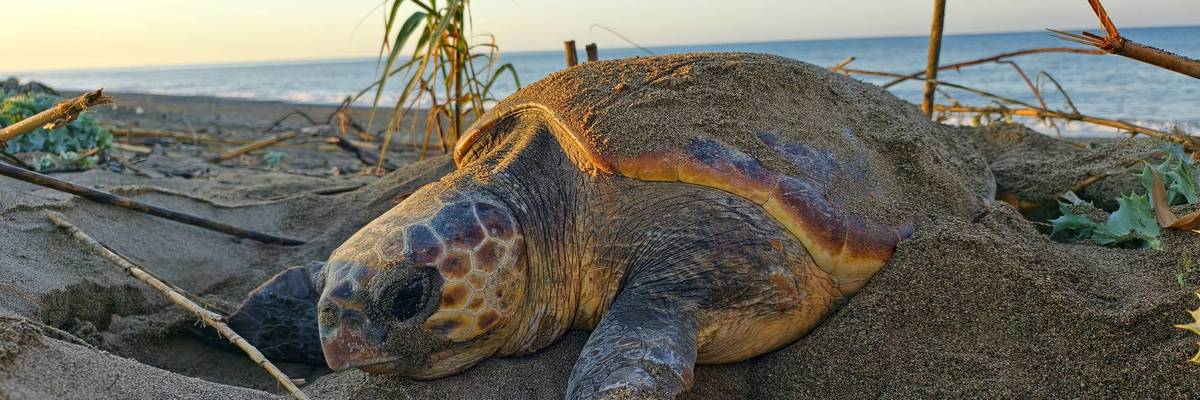
An endangered loggerhead sea turtle is seen laying eggs on the beach in Antalya, Turkiye, on May 18, 2026.
"If animals don’t have a place to live, they can’t live," said one critic.
President Donald Trump's administration on Friday paved the way for letting US corporations destroy the habitats of endangered species by rescinding a longtime interpretation of the Endangered Species Act.
As reported by The New York Times, the Interior Department and the Commerce Department announced that they were narrowing the law's definition of what constitutes harming endangered species.
Whereas the law has for decades been interpreted as protecting endangered animals' habitats from significant "modification or degradation," the administration said that offenders would have to directly injure or kill an endangered animal to be considered in violation of the law.
"The change could open the door for fossil fuel companies, agricultural interests, land developers, and others," wrote the Times, "to disturb or even destroy the habitats of vulnerable species."
The Endangered Species Act has been interpreted as protecting animals' habitats for decades, and that interpretation upheld by the US Supreme Court in 1995.
Environmental advocates expressed horror in response to the rule change, which they said would put endangered species at unprecedented risk.
Kristen Boyles, attorney for Earthjustice, vowed that the administration would face legal challenges for its rule change, which she said would jeopardize endangered animals' ability to "raise their young, or search for food."
"Let’s be clear: There is no support for the Trump Administration’s rule—no scientific support, no legal support, no public support," Boyles said. "We will see the Trump Administration in court."
Ben Greuel, wildlife campaign manager at the Sierra Club, called the rule changed "a direct attack on the foundation of the Endangered Species Act" that, if kept in place, would put species "on a path to extinction."
"This rule ignores that reality in an unlawful attempt to open the door for corporate polluters to degrade vitally important habitats, wildlife be damned," Greuel emphasized. "The Endangered Species Act is a bedrock law that must be followed."
Tara Zuardo, a senior campaigner at the Center for Biological Diversity, pointed out that "habitat destruction is the number one threat to endangered species," while calling the Trump administration's new policy "a death knell for America’s wildlife."
"If animals don’t have a place to live, they can’t live," Zuardo said. "Spotted owls, Atlantic salmon, Florida panthers, and thousands of other species need protections for the wild places where they make their homes."
Andrew Bowman, president and CEO of Defenders of Wildlife, accused the Trump administration of embracing an "erroneous and nonsensical interpretation" of the Endangered Species Act that he vowed to challenge in court.
"We intend to fight back with the full force of the law," said Bowman, "to defeat this attack and innumerable others by the administration on the statutes and regulations that protect America’s cherished wildlife."
Dear Common Dreams reader, It’s been nearly 30 years since I co-founded Common Dreams with my late wife, Lina Newhouser. We had the radical notion that journalism should serve the public good, not corporate profits. It was clear to us from the outset what it would take to build such a project. No paid advertisements. No corporate sponsors. No millionaire publisher telling us what to think or do. Many people said we wouldn't last a year, but we proved those doubters wrong. Together with a tremendous team of journalists and dedicated staff, we built an independent media outlet free from the constraints of profits and corporate control. Our mission has always been simple: To inform. To inspire. To ignite change for the common good. Building Common Dreams was not easy. Our survival was never guaranteed. When you take on the most powerful forces—Wall Street greed, fossil fuel industry destruction, Big Tech lobbyists, and uber-rich oligarchs who have spent billions upon billions rigging the economy and democracy in their favor—the only bulwark you have is supporters who believe in your work. But here’s the urgent message from me today. It's never been this bad out there. And it's never been this hard to keep us going. At the very moment Common Dreams is most needed, the threats we face are intensifying. We need your support now more than ever. We don't accept corporate advertising and never will. We don't have a paywall because we don't think people should be blocked from critical news based on their ability to pay. Everything we do is funded by the donations of readers like you. When everyone does the little they can afford, we are strong. But if that support retreats or dries up, so do we. Will you donate now to make sure Common Dreams not only survives but thrives? —Craig Brown, Co-founder |
President Donald Trump's administration on Friday paved the way for letting US corporations destroy the habitats of endangered species by rescinding a longtime interpretation of the Endangered Species Act.
As reported by The New York Times, the Interior Department and the Commerce Department announced that they were narrowing the law's definition of what constitutes harming endangered species.
Whereas the law has for decades been interpreted as protecting endangered animals' habitats from significant "modification or degradation," the administration said that offenders would have to directly injure or kill an endangered animal to be considered in violation of the law.
"The change could open the door for fossil fuel companies, agricultural interests, land developers, and others," wrote the Times, "to disturb or even destroy the habitats of vulnerable species."
The Endangered Species Act has been interpreted as protecting animals' habitats for decades, and that interpretation upheld by the US Supreme Court in 1995.
Environmental advocates expressed horror in response to the rule change, which they said would put endangered species at unprecedented risk.
Kristen Boyles, attorney for Earthjustice, vowed that the administration would face legal challenges for its rule change, which she said would jeopardize endangered animals' ability to "raise their young, or search for food."
"Let’s be clear: There is no support for the Trump Administration’s rule—no scientific support, no legal support, no public support," Boyles said. "We will see the Trump Administration in court."
Ben Greuel, wildlife campaign manager at the Sierra Club, called the rule changed "a direct attack on the foundation of the Endangered Species Act" that, if kept in place, would put species "on a path to extinction."
"This rule ignores that reality in an unlawful attempt to open the door for corporate polluters to degrade vitally important habitats, wildlife be damned," Greuel emphasized. "The Endangered Species Act is a bedrock law that must be followed."
Tara Zuardo, a senior campaigner at the Center for Biological Diversity, pointed out that "habitat destruction is the number one threat to endangered species," while calling the Trump administration's new policy "a death knell for America’s wildlife."
"If animals don’t have a place to live, they can’t live," Zuardo said. "Spotted owls, Atlantic salmon, Florida panthers, and thousands of other species need protections for the wild places where they make their homes."
Andrew Bowman, president and CEO of Defenders of Wildlife, accused the Trump administration of embracing an "erroneous and nonsensical interpretation" of the Endangered Species Act that he vowed to challenge in court.
"We intend to fight back with the full force of the law," said Bowman, "to defeat this attack and innumerable others by the administration on the statutes and regulations that protect America’s cherished wildlife."
President Donald Trump's administration on Friday paved the way for letting US corporations destroy the habitats of endangered species by rescinding a longtime interpretation of the Endangered Species Act.
As reported by The New York Times, the Interior Department and the Commerce Department announced that they were narrowing the law's definition of what constitutes harming endangered species.
Whereas the law has for decades been interpreted as protecting endangered animals' habitats from significant "modification or degradation," the administration said that offenders would have to directly injure or kill an endangered animal to be considered in violation of the law.
"The change could open the door for fossil fuel companies, agricultural interests, land developers, and others," wrote the Times, "to disturb or even destroy the habitats of vulnerable species."
The Endangered Species Act has been interpreted as protecting animals' habitats for decades, and that interpretation upheld by the US Supreme Court in 1995.
Environmental advocates expressed horror in response to the rule change, which they said would put endangered species at unprecedented risk.
Kristen Boyles, attorney for Earthjustice, vowed that the administration would face legal challenges for its rule change, which she said would jeopardize endangered animals' ability to "raise their young, or search for food."
"Let’s be clear: There is no support for the Trump Administration’s rule—no scientific support, no legal support, no public support," Boyles said. "We will see the Trump Administration in court."
Ben Greuel, wildlife campaign manager at the Sierra Club, called the rule changed "a direct attack on the foundation of the Endangered Species Act" that, if kept in place, would put species "on a path to extinction."
"This rule ignores that reality in an unlawful attempt to open the door for corporate polluters to degrade vitally important habitats, wildlife be damned," Greuel emphasized. "The Endangered Species Act is a bedrock law that must be followed."
Tara Zuardo, a senior campaigner at the Center for Biological Diversity, pointed out that "habitat destruction is the number one threat to endangered species," while calling the Trump administration's new policy "a death knell for America’s wildlife."
"If animals don’t have a place to live, they can’t live," Zuardo said. "Spotted owls, Atlantic salmon, Florida panthers, and thousands of other species need protections for the wild places where they make their homes."
Andrew Bowman, president and CEO of Defenders of Wildlife, accused the Trump administration of embracing an "erroneous and nonsensical interpretation" of the Endangered Species Act that he vowed to challenge in court.
"We intend to fight back with the full force of the law," said Bowman, "to defeat this attack and innumerable others by the administration on the statutes and regulations that protect America’s cherished wildlife."