SUBSCRIBE TO OUR FREE NEWSLETTER
Daily news & progressive opinion—funded by the people, not the corporations—delivered straight to your inbox.
5
#000000
#FFFFFF
To donate by check, phone, or other method, see our More Ways to Give page.
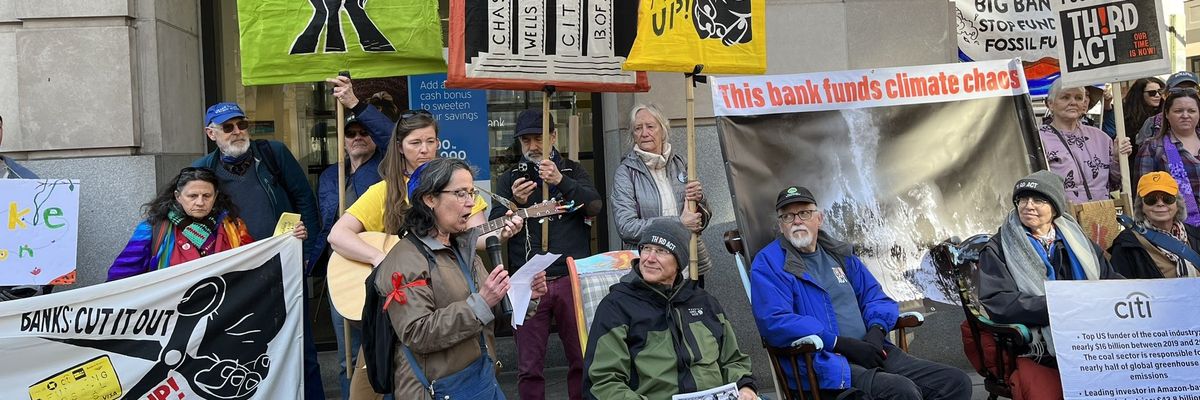
Thousands of seniors outraged at big banks for continuing to underwrite the expansion of coal, oil, and gas projects took to the streets in cities across the United States on Tuesday to demand that financial institutions "stop funding climate chaos."
Held 24 hours after United Nations Secretary-General António Guterres—citing the latest report from the Intergovernmental Panel on Climate Change—called for an end to fossil fuel financing, the "Stop Dirty Banks" national day of action was organized by Third Act, an alliance of activists over the age of 60 co-founded by veteran campaigner Bill McKibben, and more than 50 other progressive advocacy groups.
The first elderly-led mass climate demonstration in U.S. history, which featured more than 100 rallies around the country, aimed to pressure financial institutions to stop bankrolling the planet-heating pollution that scientists have linked to worsening extreme weather.
Despite pledging to put themselves and their clients on a path to "net-zero" greenhouse gas emissions, the world's 60 largest private banks dumped $4.6 trillion into coal, oil, and gas projects from 2016 to 2021. Just four U.S. financial giants—JPMorgan Chase, Citi, Wells Fargo, and Bank of America—are responsible for a quarter of all fossil fuel financing identified since the Paris agreement entered into force.
"We must break the big banks' addiction to Big Oil."
"Today is a major drive to take the cash out of carbon," McKibben said Tuesday in a statement. "We want JPMorgan Chase, Citi, Wells Fargo, and Bank of America to hear the voices of the older generation which has the money and structural power to face down their empty, weasel words on climate. We will not go to our graves quietly knowing that the financial institutions in our own communities continue to fund the climate crisis."
"We're going to hit the streets and banks today in a wave of gray power," McKibben continued. "We will be colorful and noisy but our message is serious: We want the banks to move out of fossil fuels. The lives and livelihoods of our children and grandchildren depend on a drastic change and banks are the key to this."
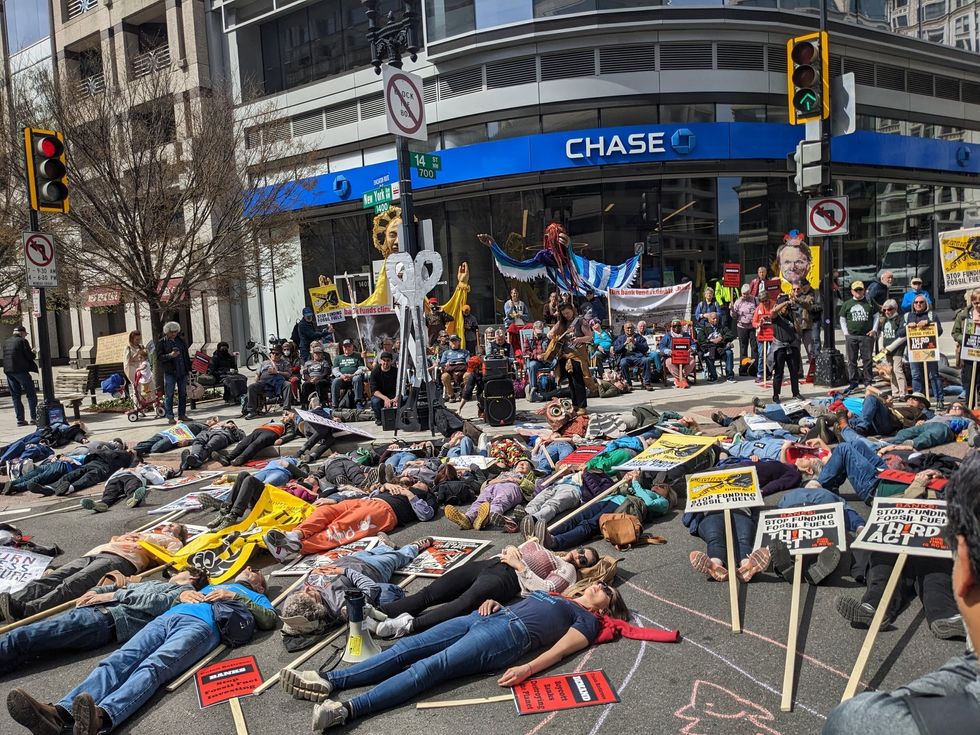
In Washington, D.C., participants continued a 24-hour "rocking chair rebellion" that began Monday.
On Tuesday, people in D.C. also staged a die-in to draw attention to the lethal consequences of fossil fuel lending.
Sierra Club executive director Ben Jealous warned that "the big banks feel beholden to an industry literally driving us toward human extinction."
"What we're asking these banks to do," said Jealous, "is to have the moral clarity to say to their clients, 'You cannot keep expanding into the Arctic, you cannot keep expanding into the Gulf, you cannot keep drilling in Africa and throughout the globe. Because what you're doing is putting our communities, our future, and the climate at risk.'"
Closing out the rally in the nation's capital, Jealous declared, "We must break the big banks' addiction to Big Oil."
In New York City, protesters of all ages shut down traffic.
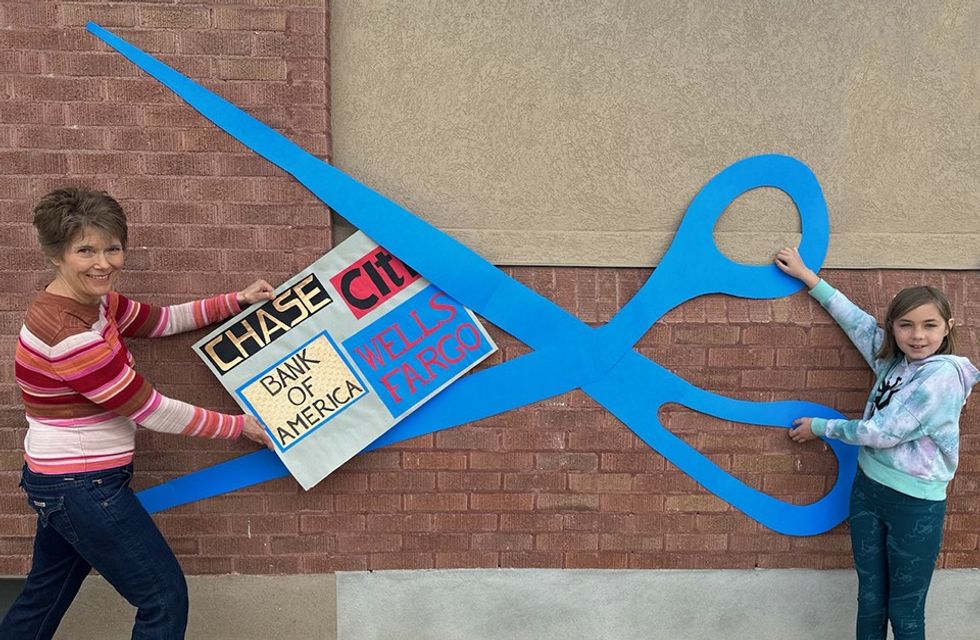
They also used giant mock scissors to "cut up" a cardboard credit card.
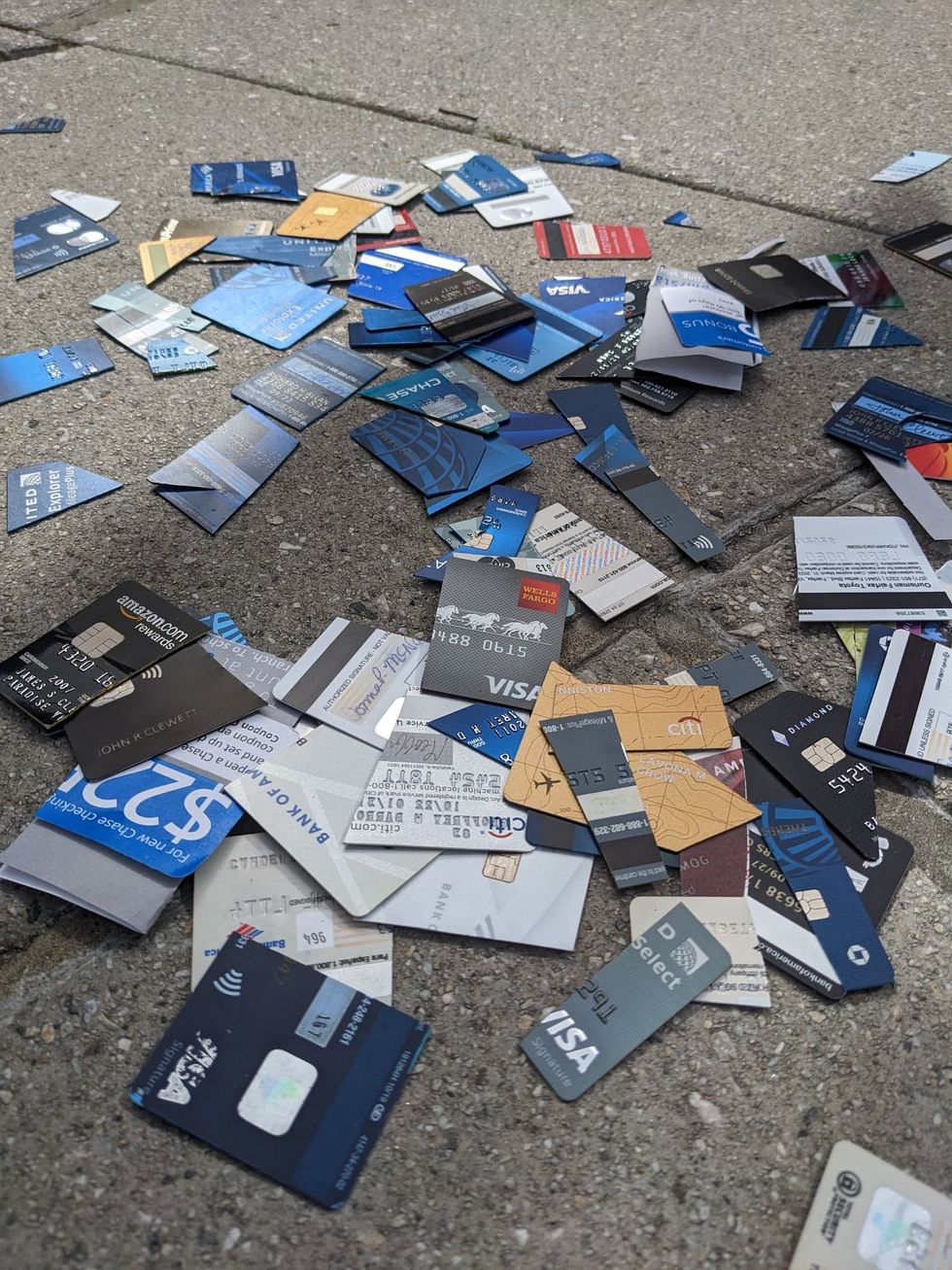
In addition to symbolically destroying a fake credit card, many people cut up real cards taken from their wallets.
"Third Act has gathered 17,000 pledges from bank customers to close their accounts and cut up their credit cards if the banks continue to fund fossil fuels," the group said. "These pledges were sent in recent weeks to the bank CEOs and in-person at bank branches from Burlington to Cleveland, from Oakland to New York."
"By continuing to finance fossil fuel expansion, Wall Street banks undermine our ability to meet our climate goals, and contradict their own climate pledges," said Ben Cushing, director of the Sierra Club's Fossil-Free Finance campaign. "These demonstrations are only the beginning of what each of us can do to hold big banks accountable for their role in the climate crisis."
"This spring, we'll also be engaging with the banks' biggest shareholders in the lead-up to their annual meetings to support key climate votes," Cushing added. "It's a critical moment to push the banks to stop the flow of money to new fossil fuel expansion, to stop greenwashing their emissions targets, and to end the burden of dirty energy on frontline communities."
Thousands of seniors outraged at big banks for continuing to underwrite the expansion of coal, oil, and gas projects took to the streets in cities across the United States on Tuesday to demand that financial institutions "stop funding climate chaos."
Held 24 hours after United Nations Secretary-General António Guterres—citing the latest report from the Intergovernmental Panel on Climate Change—called for an end to fossil fuel financing, the "Stop Dirty Banks" national day of action was organized by Third Act, an alliance of activists over the age of 60 co-founded by veteran campaigner Bill McKibben, and more than 50 other progressive advocacy groups.
The first elderly-led mass climate demonstration in U.S. history, which featured more than 100 rallies around the country, aimed to pressure financial institutions to stop bankrolling the planet-heating pollution that scientists have linked to worsening extreme weather.
Despite pledging to put themselves and their clients on a path to "net-zero" greenhouse gas emissions, the world's 60 largest private banks dumped $4.6 trillion into coal, oil, and gas projects from 2016 to 2021. Just four U.S. financial giants—JPMorgan Chase, Citi, Wells Fargo, and Bank of America—are responsible for a quarter of all fossil fuel financing identified since the Paris agreement entered into force.
"We must break the big banks' addiction to Big Oil."
"Today is a major drive to take the cash out of carbon," McKibben said Tuesday in a statement. "We want JPMorgan Chase, Citi, Wells Fargo, and Bank of America to hear the voices of the older generation which has the money and structural power to face down their empty, weasel words on climate. We will not go to our graves quietly knowing that the financial institutions in our own communities continue to fund the climate crisis."
"We're going to hit the streets and banks today in a wave of gray power," McKibben continued. "We will be colorful and noisy but our message is serious: We want the banks to move out of fossil fuels. The lives and livelihoods of our children and grandchildren depend on a drastic change and banks are the key to this."
In Washington, D.C., participants continued a 24-hour "rocking chair rebellion" that began Monday.
On Tuesday, people in D.C. also staged a die-in to draw attention to the lethal consequences of fossil fuel lending.
Sierra Club executive director Ben Jealous warned that "the big banks feel beholden to an industry literally driving us toward human extinction."
"What we're asking these banks to do," said Jealous, "is to have the moral clarity to say to their clients, 'You cannot keep expanding into the Arctic, you cannot keep expanding into the Gulf, you cannot keep drilling in Africa and throughout the globe. Because what you're doing is putting our communities, our future, and the climate at risk.'"
Closing out the rally in the nation's capital, Jealous declared, "We must break the big banks' addiction to Big Oil."
In New York City, protesters of all ages shut down traffic.
They also used giant mock scissors to "cut up" a cardboard credit card.
In addition to symbolically destroying a fake credit card, many people cut up real cards taken from their wallets.
"Third Act has gathered 17,000 pledges from bank customers to close their accounts and cut up their credit cards if the banks continue to fund fossil fuels," the group said. "These pledges were sent in recent weeks to the bank CEOs and in-person at bank branches from Burlington to Cleveland, from Oakland to New York."
"By continuing to finance fossil fuel expansion, Wall Street banks undermine our ability to meet our climate goals, and contradict their own climate pledges," said Ben Cushing, director of the Sierra Club's Fossil-Free Finance campaign. "These demonstrations are only the beginning of what each of us can do to hold big banks accountable for their role in the climate crisis."
"This spring, we'll also be engaging with the banks' biggest shareholders in the lead-up to their annual meetings to support key climate votes," Cushing added. "It's a critical moment to push the banks to stop the flow of money to new fossil fuel expansion, to stop greenwashing their emissions targets, and to end the burden of dirty energy on frontline communities."
Thousands of seniors outraged at big banks for continuing to underwrite the expansion of coal, oil, and gas projects took to the streets in cities across the United States on Tuesday to demand that financial institutions "stop funding climate chaos."
Held 24 hours after United Nations Secretary-General António Guterres—citing the latest report from the Intergovernmental Panel on Climate Change—called for an end to fossil fuel financing, the "Stop Dirty Banks" national day of action was organized by Third Act, an alliance of activists over the age of 60 co-founded by veteran campaigner Bill McKibben, and more than 50 other progressive advocacy groups.
The first elderly-led mass climate demonstration in U.S. history, which featured more than 100 rallies around the country, aimed to pressure financial institutions to stop bankrolling the planet-heating pollution that scientists have linked to worsening extreme weather.
Despite pledging to put themselves and their clients on a path to "net-zero" greenhouse gas emissions, the world's 60 largest private banks dumped $4.6 trillion into coal, oil, and gas projects from 2016 to 2021. Just four U.S. financial giants—JPMorgan Chase, Citi, Wells Fargo, and Bank of America—are responsible for a quarter of all fossil fuel financing identified since the Paris agreement entered into force.
"We must break the big banks' addiction to Big Oil."
"Today is a major drive to take the cash out of carbon," McKibben said Tuesday in a statement. "We want JPMorgan Chase, Citi, Wells Fargo, and Bank of America to hear the voices of the older generation which has the money and structural power to face down their empty, weasel words on climate. We will not go to our graves quietly knowing that the financial institutions in our own communities continue to fund the climate crisis."
"We're going to hit the streets and banks today in a wave of gray power," McKibben continued. "We will be colorful and noisy but our message is serious: We want the banks to move out of fossil fuels. The lives and livelihoods of our children and grandchildren depend on a drastic change and banks are the key to this."
In Washington, D.C., participants continued a 24-hour "rocking chair rebellion" that began Monday.
On Tuesday, people in D.C. also staged a die-in to draw attention to the lethal consequences of fossil fuel lending.
Sierra Club executive director Ben Jealous warned that "the big banks feel beholden to an industry literally driving us toward human extinction."
"What we're asking these banks to do," said Jealous, "is to have the moral clarity to say to their clients, 'You cannot keep expanding into the Arctic, you cannot keep expanding into the Gulf, you cannot keep drilling in Africa and throughout the globe. Because what you're doing is putting our communities, our future, and the climate at risk.'"
Closing out the rally in the nation's capital, Jealous declared, "We must break the big banks' addiction to Big Oil."
In New York City, protesters of all ages shut down traffic.
They also used giant mock scissors to "cut up" a cardboard credit card.
In addition to symbolically destroying a fake credit card, many people cut up real cards taken from their wallets.
"Third Act has gathered 17,000 pledges from bank customers to close their accounts and cut up their credit cards if the banks continue to fund fossil fuels," the group said. "These pledges were sent in recent weeks to the bank CEOs and in-person at bank branches from Burlington to Cleveland, from Oakland to New York."
"By continuing to finance fossil fuel expansion, Wall Street banks undermine our ability to meet our climate goals, and contradict their own climate pledges," said Ben Cushing, director of the Sierra Club's Fossil-Free Finance campaign. "These demonstrations are only the beginning of what each of us can do to hold big banks accountable for their role in the climate crisis."
"This spring, we'll also be engaging with the banks' biggest shareholders in the lead-up to their annual meetings to support key climate votes," Cushing added. "It's a critical moment to push the banks to stop the flow of money to new fossil fuel expansion, to stop greenwashing their emissions targets, and to end the burden of dirty energy on frontline communities."