SUBSCRIBE TO OUR FREE NEWSLETTER
Daily news & progressive opinion—funded by the people, not the corporations—delivered straight to your inbox.
5
#000000
#FFFFFF
To donate by check, phone, or other method, see our More Ways to Give page.
Daily news & progressive opinion—funded by the people, not the corporations—delivered straight to your inbox.

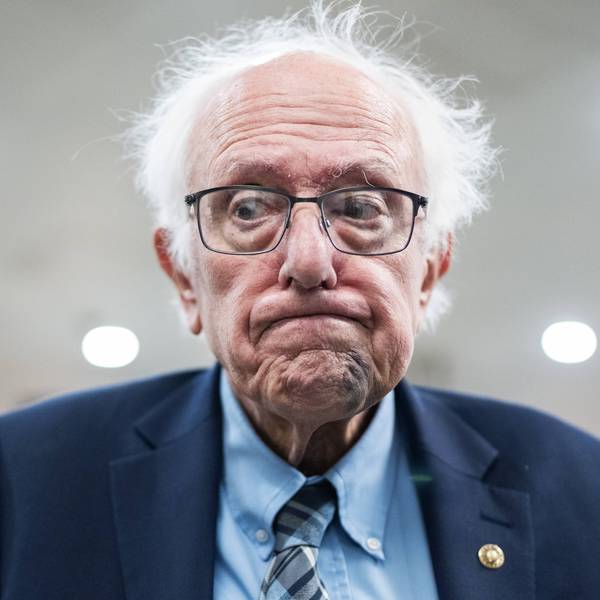
Sen. Rick Scott (R-Fla.) talks with reporters after the Senate luncheons in the U.S. Capitol on Tuesday, December 2, 2025.
Sen. Rick Scott is warning fellow Republicans of a "slow creep" toward single-payer healthcare if they don't craft an alternative to the Affordable Care Act.
US Sen. Rick Scott, former CEO of the company that was at the center of the biggest Medicare fraud scheme in American history, has emerged as the most vocal Republican proponent of healthcare reform, warning his fellow GOP lawmakers that continued refusal to engage with the issue risks a "slow creep" toward single-payer healthcare.
On Thursday, according to Axios, Scott (R-Fla.) is "convening a group of House and Senate conservatives on Capitol Hill to pore over fresh polling to develop GOP alternatives to the Affordable Care Act."
Late last month, Scott unveiled his own proposal titled the More Affordable Care Act, which would keep ACA exchanges intact while creating "Trump Health Freedom Accounts" that enrollees could use to pay for out-of-pocket costs. Scott's plan, as the health policy group KFF explained, would allow enhanced ACA tax credits to expire and let states replace subsidies in the original ACA with contributions to the newly created health savings accounts.
"Unlike ACA premium tax credits, which can only be used for ACA Marketplace plans, the accounts in the Scott proposal could be used for any type of health insurance plan, including short-term plans that can exclude people based on preexisting conditions," KFF noted. "States could also waive certain provisions of the ACA, including the requirement to cover certain benefits."
"While ACA plans would still be required to cover people with preexisting conditions under the Scott proposal," the group added, "it is likely that the ACA marketplace would collapse in states that seek a waiver under his approach."
Last month, amid the longest government shutdown in US history, Scott leapt at the opportunity to champion possible Republican alternatives to the healthcare status quo, despite his ignominious record.
In 2003, the US Justice Department announced that the hospital chain HCA Inc.—formerly known as Columbia/HCA—had agreed to pay hundreds of millions of dollars in penalties and damages to settle what the DOJ characterized as the "largest healthcare fraud case in US history."
Scott resigned as CEO of Columbia/HCA in 1997, days after federal agents raided company facilities as part of the sweeping fraud probe. The federal government and company whistleblowers said the hospital giant "systematically defrauded" Medicare, Medicaid, and other healthcare programs through unlawful billing and other ploys.
"In 2000, Scott invoked the Fifth Amendment 75 times in a deposition as part of a civil case involving his time leading the company," Florida Phoenix reported last year. A former HCA accountant accused Scott, who was never directly charged in the case, of leading "a criminal enterprise."
Scott later served two terms as governor of Florida and is now one of the wealthiest members of Congress, and he maintains he was the victim of a politically motivated DOJ investigation.
"The Clinton Justice Department went after me," Scott complained during his 2024 Senate reelection campaign.
It's unclear whether Scott's healthcare ideas will gain sufficient traction with President Donald Trump and Republican lawmakers, who have seemed content to bash the existing system without proposing anything concrete or viable to replace it. Trump was supposed to unveil his own healthcare proposal last month, but the White House pulled the plug amid GOP pushback.
Some members of the Democratic caucus, meanwhile, are making the case for the very system Scott is warning his colleagues about.
"Let’s finally create a system that puts your health over corporate profits," Sen. Chris Van Hollen (D-Md.) said earlier this week. "We need Medicare for All."
Dear Common Dreams reader, It’s been nearly 30 years since I co-founded Common Dreams with my late wife, Lina Newhouser. We had the radical notion that journalism should serve the public good, not corporate profits. It was clear to us from the outset what it would take to build such a project. No paid advertisements. No corporate sponsors. No millionaire publisher telling us what to think or do. Many people said we wouldn't last a year, but we proved those doubters wrong. Together with a tremendous team of journalists and dedicated staff, we built an independent media outlet free from the constraints of profits and corporate control. Our mission has always been simple: To inform. To inspire. To ignite change for the common good. Building Common Dreams was not easy. Our survival was never guaranteed. When you take on the most powerful forces—Wall Street greed, fossil fuel industry destruction, Big Tech lobbyists, and uber-rich oligarchs who have spent billions upon billions rigging the economy and democracy in their favor—the only bulwark you have is supporters who believe in your work. But here’s the urgent message from me today. It's never been this bad out there. And it's never been this hard to keep us going. At the very moment Common Dreams is most needed, the threats we face are intensifying. We need your support now more than ever. We don't accept corporate advertising and never will. We don't have a paywall because we don't think people should be blocked from critical news based on their ability to pay. Everything we do is funded by the donations of readers like you. When everyone does the little they can afford, we are strong. But if that support retreats or dries up, so do we. Will you donate now to make sure Common Dreams not only survives but thrives? —Craig Brown, Co-founder |
US Sen. Rick Scott, former CEO of the company that was at the center of the biggest Medicare fraud scheme in American history, has emerged as the most vocal Republican proponent of healthcare reform, warning his fellow GOP lawmakers that continued refusal to engage with the issue risks a "slow creep" toward single-payer healthcare.
On Thursday, according to Axios, Scott (R-Fla.) is "convening a group of House and Senate conservatives on Capitol Hill to pore over fresh polling to develop GOP alternatives to the Affordable Care Act."
Late last month, Scott unveiled his own proposal titled the More Affordable Care Act, which would keep ACA exchanges intact while creating "Trump Health Freedom Accounts" that enrollees could use to pay for out-of-pocket costs. Scott's plan, as the health policy group KFF explained, would allow enhanced ACA tax credits to expire and let states replace subsidies in the original ACA with contributions to the newly created health savings accounts.
"Unlike ACA premium tax credits, which can only be used for ACA Marketplace plans, the accounts in the Scott proposal could be used for any type of health insurance plan, including short-term plans that can exclude people based on preexisting conditions," KFF noted. "States could also waive certain provisions of the ACA, including the requirement to cover certain benefits."
"While ACA plans would still be required to cover people with preexisting conditions under the Scott proposal," the group added, "it is likely that the ACA marketplace would collapse in states that seek a waiver under his approach."
Last month, amid the longest government shutdown in US history, Scott leapt at the opportunity to champion possible Republican alternatives to the healthcare status quo, despite his ignominious record.
In 2003, the US Justice Department announced that the hospital chain HCA Inc.—formerly known as Columbia/HCA—had agreed to pay hundreds of millions of dollars in penalties and damages to settle what the DOJ characterized as the "largest healthcare fraud case in US history."
Scott resigned as CEO of Columbia/HCA in 1997, days after federal agents raided company facilities as part of the sweeping fraud probe. The federal government and company whistleblowers said the hospital giant "systematically defrauded" Medicare, Medicaid, and other healthcare programs through unlawful billing and other ploys.
"In 2000, Scott invoked the Fifth Amendment 75 times in a deposition as part of a civil case involving his time leading the company," Florida Phoenix reported last year. A former HCA accountant accused Scott, who was never directly charged in the case, of leading "a criminal enterprise."
Scott later served two terms as governor of Florida and is now one of the wealthiest members of Congress, and he maintains he was the victim of a politically motivated DOJ investigation.
"The Clinton Justice Department went after me," Scott complained during his 2024 Senate reelection campaign.
It's unclear whether Scott's healthcare ideas will gain sufficient traction with President Donald Trump and Republican lawmakers, who have seemed content to bash the existing system without proposing anything concrete or viable to replace it. Trump was supposed to unveil his own healthcare proposal last month, but the White House pulled the plug amid GOP pushback.
Some members of the Democratic caucus, meanwhile, are making the case for the very system Scott is warning his colleagues about.
"Let’s finally create a system that puts your health over corporate profits," Sen. Chris Van Hollen (D-Md.) said earlier this week. "We need Medicare for All."
US Sen. Rick Scott, former CEO of the company that was at the center of the biggest Medicare fraud scheme in American history, has emerged as the most vocal Republican proponent of healthcare reform, warning his fellow GOP lawmakers that continued refusal to engage with the issue risks a "slow creep" toward single-payer healthcare.
On Thursday, according to Axios, Scott (R-Fla.) is "convening a group of House and Senate conservatives on Capitol Hill to pore over fresh polling to develop GOP alternatives to the Affordable Care Act."
Late last month, Scott unveiled his own proposal titled the More Affordable Care Act, which would keep ACA exchanges intact while creating "Trump Health Freedom Accounts" that enrollees could use to pay for out-of-pocket costs. Scott's plan, as the health policy group KFF explained, would allow enhanced ACA tax credits to expire and let states replace subsidies in the original ACA with contributions to the newly created health savings accounts.
"Unlike ACA premium tax credits, which can only be used for ACA Marketplace plans, the accounts in the Scott proposal could be used for any type of health insurance plan, including short-term plans that can exclude people based on preexisting conditions," KFF noted. "States could also waive certain provisions of the ACA, including the requirement to cover certain benefits."
"While ACA plans would still be required to cover people with preexisting conditions under the Scott proposal," the group added, "it is likely that the ACA marketplace would collapse in states that seek a waiver under his approach."
Last month, amid the longest government shutdown in US history, Scott leapt at the opportunity to champion possible Republican alternatives to the healthcare status quo, despite his ignominious record.
In 2003, the US Justice Department announced that the hospital chain HCA Inc.—formerly known as Columbia/HCA—had agreed to pay hundreds of millions of dollars in penalties and damages to settle what the DOJ characterized as the "largest healthcare fraud case in US history."
Scott resigned as CEO of Columbia/HCA in 1997, days after federal agents raided company facilities as part of the sweeping fraud probe. The federal government and company whistleblowers said the hospital giant "systematically defrauded" Medicare, Medicaid, and other healthcare programs through unlawful billing and other ploys.
"In 2000, Scott invoked the Fifth Amendment 75 times in a deposition as part of a civil case involving his time leading the company," Florida Phoenix reported last year. A former HCA accountant accused Scott, who was never directly charged in the case, of leading "a criminal enterprise."
Scott later served two terms as governor of Florida and is now one of the wealthiest members of Congress, and he maintains he was the victim of a politically motivated DOJ investigation.
"The Clinton Justice Department went after me," Scott complained during his 2024 Senate reelection campaign.
It's unclear whether Scott's healthcare ideas will gain sufficient traction with President Donald Trump and Republican lawmakers, who have seemed content to bash the existing system without proposing anything concrete or viable to replace it. Trump was supposed to unveil his own healthcare proposal last month, but the White House pulled the plug amid GOP pushback.
Some members of the Democratic caucus, meanwhile, are making the case for the very system Scott is warning his colleagues about.
"Let’s finally create a system that puts your health over corporate profits," Sen. Chris Van Hollen (D-Md.) said earlier this week. "We need Medicare for All."