SUBSCRIBE TO OUR FREE NEWSLETTER
Daily news & progressive opinion—funded by the people, not the corporations—delivered straight to your inbox.
5
#000000
#FFFFFF
To donate by check, phone, or other method, see our More Ways to Give page.
Daily news & progressive opinion—funded by the people, not the corporations—delivered straight to your inbox.
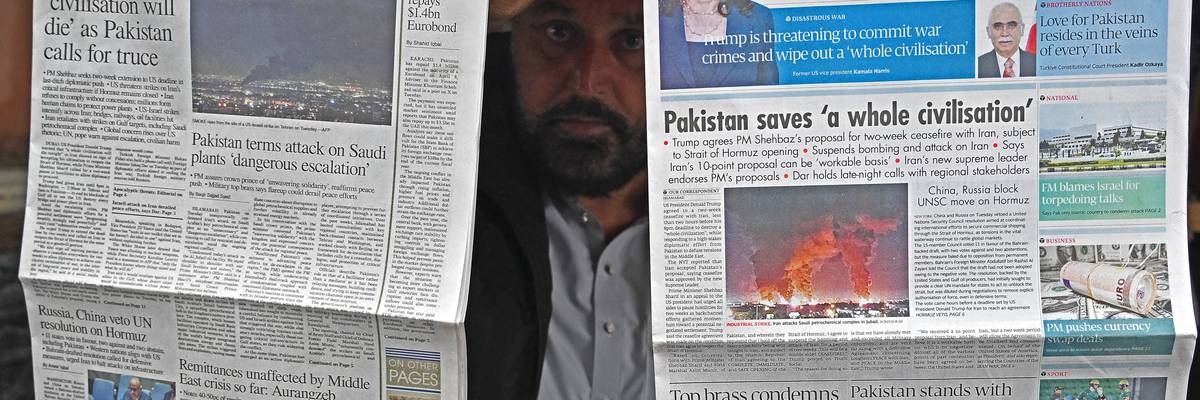
A vendor displays morning newspapers at his roadside stall in Islamabad on April 8, 2026.
A foreign policy expert told Common Dreams that Israel’s unprecedented attack on Lebanon, backed by the US, “appeared to be a direct attempt to blow up the ceasefire, and it worked.”
A Pakistani official said Wednesday that despite Israel’s unprecedented attack on Lebanon, it is still part of the ceasefire agreement that Pakistan's prime minister helped to mediate the previous day, even as Israel and the US insist otherwise.
Pakistani Prime Minister Shehbaz Sharif, who played a key role in brokering the deal announced on Tuesday, said that "Iran and the United States of America, along with their allies, have agreed to an immediate ceasefire everywhere, including Lebanon and elsewhere, EFFECTIVE IMMEDIATELY.”
But within hours of the agreement, Israel launched what it said was its largest military operation against Lebanon yet, which killed at least 254 people and wounded 1,165 others, according to the Lebanese Health Ministry. The Israel Defense Forces acknowledged that the assault included attacks on many civilian areas.
Contrary to the mediators, Israeli Prime Minister Benjamin Netanyahu declared that the ceasefire "does not include Lebanon.” White House Press Secretary Karoline Leavitt followed suit, confirming that the US's position was also that “Lebanon is not part of the ceasefire,” adding that “that has been relayed to all parties involved."
But Pakistan's ambassador to the US, Rizwan Saeed Sheikh, said on Wednesday afternoon that this was not the agreement the parties reached on Tuesday.
He told CNN anchor Becky Anderson that the deal announced by his prime minister, which included Lebanon, "could not have been more authentic" to what the two parties agreed to, and that it was still the prime minister's understanding that Lebanon was included.
He added that this was another instance in which a ceasefire "could be disrupted" by Israel's actions. He also noted that "there have been instances in the past where ceasefires have been disrupted," a possible reference to Israel's routine violations of its previous ceasefire with Lebanon and the current one with Gaza, and its repeated assassinations of Iranian negotiators as they've sat down for talks with the US.
The US-Iran ceasefire is less than 24 hours old, but Israel's attack on Wednesday has already thrown it into peril. Iran responded to the attacks on Wednesday by once again closing the Strait of Hormuz after briefly reopening the critical waterway in accordance with the deal. Iran is also reportedly considering withdrawing from the ceasefire altogether and resuming strikes against Israel.
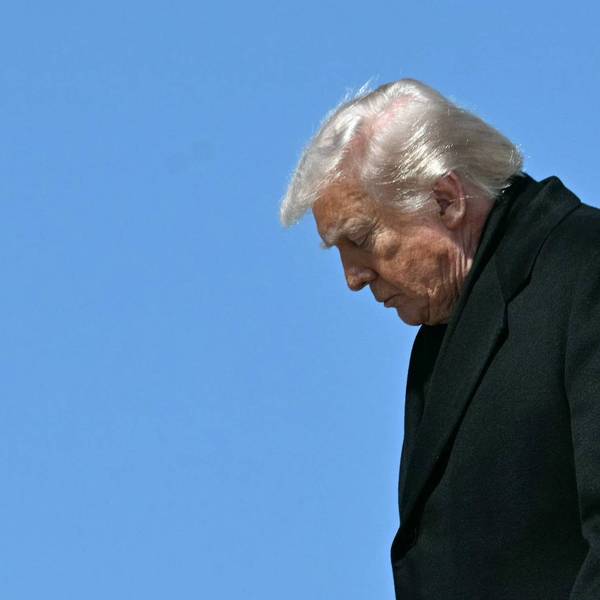
President Donald Trump has appeared eager to declare victory and move on from the war, which has further tanked his already plummeting support at home and sparked a global economic crisis.
But Janet Abou-Elias, a researcher with the Democratizing Foreign Policy program at the Quincy Institute for Responsible Statecraft, told Common Dreams that Israel's goals are very different.
She explained that Israel was largely sidelined from the talks that culminated in Tuesday's ceasefire and that within Israel's internal politics, the agreement is being portrayed as "catastrophic."
She noted that Yair Lapid, the leader of the opposition to Netanyahu's government, has portrayed it as “the worst political failure in our history,” and accused the prime minister of failing to achieve his goals.
"What we’ve seen since looks like Israel acting to undermine a diplomatic process over which it had lost influence," Abou-Elias said.
She said that Israel's attack on Lebanon on Wednesday, which it has referred to as Operation Eternal Darkness, "appeared to be a direct attempt to blow up the ceasefire, and it worked."
According to the Human Rights Activists News Agency, a US-based human rights monitor for Iran, at least 1,701 civilians have been killed in US-Israeli attacks against Iran since the war was launched on February 28.
After Wednesday's bombardment, Lebanon's Health Ministry reported that the death toll in the country was now up to at least 1,739 since the war began on March 2.
"At this point, any durable end to this conflict, even a temporary one, requires Washington to rein in Israel," Abou-Elias said. "Trump has the leverage to do it. What’s unclear is whether he has the political will to use it."
Dear Common Dreams reader, It’s been nearly 30 years since I co-founded Common Dreams with my late wife, Lina Newhouser. We had the radical notion that journalism should serve the public good, not corporate profits. It was clear to us from the outset what it would take to build such a project. No paid advertisements. No corporate sponsors. No millionaire publisher telling us what to think or do. Many people said we wouldn't last a year, but we proved those doubters wrong. Together with a tremendous team of journalists and dedicated staff, we built an independent media outlet free from the constraints of profits and corporate control. Our mission has always been simple: To inform. To inspire. To ignite change for the common good. Building Common Dreams was not easy. Our survival was never guaranteed. When you take on the most powerful forces—Wall Street greed, fossil fuel industry destruction, Big Tech lobbyists, and uber-rich oligarchs who have spent billions upon billions rigging the economy and democracy in their favor—the only bulwark you have is supporters who believe in your work. But here’s the urgent message from me today. It's never been this bad out there. And it's never been this hard to keep us going. At the very moment Common Dreams is most needed, the threats we face are intensifying. We need your support now more than ever. We don't accept corporate advertising and never will. We don't have a paywall because we don't think people should be blocked from critical news based on their ability to pay. Everything we do is funded by the donations of readers like you. When everyone does the little they can afford, we are strong. But if that support retreats or dries up, so do we. Will you donate now to make sure Common Dreams not only survives but thrives? —Craig Brown, Co-founder |
A Pakistani official said Wednesday that despite Israel’s unprecedented attack on Lebanon, it is still part of the ceasefire agreement that Pakistan's prime minister helped to mediate the previous day, even as Israel and the US insist otherwise.
Pakistani Prime Minister Shehbaz Sharif, who played a key role in brokering the deal announced on Tuesday, said that "Iran and the United States of America, along with their allies, have agreed to an immediate ceasefire everywhere, including Lebanon and elsewhere, EFFECTIVE IMMEDIATELY.”
But within hours of the agreement, Israel launched what it said was its largest military operation against Lebanon yet, which killed at least 254 people and wounded 1,165 others, according to the Lebanese Health Ministry. The Israel Defense Forces acknowledged that the assault included attacks on many civilian areas.
Contrary to the mediators, Israeli Prime Minister Benjamin Netanyahu declared that the ceasefire "does not include Lebanon.” White House Press Secretary Karoline Leavitt followed suit, confirming that the US's position was also that “Lebanon is not part of the ceasefire,” adding that “that has been relayed to all parties involved."
But Pakistan's ambassador to the US, Rizwan Saeed Sheikh, said on Wednesday afternoon that this was not the agreement the parties reached on Tuesday.
He told CNN anchor Becky Anderson that the deal announced by his prime minister, which included Lebanon, "could not have been more authentic" to what the two parties agreed to, and that it was still the prime minister's understanding that Lebanon was included.
He added that this was another instance in which a ceasefire "could be disrupted" by Israel's actions. He also noted that "there have been instances in the past where ceasefires have been disrupted," a possible reference to Israel's routine violations of its previous ceasefire with Lebanon and the current one with Gaza, and its repeated assassinations of Iranian negotiators as they've sat down for talks with the US.
The US-Iran ceasefire is less than 24 hours old, but Israel's attack on Wednesday has already thrown it into peril. Iran responded to the attacks on Wednesday by once again closing the Strait of Hormuz after briefly reopening the critical waterway in accordance with the deal. Iran is also reportedly considering withdrawing from the ceasefire altogether and resuming strikes against Israel.
President Donald Trump has appeared eager to declare victory and move on from the war, which has further tanked his already plummeting support at home and sparked a global economic crisis.
But Janet Abou-Elias, a researcher with the Democratizing Foreign Policy program at the Quincy Institute for Responsible Statecraft, told Common Dreams that Israel's goals are very different.
She explained that Israel was largely sidelined from the talks that culminated in Tuesday's ceasefire and that within Israel's internal politics, the agreement is being portrayed as "catastrophic."
She noted that Yair Lapid, the leader of the opposition to Netanyahu's government, has portrayed it as “the worst political failure in our history,” and accused the prime minister of failing to achieve his goals.
"What we’ve seen since looks like Israel acting to undermine a diplomatic process over which it had lost influence," Abou-Elias said.
She said that Israel's attack on Lebanon on Wednesday, which it has referred to as Operation Eternal Darkness, "appeared to be a direct attempt to blow up the ceasefire, and it worked."
According to the Human Rights Activists News Agency, a US-based human rights monitor for Iran, at least 1,701 civilians have been killed in US-Israeli attacks against Iran since the war was launched on February 28.
After Wednesday's bombardment, Lebanon's Health Ministry reported that the death toll in the country was now up to at least 1,739 since the war began on March 2.
"At this point, any durable end to this conflict, even a temporary one, requires Washington to rein in Israel," Abou-Elias said. "Trump has the leverage to do it. What’s unclear is whether he has the political will to use it."
A Pakistani official said Wednesday that despite Israel’s unprecedented attack on Lebanon, it is still part of the ceasefire agreement that Pakistan's prime minister helped to mediate the previous day, even as Israel and the US insist otherwise.
Pakistani Prime Minister Shehbaz Sharif, who played a key role in brokering the deal announced on Tuesday, said that "Iran and the United States of America, along with their allies, have agreed to an immediate ceasefire everywhere, including Lebanon and elsewhere, EFFECTIVE IMMEDIATELY.”
But within hours of the agreement, Israel launched what it said was its largest military operation against Lebanon yet, which killed at least 254 people and wounded 1,165 others, according to the Lebanese Health Ministry. The Israel Defense Forces acknowledged that the assault included attacks on many civilian areas.
Contrary to the mediators, Israeli Prime Minister Benjamin Netanyahu declared that the ceasefire "does not include Lebanon.” White House Press Secretary Karoline Leavitt followed suit, confirming that the US's position was also that “Lebanon is not part of the ceasefire,” adding that “that has been relayed to all parties involved."
But Pakistan's ambassador to the US, Rizwan Saeed Sheikh, said on Wednesday afternoon that this was not the agreement the parties reached on Tuesday.
He told CNN anchor Becky Anderson that the deal announced by his prime minister, which included Lebanon, "could not have been more authentic" to what the two parties agreed to, and that it was still the prime minister's understanding that Lebanon was included.
He added that this was another instance in which a ceasefire "could be disrupted" by Israel's actions. He also noted that "there have been instances in the past where ceasefires have been disrupted," a possible reference to Israel's routine violations of its previous ceasefire with Lebanon and the current one with Gaza, and its repeated assassinations of Iranian negotiators as they've sat down for talks with the US.
The US-Iran ceasefire is less than 24 hours old, but Israel's attack on Wednesday has already thrown it into peril. Iran responded to the attacks on Wednesday by once again closing the Strait of Hormuz after briefly reopening the critical waterway in accordance with the deal. Iran is also reportedly considering withdrawing from the ceasefire altogether and resuming strikes against Israel.
President Donald Trump has appeared eager to declare victory and move on from the war, which has further tanked his already plummeting support at home and sparked a global economic crisis.
But Janet Abou-Elias, a researcher with the Democratizing Foreign Policy program at the Quincy Institute for Responsible Statecraft, told Common Dreams that Israel's goals are very different.
She explained that Israel was largely sidelined from the talks that culminated in Tuesday's ceasefire and that within Israel's internal politics, the agreement is being portrayed as "catastrophic."
She noted that Yair Lapid, the leader of the opposition to Netanyahu's government, has portrayed it as “the worst political failure in our history,” and accused the prime minister of failing to achieve his goals.
"What we’ve seen since looks like Israel acting to undermine a diplomatic process over which it had lost influence," Abou-Elias said.
She said that Israel's attack on Lebanon on Wednesday, which it has referred to as Operation Eternal Darkness, "appeared to be a direct attempt to blow up the ceasefire, and it worked."
According to the Human Rights Activists News Agency, a US-based human rights monitor for Iran, at least 1,701 civilians have been killed in US-Israeli attacks against Iran since the war was launched on February 28.
After Wednesday's bombardment, Lebanon's Health Ministry reported that the death toll in the country was now up to at least 1,739 since the war began on March 2.
"At this point, any durable end to this conflict, even a temporary one, requires Washington to rein in Israel," Abou-Elias said. "Trump has the leverage to do it. What’s unclear is whether he has the political will to use it."