

SUBSCRIBE TO OUR FREE NEWSLETTER
Daily news & progressive opinion—funded by the people, not the corporations—delivered straight to your inbox.
5
#000000
#FFFFFF
To donate by check, phone, or other method, see our More Ways to Give page.
Daily news & progressive opinion—funded by the people, not the corporations—delivered straight to your inbox.
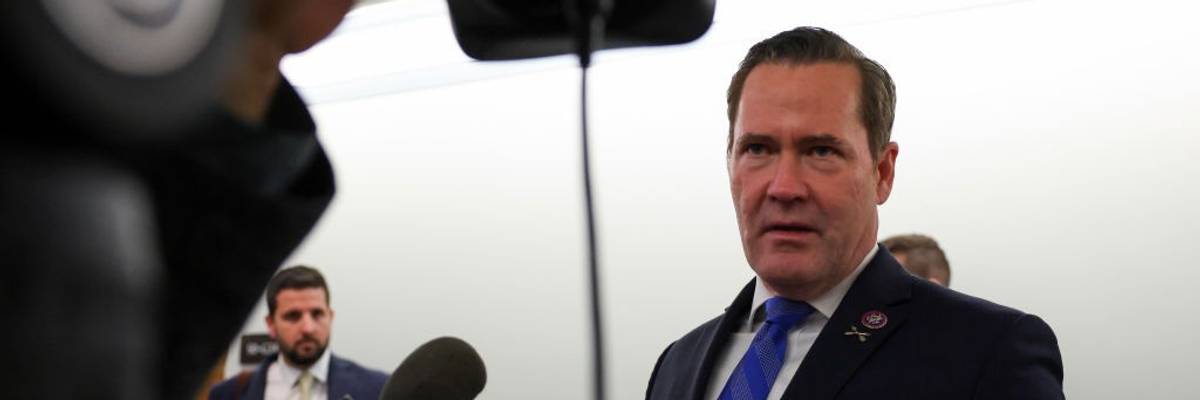
Rep. Mike Waltz (R-Fla.), President-elect Donald Trump's national security adviser pick, walks to a Senate hearing on January 14, 2025 in Washington, D.C.
Journalist Jeremy Scahill noted that Mike Waltz's comments echo "a plan Netanyahu has hinted at: Israel views this deal as only one phase to get the Israeli and U.S. hostages out."
U.S. President-elect Donald Trump's pick to serve as national security adviser said late Wednesday that the incoming administration will support future Israeli attacks on Gaza even as Trump hailed the tenuous new cease-fire and hostage-release agreement as a signal "to the entire world that my administration would seek peace."
In an appearance on Fox News late Wednesday after the agreement was announced, Rep. Mike Waltz (R-Fla.) said that "we've made it very clear to the Israelis, and I want the people of Israel to hear me on this: If they need to go back in [to Gaza], we're with them."
"Hamas is not going to continue as a military entity and it's certainly not going to govern Gaza," Waltz added.
The national security adviser nominee expressed a similar position in a podcast appearance prior to the announcement of the cease-fire deal, which is currently in jeopardy as Israeli Prime Minister Benjamin Netanyahu accuses Hamas of reneging on the terms of the agreement—a claim Hamas has rejected.
Asked whether a cease-fire agreement would mean "the war is over," Waltz said, "Hamas would like to believe that."
"But we've been clear that Gaza has to be fully demilitarized, Hamas has to be destroyed to the point that it cannot reconstitute, and that Israel has every right to fully protect itself," he added. "All of those objectives are still very much in place."
"We need to get our people out," Waltz continued, "and then we need to achieve those objectives in this war."
Trump’s national security advisor Mike Waltz lays out a plan Netanyahu has hinted at: Israel views this deal as only one phase to get the Israeli and U.S. hostages out. He says Hamas will be destroyed and Gaza totally demilitarized. pic.twitter.com/4aBsPgXY3q
— jeremy scahill (@jeremyscahill) January 16, 2025
Drop Site's Jeremy Scahill noted that the approach Waltz laid out mirrors "a plan Netanyahu has hinted at: Israel views this deal as only one phase to get the Israeli and U.S. hostages out."
Last month, Netanyahu said that Israeli forces would "return to fighting" once hostages are freed.
"There is no point in pretending otherwise," said Netanyahu, "because returning to fighting is needed in order to complete the goals of the war."
Under the first phase of the deal announced Wednesday, a six-week cease-fire would begin as soon as Sunday and 33 hostages would be freed in exchange for the release of more than 1,000 Palestinian detainees. The second and third stages of the deal are contingent upon negotiations that will take place during the first.
The text also stipulates the "withdrawal of Israeli forces eastwards from densely populated areas along the borders of the Gaza Strip" and a reduction of Israeli troop presence in the Philadelphi corridor—an issue that has repeatedly emerged as a sticking point in cease-fire negotiations.
The agreement states that "the Israeli side will gradually reduce the forces in the corridor area during stage 1 based on the accompanying maps and the agreement between both sides."
"After the last hostage release of stage one, on day 42, the Israeli forces will begin their withdrawal and complete it no later than day 50," the text continues.
But Netanyahu's office insisted Thursday that the same number of forces would remain in the corridor during the deal's first phase—a position that critics said runs counter to the agreement.
While Trump and his allies celebrated the announced agreement as a master stroke of dealmaking and aid groups voiced hope for some reprieve for devastated Palestinians in Gaza, Netanyahu's spokesman told The New York Times in a text message that "there isn't any deal at the moment."
Israel's cabinet was expected to vote on the deal Thursday, but Netanyahu delayed the meeting and accused Hamas of trying to "extort last-minute concessions."
Hamas officials denied the charge, saying they are committed to the agreed-upon text.
Ruby Chen, the father of a 19-year-old Israeli-American soldier who was taken captive by Hamas on October 7, 2023, suggested Thursday that Netanyahu "might be looking to get out of" the deal as he faces backlash from far-right members of his coalition.
Citing unnamed sources, The Washington Post reported Thursday that "behind closed doors, Netanyahu has been promising his far-right allies that the war could resume after the first, 42-day phase of the cease-fire, when Hamas is to release 33 hostages in exchange for the release of more than 1,000 Palestinian prisoners."
Paul Pillar, a non-resident fellow at the Quincy Institute for Responsible Statecraft, wrote Thursday that "there remains the possibility that a renewed war in Gaza will, beginning a few weeks from now, become a problem for Trump just as it was for Biden."
"But two main factors will incline President Trump not to exert any pressure on the Israeli government to turn away from renewing its devastation and ethnic cleansing in the Gaza Strip," Pillar predicted. "One is Trump's relationship with his domestic evangelical political base, with its unconditional support for most anything Israel does. The other is that his ally Netanyahu has done him a big favor with his handling of the ceasefire negotiations, and now Trump owes Netanyahu favors in return."
According to one Israeli report, Trump offered Netanyahu a "gift bag" of concessions in exchange for accepting a pre-inauguration cease-fire deal, including sanctions relief for violent Israeli settlers in the illegally occupied West Bank.
Dear Common Dreams reader, It’s been nearly 30 years since I co-founded Common Dreams with my late wife, Lina Newhouser. We had the radical notion that journalism should serve the public good, not corporate profits. It was clear to us from the outset what it would take to build such a project. No paid advertisements. No corporate sponsors. No millionaire publisher telling us what to think or do. Many people said we wouldn't last a year, but we proved those doubters wrong. Together with a tremendous team of journalists and dedicated staff, we built an independent media outlet free from the constraints of profits and corporate control. Our mission has always been simple: To inform. To inspire. To ignite change for the common good. Building Common Dreams was not easy. Our survival was never guaranteed. When you take on the most powerful forces—Wall Street greed, fossil fuel industry destruction, Big Tech lobbyists, and uber-rich oligarchs who have spent billions upon billions rigging the economy and democracy in their favor—the only bulwark you have is supporters who believe in your work. But here’s the urgent message from me today. It's never been this bad out there. And it's never been this hard to keep us going. At the very moment Common Dreams is most needed, the threats we face are intensifying. We need your support now more than ever. We don't accept corporate advertising and never will. We don't have a paywall because we don't think people should be blocked from critical news based on their ability to pay. Everything we do is funded by the donations of readers like you. When everyone does the little they can afford, we are strong. But if that support retreats or dries up, so do we. Will you donate now to make sure Common Dreams not only survives but thrives? —Craig Brown, Co-founder |
U.S. President-elect Donald Trump's pick to serve as national security adviser said late Wednesday that the incoming administration will support future Israeli attacks on Gaza even as Trump hailed the tenuous new cease-fire and hostage-release agreement as a signal "to the entire world that my administration would seek peace."
In an appearance on Fox News late Wednesday after the agreement was announced, Rep. Mike Waltz (R-Fla.) said that "we've made it very clear to the Israelis, and I want the people of Israel to hear me on this: If they need to go back in [to Gaza], we're with them."
"Hamas is not going to continue as a military entity and it's certainly not going to govern Gaza," Waltz added.
The national security adviser nominee expressed a similar position in a podcast appearance prior to the announcement of the cease-fire deal, which is currently in jeopardy as Israeli Prime Minister Benjamin Netanyahu accuses Hamas of reneging on the terms of the agreement—a claim Hamas has rejected.
Asked whether a cease-fire agreement would mean "the war is over," Waltz said, "Hamas would like to believe that."
"But we've been clear that Gaza has to be fully demilitarized, Hamas has to be destroyed to the point that it cannot reconstitute, and that Israel has every right to fully protect itself," he added. "All of those objectives are still very much in place."
"We need to get our people out," Waltz continued, "and then we need to achieve those objectives in this war."
Trump’s national security advisor Mike Waltz lays out a plan Netanyahu has hinted at: Israel views this deal as only one phase to get the Israeli and U.S. hostages out. He says Hamas will be destroyed and Gaza totally demilitarized. pic.twitter.com/4aBsPgXY3q
— jeremy scahill (@jeremyscahill) January 16, 2025
Drop Site's Jeremy Scahill noted that the approach Waltz laid out mirrors "a plan Netanyahu has hinted at: Israel views this deal as only one phase to get the Israeli and U.S. hostages out."
Last month, Netanyahu said that Israeli forces would "return to fighting" once hostages are freed.
"There is no point in pretending otherwise," said Netanyahu, "because returning to fighting is needed in order to complete the goals of the war."
Under the first phase of the deal announced Wednesday, a six-week cease-fire would begin as soon as Sunday and 33 hostages would be freed in exchange for the release of more than 1,000 Palestinian detainees. The second and third stages of the deal are contingent upon negotiations that will take place during the first.
The text also stipulates the "withdrawal of Israeli forces eastwards from densely populated areas along the borders of the Gaza Strip" and a reduction of Israeli troop presence in the Philadelphi corridor—an issue that has repeatedly emerged as a sticking point in cease-fire negotiations.
The agreement states that "the Israeli side will gradually reduce the forces in the corridor area during stage 1 based on the accompanying maps and the agreement between both sides."
"After the last hostage release of stage one, on day 42, the Israeli forces will begin their withdrawal and complete it no later than day 50," the text continues.
But Netanyahu's office insisted Thursday that the same number of forces would remain in the corridor during the deal's first phase—a position that critics said runs counter to the agreement.
While Trump and his allies celebrated the announced agreement as a master stroke of dealmaking and aid groups voiced hope for some reprieve for devastated Palestinians in Gaza, Netanyahu's spokesman told The New York Times in a text message that "there isn't any deal at the moment."
Israel's cabinet was expected to vote on the deal Thursday, but Netanyahu delayed the meeting and accused Hamas of trying to "extort last-minute concessions."
Hamas officials denied the charge, saying they are committed to the agreed-upon text.
Ruby Chen, the father of a 19-year-old Israeli-American soldier who was taken captive by Hamas on October 7, 2023, suggested Thursday that Netanyahu "might be looking to get out of" the deal as he faces backlash from far-right members of his coalition.
Citing unnamed sources, The Washington Post reported Thursday that "behind closed doors, Netanyahu has been promising his far-right allies that the war could resume after the first, 42-day phase of the cease-fire, when Hamas is to release 33 hostages in exchange for the release of more than 1,000 Palestinian prisoners."
Paul Pillar, a non-resident fellow at the Quincy Institute for Responsible Statecraft, wrote Thursday that "there remains the possibility that a renewed war in Gaza will, beginning a few weeks from now, become a problem for Trump just as it was for Biden."
"But two main factors will incline President Trump not to exert any pressure on the Israeli government to turn away from renewing its devastation and ethnic cleansing in the Gaza Strip," Pillar predicted. "One is Trump's relationship with his domestic evangelical political base, with its unconditional support for most anything Israel does. The other is that his ally Netanyahu has done him a big favor with his handling of the ceasefire negotiations, and now Trump owes Netanyahu favors in return."
According to one Israeli report, Trump offered Netanyahu a "gift bag" of concessions in exchange for accepting a pre-inauguration cease-fire deal, including sanctions relief for violent Israeli settlers in the illegally occupied West Bank.
U.S. President-elect Donald Trump's pick to serve as national security adviser said late Wednesday that the incoming administration will support future Israeli attacks on Gaza even as Trump hailed the tenuous new cease-fire and hostage-release agreement as a signal "to the entire world that my administration would seek peace."
In an appearance on Fox News late Wednesday after the agreement was announced, Rep. Mike Waltz (R-Fla.) said that "we've made it very clear to the Israelis, and I want the people of Israel to hear me on this: If they need to go back in [to Gaza], we're with them."
"Hamas is not going to continue as a military entity and it's certainly not going to govern Gaza," Waltz added.
The national security adviser nominee expressed a similar position in a podcast appearance prior to the announcement of the cease-fire deal, which is currently in jeopardy as Israeli Prime Minister Benjamin Netanyahu accuses Hamas of reneging on the terms of the agreement—a claim Hamas has rejected.
Asked whether a cease-fire agreement would mean "the war is over," Waltz said, "Hamas would like to believe that."
"But we've been clear that Gaza has to be fully demilitarized, Hamas has to be destroyed to the point that it cannot reconstitute, and that Israel has every right to fully protect itself," he added. "All of those objectives are still very much in place."
"We need to get our people out," Waltz continued, "and then we need to achieve those objectives in this war."
Trump’s national security advisor Mike Waltz lays out a plan Netanyahu has hinted at: Israel views this deal as only one phase to get the Israeli and U.S. hostages out. He says Hamas will be destroyed and Gaza totally demilitarized. pic.twitter.com/4aBsPgXY3q
— jeremy scahill (@jeremyscahill) January 16, 2025
Drop Site's Jeremy Scahill noted that the approach Waltz laid out mirrors "a plan Netanyahu has hinted at: Israel views this deal as only one phase to get the Israeli and U.S. hostages out."
Last month, Netanyahu said that Israeli forces would "return to fighting" once hostages are freed.
"There is no point in pretending otherwise," said Netanyahu, "because returning to fighting is needed in order to complete the goals of the war."
Under the first phase of the deal announced Wednesday, a six-week cease-fire would begin as soon as Sunday and 33 hostages would be freed in exchange for the release of more than 1,000 Palestinian detainees. The second and third stages of the deal are contingent upon negotiations that will take place during the first.
The text also stipulates the "withdrawal of Israeli forces eastwards from densely populated areas along the borders of the Gaza Strip" and a reduction of Israeli troop presence in the Philadelphi corridor—an issue that has repeatedly emerged as a sticking point in cease-fire negotiations.
The agreement states that "the Israeli side will gradually reduce the forces in the corridor area during stage 1 based on the accompanying maps and the agreement between both sides."
"After the last hostage release of stage one, on day 42, the Israeli forces will begin their withdrawal and complete it no later than day 50," the text continues.
But Netanyahu's office insisted Thursday that the same number of forces would remain in the corridor during the deal's first phase—a position that critics said runs counter to the agreement.
While Trump and his allies celebrated the announced agreement as a master stroke of dealmaking and aid groups voiced hope for some reprieve for devastated Palestinians in Gaza, Netanyahu's spokesman told The New York Times in a text message that "there isn't any deal at the moment."
Israel's cabinet was expected to vote on the deal Thursday, but Netanyahu delayed the meeting and accused Hamas of trying to "extort last-minute concessions."
Hamas officials denied the charge, saying they are committed to the agreed-upon text.
Ruby Chen, the father of a 19-year-old Israeli-American soldier who was taken captive by Hamas on October 7, 2023, suggested Thursday that Netanyahu "might be looking to get out of" the deal as he faces backlash from far-right members of his coalition.
Citing unnamed sources, The Washington Post reported Thursday that "behind closed doors, Netanyahu has been promising his far-right allies that the war could resume after the first, 42-day phase of the cease-fire, when Hamas is to release 33 hostages in exchange for the release of more than 1,000 Palestinian prisoners."
Paul Pillar, a non-resident fellow at the Quincy Institute for Responsible Statecraft, wrote Thursday that "there remains the possibility that a renewed war in Gaza will, beginning a few weeks from now, become a problem for Trump just as it was for Biden."
"But two main factors will incline President Trump not to exert any pressure on the Israeli government to turn away from renewing its devastation and ethnic cleansing in the Gaza Strip," Pillar predicted. "One is Trump's relationship with his domestic evangelical political base, with its unconditional support for most anything Israel does. The other is that his ally Netanyahu has done him a big favor with his handling of the ceasefire negotiations, and now Trump owes Netanyahu favors in return."
According to one Israeli report, Trump offered Netanyahu a "gift bag" of concessions in exchange for accepting a pre-inauguration cease-fire deal, including sanctions relief for violent Israeli settlers in the illegally occupied West Bank.

