SUBSCRIBE TO OUR FREE NEWSLETTER
Daily news & progressive opinion—funded by the people, not the corporations—delivered straight to your inbox.
5
#000000
#FFFFFF
To donate by check, phone, or other method, see our More Ways to Give page.
Daily news & progressive opinion—funded by the people, not the corporations—delivered straight to your inbox.
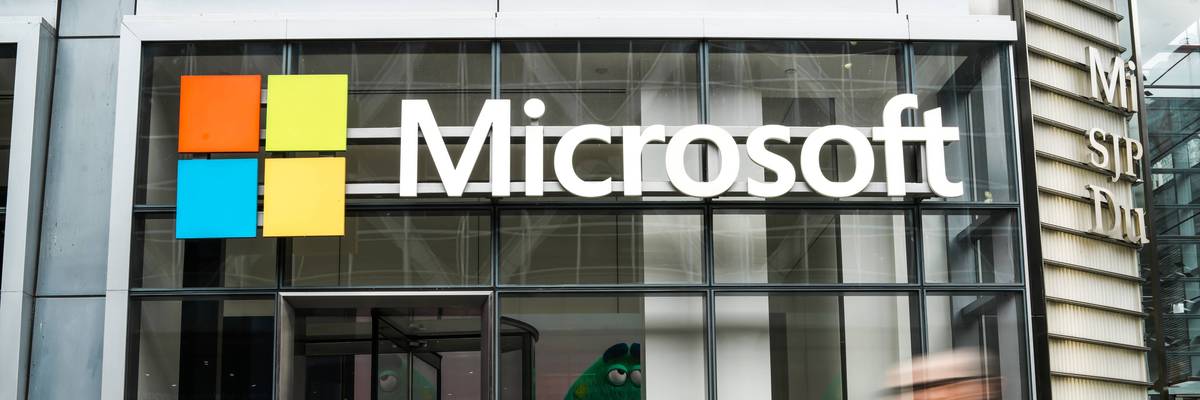
People walk in front of Microsoft store in Manhattan on March 31, 2026, in New York City. Microsoft is facing a significant market downturn during the first quarter of 2026.
"Seeing such strong numbers coupled with the mass layoffs at Xbox is not sitting right with many," wrote one tech journalist.
President Donald Trump has touted his massive corporate tax breaks in 2017 and 2025 not just as handouts to the rich, but as boons for their employees, who could expect to see rising wages and job growth in the coming years.
But one of the policy's biggest beneficiaries, Microsoft, just announced it was laying off thousands of employees in a move described as "cost-cutting," even though the company has spent tens of billions of dollars buying back its own stock.
When Trump's 2017 tax law reduced the corporate tax rate from 35% to 21%, Americans for Tax Fairness estimated that the company was saving about $16.5 billion per year.
The One Big Beautiful Bill Act, passed last July, rewrote rules to benefit companies investing in artificial intelligence by allowing them to deduct the cost of data centers and other equipment up front rather than spreading the deductions out over time, and introduced new deductions for research and development expenses.
For Microsoft, which pledged roughly $80 billion globally toward AI data center investment last year, that could translate to up to $16.8 billion in near-term federal tax savings.
The added windfall has been great for Microsoft shareholders. From 2018-25, the company returned roughly $139.5 billion to shareholders through stock buybacks since the Trump-GOP tax cut took effect, according to shareholder reports.
In the first nine months of fiscal year 2026, the first since the new tax breaks went into effect, the company bought back another $13.3 billion, an acceleration from the previous year, according to a form filed with the US Securities and Exchange Commission.
At the same time as the company is ramping up AI investment, however, it is laying off employees.
On Monday, the company announced that it was shedding roughly 2% of its global workforce, eliminating about 4,800 jobs—mostly in its Xbox division—as it allocates more money and resources to the AI arms race.
They are among the more than 20,000 Microsoft employees who have been shown the door since 2025. Additionally, thousands more employees took voluntary buyouts this spring.
Microsoft executive Amy Coleman attributed the cuts to a changing technological landscape.
"Our customers’ needs are shifting, the business models that serve them are shifting, and that means the work itself—what we do, where we focus, and how we’re organized—has to transform too,” she said. “Companies don’t get to choose whether their industry changes; they only get to choose whether they change with it."
She also stressed that workers were “not being replaced by AI.”
But Eddie Makuch, a writer at GameSpot, noted that the company has been doing terrifically, and despite falling share prices over the past year, remains "the No. 4 biggest company on Earth with a market cap of more than $2.8 trillion."
"Microsoft stockholders might not have been happy with the company’s share price falling, but for the past quarter alone, Microsoft paid out $10.2 billion to shareholders via dividends and share repurchases," he wrote. "These are signs of strength and health for Microsoft. Xbox is a very small piece of Microsoft’s overall business, but seeing such strong numbers coupled with the mass layoffs at Xbox is not sitting right with many."
Dear Common Dreams reader, It’s been nearly 30 years since I co-founded Common Dreams with my late wife, Lina Newhouser. We had the radical notion that journalism should serve the public good, not corporate profits. It was clear to us from the outset what it would take to build such a project. No paid advertisements. No corporate sponsors. No millionaire publisher telling us what to think or do. Many people said we wouldn't last a year, but we proved those doubters wrong. Together with a tremendous team of journalists and dedicated staff, we built an independent media outlet free from the constraints of profits and corporate control. Our mission has always been simple: To inform. To inspire. To ignite change for the common good. Building Common Dreams was not easy. Our survival was never guaranteed. When you take on the most powerful forces—Wall Street greed, fossil fuel industry destruction, Big Tech lobbyists, and uber-rich oligarchs who have spent billions upon billions rigging the economy and democracy in their favor—the only bulwark you have is supporters who believe in your work. But here’s the urgent message from me today. It's never been this bad out there. And it's never been this hard to keep us going. At the very moment Common Dreams is most needed, the threats we face are intensifying. We need your support now more than ever. We don't accept corporate advertising and never will. We don't have a paywall because we don't think people should be blocked from critical news based on their ability to pay. Everything we do is funded by the donations of readers like you. When everyone does the little they can afford, we are strong. But if that support retreats or dries up, so do we. Will you donate now to make sure Common Dreams not only survives but thrives? —Craig Brown, Co-founder |
President Donald Trump has touted his massive corporate tax breaks in 2017 and 2025 not just as handouts to the rich, but as boons for their employees, who could expect to see rising wages and job growth in the coming years.
But one of the policy's biggest beneficiaries, Microsoft, just announced it was laying off thousands of employees in a move described as "cost-cutting," even though the company has spent tens of billions of dollars buying back its own stock.
When Trump's 2017 tax law reduced the corporate tax rate from 35% to 21%, Americans for Tax Fairness estimated that the company was saving about $16.5 billion per year.
The One Big Beautiful Bill Act, passed last July, rewrote rules to benefit companies investing in artificial intelligence by allowing them to deduct the cost of data centers and other equipment up front rather than spreading the deductions out over time, and introduced new deductions for research and development expenses.
For Microsoft, which pledged roughly $80 billion globally toward AI data center investment last year, that could translate to up to $16.8 billion in near-term federal tax savings.
The added windfall has been great for Microsoft shareholders. From 2018-25, the company returned roughly $139.5 billion to shareholders through stock buybacks since the Trump-GOP tax cut took effect, according to shareholder reports.
In the first nine months of fiscal year 2026, the first since the new tax breaks went into effect, the company bought back another $13.3 billion, an acceleration from the previous year, according to a form filed with the US Securities and Exchange Commission.
At the same time as the company is ramping up AI investment, however, it is laying off employees.
On Monday, the company announced that it was shedding roughly 2% of its global workforce, eliminating about 4,800 jobs—mostly in its Xbox division—as it allocates more money and resources to the AI arms race.
They are among the more than 20,000 Microsoft employees who have been shown the door since 2025. Additionally, thousands more employees took voluntary buyouts this spring.
Microsoft executive Amy Coleman attributed the cuts to a changing technological landscape.
"Our customers’ needs are shifting, the business models that serve them are shifting, and that means the work itself—what we do, where we focus, and how we’re organized—has to transform too,” she said. “Companies don’t get to choose whether their industry changes; they only get to choose whether they change with it."
She also stressed that workers were “not being replaced by AI.”
But Eddie Makuch, a writer at GameSpot, noted that the company has been doing terrifically, and despite falling share prices over the past year, remains "the No. 4 biggest company on Earth with a market cap of more than $2.8 trillion."
"Microsoft stockholders might not have been happy with the company’s share price falling, but for the past quarter alone, Microsoft paid out $10.2 billion to shareholders via dividends and share repurchases," he wrote. "These are signs of strength and health for Microsoft. Xbox is a very small piece of Microsoft’s overall business, but seeing such strong numbers coupled with the mass layoffs at Xbox is not sitting right with many."
President Donald Trump has touted his massive corporate tax breaks in 2017 and 2025 not just as handouts to the rich, but as boons for their employees, who could expect to see rising wages and job growth in the coming years.
But one of the policy's biggest beneficiaries, Microsoft, just announced it was laying off thousands of employees in a move described as "cost-cutting," even though the company has spent tens of billions of dollars buying back its own stock.
When Trump's 2017 tax law reduced the corporate tax rate from 35% to 21%, Americans for Tax Fairness estimated that the company was saving about $16.5 billion per year.
The One Big Beautiful Bill Act, passed last July, rewrote rules to benefit companies investing in artificial intelligence by allowing them to deduct the cost of data centers and other equipment up front rather than spreading the deductions out over time, and introduced new deductions for research and development expenses.
For Microsoft, which pledged roughly $80 billion globally toward AI data center investment last year, that could translate to up to $16.8 billion in near-term federal tax savings.
The added windfall has been great for Microsoft shareholders. From 2018-25, the company returned roughly $139.5 billion to shareholders through stock buybacks since the Trump-GOP tax cut took effect, according to shareholder reports.
In the first nine months of fiscal year 2026, the first since the new tax breaks went into effect, the company bought back another $13.3 billion, an acceleration from the previous year, according to a form filed with the US Securities and Exchange Commission.
At the same time as the company is ramping up AI investment, however, it is laying off employees.
On Monday, the company announced that it was shedding roughly 2% of its global workforce, eliminating about 4,800 jobs—mostly in its Xbox division—as it allocates more money and resources to the AI arms race.
They are among the more than 20,000 Microsoft employees who have been shown the door since 2025. Additionally, thousands more employees took voluntary buyouts this spring.
Microsoft executive Amy Coleman attributed the cuts to a changing technological landscape.
"Our customers’ needs are shifting, the business models that serve them are shifting, and that means the work itself—what we do, where we focus, and how we’re organized—has to transform too,” she said. “Companies don’t get to choose whether their industry changes; they only get to choose whether they change with it."
She also stressed that workers were “not being replaced by AI.”
But Eddie Makuch, a writer at GameSpot, noted that the company has been doing terrifically, and despite falling share prices over the past year, remains "the No. 4 biggest company on Earth with a market cap of more than $2.8 trillion."
"Microsoft stockholders might not have been happy with the company’s share price falling, but for the past quarter alone, Microsoft paid out $10.2 billion to shareholders via dividends and share repurchases," he wrote. "These are signs of strength and health for Microsoft. Xbox is a very small piece of Microsoft’s overall business, but seeing such strong numbers coupled with the mass layoffs at Xbox is not sitting right with many."