
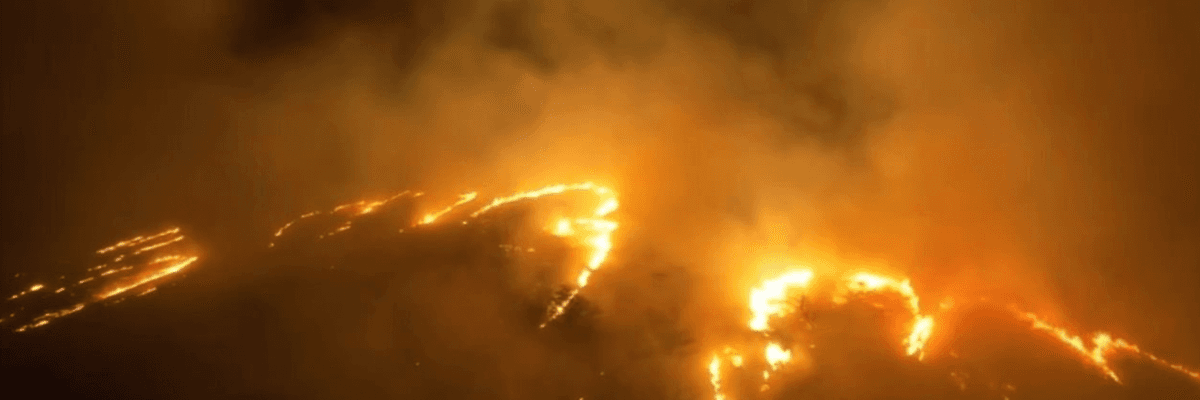
Wildfires are seen from above in Maui County, Hawaii on August 9, 2023.
Campaigner Blasts Climate-Denying 'Arsonists' as Maui Fires Kill at Least 36
The wildfires offer the latest evidence that President Joe Biden must declare a climate emergency, said one progressive economist.
With weather experts pointing to unusually dry conditions on the Hawaiian island of Maui that primed the area for the wildfires that have killed at least 36 people so far, climate advocates on Thursday said the devastation offers the latest evidence that U.S. President Joe Biden must declare a national climate emergency.
Major General Kenneth Hara, the top defense official in Hawaii, said early Thursday that the wildfires had been contained, but authorities are still assessing widespread damage, displacement, and loss of life following a disaster that sent residents frantically running into the ocean for safety.
The historic town of Lahaina, once the capital of Hawaii, was decimated by the fires on Wednesday, with its oldest building apparently burned to the ground.
Theo Morrison, the executive director of the Lahaina Restoration Foundation, told The New York Times that the town had "no preparation, no warning, nothing" as the flames—directly fueled by the 80 mile-per-hour winds of Hurricane Dora south of Hawaii and dry vegetation—spread to Lahaina and razed its historic town center in a matter of hours.
Kaniela Ing, a former Hawaii state representative and national director of the Green New Deal Network, expressed grief over the devastating fires and noted that while residents and local authorities were caught off-guard by the fast-moving blaze, U.S. officials have been warned for years that the continued extraction of fossil fuels is making parts of the country drier and hotter and creating conditions in which wildfires can become more damaging.
"My island is on fire. My heart is breaking at the utter devastation these wildfires are causing my friends, family, and community," said Ing in a statement. "The extreme wildfires in Lahaina in this summer of climate disasters are yet more proof that we are in a climate emergency and this crisis is killing us. Our leaders in D.C. passed starting measures to tackle climate change—but we need legislation that is as bold and urgent as the scale of the wildfires choking Hawaii and Canada, the heatwaves suffocating Texas, and the extreme flooding drowning Europe."
Ing suggested that Congress must pass legislation to expand investments in clean energy infrastructure and jobs, but also that Biden can and should act without Congress to significantly reduce the fossil fuel emissions which scientists have said are contributing to extreme heat and wildfires.
"How many more lives lost or families displaced in communities like mine is President Biden willing to tolerate before he declares a climate emergency and activates politicians to take further climate action?" said Ing.
The wildfires devastated Lahaina on the same day that Biden told a reporter on The Weather Channel that "practically speaking," he has already declared a climate emergency by acting to protect some public land from certain types of mining and rejoining the Paris climate agreement.
The "apocalyptic scenes" in Hawaii, said economist Umair Haque, offer the latest proof that "practically" declaring a climate emergency is not enough.
Ing also condemned Republican politicians who continue to deny the existence of the climate crisis and that it's being caused by the fossil fuel industry, including Sen. Tim Scott (R-S.C.), who dismissed the call for a climate emergency declaration in a Fox News interview.
"Ron DeSantis, Tim Scott, oil companies, and anyone in power who denies climate change are the arsonists," said Ing. "We are living the climate emergency."
According to the U.S. Drought Monitor, more than a third of Maui was experiencing at least a moderate drought as of August 1, and nearly 16% of the island was in a severe drought the day before the flames engulfed parts of the island.
Climate scientist Michael Mann of the University of Pennsylvania said the fires are a "'compound' climate catastrophe"—made worse by the hurricane's rapid winds, which interacted with the "background state" of extreme drought.
Gov. Josh Green, a Democrat, said an immediate issue the island is coping with is the displacement of several thousand people, and asked visitors to leave or cancel nonessential travel to Maui to ensure that hotel rooms and other accommodations are available for people in need of shelter.
We are at a crossroads
This country and this world are at a monumental crossroads. In a few short weeks, US voters will have an opportunity to beat back the forces of fascism and confront the billionaires who are rigging the economy, our media system, and our democracy, making it increasingly impossible for ordinary people to get by. We’re not just talking about the election. We’re talking about what must be done once these fascist elements are vanquished from power. We need a bolder set of solutions than what either major party has so far been willing to offer and a working-class movement ready to fight like hell for it. Trump didn't emerge from nowhere. The conditions that fueled MAGA authoritarianism were created by decades of radical neoliberal economic policies and a corrupt political system dominated by corporate interests. They slashed taxes on the super-rich, promising that the benefits would trickle down. They said giveaways to the corporate titans would make life more affordable for the rest of us. It was all bullshit. And when a bitter, betrayed populace searches for someone to blame, right-wing demagogues have little trouble finding scapegoats. People know when they're being lied to, but you won't hear any of this from the corporate media. Only independent journalism—powered and funded by people who believe in building a better world—can deliver truly trustworthy daily news. Our Fall Campaign is underway, and we need your help. To power our newsroom through the rest of the year, we need to raise $125,000 by midnight on October 31. So if you share our vision, please contribute whatever you can to sustain our work. |
With weather experts pointing to unusually dry conditions on the Hawaiian island of Maui that primed the area for the wildfires that have killed at least 36 people so far, climate advocates on Thursday said the devastation offers the latest evidence that U.S. President Joe Biden must declare a national climate emergency.
Major General Kenneth Hara, the top defense official in Hawaii, said early Thursday that the wildfires had been contained, but authorities are still assessing widespread damage, displacement, and loss of life following a disaster that sent residents frantically running into the ocean for safety.
The historic town of Lahaina, once the capital of Hawaii, was decimated by the fires on Wednesday, with its oldest building apparently burned to the ground.
Theo Morrison, the executive director of the Lahaina Restoration Foundation, told The New York Times that the town had "no preparation, no warning, nothing" as the flames—directly fueled by the 80 mile-per-hour winds of Hurricane Dora south of Hawaii and dry vegetation—spread to Lahaina and razed its historic town center in a matter of hours.
Kaniela Ing, a former Hawaii state representative and national director of the Green New Deal Network, expressed grief over the devastating fires and noted that while residents and local authorities were caught off-guard by the fast-moving blaze, U.S. officials have been warned for years that the continued extraction of fossil fuels is making parts of the country drier and hotter and creating conditions in which wildfires can become more damaging.
"My island is on fire. My heart is breaking at the utter devastation these wildfires are causing my friends, family, and community," said Ing in a statement. "The extreme wildfires in Lahaina in this summer of climate disasters are yet more proof that we are in a climate emergency and this crisis is killing us. Our leaders in D.C. passed starting measures to tackle climate change—but we need legislation that is as bold and urgent as the scale of the wildfires choking Hawaii and Canada, the heatwaves suffocating Texas, and the extreme flooding drowning Europe."
Ing suggested that Congress must pass legislation to expand investments in clean energy infrastructure and jobs, but also that Biden can and should act without Congress to significantly reduce the fossil fuel emissions which scientists have said are contributing to extreme heat and wildfires.
"How many more lives lost or families displaced in communities like mine is President Biden willing to tolerate before he declares a climate emergency and activates politicians to take further climate action?" said Ing.
The wildfires devastated Lahaina on the same day that Biden told a reporter on The Weather Channel that "practically speaking," he has already declared a climate emergency by acting to protect some public land from certain types of mining and rejoining the Paris climate agreement.
The "apocalyptic scenes" in Hawaii, said economist Umair Haque, offer the latest proof that "practically" declaring a climate emergency is not enough.
Ing also condemned Republican politicians who continue to deny the existence of the climate crisis and that it's being caused by the fossil fuel industry, including Sen. Tim Scott (R-S.C.), who dismissed the call for a climate emergency declaration in a Fox News interview.
"Ron DeSantis, Tim Scott, oil companies, and anyone in power who denies climate change are the arsonists," said Ing. "We are living the climate emergency."
According to the U.S. Drought Monitor, more than a third of Maui was experiencing at least a moderate drought as of August 1, and nearly 16% of the island was in a severe drought the day before the flames engulfed parts of the island.
Climate scientist Michael Mann of the University of Pennsylvania said the fires are a "'compound' climate catastrophe"—made worse by the hurricane's rapid winds, which interacted with the "background state" of extreme drought.
Gov. Josh Green, a Democrat, said an immediate issue the island is coping with is the displacement of several thousand people, and asked visitors to leave or cancel nonessential travel to Maui to ensure that hotel rooms and other accommodations are available for people in need of shelter.
- 'It's Apocalyptic': Wildfires Engulf Maui, Killing At Least 6 ›
- As Death Toll Hits 80, Hawaii AG to Probe Decisions and Policies on Wildfires ›
- As 93 Confirmed Dead, Locals Fear Lahaina Rebuild Dominated by Rich Outsiders ›
- Scientists Warn of Toxic Particle Pollution in Maui Wildfire Smoke ›
- Amid Maui Fire Devastation, Big Oil Tries to Kill Hawaii Climate Lawsuit ›
- Maui-Bound Biden Urged to Back Hawaiian Cases Against Big Oil, Declare Climate Emergency ›
- The Deadliest US Wildfire in a Century Could Also Take a High Toll on Maui Wildlife ›
- Opinion | In Response to Maui Fires, Hawaii Should Buy the State’s Power Provider | Common Dreams ›
- 'Historic' Settlement With Youth Will Force Hawaiian Transit System to Speed Decarbonization | Common Dreams ›
With weather experts pointing to unusually dry conditions on the Hawaiian island of Maui that primed the area for the wildfires that have killed at least 36 people so far, climate advocates on Thursday said the devastation offers the latest evidence that U.S. President Joe Biden must declare a national climate emergency.
Major General Kenneth Hara, the top defense official in Hawaii, said early Thursday that the wildfires had been contained, but authorities are still assessing widespread damage, displacement, and loss of life following a disaster that sent residents frantically running into the ocean for safety.
The historic town of Lahaina, once the capital of Hawaii, was decimated by the fires on Wednesday, with its oldest building apparently burned to the ground.
Theo Morrison, the executive director of the Lahaina Restoration Foundation, told The New York Times that the town had "no preparation, no warning, nothing" as the flames—directly fueled by the 80 mile-per-hour winds of Hurricane Dora south of Hawaii and dry vegetation—spread to Lahaina and razed its historic town center in a matter of hours.
Kaniela Ing, a former Hawaii state representative and national director of the Green New Deal Network, expressed grief over the devastating fires and noted that while residents and local authorities were caught off-guard by the fast-moving blaze, U.S. officials have been warned for years that the continued extraction of fossil fuels is making parts of the country drier and hotter and creating conditions in which wildfires can become more damaging.
"My island is on fire. My heart is breaking at the utter devastation these wildfires are causing my friends, family, and community," said Ing in a statement. "The extreme wildfires in Lahaina in this summer of climate disasters are yet more proof that we are in a climate emergency and this crisis is killing us. Our leaders in D.C. passed starting measures to tackle climate change—but we need legislation that is as bold and urgent as the scale of the wildfires choking Hawaii and Canada, the heatwaves suffocating Texas, and the extreme flooding drowning Europe."
Ing suggested that Congress must pass legislation to expand investments in clean energy infrastructure and jobs, but also that Biden can and should act without Congress to significantly reduce the fossil fuel emissions which scientists have said are contributing to extreme heat and wildfires.
"How many more lives lost or families displaced in communities like mine is President Biden willing to tolerate before he declares a climate emergency and activates politicians to take further climate action?" said Ing.
The wildfires devastated Lahaina on the same day that Biden told a reporter on The Weather Channel that "practically speaking," he has already declared a climate emergency by acting to protect some public land from certain types of mining and rejoining the Paris climate agreement.
The "apocalyptic scenes" in Hawaii, said economist Umair Haque, offer the latest proof that "practically" declaring a climate emergency is not enough.
Ing also condemned Republican politicians who continue to deny the existence of the climate crisis and that it's being caused by the fossil fuel industry, including Sen. Tim Scott (R-S.C.), who dismissed the call for a climate emergency declaration in a Fox News interview.
"Ron DeSantis, Tim Scott, oil companies, and anyone in power who denies climate change are the arsonists," said Ing. "We are living the climate emergency."
According to the U.S. Drought Monitor, more than a third of Maui was experiencing at least a moderate drought as of August 1, and nearly 16% of the island was in a severe drought the day before the flames engulfed parts of the island.
Climate scientist Michael Mann of the University of Pennsylvania said the fires are a "'compound' climate catastrophe"—made worse by the hurricane's rapid winds, which interacted with the "background state" of extreme drought.
Gov. Josh Green, a Democrat, said an immediate issue the island is coping with is the displacement of several thousand people, and asked visitors to leave or cancel nonessential travel to Maui to ensure that hotel rooms and other accommodations are available for people in need of shelter.
- 'It's Apocalyptic': Wildfires Engulf Maui, Killing At Least 6 ›
- As Death Toll Hits 80, Hawaii AG to Probe Decisions and Policies on Wildfires ›
- As 93 Confirmed Dead, Locals Fear Lahaina Rebuild Dominated by Rich Outsiders ›
- Scientists Warn of Toxic Particle Pollution in Maui Wildfire Smoke ›
- Amid Maui Fire Devastation, Big Oil Tries to Kill Hawaii Climate Lawsuit ›
- Maui-Bound Biden Urged to Back Hawaiian Cases Against Big Oil, Declare Climate Emergency ›
- The Deadliest US Wildfire in a Century Could Also Take a High Toll on Maui Wildlife ›
- Opinion | In Response to Maui Fires, Hawaii Should Buy the State’s Power Provider | Common Dreams ›
- 'Historic' Settlement With Youth Will Force Hawaiian Transit System to Speed Decarbonization | Common Dreams ›