

SUBSCRIBE TO OUR FREE NEWSLETTER
Daily news & progressive opinion—funded by the people, not the corporations—delivered straight to your inbox.
5
#000000
#FFFFFF
To donate by check, phone, or other method, see our More Ways to Give page.
Daily news & progressive opinion—funded by the people, not the corporations—delivered straight to your inbox.
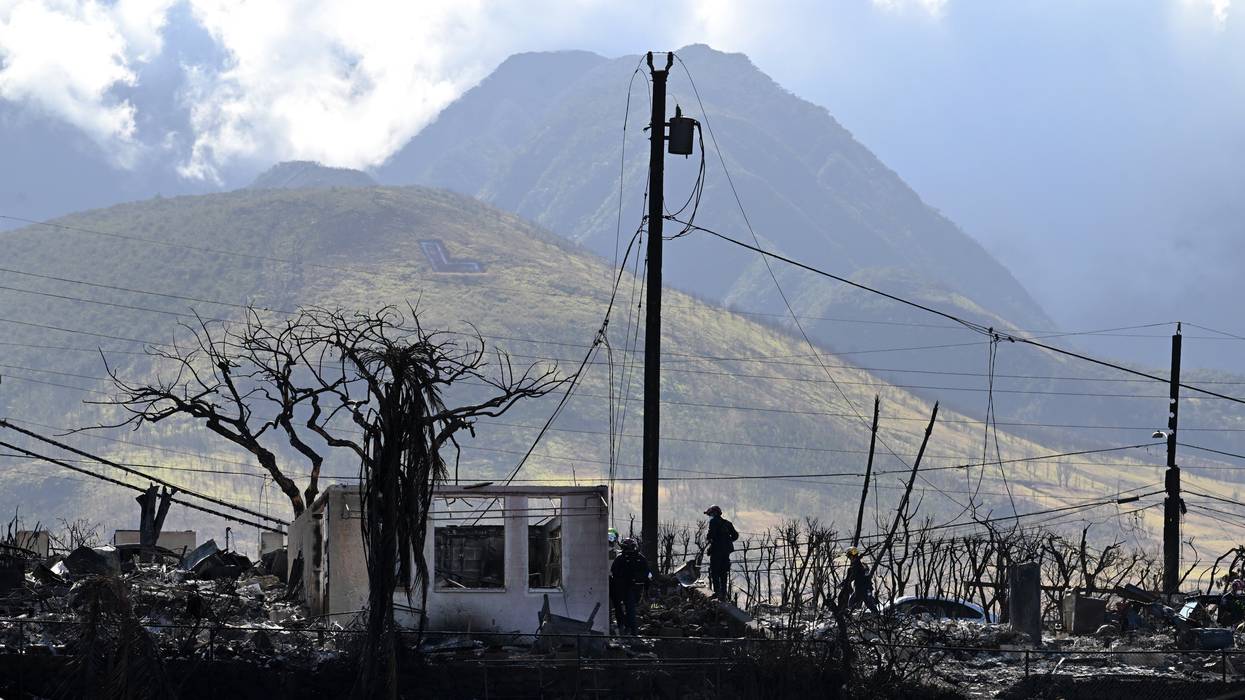
"Justice is returning control of public resources like land and water to the people," wrote one activist. "For too long the strings of Maui and thousands of communities like it have been pulled by forces indifferent to their soul."
As Maui County faces a daunting recovery from the deadliest U.S. wildfire in over a century—with at least 115 confirmed deaths as of Tuesday, around 1,000 people still unaccounted for, and a rebuild expected to cost billions of dollars—fears and fights over land and water are highlighting the long history of colonialism and exploitation in the Hawaiian Islands.
"It's disaster capitalism at its finest," Hokuao Pellegrino, a seventh-generation Native Hawaiian farmer, educator, and president of the nonprofit Hui o Nā Wai 'Ehā, told CNN in a Monday segment about Maui's current water battles.
Disaster capitalism, as journalist Naomi Klein explained in her 2007 book The Shock Doctrine, is "orchestrated raids on the public sphere in the wake of catastrophic events, combined with the treatment of disasters as exciting market opportunities."
Fire spread by hurricane winds earlier this month leveled Lahaina, a Maui tourist destination that was previously the capital of the Hawaiian Kingdom, before an 1893 coup led by American expatriates and sugar planters. The United States formally annexed the islands in 1898. Hawaii became a U.S. territory in 1900 and the 50th state in 1959.
"Disaster capitalism has taken many forms in different contexts," Klein wrote last week in a Guardian column with Kapua'ala Sproat, a University of Hawaii at Manoa law professor and director of the Ka Huli Ao Center for Excellence in Native Hawaiian Law.
"It's always a little different, which is why some Native Hawaiians have taken to calling their unique version by a slightly different term: plantation disaster capitalism," the pair continued. "It's a name that speaks to contemporary forms of neocolonialism and climate profiteering, like the real estate agents who have been cold-calling Lahaina residents who have lost everything to the fire and prodding them to sell their ancestral lands rather than wait for compensation. But it also places these moves inside the long and ongoing history of settler colonial resource theft and trickery, making clear that while disaster capitalism might have some modern disguises, it's a very old tactic. A tactic that Native Hawaiians have a great deal of experience resisting."
As Klein and Sproat detailed:
For over a century, water across Maui Komohana, the western region of the island, has been extracted to benefit outside interests: first large sugar plantations and, more recently, their corporate successors. The companies—including West Maui Land Co. (WML) and its subsidiaries, as well as Kaanapali Land Management and Maui Land & Pineapple Inc.—have devoured the island's natural resources to develop McMansions, colonial-style subdivisions, luxury resorts, and golf courses where cane and pineapple once grew.
This historical and modern plantation economy has taken a tremendous toll on water in particular, draining Indigenous ecologies of their natural moisture. Lahaina, once known as the Venice of the Pacific, has been transformed into a parched desert, which is part of what has made it so vulnerable to fire.
A few days after flames tore through Lahaina, Hawaiian state Attorney General Anne Lopez announced a probe into the formal response. Her sweeping investigation includes a five-hour delay in the state Commission on Water Resource Management (CWRM)—which is responsible for how much water flows through streams—approving WML's request to fill its private reservoirs that are not connected to local hydrants but the company was willing to make available to firefighters.
The delay was reportedly the result of unsuccessful attempts to reach a farmer of taro—or kalo, a root vegetable sacred to Native Hawaiians—affected by the diversion. Activists and officials have pointed out that wind would have prevented helicopter crews from reaching the WML reservoirs for firefighting. According to the Honolulu Civil Beat, "The company suffered no significant property damage in the fires."
A water official involved with the delay, Kaleo Manuel, was then reassigned to another Hawaii Department of Land and Natural Resources division—though the DLNR said in a statement last week that the shift was part of an effort "to focus on the necessary work to assist the people of Maui recover from the devastation of wildfires" and "does not suggest that First Deputy Manuel did anything wrong."
In a lawsuit filed Monday, Maui residents Kekai Keahi and Jennifer Kamaho'i Mather argue that the redeployment was illegal, and ask a Hawaii court to void the decision and affirm that any such move must be made in an open meeting to allow public testimony.
Hawaii Public Radio reported Tuesday that while decision has also "prompted serious concerns" from CWRM members, the state attorney general's office claims the case is "wholly without merit" and plans to file a motion to dismiss it.
"One thing that people need to understand especially those from far away is that there's been a great deal of water conflict on Maui for many years," Hawaii Gov. Josh Green said during a press briefing last week. "It's important that we're honest about this. People have been fighting against the release of water to fight fires. I'll leave that to you to explore."
The Democratic governor has faced criticism for the comments and for suspending the "state water code, to the extent necessary to respond to the emergency," through his recent proclamations relating to wildfires.
As the Civil Beat reported:
"No one's trying to oppose the use of water to fight fires," said Isaac Moriwake, an attorney with Earthjustice. "That was unfair for the governor to go there."
The real issue, Moriwake said, is that West Maui Land Co. is trying to use the fire as an excuse to gain control over the region's water supply.
Moriwake points out that Hawaii Board of Land and Natural Resources Chair Dawn Chang has agreed to amend—temporarily—several water regulations, at West Maui Land Co.'s request, pursuant to an emergency declaration related to the fire issued by Green. That included a provision allowing companies like West Maui Land to fill its reservoirs when fire was reported in the area.
"They should stop trying to use this tragedy for cheap advantage," Moriwake said.
Kamanamaikalani Beamer, a former member of the CWRM, also challenged Green's claims about community members fighting against the release of water for firefighting, telling The Washington Post that "in my eight years on the water commission, I never heard, in a single hearing, that testimony from anyone in the community."
Lahaina's Native Hawaiian community "has fought for literally generations to seek justice and balance for the streams and the community and other usages," added Beamer, a professor at the University of Hawaii at Manoa's Center for Hawaiian Studies.
According to The New York Times:
Wayne Tanaka, director of the Sierra Club of Hawaii, said conservationists had supported the use of water for fire reserves. But he said he worried that water companies and large landowners use fire protection as an excuse to hoard water for commercial purposes.
"No one has opposed the need to reserve water for firefighting, but we want to know how much they actually use for that purpose," Mr. Tanaka said.
Sproat made similar remarks in an appearance on
Democracy Now! last week after her column with Klein was published.
"Plantation disaster capitalism, I think, is, unfortunately, the perfect term for what's going on in Maui Komohana, or in West Maui, right now," Sproat said. "The plantations, the large landed interests that have had control over not just the land, but really much of Hawaii's and Maui Komohana's resources for the last several centuries, are using this opportunity, are using this time of tremendous trauma for the people of Maui, to swoop in and to get past the law, basically."
"They're using the emergency proclamation that the governor put into place the day after the fires to, you know, ravage Lahaina, and they're using this as an opportunity to try to get their way, especially with respect to water resources, something they could not achieve when the law and Hawaii's water code, in particular, were in place," she explained.
During a Thursday interview with the Civil Beat, Green "defended his position that government, developers, and environmental and cultural activists need to work together to resolve issues," but also insisted that Lahaina's rebuild "will be done with direct input from fire survivors, the island, and its mayor," and "new construction will be primarily to house locals and not to favor large developers."
A coalition of community members gathered at Maui's Wahikuli Beach Park for a Friday press conference about rebuilding. Keahi—one of the residents behind the suit over Manuel's redeployment—said that "we don't want to hear the governor's office saying that we have a plan for Lahaina because none of us ever got to speak to the governor."
Reporting from the event, Hawaii Public Radio explained that Nā 'Ohana O Lele—or the Families of Lele, in honor of Lahaina's ancient name—has three demands for Green: "One is to allow the community time to heal before rebuilding. Two is to let Lahaina lead the planning process. And three is to amend the emergency proclamation to ensure Hawaii's open meeting regulation or 'Sunshine Law' remains in full force."
Noting the group's demands, Kaniela Ing, a seventh-generation Native Hawaiian and national director of Green New Deal Network, wrote Monday for The Nation, "The vision is clear: The restoration of Lahaina should be by the community, for the community."
President Joe Biden and First Lady Jill Biden traveled to Maui on Monday to tour the destruction and meet first responders and survivors. In a pair of speeches, the president claimed that "we're going to rebuild the way the people of Maui want to build."
"It's time to rebuild this community the way you want it built—the way you want it—so it's still a community, not a group of beautiful homes, but a community," Biden declared at the Lahaina Civic Center, provoking applause from residents impacted by fires.
Still, Hawaiians stress that such words from government officials are not enough—action is also required. Ing wrote Monday that "political and legislative fights lie ahead to ensure that rebuilding efforts steer clear of the pitfalls of external influences, and that resources are channeled to foster local resilience and empowerment."
"True justice doesn't lie merely in acknowledging the climate crisis," he argued. "Justice is returning control of public resources like land and water to the people. It's about recognizing that for too long the strings of Maui and thousands of communities like it have been pulled by forces indifferent to their soul. It's acknowledging that survivors aren't just figures in a news report but the heartbeats of a resilient community that demands its rightful place in shaping its future."
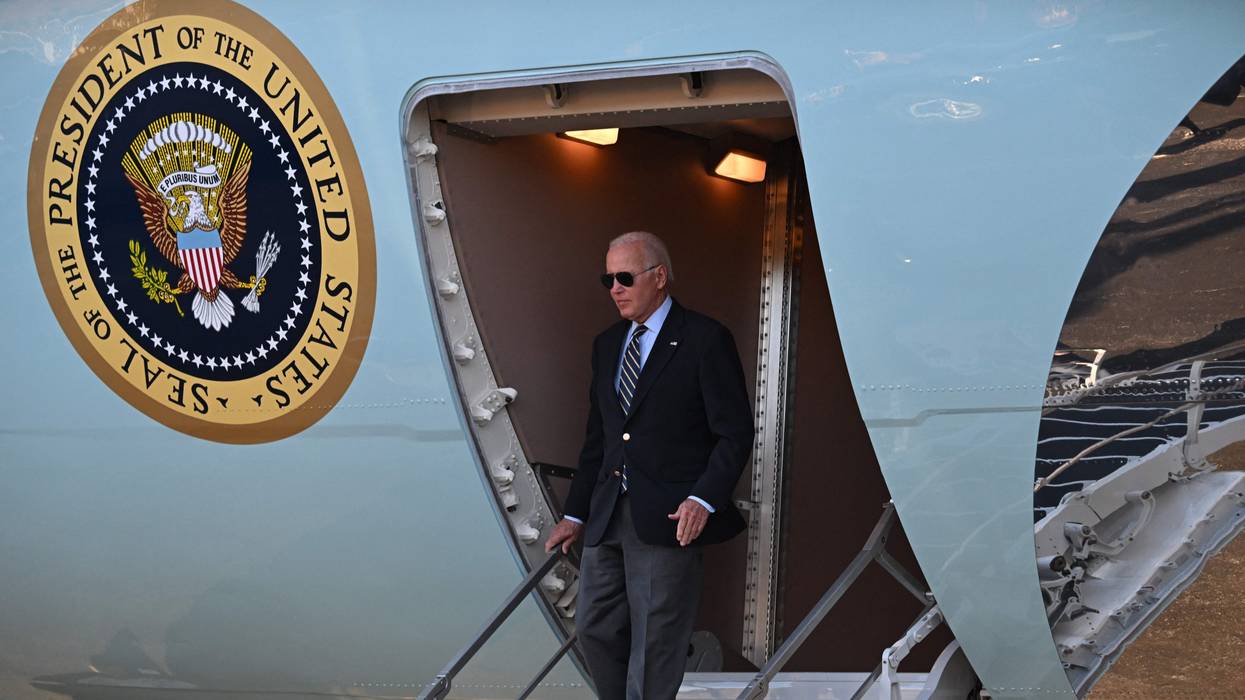
"President Biden should unequivocally voice his support for the people of Maui and Honolulu in their efforts to put fossil fuel companies on trial for their climate deception and make polluters pay," said one activist.
As President Joe Biden prepares to visit Maui next week amid Hawaiian wildfires that have prompted a federal disaster declaration, he faces fresh calls to declare a national climate emergency and support a pair of local lawsuits against the planet-wrecking fossil fuel industry.
The lawsuits against Big Oil were filed in 2020 by Oahu's City and County of Honolulu as well as Maui County—where a fire last week killed at least 111 people, caused over $5 billion in damage, and devastated Lahaina, the former capital of the Hawaiian Kingdom. Both complaints highlight how rising global temperatures are making fires on the islands worse.
"Hawaii communities are on the frontlines of the fight to hold Big Oil companies accountable for knowingly increasing the risks of deadly wildfires and other climate disasters," Richard Wiles, president of the Center for Climate Integrity (CCI), said Friday. "President Biden should unequivocally voice his support for the people of Maui and Honolulu in their efforts to put fossil fuel companies on trial for their climate deception and make polluters pay for the damage they have caused."
The Supreme Court of Hawaii on Thursday heard oral arguments for the fossil fuel industry's attempts to dismiss the Honolulu case. After the hearing, Matthew Gonser, chief resilience officer and executive director of Honolulu's Office of Climate Change, Sustainability, and Resiliency, said: "We appreciate today's thorough inquiry and remain confident in the strength of our case. We look forward to the court's forthcoming decision as we continue to litigate the case and move toward trial."
Just ahead of the hearing, CCI declared that "the deadly fires in Maui underscore how urgent it is to make polluters pay for fueling the climate crisis," and "the people of Honolulu and Maui deserve their day to put Big Oil on trial."
Wiles added Friday that "simply connecting the deadly Maui fires and other recent disasters to climate change is not enough; it's time for President Biden to make clear to the American people that the oil and gas industry must be held accountable for their lies and pollution that continue to fuel the climate crisis."
Whether Biden will take a position on the Hawaiian climate cases is hard to predict, given his administration's mixed messages on such litigation. While the U.S. Department of Justice in March backed Colorado communities suing Big Oil, the DOJ has also recently claimed in a federal court filing for the youth-led case Juliana v. United States that "there is no constitutional right to a stable climate system."
The president and First Lady Jill Biden are scheduled to visit Maui on Monday. According to the White House, the Bidens "will be welcomed by state and local leaders to see firsthand the impacts of the wildfires and the devastating loss of life and land that has occurred on the island, as well as discuss the next steps in the recovery effort."
The historic blaze that spread rapidly because of winds from Hurricane Dora and ultimately leveled Lahaina has sparked national conversations about the climate emergency. Scientists have long warned that producing planet-heating emissions with human activities like fossil fuel use will make fires and hurricanes more devastating.
The wreckage and early assessments of what rebuilding requires have also generated fears among locals about more exploitation from rich outsiders—continuing a long trend in the Hawaiian Islands, which were annexed by the United States in 1898 and became the 50th state in 1959.
Kaniela Ing, national director of the Green New Deal Network and a seventh-generation Kanaka Maoli (Native Hawaiian) from Maui, wrote Thursday for TIME that "it felt like Goddess Papahānaumoku—Earth Mother, herself—raging at humanity's hubris. The disturbing silence left by the missing and the mourned souls tells of a disaster that's unnatural, shaped by the human hand—a byproduct of the dangerous dance between climate change and centuries of colonial greed."
"My greatest fear is that this trajectory of exploitation will continue in the recovery from the Maui wildfires," he continued. "As whispers of reshaping Lahaina emerge, with wealthy developers eager to mold it to their vision, our generation's vision for social and environmental justice grows even firmer. Our recovery from the wildfires can't just be about combating climate change—it has to be about returning control of our cherished lands to the people who hold them dear."
"At the national level, it's past time for President Biden to officially recognize the climate crisis by declaring a climate emergency," added Ing, a former state legislator. "This would enable him to halt the destructive fossil fuel production driving these disasters. Furthermore, substantial federal investments on the scale of trillions are required to prevent catastrophes like this one in the future and prioritize the welfare of working families in mitigation and recovery efforts."
The Hawaiian fires are part of a summer of unprecedented heat that scientists already concluded "would have been virtually impossible" without the burning of fossil fuels—conditions that have inspired other demands for a climate emergency declaration.
The Center for Biological Diversity last year released a report detailing all that Biden could do if the heeded those calls. Report co-author Jean Su said at the time that "declaring a climate emergency isn't a catchphrase, it's a vital suite of actions to protect people and the planet from this crisis."
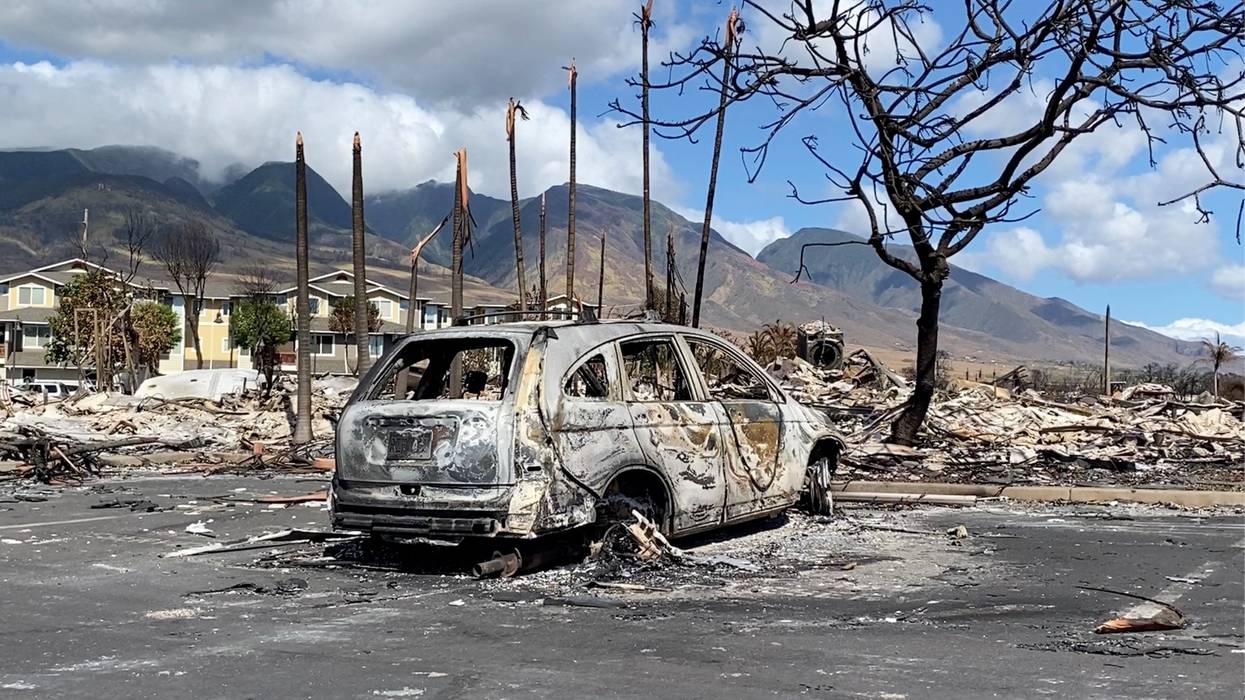
"The people of Honolulu and Maui deserve their day to put Big Oil on trial," said the Center for Climate Integrity.
As the Hawaiian island of Maui is reeling from the deadliest U.S. wildfire in over a century, the Hawaii Supreme Court on Thursday is set to hear fossil fuel giants' request to dismiss a climate liability lawsuit filed by the City and County of Honolulu on Oahu.
Honolulu leaders sued companies including Chevron, ExxonMobil, Shell, and Sunono in March 2020. Just seven months later, Maui County followed suit, launching a case against those and other Big Oil firms. Both complaints mention worsening wildfires.
"The average air temperature in the city is currently warming at a rate that is approximately four times faster than the warming rate 50 years ago," the Honolulu complaint states. "Warming air temperatures have led to heatwaves, expanded pathogen and invasive species ranges, thermal stress for native flora and fauna, increased electricity demand, increased occurrence and intensity of wildfire, threats to human health such as from heat stroke and dehydration, and decreased water supply due to increased evaporation and demand."
The Maui filing explains that "wildfires are becoming more frequent, intense, and destructive in the county. As climate changes, stronger El Niño events become more frequent. El Niños alter Hawaii's weather patterns, bringing wetter summers which in turn provide prime conditions for fast-growing grasses and invasive species, followed by prolonged periods of drought and hotter average temperatures, which desiccate vegetation thereby increasing the fuel available for fires."
"The county's fire 'season' now runs year-round, rather than only a few months of the year," the 2020 document adds. "In 2019, called the 'year of fire' on Maui, 26,000 acres burned in the County—more than six times the total area burned in 2018."
Three years after the filings, the Northern Hemisphere is enduring a summer of unprecedented heat that scientists say "would have been virtually impossible" without the burning of fossil fuels, and Lahaina, the former capital of the Hawaiian Kingdom, was leveled last week in a Maui County fire that killed at least 106 people—a death toll expected to rise, with over 1,000 missing—and caused over $5 billion in damage.
Denise Antolini, a retired University of Hawaii law professor and supporter of the plaintiffs, told The Guardian that the fires affecting the 50th U.S. state "underscore the importance" of climate liability suits, which seek damages from fossil fuel giants.
The Honolulu case calls out the companies for "their introduction of fossil fuel products into the stream of commerce knowing, but failing to warn of, the threats posed to the world's climate; their wrongful promotion of their fossil fuel products and concealment of known hazards associated with the use of those products; their public deception campaigns designed to obscure the connection between their products and global warming and the environmental, physical, social, and economic consequences flowing from it; and their failure to pursue less hazardous alternatives."
Antolini said that "if the truth had been known about climate change, if the truth had been allowed to be known by Big Oil, Hawaii might have had a different future," telling the newspaper that while the climate emergency isn't the sole cause of this summer's fires, it "set the table" for the destruction.
Thursday's hearing before the state Supreme Court "is an incredibly important milestone in the case because it determines whether or not the case will proceed to discovery, to further motions, and to trial," she added. "So it's a go or no-go point."
The high court's hearing for the Honolulu case is scheduled to begin at 10:00 am local time and will be livestreamed on YouTube.
"The deadly fires in Maui underscore how urgent it is to make polluters pay for fueling the climate crisis," the Center for Climate Integrity (CCI) said Thursday. "The people of Honolulu and Maui deserve their day to put Big Oil on trial."
As for the Maui case, Emily Sanders, CCI's editorial lead, wrote for ExxonKnews on Tuesday:
Maui spent years defeating the industry's numerous attempts to move the case out of state court, where it was originally filed. The county is now awaiting a decision from a judge that could make it the third community—after Honolulu and Massachusetts—to enter the pretrial phase of a climate accountability lawsuit against Big Oil. That means the people of Maui would be one step closer to their rightful day in court to hold fossil fuel companies accountable.
Another ongoing Hawaiian climate case was launched last year by youth from the islands of Hawaii, Kauai, Maui, Molokai, and Oahu against the Hawaii Department of Transportation and its director, the governor, and the state.
"While in many ways Hawaii has been a leader in recognizing and setting goals to address the climate emergency, progress is slow because of the unconstitutional, and uncooperative, actions of the state Department of Transportation," said Andrea Rodgers, senior litigation attorney at Our Children's Trust and co-counsel for the youth plaintiffs, at the time.
Our Children's Trust also represents youth plaintiffs for a similar constitutional climate case in which a Montana judge on Monday sided with 16 young residents who claimed that the state violated their rights by promoting fossil fuel extraction. Julia Olson, founder of the nonprofit law firm, called the ruling "a game-changer that marks a turning point in this generation's efforts to save the planet from the devastating effects of human-caused climate chaos."
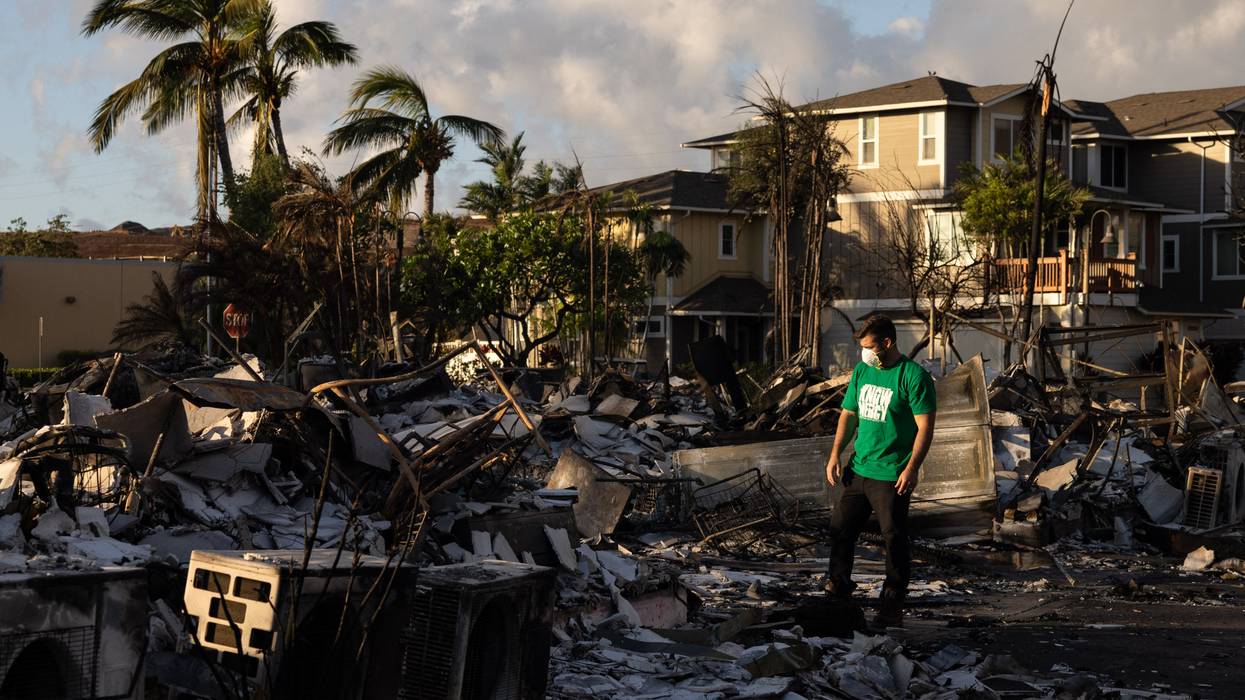
"Disaster capitalism will happen yet again unless they act proactively."
Formerly the capital of the Hawaiian Kingdom, Lahaina on island of Maui was ravaged by a wildfire that has killed 93 people as of Sunday, and locals now fear wealthy outsiders will dominate and further serve themselves with the multibillion-dollar rebuild from the recent devastation in the 50th U.S. state.
"Lahaina residents worry that rebuilt homes in their Maui town could slip into the hands of affluent outsiders seeking a tropical haven rather than homegrown residents who give the Hawaiian island its spirit and identity," The Associated Press wrote on social media Sunday, sharing new reporting from Hawaii.
Naomi Klein—author of several books including The Shock Doctrine: The Rise of Disaster Capitalism—responded with one word: "Again."
After American expatriates and sugar planters backed by U.S. troops led the 1893 coup that deposed the Hawaiian Kingdom's Queen Lili'uokalani, the United States formally annexed the islands in 1898. Hawaii became a state in 1959.
"As that recovery unfolds, we want to make sure that the people, the communities, are actually empowered to rebuild themselves, that we don't open the door for disaster capitalists."
Even before Tuesday's fire—which was enabled by climate-wrecking fossil fuel companies and land management decisions that have diverted water away from the area—"a chronic housing shortage and an influx of second-home buyers and wealthy transplants have been displacing residents," the AP noted.
Richy Palalay, who had "Lahaina Grown" tattooed on his forearms when he was 16, told the outlet at a shelter on Saturday that "I'm more concerned of big land developers coming in and seeing this charred land as an opportunity to rebuild."
Condos and hotels "that we can't afford, that we can't afford to live in—that's what we're afraid of," said Palalay, who didn't yet know whether the house where he rents a room for $1,000 survived the fire, which destroyed the restaurant where he works.
The Pacific Disaster Center and the Federal Emergency Management Agency (FEMA) estimate that 86% of the 2,719 structures in Maui County exposed to fire—the deadliest in the U.S. in over a century—were residential, 4,500 people may be in need of shelter, and rebuilding could cost $5.52 billion.
The AP's reporting on Sunday sparked warnings from Kanaka Maoli—a term Native Hawaiians use to refer to themselves—as well as campaigners and experts beyond the islands.
"Reports suggest 93 people are dead, 1,000 people missing still, and 2,700 structures destroyed," said Uahikea Maile, a Kanaka Maoli activist and scholar and assistant professor of Indigenous politics at the University of Toronto, St. George. "The colonial speculation of disaster capitalism is happening right now in Lahaina."
Former National Women's Soccer League player Mana Shim, who is also Kanaka Maoli, wrote on social media: "This is a major concern that needs our immediate attention. It's awful to have to discuss this before we know how many have lost their lives, but anyone who knows disaster capitalism knows the urgency of protecting our 'āina from developers and greedy malihini."
Malihini means a foreigner, newcomer, or stranger, while 'āina is a Hawaiian term for land or Earth.
Klein, who coined the term disaster capitalism, has said, "The way I define disaster capitalism is really straightforward: It describes the way private industries spring up to directly profit from large-scale crises."
Some users of X, the platform formerly known as Twitter, pointed to past examples of such exploitation:
Institute for Policy Studies fellow Sanho Tree said Sunday that "disaster capitalism will happen yet again unless they act proactively."
In an interview earlier this week with Heatmap, Kaniela Ing, a seventh-generation Native Hawaiian from Maui and national director of the Green New Deal Network, took aim at the fossil fuel companies that have heated the planet as well as mismanagement of land and water tied to "corporations that stem from the original Big Five oligarchy in Hawaii—which is the first five missionary families who control our government, rich, white, right-wing families."
"We want to make sure that as we recover, once the direct relief efforts are done, the cameras have left—we understand that recovery will take years. And as that recovery unfolds, we want to make sure that the people, the communities, are actually empowered to rebuild themselves, that we don't open the door for disaster capitalists," Ing said.
"Unfortunately, the institutions best poised to distribute direct aid are also the most likely to enable disaster capitalists to exploit this tragedy," he continued. "They're actively raising millions and once the spotlight moves from our island, what's to come of those monies, and who's really going to benefit? Those are questions that I think we need to be really proactive about answering on our own as community organizers."
"And maybe in this opportunity—like, we all understand that we're going to have to be lobbying for additional FEMA funds, federal funds, state and local funds," he added. "We want to make sure that the people, the forces that contributed to this problem in the first place, are pushed out of power for a more community, ground-up sort of infrastructure. So there's a lot of mutual aid and power building that needs to happen immediately."
This post has been updated to correct the name of Uahikea Maile.

Campaigners continue to call out fossil fuel giants, with Kaniela Ing saying, "You can't claim to care about 'āina, but refuse to fight against the polluters that overheated our planet, warmed the air, and dried out our vegetation."
Hawaiian state Attorney General Anne Lopez on Friday announced her office will conduct a "comprehensive review of critical decision-making and standing policies leading up to, during, and after the wildfires on Maui and Hawaii," which have killed dozens of people.
"The Department of the Attorney General shares the grief felt by all in Hawaii, and our hearts go out to everyone affected by this tragedy," Lopez said in a statement. "My department is committed to understanding the decisions that were made before and during the wildfires and to sharing with the public the results of this review. As we continue to support all aspects of the ongoing relief effort, now is the time to begin this process of understanding."
As
CNN reported Saturday:
Hawaii officials underestimated the deadly threat of wildfires even as they acknowledged a lack of necessary resources to mitigate them, according to a CNN review of state and local emergency planning documents that show how ill-prepared the state was for the disaster.
One Maui County report on wildfire prevention from 2021 stated that while the number of acres consumed by wildfires had spiked, funds to prevent and mitigate them were "inadequate." The report also stated that the county fire department's strategic plan included "nothing about what can and should be done to prevent fires"—in what it called a "significant oversight."
While the outlet added that "Hawaii and Maui County officials didn't immediately respond to requests for comment Friday as disaster response efforts continued," local leaders have made some related comments this week.
The fire that ravaged Lahaina—the Hawaiian Kingdom's capital and a tourist destination—on Tuesday "moved so quickly that from where it started in the brush and moved into the neighborhood, communications back to those who make those notifications were physically and nearly impossible," explained Maui Fire Chief Brad Ventura.
Highlighting the winds from Hurricane Dora, Maui County Mayor Richard Bissen similarly said on NBC's "TODAY" Friday, "I think this was an impossible situation."
"The winds that hit us in on that side of the island, and in fact on other parts of the island, in some areas, the gusts were up to 80 mph, some sustained between 45 and 60-65 [mph]. So, everything happened so quickly. I can't comment on whether or not the sirens sounded or not, but I know that the fires came up so quickly and they spread so fast," he added, noting that some homes were evacuated.
According to The Associated Press:
Many fire survivors said they didn't hear any sirens or receive a warning giving them enough time to prepare, realizing they were in danger only when they saw flames or heard explosions.
"There was no warning," said Lynn Robinson, who lost her home.
Hawaii emergency management records do not indicate warning sirens sounded before people had to run for their lives. Officials sent alerts to mobile phones, televisions, and radio stations, but widespread power and cellular outages may have limited their reach.
The Hawaii Emergency Management Agency (HI-EMA) said in a statement Friday that "the sirens are used to alert the public to seek additional information; they do not necessarily indicate an evacuation."
"HI-EMA is committed to transparency and will work with the Department of the Attorney General on the comprehensive review announced today," the agency added. "Our priority is supporting Maui County to assist the people affected by the fires."
U.S. President Joe Biden on Thursday approved a disaster declaration for Hawaii. As search-and-rescue efforts continued, Maui County confirmed late Friday that the death toll had hit 80 and over 1,400 people were at emergency evacuation shelters.
The Pacific Disaster Center and the Federal Emergency Management Agency estimate that 86% of the 2,719 structures in Maui County exposed to fire were residential, and 4,500 people may be in need of shelter. They found that 2,207 structures were damaged or destroyed and 2,170 acres burned—and rebuilding is expected to cost $5.52 billion.
As humanitarian groups assisted the displaced on Saturday, firefighters in Hawaii kept working to contain blazes.
Amid the historic devastation, campaigners in Hawaii and beyond this week have called out the fossil fuel industry for creating the conditions for such "apocalyptic" fires on the islands, which were annexed by the United States in 1898.
Kaniela Ing, a seventh-generation Native Hawaiian from Maui and national director of the Green New Deal Network, addressed connections between the climate emergency and the fires across Hawaii on Democracy Now! Friday.
"The National Weather Service says the cause of this fire was a downed power line, and the spread because of hurricane-force winds. And the spread was caused by dry vegetation and low humidity. Those are all functions of climate change," Ing explained. "This isn't disputable. This isn't political. It, unfortunately, has become politicized, but it's a matter of fact. Climate pollution, corporate polluters that set a blanket of pollution in the air that is overheating our planet contributed—caused the conditions that led to this fire."
"In addition, there is mismanagement of land. The original 'Big Five' oligarchy in Hawaii, missionary families that took over our economy and government, they continue on today as some of our largest political donors and landowners and corporations. They've been grabbing land and diverting water away from this area for a very long time now, for generations. And Lahaina was actually a wetland," he added. "But, you know, because they needed water for their corporate ventures, like golf courses and hotels and monocropping, that has ended. So the natural form of Lahaina would have never caught on fire. These disasters are anything but natural."
Using the Hawaiian
term for Earth, Ing said on social media Saturday, "You can't claim to care about 'āina, but refuse to fight against the polluters that overheated our planet, warmed the air, and dried out our vegetation—to the point where fires are killing our people."

The wildfires offer the latest evidence that President Joe Biden must declare a climate emergency, said one progressive economist.
With weather experts pointing to unusually dry conditions on the Hawaiian island of Maui that primed the area for the wildfires that have killed at least 36 people so far, climate advocates on Thursday said the devastation offers the latest evidence that U.S. President Joe Biden must declare a national climate emergency.
Major General Kenneth Hara, the top defense official in Hawaii, said early Thursday that the wildfires had been contained, but authorities are still assessing widespread damage, displacement, and loss of life following a disaster that sent residents frantically running into the ocean for safety.
The historic town of Lahaina, once the capital of Hawaii, was decimated by the fires on Wednesday, with its oldest building apparently burned to the ground.
Theo Morrison, the executive director of the Lahaina Restoration Foundation, told The New York Times that the town had "no preparation, no warning, nothing" as the flames—directly fueled by the 80 mile-per-hour winds of Hurricane Dora south of Hawaii and dry vegetation—spread to Lahaina and razed its historic town center in a matter of hours.
Kaniela Ing, a former Hawaii state representative and national director of the Green New Deal Network, expressed grief over the devastating fires and noted that while residents and local authorities were caught off-guard by the fast-moving blaze, U.S. officials have been warned for years that the continued extraction of fossil fuels is making parts of the country drier and hotter and creating conditions in which wildfires can become more damaging.
"My island is on fire. My heart is breaking at the utter devastation these wildfires are causing my friends, family, and community," said Ing in a statement. "The extreme wildfires in Lahaina in this summer of climate disasters are yet more proof that we are in a climate emergency and this crisis is killing us. Our leaders in D.C. passed starting measures to tackle climate change—but we need legislation that is as bold and urgent as the scale of the wildfires choking Hawaii and Canada, the heatwaves suffocating Texas, and the extreme flooding drowning Europe."
Ing suggested that Congress must pass legislation to expand investments in clean energy infrastructure and jobs, but also that Biden can and should act without Congress to significantly reduce the fossil fuel emissions which scientists have said are contributing to extreme heat and wildfires.
"How many more lives lost or families displaced in communities like mine is President Biden willing to tolerate before he declares a climate emergency and activates politicians to take further climate action?" said Ing.
The wildfires devastated Lahaina on the same day that Biden told a reporter on The Weather Channel that "practically speaking," he has already declared a climate emergency by acting to protect some public land from certain types of mining and rejoining the Paris climate agreement.
The "apocalyptic scenes" in Hawaii, said economist Umair Haque, offer the latest proof that "practically" declaring a climate emergency is not enough.
Ing also condemned Republican politicians who continue to deny the existence of the climate crisis and that it's being caused by the fossil fuel industry, including Sen. Tim Scott (R-S.C.), who dismissed the call for a climate emergency declaration in a Fox News interview.
"Ron DeSantis, Tim Scott, oil companies, and anyone in power who denies climate change are the arsonists," said Ing. "We are living the climate emergency."
According to the U.S. Drought Monitor, more than a third of Maui was experiencing at least a moderate drought as of August 1, and nearly 16% of the island was in a severe drought the day before the flames engulfed parts of the island.
Climate scientist Michael Mann of the University of Pennsylvania said the fires are a "'compound' climate catastrophe"—made worse by the hurricane's rapid winds, which interacted with the "background state" of extreme drought.
Gov. Josh Green, a Democrat, said an immediate issue the island is coping with is the displacement of several thousand people, and asked visitors to leave or cancel nonessential travel to Maui to ensure that hotel rooms and other accommodations are available for people in need of shelter.

As a growing number of political candidates facing November elections proclaim their support for single-payer healthcare--which the majority of Americans want to replace the nation's current for-profit system--the Democratic primary for Hawaii's 1st Congressional District is shedding light on the insurance and pharmaceutical industry forces working against a transition to Medicare for All.
"We need healthcare champions, not puppets."
--Kaniela Ing, Hawaii congressional candidate
At least three of the six candidates running to represent the "reliably" Democratic district in Hawaii "took time out from their schedules to talk to a consultant dispatched by the Healthcare Leadership Council, a lobbying group that seeks to advance the goals of the largest players in the private healthcare industry," according to a new report by The Intercept.
Although much of the report focuses on the Hawaii race, as The Intercept notes, the Healthcare Leadership Council--which is funded by Big Pharma companies such as Pfizer and Novartis--spends more than $5 million a year representing the interests of "insurers, hospitals, drugmakers, medical device manufacturers, pharmacies, health product distributors, and information technology companies" across the nation.
The lobbying group reached out to and met with former state Sen. Donna Mercado Kim, Hawaii Lt. Gov. Doug Chin, and Honolulu City Council Member Ernest Martin, then crafted dossiers that included "their photos, biographical sketches, contact information for their campaigns, and a checklist for determining their positions on certain issues of importance to the Healthcare Leadership Council," based in part upon the candidates' answers to a survey about specific policy proposals.
The Intercept, which obtained and published the dossiers, reports:
Of Kim, the former state senator, the group's profile says, "She is very pro-market, opposes any attempt at single-payer, does not support price controls on pharmaceuticals, and agrees that Medicaid and Medicare need to be managed by the private market."
Chin is a "moderate Democrat that has represented healthcare providers in Med-mal lawsuits," said the Healthcare Leadership Council's profile. Chin, the survey noted, "supports the market concept advocated by HLC and does not think a single-payer/Medicare for All approach would work in Hawaii."
"Martin supports a majority of HLC's positions," the profile on the Honolulu City Council member says. "He does not want single-payer." But, the dossier noted, Martin needed better education on health policy.
In some cases, what the candidates told the lobbyist appeared to differ from what they told voters.
"Democrats running in a primary election will say they support 'Medicare for All,' but what do they say to lobbyists behind the scenes?" responded fellow candidate Kaniela Ing, a vocal supporter of Medicare for All and other progressive policies who did not meet with the healthcare industry lobbyists.
"We need healthcare champions, not puppets," added Ing, a state lawmaker and democratic socialist whose recent campaign ad has drawn national attention to the race.
People for Bernie, a collective formed in response to the 2016 presidential run of Sen. Bernie Sanders (I-Vt.)--a longtime supporter of single-payer who introduced a Medicare for All bill in the Senate last September--turned to Twitter Thursday to share the report and urge progressives to help Ing get elected.
Of the other two candidates in the race, a spokesperson for Republican-turned-Democratic state legislator Beth Fukumoto told The Intercept that the Healthcare Leadership Council had not contacted her campaign, and Ed Case, a former congressman and "Blue Dog" Democrat, did not respond to request for comment.

The Detroit-based democratic socialist filmmakers behind New York congressional candidate Alexandria Ocasio-Cortez's viral campaign ad have produced a new video for Hawaii state representative Kaniela Ing, a progressive who is running to represent the state's 1st Congressional District.
"It's time for a new era of Democratic leadership... The people of Hawaii demand housing for all, Medicare for All, a green new deal, free college, and student debt cancellation now. The majority of people in Hawaii and across the nation support these ideas, but big donors don't," Ing says in the video, which has quickly garnered the attention of progressive leaders, reporters, and voters.
"Watch this video--it will give you a hopeful chill down your spine," responded 350.org co-founder Bill McKibben. Urging his followers to donate to Ing's campaign, McKibben added, "He's going to be an important leader on this planet."
"This video is like political poetry, weaving histories of resistance with a radical clarity about the situation working people face today," concluded Ella Mahony, a national political committee member of the Democratic Socialists of America (DSA) and an assistant editor for Jacobin magazine.
Recalling stories his grandmother told him about his ancestors, Ing says:
They preserved our environment and took care of each other. She told me how our people were exploited by colonizers, and forced to work on plantations. The people of Hawaii have come together and risen up before, and we can do it again. If my great-grandparents didn't stand up to the corporate establishment of their time, I would still be on the plantation.
"Let's send a working class, Native Hawaiian, democratic socialist to Congress," declared DSA's Honolulu chapter.
"Kaniela's from a new slate of politicians who take the approach that people should be able to live quality lives--not that they should be 'given the opportunity to' or 'given access to'--but that they should have housing, healthcare, education, community," tweeted Washington Post columnist Elizabeth Bruenig.
Several viewers were quick to draw comparisons to the video and broader platform of Ocasio-Cortez, who shared Ing's ad on Twitter and offered her support for the candidate:
The Post's Jeff Stein noted that Ing's video addresses several key themes that propelled Ocasio-Cortez to her primary victory, including housing and Medicare for All, a refusal to accept money from corporations or lobbyists, and a clear message to constituents that not all Democrats are the same.
Stein highlighted one of Ing's lines from the ad, which points out the role that Democratic elected officials have played in pushing through policies that are failing constituents: "It's easy to blame Republicans, to blame Trump, for our problems. But we have to look in the mirror: who controls this state?"
Responding on Twitter, Ing wrote:
The video was produced by Naomi Burton and Nick Hayes, DSA members who founded their Michigan-based media company Means of Production following the 2016 election. The pair, as CNN reports, "were paid less than $10,000 for the Ocasio-Cortez ad. After it exploded on social media, they reached out to Ing on Twitter, pitched him and--for about $15,000 this time--were off to Hawaii a few weeks ago to start filming."
Ing, who is also a member of DSA and has been endorsed by the group--along with many other progressive organizations, politicians, and activists--expressed his appreciation for the filmmakers after the video's release, tweeting, "Nick and Naomi are two of the most genuine, caring people I've met."
The vote for Ing's primary race is scheduled for Aug. 11.

Arguing that her win is part of a much larger political shift in the country, Alexandria Ocasio-Cortez is pushing back vehemently after House Minority Leader Nancy Pelosi dismissed the New York Democrat's stunning victory in the state's 14th congressional district on Tuesday as an isolated incident.
"I think that we're in the middle of a movement in this country--I feel this movement--but that movement is going to happen from the bottom up. That movement is going to come from voters," Ocasio-Cortez told Erin Burnett on CNN during an interview Wednesday night.
With Ocasio-Cortez's opponent in the primary, 10-term Rep. Joseph Crowley, presiding comfortably over his district while taking hundreds of thousands of dollars in donations from real estate developers and Wall Street, Pelosi appeared caught off-guard by Ocasio-Cortez's triumph, releasing a statement after she won by a 15-point margin that mentioned the 28-year-old Bronx native only in passing.
"There are a lot of really exciting races with extremely similar dynamics as mine. It's not just one district." --Alexandria Ocasio-CortezPelosi later dismissed the notion that Ocasio-Cortez's victory was indicative of an ascendent progressive movement that could replace establishment, more centrist Democrats like Crowley and herself.
"They made a choice in one district. So let's not get yourself carried away as an expert on demographics and the rest of that," Pelosi told one reporter at a news conference. "The fact that in a very progressive district in New York it went more progressive...is about that district. It is not to be viewed as something that stands for anything else."
"There are a lot of really exciting races with extremely similar dynamics as mine. It's not just one district," Ocasio-Cortez countered on CNN.
The Intercept's Glenn Greenwald denounced Pelosi's refusal to take seriously the nationwide enthusiasm surrounding Ocasio-Cortez and other candidates like her.
Ocasio-Cortez herself has promoted the campaigns of a number of progressive congressional candidates, including Ayanna Pressley in Massachusetts, Kaniela Ing in Hawaii, Chardo Richardson in Florida, and Cori Bush in Missouri.
Speaking to MSNBC's Chris Hayes, Ocasio-Cortez outlined the core beliefs held by the Democratic Socialists of America (DSA), of which she is a member, and the progressive candidates she is supporting.
"For me what it means is that in a modern and moral America--in a modern, moral, and wealthy America--where we have the capacity to ensure that every American can have healthcare and education and access to dignified housing, we should be able to try to do that as a society by whichever means we can...I don't think any person in America should die because they're too poor to live," she said.
Sen. Bernie Sanders (I-Vt.) spoke with Chris Hayes as well, highlighting Ben Jealous, Democratic candidate for governor of Maryland following his own victory on Tuesday, as another progressive promoting bold agenda items like Medicare for All and tuition-free college--both of which have the support of most Americans.
But Ocasio declined to wade into the inevitable debate about the "fracture" or "divide" within the Democratic Party, instead stating on Wednesday that her focus will remain on the issues that are central to her working-class constituents and that drove her campaign: