SUBSCRIBE TO OUR FREE NEWSLETTER
Daily news & progressive opinion—funded by the people, not the corporations—delivered straight to your inbox.
5
#000000
#FFFFFF
To donate by check, phone, or other method, see our More Ways to Give page.
Daily news & progressive opinion—funded by the people, not the corporations—delivered straight to your inbox.
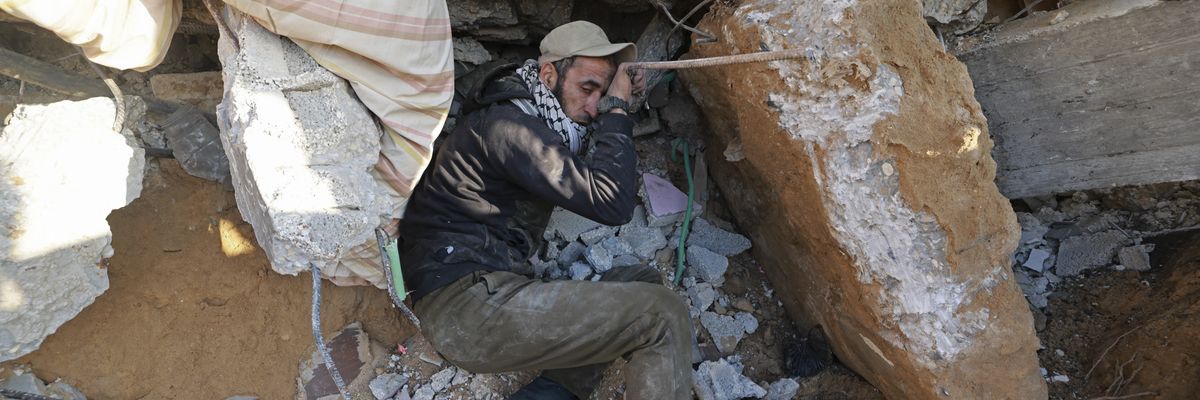
An invasion would have "catastrophic humanitarian consequences, including mass civilian casualties, extensive population displacement, and the collapse of the existing humanitarian response," the cable warned.
An Israeli invasion of Rafah would have "catastrophic" consequences for the 1.5 million civilians sheltering in the southern Gazan city, a U.S. diplomatic cable has warned.
The cable, written by members of the Bureau for Humanitarian Assistance at the U.S. Agency for International Development (USAID), was sent from Jerusalem to the State Department in Washington, D.C. on Monday and reported by The Intercept on Tuesday.
"A potential escalation of military operations in within Southern Gaza's Rafah Governorate could result in catastrophic humanitarian consequences, including mass civilian casualties, extensive population displacement, and the collapse of the existing humanitarian response, multiple relief actors have warned USAID's Levant Disaster Assistance Response Team," the cable reads.
"A 'military incursion' into a tent city of unarmed civilians is a horrifying, psychopathic action."
It comes amid increased protests against a potential Rafah invasion and international calls for a cease-fire in an attack that the International Court of Justice has deemed a plausible genocide. Israel's assault on Gaza has already killed more than 30,000 people, displaced at least 85% of the population, and induced a famine that is killing children through starvation and dehydration.
The Biden administration faces mounting domestic pressure to push for an end to the onslaught. However, the cable was publicized the same day that Secretary of State Anthony Blinken met with Israeli War Cabinet Member Benny Gantz and did not categorically reject a Rafah invasion. Instead, Blinken reportedly "underscored the need for a credible and implementable humanitarian plan prior to any major military operation in Rafah, given the risks to civilians."
Yet the stark language of the cable belies the possibility of such a plan.
"At present, there appear to be no viable evacuation options for the 1.5 million in Rafah," the cable said.
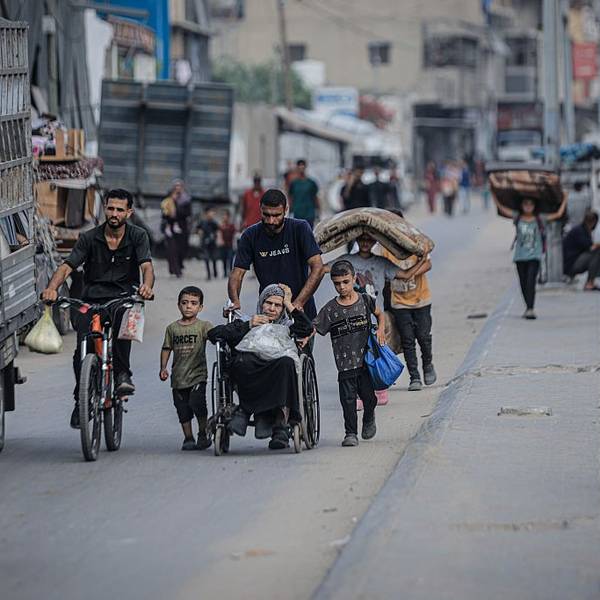
The Rafah Governorate, which it said was comparable in size to Syracuse, New York, has seen its population increase by more than sevenfold since Israel began its assault on Gaza following Hamas' deadly incursion into Southern Israel on October 7. The Israeli military ordered civilians to flee southward for safety, and now those who heeded those calls have nowhere else to go.
"A large portion of those residing in Rafah, including elderly populations, exhausted IDPs [internally displaced persons], and those with reduced mobility, would likely remain in the governorate during the potential military operation due to lack of viable alternatives, heightening the risk of mass casualties," the cable said.
It described the situation in Rafah as already dire. Many people entering Rafah from the north had their belongings seized by the Israel Defense Forces and then had to spend months trying to find basic items like blankets. The services that do exist are overwhelmed.
"The impact of hostilities has stretched the capacity of Gaza's health system beyond its limit," the cable said.
In addition, Israel been ramping up a bombing campaign against Rafah, leading to "escalating panic and increased breakdown of social order," the cable said.
Reacting to the cable, journalist Heidi Moore said on social media that its assessment of a potential Rafah invasion as "catastrophic" was "the only conclusion."
"A 'military incursion' into a tent city of unarmed civilians is a horrifying, psychopathic action," Moore added.
It is unclear how much influence the cable will have with the administration. In addition to the State Department, copies of it were also sent to the National Security Council, secretary of defense, and the CIA.
USAID declined The Intercept's request for comment, but pointed to previous remarks of Administrator Samantha Power, who said in late February that the U.S. could not support a Rafah campaign without a "credible plan to protect civilians" and that it had "seen no credible plan."
Dear Common Dreams reader, It’s been nearly 30 years since I co-founded Common Dreams with my late wife, Lina Newhouser. We had the radical notion that journalism should serve the public good, not corporate profits. It was clear to us from the outset what it would take to build such a project. No paid advertisements. No corporate sponsors. No millionaire publisher telling us what to think or do. Many people said we wouldn't last a year, but we proved those doubters wrong. Together with a tremendous team of journalists and dedicated staff, we built an independent media outlet free from the constraints of profits and corporate control. Our mission has always been simple: To inform. To inspire. To ignite change for the common good. Building Common Dreams was not easy. Our survival was never guaranteed. When you take on the most powerful forces—Wall Street greed, fossil fuel industry destruction, Big Tech lobbyists, and uber-rich oligarchs who have spent billions upon billions rigging the economy and democracy in their favor—the only bulwark you have is supporters who believe in your work. But here’s the urgent message from me today. It's never been this bad out there. And it's never been this hard to keep us going. At the very moment Common Dreams is most needed, the threats we face are intensifying. We need your support now more than ever. We don't accept corporate advertising and never will. We don't have a paywall because we don't think people should be blocked from critical news based on their ability to pay. Everything we do is funded by the donations of readers like you. When everyone does the little they can afford, we are strong. But if that support retreats or dries up, so do we. Will you donate now to make sure Common Dreams not only survives but thrives? —Craig Brown, Co-founder |
An Israeli invasion of Rafah would have "catastrophic" consequences for the 1.5 million civilians sheltering in the southern Gazan city, a U.S. diplomatic cable has warned.
The cable, written by members of the Bureau for Humanitarian Assistance at the U.S. Agency for International Development (USAID), was sent from Jerusalem to the State Department in Washington, D.C. on Monday and reported by The Intercept on Tuesday.
"A potential escalation of military operations in within Southern Gaza's Rafah Governorate could result in catastrophic humanitarian consequences, including mass civilian casualties, extensive population displacement, and the collapse of the existing humanitarian response, multiple relief actors have warned USAID's Levant Disaster Assistance Response Team," the cable reads.
"A 'military incursion' into a tent city of unarmed civilians is a horrifying, psychopathic action."
It comes amid increased protests against a potential Rafah invasion and international calls for a cease-fire in an attack that the International Court of Justice has deemed a plausible genocide. Israel's assault on Gaza has already killed more than 30,000 people, displaced at least 85% of the population, and induced a famine that is killing children through starvation and dehydration.
The Biden administration faces mounting domestic pressure to push for an end to the onslaught. However, the cable was publicized the same day that Secretary of State Anthony Blinken met with Israeli War Cabinet Member Benny Gantz and did not categorically reject a Rafah invasion. Instead, Blinken reportedly "underscored the need for a credible and implementable humanitarian plan prior to any major military operation in Rafah, given the risks to civilians."
Yet the stark language of the cable belies the possibility of such a plan.
"At present, there appear to be no viable evacuation options for the 1.5 million in Rafah," the cable said.
The Rafah Governorate, which it said was comparable in size to Syracuse, New York, has seen its population increase by more than sevenfold since Israel began its assault on Gaza following Hamas' deadly incursion into Southern Israel on October 7. The Israeli military ordered civilians to flee southward for safety, and now those who heeded those calls have nowhere else to go.
"A large portion of those residing in Rafah, including elderly populations, exhausted IDPs [internally displaced persons], and those with reduced mobility, would likely remain in the governorate during the potential military operation due to lack of viable alternatives, heightening the risk of mass casualties," the cable said.
It described the situation in Rafah as already dire. Many people entering Rafah from the north had their belongings seized by the Israel Defense Forces and then had to spend months trying to find basic items like blankets. The services that do exist are overwhelmed.
"The impact of hostilities has stretched the capacity of Gaza's health system beyond its limit," the cable said.
In addition, Israel been ramping up a bombing campaign against Rafah, leading to "escalating panic and increased breakdown of social order," the cable said.
Reacting to the cable, journalist Heidi Moore said on social media that its assessment of a potential Rafah invasion as "catastrophic" was "the only conclusion."
"A 'military incursion' into a tent city of unarmed civilians is a horrifying, psychopathic action," Moore added.
It is unclear how much influence the cable will have with the administration. In addition to the State Department, copies of it were also sent to the National Security Council, secretary of defense, and the CIA.
USAID declined The Intercept's request for comment, but pointed to previous remarks of Administrator Samantha Power, who said in late February that the U.S. could not support a Rafah campaign without a "credible plan to protect civilians" and that it had "seen no credible plan."
An Israeli invasion of Rafah would have "catastrophic" consequences for the 1.5 million civilians sheltering in the southern Gazan city, a U.S. diplomatic cable has warned.
The cable, written by members of the Bureau for Humanitarian Assistance at the U.S. Agency for International Development (USAID), was sent from Jerusalem to the State Department in Washington, D.C. on Monday and reported by The Intercept on Tuesday.
"A potential escalation of military operations in within Southern Gaza's Rafah Governorate could result in catastrophic humanitarian consequences, including mass civilian casualties, extensive population displacement, and the collapse of the existing humanitarian response, multiple relief actors have warned USAID's Levant Disaster Assistance Response Team," the cable reads.
"A 'military incursion' into a tent city of unarmed civilians is a horrifying, psychopathic action."
It comes amid increased protests against a potential Rafah invasion and international calls for a cease-fire in an attack that the International Court of Justice has deemed a plausible genocide. Israel's assault on Gaza has already killed more than 30,000 people, displaced at least 85% of the population, and induced a famine that is killing children through starvation and dehydration.
The Biden administration faces mounting domestic pressure to push for an end to the onslaught. However, the cable was publicized the same day that Secretary of State Anthony Blinken met with Israeli War Cabinet Member Benny Gantz and did not categorically reject a Rafah invasion. Instead, Blinken reportedly "underscored the need for a credible and implementable humanitarian plan prior to any major military operation in Rafah, given the risks to civilians."
Yet the stark language of the cable belies the possibility of such a plan.
"At present, there appear to be no viable evacuation options for the 1.5 million in Rafah," the cable said.
The Rafah Governorate, which it said was comparable in size to Syracuse, New York, has seen its population increase by more than sevenfold since Israel began its assault on Gaza following Hamas' deadly incursion into Southern Israel on October 7. The Israeli military ordered civilians to flee southward for safety, and now those who heeded those calls have nowhere else to go.
"A large portion of those residing in Rafah, including elderly populations, exhausted IDPs [internally displaced persons], and those with reduced mobility, would likely remain in the governorate during the potential military operation due to lack of viable alternatives, heightening the risk of mass casualties," the cable said.
It described the situation in Rafah as already dire. Many people entering Rafah from the north had their belongings seized by the Israel Defense Forces and then had to spend months trying to find basic items like blankets. The services that do exist are overwhelmed.
"The impact of hostilities has stretched the capacity of Gaza's health system beyond its limit," the cable said.
In addition, Israel been ramping up a bombing campaign against Rafah, leading to "escalating panic and increased breakdown of social order," the cable said.
Reacting to the cable, journalist Heidi Moore said on social media that its assessment of a potential Rafah invasion as "catastrophic" was "the only conclusion."
"A 'military incursion' into a tent city of unarmed civilians is a horrifying, psychopathic action," Moore added.
It is unclear how much influence the cable will have with the administration. In addition to the State Department, copies of it were also sent to the National Security Council, secretary of defense, and the CIA.
USAID declined The Intercept's request for comment, but pointed to previous remarks of Administrator Samantha Power, who said in late February that the U.S. could not support a Rafah campaign without a "credible plan to protect civilians" and that it had "seen no credible plan."