5
#000000
#FFFFFF
To donate by check, phone, or other method, see our More Ways to Give page.
Daily news & progressive opinion—funded by the people, not the corporations—delivered straight to your inbox.
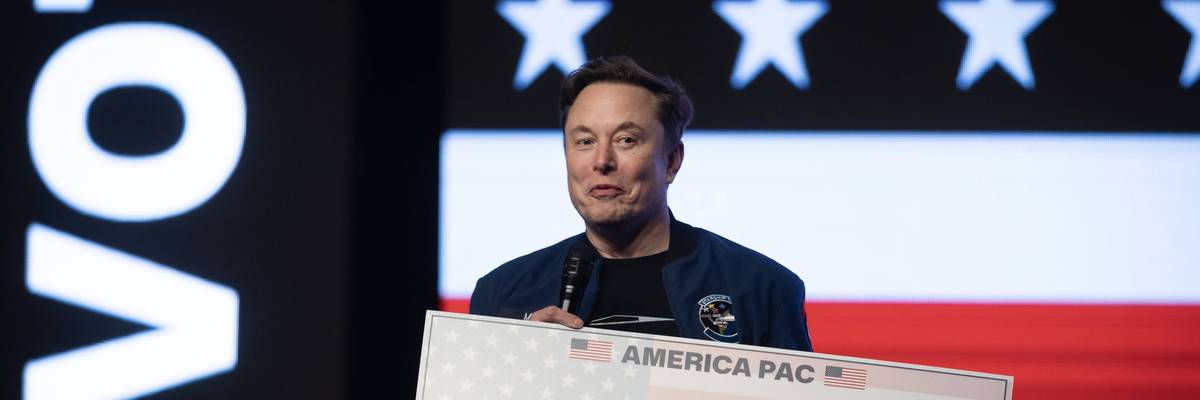
Elon Musk prepares to give $1,000,000 to a Wisconsin voter during a town hall meeting on March 30, 2025 in Green Bay, Wisconsin.
"It is time to break decisively with the perverse logic in which retirees, the poor, or immigrants are expected to balance the budget, while the rich are to be allowed to live tax-free in their own parallel society. "
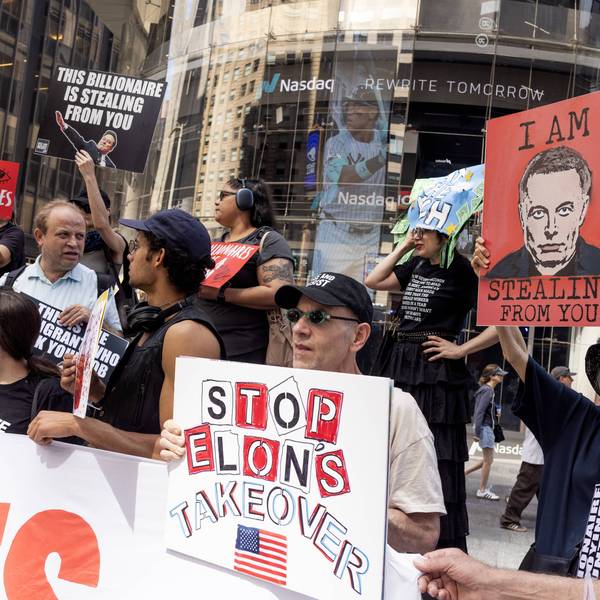
SpaceX CEO Elon Musk became the world's first trillionaire last week, and now a prominent economist is warning that his unprecedented wealth poses a grave threat to human freedom in the US and across the globe.
In a column published by The Guardian on Tuesday, Paris School of Economics professor Gabriel Zucman argued that Musk's enormous fortune is fundamentally at odds with a democratic system of governance because it gives him "the power to stifle competition, the power to shape public discourse, the power to influence policymaking, the power to buy elections, the power to stall social progress," and much else.
Zucman noted that wealth concentration is even greater now than it was during the original Gilded Age, as the top 0.00001% now have fortunes large enough to "buy 14% of everything produced in a given year in the US."
The economist added that while Musk—whose infamous destruction of the US Agency for International Development is projected to kill millions of people in the coming years—makes a particularly compelling villain, trillionaires would be a major problem for democracy even if they were of a more benevolent variety.
"No one should want to live in a society where one single individual can be worth $1 trillion, no matter their personal virtues," Zucman emphasized. "Such levels invariably skew power, distort markets, and sap our democratic ideals."
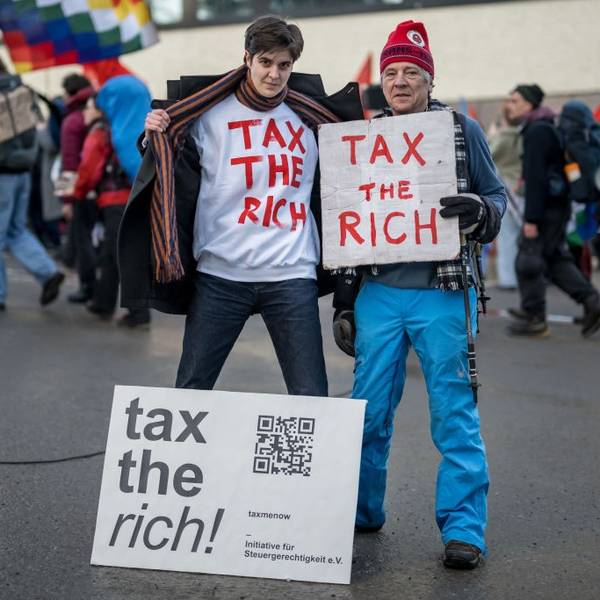
The best solution to this crisis, Zucman said, is to "create an unavoidable minimum tax on their wealth" that will "make it impossible for the super-rich to pay less tax than middle-class workers—a matter of basic equality before the law."
"It is time to break decisively with the perverse logic in which retirees, the poor, or immigrants are expected to balance the budget," Zucman concluded, "while the rich are to be allowed to live tax-free in their own parallel society. There cannot be a law more lenient for the rich and powerful than for the rest of us. If ever there was a time to act, it is now."
Zucman's thoughts on extreme wealth and democracy were echoed by Nobel Prize-winning economist Paul Krugman, who on Tuesday published an essay on his Substack page where he likened President Donald Trump's White House cage-fighting matches to the kinds of spectacles put on by Roman emperors before noting ominous similarities between the US today and the Roman Empire.
"While the causes of the decline of republican government and Rome’s eventual transition to one-man rule were doubtless complex," Krugman wrote, "there is broad consensus among historians that a key factor was the emergence of extreme inequality. A handful of men became incredibly wealthy from the spoils of Rome’s eastern conquests, and their wealth and power eventually became too great for the rules of constitutional, republican government to contain. Sound uncomfortably familiar?"
Gautam Mukunda, a professor at the Yale School of Management, similarly warned that Musk's newly minted trillionaire status was bad news for American self-governance.
In a Monday column published by Bloomberg, Mukunda pointed to the vast sums of money being spent by billionaires in US elections, which he noted "dwarf what candidates can raise themselves."
And like Krugman, Mukunda saw disturbing parallels between the US today and Ancient Rome.
"Marcus Crassus was the richest man in ancient Rome," he explained. "So rich that, by Plutarch’s account, he thought no man truly wealthy unless he could pay an army from his own purse. He spent that fortune bankrolling Julius Caesar and building the triumvirate that sidelined the Senate and, in fact if not in name, overthrew the republic."
Dear Common Dreams reader, It’s been nearly 30 years since I co-founded Common Dreams with my late wife, Lina Newhouser. We had the radical notion that journalism should serve the public good, not corporate profits. It was clear to us from the outset what it would take to build such a project. No paid advertisements. No corporate sponsors. No millionaire publisher telling us what to think or do. Many people said we wouldn't last a year, but we proved those doubters wrong. Together with a tremendous team of journalists and dedicated staff, we built an independent media outlet free from the constraints of profits and corporate control. Our mission has always been simple: To inform. To inspire. To ignite change for the common good. Building Common Dreams was not easy. Our survival was never guaranteed. When you take on the most powerful forces—Wall Street greed, fossil fuel industry destruction, Big Tech lobbyists, and uber-rich oligarchs who have spent billions upon billions rigging the economy and democracy in their favor—the only bulwark you have is supporters who believe in your work. But here’s the urgent message from me today. It's never been this bad out there. And it's never been this hard to keep us going. At the very moment Common Dreams is most needed, the threats we face are intensifying. We need your support now more than ever. We don't accept corporate advertising and never will. We don't have a paywall because we don't think people should be blocked from critical news based on their ability to pay. Everything we do is funded by the donations of readers like you. When everyone does the little they can afford, we are strong. But if that support retreats or dries up, so do we. Will you donate now to make sure Common Dreams not only survives but thrives? —Craig Brown, Co-founder |
SpaceX CEO Elon Musk became the world's first trillionaire last week, and now a prominent economist is warning that his unprecedented wealth poses a grave threat to human freedom in the US and across the globe.
In a column published by The Guardian on Tuesday, Paris School of Economics professor Gabriel Zucman argued that Musk's enormous fortune is fundamentally at odds with a democratic system of governance because it gives him "the power to stifle competition, the power to shape public discourse, the power to influence policymaking, the power to buy elections, the power to stall social progress," and much else.
Zucman noted that wealth concentration is even greater now than it was during the original Gilded Age, as the top 0.00001% now have fortunes large enough to "buy 14% of everything produced in a given year in the US."
The economist added that while Musk—whose infamous destruction of the US Agency for International Development is projected to kill millions of people in the coming years—makes a particularly compelling villain, trillionaires would be a major problem for democracy even if they were of a more benevolent variety.
"No one should want to live in a society where one single individual can be worth $1 trillion, no matter their personal virtues," Zucman emphasized. "Such levels invariably skew power, distort markets, and sap our democratic ideals."
The best solution to this crisis, Zucman said, is to "create an unavoidable minimum tax on their wealth" that will "make it impossible for the super-rich to pay less tax than middle-class workers—a matter of basic equality before the law."
"It is time to break decisively with the perverse logic in which retirees, the poor, or immigrants are expected to balance the budget," Zucman concluded, "while the rich are to be allowed to live tax-free in their own parallel society. There cannot be a law more lenient for the rich and powerful than for the rest of us. If ever there was a time to act, it is now."
Zucman's thoughts on extreme wealth and democracy were echoed by Nobel Prize-winning economist Paul Krugman, who on Tuesday published an essay on his Substack page where he likened President Donald Trump's White House cage-fighting matches to the kinds of spectacles put on by Roman emperors before noting ominous similarities between the US today and the Roman Empire.
"While the causes of the decline of republican government and Rome’s eventual transition to one-man rule were doubtless complex," Krugman wrote, "there is broad consensus among historians that a key factor was the emergence of extreme inequality. A handful of men became incredibly wealthy from the spoils of Rome’s eastern conquests, and their wealth and power eventually became too great for the rules of constitutional, republican government to contain. Sound uncomfortably familiar?"
Gautam Mukunda, a professor at the Yale School of Management, similarly warned that Musk's newly minted trillionaire status was bad news for American self-governance.
In a Monday column published by Bloomberg, Mukunda pointed to the vast sums of money being spent by billionaires in US elections, which he noted "dwarf what candidates can raise themselves."
And like Krugman, Mukunda saw disturbing parallels between the US today and Ancient Rome.
"Marcus Crassus was the richest man in ancient Rome," he explained. "So rich that, by Plutarch’s account, he thought no man truly wealthy unless he could pay an army from his own purse. He spent that fortune bankrolling Julius Caesar and building the triumvirate that sidelined the Senate and, in fact if not in name, overthrew the republic."
SpaceX CEO Elon Musk became the world's first trillionaire last week, and now a prominent economist is warning that his unprecedented wealth poses a grave threat to human freedom in the US and across the globe.
In a column published by The Guardian on Tuesday, Paris School of Economics professor Gabriel Zucman argued that Musk's enormous fortune is fundamentally at odds with a democratic system of governance because it gives him "the power to stifle competition, the power to shape public discourse, the power to influence policymaking, the power to buy elections, the power to stall social progress," and much else.
Zucman noted that wealth concentration is even greater now than it was during the original Gilded Age, as the top 0.00001% now have fortunes large enough to "buy 14% of everything produced in a given year in the US."
The economist added that while Musk—whose infamous destruction of the US Agency for International Development is projected to kill millions of people in the coming years—makes a particularly compelling villain, trillionaires would be a major problem for democracy even if they were of a more benevolent variety.
"No one should want to live in a society where one single individual can be worth $1 trillion, no matter their personal virtues," Zucman emphasized. "Such levels invariably skew power, distort markets, and sap our democratic ideals."
The best solution to this crisis, Zucman said, is to "create an unavoidable minimum tax on their wealth" that will "make it impossible for the super-rich to pay less tax than middle-class workers—a matter of basic equality before the law."
"It is time to break decisively with the perverse logic in which retirees, the poor, or immigrants are expected to balance the budget," Zucman concluded, "while the rich are to be allowed to live tax-free in their own parallel society. There cannot be a law more lenient for the rich and powerful than for the rest of us. If ever there was a time to act, it is now."
Zucman's thoughts on extreme wealth and democracy were echoed by Nobel Prize-winning economist Paul Krugman, who on Tuesday published an essay on his Substack page where he likened President Donald Trump's White House cage-fighting matches to the kinds of spectacles put on by Roman emperors before noting ominous similarities between the US today and the Roman Empire.
"While the causes of the decline of republican government and Rome’s eventual transition to one-man rule were doubtless complex," Krugman wrote, "there is broad consensus among historians that a key factor was the emergence of extreme inequality. A handful of men became incredibly wealthy from the spoils of Rome’s eastern conquests, and their wealth and power eventually became too great for the rules of constitutional, republican government to contain. Sound uncomfortably familiar?"
Gautam Mukunda, a professor at the Yale School of Management, similarly warned that Musk's newly minted trillionaire status was bad news for American self-governance.
In a Monday column published by Bloomberg, Mukunda pointed to the vast sums of money being spent by billionaires in US elections, which he noted "dwarf what candidates can raise themselves."
And like Krugman, Mukunda saw disturbing parallels between the US today and Ancient Rome.
"Marcus Crassus was the richest man in ancient Rome," he explained. "So rich that, by Plutarch’s account, he thought no man truly wealthy unless he could pay an army from his own purse. He spent that fortune bankrolling Julius Caesar and building the triumvirate that sidelined the Senate and, in fact if not in name, overthrew the republic."