

SUBSCRIBE TO OUR FREE NEWSLETTER
Daily news & progressive opinion—funded by the people, not the corporations—delivered straight to your inbox.
5
#000000
#FFFFFF
To donate by check, phone, or other method, see our More Ways to Give page.
Daily news & progressive opinion—funded by the people, not the corporations—delivered straight to your inbox.
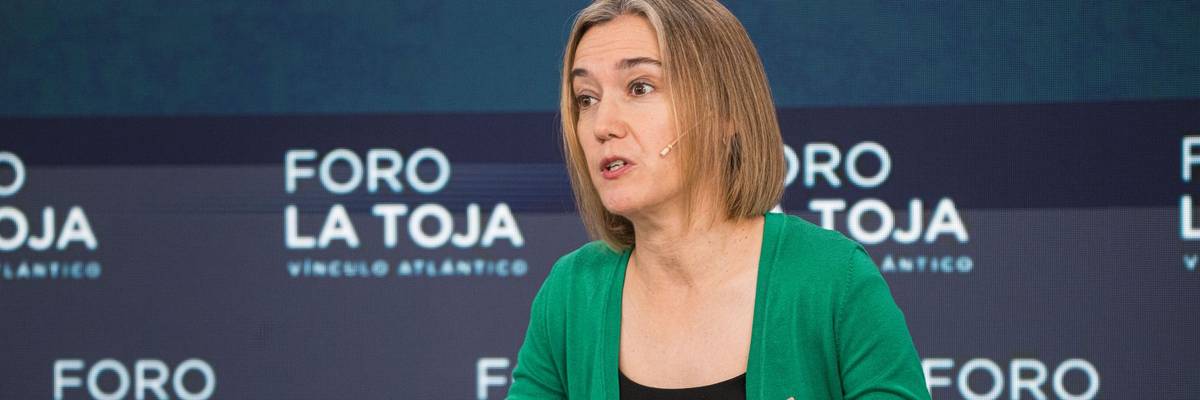
Amanda Sloat speaks at the La Toja Forum at the Eurostars Gran Hotel La Toja in Pontevedra, Spain on October 3, 2025.
"This is as close to a smoking gun as I've ever seen on Ukraine," said one observer.
A former senior Biden administration official admitted during a recent interview with who she thought were aides to Ukraine's president that the Russian invasion of Ukraine could have been averted if Kyiv had agreed to stop seeking NATO membership.
Amanda Sloat—a former special assistant to then-President Joe Biden and senior director for Europe at the National Security Council—believed she was speaking with aides to Ukrainian President Volodymyr Zelenskyy last week when she sat down for a phone interview with who turned out to be the Russian prankster duo known as Vovan and Lexus.
“We had some conversations even before the war started about, what if Ukraine comes out and just says to Russia, ‘Fine, you know, we won’t go into NATO, you know, if that stops the war, if that stops the invasion’—which at that point it may well have done,” Sloat said. “There is certainly a question, three years on now, you know, would that have been better to do before the war started, would that have been better to do [at the] Istanbul talks? It certainly would have prevented the destruction and loss of life.”
However, Biden officials chose not to address Russia's main concerns regarding Ukraine and NATO—with disastrous results.
Sloat explained that she "was uncomfortable with the idea of the US pushing Ukraine" against pursuing NATO membership, "and sort of implicitly giving Russia some sort of sphere of influence or veto power on that."
"I don’t think [then-President Joe] Biden felt like it was his place to tell Ukraine what to do then, to tell Ukraine not to pursue NATO," she said.
Sloat is the latest in a series of former US officials who have fallen victim to Vovan and Lexus' pranks, including ex-Secretaries of State Hillary Clinton and Mike Pompeo, UN Ambassador Samantha Power, and senior State Department official Victoria Nuland—who played a key role in a plot to overthrow the pro-Moscow government of then-Ukrainian President Viktor Yanukovych during the Euromaidan uprising of 2013-14.
Sloat's remarks during the interview implicitly belied the prevalent Western prewar narrative of an unprovoked Russian invasion—an assertion that ignored decades of provocation, beginning with the betrayal of a 1990 assurance by then-US Secretary of State James Baker to Soviet President Mikhail Gorbachev that NATO would not expand "one inch eastward" if the Soviets cooperated on German reunification.
Not only did NATO admit 13 new nations between then and the start of Russia's 2022 invasion, all of the new members were countries formerly in Moscow's orbit, and three—Estonia, Latvia, and Lithuania—were ex-Soviet republics. The Biden administration's public pronouncements of an "open door" to Ukrainian NATO membership continued right up to Russia's invasion, and were particularly intolerable for Moscow—even if Russian leaders understood that the US was actually more opposed to Kyiv joining the alliance than in favor of such a potentially fraught outcome.
Responding to the prank, French political commentator Arnaud Bertrand said on X that "this is as close to a smoking gun as I've ever seen on Ukraine."
"Hundreds of thousands dead, a country in ruins, and the justification is America being 'uncomfortable' about not preserving optionality," he added. "Not even an actual gain—just the theoretical possibility of one day pulling Ukraine into NATO. The banality of evil."
"All of this will surely go down as one of the great missed opportunities of history."
Sloat's comments, noted Norwegian political scientist Glenn Diesen, come "after our political-media establishment has for four years smeared, censored, and cancelled anyone who claimed that NATO expansion triggered the war."
Referring to Sloat's acknowledgment that Russia's invasion of Ukraine could have been averted with a guarantee of Ukrainian neutrality, Jacobin staff writer Branko Marcetic wrote for Responsible Statecraft Tuesday that she "is not the first to have made this admission."
"As I documented two years ago, former NATO Secretary General Jens Stoltenberg and former Biden Director of National Intelligence Avril Haines both likewise explicitly said that NATO’s potential expansion into Ukraine was the core grievance that motivated Putin’s decision to invade, and that, at least according to Stoltenberg, NATO rejected compromising on it."
"Zelensky has now publicly agreed to this concession to advance peace talks—only three years later, with Ukraine now in physical ruins, its economy destroyed, hundreds of thousands of casualties, and survivors traumatized and disabled on a mass scale," he lamented.
"All of this will surely go down as one of the great missed opportunities of history," Marcetic added. "Critics of the war and NATO policy have long said the war and its devastating impact could have been avoided by explicitly ruling out Ukrainian entry into NATO, only to be told they were spreading Kremlin propaganda. It turns out they were simply spreading Biden officials' own private thoughts."
Dear Common Dreams reader, It’s been nearly 30 years since I co-founded Common Dreams with my late wife, Lina Newhouser. We had the radical notion that journalism should serve the public good, not corporate profits. It was clear to us from the outset what it would take to build such a project. No paid advertisements. No corporate sponsors. No millionaire publisher telling us what to think or do. Many people said we wouldn't last a year, but we proved those doubters wrong. Together with a tremendous team of journalists and dedicated staff, we built an independent media outlet free from the constraints of profits and corporate control. Our mission has always been simple: To inform. To inspire. To ignite change for the common good. Building Common Dreams was not easy. Our survival was never guaranteed. When you take on the most powerful forces—Wall Street greed, fossil fuel industry destruction, Big Tech lobbyists, and uber-rich oligarchs who have spent billions upon billions rigging the economy and democracy in their favor—the only bulwark you have is supporters who believe in your work. But here’s the urgent message from me today. It's never been this bad out there. And it's never been this hard to keep us going. At the very moment Common Dreams is most needed, the threats we face are intensifying. We need your support now more than ever. We don't accept corporate advertising and never will. We don't have a paywall because we don't think people should be blocked from critical news based on their ability to pay. Everything we do is funded by the donations of readers like you. When everyone does the little they can afford, we are strong. But if that support retreats or dries up, so do we. Will you donate now to make sure Common Dreams not only survives but thrives? —Craig Brown, Co-founder |
A former senior Biden administration official admitted during a recent interview with who she thought were aides to Ukraine's president that the Russian invasion of Ukraine could have been averted if Kyiv had agreed to stop seeking NATO membership.
Amanda Sloat—a former special assistant to then-President Joe Biden and senior director for Europe at the National Security Council—believed she was speaking with aides to Ukrainian President Volodymyr Zelenskyy last week when she sat down for a phone interview with who turned out to be the Russian prankster duo known as Vovan and Lexus.
“We had some conversations even before the war started about, what if Ukraine comes out and just says to Russia, ‘Fine, you know, we won’t go into NATO, you know, if that stops the war, if that stops the invasion’—which at that point it may well have done,” Sloat said. “There is certainly a question, three years on now, you know, would that have been better to do before the war started, would that have been better to do [at the] Istanbul talks? It certainly would have prevented the destruction and loss of life.”
However, Biden officials chose not to address Russia's main concerns regarding Ukraine and NATO—with disastrous results.
Sloat explained that she "was uncomfortable with the idea of the US pushing Ukraine" against pursuing NATO membership, "and sort of implicitly giving Russia some sort of sphere of influence or veto power on that."
"I don’t think [then-President Joe] Biden felt like it was his place to tell Ukraine what to do then, to tell Ukraine not to pursue NATO," she said.
Sloat is the latest in a series of former US officials who have fallen victim to Vovan and Lexus' pranks, including ex-Secretaries of State Hillary Clinton and Mike Pompeo, UN Ambassador Samantha Power, and senior State Department official Victoria Nuland—who played a key role in a plot to overthrow the pro-Moscow government of then-Ukrainian President Viktor Yanukovych during the Euromaidan uprising of 2013-14.
Sloat's remarks during the interview implicitly belied the prevalent Western prewar narrative of an unprovoked Russian invasion—an assertion that ignored decades of provocation, beginning with the betrayal of a 1990 assurance by then-US Secretary of State James Baker to Soviet President Mikhail Gorbachev that NATO would not expand "one inch eastward" if the Soviets cooperated on German reunification.
Not only did NATO admit 13 new nations between then and the start of Russia's 2022 invasion, all of the new members were countries formerly in Moscow's orbit, and three—Estonia, Latvia, and Lithuania—were ex-Soviet republics. The Biden administration's public pronouncements of an "open door" to Ukrainian NATO membership continued right up to Russia's invasion, and were particularly intolerable for Moscow—even if Russian leaders understood that the US was actually more opposed to Kyiv joining the alliance than in favor of such a potentially fraught outcome.
Responding to the prank, French political commentator Arnaud Bertrand said on X that "this is as close to a smoking gun as I've ever seen on Ukraine."
"Hundreds of thousands dead, a country in ruins, and the justification is America being 'uncomfortable' about not preserving optionality," he added. "Not even an actual gain—just the theoretical possibility of one day pulling Ukraine into NATO. The banality of evil."
"All of this will surely go down as one of the great missed opportunities of history."
Sloat's comments, noted Norwegian political scientist Glenn Diesen, come "after our political-media establishment has for four years smeared, censored, and cancelled anyone who claimed that NATO expansion triggered the war."
Referring to Sloat's acknowledgment that Russia's invasion of Ukraine could have been averted with a guarantee of Ukrainian neutrality, Jacobin staff writer Branko Marcetic wrote for Responsible Statecraft Tuesday that she "is not the first to have made this admission."
"As I documented two years ago, former NATO Secretary General Jens Stoltenberg and former Biden Director of National Intelligence Avril Haines both likewise explicitly said that NATO’s potential expansion into Ukraine was the core grievance that motivated Putin’s decision to invade, and that, at least according to Stoltenberg, NATO rejected compromising on it."
"Zelensky has now publicly agreed to this concession to advance peace talks—only three years later, with Ukraine now in physical ruins, its economy destroyed, hundreds of thousands of casualties, and survivors traumatized and disabled on a mass scale," he lamented.
"All of this will surely go down as one of the great missed opportunities of history," Marcetic added. "Critics of the war and NATO policy have long said the war and its devastating impact could have been avoided by explicitly ruling out Ukrainian entry into NATO, only to be told they were spreading Kremlin propaganda. It turns out they were simply spreading Biden officials' own private thoughts."
A former senior Biden administration official admitted during a recent interview with who she thought were aides to Ukraine's president that the Russian invasion of Ukraine could have been averted if Kyiv had agreed to stop seeking NATO membership.
Amanda Sloat—a former special assistant to then-President Joe Biden and senior director for Europe at the National Security Council—believed she was speaking with aides to Ukrainian President Volodymyr Zelenskyy last week when she sat down for a phone interview with who turned out to be the Russian prankster duo known as Vovan and Lexus.
“We had some conversations even before the war started about, what if Ukraine comes out and just says to Russia, ‘Fine, you know, we won’t go into NATO, you know, if that stops the war, if that stops the invasion’—which at that point it may well have done,” Sloat said. “There is certainly a question, three years on now, you know, would that have been better to do before the war started, would that have been better to do [at the] Istanbul talks? It certainly would have prevented the destruction and loss of life.”
However, Biden officials chose not to address Russia's main concerns regarding Ukraine and NATO—with disastrous results.
Sloat explained that she "was uncomfortable with the idea of the US pushing Ukraine" against pursuing NATO membership, "and sort of implicitly giving Russia some sort of sphere of influence or veto power on that."
"I don’t think [then-President Joe] Biden felt like it was his place to tell Ukraine what to do then, to tell Ukraine not to pursue NATO," she said.
Sloat is the latest in a series of former US officials who have fallen victim to Vovan and Lexus' pranks, including ex-Secretaries of State Hillary Clinton and Mike Pompeo, UN Ambassador Samantha Power, and senior State Department official Victoria Nuland—who played a key role in a plot to overthrow the pro-Moscow government of then-Ukrainian President Viktor Yanukovych during the Euromaidan uprising of 2013-14.
Sloat's remarks during the interview implicitly belied the prevalent Western prewar narrative of an unprovoked Russian invasion—an assertion that ignored decades of provocation, beginning with the betrayal of a 1990 assurance by then-US Secretary of State James Baker to Soviet President Mikhail Gorbachev that NATO would not expand "one inch eastward" if the Soviets cooperated on German reunification.
Not only did NATO admit 13 new nations between then and the start of Russia's 2022 invasion, all of the new members were countries formerly in Moscow's orbit, and three—Estonia, Latvia, and Lithuania—were ex-Soviet republics. The Biden administration's public pronouncements of an "open door" to Ukrainian NATO membership continued right up to Russia's invasion, and were particularly intolerable for Moscow—even if Russian leaders understood that the US was actually more opposed to Kyiv joining the alliance than in favor of such a potentially fraught outcome.
Responding to the prank, French political commentator Arnaud Bertrand said on X that "this is as close to a smoking gun as I've ever seen on Ukraine."
"Hundreds of thousands dead, a country in ruins, and the justification is America being 'uncomfortable' about not preserving optionality," he added. "Not even an actual gain—just the theoretical possibility of one day pulling Ukraine into NATO. The banality of evil."
"All of this will surely go down as one of the great missed opportunities of history."
Sloat's comments, noted Norwegian political scientist Glenn Diesen, come "after our political-media establishment has for four years smeared, censored, and cancelled anyone who claimed that NATO expansion triggered the war."
Referring to Sloat's acknowledgment that Russia's invasion of Ukraine could have been averted with a guarantee of Ukrainian neutrality, Jacobin staff writer Branko Marcetic wrote for Responsible Statecraft Tuesday that she "is not the first to have made this admission."
"As I documented two years ago, former NATO Secretary General Jens Stoltenberg and former Biden Director of National Intelligence Avril Haines both likewise explicitly said that NATO’s potential expansion into Ukraine was the core grievance that motivated Putin’s decision to invade, and that, at least according to Stoltenberg, NATO rejected compromising on it."
"Zelensky has now publicly agreed to this concession to advance peace talks—only three years later, with Ukraine now in physical ruins, its economy destroyed, hundreds of thousands of casualties, and survivors traumatized and disabled on a mass scale," he lamented.
"All of this will surely go down as one of the great missed opportunities of history," Marcetic added. "Critics of the war and NATO policy have long said the war and its devastating impact could have been avoided by explicitly ruling out Ukrainian entry into NATO, only to be told they were spreading Kremlin propaganda. It turns out they were simply spreading Biden officials' own private thoughts."

