SUBSCRIBE TO OUR FREE NEWSLETTER
Daily news & progressive opinion—funded by the people, not the corporations—delivered straight to your inbox.
5
#000000
#FFFFFF
To donate by check, phone, or other method, see our More Ways to Give page.
Daily news & progressive opinion—funded by the people, not the corporations—delivered straight to your inbox.
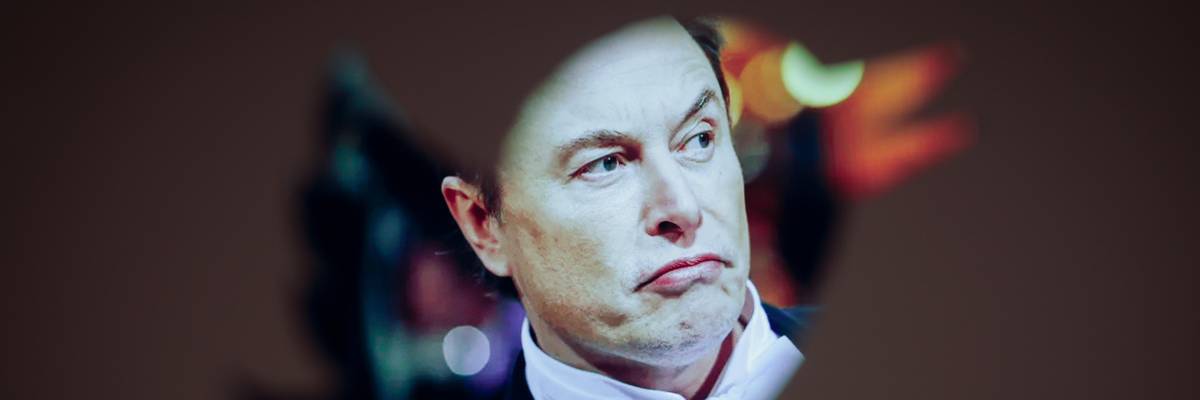
Elon Musk and a Twitter logo are seen in a photo illustration on November 30, 2022. (Photo: STR/NurPhoto via Getty Images)
Twitter CEO Elon Musk, a self-proclaimed free speech absolutist, suspended a number of journalists from the social media platform on Thursday in what the ACLU condemned as "an attack on free expression" that should be reversed.
Musk justified his decision by claiming those suspended--including Drew Harwell of The Washington Post, Micah Lee of The Intercept, Ryan Mac of The New York Times, and Matt Binder of Mashable--shared real-time details about his location, an accusation stemming from the journalists' reporting on a Twitter account that tracked the movements of the billionaire's private jet.
That account and the person behind it, a college student, have been suspended and Musk says he intends to take legal action, even though the flight information was based on publicly available data.
"Criticizing me all day long is totally fine," Musk tweeted late Thursday, "but doxxing my real-time location and endangering my family is not."
Following the suspensions of journalists, which were carried out without notice or immediate explanation, the Post reported that "none of the tweets from suspended reporters" that it reviewed "revealed the location of Musk or his family."
Musk later insisted that even so much as sharing a link to the flight-tracking account in the course of reporting amounts to a violation of Twitter's newly amended policy against sharing a person's "live location information."
As Musk faced backlash from press freedom and civil liberties groups over the decision, he posted a poll on Twitter asking users when he should unsuspend the journalists' accounts. When a plurality of respondents said the accounts should be restored "now," Musk tweeted: "Sorry, too many options. Will redo poll."
Jameel Jaffer, executive director of the Knight First Amendment Institute at Columbia University, told NPR that "Musk suspending journalists' accounts is petty and vindictive and absolutely disgraceful--and especially so because Musk has styled himself, however absurdly, as a champion of free speech."
The Committee to Protect Journalists, a watchdog group that defends press freedom worldwide, said in a statement that it is "concerned about news reports that journalists who have covered recent developments involving Twitter and its owner, Elon Musk, have had their accounts on the platform suspended."
"If confirmed as retaliation for their work, this would be a serious violation of journalists' right to report the news without fear of reprisal," the group added.
Musk's move also drew attention and criticism from lawmakers.
Rep. Alexandria Ocasio-Cortez (D-N.Y.), who has faced death threats and other forms of harassment, tweeted that she understands "feeling unsafe, but descending into abuse of power [and] erratically banning journalists only increases the intensity around you."
"You're a public figure. An extremely controversial and powerful one," Ocasio-Cortez wrote. "Take a beat and lay off the proto-fascism. Maybe try putting down your phone."
Edward Snowden, who exposed mass surveillance by the powerful U.S. National Security Agency and is now living in Russia under threat of imprisonment in his home country, weighed in on the suspensions Friday morning, writing that he is "significantly more sympathetic to Elon Musk's concern about crazy people showing up at the door than the average person because, well, look at my life, but c'mon, man."
"You're a public figure in a position of power in a world where even normal people are constantly tracked," Snowden added.
Dear Common Dreams reader, It’s been nearly 30 years since I co-founded Common Dreams with my late wife, Lina Newhouser. We had the radical notion that journalism should serve the public good, not corporate profits. It was clear to us from the outset what it would take to build such a project. No paid advertisements. No corporate sponsors. No millionaire publisher telling us what to think or do. Many people said we wouldn't last a year, but we proved those doubters wrong. Together with a tremendous team of journalists and dedicated staff, we built an independent media outlet free from the constraints of profits and corporate control. Our mission has always been simple: To inform. To inspire. To ignite change for the common good. Building Common Dreams was not easy. Our survival was never guaranteed. When you take on the most powerful forces—Wall Street greed, fossil fuel industry destruction, Big Tech lobbyists, and uber-rich oligarchs who have spent billions upon billions rigging the economy and democracy in their favor—the only bulwark you have is supporters who believe in your work. But here’s the urgent message from me today. It's never been this bad out there. And it's never been this hard to keep us going. At the very moment Common Dreams is most needed, the threats we face are intensifying. We need your support now more than ever. We don't accept corporate advertising and never will. We don't have a paywall because we don't think people should be blocked from critical news based on their ability to pay. Everything we do is funded by the donations of readers like you. When everyone does the little they can afford, we are strong. But if that support retreats or dries up, so do we. Will you donate now to make sure Common Dreams not only survives but thrives? —Craig Brown, Co-founder |
Twitter CEO Elon Musk, a self-proclaimed free speech absolutist, suspended a number of journalists from the social media platform on Thursday in what the ACLU condemned as "an attack on free expression" that should be reversed.
Musk justified his decision by claiming those suspended--including Drew Harwell of The Washington Post, Micah Lee of The Intercept, Ryan Mac of The New York Times, and Matt Binder of Mashable--shared real-time details about his location, an accusation stemming from the journalists' reporting on a Twitter account that tracked the movements of the billionaire's private jet.
That account and the person behind it, a college student, have been suspended and Musk says he intends to take legal action, even though the flight information was based on publicly available data.
"Criticizing me all day long is totally fine," Musk tweeted late Thursday, "but doxxing my real-time location and endangering my family is not."
Following the suspensions of journalists, which were carried out without notice or immediate explanation, the Post reported that "none of the tweets from suspended reporters" that it reviewed "revealed the location of Musk or his family."
Musk later insisted that even so much as sharing a link to the flight-tracking account in the course of reporting amounts to a violation of Twitter's newly amended policy against sharing a person's "live location information."
As Musk faced backlash from press freedom and civil liberties groups over the decision, he posted a poll on Twitter asking users when he should unsuspend the journalists' accounts. When a plurality of respondents said the accounts should be restored "now," Musk tweeted: "Sorry, too many options. Will redo poll."
Jameel Jaffer, executive director of the Knight First Amendment Institute at Columbia University, told NPR that "Musk suspending journalists' accounts is petty and vindictive and absolutely disgraceful--and especially so because Musk has styled himself, however absurdly, as a champion of free speech."
The Committee to Protect Journalists, a watchdog group that defends press freedom worldwide, said in a statement that it is "concerned about news reports that journalists who have covered recent developments involving Twitter and its owner, Elon Musk, have had their accounts on the platform suspended."
"If confirmed as retaliation for their work, this would be a serious violation of journalists' right to report the news without fear of reprisal," the group added.
Musk's move also drew attention and criticism from lawmakers.
Rep. Alexandria Ocasio-Cortez (D-N.Y.), who has faced death threats and other forms of harassment, tweeted that she understands "feeling unsafe, but descending into abuse of power [and] erratically banning journalists only increases the intensity around you."
"You're a public figure. An extremely controversial and powerful one," Ocasio-Cortez wrote. "Take a beat and lay off the proto-fascism. Maybe try putting down your phone."
Edward Snowden, who exposed mass surveillance by the powerful U.S. National Security Agency and is now living in Russia under threat of imprisonment in his home country, weighed in on the suspensions Friday morning, writing that he is "significantly more sympathetic to Elon Musk's concern about crazy people showing up at the door than the average person because, well, look at my life, but c'mon, man."
"You're a public figure in a position of power in a world where even normal people are constantly tracked," Snowden added.
Twitter CEO Elon Musk, a self-proclaimed free speech absolutist, suspended a number of journalists from the social media platform on Thursday in what the ACLU condemned as "an attack on free expression" that should be reversed.
Musk justified his decision by claiming those suspended--including Drew Harwell of The Washington Post, Micah Lee of The Intercept, Ryan Mac of The New York Times, and Matt Binder of Mashable--shared real-time details about his location, an accusation stemming from the journalists' reporting on a Twitter account that tracked the movements of the billionaire's private jet.
That account and the person behind it, a college student, have been suspended and Musk says he intends to take legal action, even though the flight information was based on publicly available data.
"Criticizing me all day long is totally fine," Musk tweeted late Thursday, "but doxxing my real-time location and endangering my family is not."
Following the suspensions of journalists, which were carried out without notice or immediate explanation, the Post reported that "none of the tweets from suspended reporters" that it reviewed "revealed the location of Musk or his family."
Musk later insisted that even so much as sharing a link to the flight-tracking account in the course of reporting amounts to a violation of Twitter's newly amended policy against sharing a person's "live location information."
As Musk faced backlash from press freedom and civil liberties groups over the decision, he posted a poll on Twitter asking users when he should unsuspend the journalists' accounts. When a plurality of respondents said the accounts should be restored "now," Musk tweeted: "Sorry, too many options. Will redo poll."
Jameel Jaffer, executive director of the Knight First Amendment Institute at Columbia University, told NPR that "Musk suspending journalists' accounts is petty and vindictive and absolutely disgraceful--and especially so because Musk has styled himself, however absurdly, as a champion of free speech."
The Committee to Protect Journalists, a watchdog group that defends press freedom worldwide, said in a statement that it is "concerned about news reports that journalists who have covered recent developments involving Twitter and its owner, Elon Musk, have had their accounts on the platform suspended."
"If confirmed as retaliation for their work, this would be a serious violation of journalists' right to report the news without fear of reprisal," the group added.
Musk's move also drew attention and criticism from lawmakers.
Rep. Alexandria Ocasio-Cortez (D-N.Y.), who has faced death threats and other forms of harassment, tweeted that she understands "feeling unsafe, but descending into abuse of power [and] erratically banning journalists only increases the intensity around you."
"You're a public figure. An extremely controversial and powerful one," Ocasio-Cortez wrote. "Take a beat and lay off the proto-fascism. Maybe try putting down your phone."
Edward Snowden, who exposed mass surveillance by the powerful U.S. National Security Agency and is now living in Russia under threat of imprisonment in his home country, weighed in on the suspensions Friday morning, writing that he is "significantly more sympathetic to Elon Musk's concern about crazy people showing up at the door than the average person because, well, look at my life, but c'mon, man."
"You're a public figure in a position of power in a world where even normal people are constantly tracked," Snowden added.