SUBSCRIBE TO OUR FREE NEWSLETTER
Daily news & progressive opinion—funded by the people, not the corporations—delivered straight to your inbox.
5
#000000
#FFFFFF
To donate by check, phone, or other method, see our More Ways to Give page.
Peace campaigners on Tuesday decried the Biden administration's approval of more than $5 billion in missile sales to Saudi Arabia and the United Arab Emirates, a move that came weeks after U.S. President Joe Biden visited the leaders of both countries despite pleas from human rights defenders.
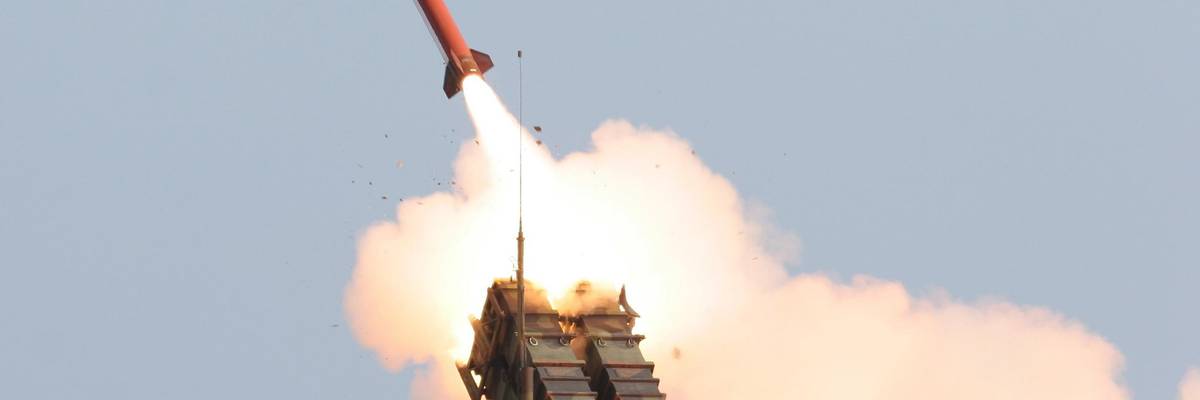
The U.S. Department of Defense said the U.S. State Department approved the $3.05 billion sale of 300 Raytheon Patriot MIM-104E missiles to Saudi Arabia, as well as 96 Lockheed Martin Terminal High Altitude Area Defense (THAAD) missiles worth $2.25 billion for the UAE.
The move came just after the extension of a United Nations-brokered truce in Yemen, where a U.S.-backed, Saudi-led coalition that includes the UAE is waging a war against Houthi rebels backed by the Iranian government. The sale's approval also comes days ahead of a virtual Organization of the Petroleum Exporting Countries (OPEC) ministerial meeting.
Citing "persistent Houthi cross-border" drone and missile attacks against Saudi Arabia, the Pentagon said the proposed sales "will support the foreign policy goals and national security objectives of the United States by improving the security of a partner country that is a force for political stability and economic progress in the Gulf region."
However, anti-war voices argued that such sales will only prolong a seven-year war in which more than 300,000 people have been killed, millions have been displaced, and millions more face hunger and disease in what's widely considered the world's worst humanitarian crisis.
Yemeni independent journalist Naseh Shaker tweeted that U.S. professions of commitment to peace in his war-ravaged nation are belied by the Biden administration's desire to sell weapons to Saudi Arabia, who will "use them in its aggression on Yemen."
The missile deals came weeks after U.S. President Joe Biden made a contentious visit to Saudi Arabia, where he met with Saudi Crown Prince Mohammed bin Salman, Emirati President Sheikh Mohamed bin Zayed Al Nahyan, and other regional leaders despite pleas from human rights defenders who drew attention to the coalition's alleged and documented war crimes in Yemen and the Saudi monarchy's repressive domestic rule.
A now-infamous photo of Biden fist-bumping bin Salman stood in stark contrast with then-candidate Biden's campaign promise to make Saudi Arabia a "pariah" over the gruesome murder of journalist Jamal Khashoggi and other human rights crimes.
After taking office, Biden temporarily froze arms sales to the country and the UAE and announced the offensive support ban. However, human rights defenders subsequently expressed disappointment when the administration approved a $650 million air-to-air missile sale to the Royal Saudi Air Force and a $500 million support services contract for Saudi military helicopters. Biden's July trip also followed reports that his administration is considering lifting its amorphous prohibition on the sale of "offensive" U.S. weaponry to Saudi Arabia.
Related Content

Raytheon shares--which have soared more than 250% since the U.S. launched the so-called War on Terror in September 2001--were up slightly on the news of Tuesday's approval. Lockheed Martin stock rose over 2% on Tuesday and is up more than 800% since 9/11.
Peace campaigners on Tuesday decried the Biden administration's approval of more than $5 billion in missile sales to Saudi Arabia and the United Arab Emirates, a move that came weeks after U.S. President Joe Biden visited the leaders of both countries despite pleas from human rights defenders.
The U.S. Department of Defense said the U.S. State Department approved the $3.05 billion sale of 300 Raytheon Patriot MIM-104E missiles to Saudi Arabia, as well as 96 Lockheed Martin Terminal High Altitude Area Defense (THAAD) missiles worth $2.25 billion for the UAE.
The move came just after the extension of a United Nations-brokered truce in Yemen, where a U.S.-backed, Saudi-led coalition that includes the UAE is waging a war against Houthi rebels backed by the Iranian government. The sale's approval also comes days ahead of a virtual Organization of the Petroleum Exporting Countries (OPEC) ministerial meeting.
Citing "persistent Houthi cross-border" drone and missile attacks against Saudi Arabia, the Pentagon said the proposed sales "will support the foreign policy goals and national security objectives of the United States by improving the security of a partner country that is a force for political stability and economic progress in the Gulf region."
However, anti-war voices argued that such sales will only prolong a seven-year war in which more than 300,000 people have been killed, millions have been displaced, and millions more face hunger and disease in what's widely considered the world's worst humanitarian crisis.
Yemeni independent journalist Naseh Shaker tweeted that U.S. professions of commitment to peace in his war-ravaged nation are belied by the Biden administration's desire to sell weapons to Saudi Arabia, who will "use them in its aggression on Yemen."
The missile deals came weeks after U.S. President Joe Biden made a contentious visit to Saudi Arabia, where he met with Saudi Crown Prince Mohammed bin Salman, Emirati President Sheikh Mohamed bin Zayed Al Nahyan, and other regional leaders despite pleas from human rights defenders who drew attention to the coalition's alleged and documented war crimes in Yemen and the Saudi monarchy's repressive domestic rule.
A now-infamous photo of Biden fist-bumping bin Salman stood in stark contrast with then-candidate Biden's campaign promise to make Saudi Arabia a "pariah" over the gruesome murder of journalist Jamal Khashoggi and other human rights crimes.
After taking office, Biden temporarily froze arms sales to the country and the UAE and announced the offensive support ban. However, human rights defenders subsequently expressed disappointment when the administration approved a $650 million air-to-air missile sale to the Royal Saudi Air Force and a $500 million support services contract for Saudi military helicopters. Biden's July trip also followed reports that his administration is considering lifting its amorphous prohibition on the sale of "offensive" U.S. weaponry to Saudi Arabia.
Related Content
Raytheon shares--which have soared more than 250% since the U.S. launched the so-called War on Terror in September 2001--were up slightly on the news of Tuesday's approval. Lockheed Martin stock rose over 2% on Tuesday and is up more than 800% since 9/11.
Peace campaigners on Tuesday decried the Biden administration's approval of more than $5 billion in missile sales to Saudi Arabia and the United Arab Emirates, a move that came weeks after U.S. President Joe Biden visited the leaders of both countries despite pleas from human rights defenders.
The U.S. Department of Defense said the U.S. State Department approved the $3.05 billion sale of 300 Raytheon Patriot MIM-104E missiles to Saudi Arabia, as well as 96 Lockheed Martin Terminal High Altitude Area Defense (THAAD) missiles worth $2.25 billion for the UAE.
The move came just after the extension of a United Nations-brokered truce in Yemen, where a U.S.-backed, Saudi-led coalition that includes the UAE is waging a war against Houthi rebels backed by the Iranian government. The sale's approval also comes days ahead of a virtual Organization of the Petroleum Exporting Countries (OPEC) ministerial meeting.
Citing "persistent Houthi cross-border" drone and missile attacks against Saudi Arabia, the Pentagon said the proposed sales "will support the foreign policy goals and national security objectives of the United States by improving the security of a partner country that is a force for political stability and economic progress in the Gulf region."
However, anti-war voices argued that such sales will only prolong a seven-year war in which more than 300,000 people have been killed, millions have been displaced, and millions more face hunger and disease in what's widely considered the world's worst humanitarian crisis.
Yemeni independent journalist Naseh Shaker tweeted that U.S. professions of commitment to peace in his war-ravaged nation are belied by the Biden administration's desire to sell weapons to Saudi Arabia, who will "use them in its aggression on Yemen."
The missile deals came weeks after U.S. President Joe Biden made a contentious visit to Saudi Arabia, where he met with Saudi Crown Prince Mohammed bin Salman, Emirati President Sheikh Mohamed bin Zayed Al Nahyan, and other regional leaders despite pleas from human rights defenders who drew attention to the coalition's alleged and documented war crimes in Yemen and the Saudi monarchy's repressive domestic rule.
A now-infamous photo of Biden fist-bumping bin Salman stood in stark contrast with then-candidate Biden's campaign promise to make Saudi Arabia a "pariah" over the gruesome murder of journalist Jamal Khashoggi and other human rights crimes.
After taking office, Biden temporarily froze arms sales to the country and the UAE and announced the offensive support ban. However, human rights defenders subsequently expressed disappointment when the administration approved a $650 million air-to-air missile sale to the Royal Saudi Air Force and a $500 million support services contract for Saudi military helicopters. Biden's July trip also followed reports that his administration is considering lifting its amorphous prohibition on the sale of "offensive" U.S. weaponry to Saudi Arabia.
Related Content
Raytheon shares--which have soared more than 250% since the U.S. launched the so-called War on Terror in September 2001--were up slightly on the news of Tuesday's approval. Lockheed Martin stock rose over 2% on Tuesday and is up more than 800% since 9/11.