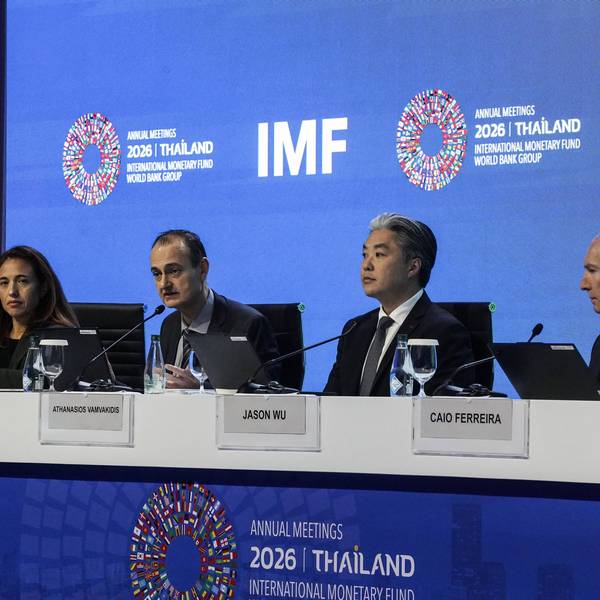
The conditions of nearly 90% of the International Monetary Fund's pandemic-related loans are forcing developing nations suffering some of the world's worst humanitarian crises to implement austerity measures that fuel further impoverishment and inequality, an analysis published Tuesday by Oxfam International revealed.
"The IMF must suspend austerity conditions on existing loans and increase access to emergency financing."
Oxfam found that "13 out of the 15 IMF loan programs negotiated during the second year of the pandemic require new austerity measures such as taxes on food and fuel or spending cuts that could put vital public services at risk."
This stands in stark contrast with IMF managing director Kristalina Georgieva's admonition to the European Union last year that the wealthy bloc should not endanger its economic recovery with "the suffocating force of austerity."
"This epitomizes the IMF's double standard," Oxfam International senior policy adviser Nabil Abdo said in a statement. "It is warning rich countries against austerity while forcing poorer ones into it."
At the start of the pandemic, the IMF issued billions of dollars in emergency loans to developing countries with few or no conditions. However, the institution has reverted to its highly controversial practice of requiring nations to impose the type of austerity measures that have exacerbated poverty and inequality, stymied countries' efforts to meet climate goals, fueled global unrest, and even played a key role in sparking revolutions.
The Oxfam report notes that the conditions of a 2021 loan of $2.3 billion to Kenya compelled the country to freeze public sector pay for three years, while mandating higher taxes on food and cooking gas.
"More than three million Kenyans are facing acute hunger as the driest conditions in decades spread a devastating drought across the country," Oxfam notes. "Nearly half of all households in Kenya are having to borrow food or buy it on credit."
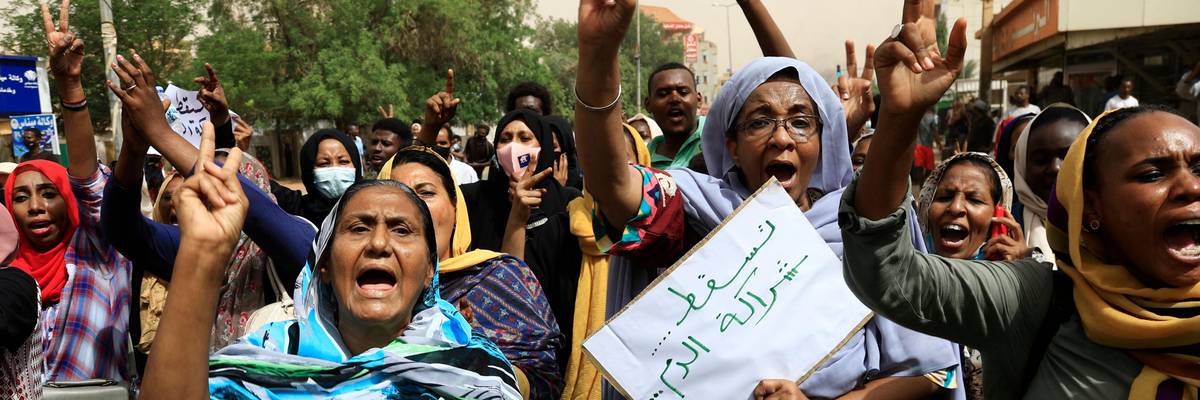
Sudan has had to end fuel subsidies, a policy that has disproportionately affected the nearly 50% of the population that is impoverished.
"The country was already reeling from international aid cuts, economic turmoil, and rising prices for everyday basics such as food and medicine before the war in Ukraine started," said Oxfam. "Over 14 million people need humanitarian assistance (almost one in every three people) and 9.8 million are food insecure in Sudan, which imports 87% of its wheat from Russia and Ukraine."
Related Content

28 Million in East Africa at Risk of Extreme Hunger as Ukraine Crisis Reverberates
Oxfam's analysis also found:
- Nine nations including Cameroon, Senegal, and Surinam must introduce or increase the collection of value-added taxes (VAT), which often apply to everyday products like food and clothing, and fall disproportionately on people living in poverty; and
- Ten countries including Kenya and Namibia are likely to freeze or cut public sector wages and jobs, which could mean lower quality of education and fewer nurses and doctors in countries already short of healthcare staff. Namibia had fewer than six doctors per 10,000 people when Covid-19 struck.
"The pandemic is not over for most of the world," said Abdo. "Rising energy bills and food prices are hurting poor countries most. They need help boosting access to basic services and social protection, not harsh conditions that kick people when they are down."
"The IMF must suspend austerity conditions on existing loans and increase access to emergency financing," he added. "It should encourage countries to increase taxes on the wealthiest and corporations to replenish depleted coffers and shrink widening inequality. That would actually be good advice."
Oxfam's analysis comes as the IMF's annual spring meetings get underway in Washington, D.C.
Related Content

Progressive International Outlines Four Ways to End IMF's 'Abuse of Power'
Last week, the leftist group Progressive International held an inquiry into the IMF at which lawyers, experts, and parliamentarians from nine nations recommended actions from bringing the institution under the United Nations' Economic and Social Council to taking it to the International Court of Justice over its alleged "illegality, impunity, and disregard for human rights."
The conditions of nearly 90% of the International Monetary Fund's pandemic-related loans are forcing developing nations suffering some of the world's worst humanitarian crises to implement austerity measures that fuel further impoverishment and inequality, an analysis published Tuesday by Oxfam International revealed.
"The IMF must suspend austerity conditions on existing loans and increase access to emergency financing."
Oxfam found that "13 out of the 15 IMF loan programs negotiated during the second year of the pandemic require new austerity measures such as taxes on food and fuel or spending cuts that could put vital public services at risk."
This stands in stark contrast with IMF managing director Kristalina Georgieva's admonition to the European Union last year that the wealthy bloc should not endanger its economic recovery with "the suffocating force of austerity."
"This epitomizes the IMF's double standard," Oxfam International senior policy adviser Nabil Abdo said in a statement. "It is warning rich countries against austerity while forcing poorer ones into it."
At the start of the pandemic, the IMF issued billions of dollars in emergency loans to developing countries with few or no conditions. However, the institution has reverted to its highly controversial practice of requiring nations to impose the type of austerity measures that have exacerbated poverty and inequality, stymied countries' efforts to meet climate goals, fueled global unrest, and even played a key role in sparking revolutions.
The Oxfam report notes that the conditions of a 2021 loan of $2.3 billion to Kenya compelled the country to freeze public sector pay for three years, while mandating higher taxes on food and cooking gas.
"More than three million Kenyans are facing acute hunger as the driest conditions in decades spread a devastating drought across the country," Oxfam notes. "Nearly half of all households in Kenya are having to borrow food or buy it on credit."
Sudan has had to end fuel subsidies, a policy that has disproportionately affected the nearly 50% of the population that is impoverished.
"The country was already reeling from international aid cuts, economic turmoil, and rising prices for everyday basics such as food and medicine before the war in Ukraine started," said Oxfam. "Over 14 million people need humanitarian assistance (almost one in every three people) and 9.8 million are food insecure in Sudan, which imports 87% of its wheat from Russia and Ukraine."
Related Content
28 Million in East Africa at Risk of Extreme Hunger as Ukraine Crisis Reverberates
Oxfam's analysis also found:
- Nine nations including Cameroon, Senegal, and Surinam must introduce or increase the collection of value-added taxes (VAT), which often apply to everyday products like food and clothing, and fall disproportionately on people living in poverty; and
- Ten countries including Kenya and Namibia are likely to freeze or cut public sector wages and jobs, which could mean lower quality of education and fewer nurses and doctors in countries already short of healthcare staff. Namibia had fewer than six doctors per 10,000 people when Covid-19 struck.
"The pandemic is not over for most of the world," said Abdo. "Rising energy bills and food prices are hurting poor countries most. They need help boosting access to basic services and social protection, not harsh conditions that kick people when they are down."
"The IMF must suspend austerity conditions on existing loans and increase access to emergency financing," he added. "It should encourage countries to increase taxes on the wealthiest and corporations to replenish depleted coffers and shrink widening inequality. That would actually be good advice."
Oxfam's analysis comes as the IMF's annual spring meetings get underway in Washington, D.C.
Related Content
Progressive International Outlines Four Ways to End IMF's 'Abuse of Power'
Last week, the leftist group Progressive International held an inquiry into the IMF at which lawyers, experts, and parliamentarians from nine nations recommended actions from bringing the institution under the United Nations' Economic and Social Council to taking it to the International Court of Justice over its alleged "illegality, impunity, and disregard for human rights."
- 28 Million in East Africa at Risk of Extreme Hunger as Ukraine Crisis Reverberates ›
- Progressive International Outlines Four Ways to End IMF's 'Abuse of Power' ›
- Opinion | Billions in Global South Face Looming Wave of Austerity in 2023 | Common Dreams ›
- Opinion | If This Global Austerity Continues, So Will Angry Protest | Common Dreams ›
- Poor Nations Face 'Perfect Storm' of Debt, Food, and Energy Crises: UN ›
- World Bank, IMF Must Prioritize Wealth Tax and Canceling Debt to Tackle Global Inequality | Common Dreams ›
- Opinion | Development Without the Poor: The Footprint of the World Bank and IMF in Thailand | Common Dreams ›
The conditions of nearly 90% of the International Monetary Fund's pandemic-related loans are forcing developing nations suffering some of the world's worst humanitarian crises to implement austerity measures that fuel further impoverishment and inequality, an analysis published Tuesday by Oxfam International revealed.
"The IMF must suspend austerity conditions on existing loans and increase access to emergency financing."
Oxfam found that "13 out of the 15 IMF loan programs negotiated during the second year of the pandemic require new austerity measures such as taxes on food and fuel or spending cuts that could put vital public services at risk."
This stands in stark contrast with IMF managing director Kristalina Georgieva's admonition to the European Union last year that the wealthy bloc should not endanger its economic recovery with "the suffocating force of austerity."
"This epitomizes the IMF's double standard," Oxfam International senior policy adviser Nabil Abdo said in a statement. "It is warning rich countries against austerity while forcing poorer ones into it."
At the start of the pandemic, the IMF issued billions of dollars in emergency loans to developing countries with few or no conditions. However, the institution has reverted to its highly controversial practice of requiring nations to impose the type of austerity measures that have exacerbated poverty and inequality, stymied countries' efforts to meet climate goals, fueled global unrest, and even played a key role in sparking revolutions.
The Oxfam report notes that the conditions of a 2021 loan of $2.3 billion to Kenya compelled the country to freeze public sector pay for three years, while mandating higher taxes on food and cooking gas.
"More than three million Kenyans are facing acute hunger as the driest conditions in decades spread a devastating drought across the country," Oxfam notes. "Nearly half of all households in Kenya are having to borrow food or buy it on credit."
Sudan has had to end fuel subsidies, a policy that has disproportionately affected the nearly 50% of the population that is impoverished.
"The country was already reeling from international aid cuts, economic turmoil, and rising prices for everyday basics such as food and medicine before the war in Ukraine started," said Oxfam. "Over 14 million people need humanitarian assistance (almost one in every three people) and 9.8 million are food insecure in Sudan, which imports 87% of its wheat from Russia and Ukraine."
Related Content
28 Million in East Africa at Risk of Extreme Hunger as Ukraine Crisis Reverberates
Oxfam's analysis also found:
- Nine nations including Cameroon, Senegal, and Surinam must introduce or increase the collection of value-added taxes (VAT), which often apply to everyday products like food and clothing, and fall disproportionately on people living in poverty; and
- Ten countries including Kenya and Namibia are likely to freeze or cut public sector wages and jobs, which could mean lower quality of education and fewer nurses and doctors in countries already short of healthcare staff. Namibia had fewer than six doctors per 10,000 people when Covid-19 struck.
"The pandemic is not over for most of the world," said Abdo. "Rising energy bills and food prices are hurting poor countries most. They need help boosting access to basic services and social protection, not harsh conditions that kick people when they are down."
"The IMF must suspend austerity conditions on existing loans and increase access to emergency financing," he added. "It should encourage countries to increase taxes on the wealthiest and corporations to replenish depleted coffers and shrink widening inequality. That would actually be good advice."
Oxfam's analysis comes as the IMF's annual spring meetings get underway in Washington, D.C.
Related Content
Progressive International Outlines Four Ways to End IMF's 'Abuse of Power'
Last week, the leftist group Progressive International held an inquiry into the IMF at which lawyers, experts, and parliamentarians from nine nations recommended actions from bringing the institution under the United Nations' Economic and Social Council to taking it to the International Court of Justice over its alleged "illegality, impunity, and disregard for human rights."
- 28 Million in East Africa at Risk of Extreme Hunger as Ukraine Crisis Reverberates ›
- Progressive International Outlines Four Ways to End IMF's 'Abuse of Power' ›
- Opinion | Billions in Global South Face Looming Wave of Austerity in 2023 | Common Dreams ›
- Opinion | If This Global Austerity Continues, So Will Angry Protest | Common Dreams ›
- Poor Nations Face 'Perfect Storm' of Debt, Food, and Energy Crises: UN ›
- World Bank, IMF Must Prioritize Wealth Tax and Canceling Debt to Tackle Global Inequality | Common Dreams ›
- Opinion | Development Without the Poor: The Footprint of the World Bank and IMF in Thailand | Common Dreams ›