SUBSCRIBE TO OUR FREE NEWSLETTER
Daily news & progressive opinion—funded by the people, not the corporations—delivered straight to your inbox.
5
#000000
#FFFFFF
To donate by check, phone, or other method, see our More Ways to Give page.

Amnesty International said Tuesday that Russia's invasion of Ukraine amounted to "a manifest violation of the United Nations Charter" and urged U.N. member states against letting Moscow "push the world closer toward an abyss of violence."
"There are long-lasting consequences from this for us all."
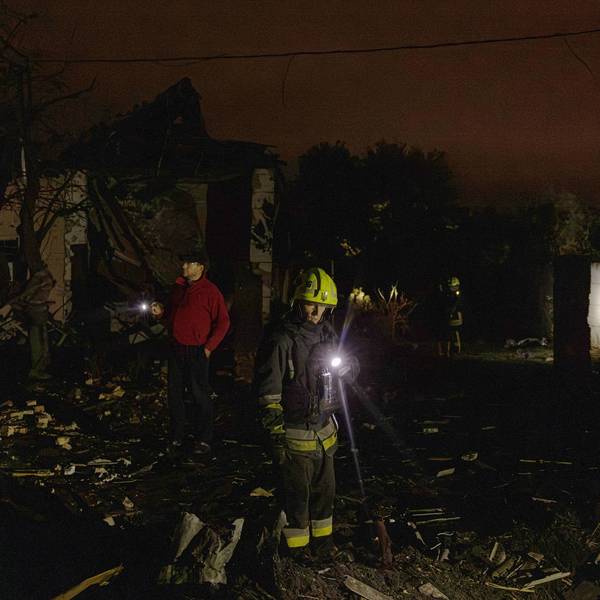
The statement from the human rights organization came as Russian forces continued to pummel large Ukrainian cities in a weeklong invasion that the U.N. says has already forced over 874,000 people to flee to neighboring countries.
The invasion, said Agnes Callamard, secretary general of Amnesty International, is singularly defined by "aggression" and "cannot remotely be justified on any of the grounds that Russia has offered."
"Yet," she continued, "all of this is being committed by a permanent member of the U.N. Security Council."
Callamard added that the invasion unleashed "a massive human rights, humanitarian, and displacement crisis that has the makings of the worst such catastrophe in recent European history," and accused Russia of "not only breaching the sovereignty of a neighbor and its people" but "also challenging the global security architecture and exploiting its frailty, including a dysfunctional U.N. Security Council."
"There are long-lasting consequences from this for us all," she said.
Amnesty further welcomed the announcement on Monday from the International Criminal Court's (ICC) prosecutor that his office intends to open an investigation into the situation in Ukraine given his satisfaction that "there is a reasonable basis to believe that both alleged war crimes and crimes against humanity have been committed."
Neither Ukraine nor Russia is state party to the Rome Statute of the ICC. In 2015, however, Ukraine accepted the court's jurisdiction over crimes committed since 2014.
Callamard said that further steps toward "comprehensive accountability" were necessary including "concerted and innovative efforts of the U.N. and its organs, as well as initiatives at the national level pursuant to the principle of universal jurisdiction."
"Above all," she said, "we must ensure that the tragically increasing number of victims of war crimes in Ukraine hear a message that the international community is already determined to secure redress for their suffering."
Related Content

Amnesty International and other humanitarian groups have already expressed grave concern about indiscriminate harm to civilians and civilian infrastructure and potential war crimes since Russian President Vladimir Putin launched the invasion on February 24.
Both Amnesty and Human Rights Watch have documented use of cluster munitions in eastern cities of Ukraine, including in strikes that damaged a hospital and preschool.
Meanwhile, on Wednesday the U.N. General Assembly, during an emergency meeting, voted overwhelmingly in favor of a nonbinding resolution calling for the immediate and unconditional withdrawal of all Russian forces from within Ukraine's "internationally recognized borders" and expressing "grave concern at reports of attacks on civilian facilities such as residences, schools, and hospitals, and of civilian casualties, including women, older persons, persons with disabilities, and children."
Also on Wednesday Ukrainian President Volodymyr Zelenskyy's government called for a "thorough and unbiased" review of Russia's permanent membership on the U.N. Security Council.
This article was updated to reflect the voting result of General Assembly resolution.
Amnesty International said Tuesday that Russia's invasion of Ukraine amounted to "a manifest violation of the United Nations Charter" and urged U.N. member states against letting Moscow "push the world closer toward an abyss of violence."
"There are long-lasting consequences from this for us all."
The statement from the human rights organization came as Russian forces continued to pummel large Ukrainian cities in a weeklong invasion that the U.N. says has already forced over 874,000 people to flee to neighboring countries.
The invasion, said Agnes Callamard, secretary general of Amnesty International, is singularly defined by "aggression" and "cannot remotely be justified on any of the grounds that Russia has offered."
"Yet," she continued, "all of this is being committed by a permanent member of the U.N. Security Council."
Callamard added that the invasion unleashed "a massive human rights, humanitarian, and displacement crisis that has the makings of the worst such catastrophe in recent European history," and accused Russia of "not only breaching the sovereignty of a neighbor and its people" but "also challenging the global security architecture and exploiting its frailty, including a dysfunctional U.N. Security Council."
"There are long-lasting consequences from this for us all," she said.
Amnesty further welcomed the announcement on Monday from the International Criminal Court's (ICC) prosecutor that his office intends to open an investigation into the situation in Ukraine given his satisfaction that "there is a reasonable basis to believe that both alleged war crimes and crimes against humanity have been committed."
Neither Ukraine nor Russia is state party to the Rome Statute of the ICC. In 2015, however, Ukraine accepted the court's jurisdiction over crimes committed since 2014.
Callamard said that further steps toward "comprehensive accountability" were necessary including "concerted and innovative efforts of the U.N. and its organs, as well as initiatives at the national level pursuant to the principle of universal jurisdiction."
"Above all," she said, "we must ensure that the tragically increasing number of victims of war crimes in Ukraine hear a message that the international community is already determined to secure redress for their suffering."
Related Content
Amnesty International and other humanitarian groups have already expressed grave concern about indiscriminate harm to civilians and civilian infrastructure and potential war crimes since Russian President Vladimir Putin launched the invasion on February 24.
Both Amnesty and Human Rights Watch have documented use of cluster munitions in eastern cities of Ukraine, including in strikes that damaged a hospital and preschool.
Meanwhile, on Wednesday the U.N. General Assembly, during an emergency meeting, voted overwhelmingly in favor of a nonbinding resolution calling for the immediate and unconditional withdrawal of all Russian forces from within Ukraine's "internationally recognized borders" and expressing "grave concern at reports of attacks on civilian facilities such as residences, schools, and hospitals, and of civilian casualties, including women, older persons, persons with disabilities, and children."
Also on Wednesday Ukrainian President Volodymyr Zelenskyy's government called for a "thorough and unbiased" review of Russia's permanent membership on the U.N. Security Council.
This article was updated to reflect the voting result of General Assembly resolution.